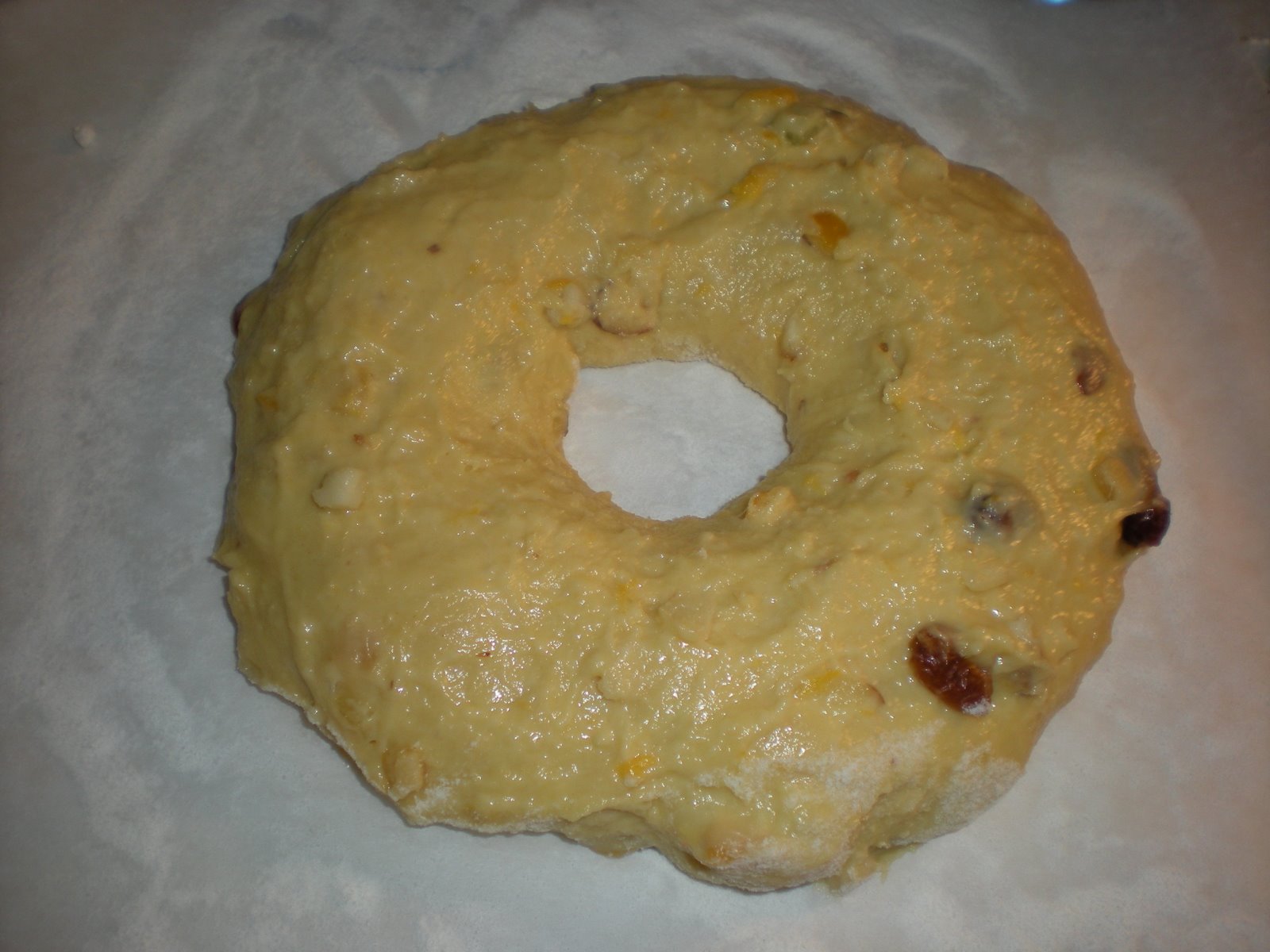
Stollen

Dear Readers,

I was inspired by my success with the Rosca last week to try other fruit breads. There are several to choose from, of course, the most famous (infamous?) being fruitcake, as well as galette des rois, king cake, panettone, and many more. I have decided to try Stollen.

Stollen has German and Scandinavian roots. While I’m not sure how authentic the recipe I’m using is, I am willing to give it a shot and see how it turns out and most importantly, how it differs from the Rosca de Reyes, even while using basically the same ingredient list.

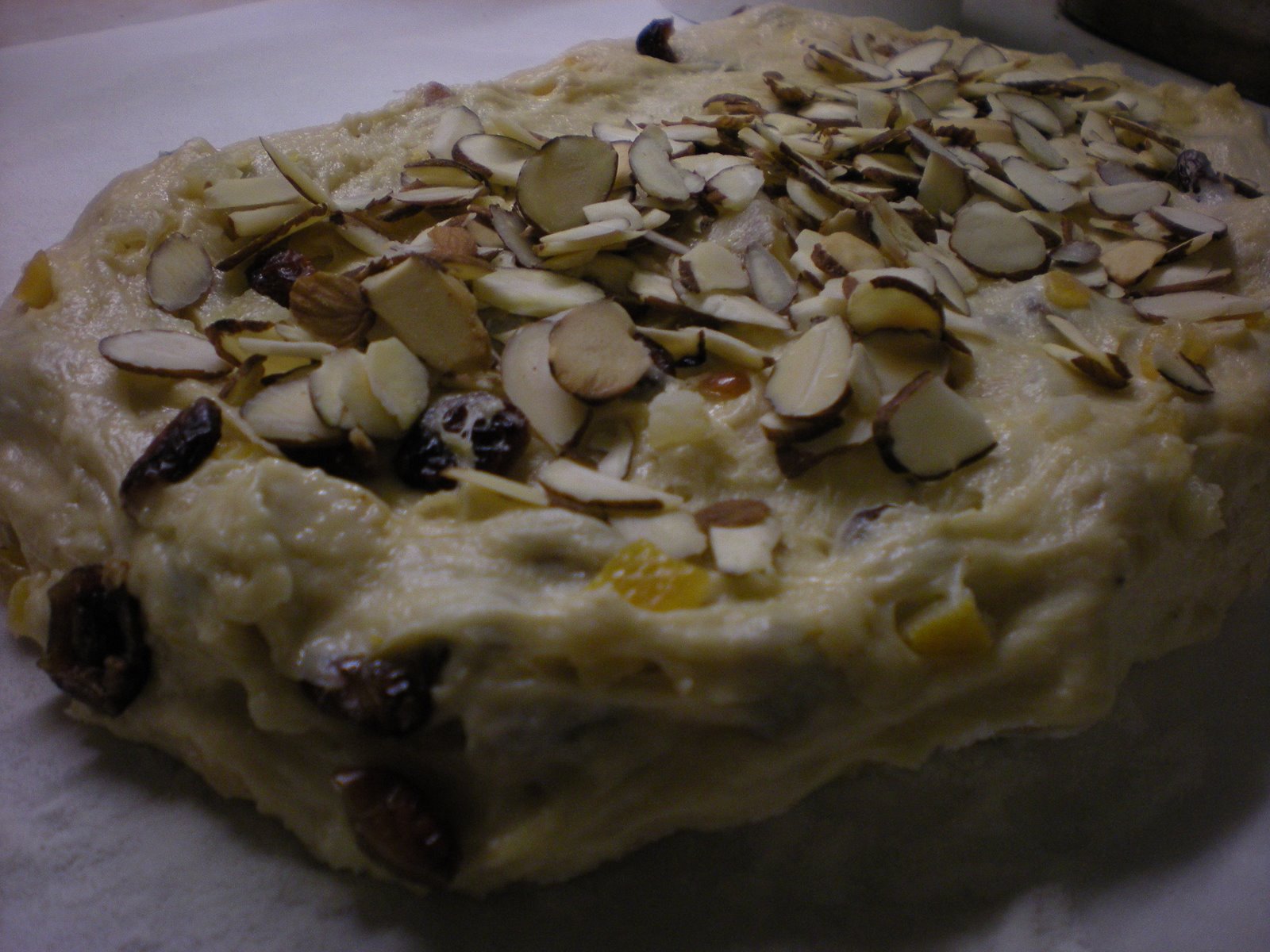
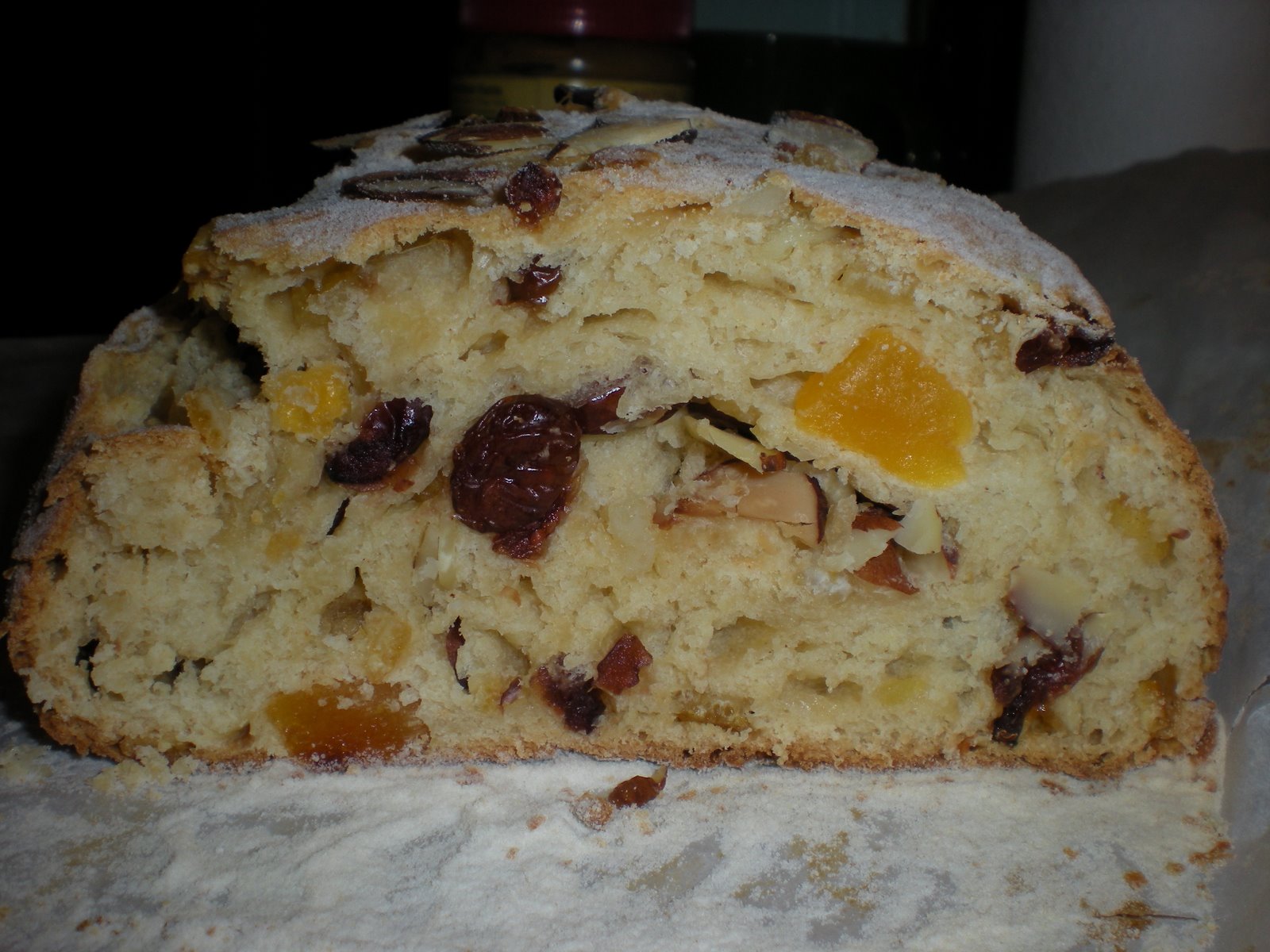
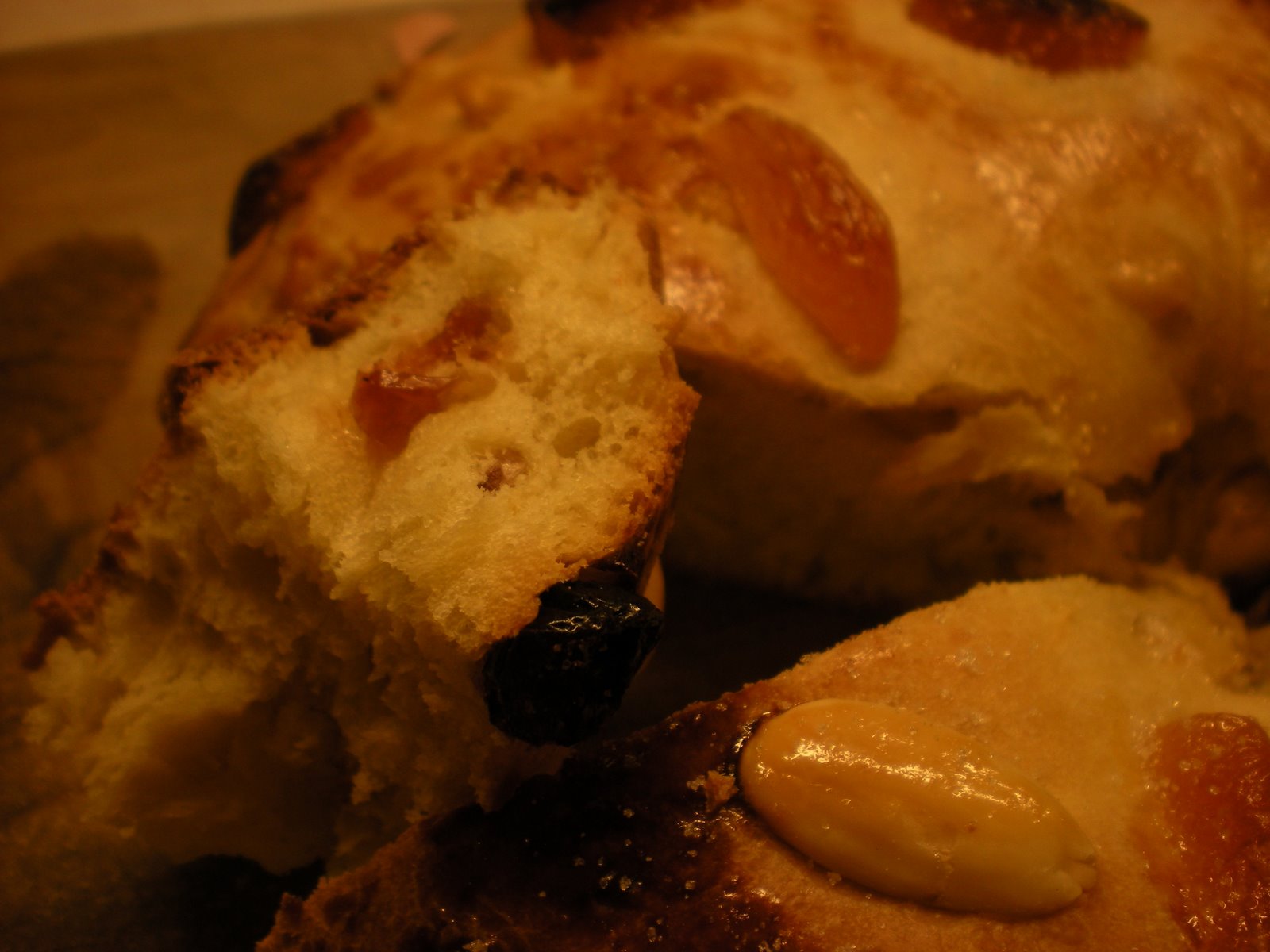
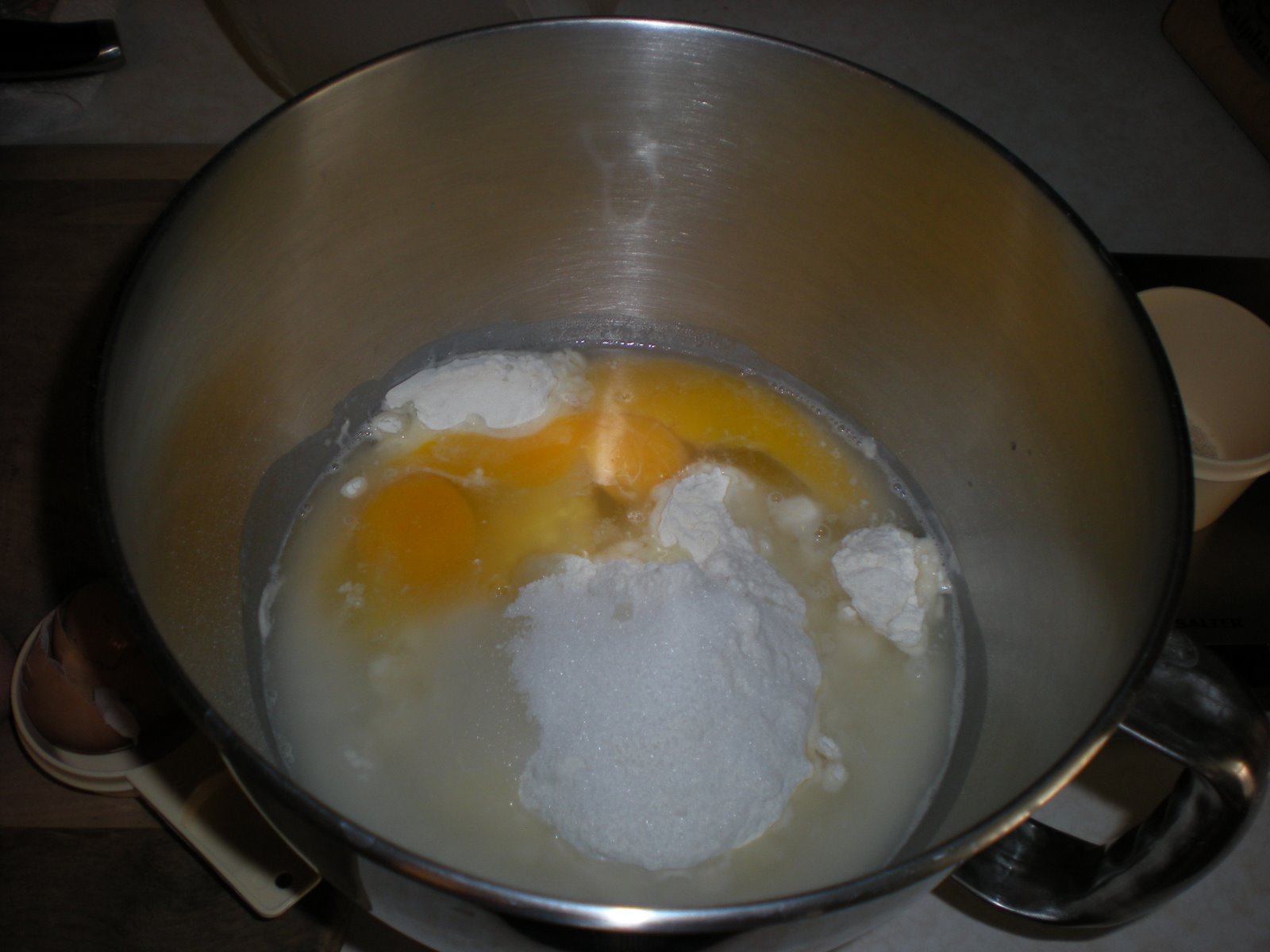
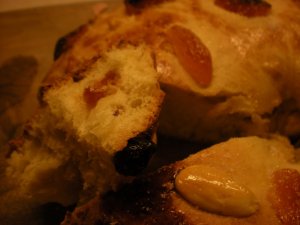
However, gentle reader, you will have to wait because while the most recent attempt was tasty, there are some things I want to tweak about it. Also I think I forgot a half cup of flour so the dough was really sticky. Also I have a ton of candied fruit from the Rosca that I need to get rid of. So instead, I will lure you in with pictures.

Rosca de Reyes

When I think of Rosca de Reyes, or Mexican Three Kings’ Cake, I always think of that scene in Like Water for Chocolate when the sisters are preparing a huge cake and have to count the eggs they add because the number is so huge.

I don’t tend to use a lot of eggs in my bread. Any, in fact. Egg breads tend to be rich and sugary, and sugar isn’t something we eat a lot of here. But a grad school friend is having a birthday on Wednesday, so I decided to make a cake for her. And in the spirit of the holidays, I settled on Rosca de Reyes.

Rosca de Reyes gets most of its sweetness from fruit, not sugar. And it is more like a bread than a cake. The dough once it’s baked reminds me of a panettone.

I got all my ingredients together into a mise en place.

I had just enough eggs to make the recipe (13 eggs!) I mixed the first set of ingredients together (including three of the eggs) and set it out to rise.

Only thing is, it didn’t rise. At all. I had to decide whether I would proceed to the next step, or start over. I didn’t have enough eggs to start the same recipe over, so I decided to find another recipe that would serve my purpose but would take less time and fewer eggs.

I settled upon the Chilean Christmas Bread recipe from Epicurious.com, albeit with a few changes:

1. I used the reconstituted dried and candied fruit that I had prepared for the other recipe.
2. I shaped it into the traditional Rosca de Reyes wreath shape.
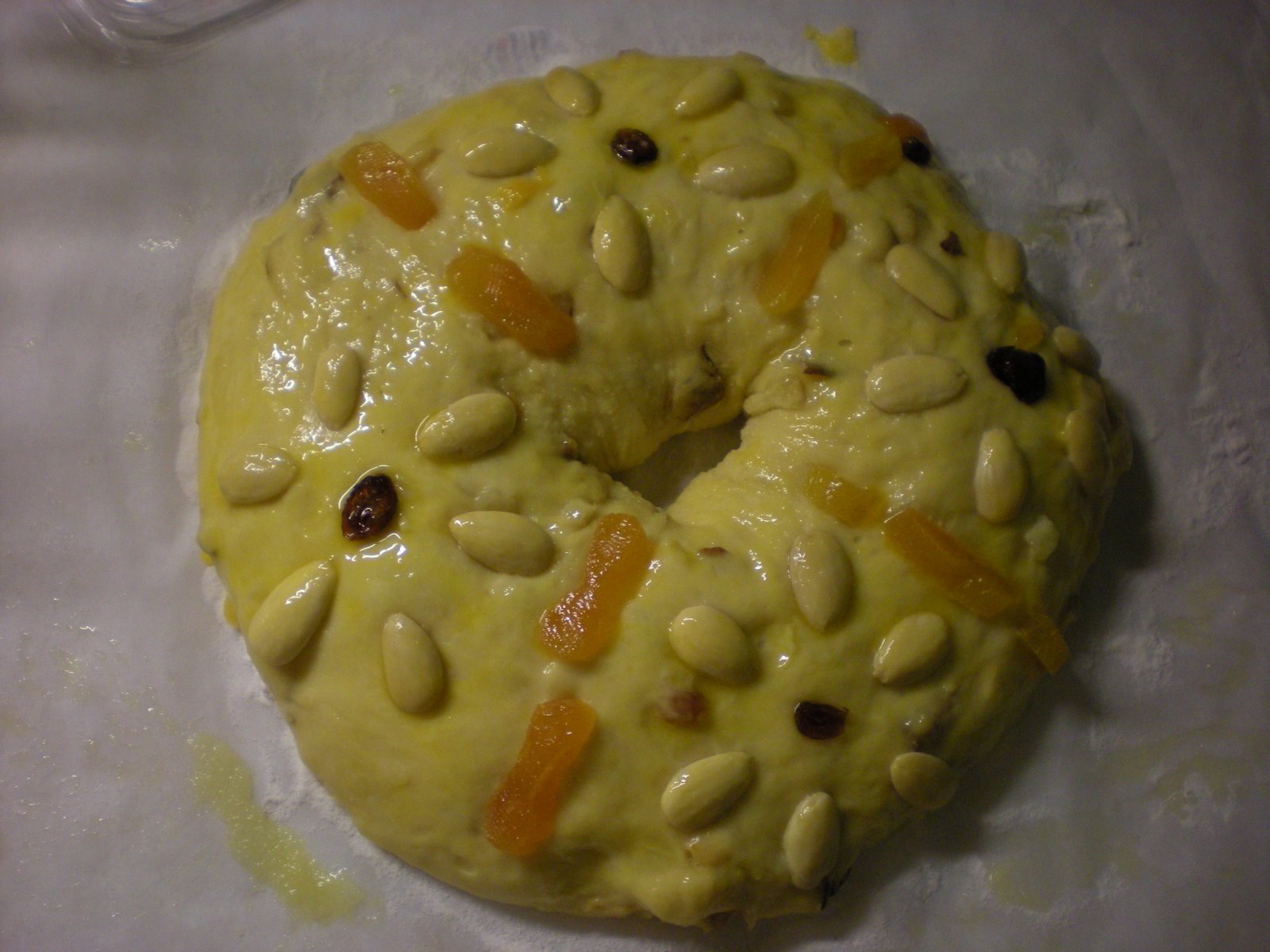
3. I decorated the top with dried fruit and almonds
4. A few other things we will get to when we start the recipe.

Ready? Here we go!

For yeast sponge:
pinch of sugar
2 1/4 teaspoons active dry yeast
3/4 cup ap flour
1/2 cup warm water

For dough
1/2 cup unsalted butter
1/3 cup sugar
1/2 tsp salt
zest of 1 orange or lemon (we used grapefruit because that’s what we had)
4 large eggs
3 cups ap flour
1 1/2 tsp brandy
1 1/2 tsp vanilla extract
1 1/2 cup mixture of candied and dried fruit (we had candied orange and lemon peel, cranberries and apricots)
rice flour
olive oil for greasing

For decoration
two egg yolks, lightly beaten
blanched whole almonds
not-reconstituted dried fruit

Tools
stand mixer
parchment paper
shallow baking pan
dutch oven
plastic wrap

1. The very first step is to set out your butter and eggs so they are room temperature.
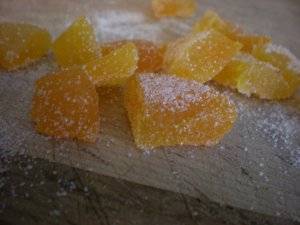
2. Put all the dried fruit into a cup and fill with hot water to reconstitute. Drain and set aside.
3. In a two-cup measuring cup, stir together the warm water, sugar, and yeast. When it gets frothy, mix in the flour, cover with plastic wrap, and let stand until the sponge reaches almost the 2-cup mark, about 20 minutes.

4. If your stand mixer paddle reaches the bottom of your bowl, beat together the butter and sugar for five minutes until fluffy. If not, have fun with a whisk (like we did). Add salt and zest and beat until combined.

5. Now add three eggs, one at a time, making sure to combine after each one. At this point, my dough did NOT look like it was coming together, so don’t worry. Now add the yeast sponge and beat until combined. Add two cups of the flour and mix at low speed. Add remaining one cup flour, remaining one egg, brandy, and vanilla and mix at low speed until smooth.

6. Increase speed to medium and beat dough until smooth and elastic. Add your reconstituted fruit here, and mix at low speed until incorporated.

7. Grease a large bowl and wet your hands with water. Form dough into a ball and place into bowl. Cover with plastic wrap and let sit until doubled in volume, about 1 hour.

8. Prepare two sheets of parchment paper with rice flour. Divide the dough in half and shape each into a ball. Poke a hole into the middle and carefully shape into a ring. Place ring onto parchment, and cover with greased plastic wrap. Let rise again 1 hour.

9. Preheat oven to 400 degrees. Remove plastic wrap from one of the loaves and decorate with almonds and dried fruit. Dab egg yolk over the top until well-covered.
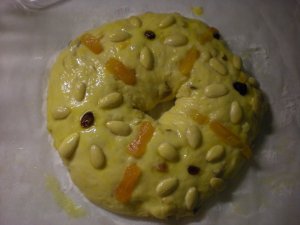
10. Transfer parchment paper to baking sheet and put in the oven. Take your dutch oven and turn it upside down, using it as a cover for the dough. Bake like this for 15 minutes.
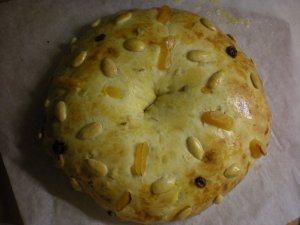
11. Remove dutch oven and turn temperature down to 330 degrees. Let bake until light brown, then remove to cooling racks. Repeat with other ring.
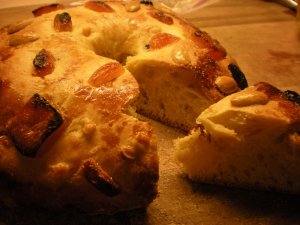
Happy eating!

Rye: Part Two


So, last time I tried to make rye bread, it was ok, but I still wanted something a little darker and more “old country”.

I found a recipe online called “scandanavian rye” at http://www.christonium.com/culinaryreview/ItemID=12267169605528, which looked like what I wanted.

I had refreshed my starter earlier in the day, so I used my 75% hydration starter in place of the commercial yeast the recipe calls for.

My modifications include adding coffee and cocoa powder, substituting the dark corn syrup with molasses, and using 6-grain mix instead of just oatmeal. I also left out the recipe’s sunflower seeds and fennel, since I don’t really like those very much.

SCANDANAVIAN RYE BREAD

makes 2 Loaves

First Day
1/4 cup sourdough starter
1 tbsp salt
¾ cup yogurt
2 cups water
¾ cups grain flakes
4 cups rye flour

Next day
1 tbsp whole cumin
2 cups flour (the recipe did not specify what type of flour so I used all-purpose)
1/3 cup molasses
100 g butter, melted & cooled
a few tablespoons coffee
a few tablespoons unsweetened cocoa powder

Method:
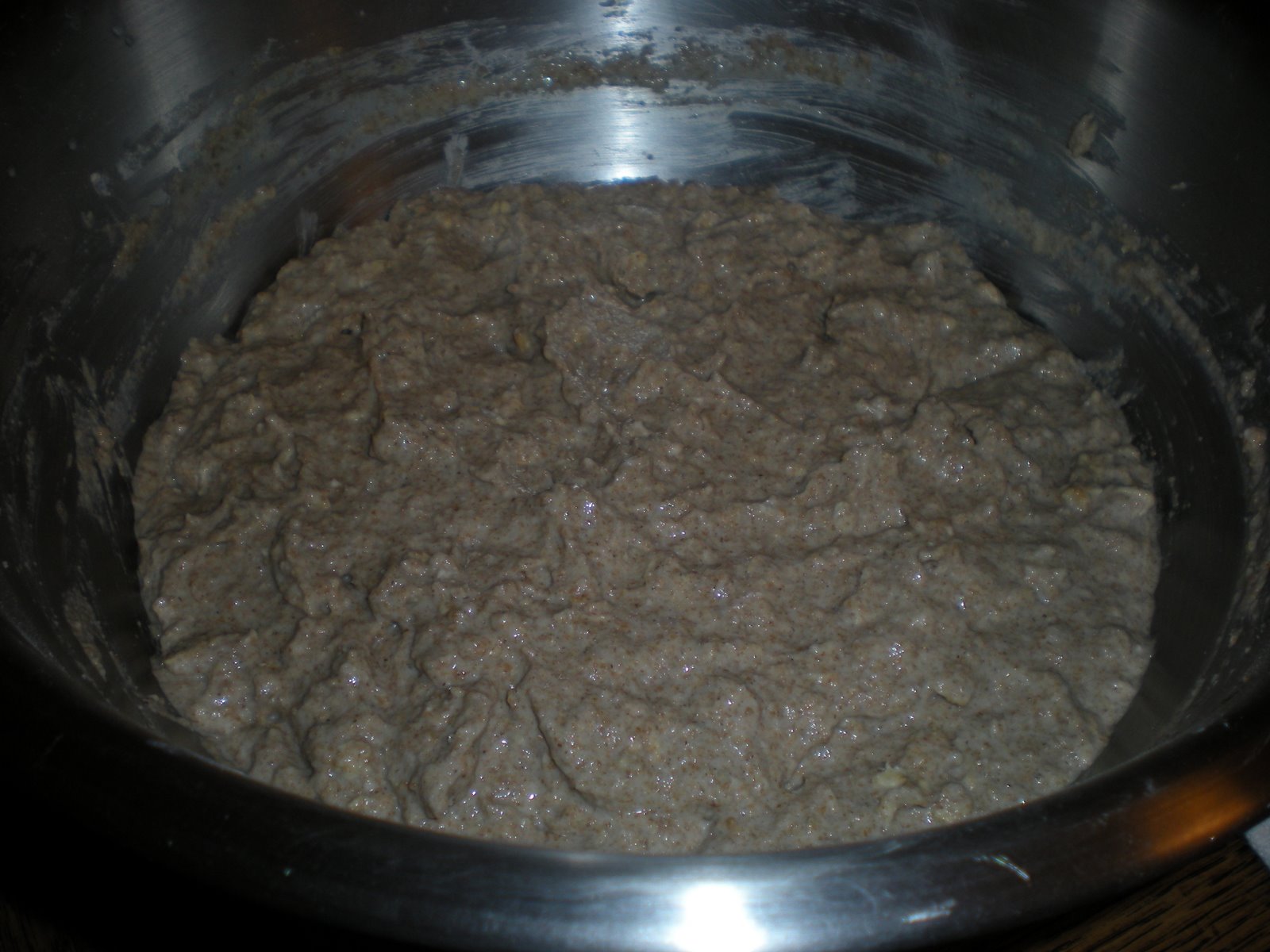
Stir yeast, salt, yogurt and water together. Add the oats and lastly the rye flour. Stir until everything is well combined. Cover the bowl with plastic wrap and allow to sit for 24 hours. The dough should be very watery.

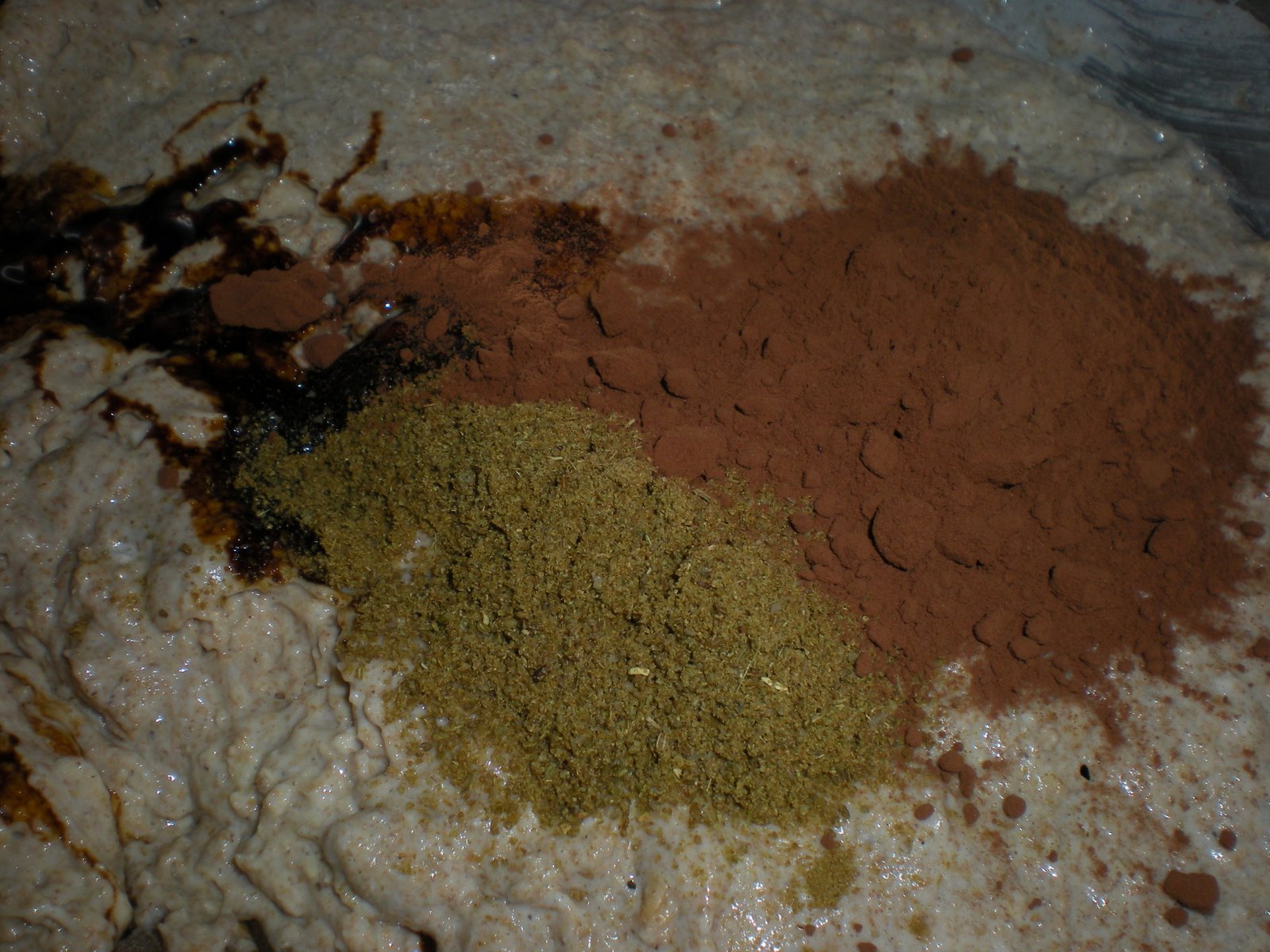
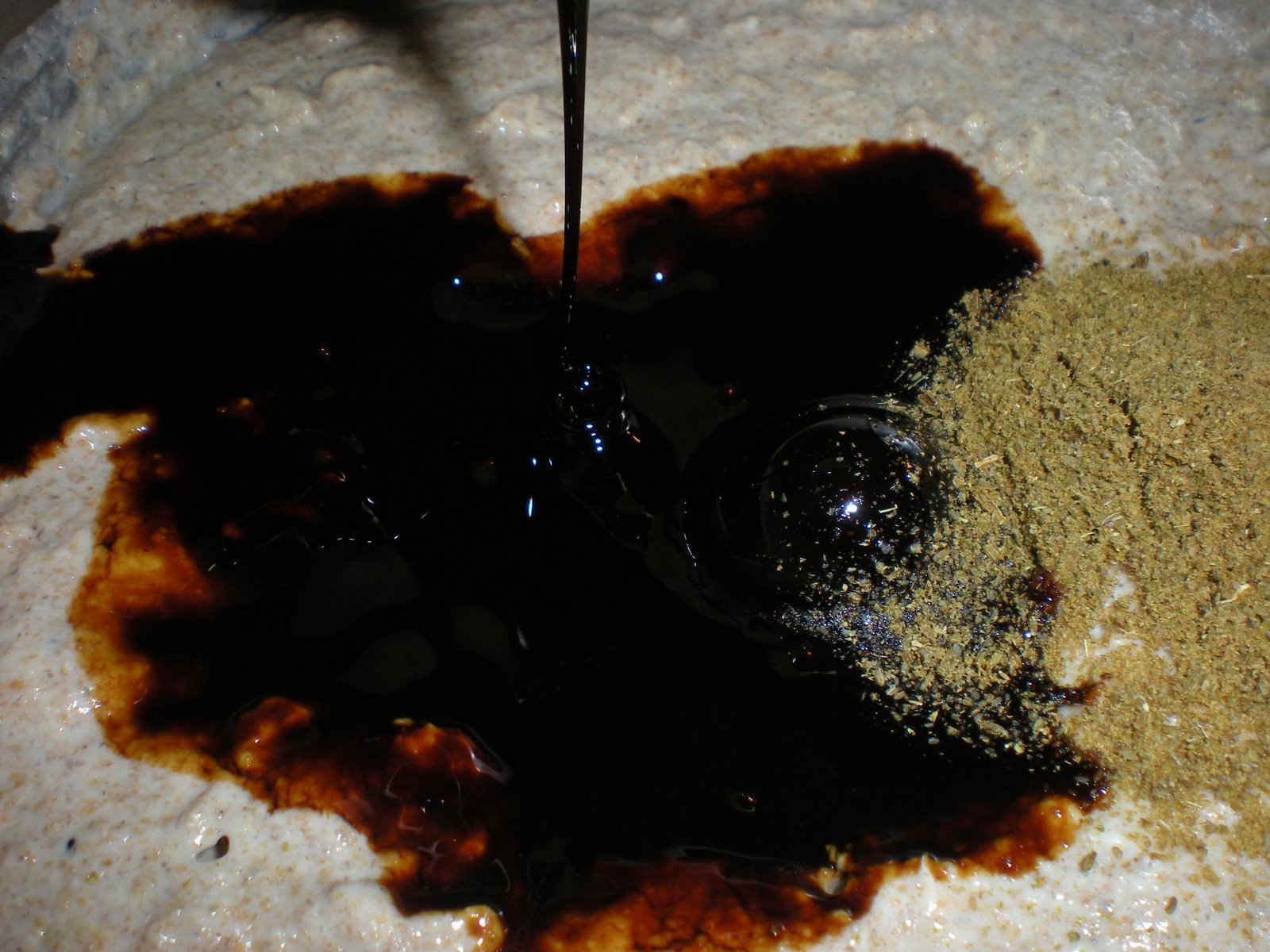
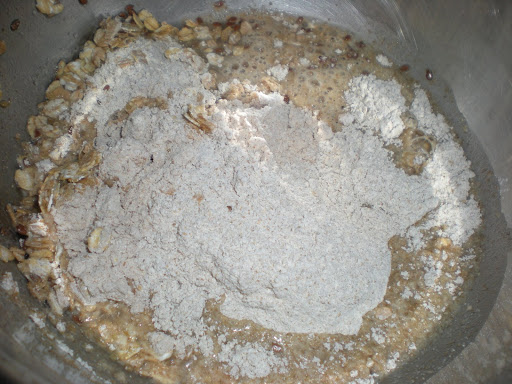
Next day, grind up the cumin and mix the spices with the flour. Add molasses, cocoa, coffee, and melted butter into the bowl from yesterday.

Stir well, then lastly add the flour mixture. With a wooden spoon, work the dough together well and make sure there are no flour pockets. The dough will still be really watery.

Pour/scoup the sticky dough into two oiled loaf pans. Cover with oiled plastic wrap and allow to rise for 1.5 – 2 hours.

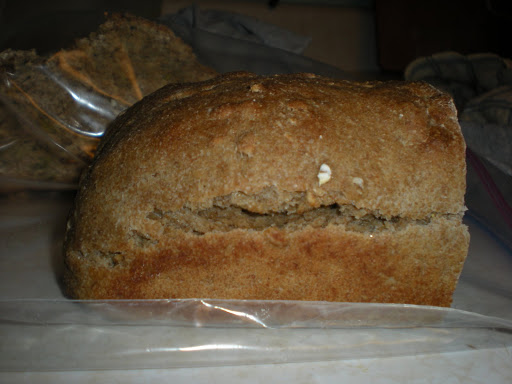
Bake the loaves in a 350 degree oven for about 45- 55 minutes. My loaves puffed up a little and then sank back down after I took them out. I had to wait until the loaves were completely cool before taking them out of the bread pans.

Preferably let the bread sit for a day or two (in a plastic bag) before cutting into. They need a chance to dry out a little.

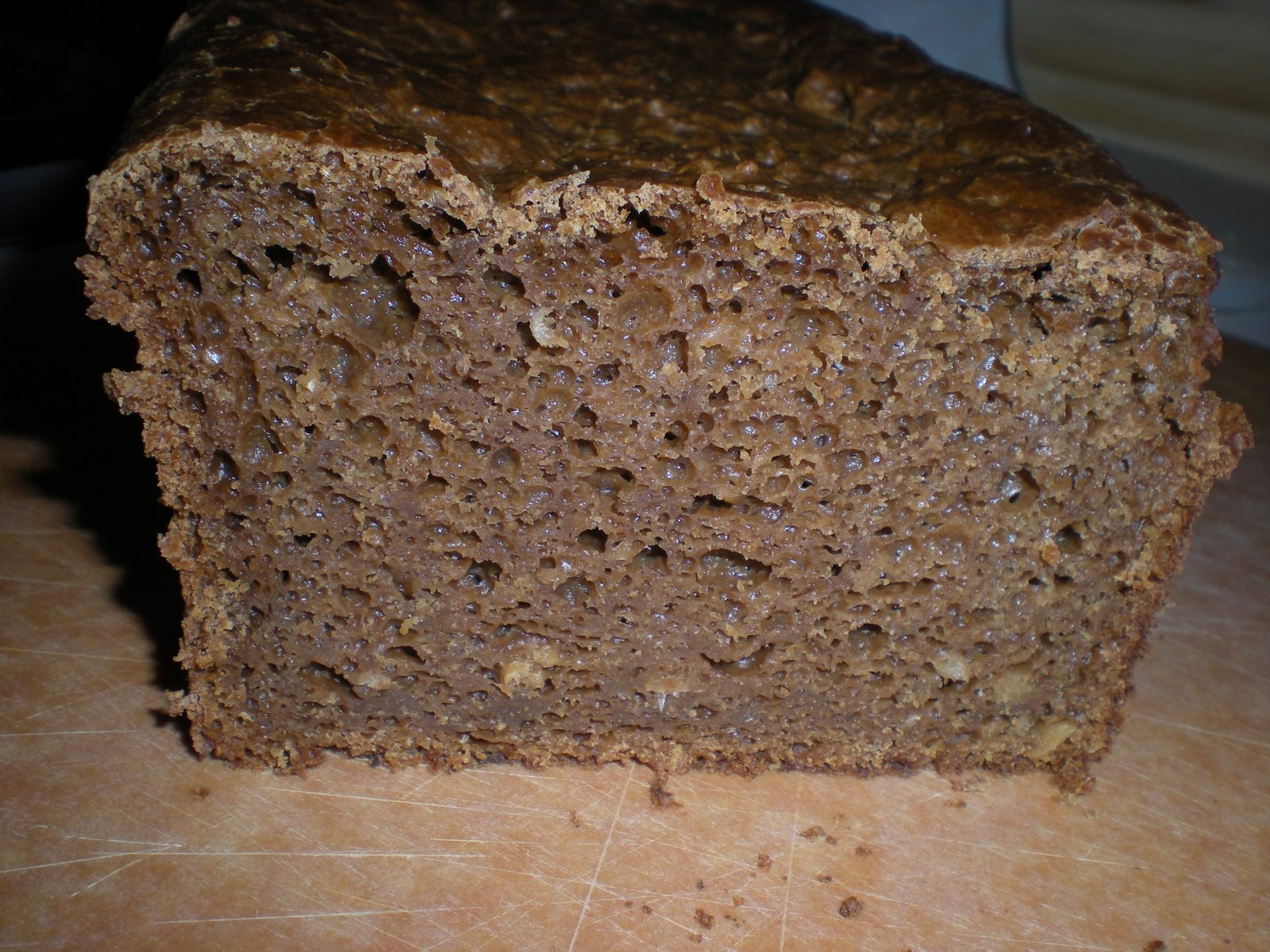
The taste was… well it took me a little while to get used to it. It was very dense, just as I wanted it. Rye flour doesn’t have the natural sweetness of wheat flour. The sourness was only enhanced by the yogurt, cumin and cocoa. I love the darkness of the loaf too!
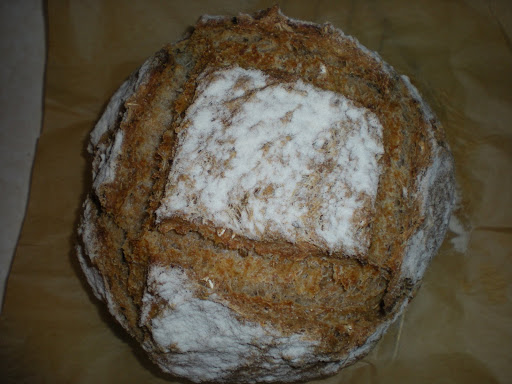
Because it made two loaves, I used half of one to make into a bread pudding with mushrooms, and I’ll probably freeze the second one. In all, I’d say it was pretty successful! Mr. Bread Maiden liked it (and the bread pudding).

Making a Sourdough Starter

So on request, I decided to post about making and caring for a sourdough starter. I love having a starter because it makes bread flavor very complex. You can easily prove this by making two doughs using a simple bread recipe like NYT’s no-knead bread. One dough is the “control” with commercial yeast, and in the other you use sourdough starter instead. Once you get used to the flavor of the sourdough, breads made with commercial yeast taste bland. Good, but bland.

How to start a starter

Here’s the problem. I cheated when I started mine. After trying and failing using Peter Reinhart’s method (flour, water, and pineapple juice), I took some of Mr. Bread Maiden’s yeast after he made beer and have been feeding it flour and water ever since. If you really want to know how to make a starter really from scratch, this is a great tutorial: http://www.thefreshloaf.com/node/233. Make sure you follow the author’s instructions about getting freshly-milled flour (or do it yourself from wheat berries) when you first start. You need the natural yeasties in the flour so you can’t use plain store-bought bread or all-purpose flour with all the good stuff removed.

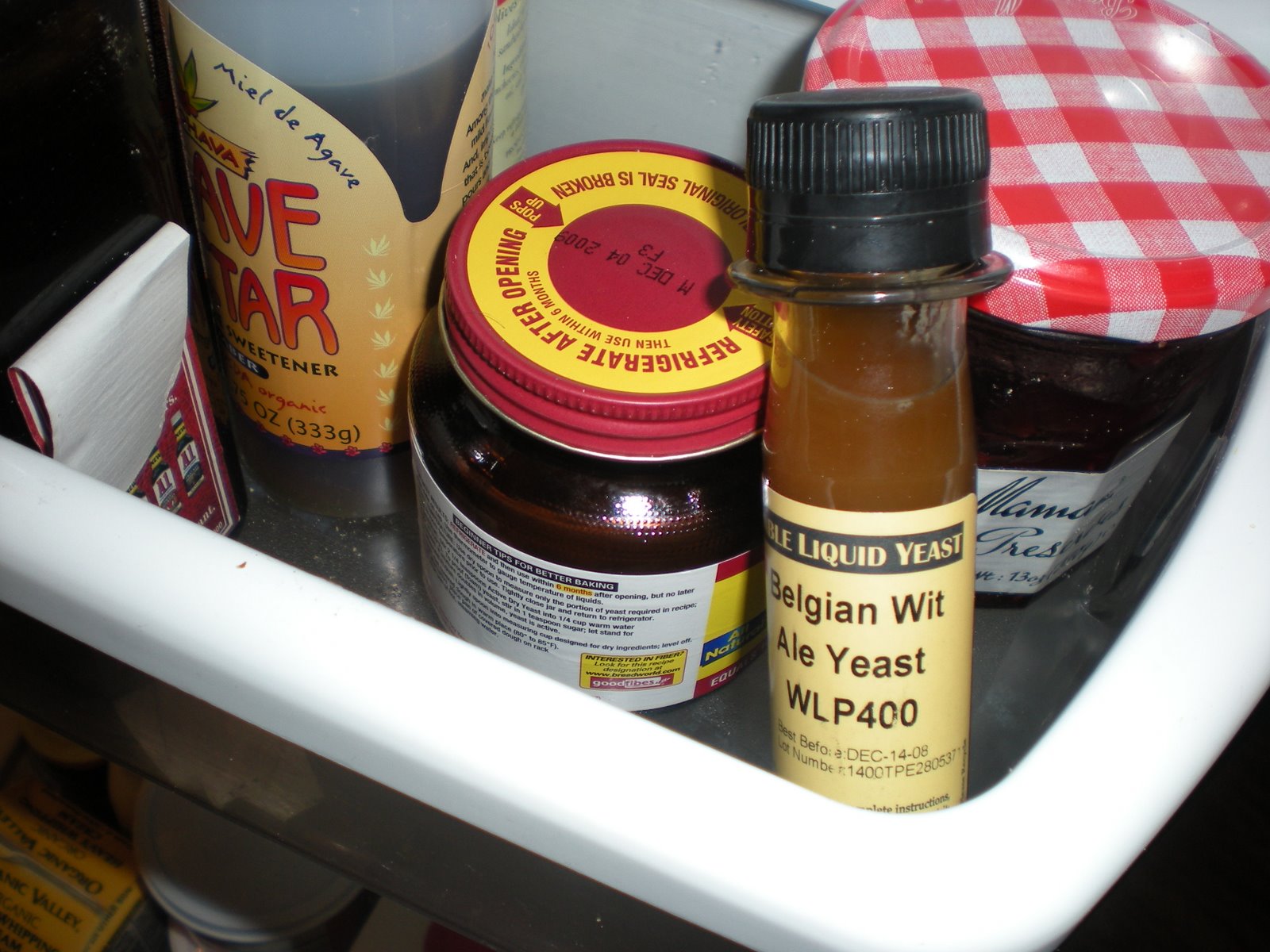
This is what Mr. Bread Maiden buys at the store when he wants to make beer.

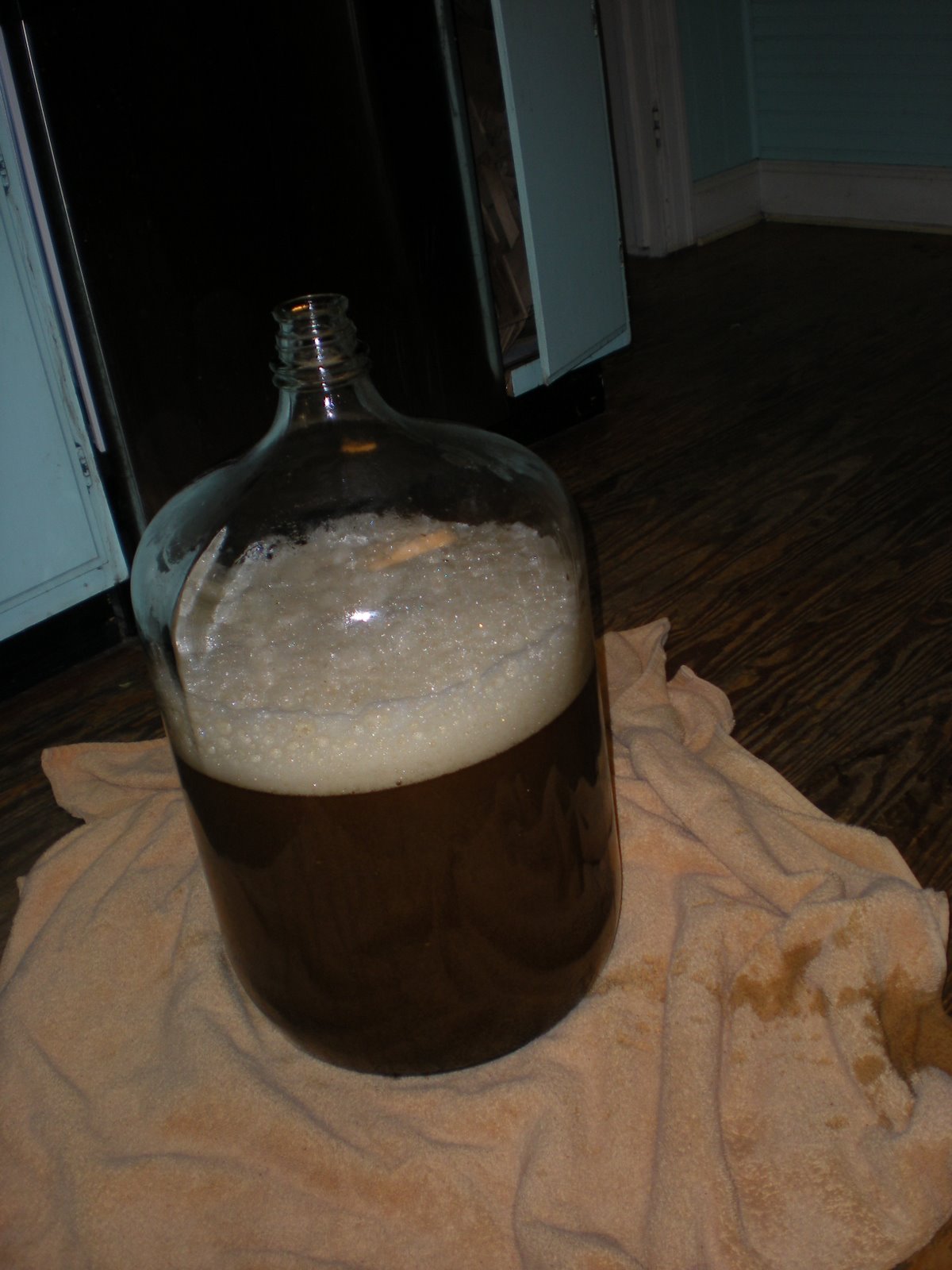
He makes a mash using hops and then adds the liquid yeast to it and lets it eat away at the sugars for a few weeks.

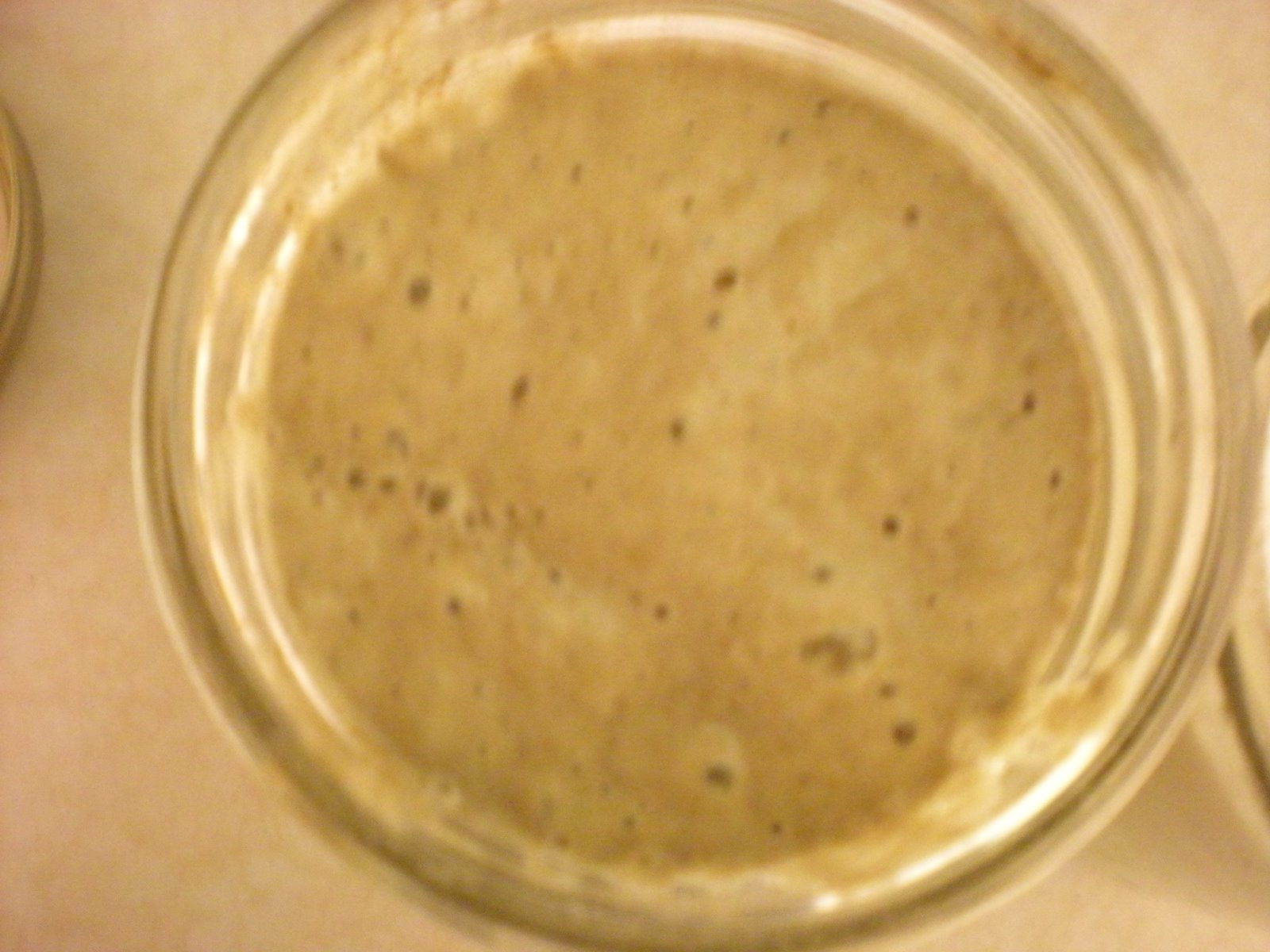
Then he bottles it and throws away the yeast. One time I asked him for a few cups and he was happy to oblige. The reason you can do this is because beer yeast and bread yeast are the same strain: S. Cerevisiae. Here is what it looks like:

You want to use a glass jar with a tight-fitting lid. Open it to feed the starter but otherwise keep it closed. You can have a bigger jar but I wouldn’t go any smaller than the one I have. The problem with a small jar of starter is that you have to build it back up each time you use it because your starter is only about two cups.

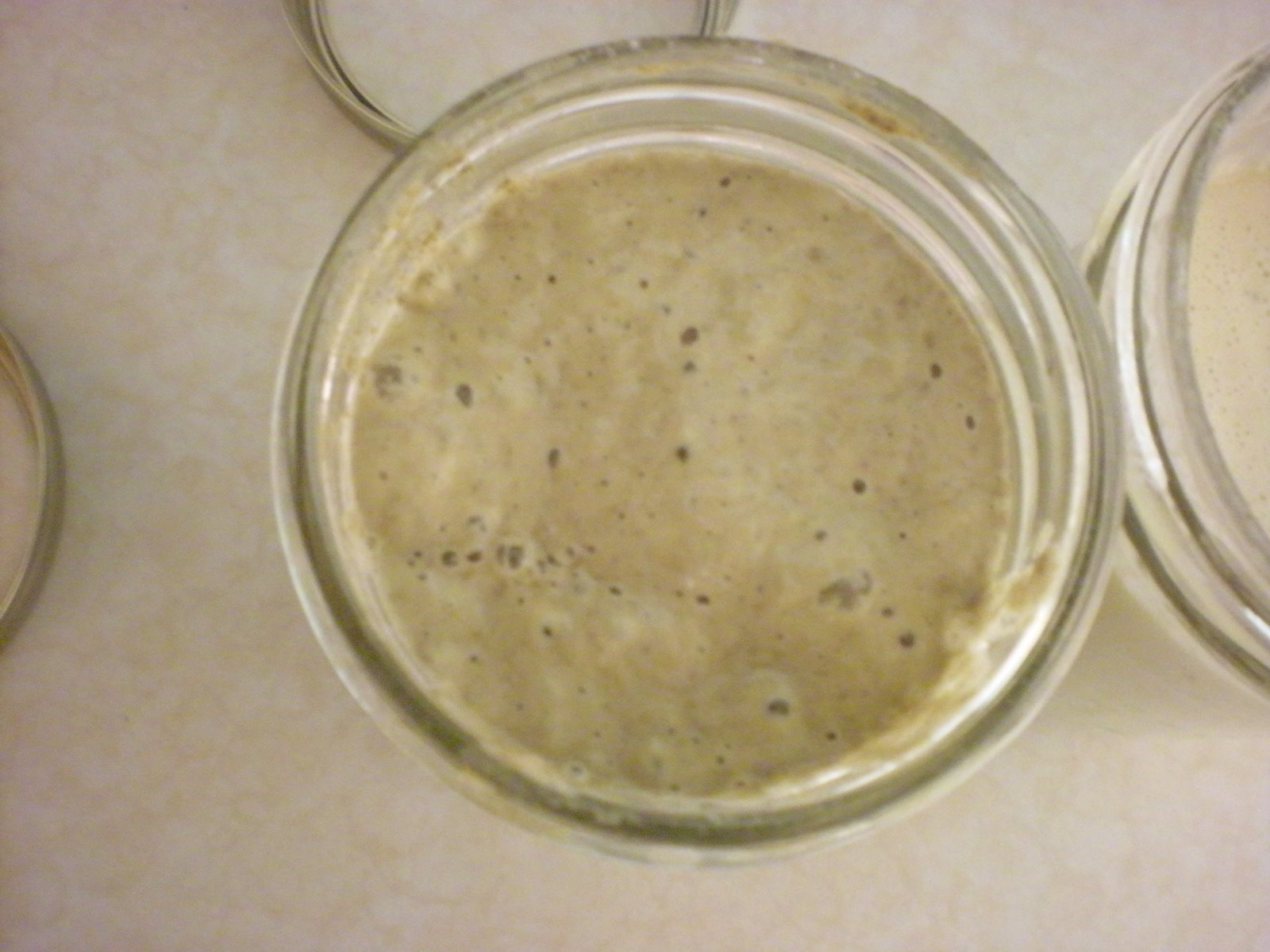
I started by feeding it equal weights of water and all-purpose flour. At first it is really bubbly but then activity dies down for a few days because you have to build up a culture and wait for non-yeast bacteria to die off. Just keep feeding it and it will either revive from the feedings or will take on some of the wild yeast floating around your kitchen and start a culture from that. This is why everyone’s starter is unique- it develops from the natural yeast in its environment.

Once I had my 100% hydration starter going, I divided it into two glass jars. One I continued feeding equal weights of flour and water, and the other I fed at 75% hydration. The only reason is that Peter Reinhart likes to use bigas, which are firm pre-ferments, and French breads tend to call for poolishes, which are more watery. I probably use the 75% hydration starter more often.

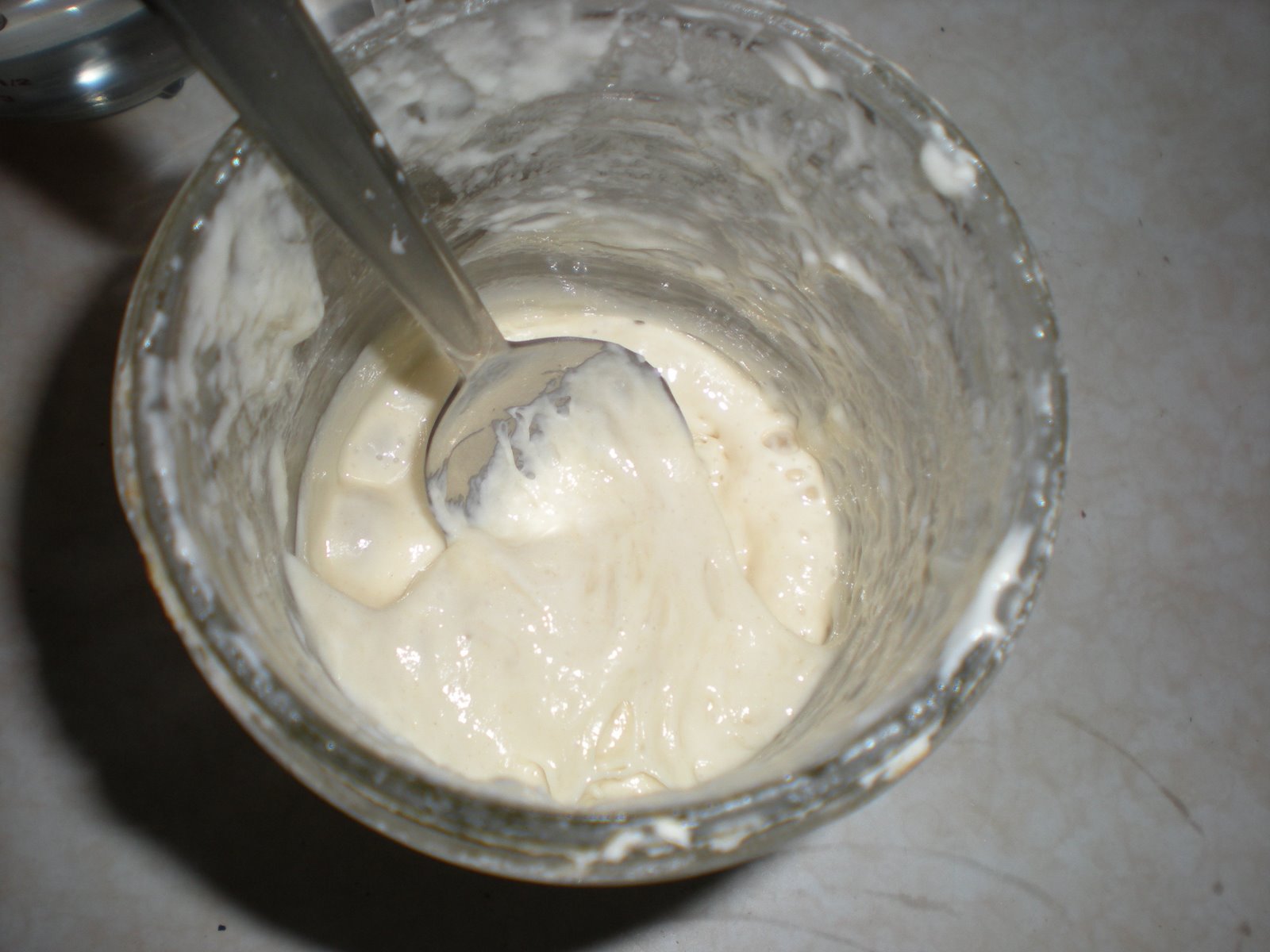
The more I refresh my starter, the lighter in color it gets. Remember at first it was brown?

Managing Your Starter
Once you get your starter going and it gets bubbly, you can start using it right away. I usually keep my starters in the fridge and then take them out and feed them the night before or in the morning if I want to bake in the afternoon so they can get up to room temperature and the yeast can start working. I feed mine every time I bake so it’s usually once a week. If you go longer than that without baking, sometimes your starter will develop a dark, alcoholic-smelling liquid on top. Don’t worry about it; when you want to use it just pour the liquid off. The starter should be just fine underneath.

Using your starter

In a given bread, you will want to add more starter than commercial yeast. Don’t worry about adding a cup or more into a dough: the amount of starter does not make the bread taste more sour. The way to get a more sour taste is to let it sit and ferment for a long time.

My favorite bread in the whole world calls for weights equivalent to 1 part starter, 2 parts water, and 3 parts flour (also some salt, which I always forget until the last minute). I can choose how sour I want it by letting it ferment for longer or shorter.

Hope this helps! The easiest way though is probably to make friends with someone who uses a starter and ask them for a little bit. You only need about a tablespoon to build up a good starter.

Experimenting with Flours

I’ve decided I do not like making rye bread. It’s just too emotionally-fraught for me. I can’t deal with this drama. I like my bread to tell me what it’s feeling. Rye bottles it all up inside until it explodes in one last burst of emotion. Sorry, I just had to get that off my chest. Shall we continue?

Here’s the back story: last night “significant other” (we are trying to think up a good name for Mr. Bread Maiden) suggested pumpernickel bread as something to try. I learned that there is no way to get that great, super-dark coloring without artificial colors. boo. How is that authentic? Yet, I decided to continue the quest.

I couldn’t find a good rye/pumpernickel recipe online, so I gathered that it used about a 60% hydration. I had heard that making 100% rye bread was difficult, so I did 50% rye flour and 50% bread flour. Instead of finding “caramel color,” we brewed some strong coffee and I replaced some of the water with that.

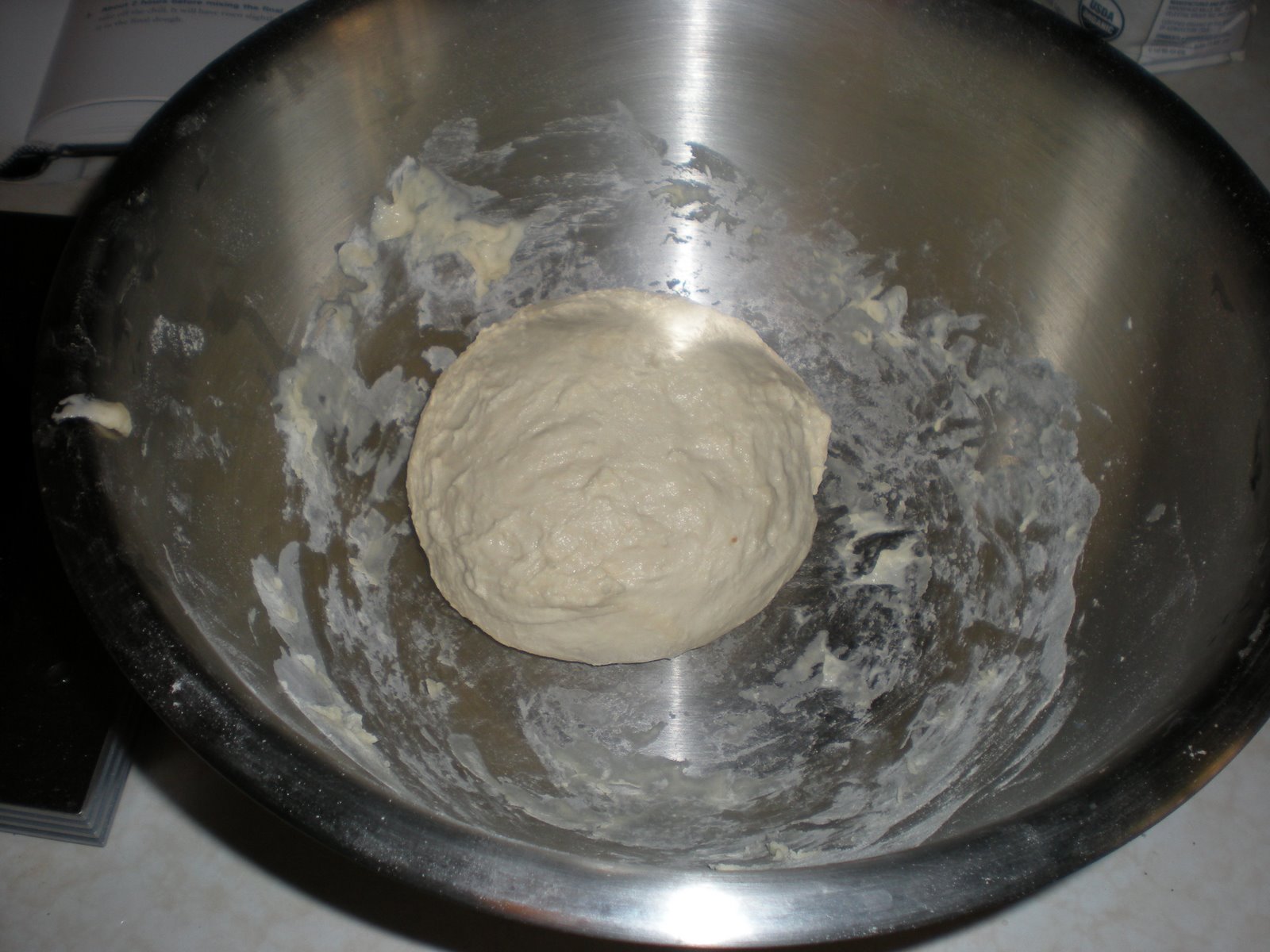
For those of you who have never tried to make a mostly rye loaf, here is what you can expect:

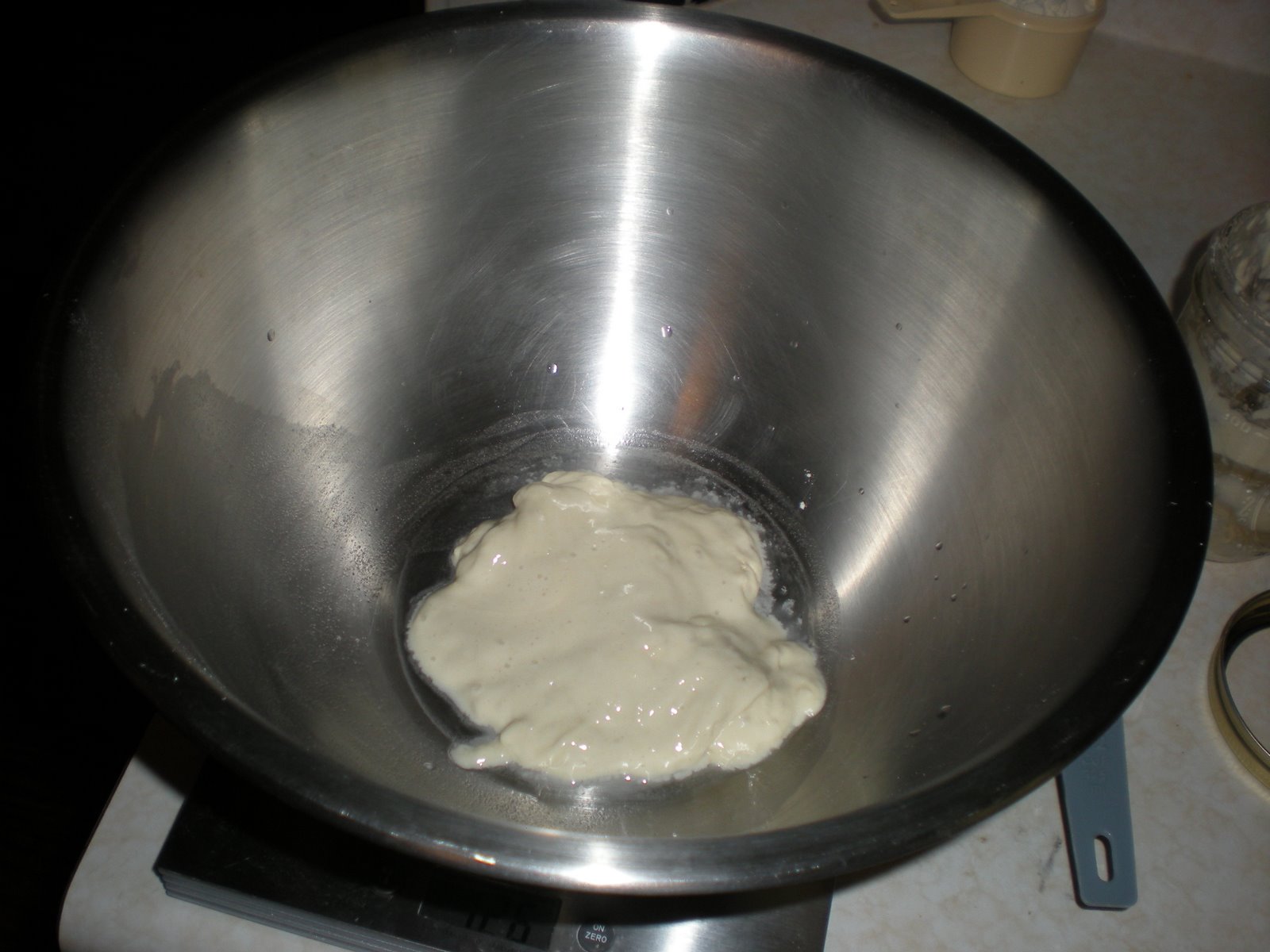
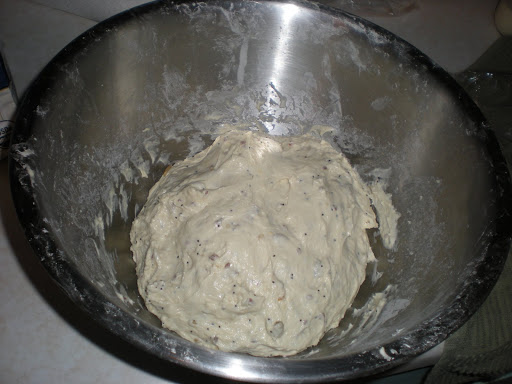
That’s what the dough looks like. Even when I added a bunch of my bubbly starter. Even with all the high-protein bread flour. It just sat like that. All night long.

I wasn’t sure about the baking temperature, or why it wasn’t rising, or if it would be able to stand up in the oven, so I put it in a bread pan.

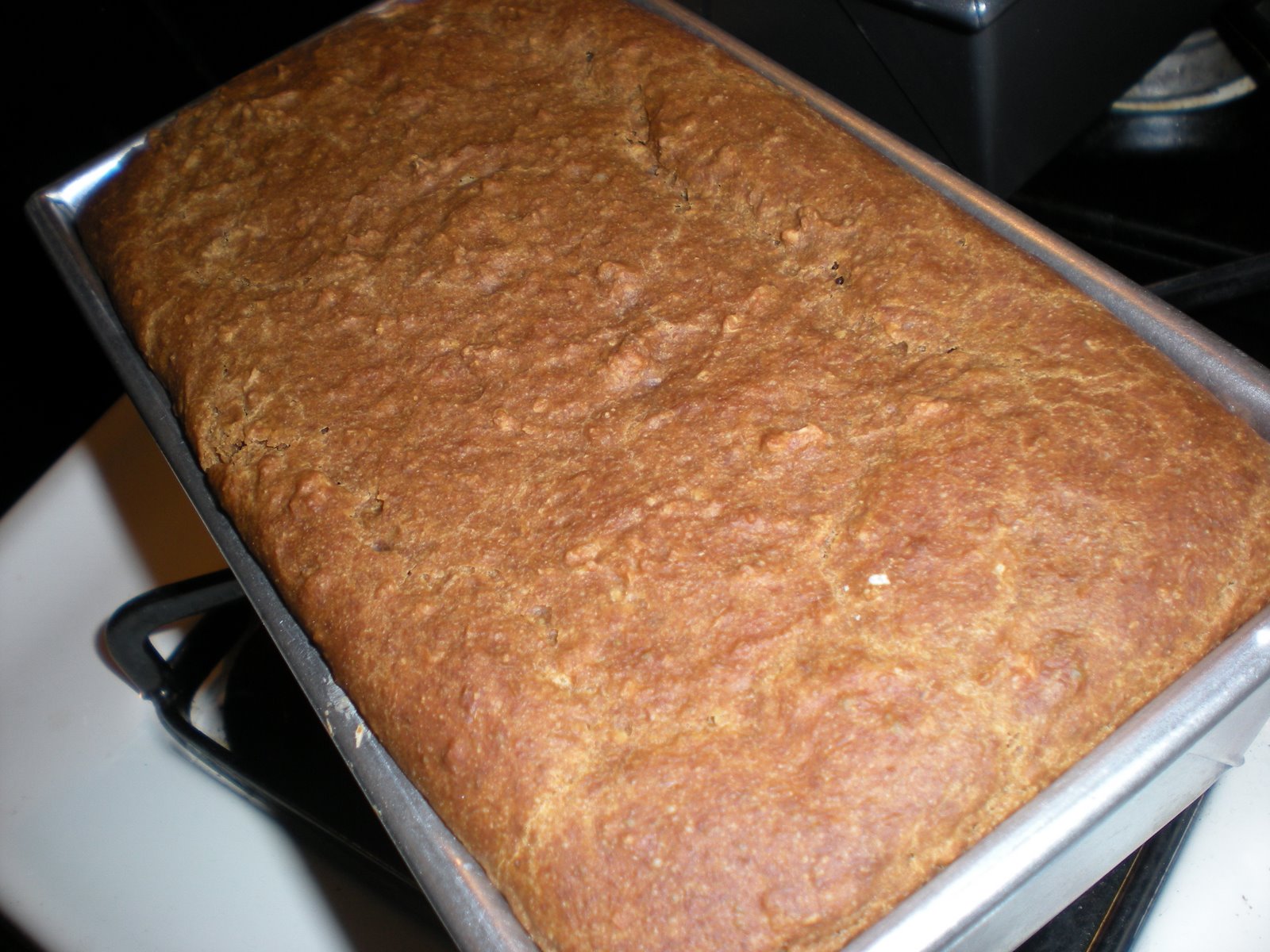
Here is what came out:

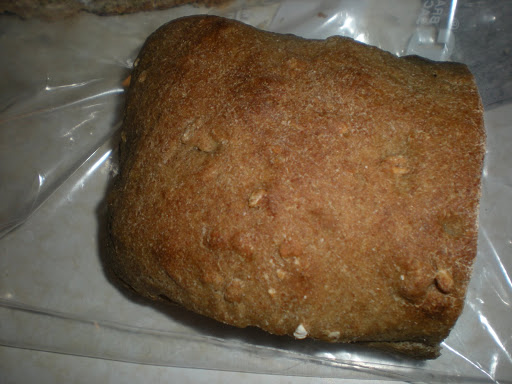
It was about the size and shape of a brick, although I was pleasantly surprised that it did spring up in the oven. Not that much, though, which is why you can still see the indentations of my fingers in the top of the loaf:

I was ready to throw it out and start over, but I cut into it so I could see the crumb.

Actually, that doesn’t look that bad. These breads are not supposed to be light and airy, they are supposed to be dense.

I took a bite. It was pretty good! Mr. Bread Maiden liked it too, and less hesitantly than me. He ate two pieces with the soup we made.

So it all worked out, I guess. I still would rather work with my trusty wheat flours, who tell me everything is going ok by rising and springing. They help me get through the long hours of waiting that try my patience in breadmaking.

Here is my recipe:
375g flour (divided into 187g rye and 189g bread flour)
225g water and coffee (60% of the flour weight)
100g starter
6g salt

1. Combine ingredients but do NOT knead. Cover with plastic wrap and a towel and let sit overnight.
2. Gently shape into a roll and place in a buttered bread pan.
3. Preheat oven to 470 degrees F.
4. Let bake 40 or so minutes.

Oh, and because the rye bread was driving me nuts, I went and made two other loaves to reassure myself that I actually do know how to make bread, it’s just this passive-aggressive rye that has me tearing my hair out.

1-2-3 Sourdough

Reinhart’s Many-Seed Bread (although Mr. Bread Maiden likes it with more grains than seeds, so this is a variation)

Thanks for stopping by!

Where to go from here

While not documented on this blog, last year was a quest not only to learn how to bake, but to find a decent recipe for a loaf we liked enough to eat (almost) every day. It had to be easy enough to whip up, but not taste like supermarket sandwich bread. With the sourdough 1-2-3 I wrote about in the last post, I knew we had reached our goal.

But what to do now? I had learned a great deal about different techniques and ingredients and was stuck on how to proceed. So I decided to do something completely crazy- find a bread type I knew nothing about, and was so completely different from the breads I had been making before. I would make a bread that was dense, not airy; mostly wheat not white; and full of delicious seeds and nuts. In a word, a brot.

What is a brot? Specifically, it’s the German word for bread, but for me it also means the dense, hearty breads from Germany like volkornbrot, dreikornbrot, schwarzbrot. I found a few recipes from Peter Reinhart’s Whole Grain Bread, so last night I brought out the ingredients and put together the pre-ferments. This recipe is for Reinhart’s “German Many-Seeded Bread,” found on page 210. Let’s get started!

This bread is a transitional whole wheat, which means it’s not 100% whole wheat. My starter breads currently will never be 100% whole wheat just because my starter is refreshed with all-purpose flour, but maybe I will make a whole wheat starter one of these days. Anyway, this is what Reinhart calls our “biga,” a yeasted preferment with flour, water, starter and some salt. It rises overnight.

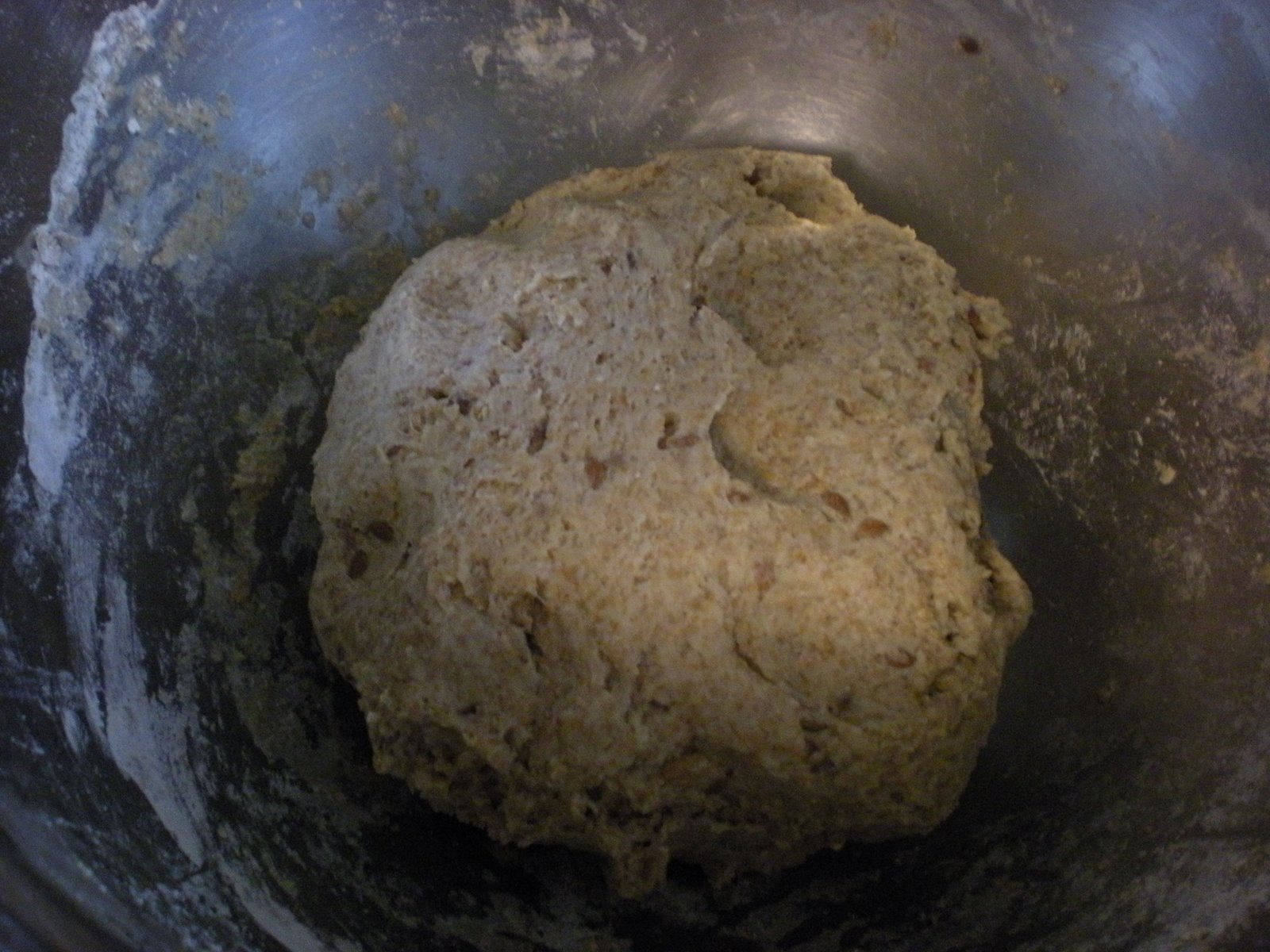
This is what Reinhart calls the “soaker.” It has no yeast in it, but basically any seeds and grains that need to be softened overnight go in here. It is 100% whole wheat. I added wheat berries and flax seeds. More seeds will go in later.

My bag of wheat berries I got at the Farmer’s Market! They aren’t so good milled and used as flour but maybe they will be tasty used whole.

So I let both of these sit overnight covered in plastic wrap and a towel, and then combined them with honey, pumpkin and sunflower seeds, a little extra flour, and some commercial yeast. This was tough work as the high-gluten bread flour dough did not want to mix with the wheat dough. I can understand why Reinhart suggests you cut each pre-ferment into small pieces and then mix together. But I am too lazy for that.

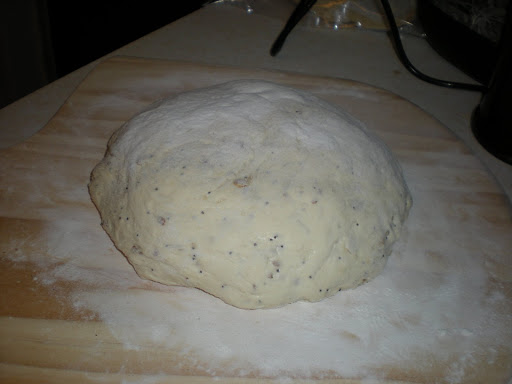
Then I let it sit for an hour and rise a little bit. I preheated the oven to 425 and slid my dutch oven in to warm up. Then I moved the dough onto a piece of parchment paper and covered it with plastic wrap and a towel for its final rise.

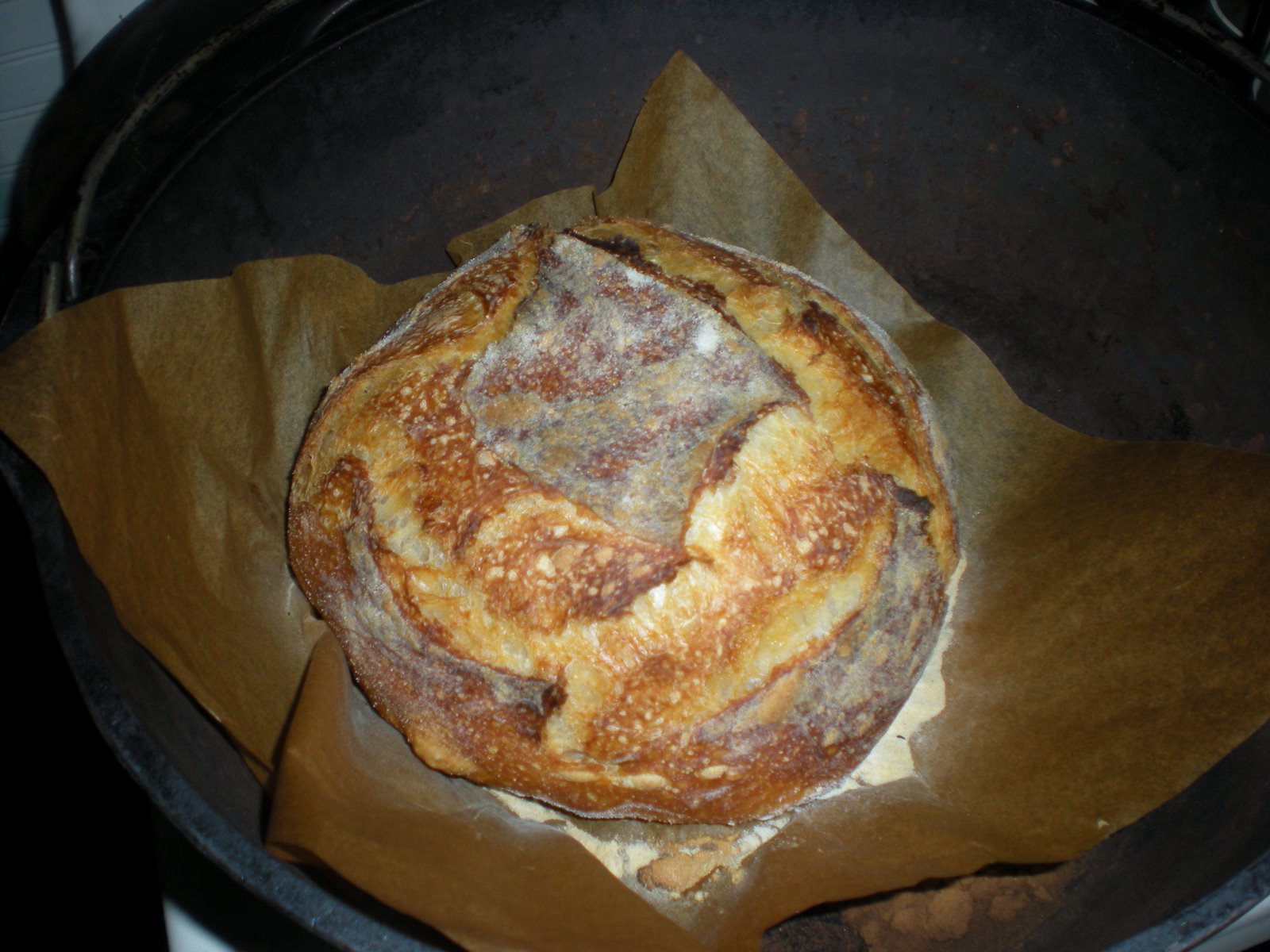
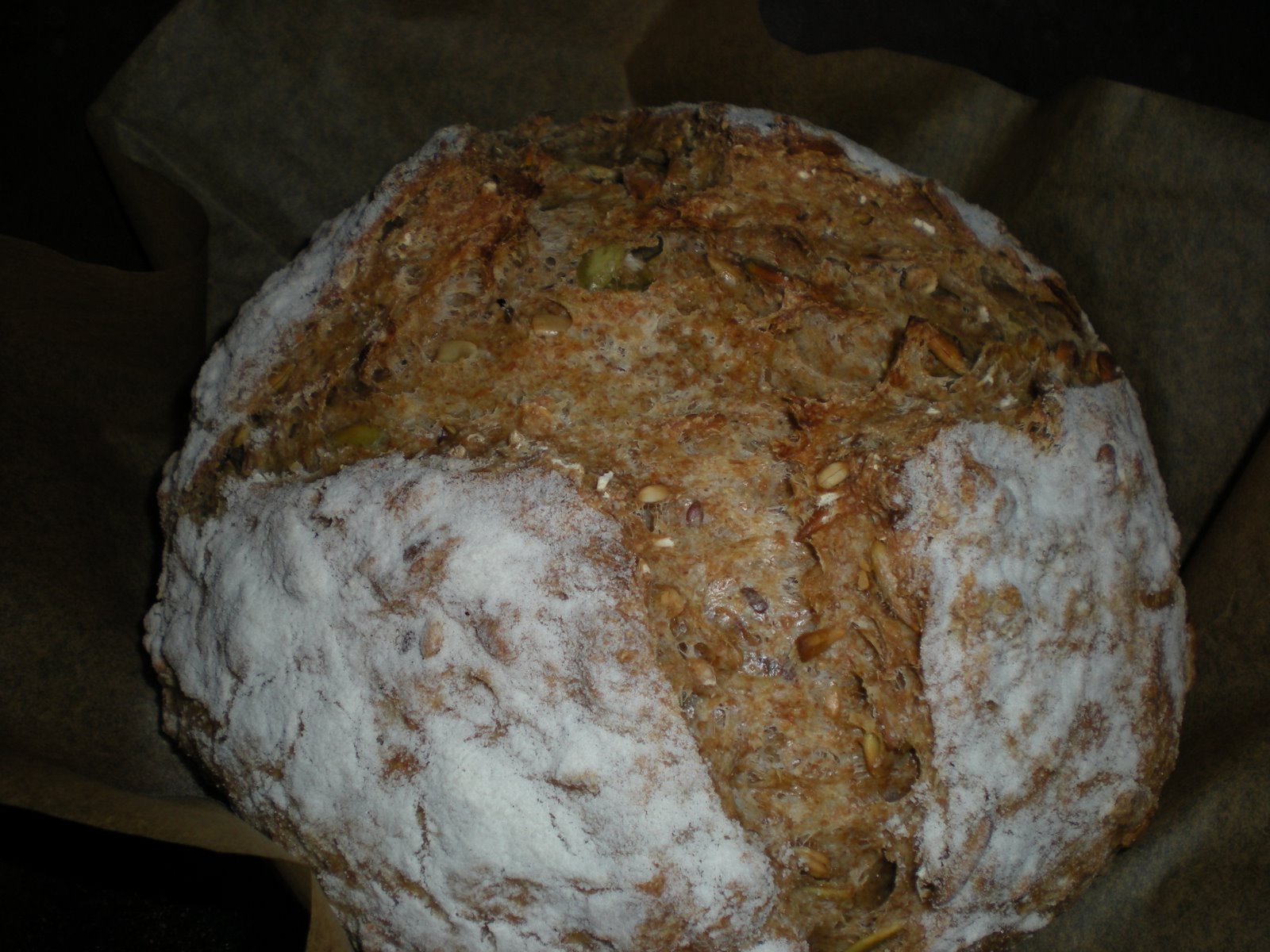
When the oven is ready, remove the towel and plastic wrap from the dough and score with a sharp knife or razor blade. Using the parchment paper as a sling, carefully open the dutch oven and place the bread into it, replacing the lid after. When the bread has baked for thirty minutes, take the lid off and bake for another twenty minutes. When the bread sounds hollow, remove it to a cooling rack. The parchment paper will come right off when the bread is cool.

Why I like making bread from Peter Reinhart’s book: sometimes mine looks better than his. Take a look.

His:

Mine:

A note to cookbook writers: it can give a new baker enormous confidence when your book is not full of impossible-to-obtain bread glamour shots.

But how does it taste? Hearty, nutty, crunchy in parts, but overall incredibly soft and delicious.

So, success! Next time, we take on Reinhart’s volkornbrot!

my absolute favorite bread

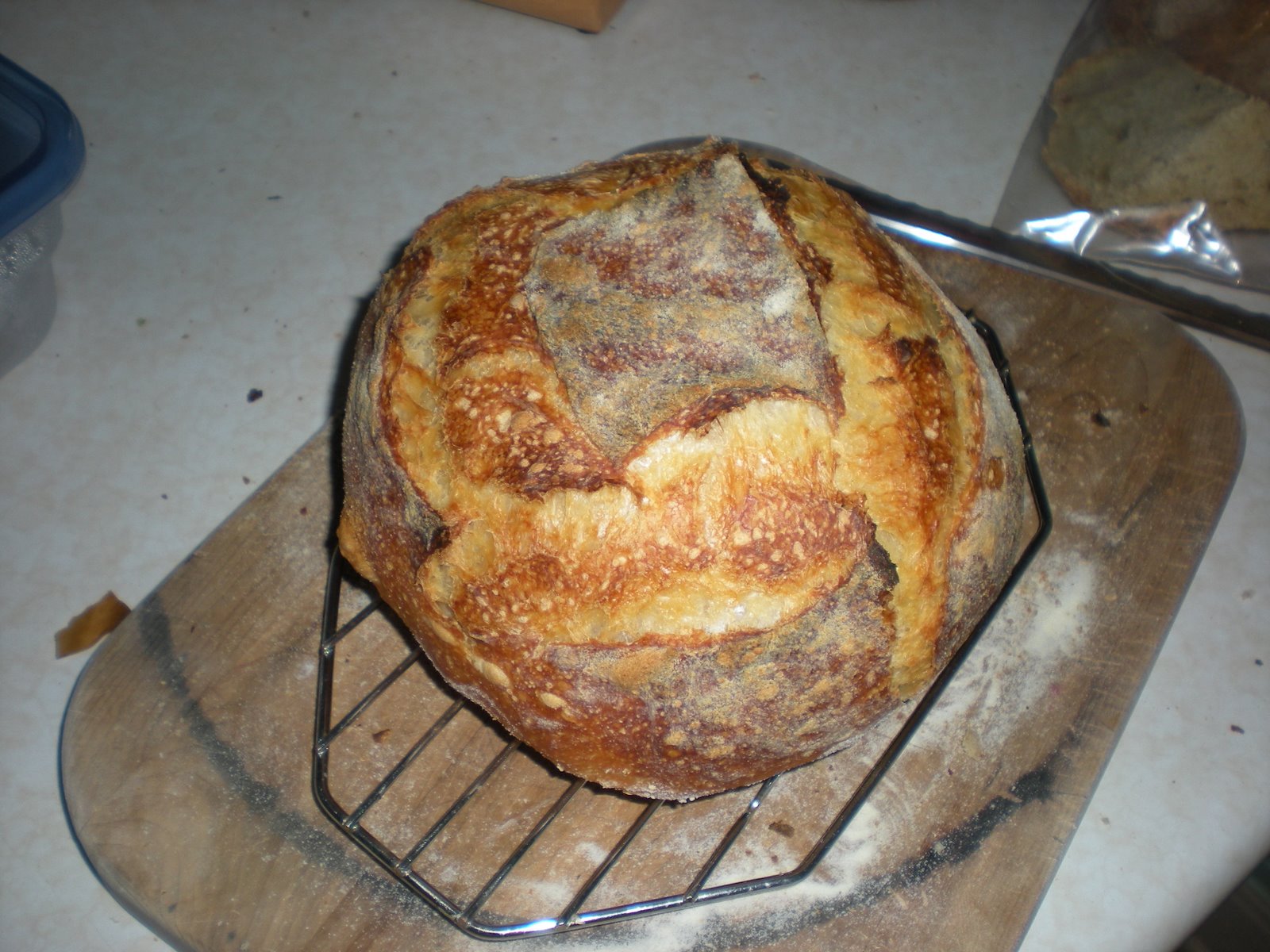
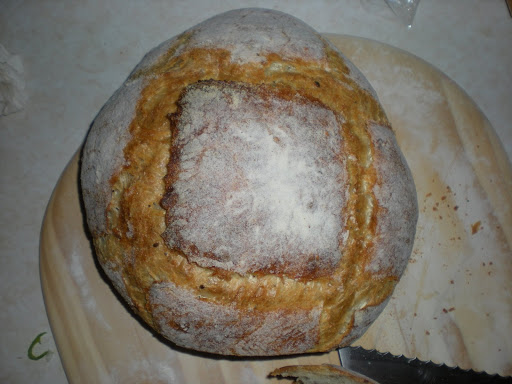
My favorite bread in the whole world is a very simple sourdough white/wheat mix. It’s just starter, flour, water, and salt. It’s based on Sullivan St.’s no-knead bread recipe, made famous by Mark Bittman of the New York Times. After making it a few times, I’ve tweaked the recipe to use less water. I also added starter instead of commercial instant yeast. The resulting loaf has a very complex, tangy flavor that makes things interesting.


I added some flax seeds in it this time. What’s nice about the recipe is that it is so simple you can really throw in anything you want. Oatmeal, honey, beer, sunflower seeds, you name it.

The bread:
125g starter
250g water
375g flour (any combination, although I would probably use no more than 25% wheat.)
6-7g salt

mix together, then cover with plastic wrap and a dish towel. Let rise overnight. After rising, punch down and shape. Put your dutch oven or pizza stone or ceramic tiles into the oven and preheat oven to 500 degrees. Put bread in the oven and turn the heat down to 470. Bake for thirty minutes, then take the dutch oven lid off. Bake 15-20 minutes more until golden brown and crusty looking. Let cool completely before slicing.