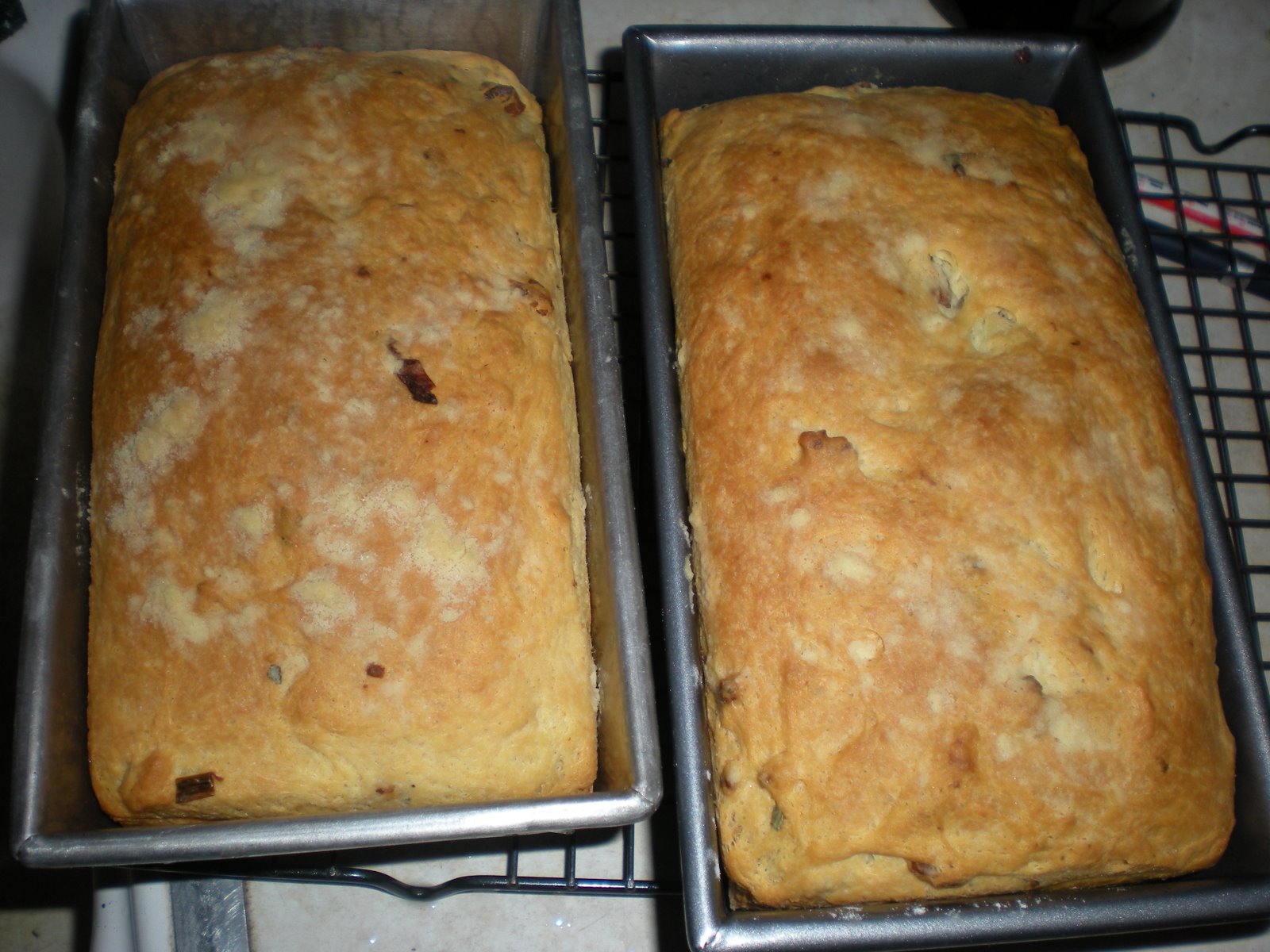
Kugelhopf au lard, part II

The last time I blogged about this bread was six years ago, and it was the laziest post I think I’ve ever written.

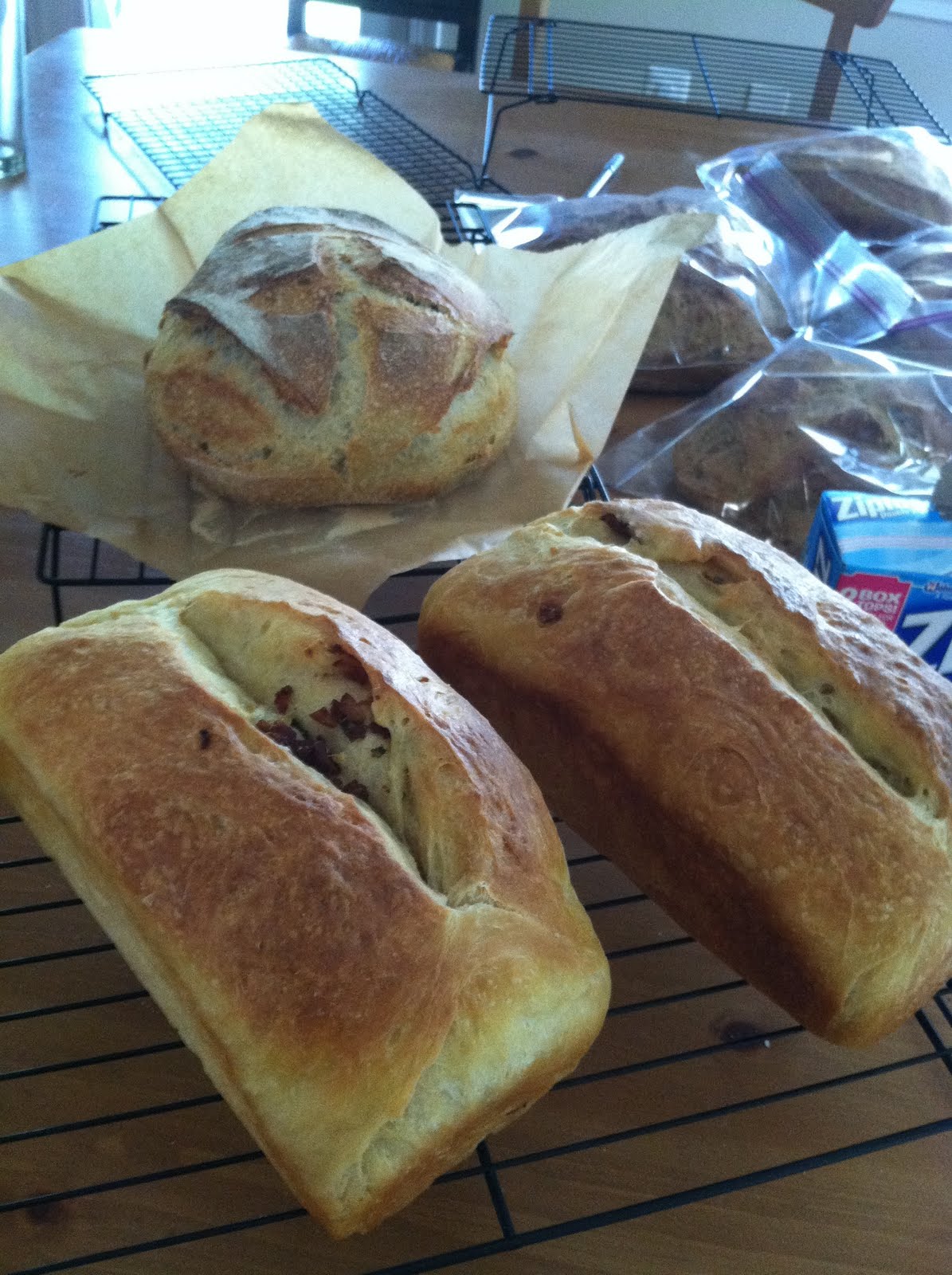
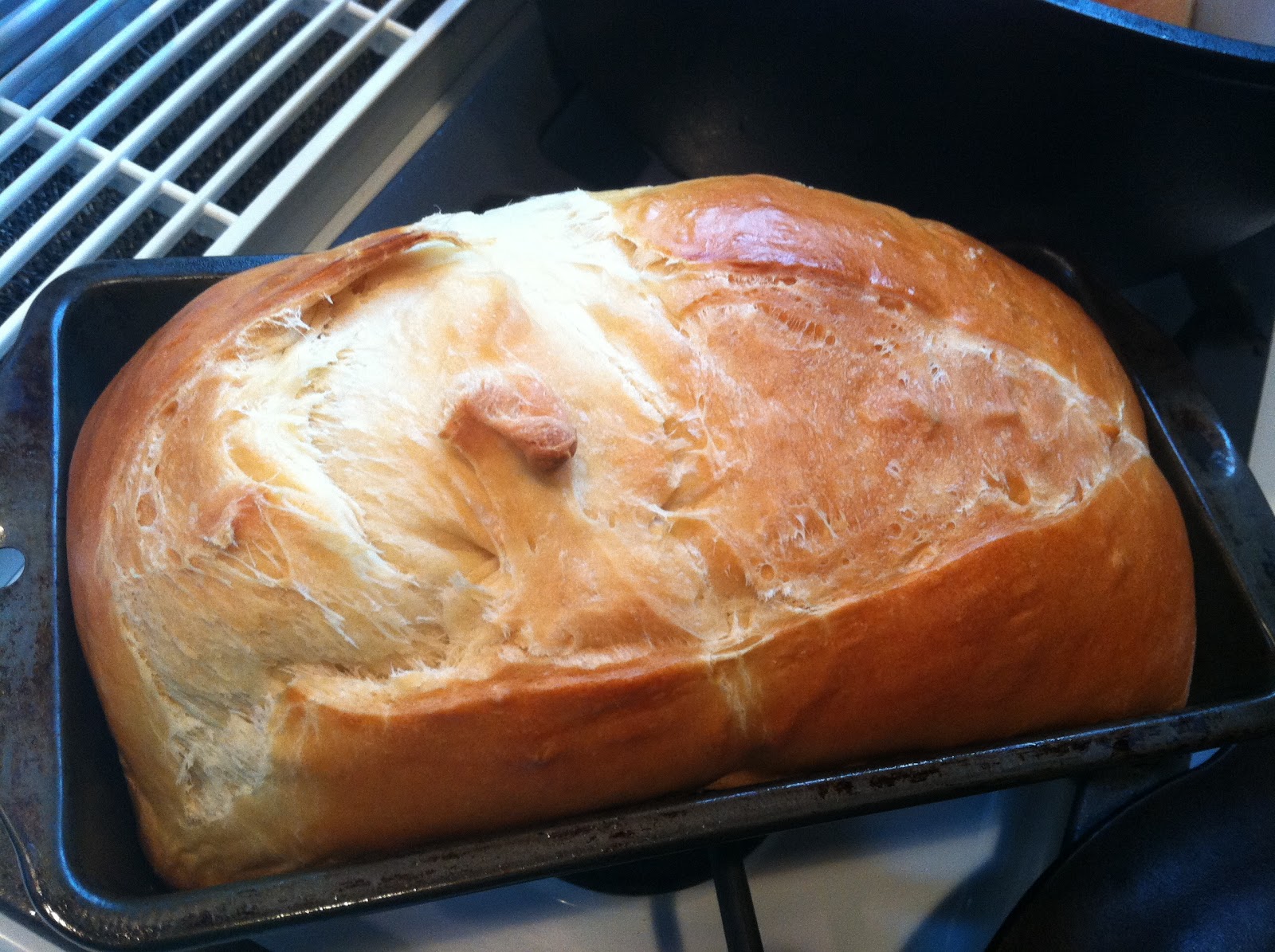
Here it is in all its glory:
——————————————————————————————————————

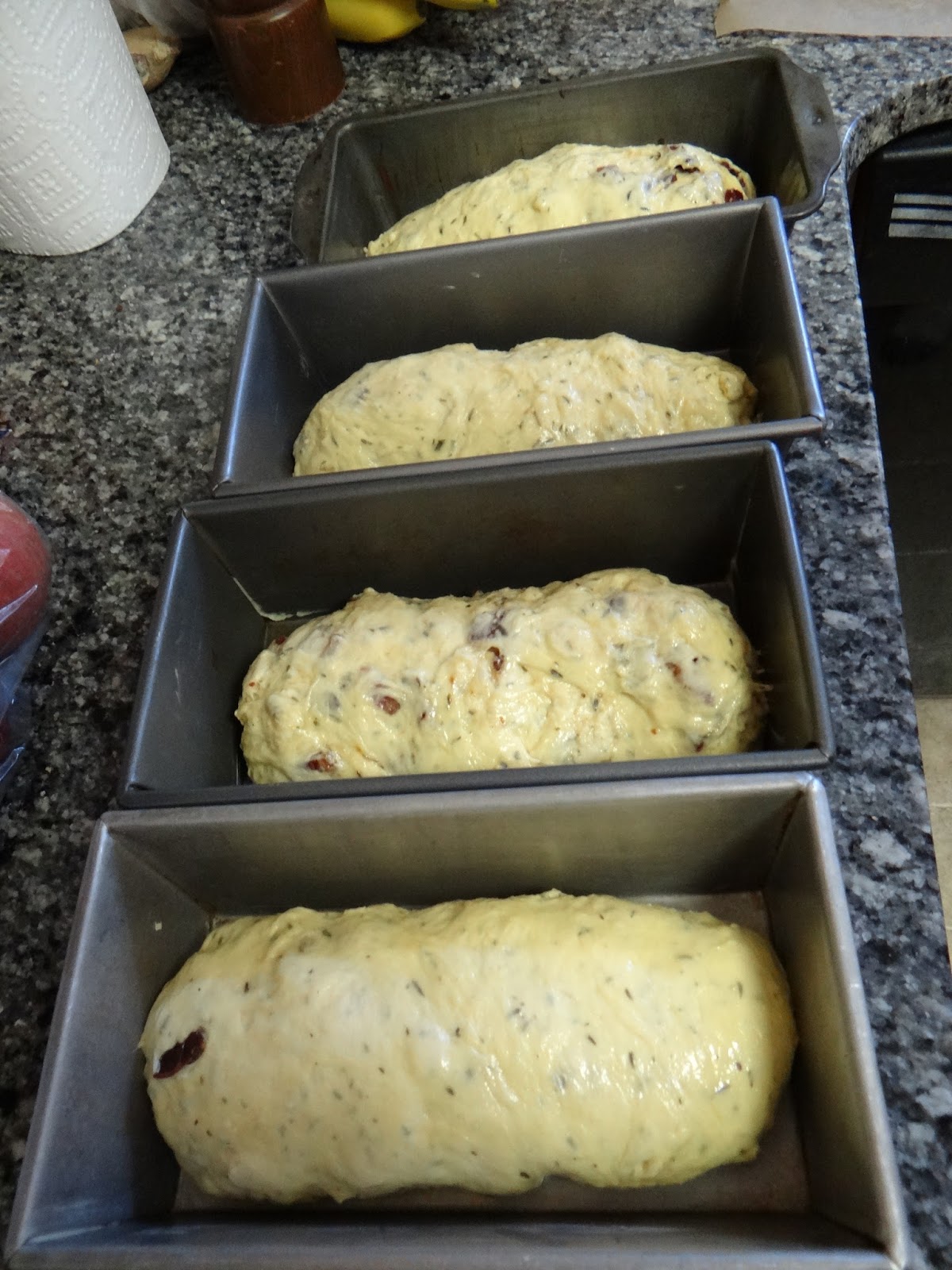
So, as some of you know, Mr. Bread Maiden and I are the proud owners of Jennifer McLagan’s Fat cookbook, and we’ve been working our way through it. Perhaps the most interesting recipe we’ve tried so far is what I made yesterday, kugelhopf au lard. I’ve been on this fruit bread kick lately, so you might be asking why the sudden shift to savory. Well, this bread is actually very similar to the stollen. It uses mostly the same ingredients, in the same order, except at the point where one would add fruit to the stollen, you add instead bacon, shallots and sage. 
The reason this recipe jumped out at me initially was the title. This dish comes from the Alsace region, and the German-French fusion could not be more obvious. The dough is very German, with its eggs and milk, but the french added shallots and sage and made it lighter. Brilliant.
Because yesterday I was busy making three recipes at a time, I didn’t get to take as many pictures or pictures of every step. So until I make another one, these will have to suffice.
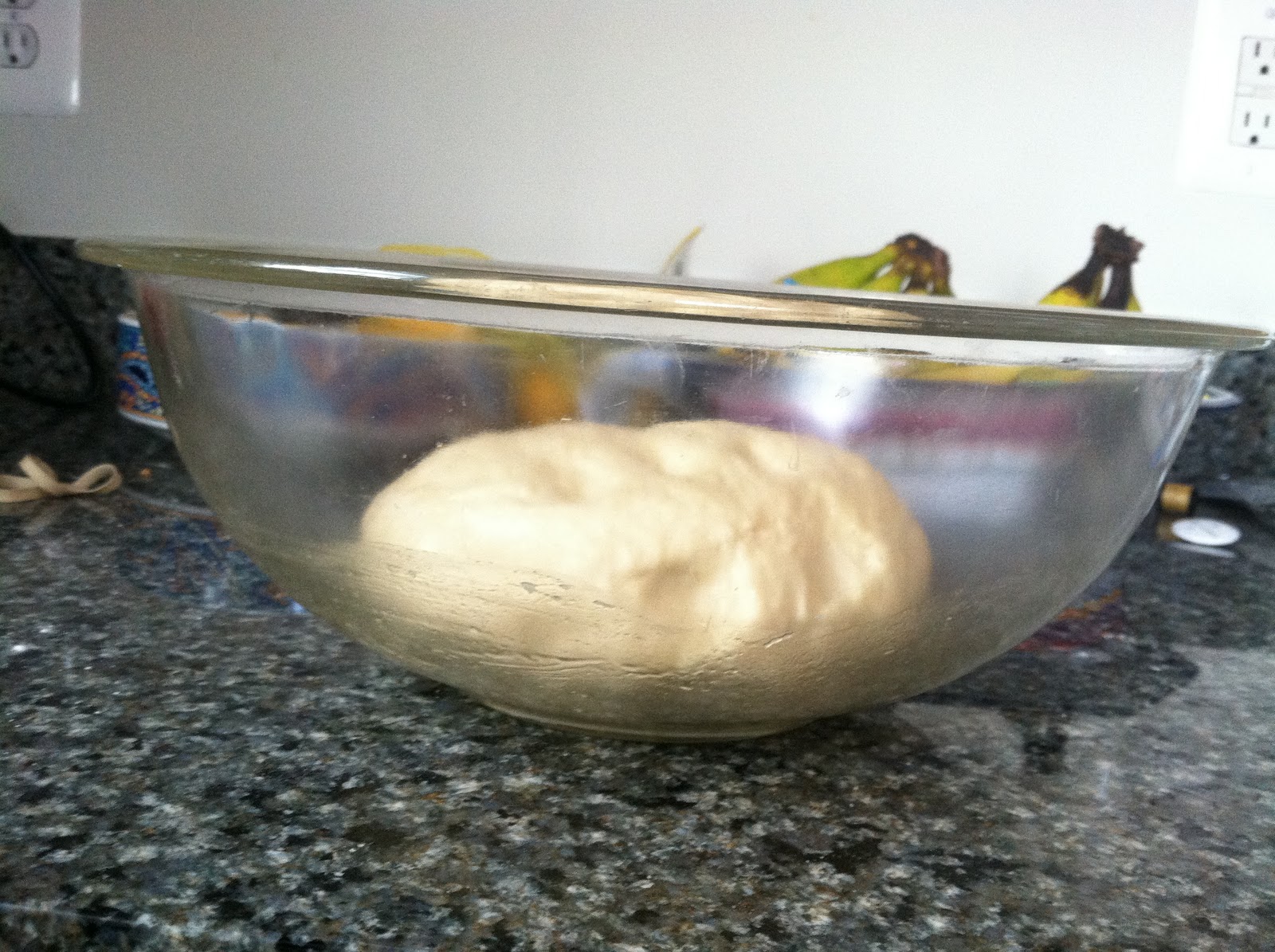
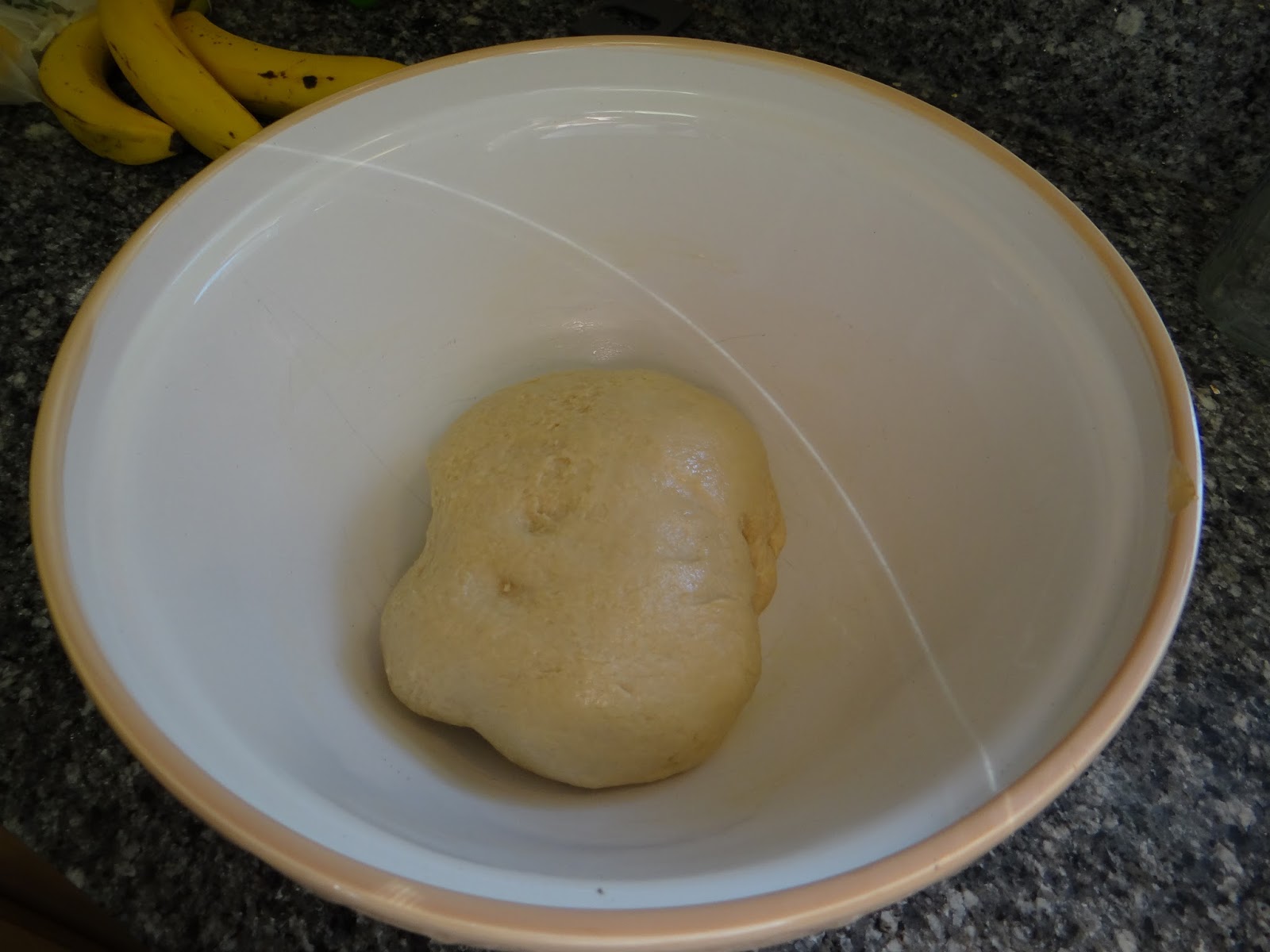
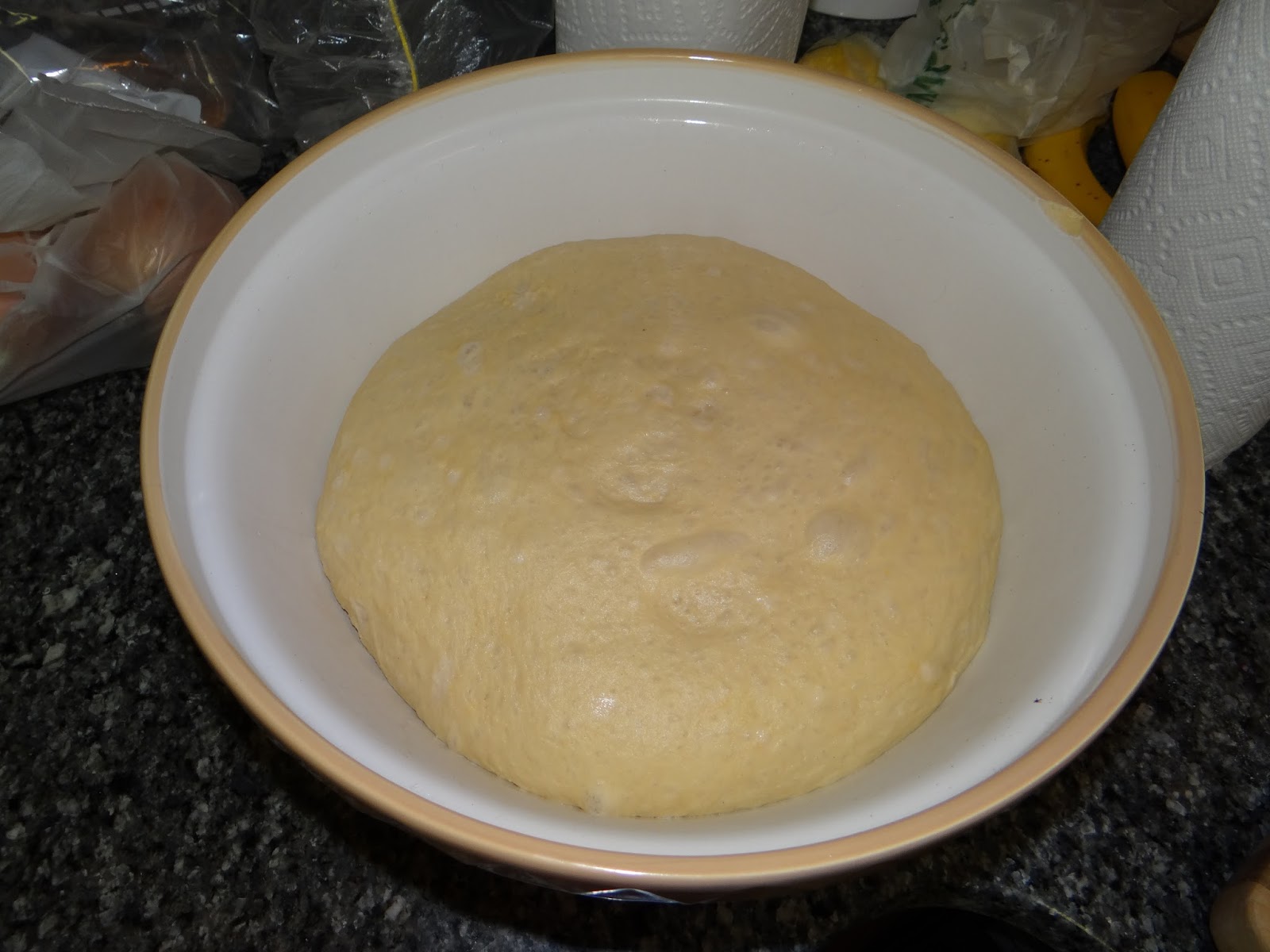
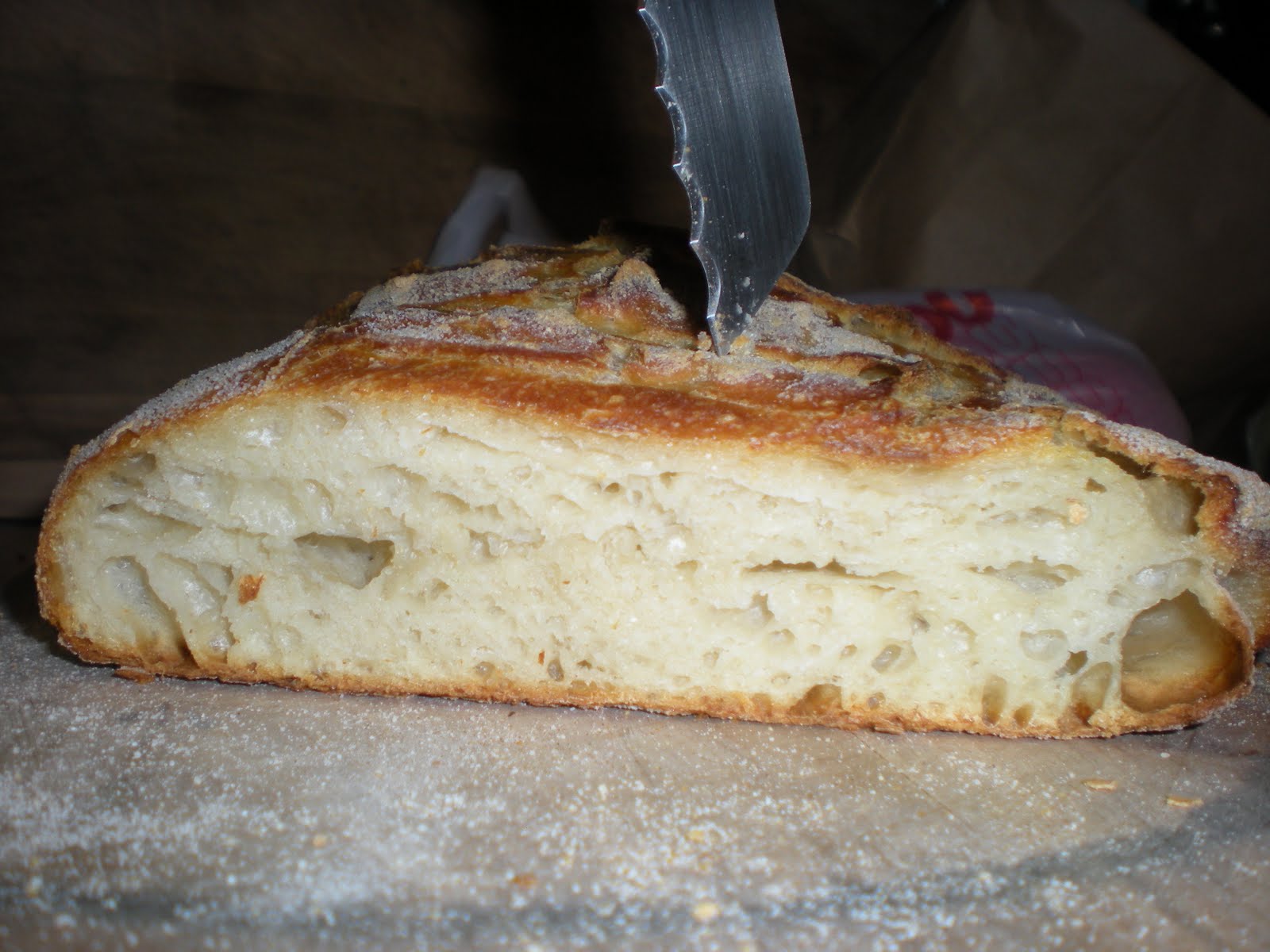
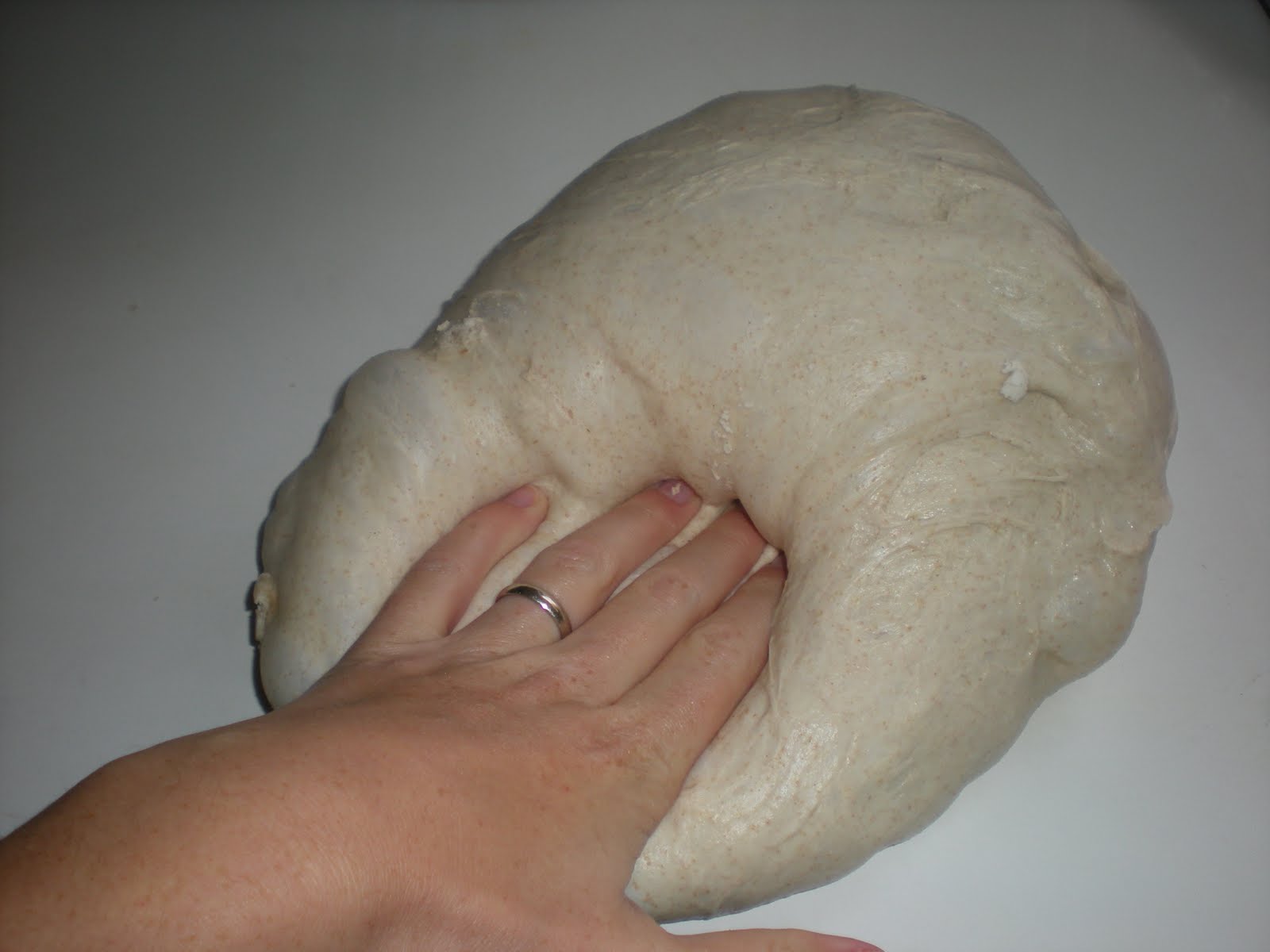
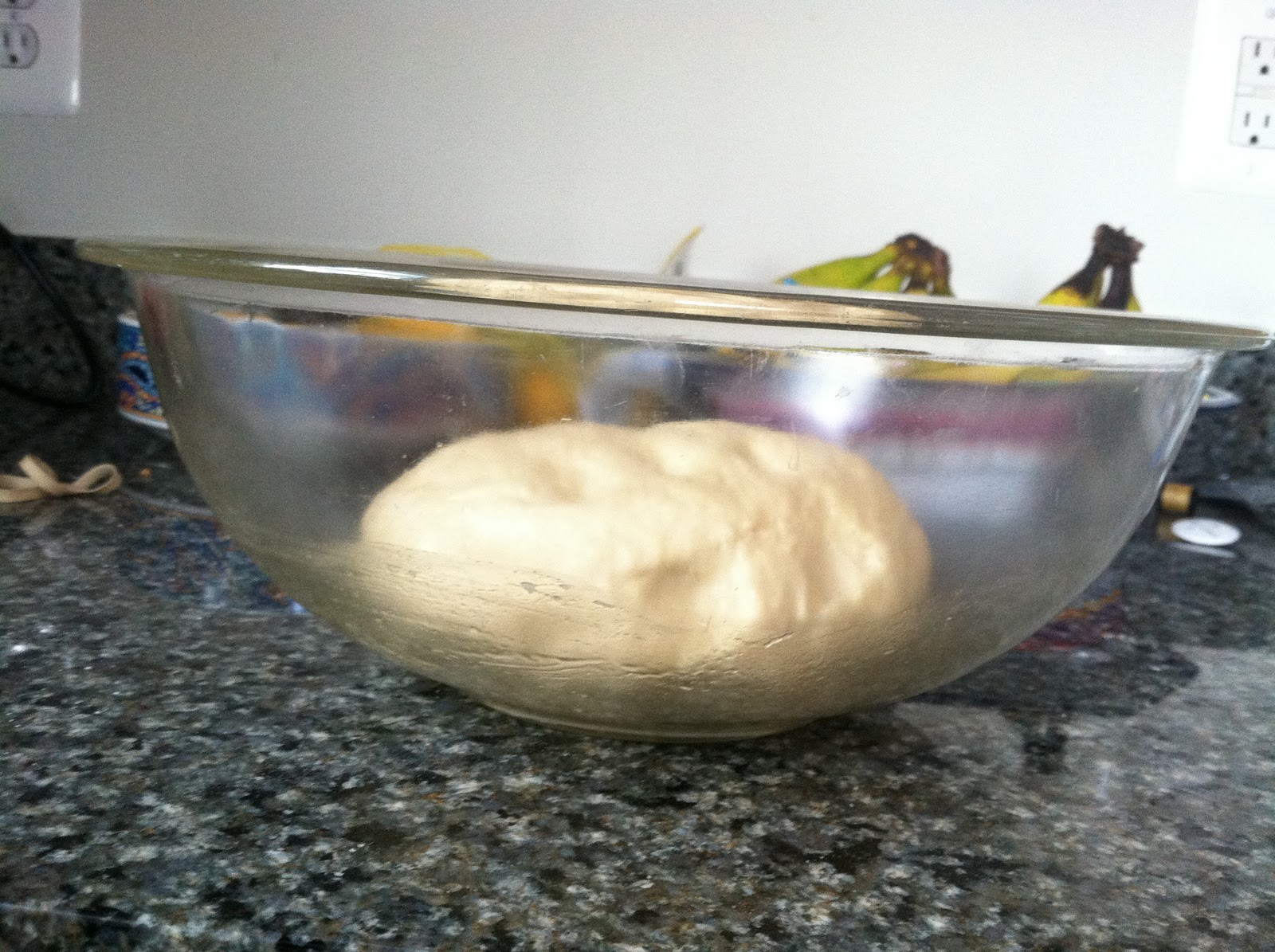
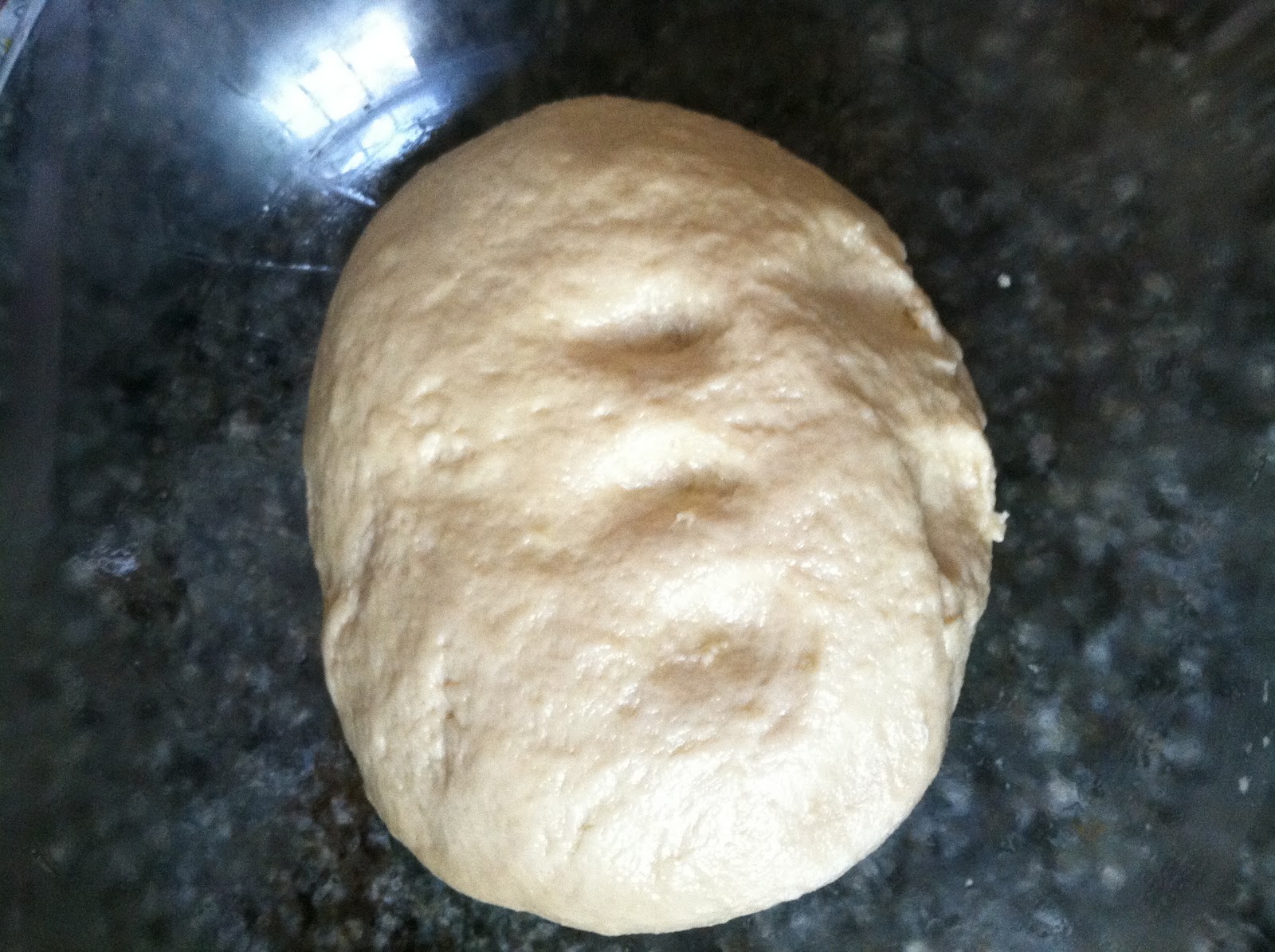
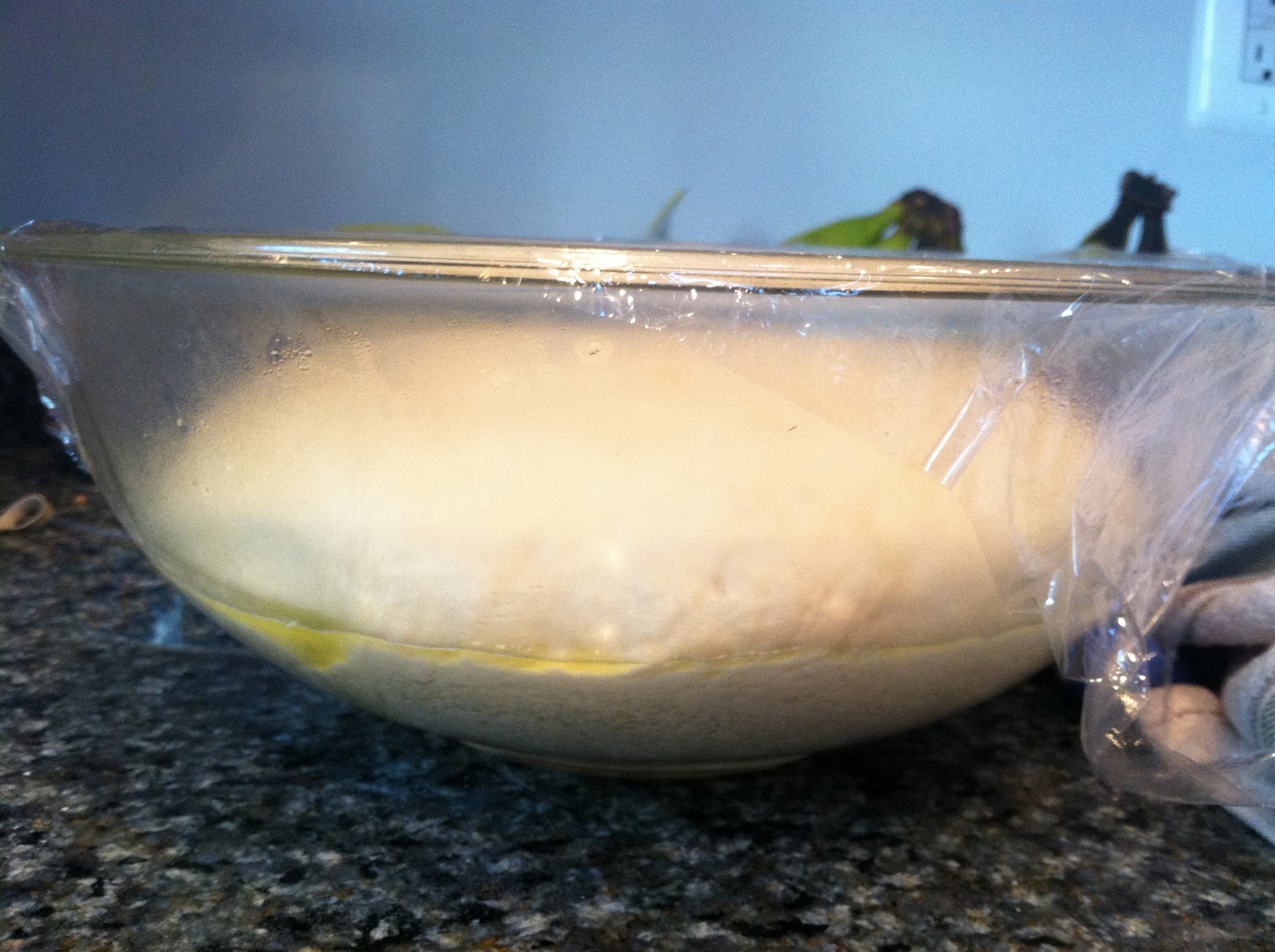
The milk and eggs in this recipe make the dough so wonderfully light (until you add the grease and bacon). The dough was so oily it was hard to manage. But it rose beautifully both times. 
______________________________________________________________________

That’s it!  That’s the whole thing!  I didn’t have a chance to take pictures, the end.

Obviously I will be taking another crack at it.  Because Kugelhopf au lard is a fantastic recipe and it deserves to be shared with the world.
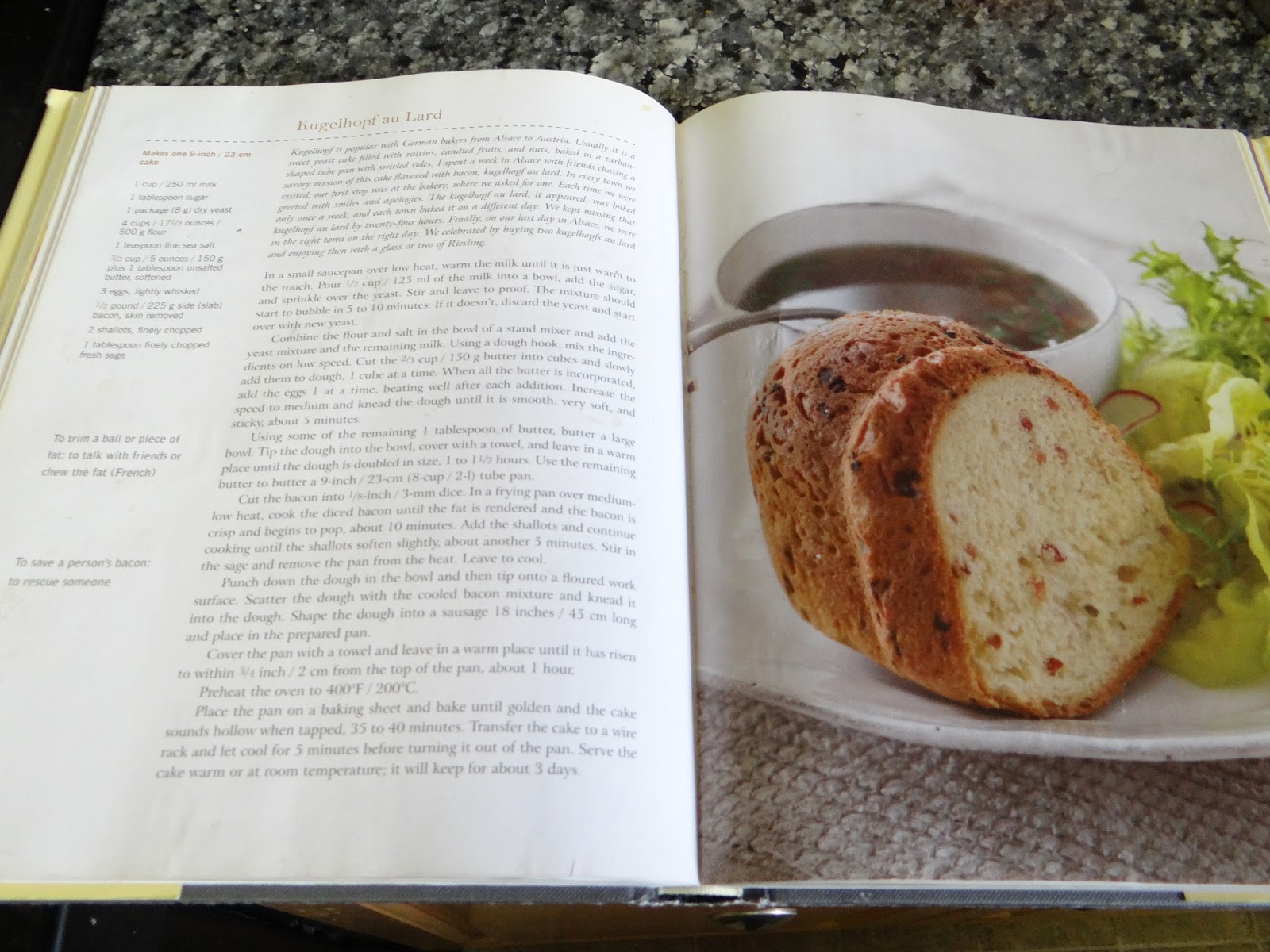
The cookbook where the recipe comes from, Fat by Jennifer McLagan, is awesome.

You will need (for four loaves):

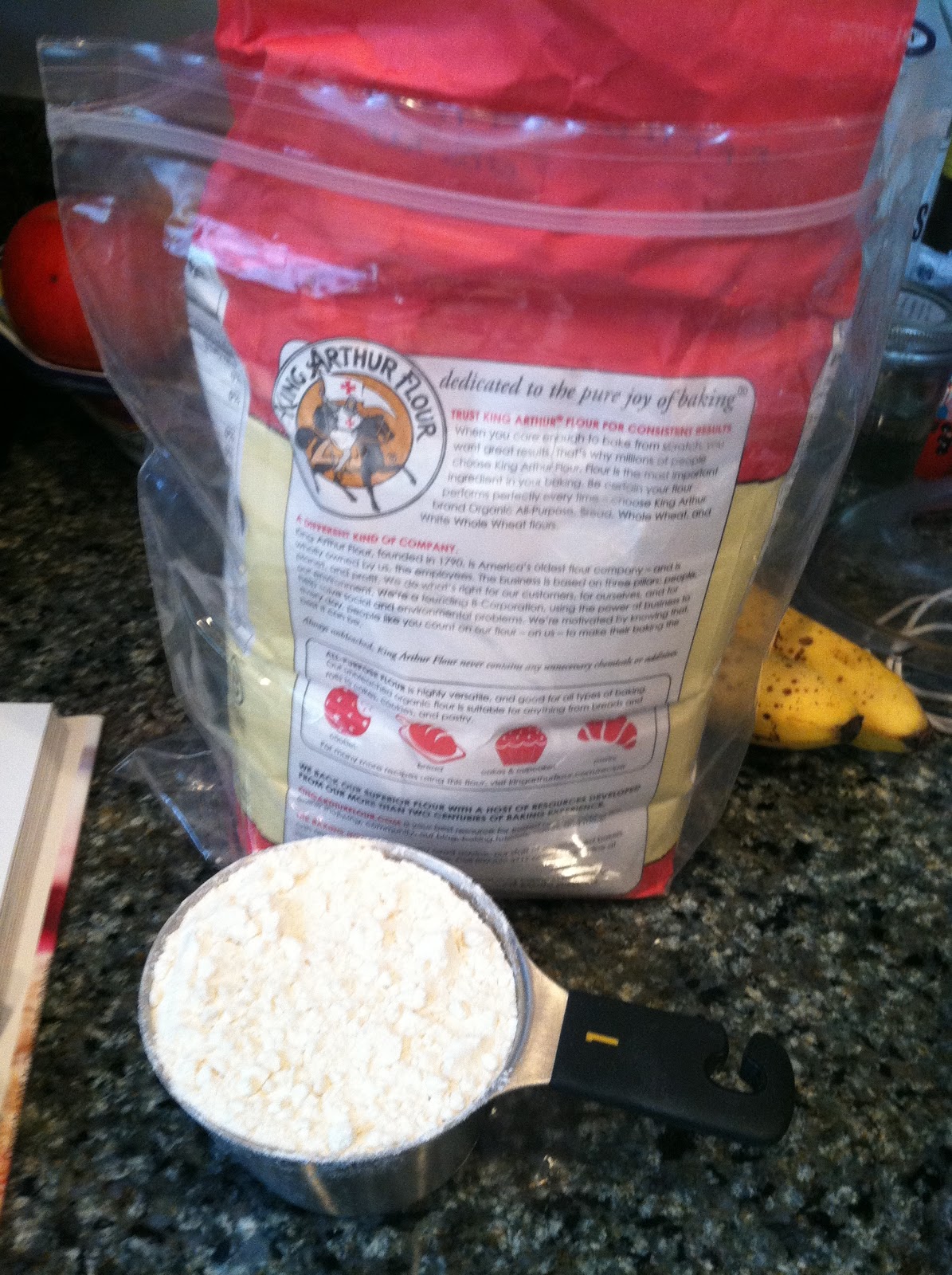
8 cups (1000 g) all-purpose flour
2 teaspoons salt
6 eggs
2 cups (500ml) milk, warm
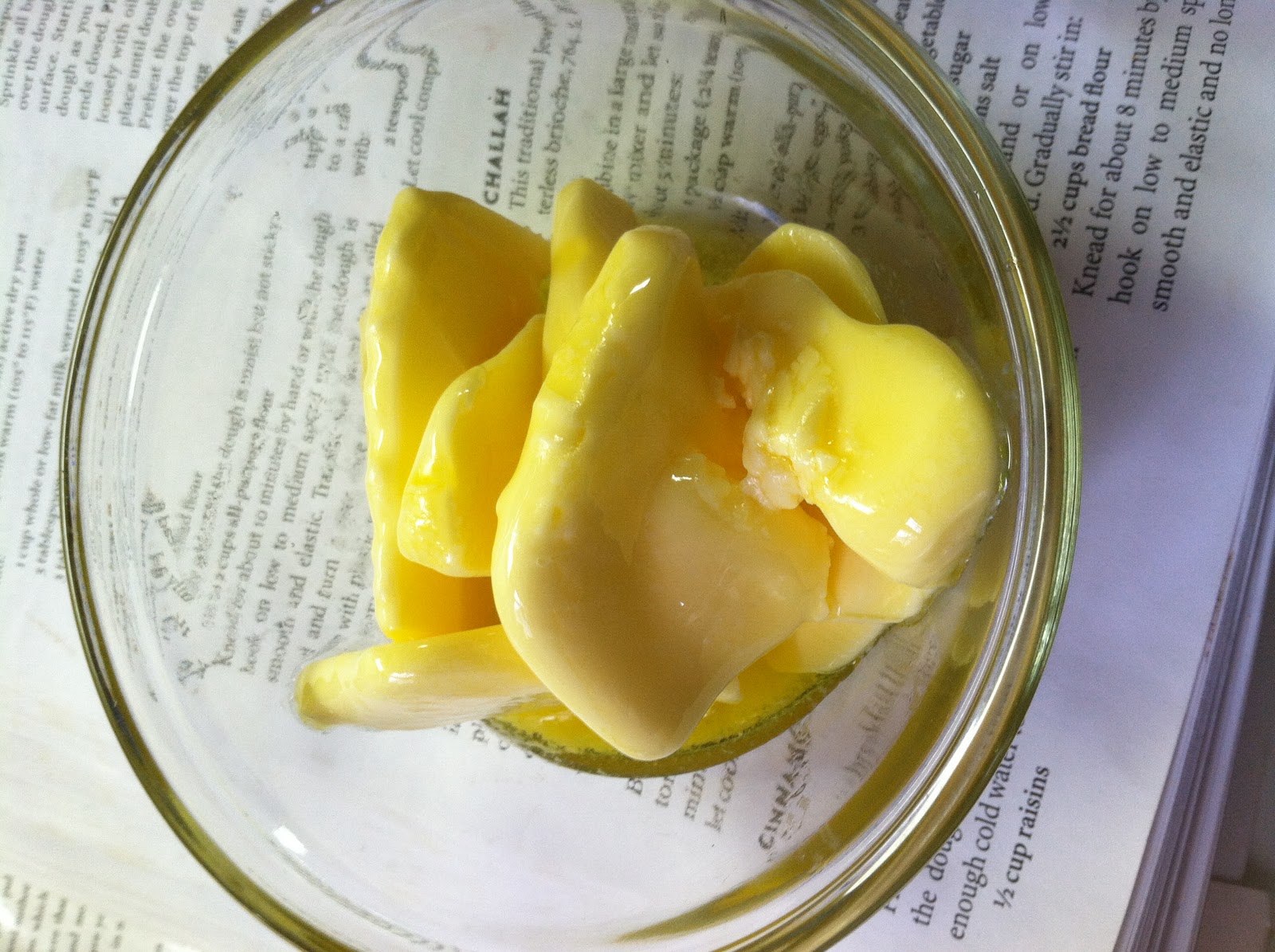
300 g butter, softened plus another tablespoon or so to butter a large bowl and four bread pans
2 shallots, diced finely
2 tablespoons thyme or sage
1 pack of bacon, thick-cut
4 teaspoons yeast
2 tablespoons of sugar
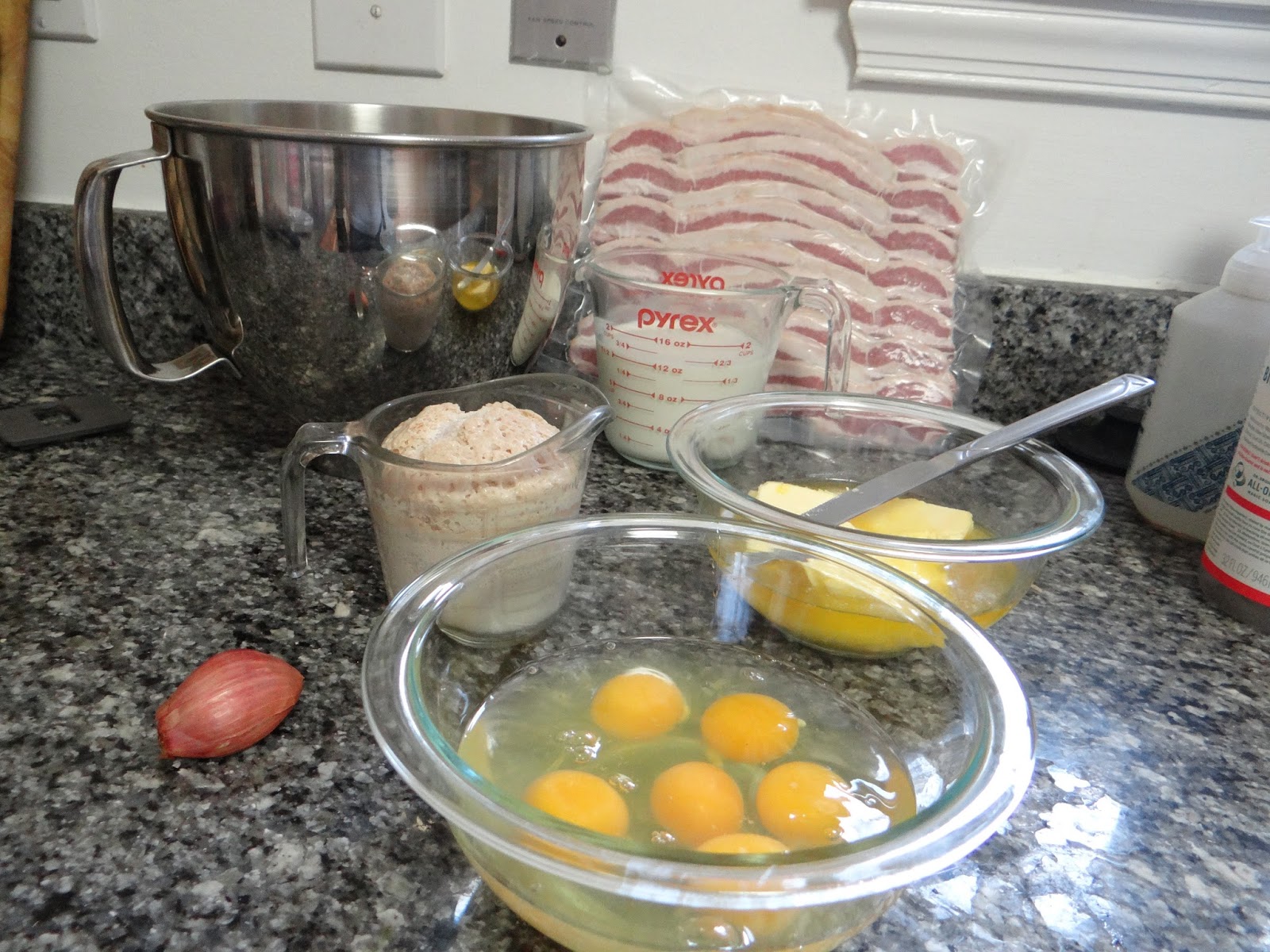
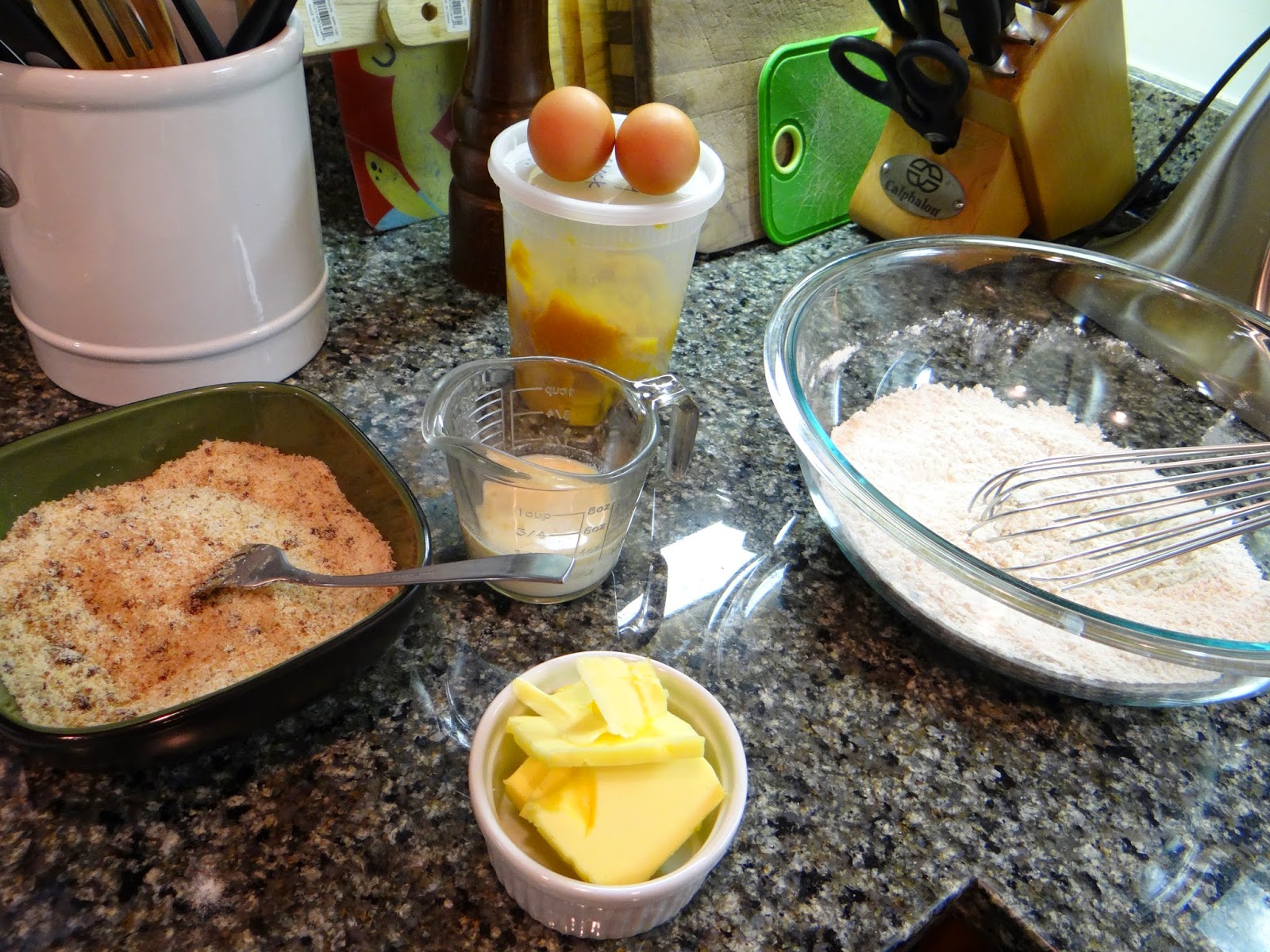
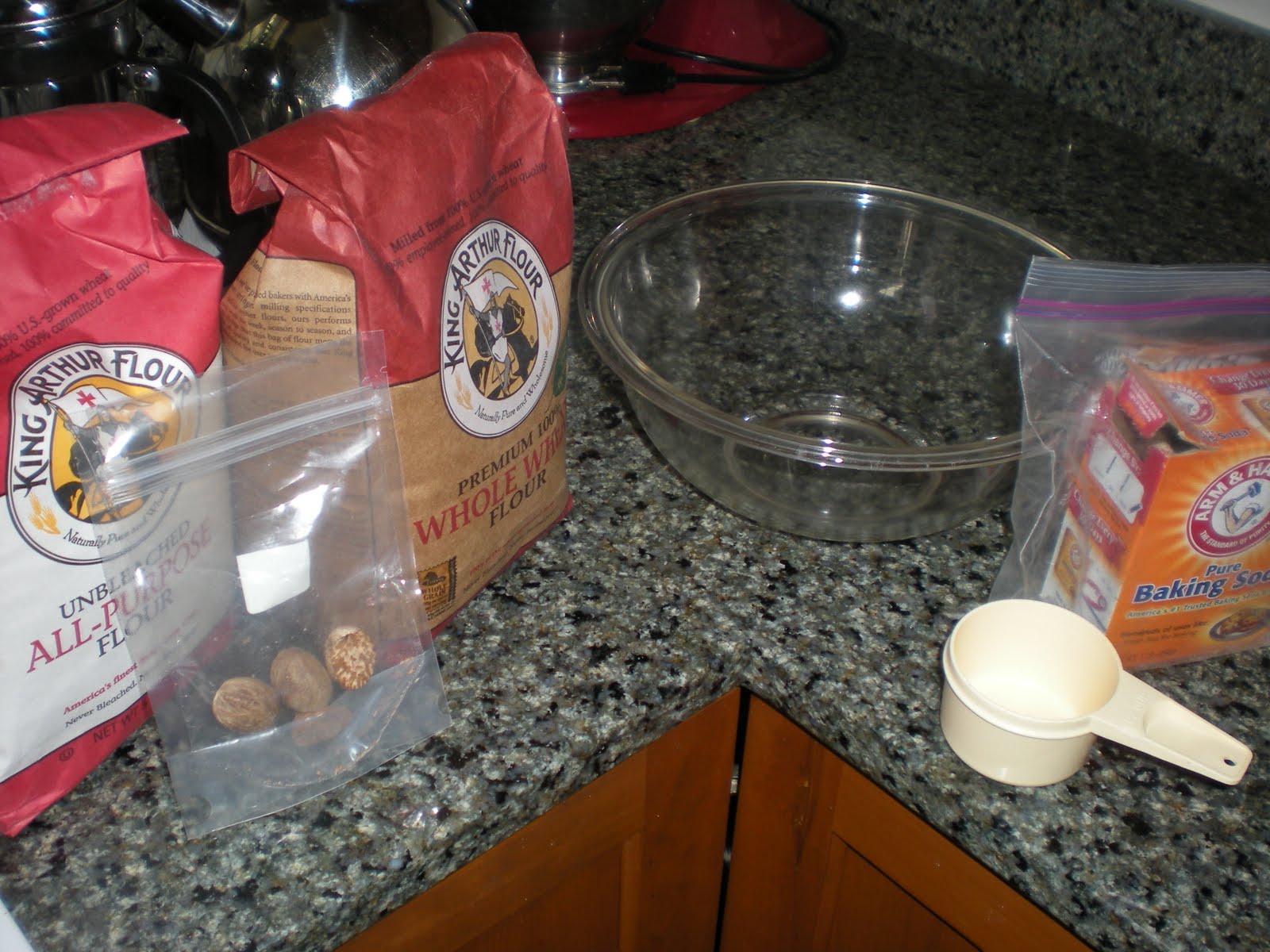
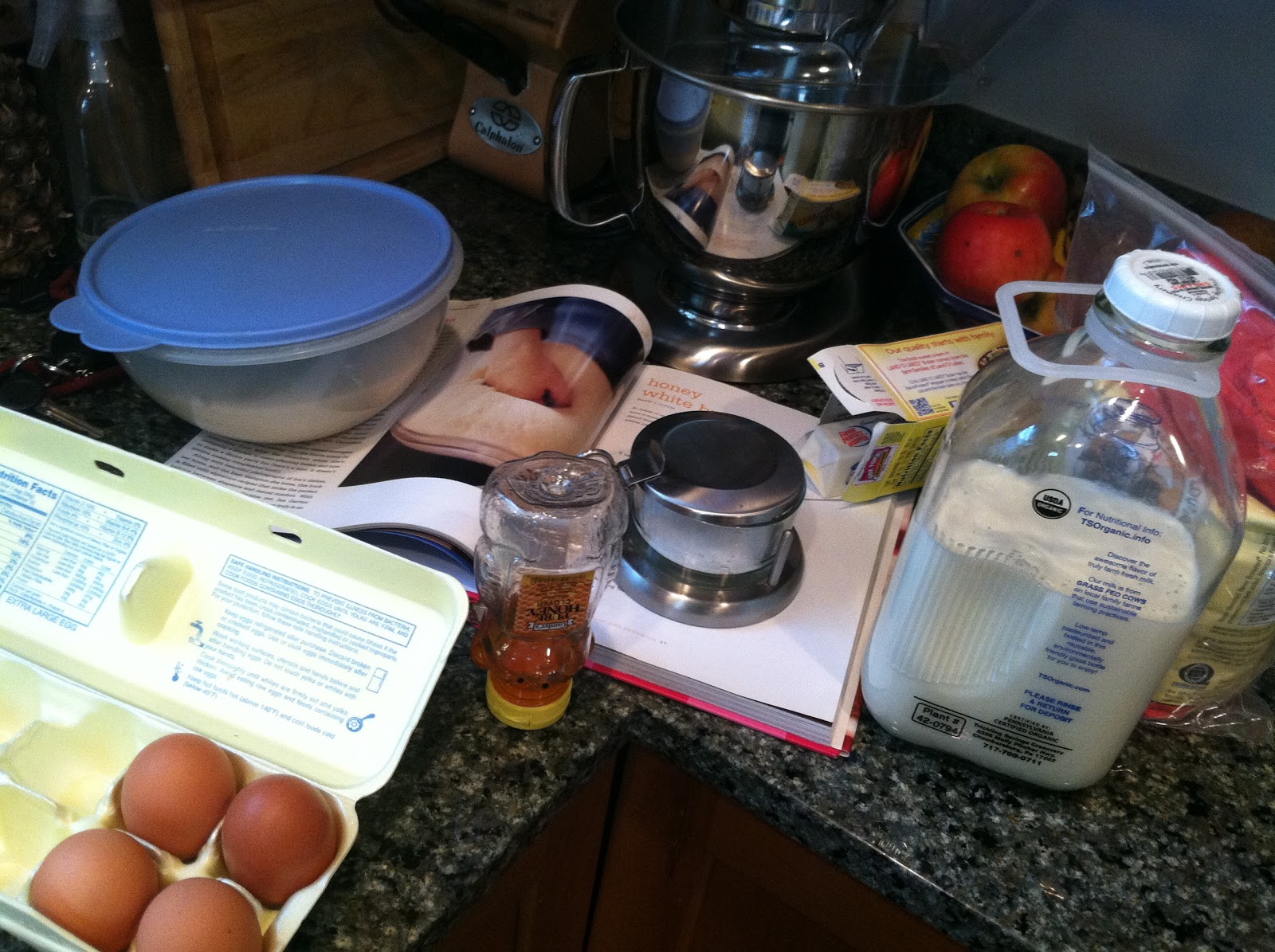
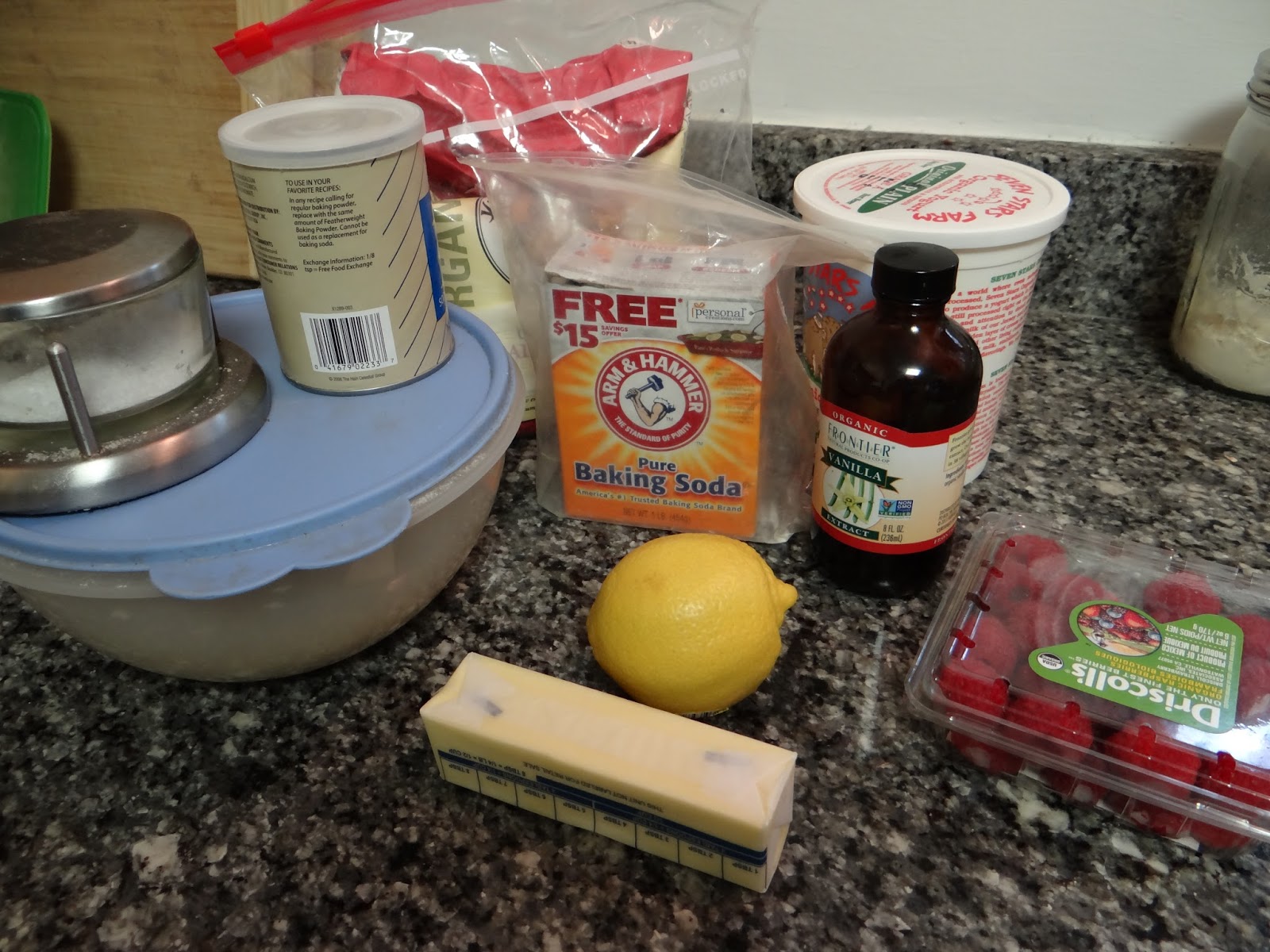
Here’s a picture of the ingredients in mise en place, also because in the first shot I forgot to show the bacon!

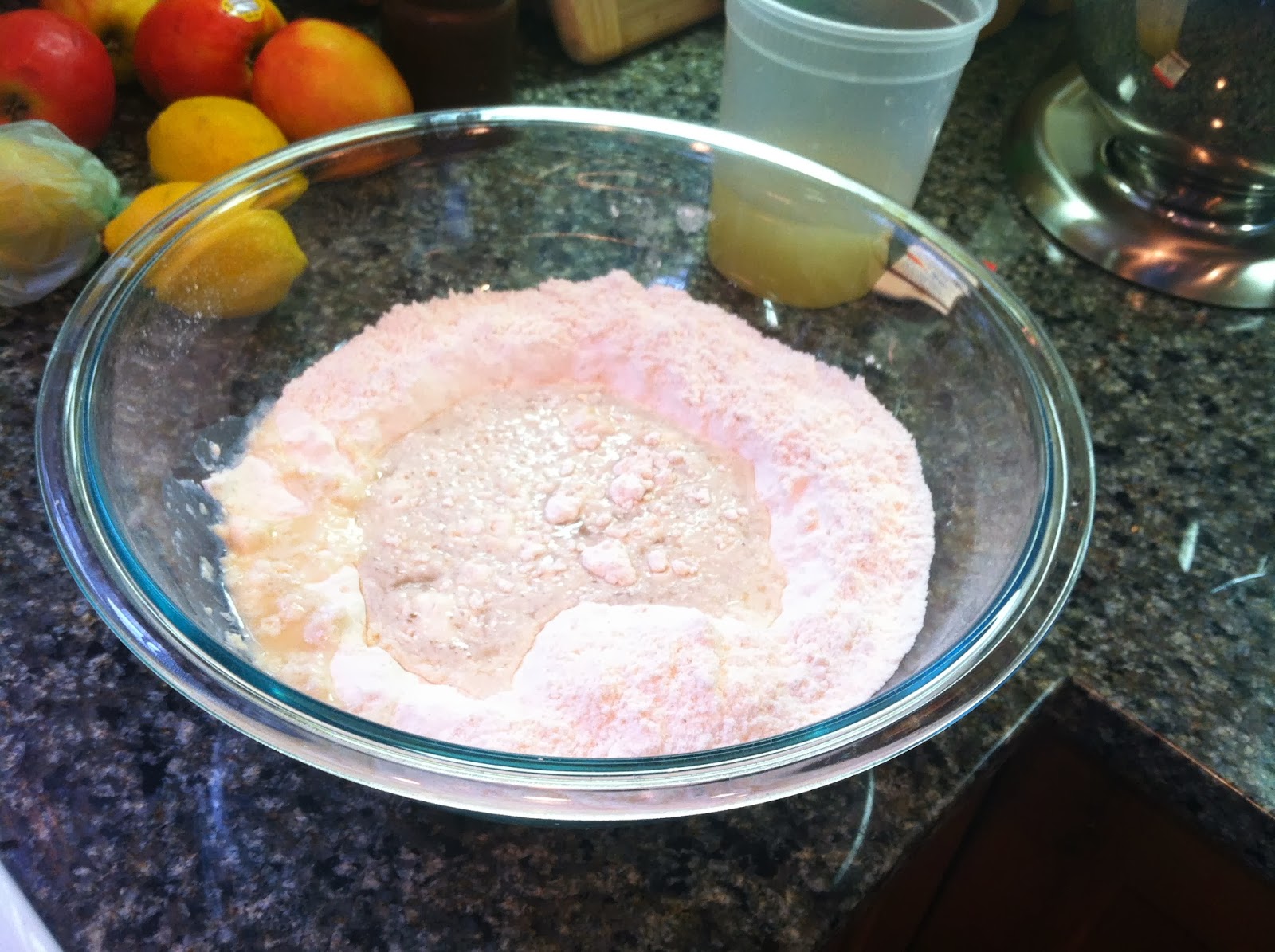
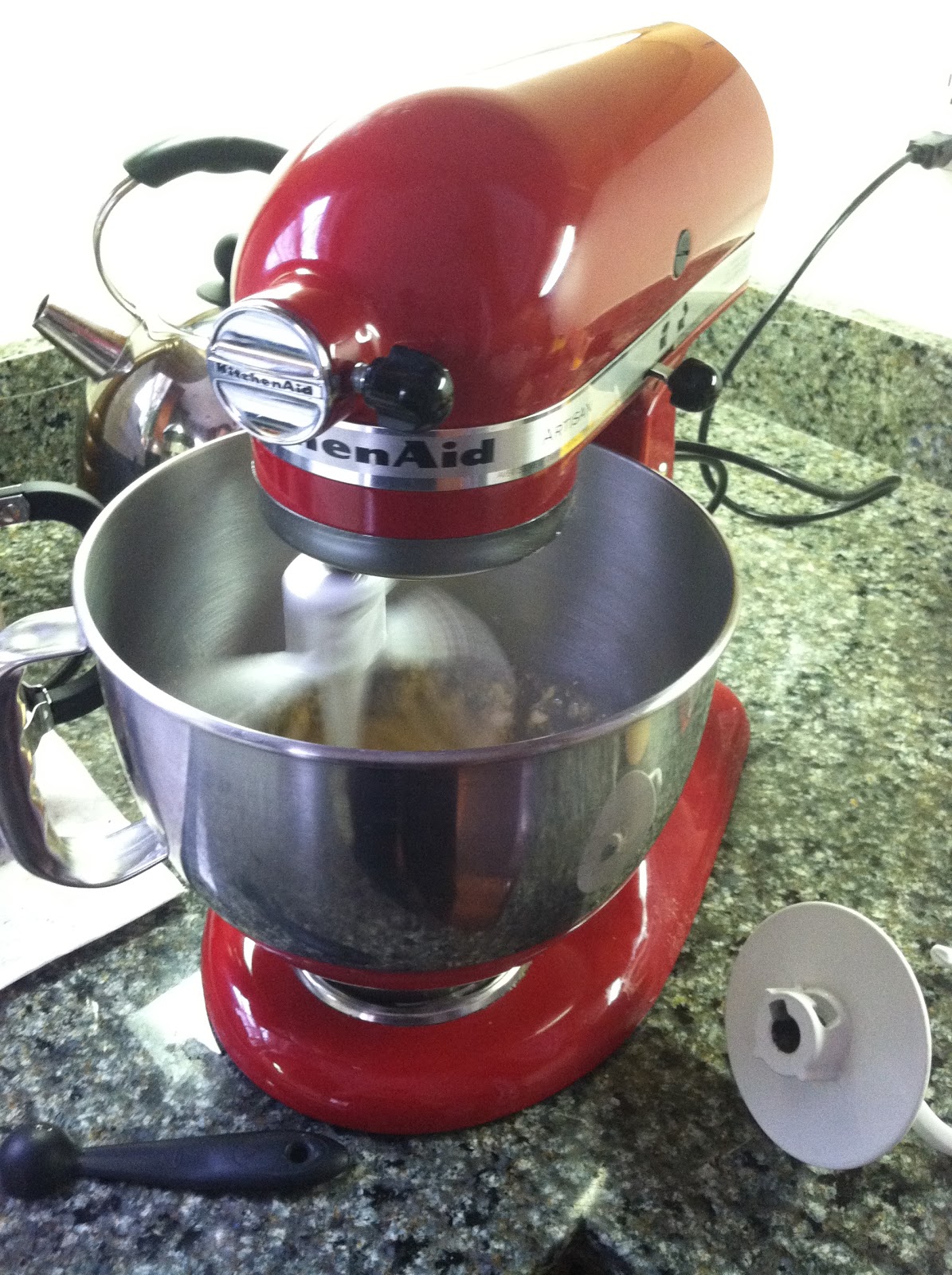
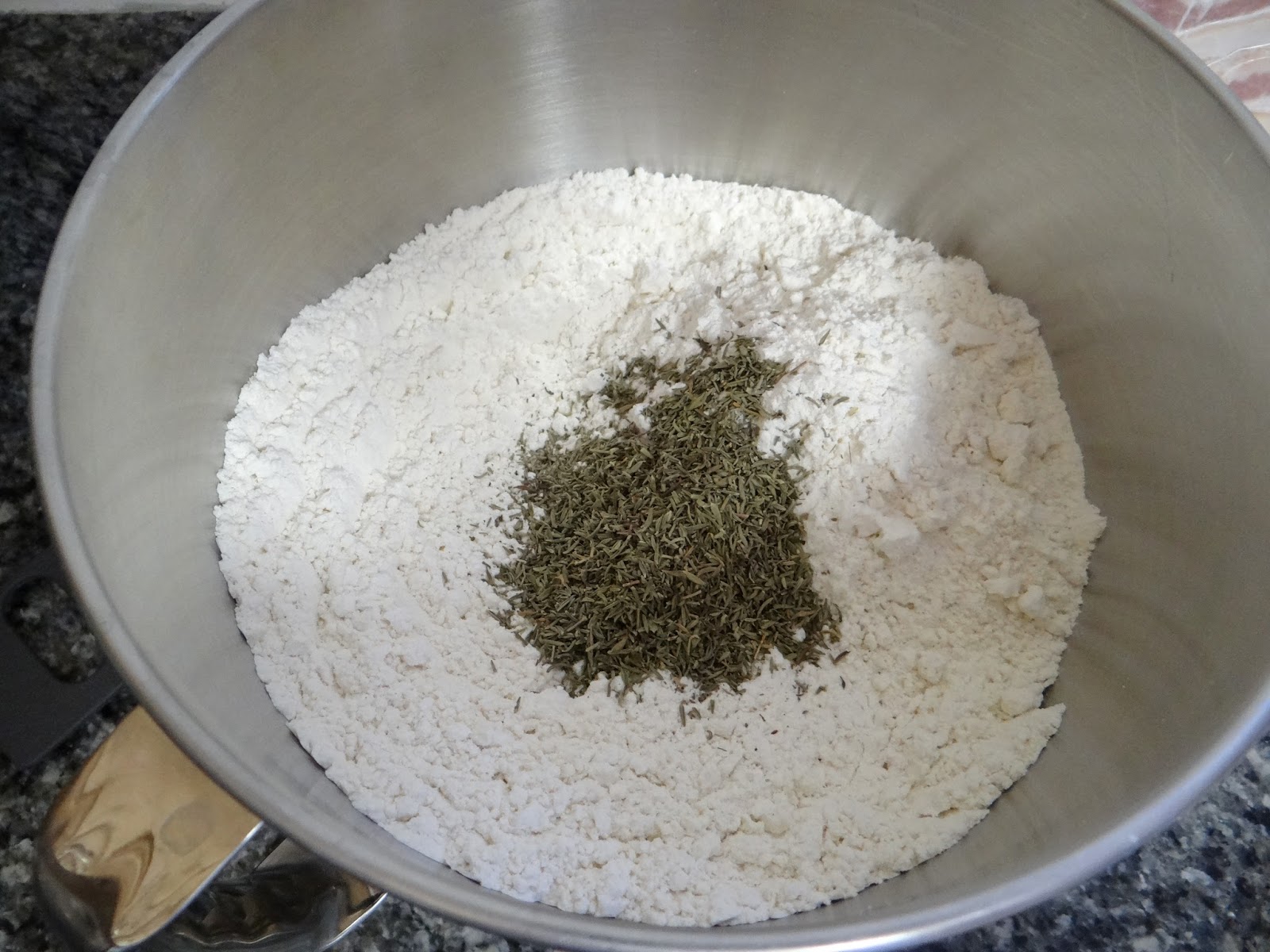
1. In the bowl of a stand mixer (with the paddle attachment), whisk together the flour, salt and thyme.  The original recipe calls for fresh sage, but I didn’t have it so I used dried thyme.

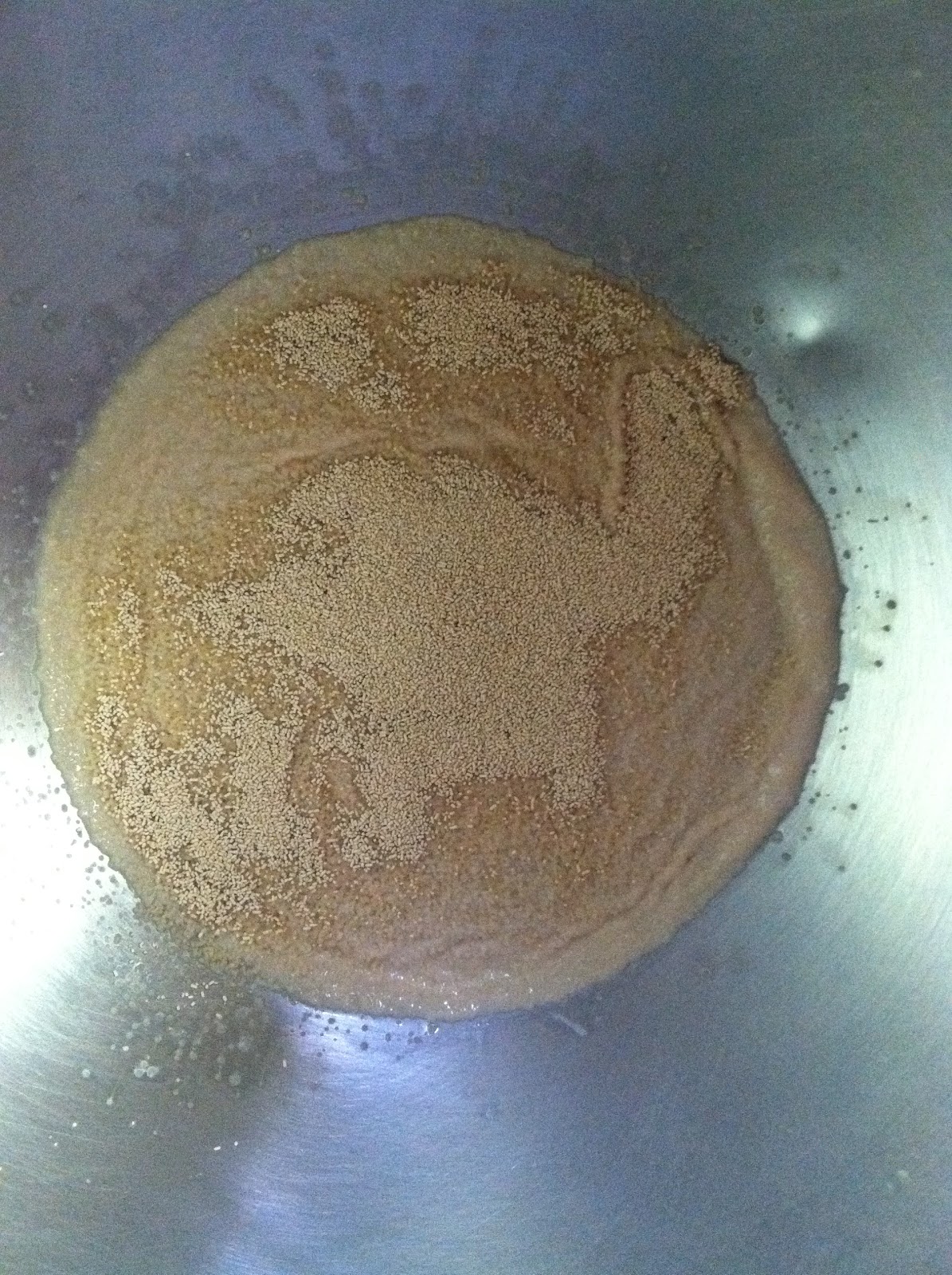
2. Warm the milk and add your yeast and sugar to one cup of it.  Let it get all frothy.  If it doesn’t get frothy, throw it out and start over.  Either your yeast is bad or the milk is too hot.  If you can’t stick your finger in the milk comfortably, it’s too hot.

3. When your yeast mixture is frothy, add it to the flour, salt and thyme.  Add the rest of the milk too.

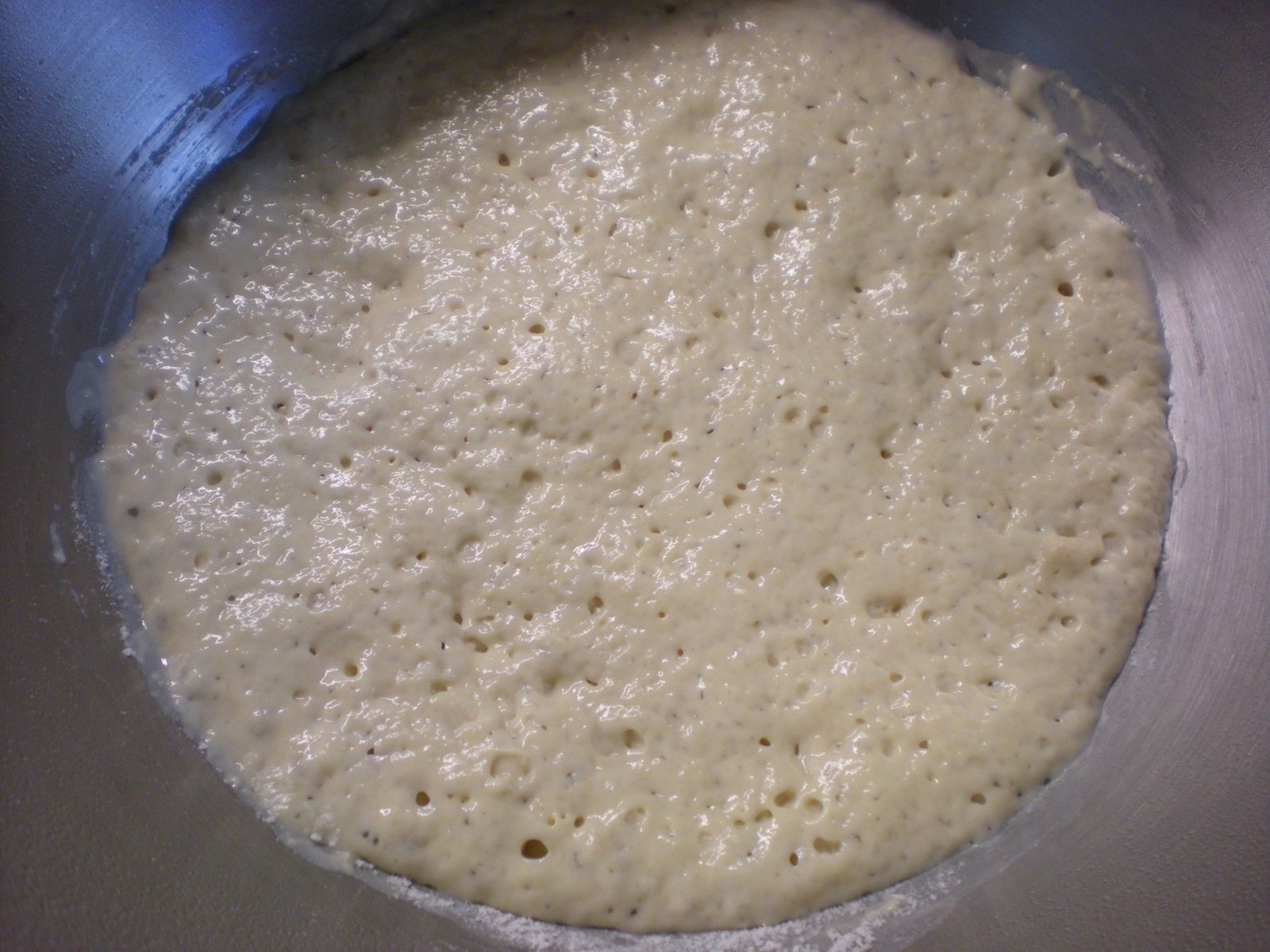
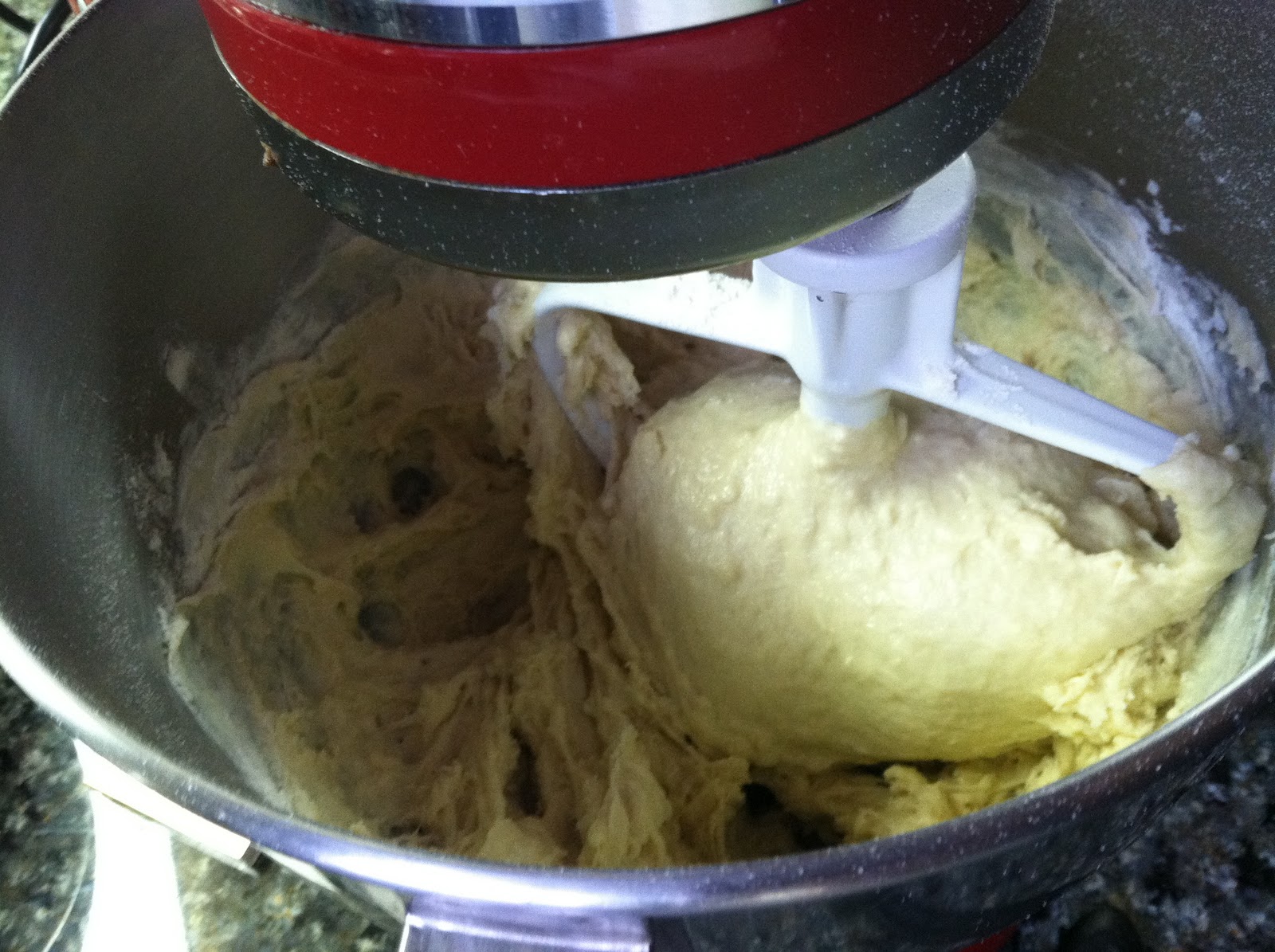
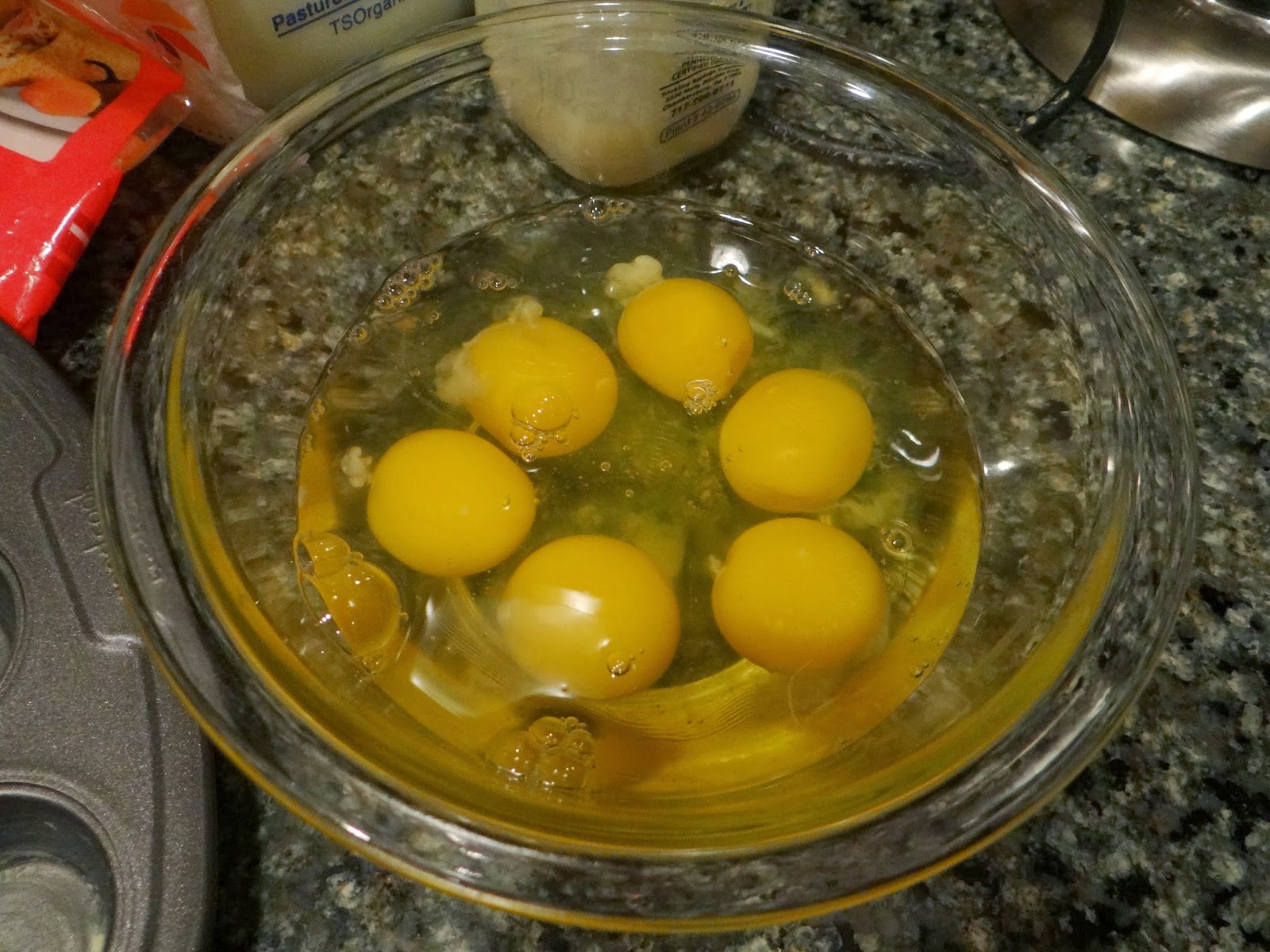
4. Now add the eggs, one at a time.  Your dough should be really, really wet and sticky.

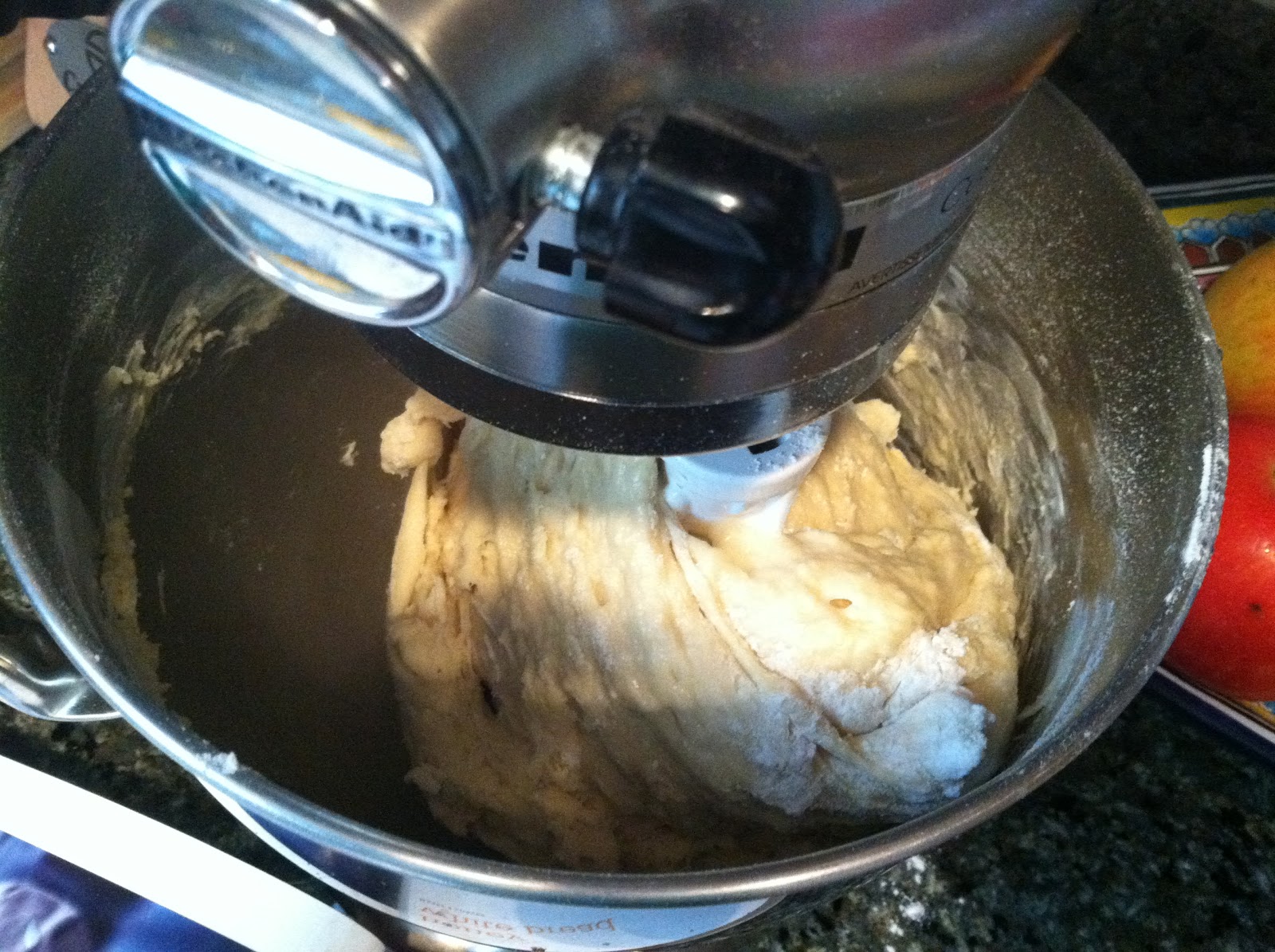
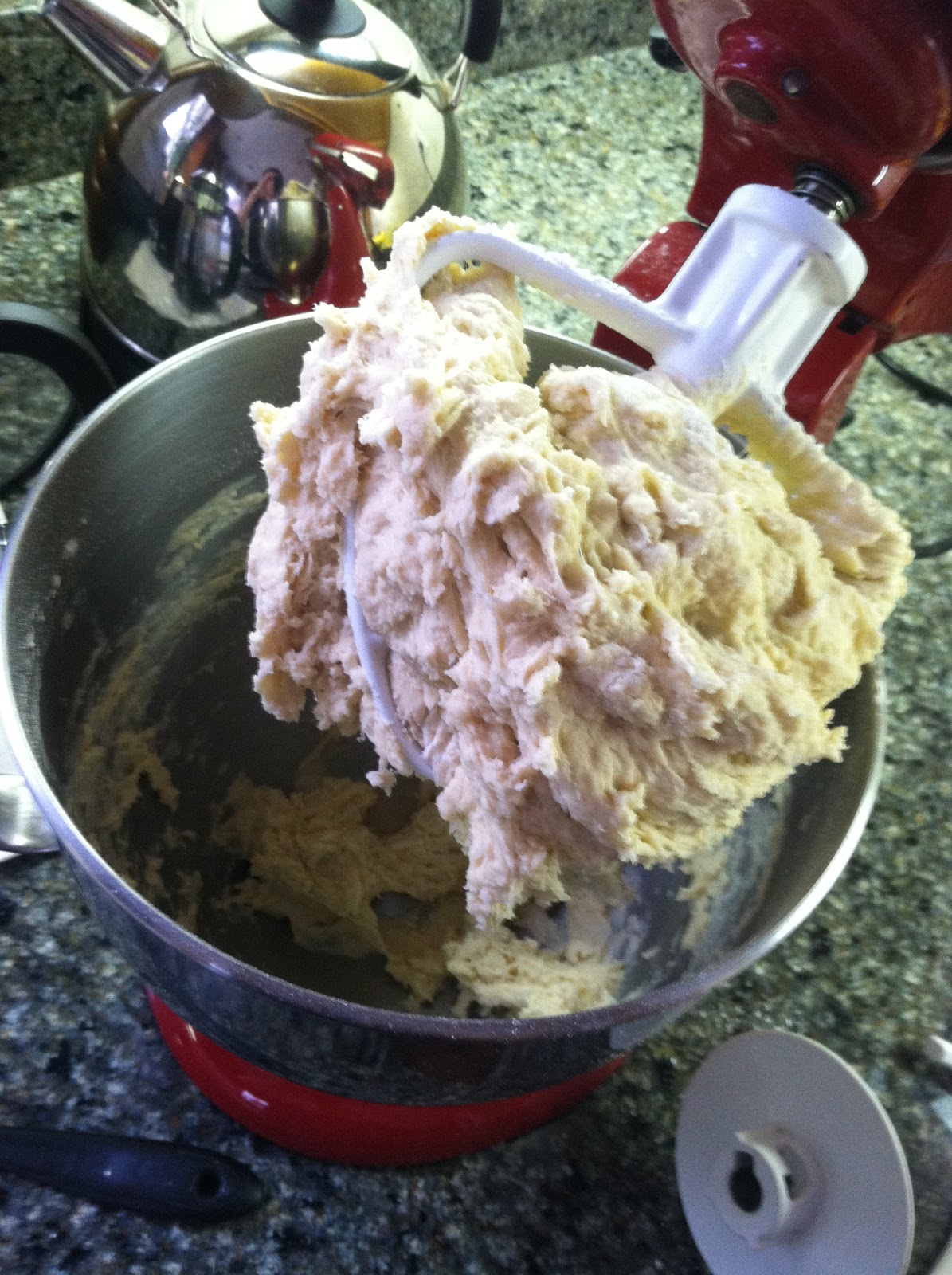
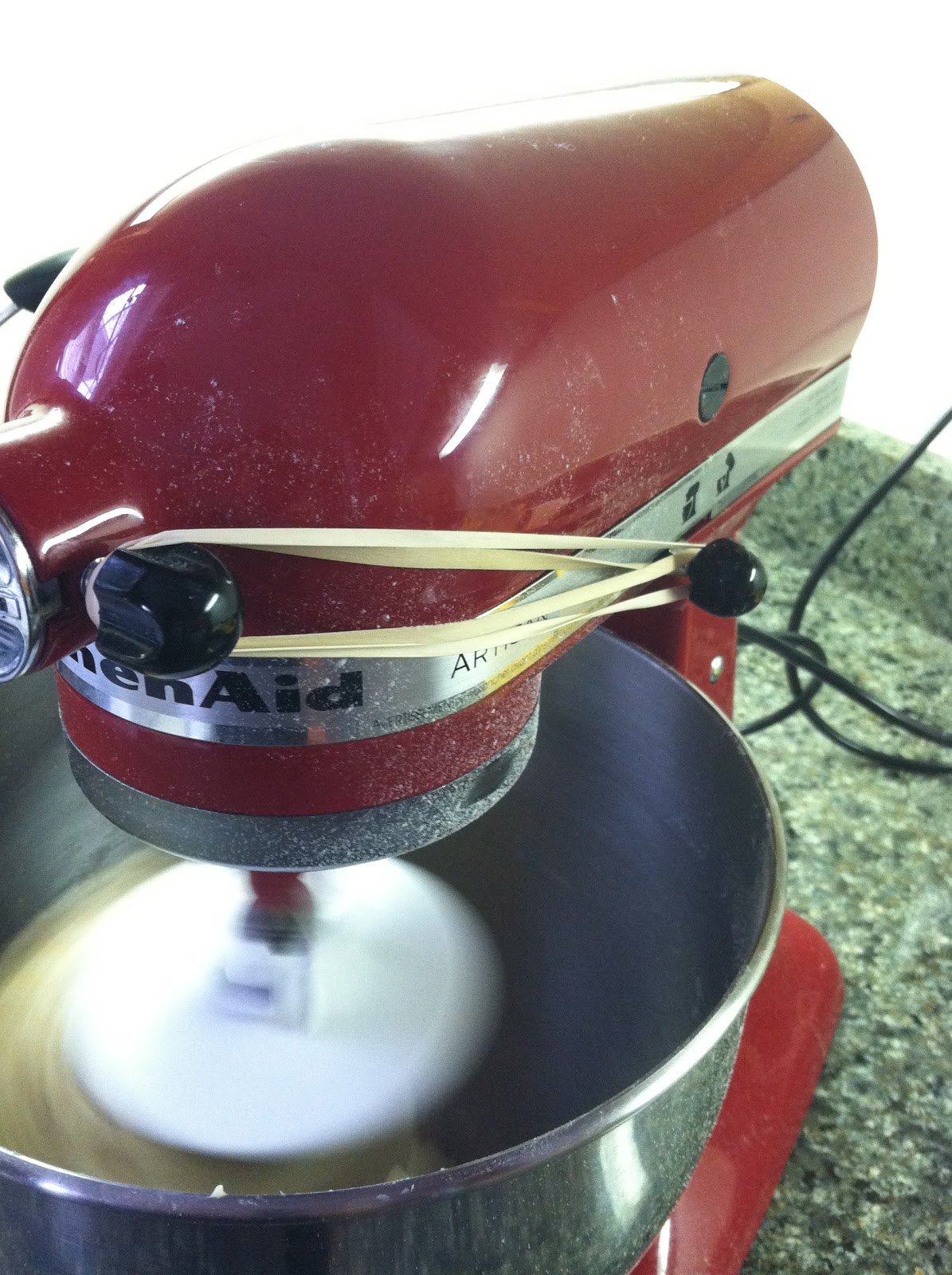
5. Switch to the dough hook.  Knead on medium for 10 minutes.  At this point, my dough looked more like batter and it was super sticky.  Clearly, the dough hook wasn’t doing it.  And given the high hydration of this dough I was going to have trouble kneading it.  Problem was, the dough also has a lot of yeast, so it was going to rise quickly.  I decided to use my secret weapon for wet doughs: the stretch and fold technique.

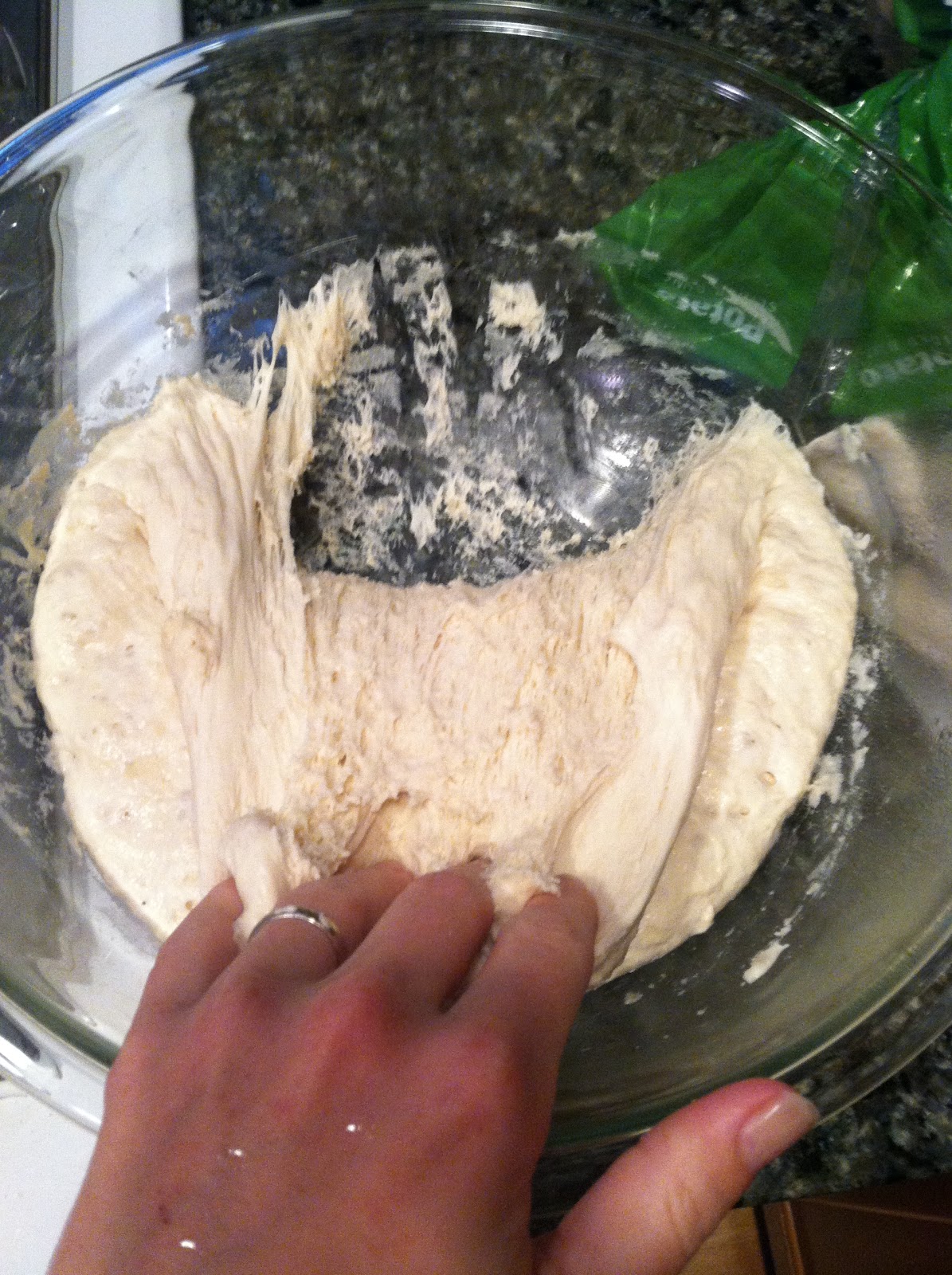
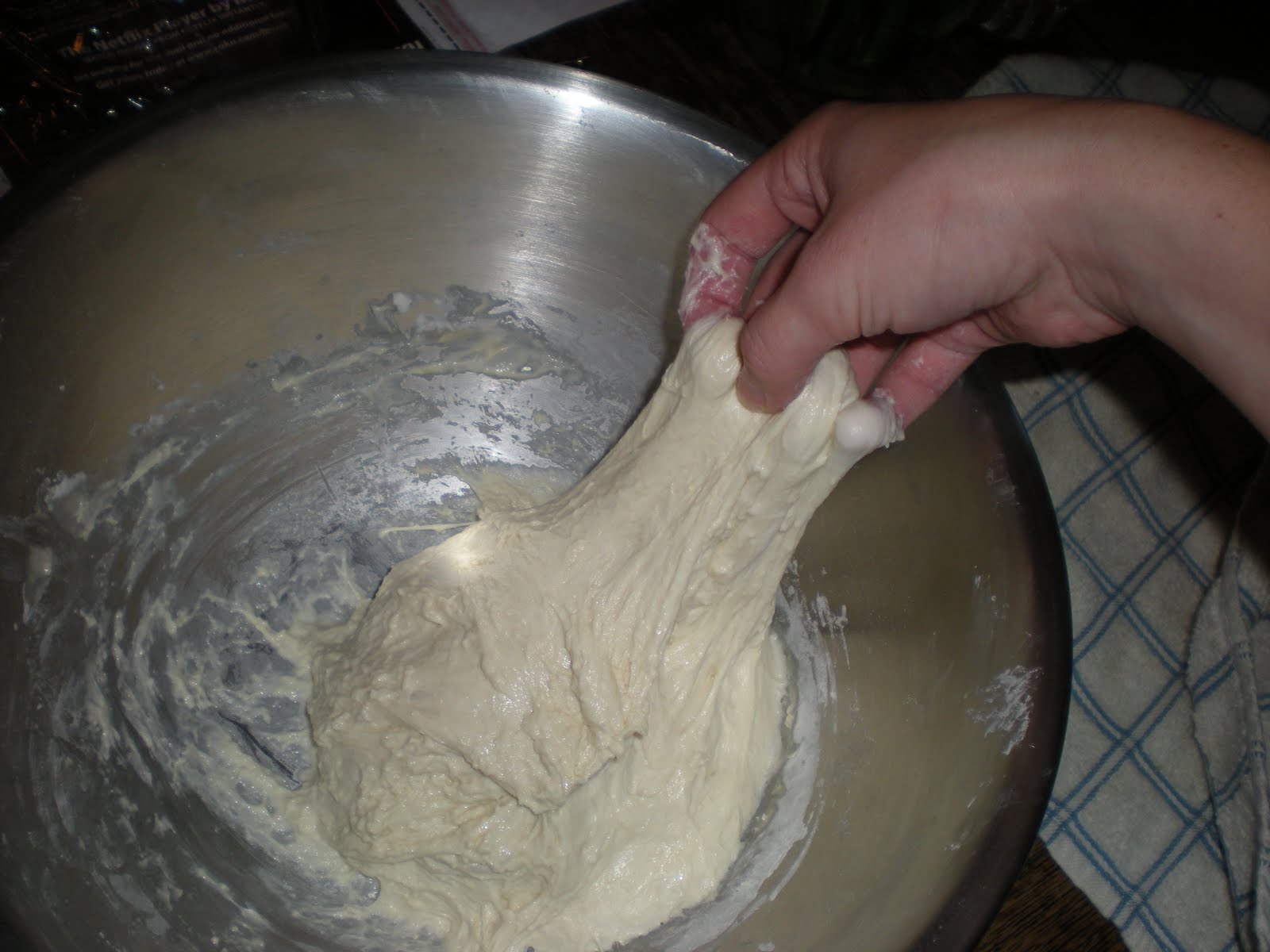
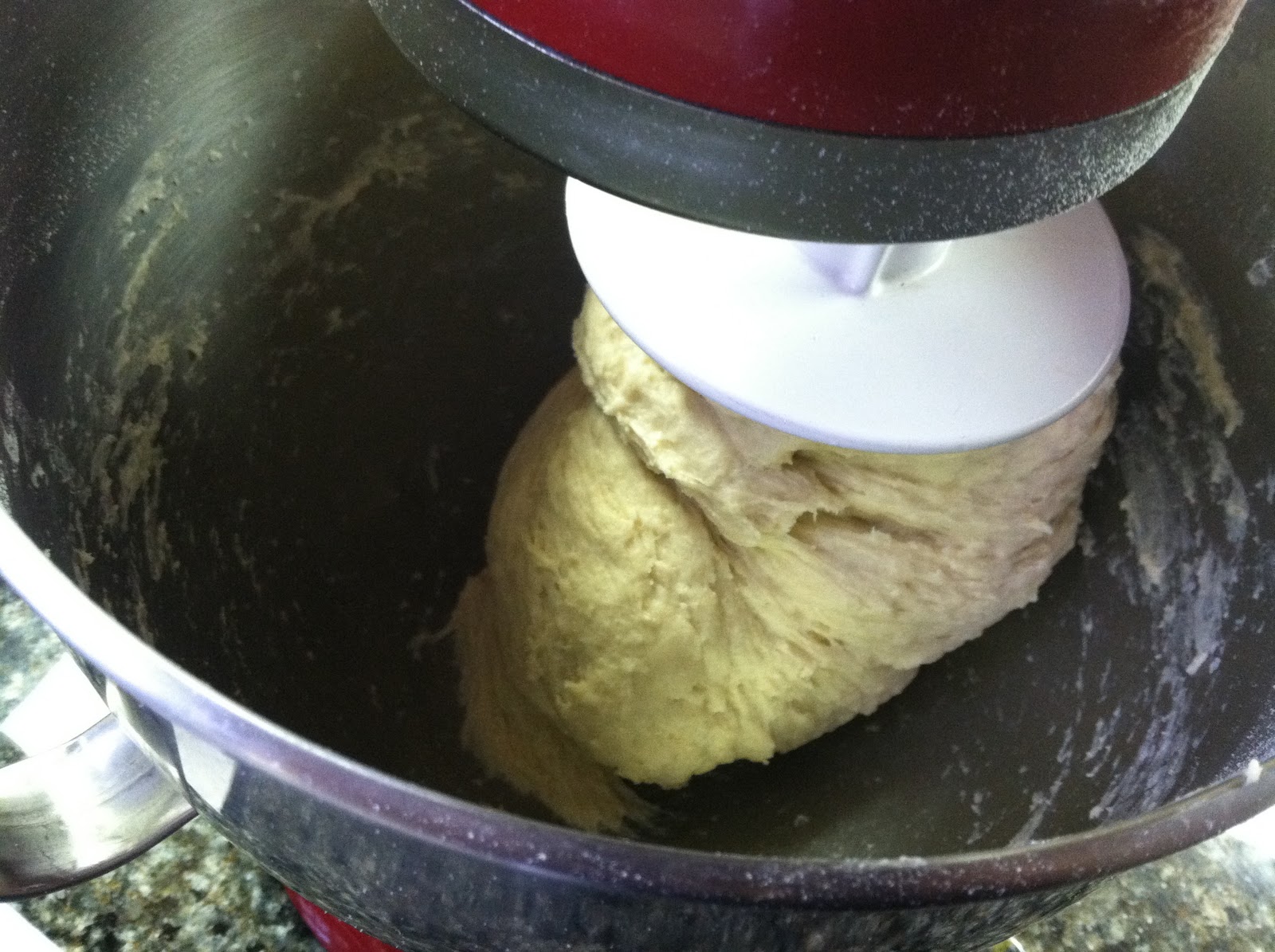
6. I buttered a very large bowl and removed the dough from the mixing bowl into the large buttered bowl.  With clean dry hands, I took one side of the dough and stretched it gently, then folded it on top.  This step takes the squiggly gluten strands that have been created from the interaction of flour and water and stretches them out, so they start to provide a structure for the dough.  Do four stretches, rotating the bowl each time so you are stretching out and folding over a different corner.

Here’s a video of the process:
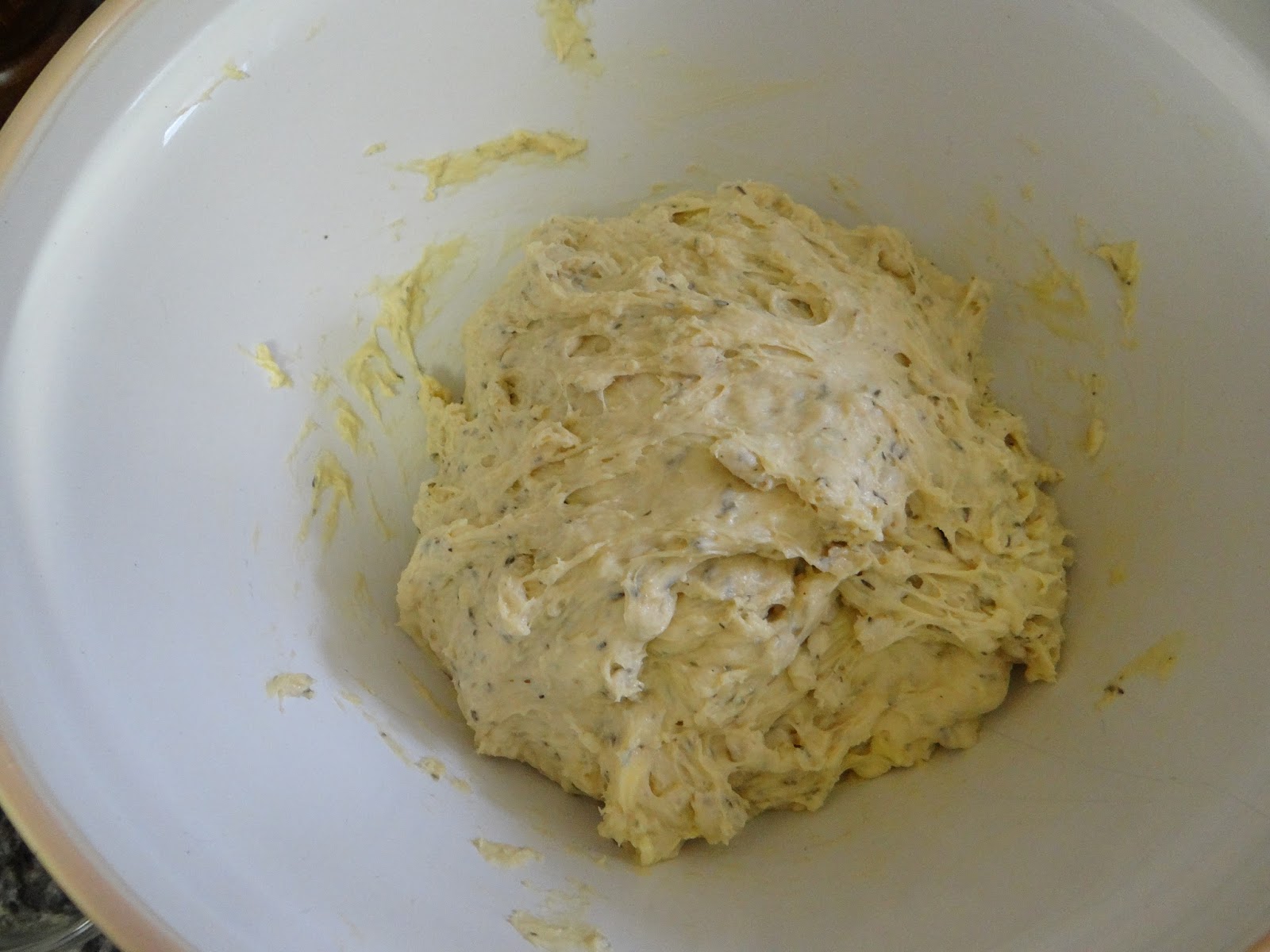
As you can see, even after only four stretches, the dough is starting to form more of a ball.  Cover the bowl with saran wrap and let sit for about fifteen minutes.  Then do another series of stretches and folds.
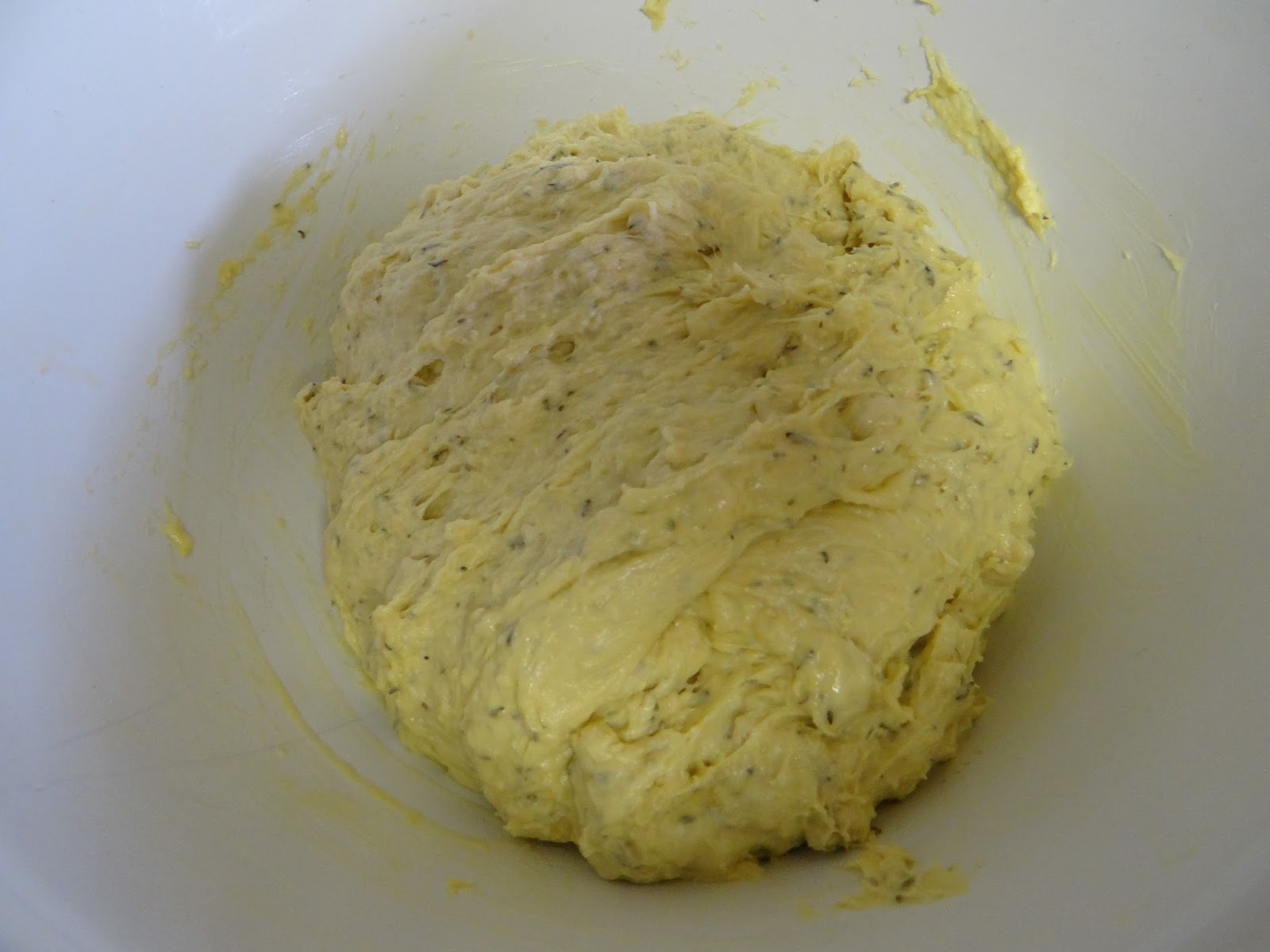
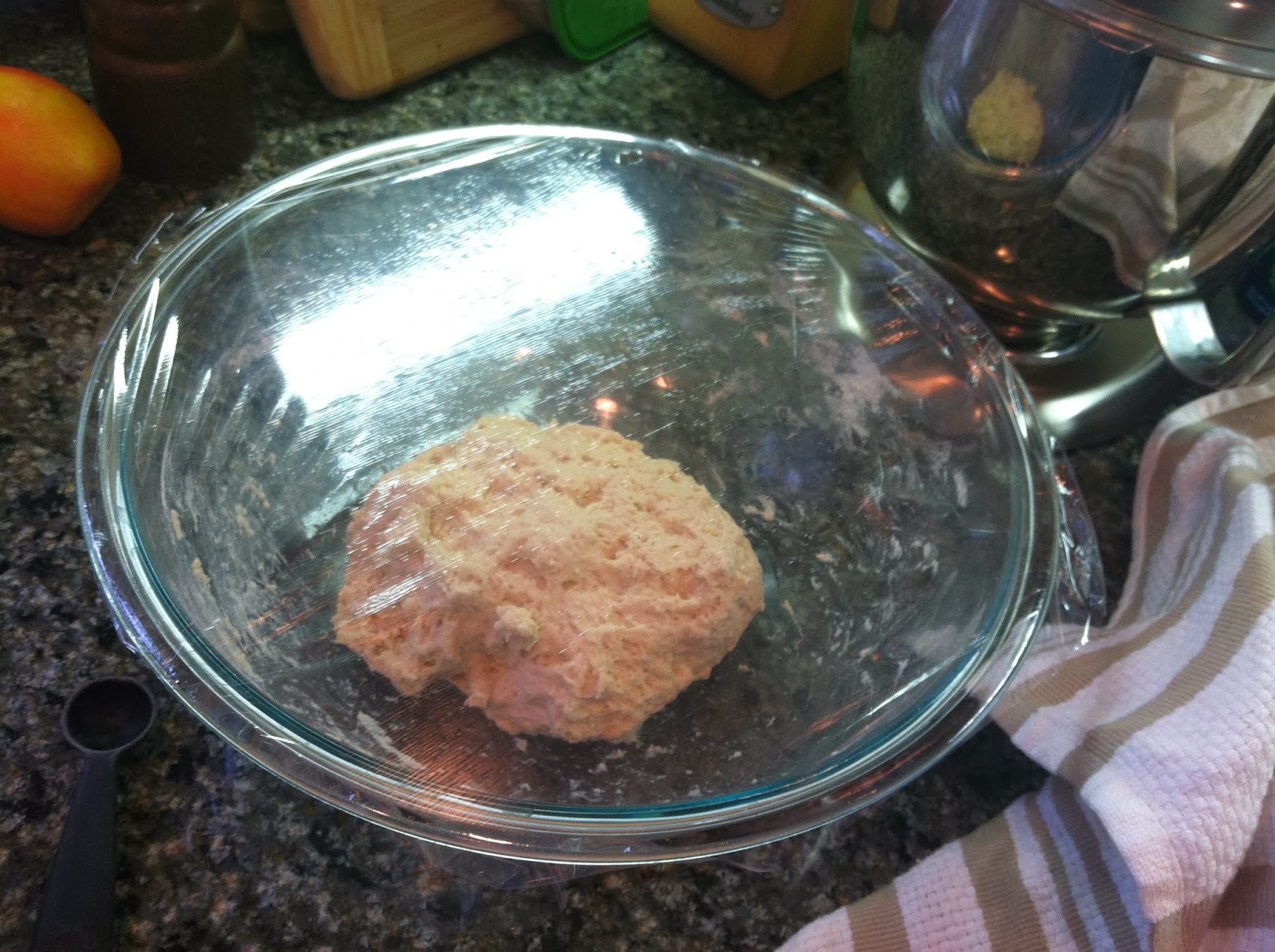
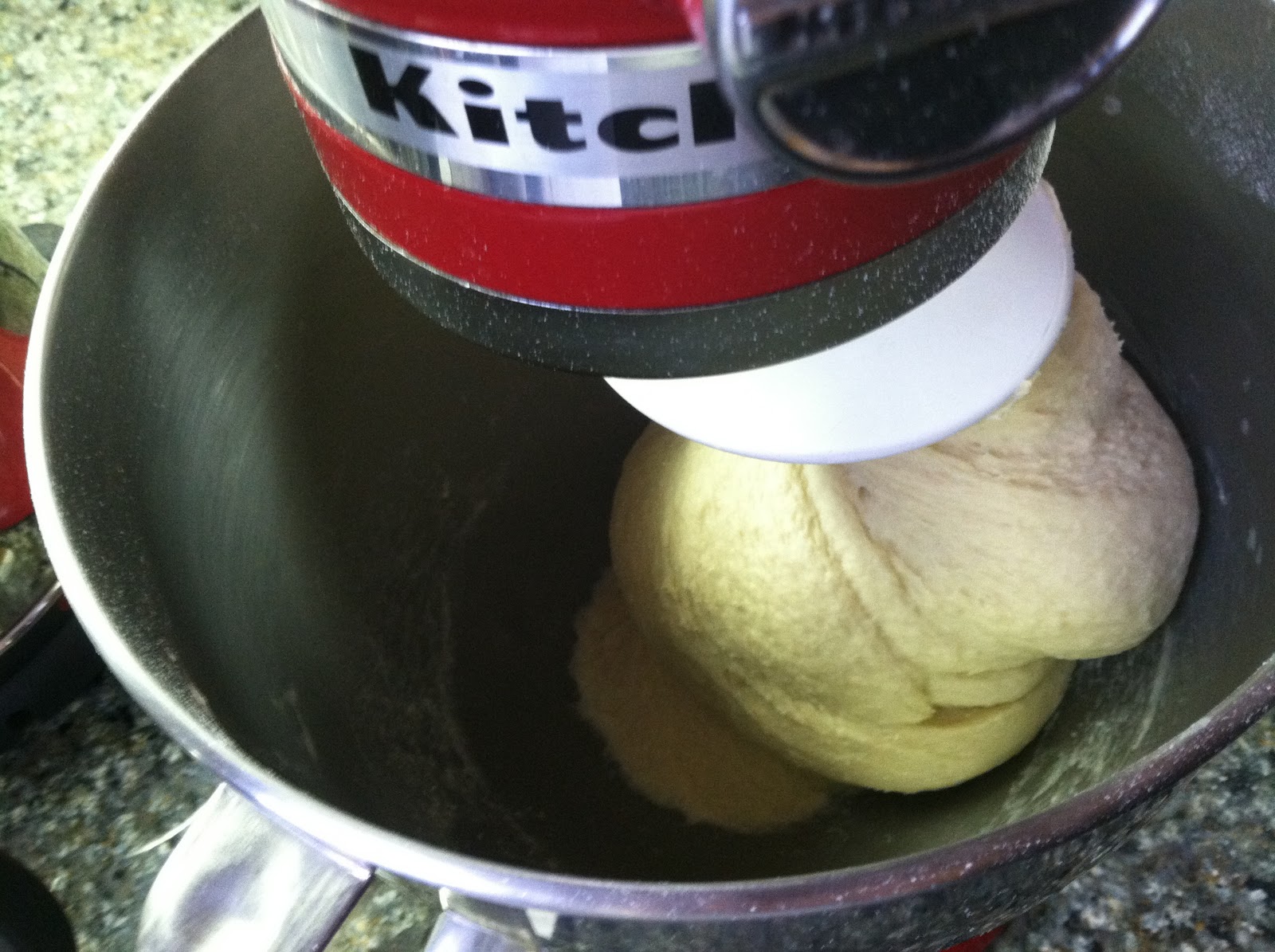
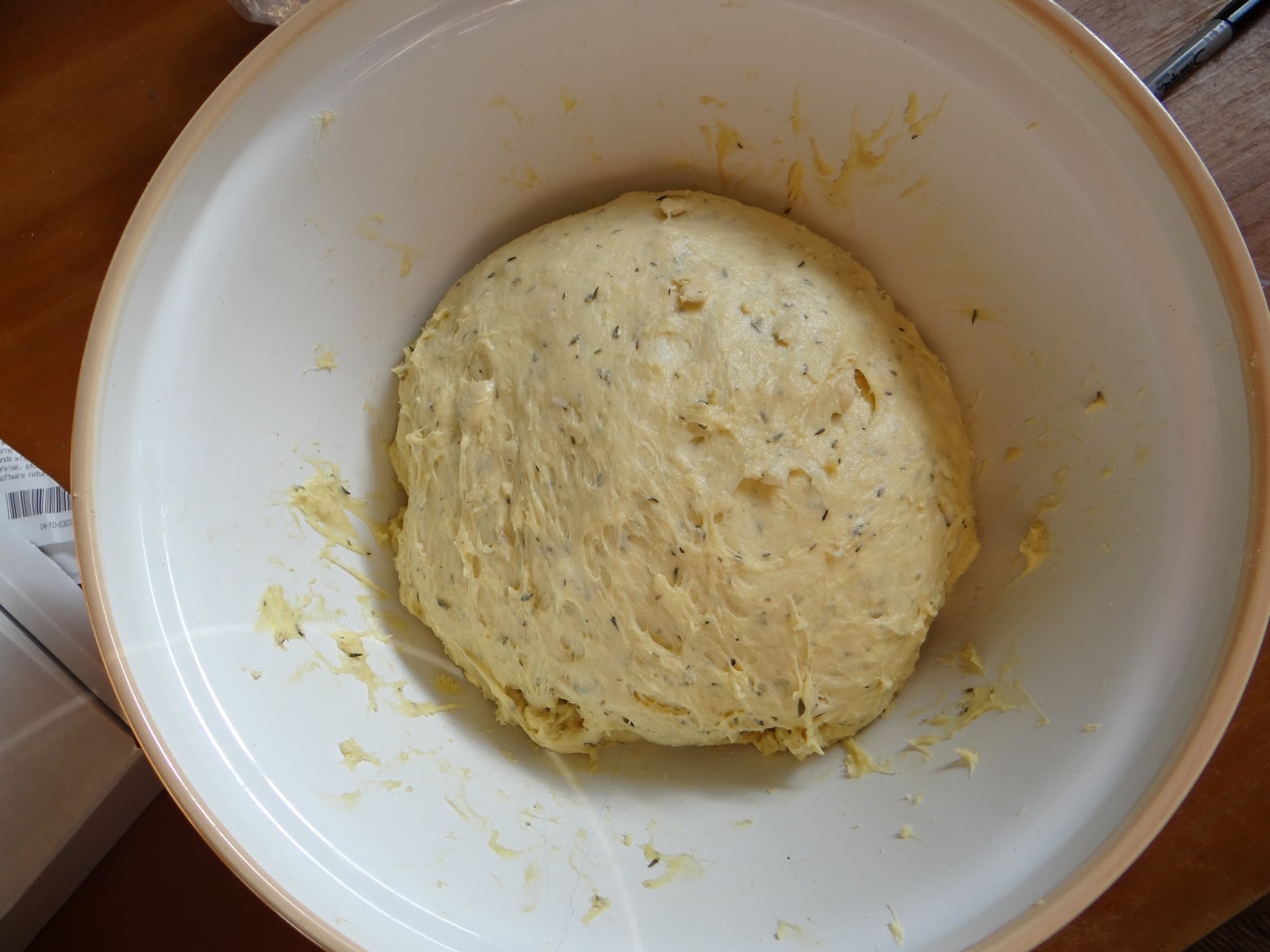
More structure.  In another fifteen minutes, do another series of stretches and folds, then cover and let rise for about 1.5 hours.
7. In the meantime, butter your bread pans.

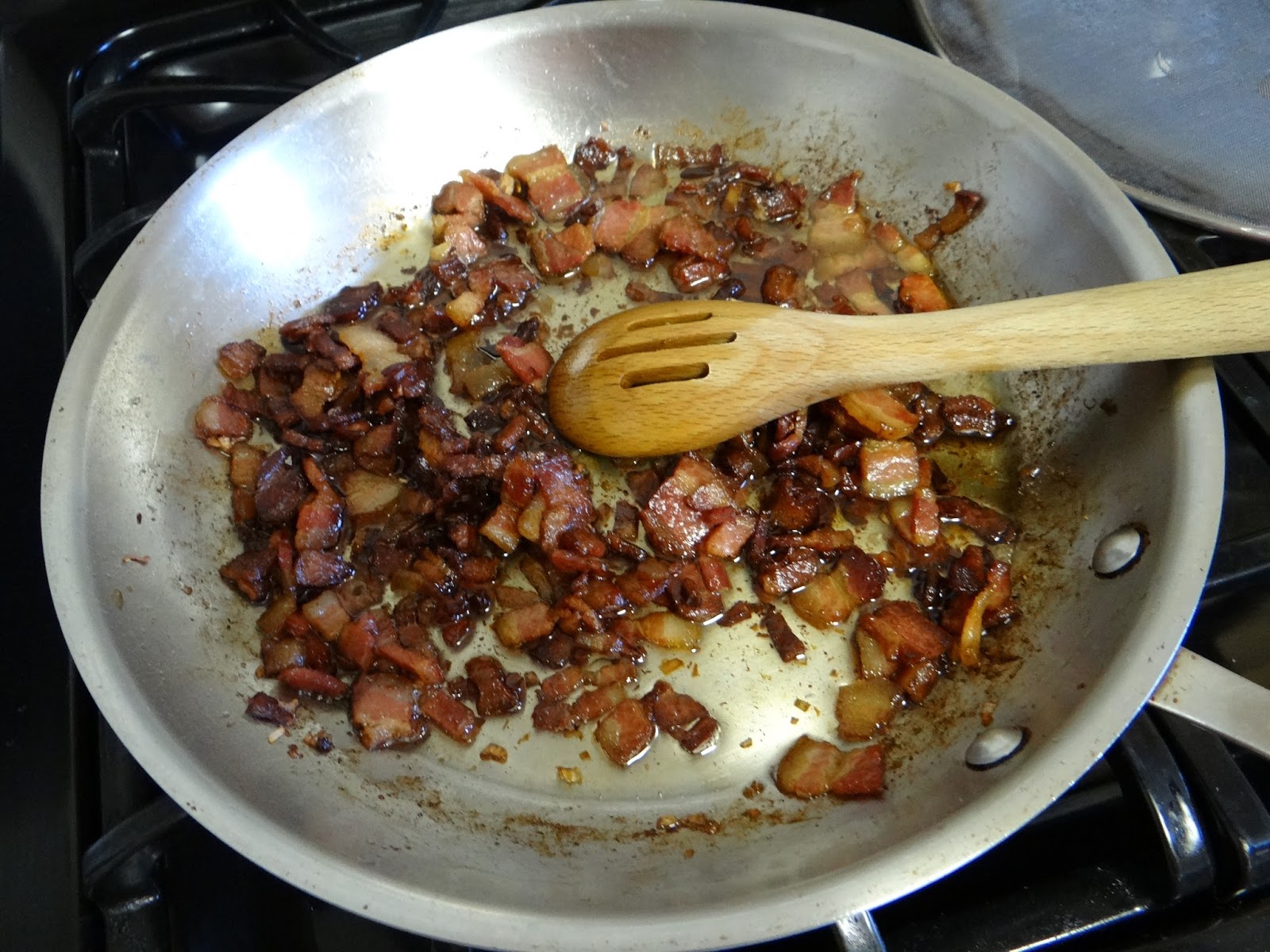
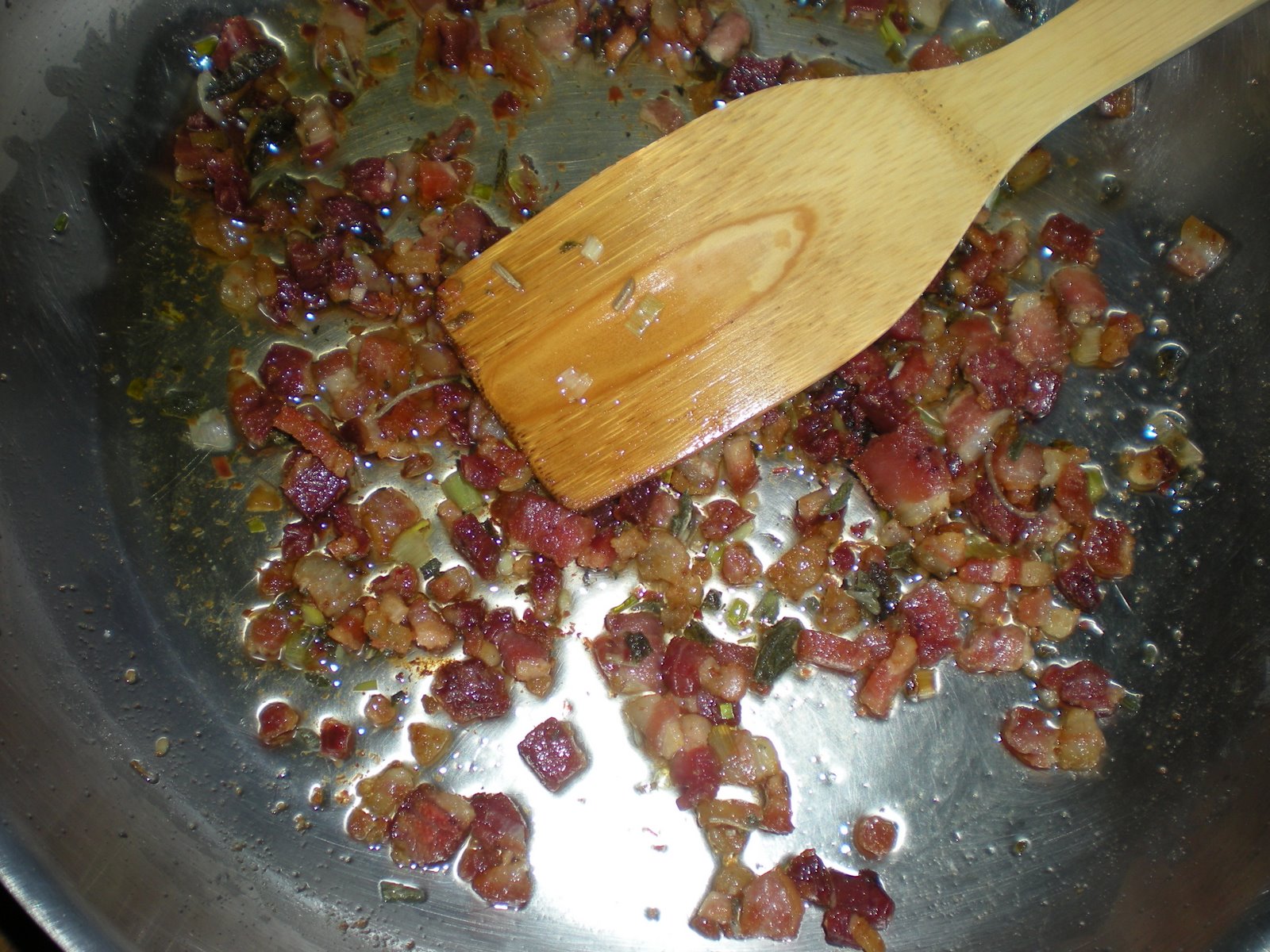
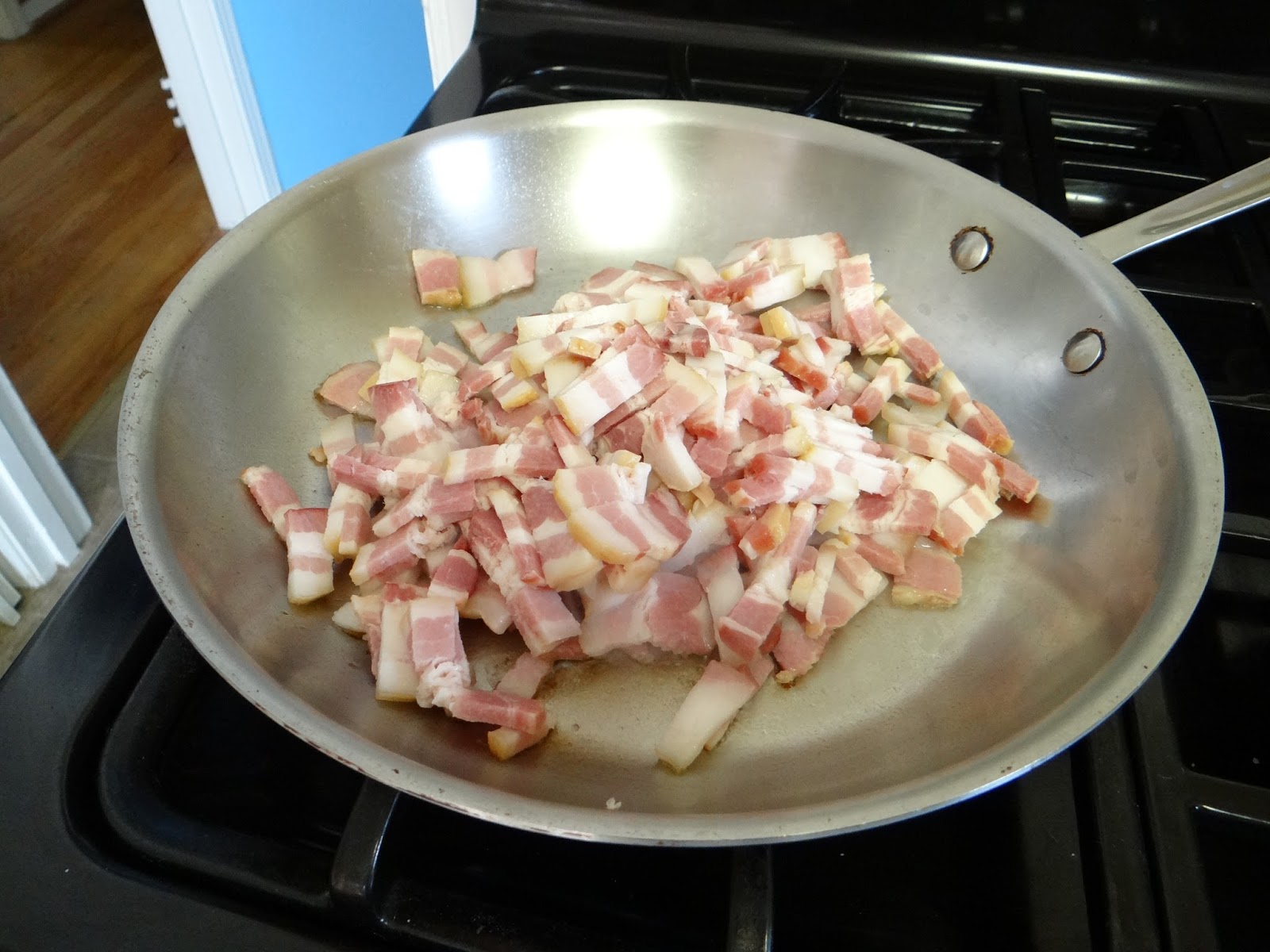
8.  Now you will want to fry up your bacon.  Cut it into a small dice and fry until just crispy.  Add the shallot.  Then let the bacon cool COMPLETELY.  It should be room temperature for the next step.
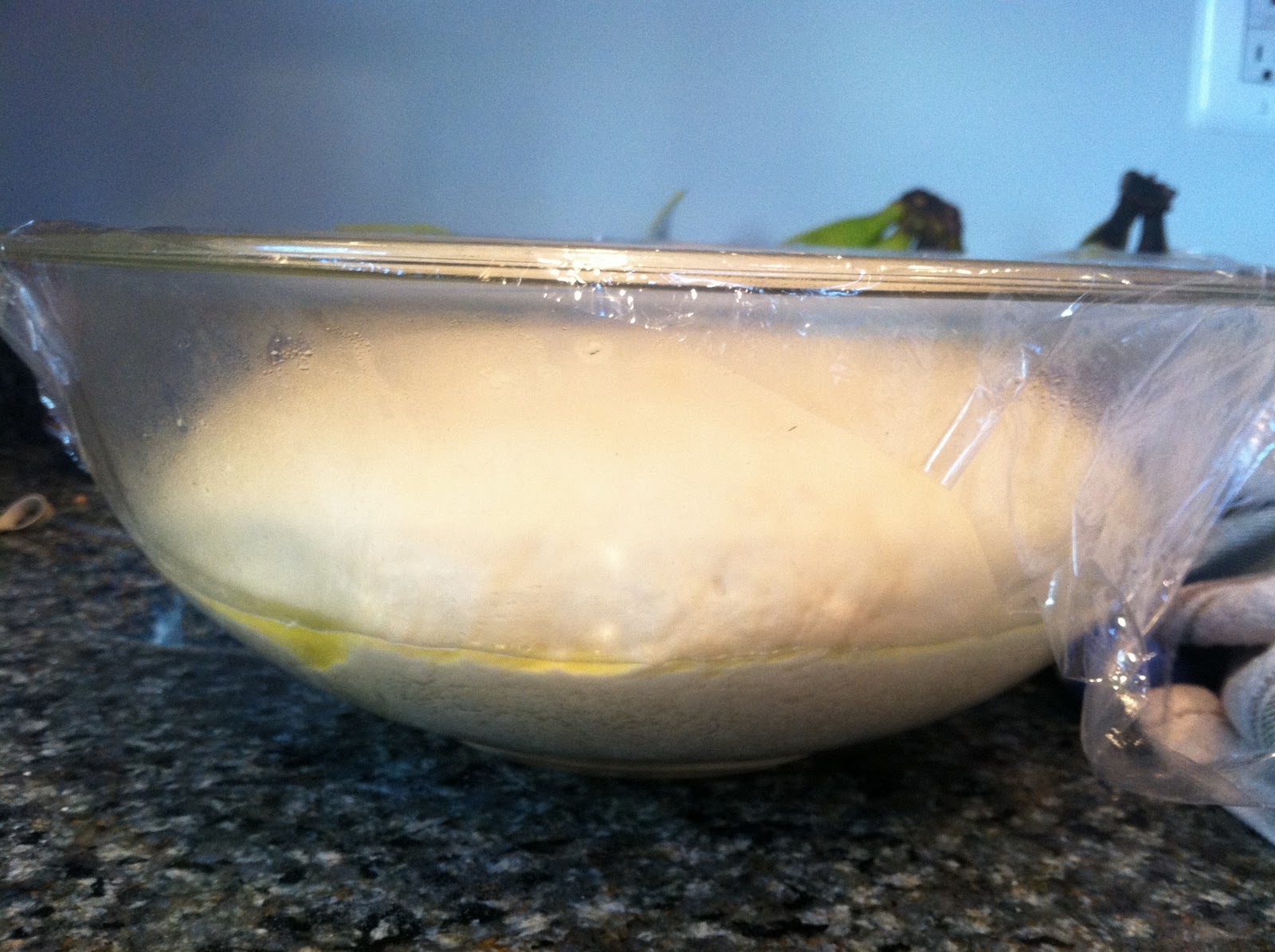
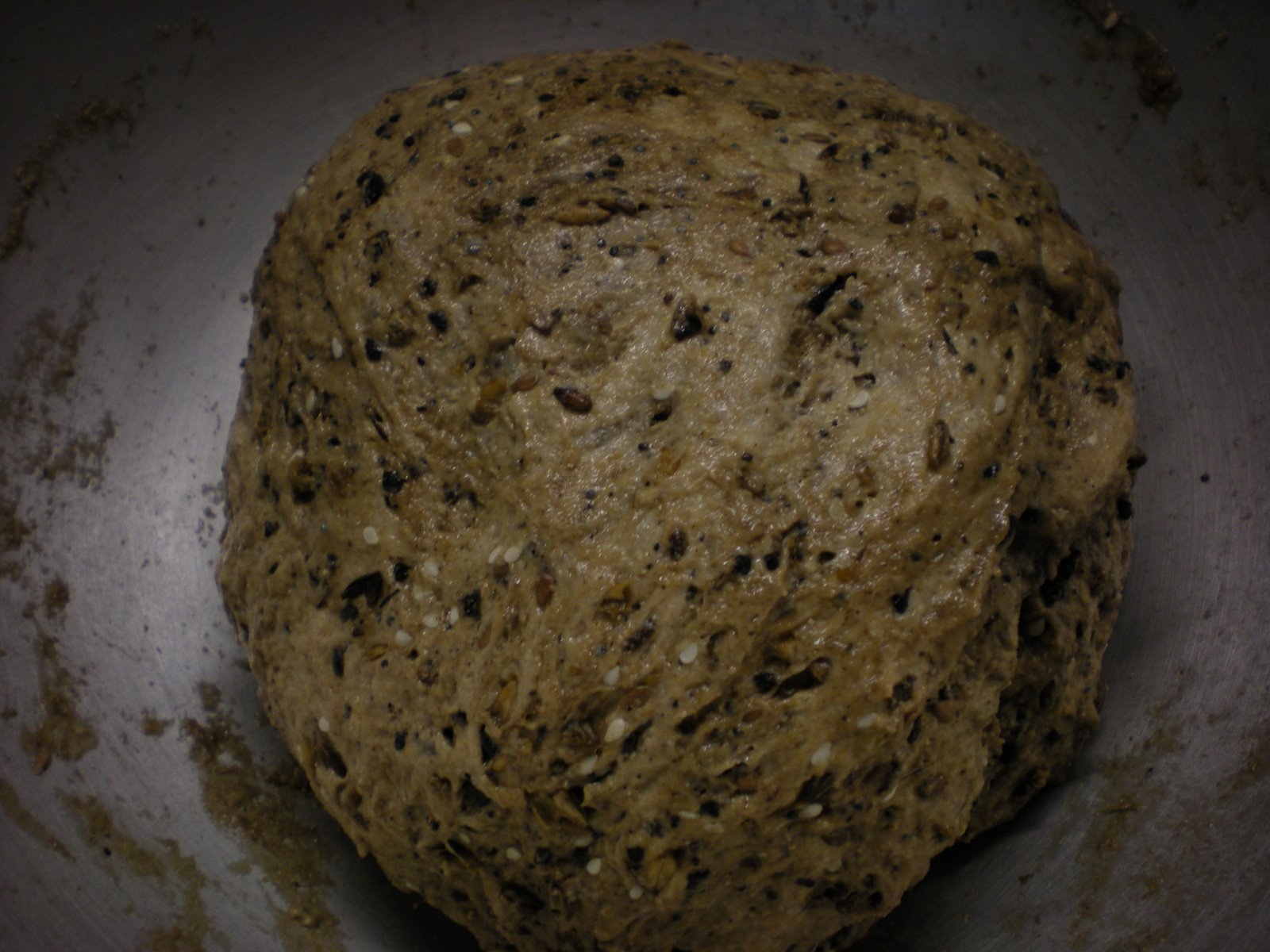
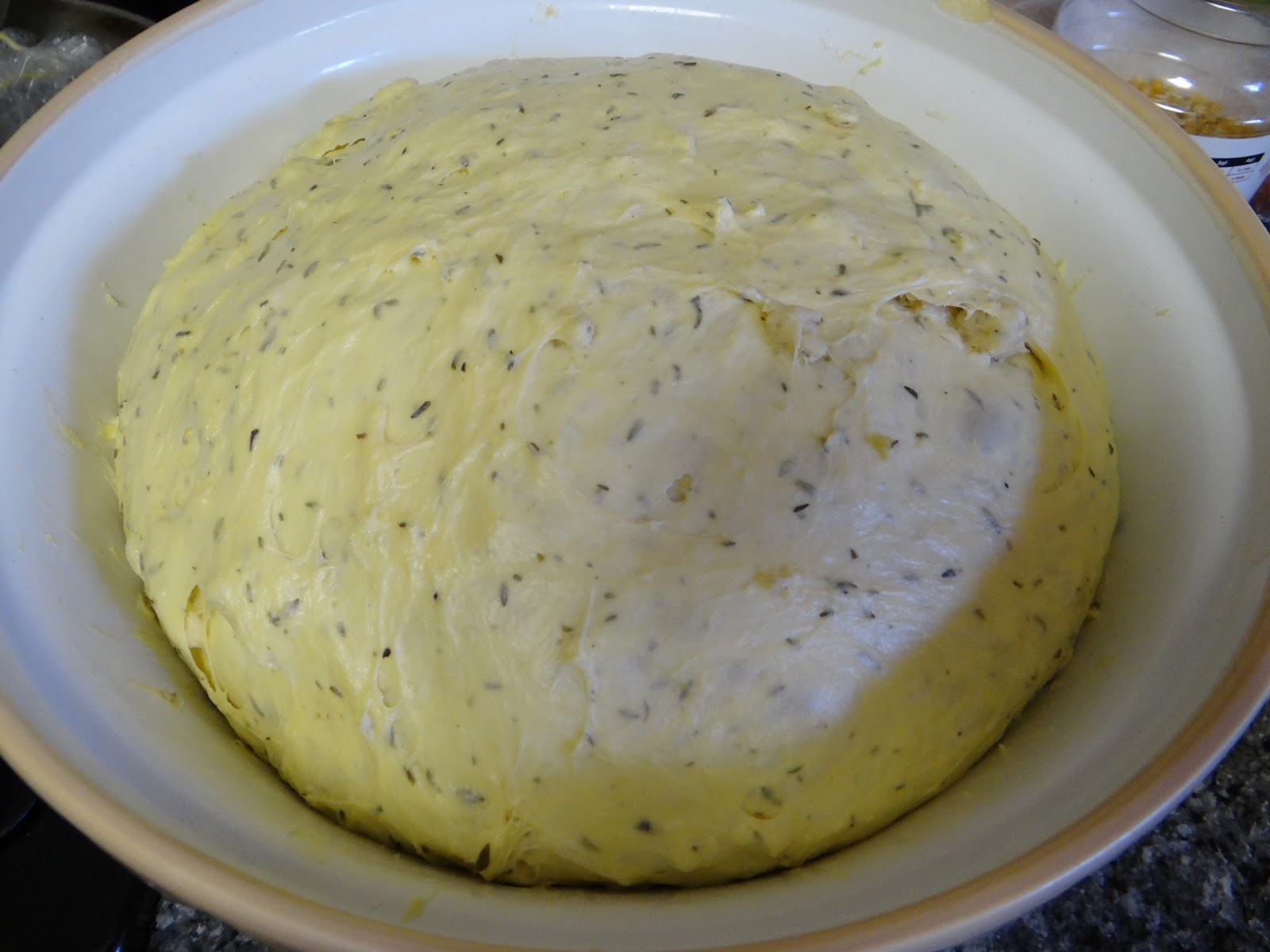
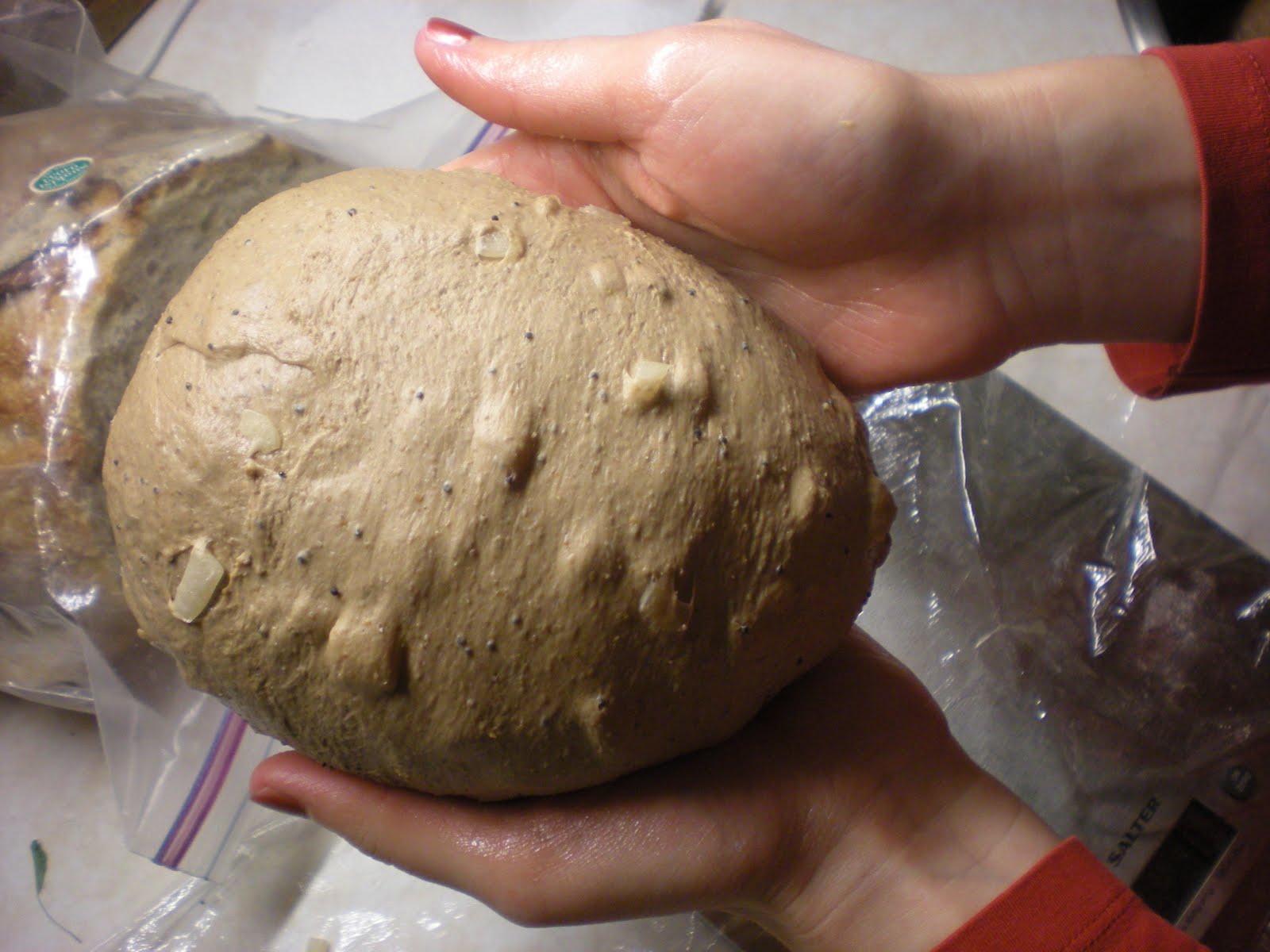
9.  At the end of 1.5 hours, your dough should look like this:
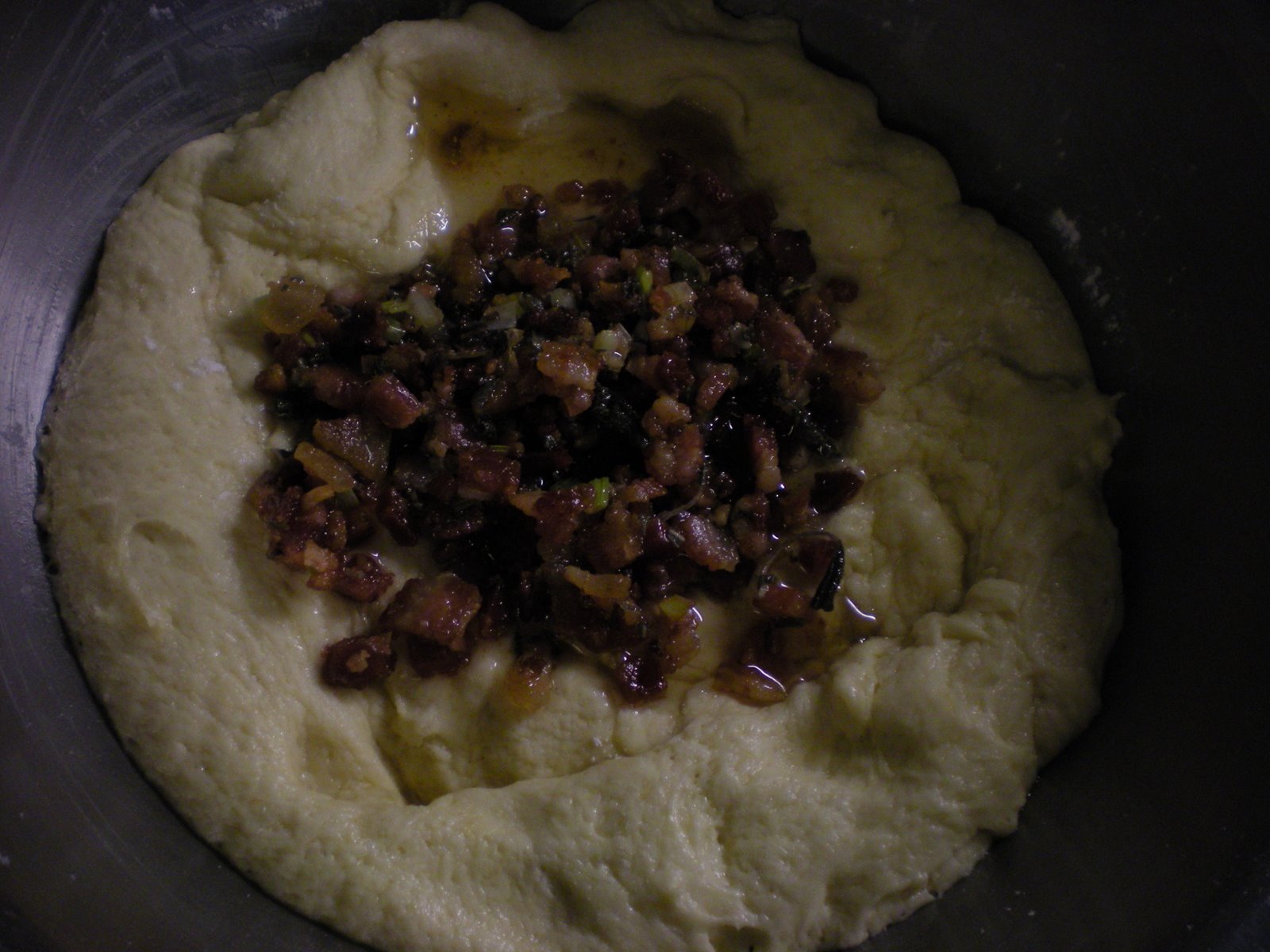
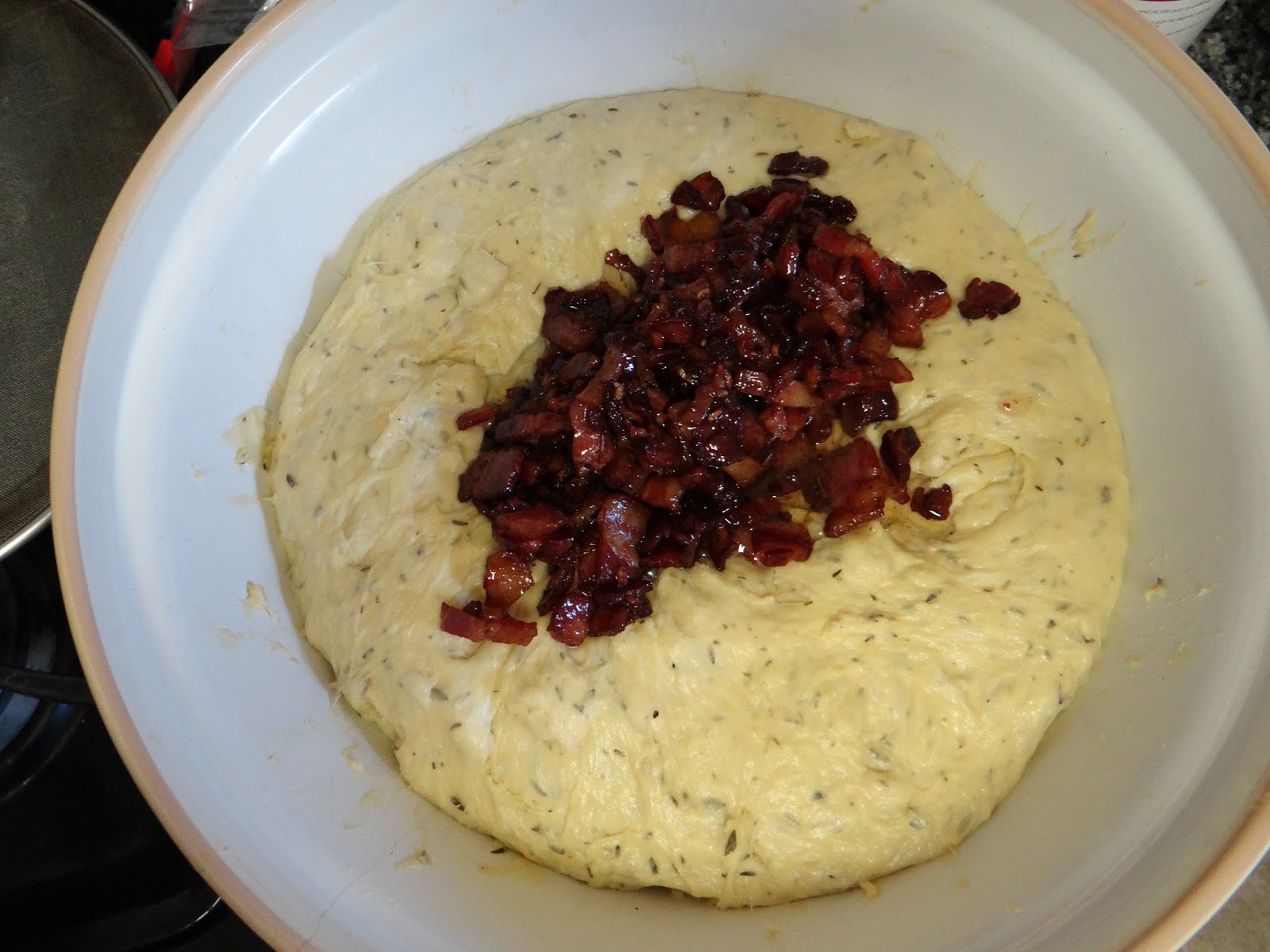
Punch it down, then add the bacon and drippings to it.
Using the same stretch and fold technique you used above, gently coax the sides of your dough around the bacon and drippings until they are all incorporated into the dough.  Since you already have a wet dough, this is going to get very wet and greasy again.  Don’t worry, it’ll all work out in the end.

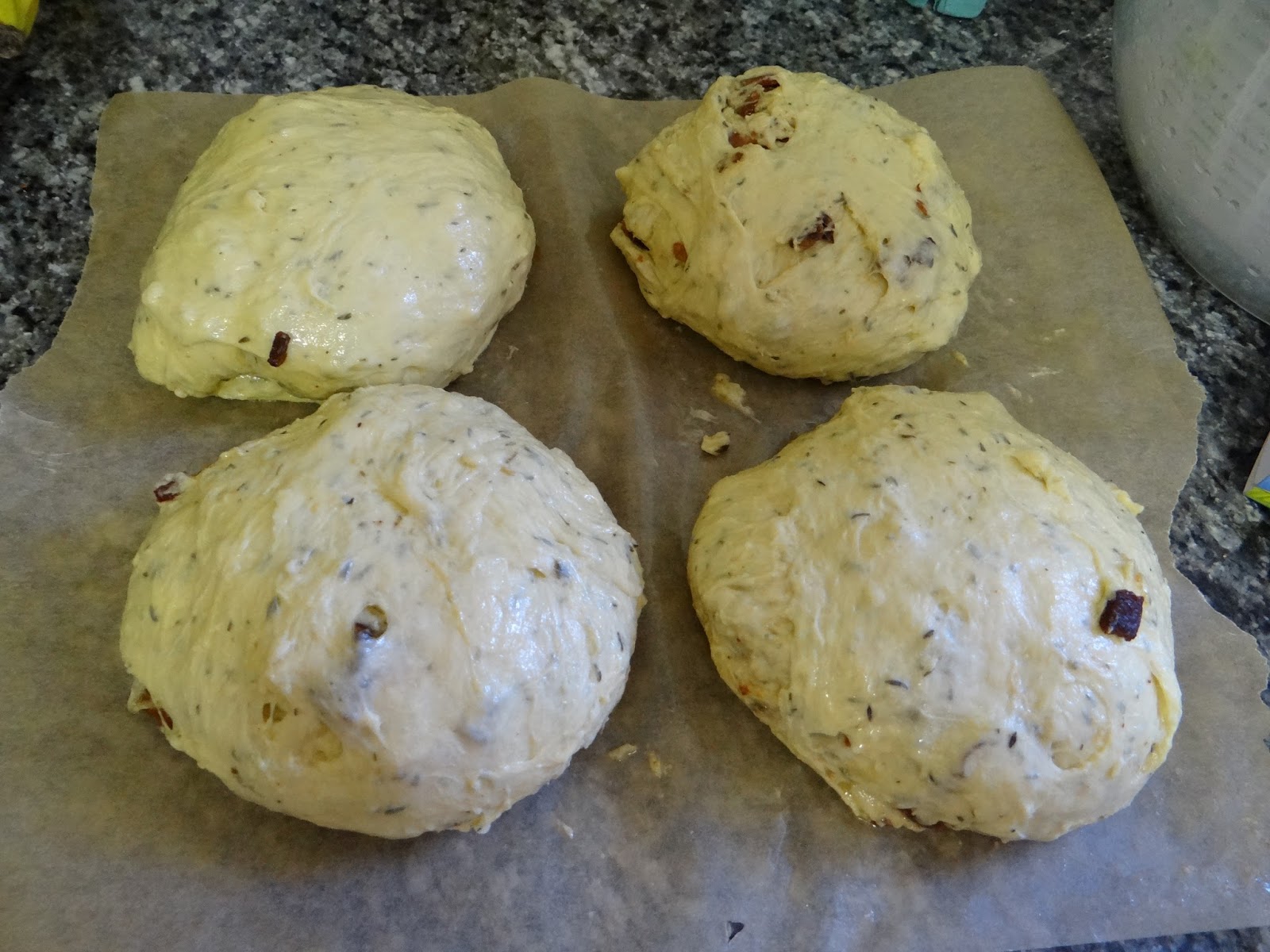
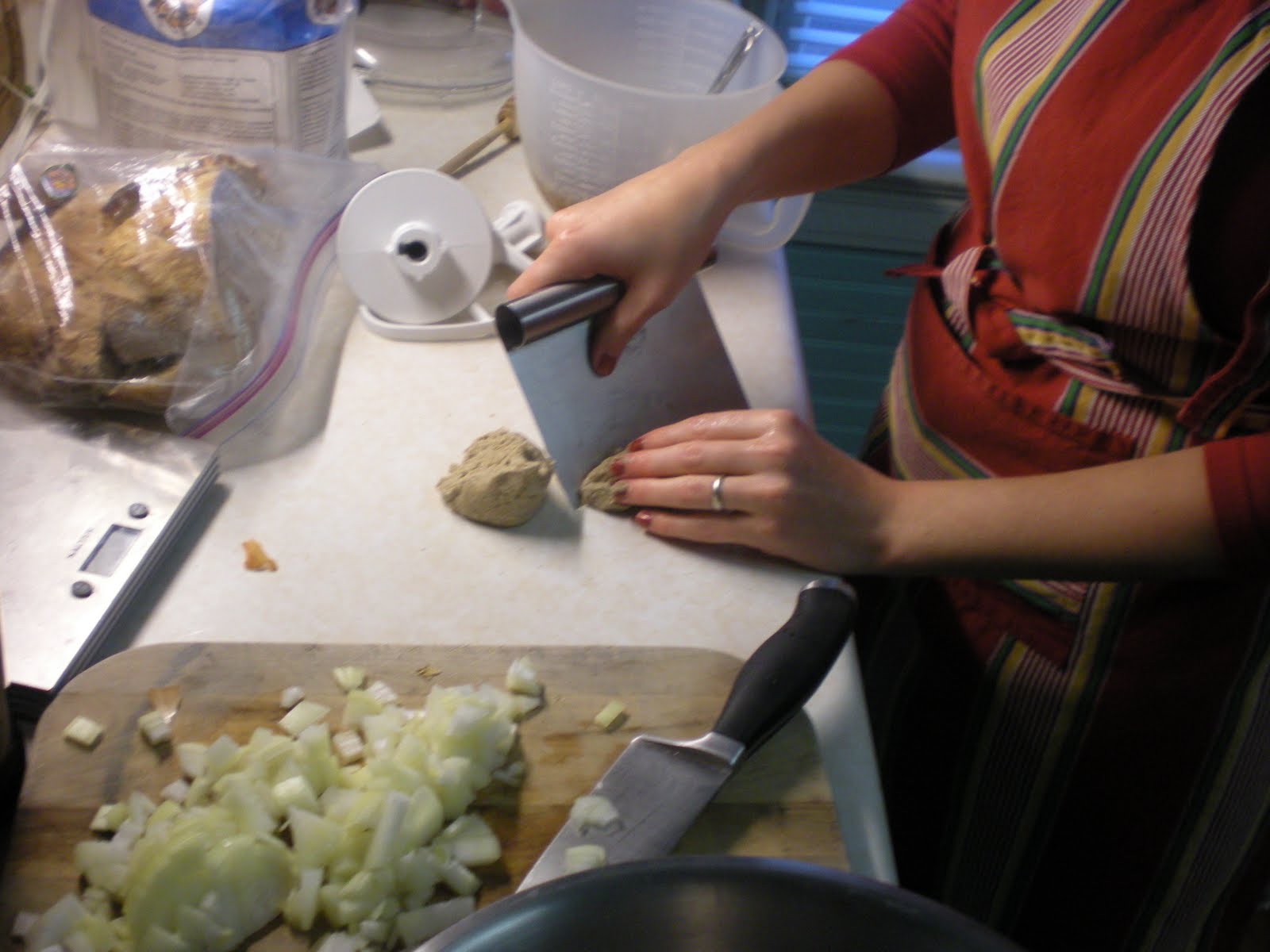
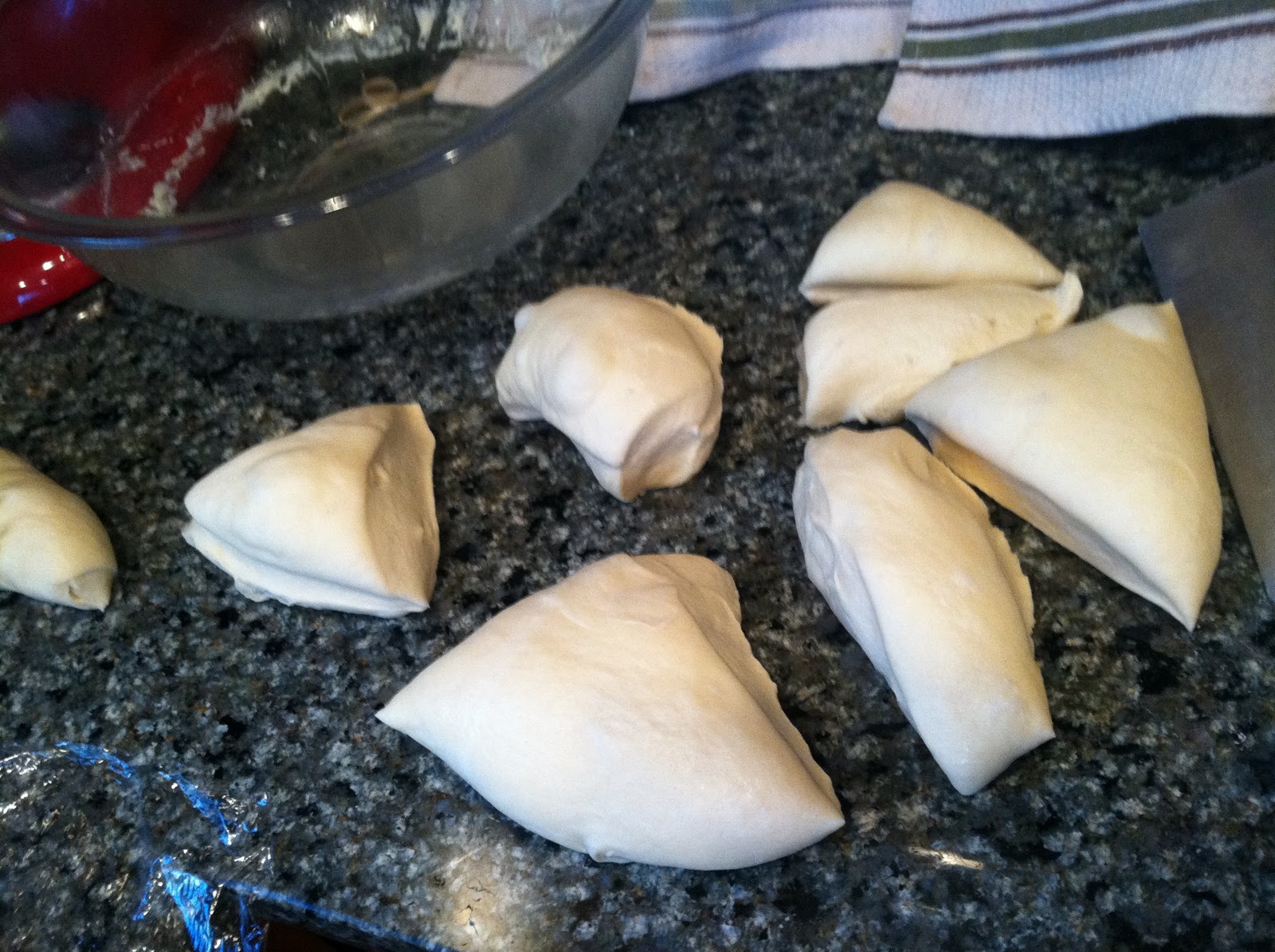
10.  Let the dough rest in the bowl for about ten minutes, then use a bench scraper to divide the dough into four equal (by weight) parts.  This is very, very important because you want them to cook evenly in the oven later.  The dough should be pretty gloopy.  But again, stretch and folds are your friend!  Gently shape them into circles for another rest.
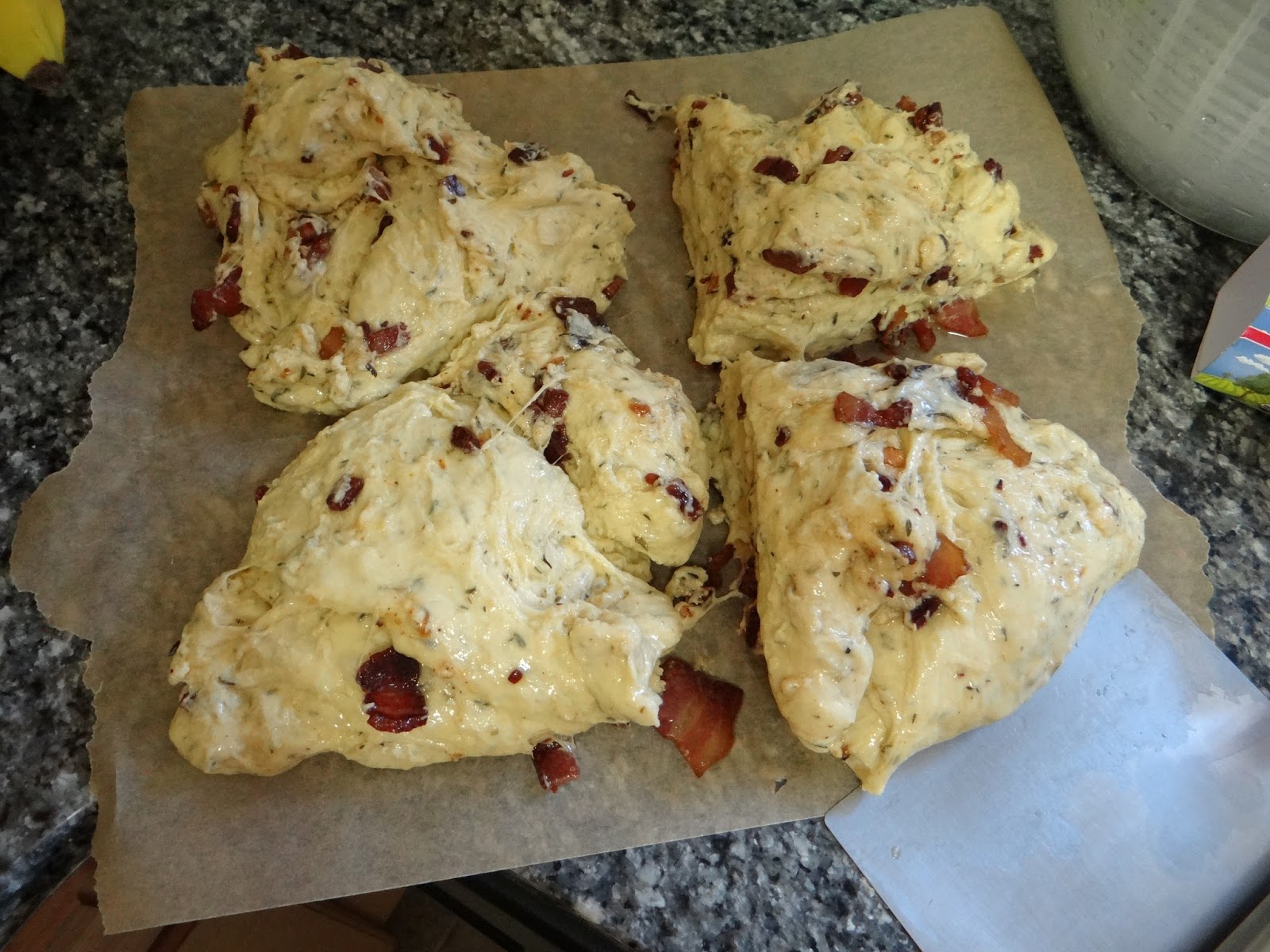
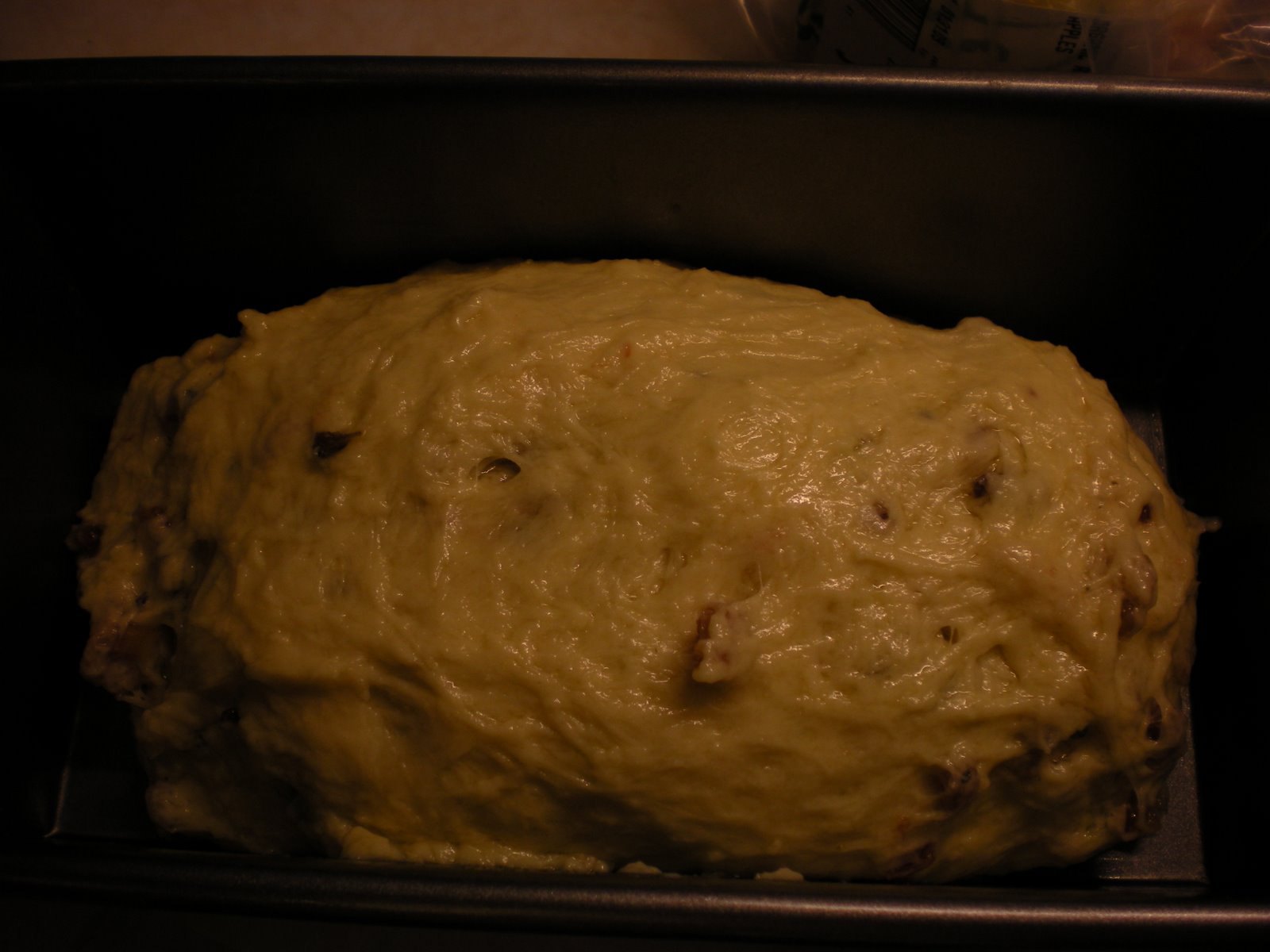
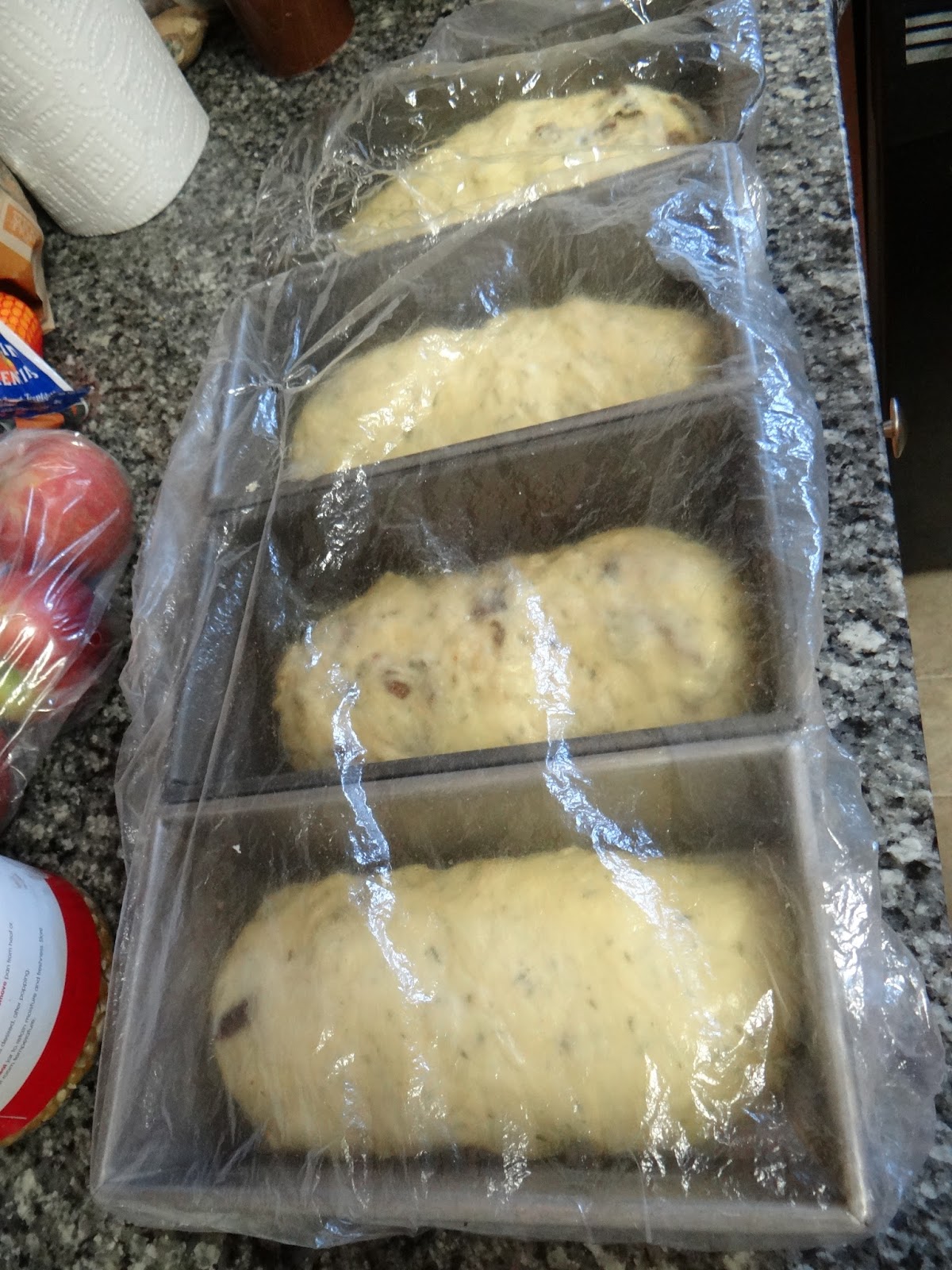
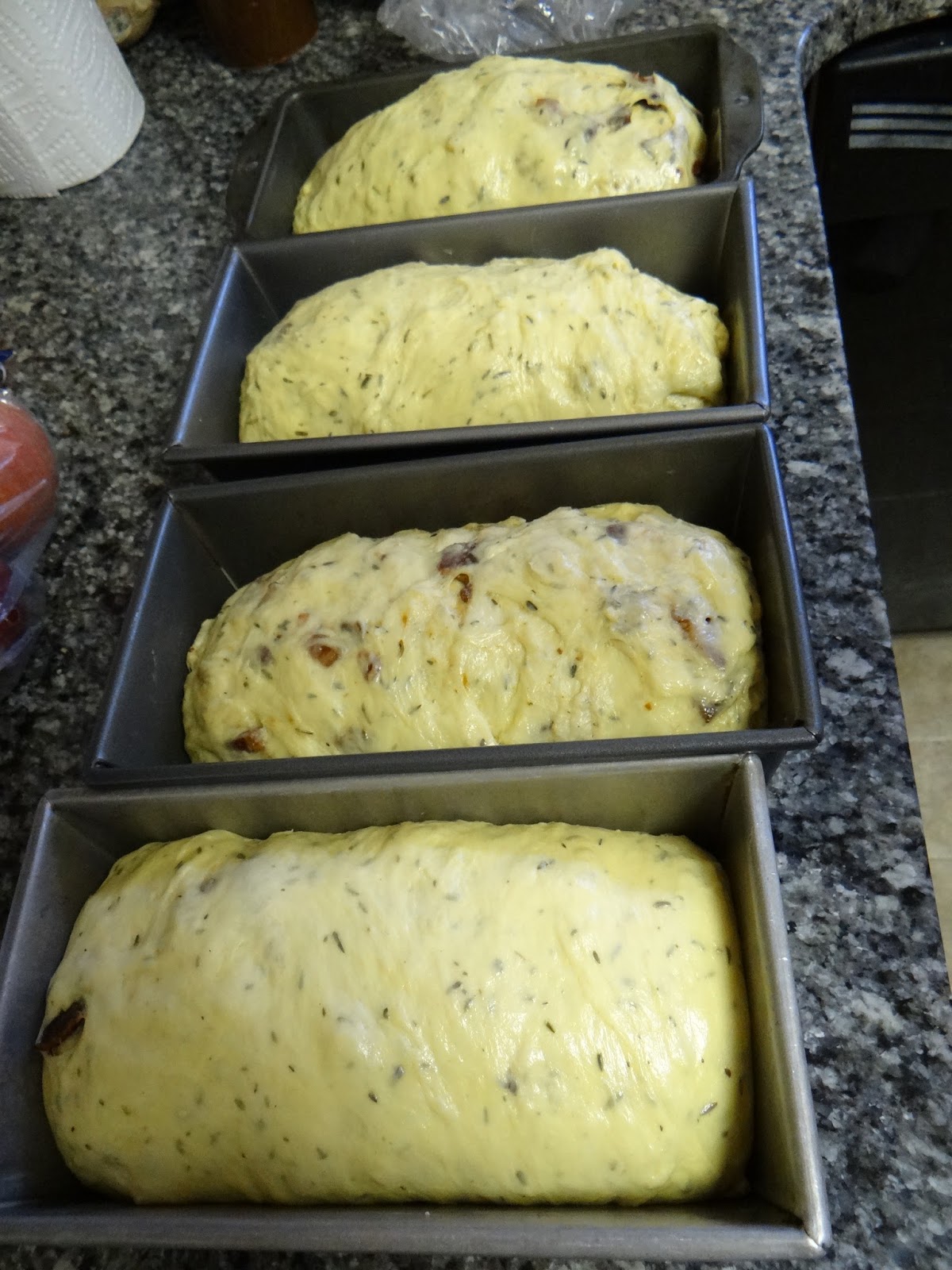
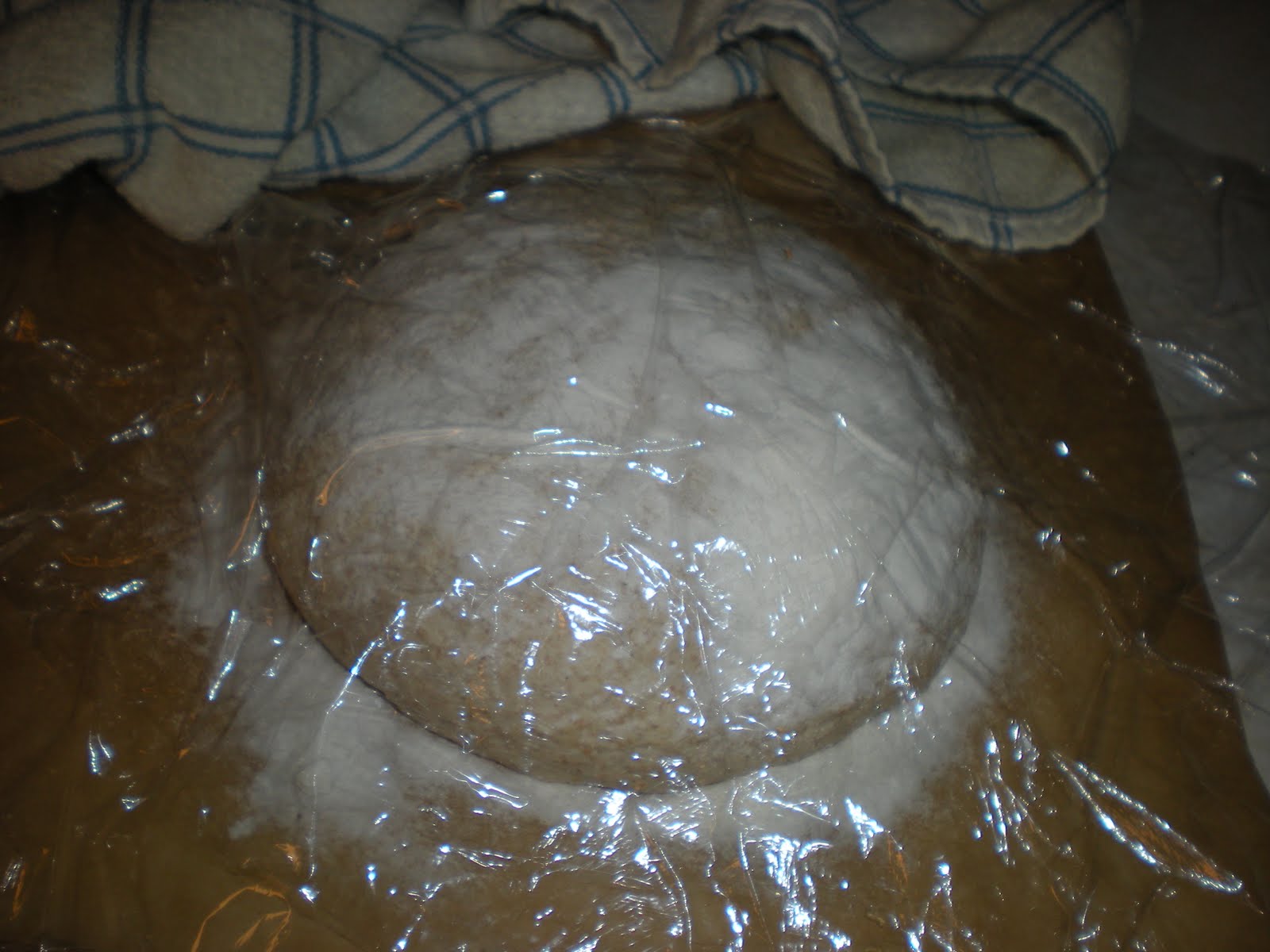
11.  At the end of this rest, roll the dough up into a Swiss-roll shape and place them into buttered bread pans, seam side down.  Preheat your oven to 400 degrees F.  Cover the loaves with saran wrap and let them rise for 45-60 minutes.

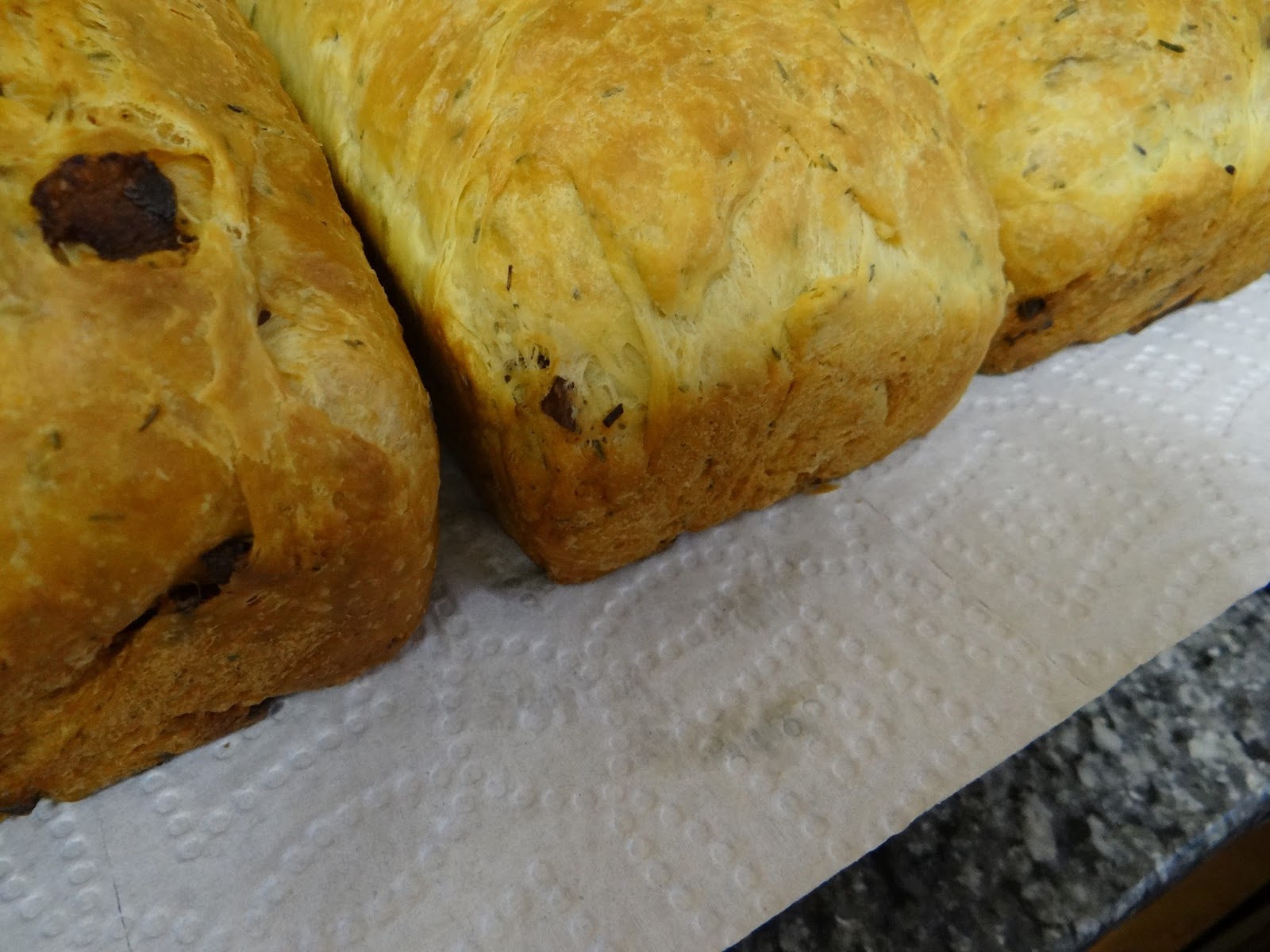
12. Bake your loaves for 35-40 minutes.  Remove from the oven when the top makes a satisfying thump when tapped with your fingernail.  Let them rest for about ten minutes before removing from the bread pan to a cooling rack.  Because these loaves are so greasy, I line the cooling rack with a paper towel.

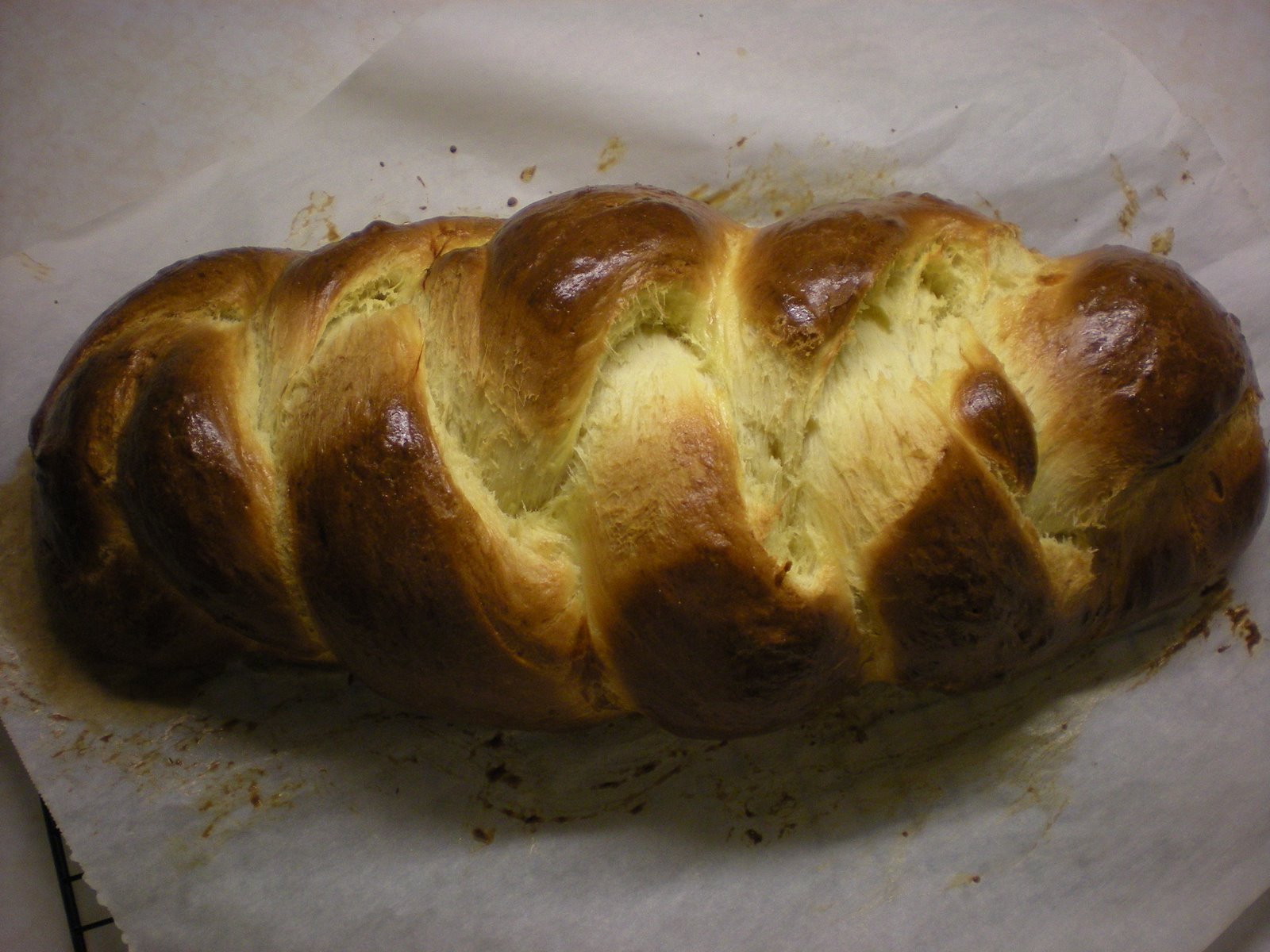
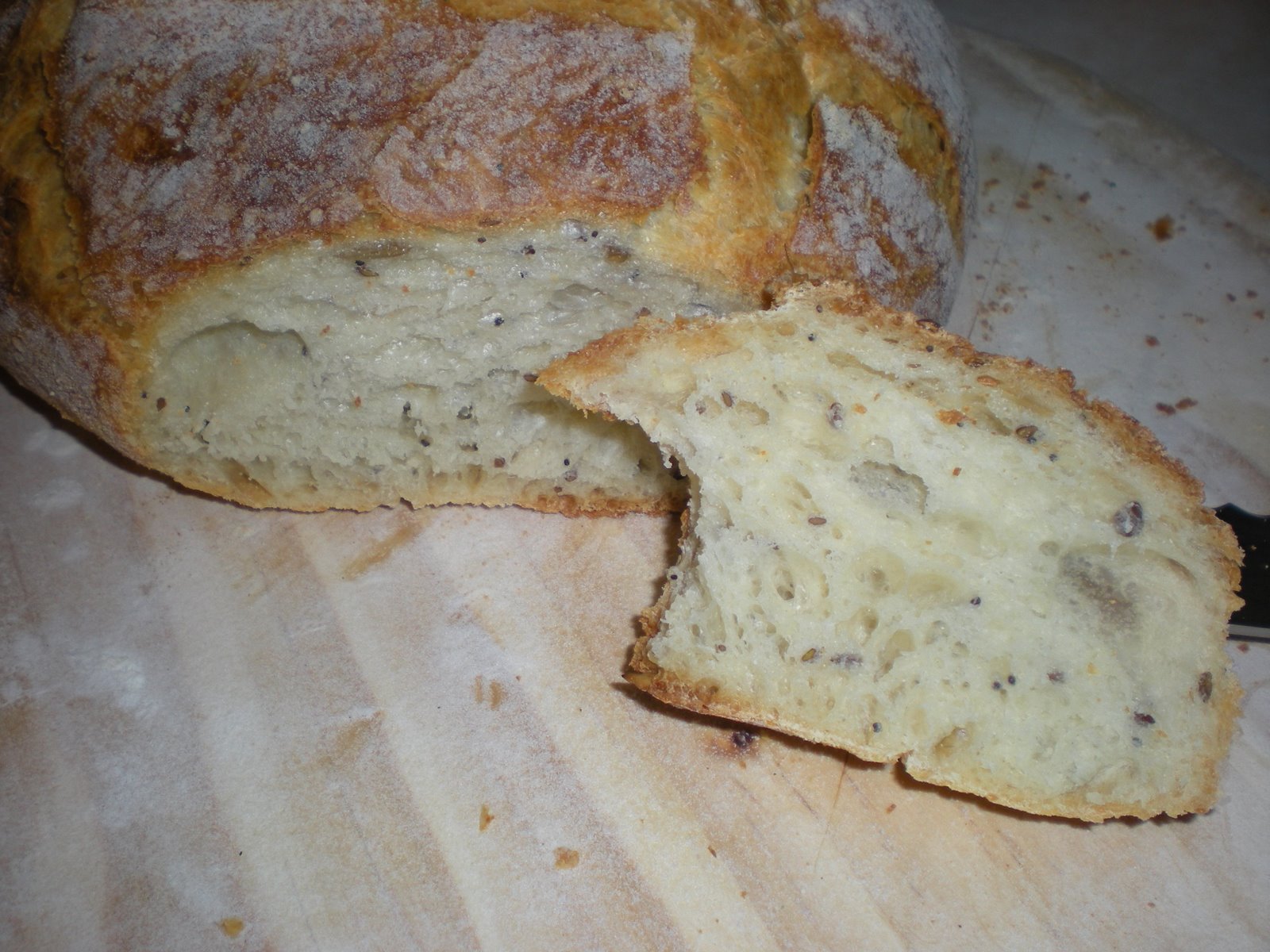
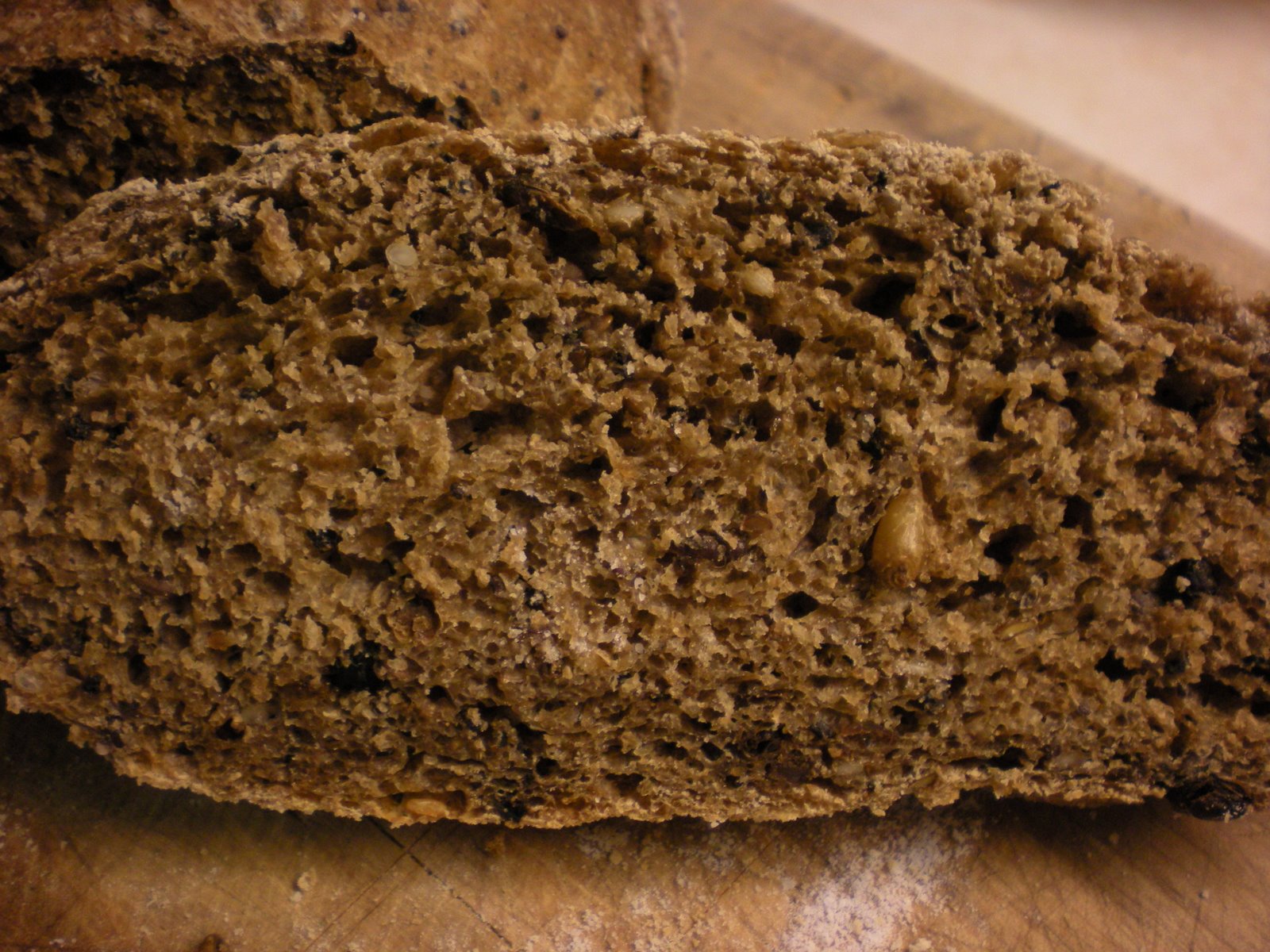
They taste like a marriage of biscuits and challah.  They are seriously so good.  Try making a BLT with them sometime.  Or french toast!
These are going to be Christmas presents!  Shhh, don’t tell anyone.

The Science Behind… scoring your dough and not being afraid

As we make our way through the “life cycle” of your bread dough, I thought I would take some time to explain one of the scariest steps to bread newbies- scoring your loaf!

Scoring is pretty important, and not just because it makes your finished loaf look pretty. 

Also, it’s really not that scary – I promise!

For this tutorial, we’ll go over:

1. What does scoring do?
2. Does all bread need to be scored?
3. How do I do it?
4. My bread collapsed when I scored it!  What did I do wrong?

1. What does scoring do?

Besides making your finished loaf pretty, as I stated above, scoring allows the loaf to have a controlled rise while baking.

Ok, let me back up.

In a bread dough, you have yeast releasing carbon dioxide, and this carbon dioxide gas is trapped by a net made of long gluten strands.  When the gluten net traps the carbon dioxide, the dough rises.  If you put the dough in a warm place to rise, it will rise more quickly.

That is essentially what you are doing when you bake your loaf of bread – you are heating the dough and causing the yeast to release carbon dioxide in a frenzied state.  The dough basically explodes with the huge amount of carbon dioxide released all at once.  How much the dough rises during the baking stage is determined by the strength of the gluten net, how quickly the crust of your dough forms, and the temperature of your oven.

By scoring your loaf in a pattern, you cut through some of the gluten net, and provide weak points for the dough to expand.  Because the dough doesn’t need to push through a thick gluten net, it will expand more quickly and thus result in a larger finished loaf with bigger holes.

Let me say that again:

You want your bread to expand as much as it possibly can in the oven.  If your gluten strands are formed properly, they will create a thick net, preventing your bread from expanding to its full potential.  By scoring your loaf, you create weak points that allow your bread to expand more easily.
If you don’t score your loaf, it will still expand, but in a jagged pattern.

Or it will find a less desirable weak point:

This crack along the side of my loaf is common in breads baked in a bread pan BECAUSE the dough exploits a weak point along the side created by the shaping process.  Sometimes you can use this to your advantage, such as in shaped loaves like braided challah:

You can see how the dough expanded at the weak points created between the braid strands.  Cool, huh?  You can see it here in these croissants too:

2. Does all bread need to be scored?

Short answer – No.  If you don’t want to, you really don’t have to.  But if you care to make uniform loaves that expand to their maximum size, you should try it.

Whether or not you should score your loaf is determined by the hydration of your dough and the temperature of your oven.

  • Hydration: If your dough is too wet, from 85% hydration to 100% hydration (or beyond!), scoring your loaf will do nothing.  It’s basically going to expand all over.  Not to mention, a wet dough is impossible to score with a knife because you don’t encounter any resistance.  
  • Oven temperature: if you are baking bread at a low temperature (375 degrees F or below), you don’t really need to score your loaf if you don’t want to.  

In summary: breads that are of average hydration (66% to 85% hydration, or your typical sandwich breads, buns, rolls, boules, and baguettes) and baked at high heat should be scored.

Breads that are high hydration or baked at a low temperature do not need to be scored.

Again, bread doesn’t NEED to be scored.  As your bread expands, it will find weak points on its own to exploit.  But scoring does provide a controlled area for your bread to expand during baking.

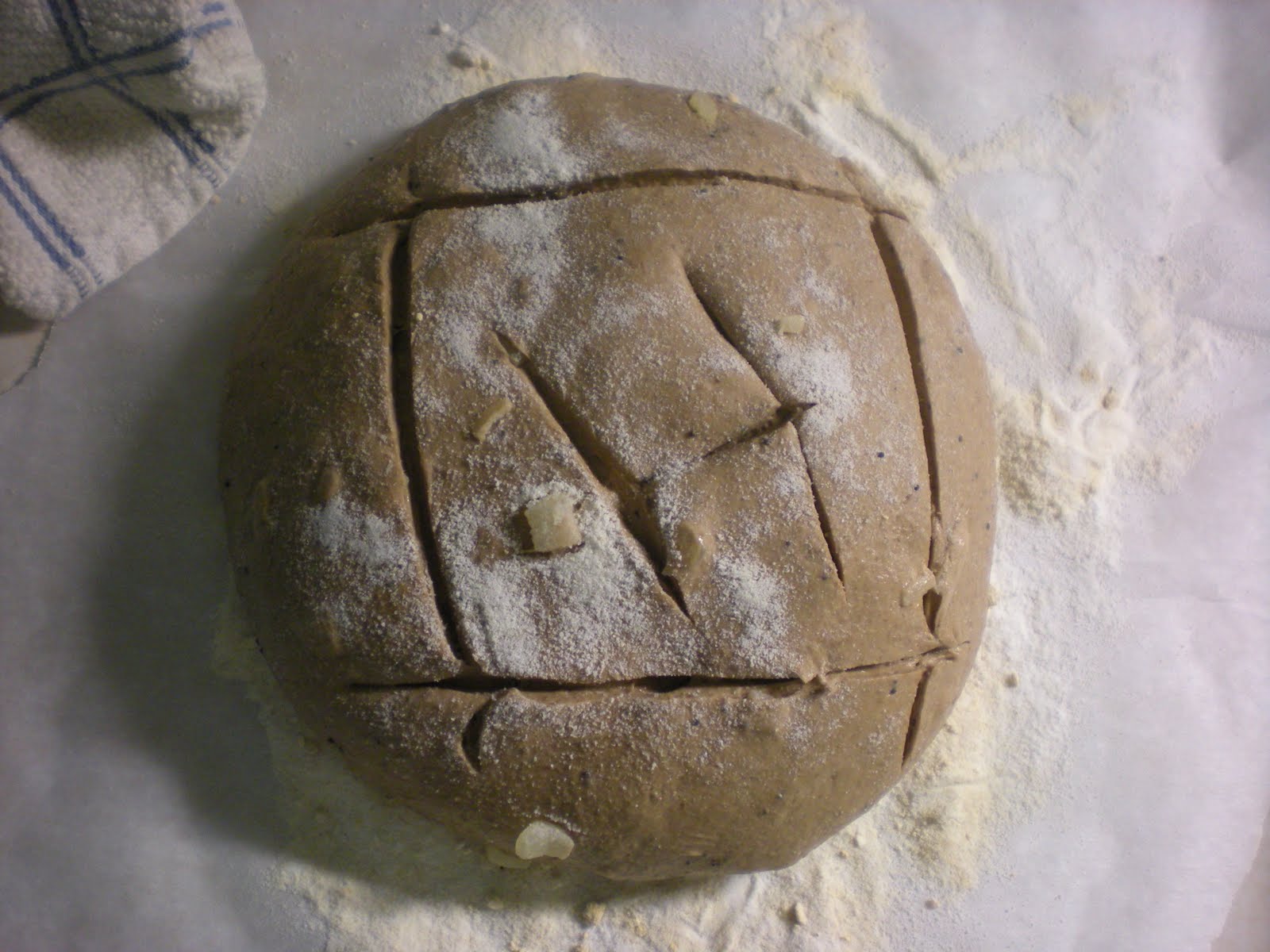
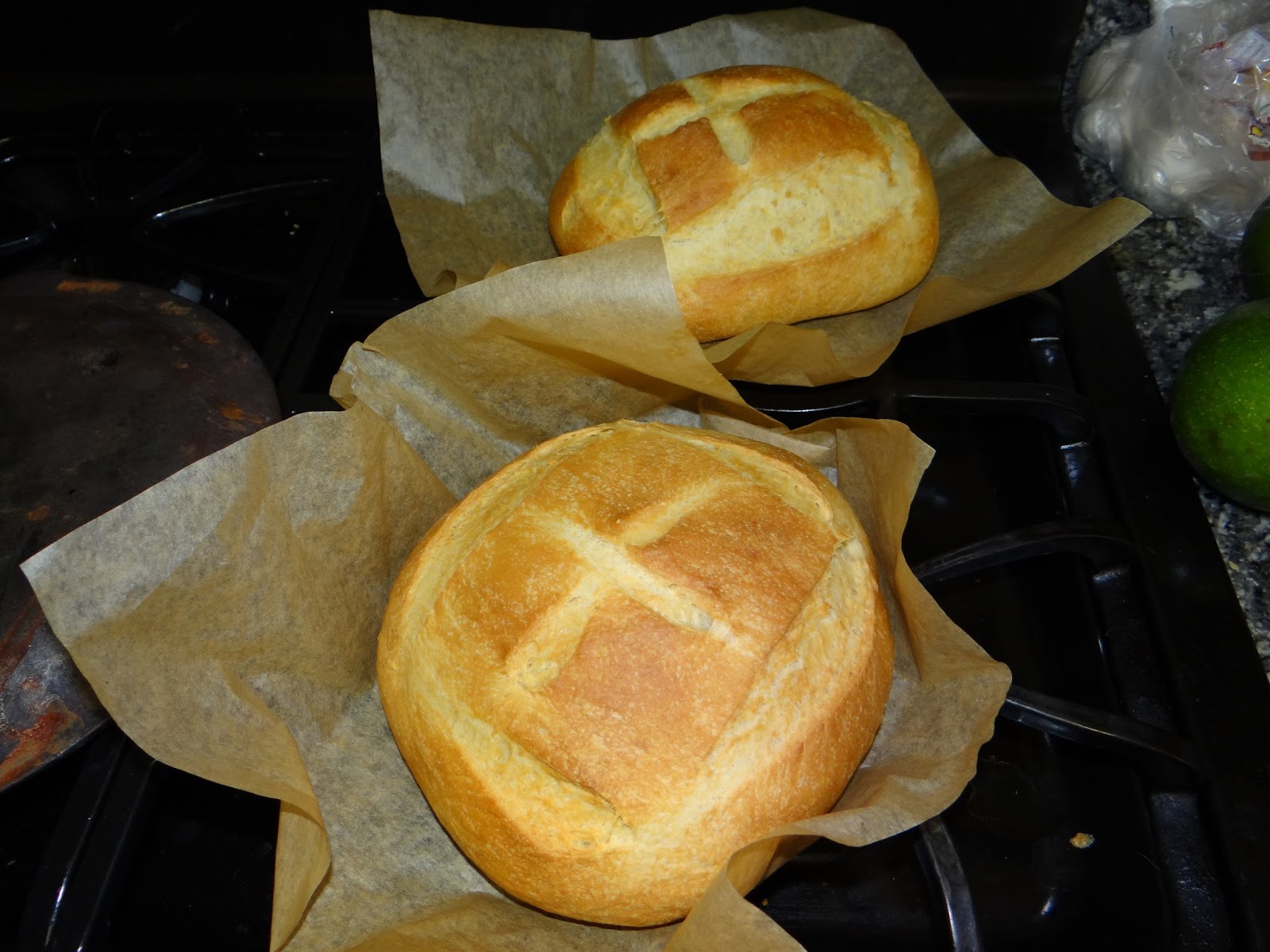
Also, don’t discount the superficial “pretty” factor!  I score my loaves differently based on who is receiving them.  Or, you can create a scoring pattern that is “yours.”  This is my usual scoring pattern for communion loaves:

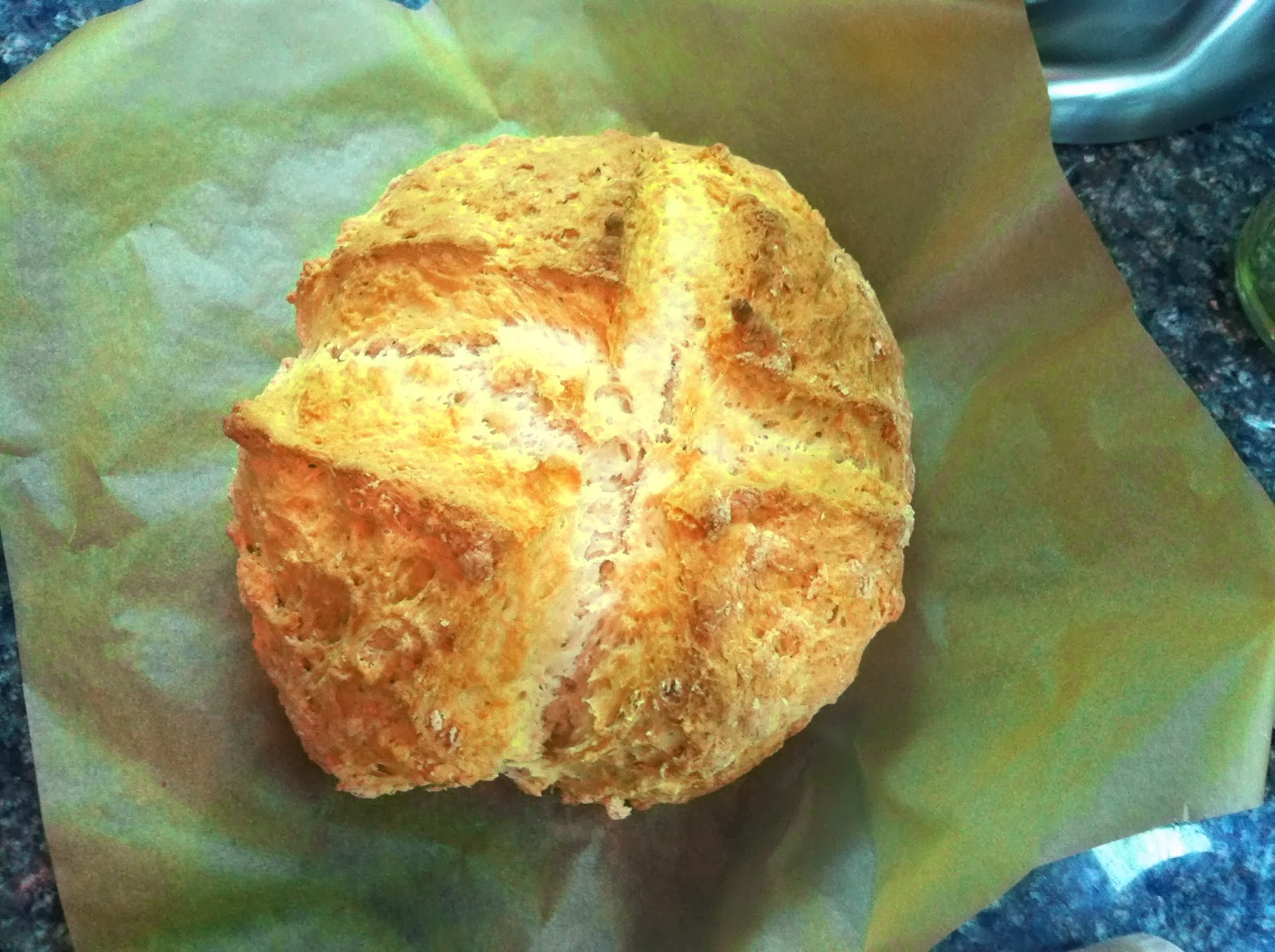
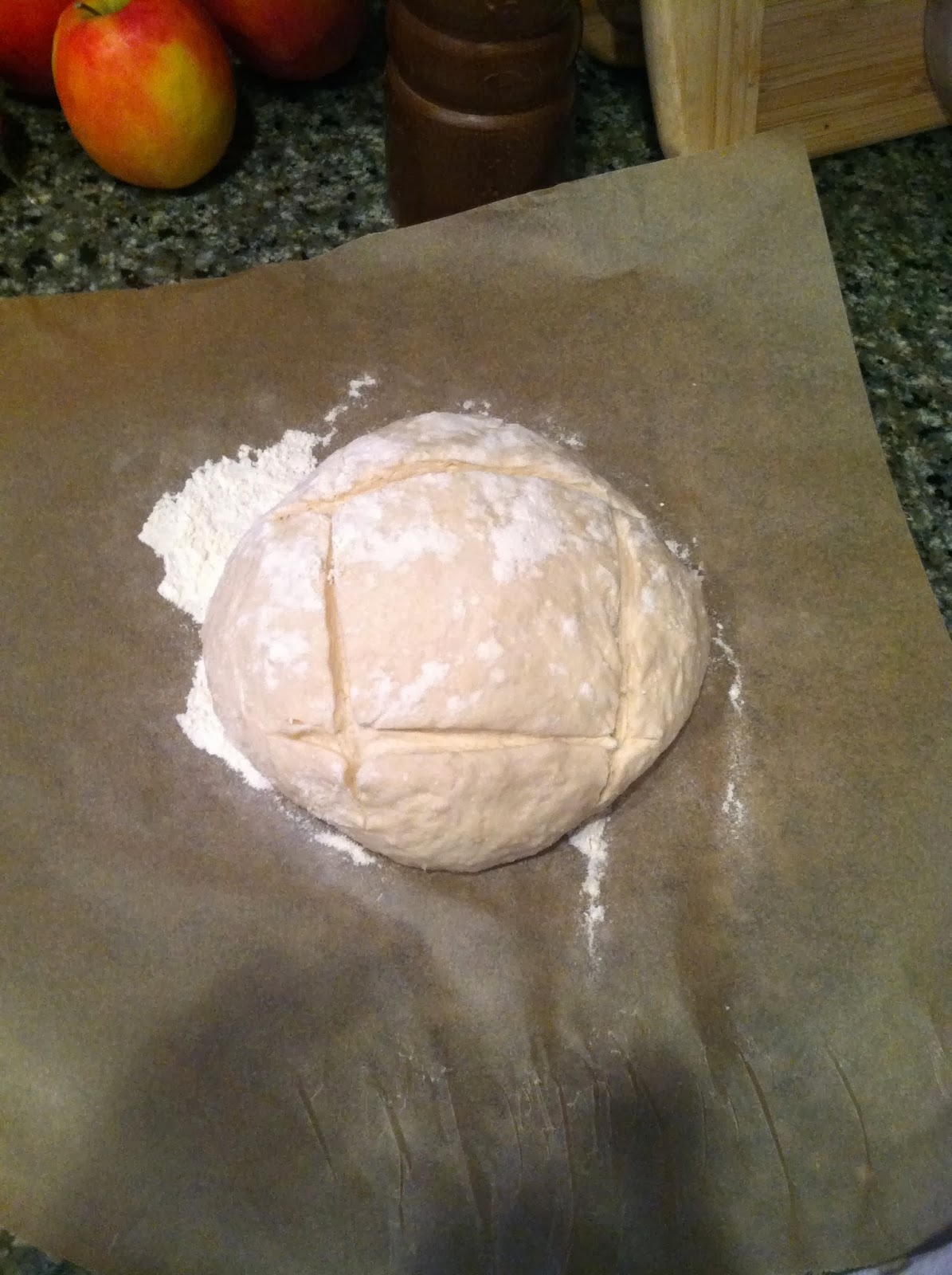
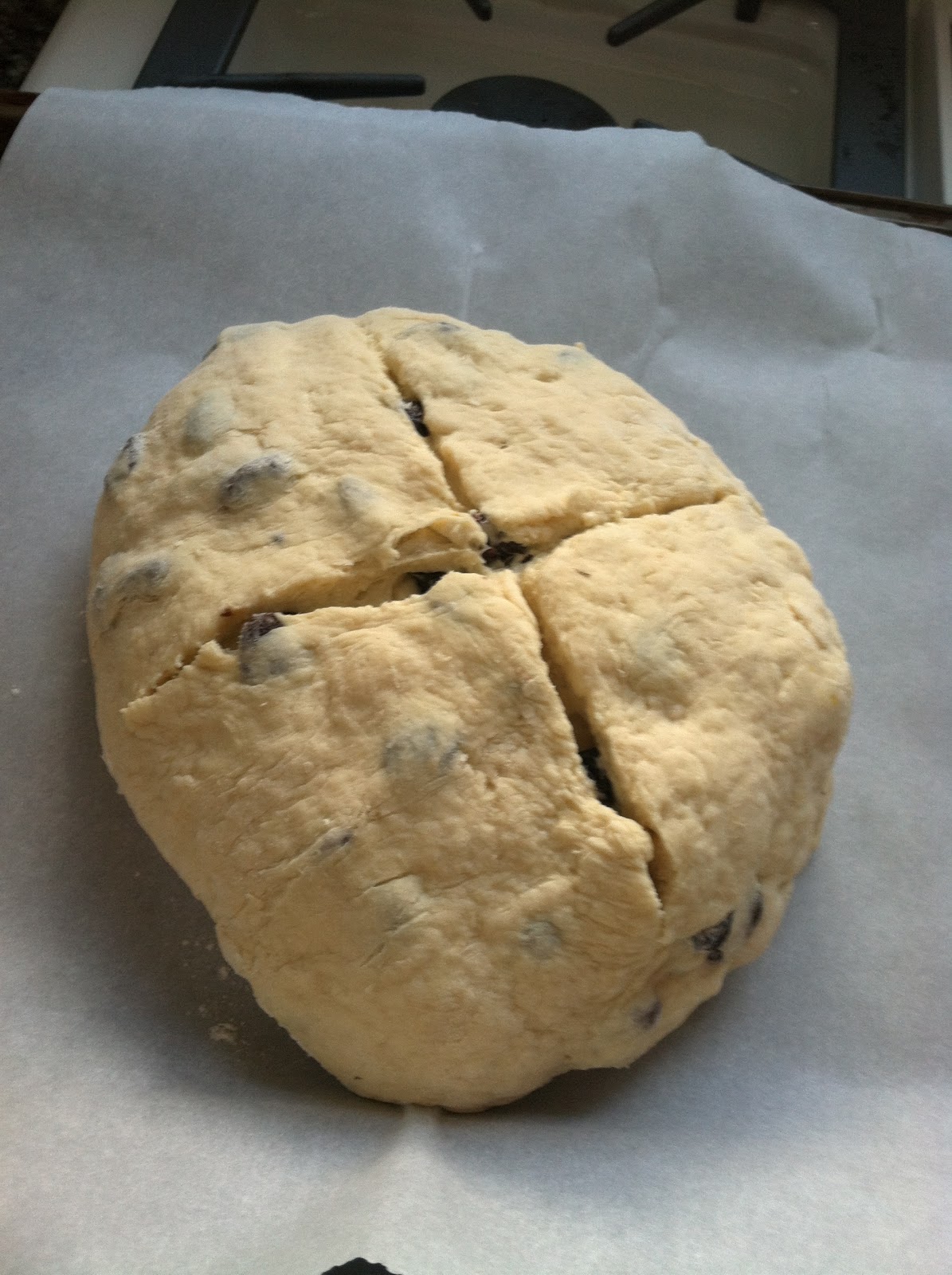
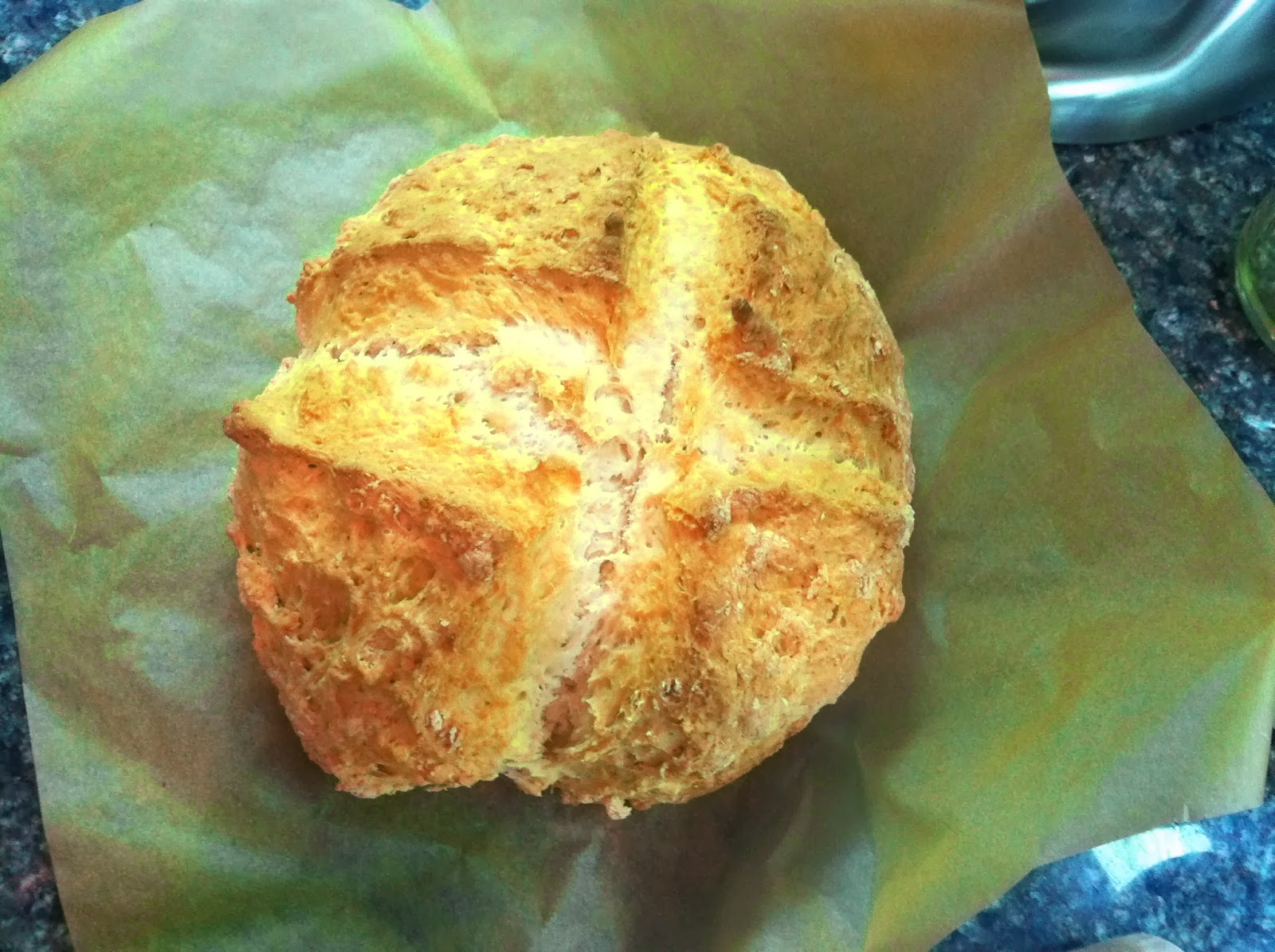
This is a typical scoring pattern for Irish soda bread:

My buns are scored with kitchen shears!

Loaves baked in bread pans get a single line across the top:

My non-communion everyday scoring pattern:

3. Ok, I’m totally on the scoring train!  How do I do it?

There are lots of ways to score your dough, as you can see above!  But how, exactly, do you do it?

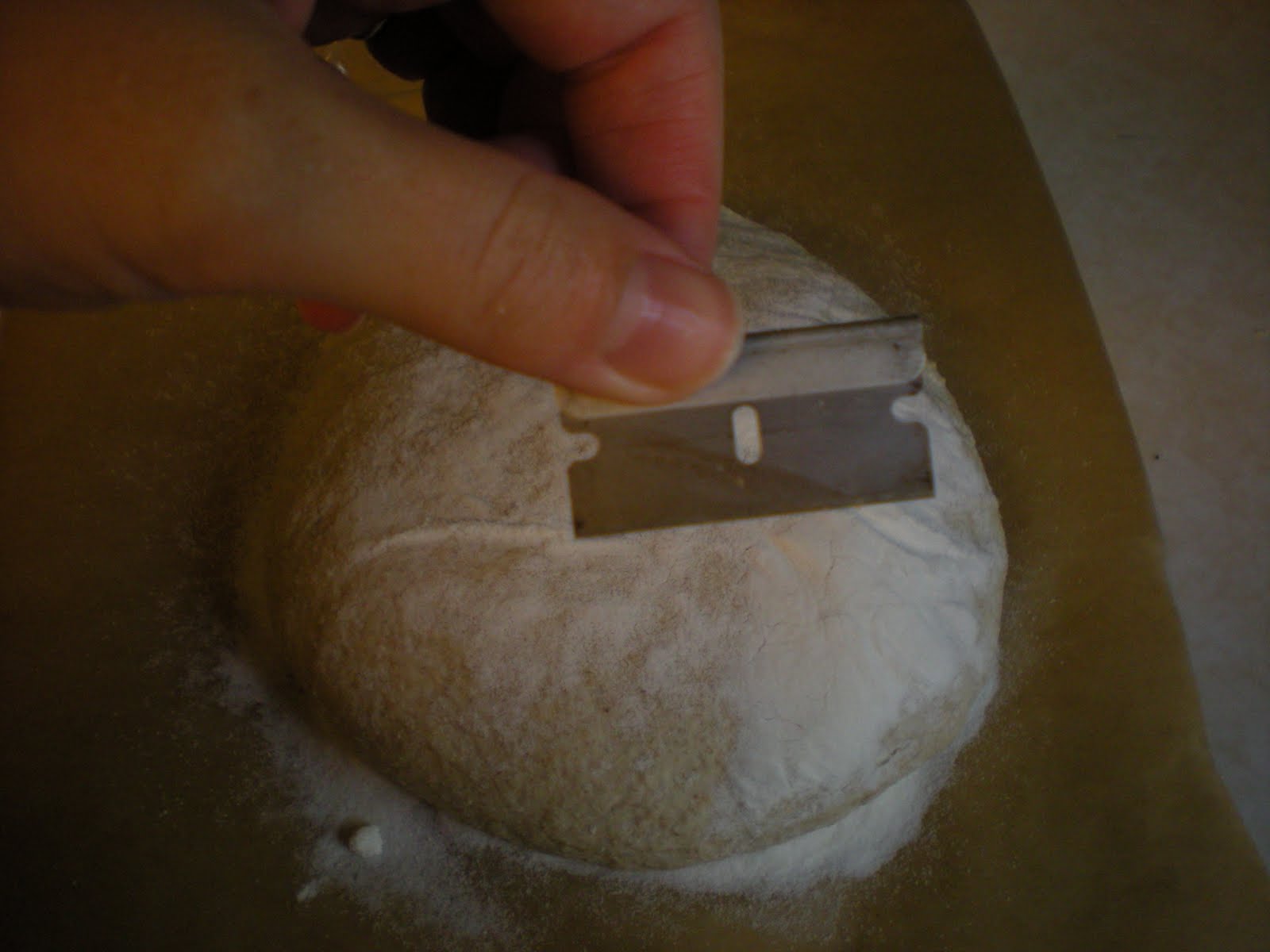
First, let’s consider our tools.  A razor blade makes very good, exact cuts.  This is what I used to use.

With kids in the house who can get into things, I switched to a serrated knife.

There are also special tools you can buy for scoring, called lames.
This video shows someone using a lame to score a baguette to make the typical “ear” pattern.
Yes, this pattern is called an ear!
 https://i0.wp.com/media2.fdncms.com/charlotte/imager/where-to-find-it-a-baguette-franandccedilaise/u/zoom/3101326/food_connecting1-1_14.jpg
Ok, now to score your loaf.
Let’s assume you have let your bread rise once, you’ve shaped your loaf into the desired shape (either boule or in a bread pan), and let it rise for the recommended time.  Your oven is hot and ready.
Pick up your chosen implement, either razor blade, knife, or lame.
Take a deep breath.
Now, using a CONFIDENT and quick motion, make a cut about 1/2 to 1 inch deep into the top of your dough.  Once you decide to make your cut, COMMIT to it.  It needs to be deep, and you need a smooth cut that is about the same depth throughout.  If you hesitate, the dough will stick to the knife and your lines will be sloppy.  Once you make the initial large cut, you can go through again with smaller cuts to make it deeper.
 A simple cross pattern is a great place to start.
A neat and easy way to score buns or rolls is to use kitchen shears!  Facing the point of the blade directly down towards the top of the bun, make two snips into the top.  That’s all you need to get that cross pattern!  So easy!
If that description was confusing, here’s a picture..

Once your loaf is scored, don’t hesitate.  It’s ready to bake!  Throw that baby in the oven and get ready for some seriously sweet oven spring (because that’s what it’s called, when the bread expands in the oven).

4. Troubleshooting

  •  I scored my loaf and the dough just deflated!
    • Some deflating is natural as gas is released from the cut edges. But if it falls flat, that means you overproofed the loaf (let it rise too long).  I would roll the dough back up into a ball, reshape it, and try for that second rise again, rather than trying to bake a deflated loaf.
    • Another option, if your dough is really, really overproofed (imagine you forgot about it and came back two hours later) is you can bake it without scoring.  This is good for high hydration doughs too, that really rely on that gluten structure to hold in all the water.
  • I scored my loaf and it didn’t expand in the oven!
    • Again, this is a symptom of overproofing.  An overproofed loaf will spread at the scored edges, rather than springing or popping open as it expands.
  •  I scored my loaf but it created a jagged pattern anyway!
    • Unlike the first two, this could be a sign of two different problems – either underproofing or not scoring your loaf deep enough.
    • Underproofing means you didn’t give the dough enough time to rise during the second rise.  
    • If you didn’t score your loaf deep enough, the dough won’t expand exclusively into the  weak points your scoring was supposed to create.  

I hope you learned a lot from this edition of The Science Behind!  Don’t be scared to score your loaf- it makes a big difference.

The Science Behind… shaping your dough

Hey everyone!

I hope you have enjoyed reading these posts as much as I have enjoyed writing and sharing them with you!  My favorite part of baking has been sharing my knowledge with others and passing it along.

After you have let your bread rise and ferment, you will want to shape it and give it one more short rise period before baking.  During this time, you can shape your dough into a simple round shape or something more complex.

In this post, I will touch on the following topics:

1. Why do you need to shape your bread?
2. When is it better NOT to shape your bread?
3. How/when do I do it?
4. What shapes can I do?
5. What are some tips for successfully shaping a boule/using loaf pans?
6. My dough is shaped, now what?

 Ready?  Let’s dive right in!

1. Why do you need to shape your bread?  Shaping your dough does a few things.  First, shaping your dough after the rise and ferment will make sure the gluten formation is uniform and strong across the loaf.  Gluten formation is key for baking bread because, as I’ve tried to emphasize throughout this series, successful bread is all about creating the correct relationships between the yeast, which exudes carbon dioxide bubbles, and the flour and water, which create a net of gluten to trap the bubbles.   When gluten proteins initially form, they are all squiggly.  By shaping your dough, you stretch them out to create a better net.
 

You can kinda see the gluten strands running criss-cross over the top of this loaf.

Second, by shaping your dough you create small, uniform holes throughout your dough.  This is good particularly for breads like sandwich breads. 

Another reason to shape your bread is that it provides weak points for your bread to spread during baking.   By controlling where and how the bread spreads, you can make it look pretty.  For example, look at a few breads I’ve done in the past:


The sky is really the limit!
 
If you don’t shape your loaf, it will still rise when you bake it.  But it will have a more irregular shape.  For things like ciabattas, that is fine.  But even ciabattas benefit from some light shaping before they go in the oven, as you can see Peter Reinhart demonstrating here.

2. When is it better NOT to shape your bread before you bake it?  There are two reasons not to shape your bread: 1) you want REALLY big holes, irregularity be damned, and 2) if the dough is very high hydration, you won’t really be able to shape it beyond some basic stretch and folds.
In this video, Jim Lahey barely shapes his dough before tossing it in the oven (at about 2:17).

3. How /when do I do it?
This video (sorry for all the videos, but this is a step that really benefits from showing rather than telling!) shows how to shape a dough for a sandwich loaf.

As you can see, you want to shape your dough after it has gone through the first long rise (leavening/fermentation).  The baker gently deflates the big bubbles, rather than punching it down the way most cookbooks used to advise (I still sometimes punch the dough down if I’m feeling…punchy that day 😉  The key for shaping a sandwich loaf is making sure to really pinch together the seam so it isn’t a weak point and blow out during baking, like this:

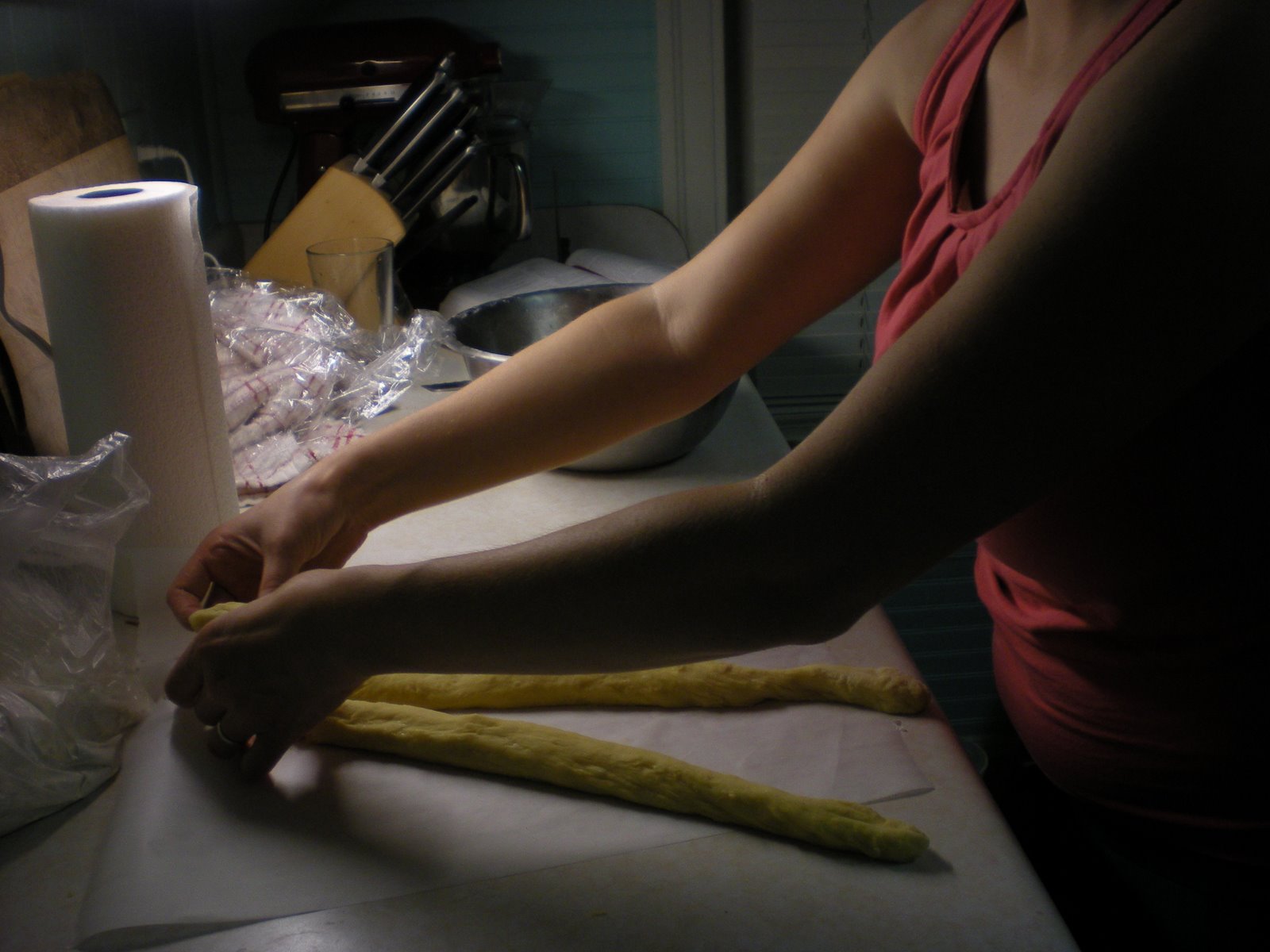
After you gently deflate your dough, you will want to divide it into the size dough you need (if your dough is the exact size you need, skip this step).  If you are making rolls or pretzels, you need to figure out how many pieces you need.  Or if you are making a four- or three-stranded challah, divide the dough into the right number of strands.  A kitchen scale and calculator can help you get pieces of uniform size.

a bench scraper makes this process easier

After you divide the pieces, cover the dough with a towel or plastic wrap and let it rest for about 10 minutes.  This will give the gluten a chance to regroup and relax after the dough has been divided.

Once you have let the dough rest, you are ready to shape.  Make sure your hands are clean and dry, and sprinkle some flour on a clean flat surface like your countertop.

An easy shape to do is a boule (round ball).  After the rest on the counter (sometimes called a bench rest), do a few stretch and folds.  Then pick your dough up in your hands with your thumbs on top of the dough and your other fingers under the dough.  Gently bring the edges of the dough underneath until the top of the dough is smooth and taut.

Transfer the dough to a piece of parchment and let the dough rest one more time for about an hour. 

4. What shapes can I do?  The answer to this question is obviously what shapes can’t you do.  Moving on.

Just kidding!  The internet has tons of tutorials on different shapes.  There are also traditional shapes for different breads, such as baguettes for french breads, brioche a tete, challah breads, folded-over stollen, etc. etc.  That is a good place to start, since some breads are a particular shape for a reason, which I talk more about below. 

5. what are some tips for successfully shaping the boule/using loaf pans?

  • My #1 tip for  shaping your dough is this: making sure your dough is the correct hydration for the shape you want.  You will not get a complicated challah braid from 100% hydration dough, no matter how many stretch and folds you do.  The sweet spot is about 66-70% hydration for most shapes.  Boules can withstand higher hydration.
  • Think about what you want the bread for.  Some shapes are utilitarian, while others are more fanciful and festive.  Sandwich bread is baked in a loaf shape for a reason.  As you might know, I bake bread for communion for my church.  I realized that the easiest shape to cut small cubes from was not a boule, but a loaf pan shape.  But I knew a loaf of sandwich bread would look silly at the front of the sanctuary.  Now I bake one boule with a fancy scoring pattern for the “look pretty” bread, and one sandwich loaf for the little communion pieces that are passed around and eaten by the congregation.
  • Use the right ingredients.  If your dough is full of dried fruit, it might be hard to shape into a delicate pattern.  Whole wheat flour might also be difficult to shape (though not impossible) because of its lower protein content.
  • Make sure to get enough gluten formation before you shape.  The typical shape of Irish Soda Bread looks like this:

    Why?  Because it is leavened with baking powder and baking soda.  These chemicals are activated immediately, so there is almost no time for gluten formation.  You have to slap that dough into a round shape, score it and bake it.  A dough with very little gluten formation will not hold a shape well.  For tips on kneading and gluten formation, check out this post.
    • Use the right baking temperature. When dough is baked at high temperature, the yeast goes nuts and produces a ton of carbon dioxide, basically blasting open your dough at any weak points.  For a boule, this is encouraged.  For a shape like challah, you want to prevent this from happening.  So you need to bake most shapes slowly to preserve the smooth crust.
    • Use an egg or milk wash before baking to prevent your dough from cracking. A dry crust will split and not look as nice.  An egg or milk wash will provide a little moisture so the dough can expand in the oven without cracking.  I’m partial to an egg wash since it leaves that nice sheen!


       6. My dough is shaped!  Now what do I do? At this point, your bread is almost ready. You will want to make sure your dough doesn’t dry out during this period, so you can either 1) invert the bowl you used to leaven the dough on top of your shaped dough thusly:

      Or, you can cover your dough with a piece of plastic wrap.  If you are worried about the plastic wrap sticking to the dough, you can cover the dough with flour, semolina or rice flour before you use the wrap.

      Now, all that is left to do is preheat the oven and wait about an hour before you bake.

      I hope this post has illuminated the purpose behind a small but important step.  If you have any other questions, please let me know in the comments.

      The Science Behind… the risen loaf

      Hello everyone,

      Today we’ll be discussing the most misunderstood part of breadbaking … the rise!

      In this post, I’ll be addressing:

      1. What do you mean, “rise?”
      2. Why does bread need to rise?
      3. What causes bread to rise?
      4. what causes bread not to rise?
      5. How can I make it rise faster/slower?
      6. Differences between baking powder/baking soda/ commercial yeast / sourdough starter

      Ready?  Let’s go!

      1. What do we mean when we talk about bread rising?  Think about the last time you ate a piece of bread.  It probably had either big or small holes inside the soft part of the bread.  Those holes were made during the rising stage. A successful rise is crucial for good bread.


      2. Why does bread need to rise?  Bread that doesn’t go through a rise is very dense.

      Think about it: if you are familiar with the story of Passover, you know that the Hebrews didn’t have time to let their dough rise in their escape from Egypt and slavery so they baked it unleavened.  Eating matzo, which looks like a large crispy cracker, is the way modern Jews observe the prohibition on leavened bread during Passover.  Crackers are a type of unleavened bread.

      Side note: one time in Sunday School, we were doing a lesson on the Passover and I brought two loaves of bread that were made with exactly the same ingredients and baked the same, but one was allowed to rise and the other wasn’t.  The taste difference was pretty amazing!

      Some breads only rise in the oven, such as quick breads like banana bread.  However, yeast breads require a separate leavening step because the gluten net needs to form to trap the carbon dioxide bubbles that eventually create the holes you were admiring in question #1.  The period of time when a bread dough rises is also referred to as its fermentation, proofing, or leavening period.  I’ll explain more about this in a second.

      3. What causes bread to rise?  Let’s back up for a second and talk once again about the science of bread.  If you’ve been following this series of posts, you know that yeast bread relies on the relationship of three ingredients: flour, water, and yeast.  More specifically, 1) the relationship between the gluten net created by the flour and the water, and 2) the production of carbon dioxide as the yeast eats the sugars in the flour.  A successful bread is one in which the gluten net successfully traps the carbon dioxide.  These two processes must work in tandem.

      So why all the fancy words for the rising step?  They describe different chemical changes that occur.  The proofing or leavening, is what you call the physical rising process that you can see.  Fermentation, however, is how flavor develops during the rise.  You see, not only carbon dioxide is released when yeast eat up all the sugars created by the flour and water.  Other gases are released as well, and these develop the flavor of the bread.  That’s why, if you try to rush the process by adding a ton of commercial yeast, your bread won’t taste as good as if you let it rise slowly, trapping in all those yummy gases.

      4. What causes bread not to rise?  Sadly, lots of things can cause your bread not to rise properly.

      don’t let this happen to you!
      • First, the environment.  If you set your dough to rise in a cold room, the yeast will eat very slowly and the dough will take a very long time to rise.
      • Second, if your liquid ingredients are too hot, that can kill the yeast.  A good way to tell if your liquid is too hot is to stick a finger in it.  If you can keep it in there comfortably, then it’s the right temperature.
      • Next, insufficient gluten formation could be a culprit.  You want the dough to trap the carbon dioxide.  If you have a very wet dough, do a few stretch and folds to strengthen the gluten.  Some flours, such as bread flour or all-purpose flour, have higher amounts of protein and form stronger gluten strands.  Whole wheat and rye flours do not form gluten easily.
      • Finally, if the yeast is old it won’t activate properly.  Before adding it to the dough, it’s always a good idea to add the yeast to a small amount of warm water or milk to make sure it’s activating before adding it to your dough.  You will know it’s working when small bubbles form and it smells yeasty.
      • I guess one more culprit for your unrisen dough is if you are using sourdough starter that is not sufficiently activated, or you didn’t use enough for the size dough you are looking to make.

      5. How can I make my bread rise faster? There are a few different ways to make your bread rise faster, although I would definitely proceed with caution here.  The best flavor comes from giving yeast a long time to rise and release tasty gases during fermentation.

      • Make sure to put the dough in a warm environment.  If someone has recently taken a shower and your bathroom is warm, put the dough in there.  Or the warmest room in the house.  Don’t go too hot though – you don’t want to accidentally cook your dough! 
      • Use warm water instead of cold.  Again, give it the finger test to make sure it’s not too hot!
      • Knead your dough or give it periodic stretch and folds to strengthen the gluten.  
      • Use more yeast.  This is the tip that comes with the biggest caution.  Remember, yeast works in tandem with your gluten net.  If you have too much yeast and not enough of a gluten net formed, the yeast will produce tons of carbon dioxide, the dough will rise too quickly, and the carbon dioxide will escape, causing your dough to fall.  Too much yeast can be too much of a bad thing.  When I say too much, I mean anything more than 2 1/4 teaspoons of yeast per loaf.

       What if I want to make it rise more slowly?  Pretty much just do the opposite of what I advocated above. 

      • Put your dough into the refrigerator.  I usually mix my dough, cover it with plastic wrap, and put it in the refrigerator overnight.  Then I take it out the next morning and let it rise over the course of the day and bake it the next evening.
      • Use cold water instead of warm.
      • Use less yeast – 1/2 to 1 teaspoon should do it.
      • leave your dough alone – once you have mixed it up, don’t mess with it.  Messing with your dough = more gluten formation = faster rise.

      bread fail

      6. Differences between baking powder/baking soda/ commercial yeast / sourdough starter.  Most of this post has been about using commercial yeast for leavening your bread. 

      • Baking powder and soda:  Anyone familiar with quick breads like banana or zucchini bread knows that baking powder and baking soda can also be used to leaven bread and give it a light, fluffy texture.  How it does that, however, is very different.  Because baking powder and baking soda are activated upon contact with water, milk or an acidic liquid, they need to be baked right away – no separate leavening step.  Breads that use baking powder and baking soda have very little gluten formation and the taste and texture are more like crumpets or biscuits.  In order to make sure your baking powder and baking soda dough will be successful, always use fresh powder and soda.
      •  Sourdough starter:  There is another way to get maximum flavor out of your dough – using a sourdough starter.  In order to use sourdough starter, you need to feed it daily to keep it active.  The amount of starter you add to a recipe should be about 1/5 or 1/6 of the total weight of the dough.  Dough that uses starter exclusively for its leavening purposes takes a longer time than one that uses commercial starter, so plan accordingly.
      Update on the sourdough starter – I borrowed a sample from my MIL and it’s now going gangbusters!  I’ll hopefully have a post about it soon. 
      I hope this post was helpful.  If you have other questions about yeast or the fermentation process, please let me know in the comments.

      The Science Behind… measuring your ingredients

      Hello all, and welcome to a new “The Science Behind…” post.

      It might seem obvious to you, but but measuring your ingredients correctly is the first step to good bread.

      In this post, I will answer the following:

      1. Why is measuring accurately so important?
      2. Do I have to switch from volume to weight measurements?
      3. What if I want to continue using volume instead of weight measurements? How can I be MORE accurate?
      4. I want to make rolls / divide my dough after the first rise.  How do I do that accurately?

      So here we go!

      1. Why is measuring accurately so important?  As I’ve said in other posts, the relationship between flour, water and yeast in your recipe determines how successful you are in creating a delicious loaf of bread.  Flour and yeast must mix together in the correct proportions to create the gluten net that traps the carbon dioxide released by the yeast activated by the water to eat up the sugars in the flour.

      • If you add too much flour, the dough will be too dry.  
      • If you add too little flour, the dough will be wet and it will be difficult for the gluten net to provide enough structure for the loaf.  
      • If you don’t add enough yeast, the dough won’t rise properly.  
      • If you add too much yeast, the dough will rise too quickly and then fall flat because the yeast have exhausted all the sugars in the loaf.  

      Measuring accurately is the best way to keep the ratios of flour, water and yeast consistent, time after time.

      Here’s a problem with the way we measure ingredients in this country: they are NOT accurate for ingredients that can be packed down, have surface tension, or are sensitive to moisture in the air.  I’m talking about flours and liquids.  We have developed all kinds of tricks for measuring accurately by volume, some of which you may have learned in Home Ec, back when that was a class you could take.  You learned that you should sift flour, then spoon it into your bowl.  Or you were instructed to scoop the flour into your measuring cup and level it off.  Some people just scoop out of the flour bag and shake a little to level the top.  For measuring liquids, you use a separate measuring cup and, with the cup at eye level, pour until you reach the desired amount.

      But even these methods aren’t perfect.  Cookbooks don’t always say what method of measuring flour they used to create the recipe, and based on your preferred method of measuring the actual amount of flour by weight could vary wildly.  You cannot switch up the liquids cup from the solids cup because you have to account for surface tension- a liquid such as water can rise high above the top of a measuring cup, also causing for a large variation in weight.  Some ingredients don’t fit well into their measuring containers, such as cold butter.  Have you ever tried measuring out 10 tablespoons of butter??

      There is a better way: just going ahead and measuring ingredients by weight.  I’ve mentioned it before, particularly here in my post about hydration.

      Buying a kitchen scale is one of the best things I ever did for my baking.  Not only does measuring by weight make your baking more accurate, but there’s the added bonus that everything gets measured into your bowl.  You don’t have to use every measuring cup in the house, so there’s fewer dishes to wash.  My lazy heart sings!

      2. Do I have to switch from volume to weight measurements?  I mean, no one’s requiring you to do that.  But if I haven’t made it obvious by now, it’s a switch that is all to the good.  It gave me a lot of confidence as a baker, because I knew I was following a recipe to the letter.  I could also easily scale up or down.  And if something went wrong, I could troubleshoot the solution.

      As baking by weight has caught on among American home bakers, most cookbook authors have started including measurements by weight, not just by volume, in their recipes.

      However, say you have a recipe in the Joy of Cooking that you really like. The ingredients are measured by volume.  What do you do?  For some ingredients, I just do the best I can.  With others, like the butter, I’ll look up the weight in butter of 10 tablespoons, then write it into the recipe.  That way, next time I make it I’ll know the weight and it’ll save me a lot of time.

      Also, my guiding principle has always been laziness.  For most ingredients, it’s easier to measure by weight.  However, for small amounts of ingredients, such as yeast and salt, I’ve found volume is actually faster.  So I use a teaspoon of salt and a teaspoon of yeast for my usual simple white bread.

      3. What if I want to continue using volume instead of weight measurements? How can I be MORE accurate?

      If you really don’t want to switch to weight measurements, there are some ways to make your baking more accurate.


      •  Make sure you are using the correct measuring tool for the type of ingredient you are measuring. Dry ingredients need a cup or spoon with a flat top so you can level off any excess.  Liquid ingredients should use a transparent measuring cup of clear plastic or pyrex that is larger than the amount of liquid the recipe calls for.  Then, kneel down so your eyes are directly at the level of the measuring cup.  Don’t look down or up at the cup or it won’t measure accurately.  Pour the liquid into the measuring cup until the liquid hits the line exactly.
      • You can always add more flour, but you can’t take it out.  If a recipe calls for four cups of flour, add the first three, then add the fourth a little bit at a time until you don’t need any more.  That way, the humidity of the air and your method of scooping flour don’t matter as much, and you can focus on the way the dough looks and feels, rather than the exact volume of flour.
      • For flour, sometimes the introduction or the appendix to a cookbook will tell you how the author measured the flour for their recipes.  Otherwise, I use the scoop method, where you scoop the flour into the cup and use the dull side of a knife to level it off.
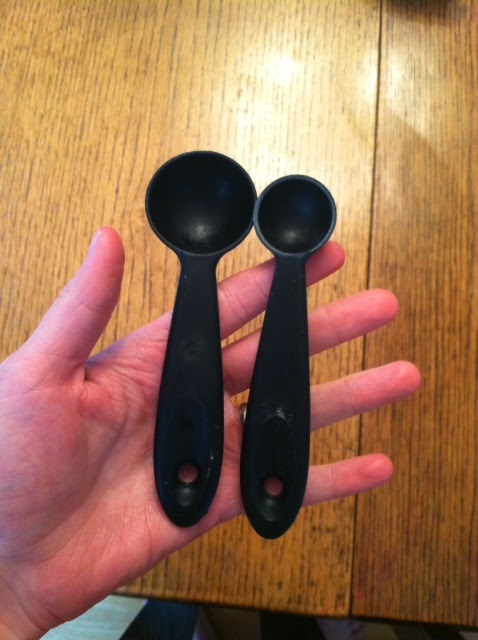
      •  I only use a tablespoon and a teaspoon.  For every other measurement, I just eyeball it.  You don’t need a million measuring spoons.  For things like spices, it doesn’t really matter if you add 1/8 teaspoon or 1/4 teaspoon.

      4. I want to make rolls / divide my dough after the first rise.  How do I do that accurately?  This is another area where accuracy can make the difference between a hodge podge of under- and over-cooked rolls, or a tray of perfectly browned rolls.  I recommend this for yeast breads, rather than muffins, because the yeast rolls require a second rise, and for muffins which use baking powder and baking soda, time is of the essence.

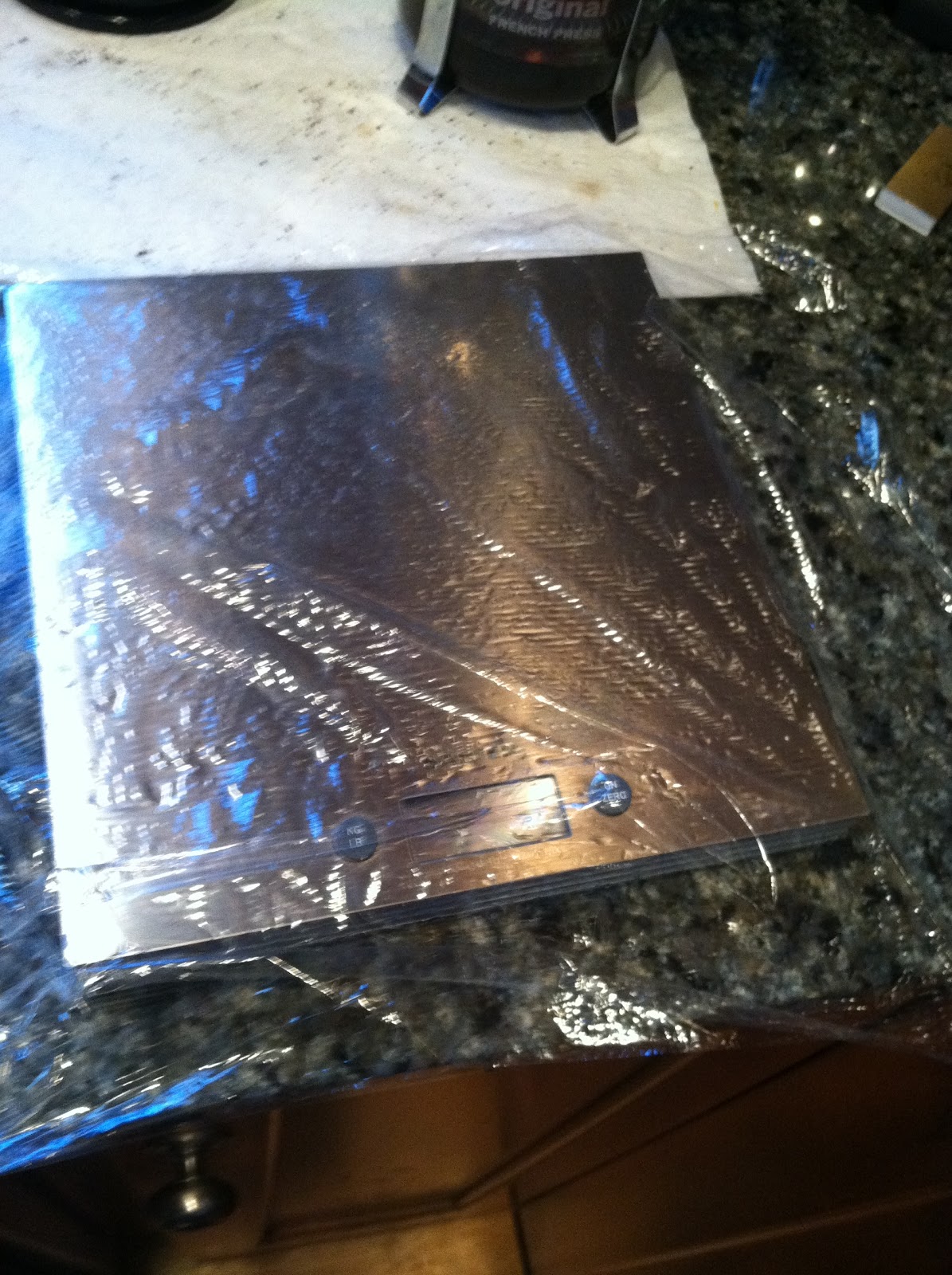
      Here is what you do.  First, coat your scale with a piece of plastic wrap.  

      Plop your entire dough onto the scale.

       Once you have the weight of the total dough, it is easy to divide it into the number of loaves or rolls you plan to make. 


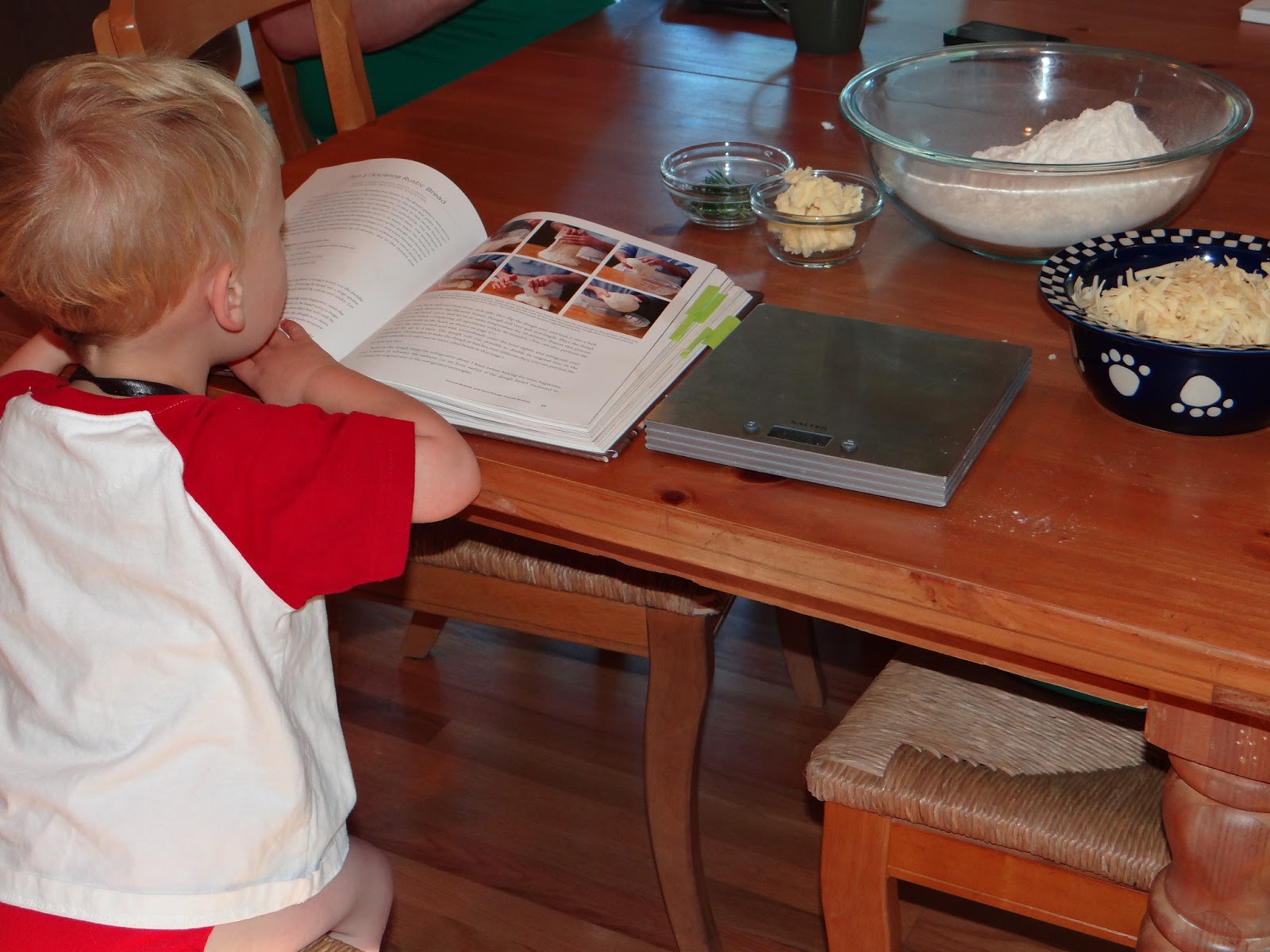
       I love this picture of Little Bread Boy looking at the cookbook!  I haven’t seen this picture in years.  Gah, so cute.

      I hope you’ve learned a lot about the importance of measuring your ingredients.  Stay tuned for the next edition of “The Science Behind!”

      The Science Behind… Thanksgiving hangover muffins

      It’s been almost a week since Thanksgiving, so here is the latest edition of “The Science Behind…,” where I explain what is going on in muffins generally, and my Thanksgiving hangover muffins in particular.

      If you haven’t already, please check out the recipe for Thanksgiving hangover muffins here.

      1. How are breads and muffins different?
      2. How is baking with baking powder/baking soda different from baking with yeast?

      3. What gives muffins their cakey texture?
      4. What gives muffins their structure?
      5. Quick breads often have you separate wet and dry ingredients and then combine them at the last moment.  Why is that?
      6. What can I substitute out from the recipe? 
      7. My muffins are tough!  Why?

      1. How are breads and muffins different?  Muffins are basically a quick bread, meaning instead of yeast they rely on baking powder and baking soda to rise during baking. 


      2. How is baking with baking powder/baking soda different from baking with yeast?  Baking soda is sodium bicarbonate.  Baking powder is baking soda mixed with a starch (typically cornstarch) and a powdered acid (typically cream of tartar).    When baking powder is mixed with any liquid, it forms carbon dioxide gas resulting in a light, fluffy muffin.  Unlike yeast which takes time to release gas, the chemical reaction between baking soda and acid is immediate and so the batter must be baked right away.  For this reason, breads that use baking soda or baking powder are called quick breads. 

      3. What gives muffins their cakey texture? You may have already guessed why these muffins (and all quick breads) have a cakey texture; it’s because the gluten doesn’t have time to develop if you have to mix and cook it right away.  Also, quick breads tend to have very wet, runny batters (sometimes called “pour batters”) which provides lots of room for small air bubbles to form.


      4. So if gluten doesn’t get a chance to form, what provides the structure for these muffins?  The eggs!  If you remember from the last “The Science Behind…,” eggs contain both fat and protein.  Protein is mostly found in egg whites, and like gluten strands in flour, it traps the carbon dioxide released by the baking powder or by the baking soda + acidic liquid.


      5. Quick breads often have you separate wet and dry ingredients and then combine them at the last moment.  Why is that?  Again, because the chemical reaction between the baking powder and the liquid takes place the minute they are combined, recipes often instruct the cook to combine all the wet ingredients together, then all the dry ingredients together before combining the wet and dry into the final batter.  This isn’t always necessary, but with two Little Bread Offspring, I find it is a lifesaver.  Often I will mix up the dry ingredients, then I can walk away and do something else knowing nothing chemically will happen while I’m gone. 


      6.  What can I substitute out of the recipe? According to Michael Ruhlman’s Ratio, the easiest muffin contains the following, measured by weight:
      2 parts flour
      2 parts liquid
      1 part egg
      1 part fat

      let’s take a look at our recipe:
      2 cups flour/bran = 250g
      2 bananas = 240g (bananas are 75% water, so that’s about 180g of liquid)
      1 egg = 73g
      6 tablespoons + 1/4 cup oil=157g

      So, it’s not exactly the Michael Ruhlman ratio, but it’s pretty close.  The lower amount of liquid in the bananas is balanced out by the higher amount of liquid fat in the canola oil. 

      If you take the above ratios, you can create literally any kind of muffin.  Make sure you know how much water is in a given ingredient, such as carrots (87% water) or zucchini (95% water) if you want to swap those in for the bananas.  If your batter is too dry, just add more oil to compensate. 

      *Be careful with acidic liquids, such as buttermilk or yogurt, as those will affect the amount of baking powder and baking soda you need to use (remember, baking soda reacts with acidic liquids in order to release carbon dioxide). They also contribute to the total fat in the recipe.

      That’s not all we had in the muffins, though.  We also had 1/2 cup sugar, which equals 112g. Sugar isn’t necessary for muffins, but it doesn’t hurt either.  We also had prunes, spices, and vanilla, which don’t affect the overall structure or hydration of the batter.

      We do have to figure out how much baking powder and baking soda to add, though.  The heavier your batter is, from mix-ins like prunes, or the more acidic it is, will determine how much baking powder to add.  For 12 muffins, 1 1/2 teaspoons of baking powder and 1/2 teaspoon of baking soda sounds about right.  If you have a lot of mix-ins or are using buttermilk, I would bump it up to 2 teaspoons baking powder and 1 teaspoon baking soda.


      7. My muffins are tough!  Why is that?  There are two possible and related reasons your muffins are tough. One is too much wheat protein (gluten), and the other is too much egg protein.

      • Overmixing your batter.  As  you might recall from question #4, muffins get their fluffy, cakey texture because gluten is not given a chance to form before the muffins are baked.  You want your muffins to get their structure from egg proteins, not gluten.  If you mix the ingredients together too much, the gluten will start to form, resulting in tough muffins.
      • Too much egg protein.  When I first started out making muffins, I thought the solution to dry muffins was to add a little more of each wet ingredient.  That meant, if the recipe called for one egg, I would add another.  This is NOT a good solution!  As I mentioned earlier, muffins get their structure from egg white protein strands that form a net to trap the carbon dioxide released from the baking powder and baking soda chemical reaction.  If there is too much egg white, too much netting will form, resulting in tough muffins.

      So how do you prevent these two problems from happening?  First, don’t mix too much.  Whisk your dry ingredients so they are evenly distributed before you add the wet ingredients.  Then, when you have added your wet ingredients to the dry, use a spatula to gently mix everything together until it just combines.  If your batter is too dry, keep adding more oil until it’s the consistency of mashed potatoes.


      I hope this post has been helpful for not only understanding the science behind muffins, but also give you the tools and confidence you need to mix things up and create your own muffin creations.

      The Science Behind… kneading

      Hello all,

      Moving right along in our series, “The Science Behind…”, where we break down the process of baking into the component steps and explain why it’s important and what it contributes to the overall success of the bread.

      In this post, I will discuss:
      1. What is kneading?
      2. What does it do?
      3. When should I knead my bread?
      4. How do you do it?
      5. How long do I need to knead?
      6. When I’m kneading, should I coat my hands and work surface in flour, water, or oil?
      7. Can I skip the kneading process entirely?
      8. When can I skip it?
      9. What is stretch and fold?

      Before I get into the what and why of kneading, here is a bit of background about bread.

      All wheat bread relies on the relationship of three ingredients: flour, water, and yeast.  More specifically, 1) the relationship between the gluten net created by the flour and the water, and 2) the production of carbon dioxide as the yeast eats the sugars in the flour.  A successful bread is one in which the gluten net successfully traps the carbon dioxide.  These two processes must work in tandem.

      Gluten has gotten a bad rap in the news and in our culture, but most people don’t know what it is.  Gluten is the long protein strands created when two proteins present in flour, glutenin and gliadin, relax and expand when exposed to water.

      Gluten is essential to a successful rise and big holes in your bread, which is why most gluten free bread is dense- the flour does not form gluten strands.  Innovations have been made to GF flour that provide structure in other ways, but it will never have that chewiness that gluten provides.  The gluten strands create a net all around your dough which traps the carbon dioxide released by the yeast, creating pockets of air that result in your bread rising.

      1.  So, what is kneading? It’s the act of working your dough with your hands or a stand mixer to promote the development of gluten.

      2. What does kneading do?   By gently working or massaging your dough, you create a stronger gluten net, and thus more structure and greater rise, as the net is able to trap more carbon dioxide.

      gluten is what makes it possible to score your bread in a pretty pattern without it falling apart

      3. When should I knead?  There are two situations where you definitely want to knead your bread (I’ll discuss when you might be able to skip the kneading process below, in section #7).

      1) If you really want that gluten formation either because you are using low-protein flour or want extra gluten formation for a chewy texture, or 2) if you need the gluten net to form quickly because you are adding a lot of yeast to your dough.

      • Different breads and different flours require different levels of gluten formation.  For example, you don’t want a banana bread to have a lot of gluten formation, because that would make it too chewy rather than soft.  You do want french bread or pizza to be chewy and have structure, so you would want the maximum gluten development through kneading and use a high-protein flour.  You want to knead your  whole wheat dough as well, because whole wheat flour is low in protein so it needs some extra help.
      • The more yeast you use, the faster they will eat the sugars in your flour and release carbon dioxide gas.  If you add lots of yeast, you want your gluten net to form right away.  By kneading your dough, you give your dough a head start in forming gluten strands.

      4. How do you do it?
      There are a lot of theories out there about the best technique.  Pictures simply cannot do these techniques justice.  I’m going to throw out an assortment of videos of different techniques, then tell you what I recommend.  Here is Julia Child’s method for kneading her french bread (she starts kneading around 4:03; at 5:22 she accidentally throws her bench scraper across the room!):

      A more gentle approach is here, on King Arthur Flour’s website:


      In both of these videos, the hosts knead their bread on the counter.  But you don’t have to!  I’ll share my method a little later in the post.

      5. How long do you have to do it?
      Let’s get one thing clear: it is nearly impossible to over-knead your dough if you do it by hand.  There is also no down-side to kneading, if that’s your thing. 

      However, with two kids, time is precious to me.  In my bread baking, there is no room for extraneous steps.  I just don’t have the time to expend the effort on hand-kneading my dough (which is why I never knead my dough unless I absolutely have to!)  If I have to knead my dough, I outsource the job.  First, I let time do some of the work.  After mixing my ingredients, I cover the bowl and let the dough relax for about 10 minutes.  Then, I use a dough hook on my stand mixer and let it go for about 10 minutes on low or medium speed.  If the dough seems sticky, I’ll coat the dough hook with oil.  That’s it.

      Watch the gluten form as the dough hook does its thing.

      6. When I’m kneading, should I coat my hands in flour, oil or water?  If you’re going to knead by hand, I would say either dry hands or water.  Keep a bowl of water nearby and keep putting your fingers in to keep them wet. People tend to over-flour their cutting board and the dough just absorbs all that flour and becomes dry.  By using dry hands or water, your hands won’t stick to the dough and you won’t mess up the hydration level of your dough.   It’s ok for dough to be sticky.

      7. Can I skip the kneading process entirely?  YES!  This is my secret bread ninja tactic.  When no-knead bread catapulted onto the scene in 2006 with this article, I knew my baking would never be the same.  By cutting out the kneading step and letting time do the work, bread baking is more convenient and easier than ever.  I can mix up the ingredients on one day, let the dough sit for 12-24 hours, and bake the next day when I have time.  So easy.

      What happens when you don’t knead your bread and you leave it to rise for 12 hours?  An amazing thing occurs- the gluten forms NATURALLY.  That’s right – given enough time, the gliadin and glutenin react with the water to form long gluten strands by themselves, no man-handling required.

      8. When can I skip it?  Basically, any bread can become a no-knead bread.  The only necessary adjustment is cutting the amount of yeast you add, to about 1/2 to 1 teaspoon of yeast.  You also might not want to leave a dough enriched with milk and eggs on the counter unrefrigerated for that long. 

      Once you let go of the kneading, you’ll learn the art of the “stretch and fold.”

      9. What is stretch and fold?
      Stretching and folding your dough, more commonly known as the “stretch and fold,” is the way bakers gently encourage the development of gluten without kneading the dough.

      It takes a deft hand, but only a few seconds of your time, to perform the stretch and fold.  Then, as far as your dough goes, it’s “set it and forget it” for as long as you need.

      So what does the stretch and fold look like?

      What you’ll notice is that both videos I posted above require you to knead the dough on your countertop.  This gives you a messy, flour-y counter that you then have to clean up.  Instead, I stretch and fold the dough IN THE SAME BOWL I MIXED THE INGREDIENTS IN.  Clever, right?

      You can see the baker in this video doing the same thing.  Starting at minute 7:30, she uses the tips of her fingers to separate the dough from the side of her bowl, then folds it on top. (bonus- she uses the same bowl showercap hack that I do!)

        
       So, to put it all together:

      1. I don’t knead my dough unless I have to.  If I have to, I let the dough rest for five to ten minutes after mixing the ingredients together, then I use a stand mixer and a dough hook for 10 minutes or so.
      2. For most of my breads, I let time do the work for me in developing the gluten.  I cut down the amount of yeast to about 1 teaspoon so that the yeast isn’t going crazy before the gluten net has a chance to develop.
      3. Once the ingredients have been mixed together, I let the dough sit for five to ten minutes.  Then I use clean or wet hands to perform a series of folds IN THE BOWL until the surface of the dough feels taut and smooth.

      Here are some pictures of the process, using my favorite dough as an example.  It’s the simplest dough ever: my 2-3 (or 1-2-3, if you’re using sourdough starter) dough, which is 2 parts water to 3 parts flour by weight (hence, 2-3 bread).  Doing some simple math, you can see that 2 parts water to 3 parts flour = 2/3 = 66% hydration.  It also requires yeast and salt to round things out.

      You can check out my recipe for 2-3 bread here.

      Mix the ingredients together like so.  Fingers are always better than a tool.

      At this point, the dough is shaggy.  Set it aside for five minutes.  You will be amazed when you return – the dough has become much smoother during its “bench rest.”

      See?

      Cover the dough with plastic wrap or a food-grade showercap and let rise for 12-24 hours.  If your dough is very wet (hydration 80% or higher), you may want to do a second or third series of stretch and folds to make sure the gluten is developing correctly and to redistribute the small amount of yeast throughout the dough.
      After the dough has risen, you will want to shape it for its second rise.  But that’s another post.  Thanks for reading!  If there’s anything you think I’ve forgotten, please let me know in the comments. 

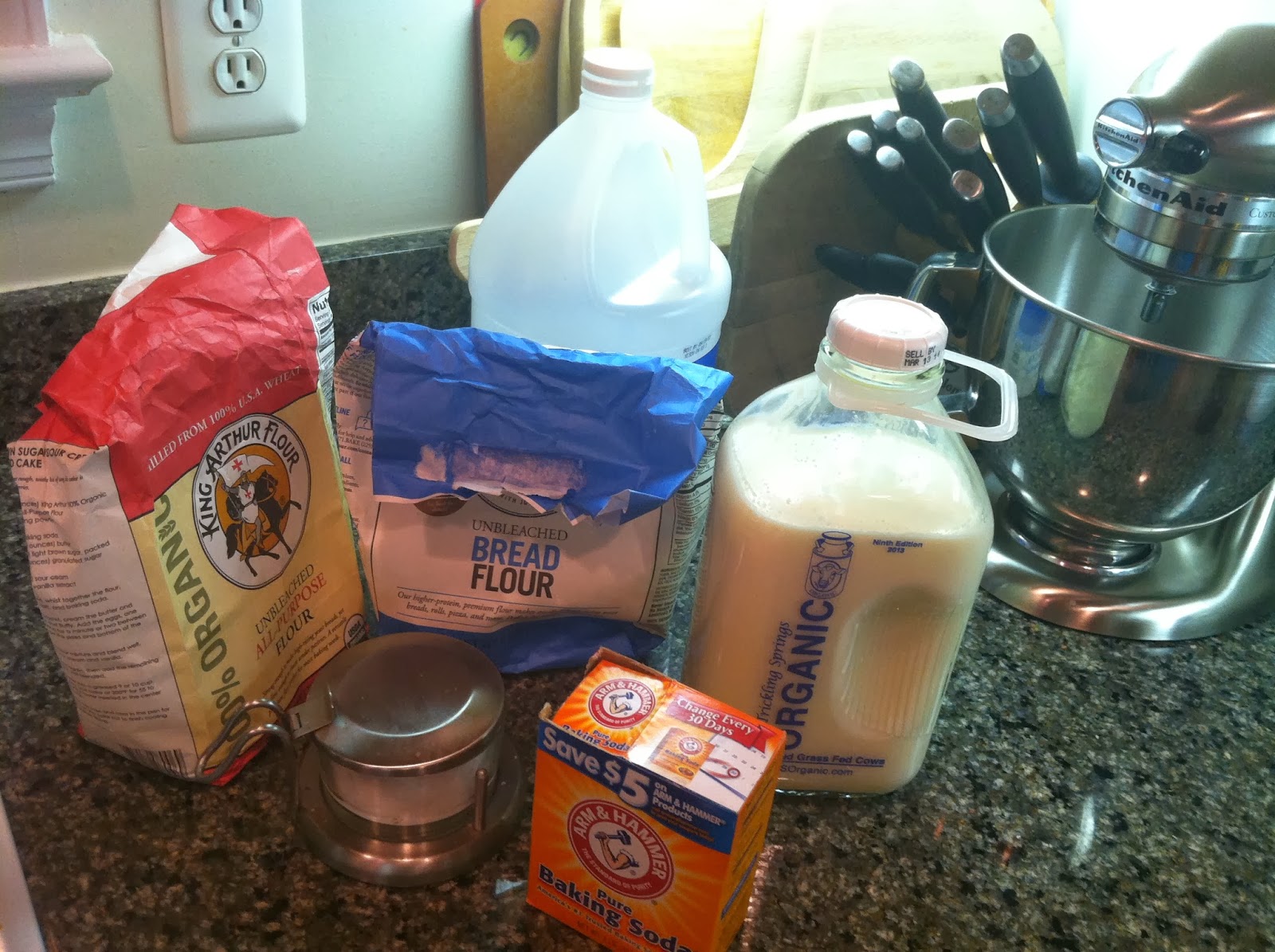
      The Bread Maiden’s essential ingredients guide


      Hello all,

      As a follow-up to my list of tools every kitchen needs, I decided to create a list of ingredients that are useful for many different baking applications.  I’m limiting this list to ingredients that work in breads, rather than ALL baked goods.

      For the TL:DR list of ingredients, scroll to the bottom of this post 😉

      • To start us off, the most important ingredient in baking… flour.

      You can do most things with all-purpose, bread, and whole wheat flours.  If you’re feeling ambitious there are other flours to try, such as buckwheat, rye, graham, cake, or pastry flour, but the three mentioned earlier have wide-ranging capabilities.  The other flours are more of an accent.

      I wanted a picture of a box of salt but I didn’t have one.  So instead here is a picture of our salt cellar which predates me in Mr. Bread Maiden’s life

      • Next is salt.  I use kosher salt.  Kosher and fine salt are not interchangeable in recipes because fine table salt is going to have a great volume at the same weight as kosher, resulting in a saltier bread.  But that’s fine if that’s your thing, just be aware of the difference.  Salt is a minor player as far as successful bread goes, but it brightens the flavor, evens out the fermentation, and helps with caramelization during baking.

      • Next is yeast.  I buy the bulk container of yeast and store it in my fridge.  I save money buying in bulk because I can choose how much yeast to add to my dough instead of the 2 1/4 teaspoons in each packet.

      • Rounding out the list of essential ingredients is water.  Water is important because hydration makes gluten formation possible when the gliadin and glutenin proteins from the flour are exposed to water. The softness or hardness of your water determines how successfully your gluten forms.  The harder your water is, the better the gluten will form.  However, water that is too hard can make your bread dry and need more water than a recipe might call for.  Likewise, water that is too soft can result in a sticky loaf, where more flour or kneading is needed to correct this.
      • Next are sugar and honey, our sweeteners.  Sugar aids in fermentation because yeast eat it and release carbon dioxide.  Americans don’t tend to like the dark, bitter flavors that are more common in Northern European breads.  By throwing a bit of sugar or honey, whole wheat and rye breads are more palatable.

      • Next are milk, butter, and oil, our softeners.  Milk, butter and oil are hydroPHOBIC, meaning they don’t contribute to the gluten formation the way water or hydroPHILIC elements would.  Because they don’t factor into the formation of the gluten net, they allow the dough to relax during the rising process.  They also give your bread a longer shelf-life.  Use the highest fat content for your milk, butter and oil.  This is not the time or place for fat-free, since that defeats the purpose of adding these ingredients in the first place!  Another benefit of oil is to prevent your dough from sticking to the bowl during the first rise.  By splashing a tablespoon of oil in the bowl and rolling the dough in it to coat the outside of the dough completely in the oil, your dough is free to rise to its greatest capacity.

      • Another element that I think is key: eggs.  Besides the yolks, which serve the same emulsifying function as the milk, butter and oil that I mentioned above, the whites also contain protein which helps strengthen the loaf in a similar way to the gluten net made from proteins in the flour.  Another benefit to eggs is that brushing an egg wash onto your loaf before it goes in the oven creates a lovely shiny crust.

      • You will also want baking powder and baking soda.  Not so much for yeast breads, but they are good to have on hand for biscuits, Irish soda bread, pancakes, cakes, muffins, cookies, and most other baking applications.

      Other ingredients that are not necessarily essential but I think make for good bread are:

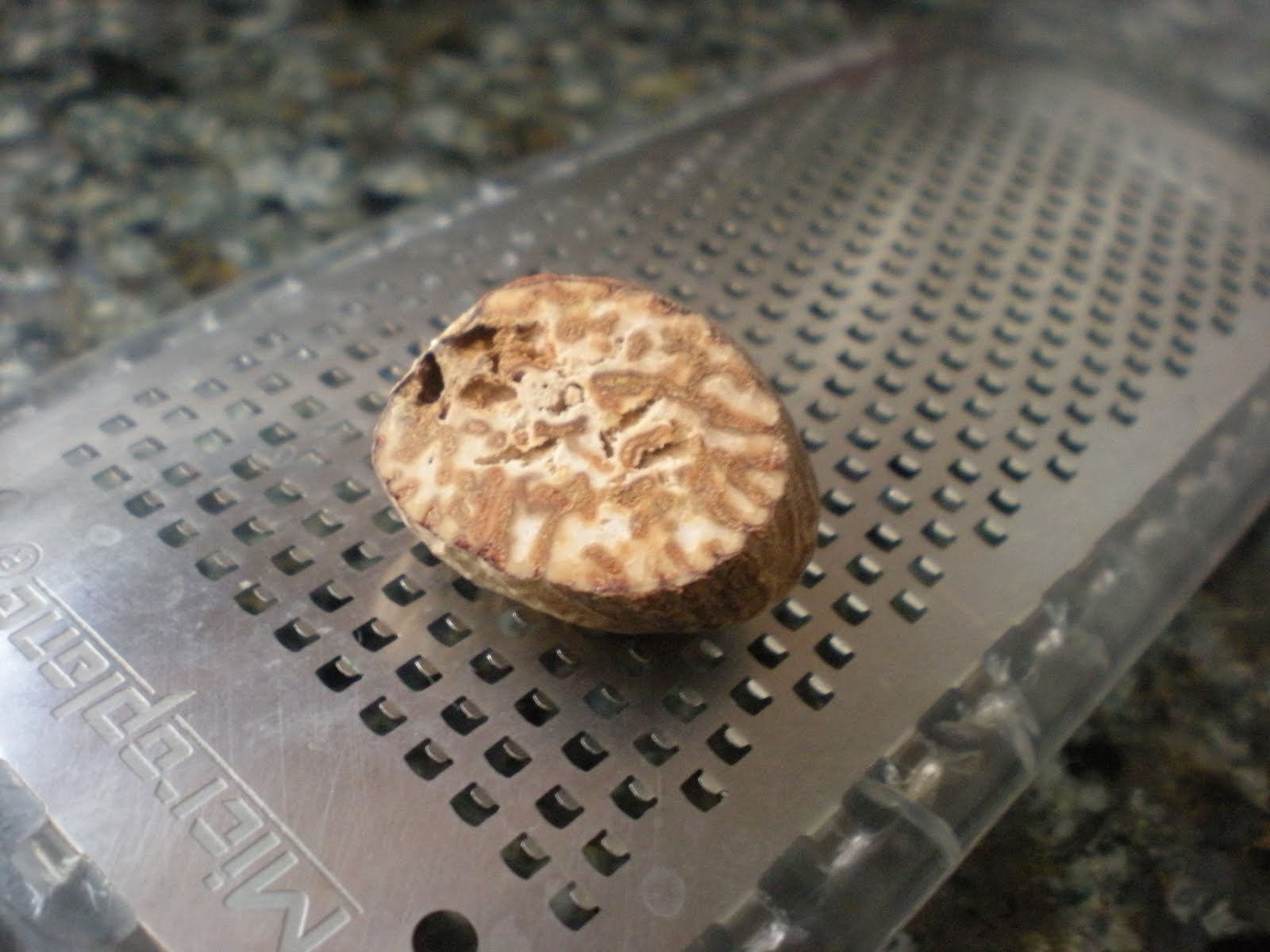
      • Spices.  In particular I like cinnamon and nutmeg.  These can easily add flavor to an enriched dough.
      • Cooked and uncooked grains.  I think these are awesome for providing flavor.  If you have some leftover oatmeal, rice, quinoa or other cooked grain, throw 1/4 to 1/2 cup into your dough before the first or second rise.  If you choose to use uncooked raw grains, they should be quick cooking (you don’t want to add something that requires long cooking and then NOT cook it).  Also remember that uncooked grains will absorb some of your liquid so you will want to add more water than the recipe calls for.  You might consider adding the raw grains to the flour, water and salt BEFORE adding the yeast and letting them sit to allow for some water absorption and so you can tinker with it before the yeast gets a chance to go to work.  Peter Reinhart uses this technique (which he calls a soaker) to good effect in his Whole Grain Breads book.

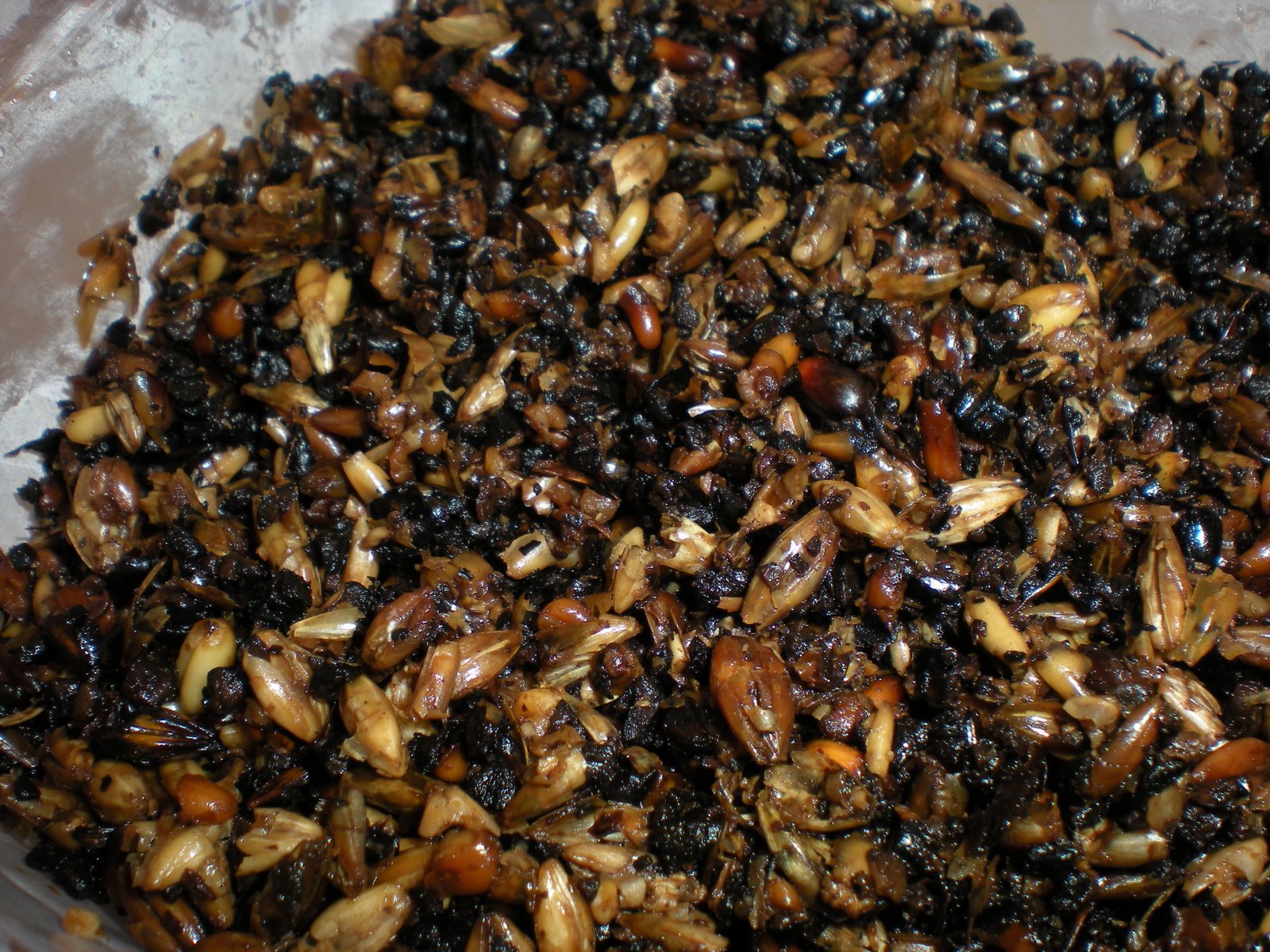
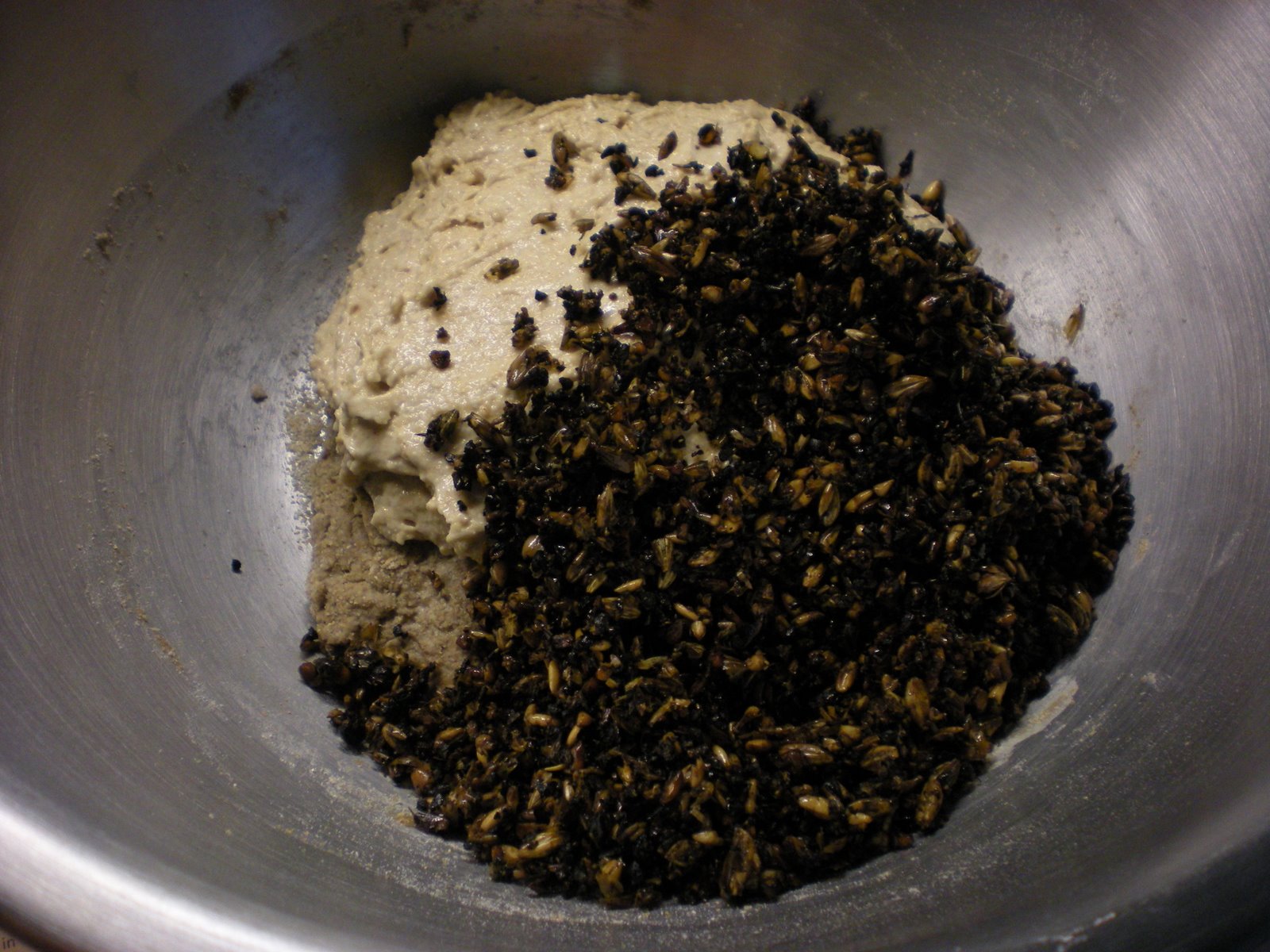
      These are “spent grains,” a byproduct of brewing beer.

      • Seeds.  This includes sesame seeds, flax seeds, poppy seeds or pumpkin seeds.  Again, throw a few tablespoons into your loaf or brush your loaf with egg white and then throw a handful of seeds on top before putting it in the oven.  The egg white will act like a glue to hold the seeds in place.  They are tasty and nutritious.

      • Another element that does double duty is stock.  Any kind will do, although I’m partial to chicken stock. Chicken stock is so easy to make; just buy or roast a chicken and boil the carcass for a few hours then strain. It can be used in place of water while adding flavor and a little bit of fat for softness.  Yum!
      • Molasses.  This dark syrup can transform your white sugar into brown sugar.  I never have brown sugar on hand because 1) it dries out so quickly, and 2) I can throw 1 teaspoon of molasses into 1 cup of white sugar and have brown sugar in the time it took for you to finish reading this sentence.
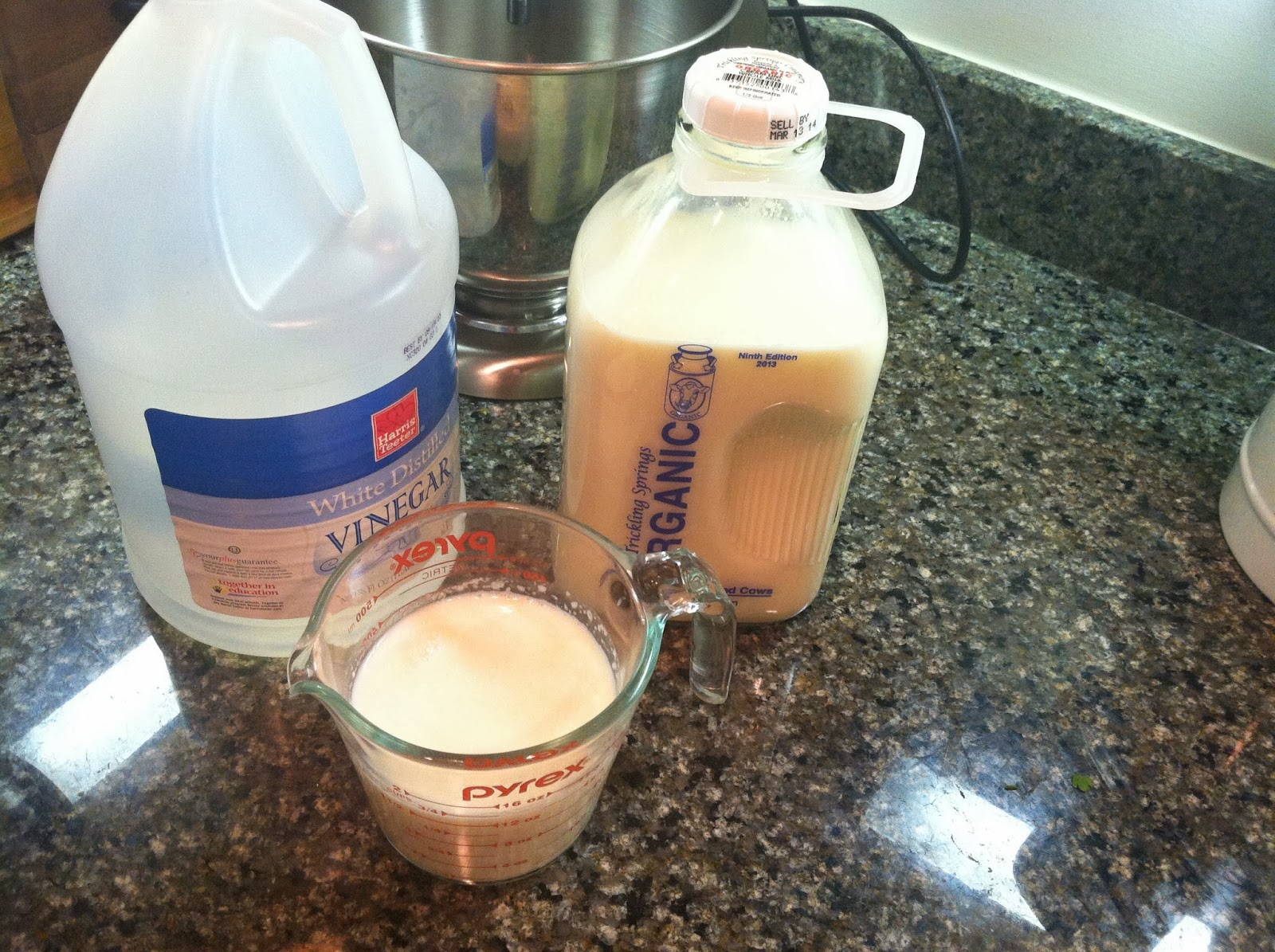
      • White vinegar.  By adding a tablespoon of this to a cup of milk, I can transform it into buttermilk.  Like molasses, having white vinegar on hand means I have one less perishable ingredient I have to buy.
      • Dried fruit.  These really add something to an otherwise unremarkable dough, and can add sweetness without extra sugar.  They go great in muffins or an enriched bread.

      Here are some things I don’t think are necessary for good bread:

      • Self-rising flour.  I like to know what I’m putting in my dough so I can tweak the flavors.  I also want my rising element to be the freshest possible for maximum effectiveness.  Leave this one out.
      • Vital wheat gluten.  As you can tell from the name, this ingredient adds a boost of gluten protein to your loaf to assist with the structure.  Some people use it for whole wheat breads baked in a bread machine, since whole wheat flour doesn’t have as much protein as all-purpose or bread flour.  However, I feel like my long-rising technique allows gluten to form naturally, and I don’t like the taste vital wheat gluten imparts.  Another pass.

      I hope you enjoyed my list of must-have ingredients for a well-furnished baking kitchen.  If there’s anything you feel I’ve left out, please let me know in the comments.

      And, as promised, here is the list of ingredients, in case you didn’t have time to read the post.

      Must-haves
      all-purpose, bread, and whole wheat flour
      yeast
      kosher salt
      water
      milk, butter, and oil
      eggs
      honey and sugar
      baking powder and baking soda

      Nice to haves
      spices (nutmeg and cinnamon)
      cooked and uncooked grains (rice, quinoa, oats, barley, wheat berries)
      molasses
      white vinegar
      seeds
      dried fruit
      chicken stock

      Thanksgiving hangover muffins

      Hello all,

      I hope you had a wonderful Thanksgiving. My rolls turned out awesome and I hope yours did too!

      But enough about yesterday.  Today, the day after Thanksgiving, I always feel a bit sluggish and bloated from all the rich food I ate the day before.

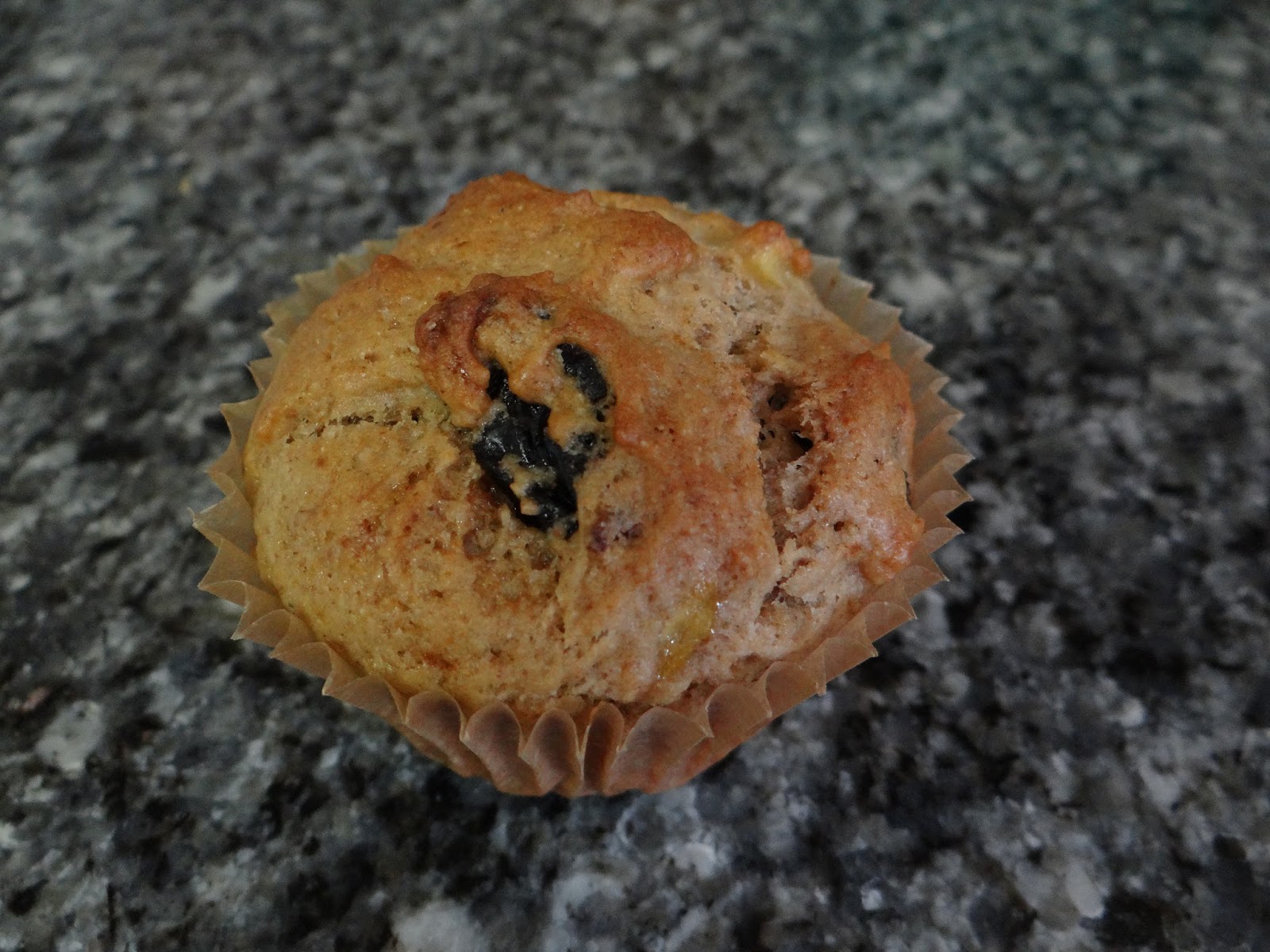
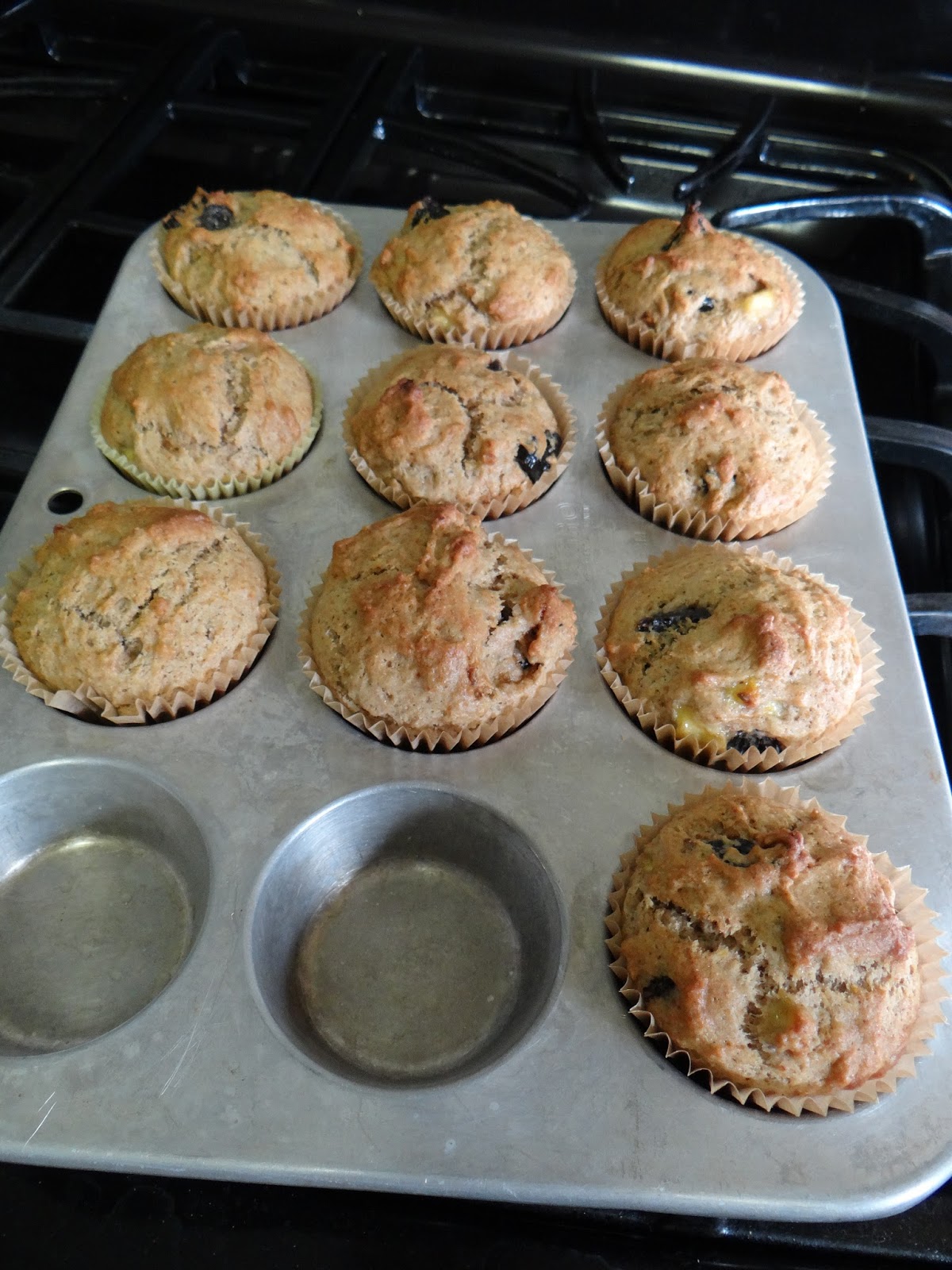
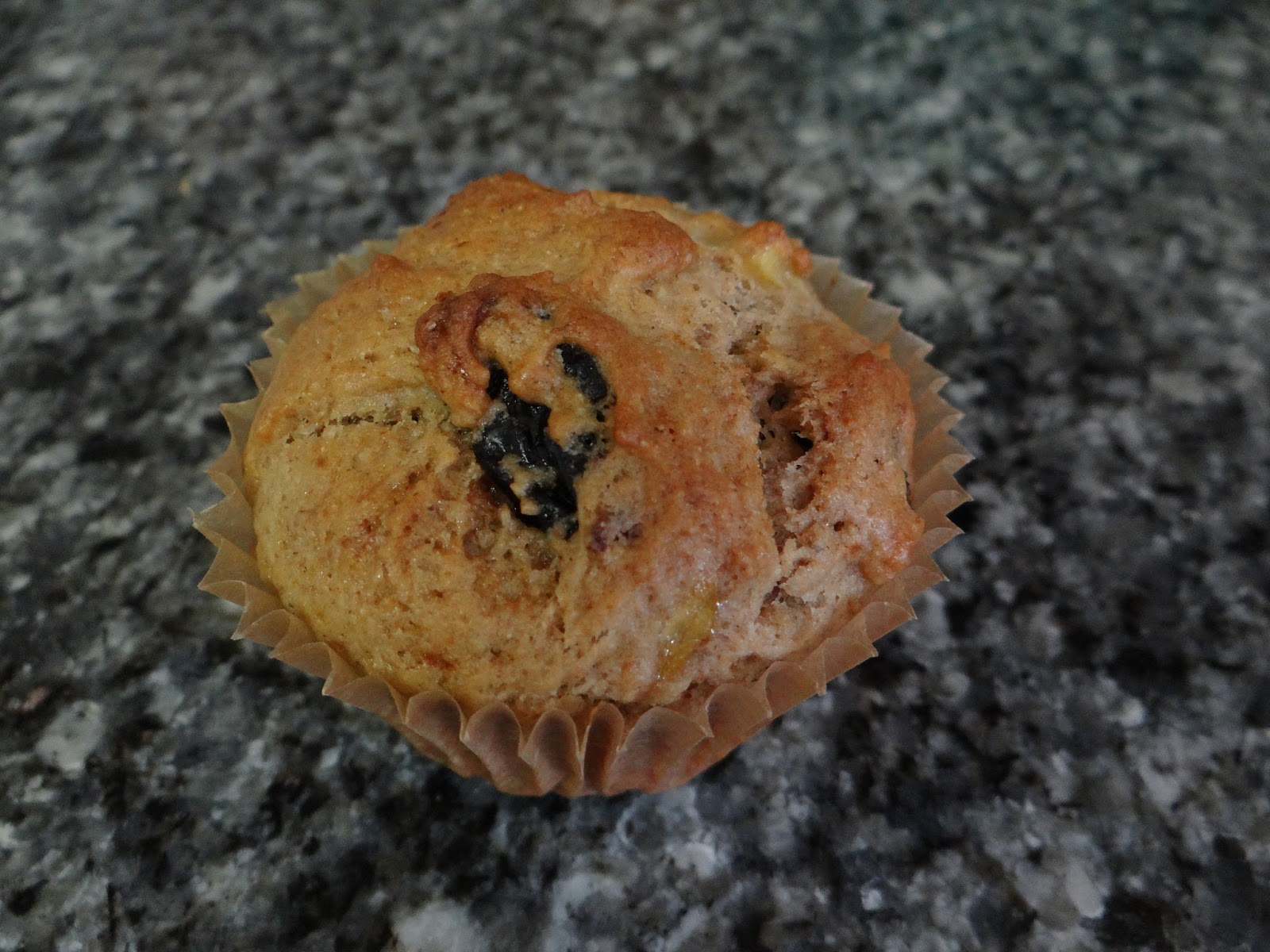
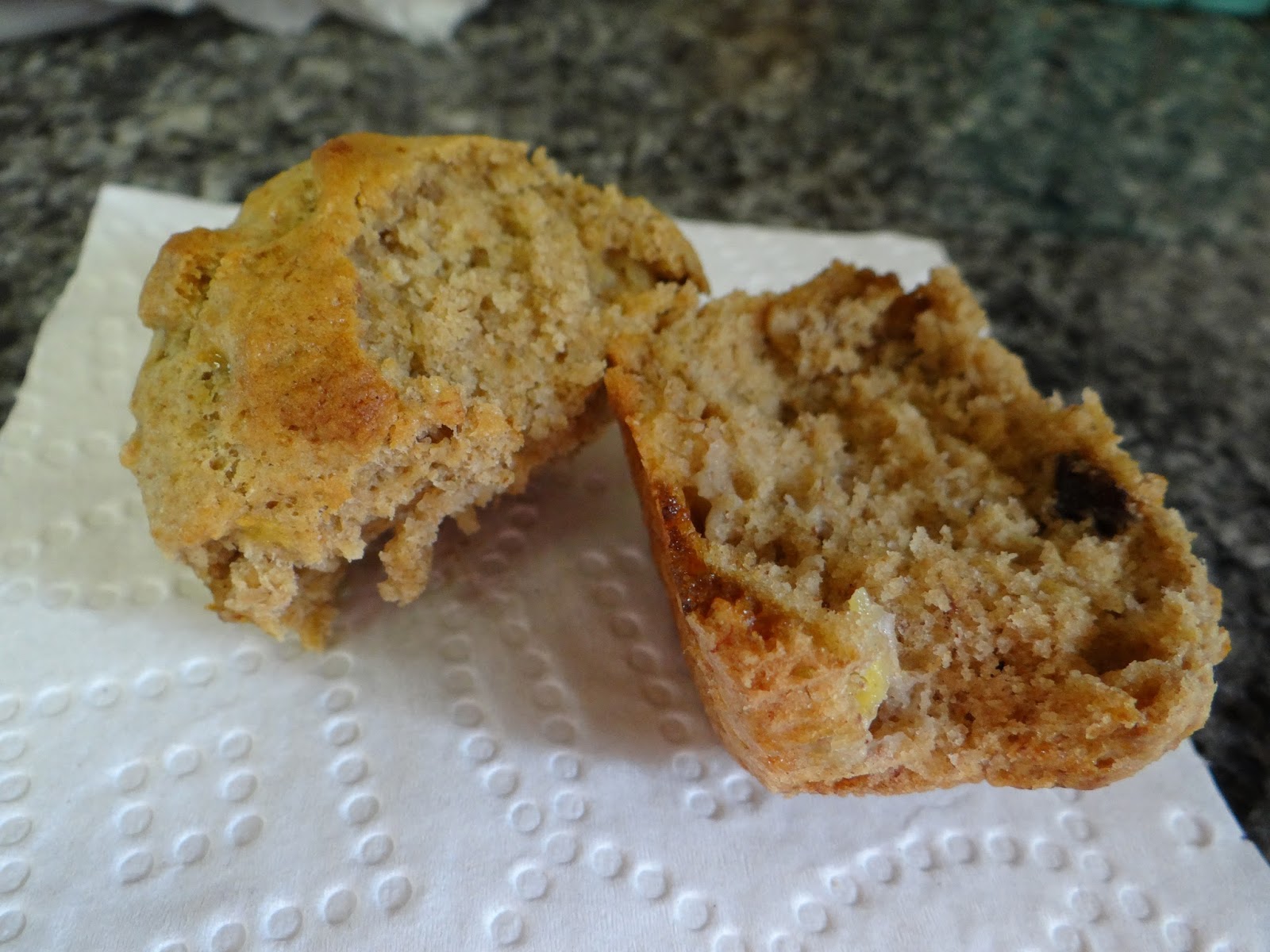
      These muffins are perfect for, um, helping your digestive process along.  They have bananas, prunes and whole wheat flour (or wheat bran) which are healthy and helpful.  I also cut some of the sugar so they’re (mostly) good for you.

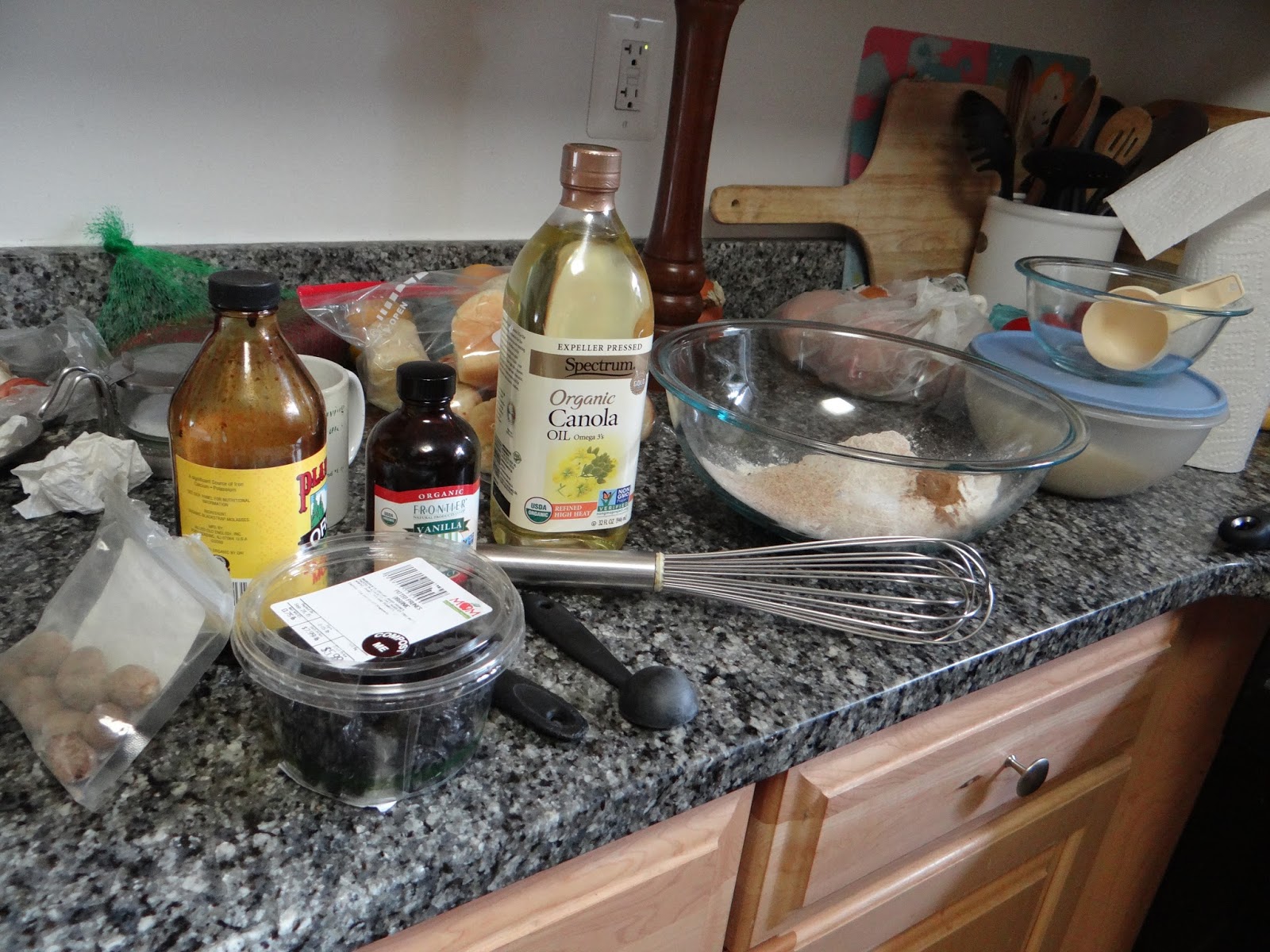
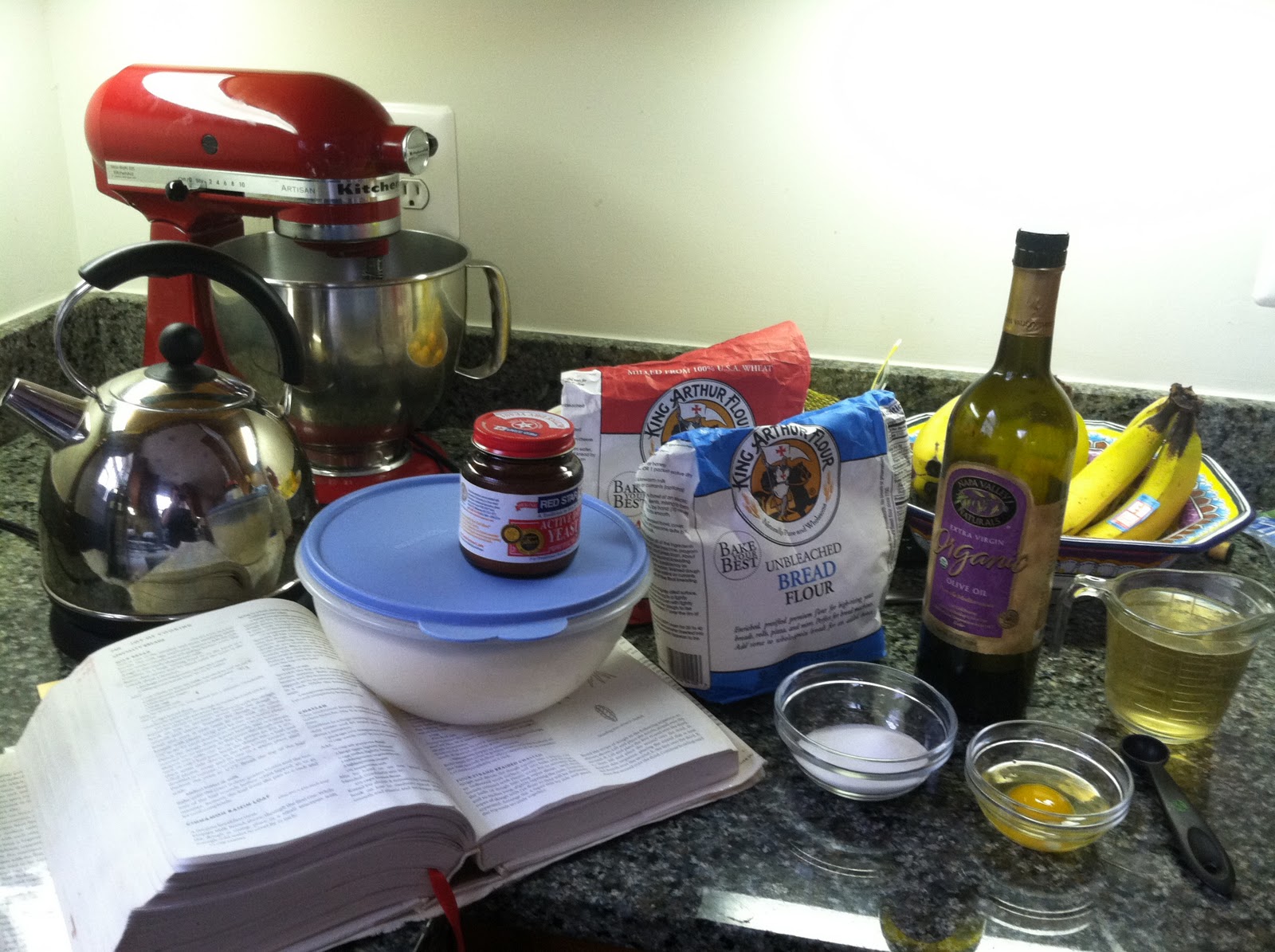
      Sorry, I didn’t clean my counters before taking pictures.  You know, sluggish.

      You will need (for 12 muffins):

      1 1/2 cups all-purpose flour
      1/2 cup whole wheat flour or wheat bran
      2 teaspoons baking powder
      1/2 teaspoon baking soda
      1/2 teaspoon salt
      1 teaspoon cinnamon
      1/4 teaspoon nutmeg
      1 egg
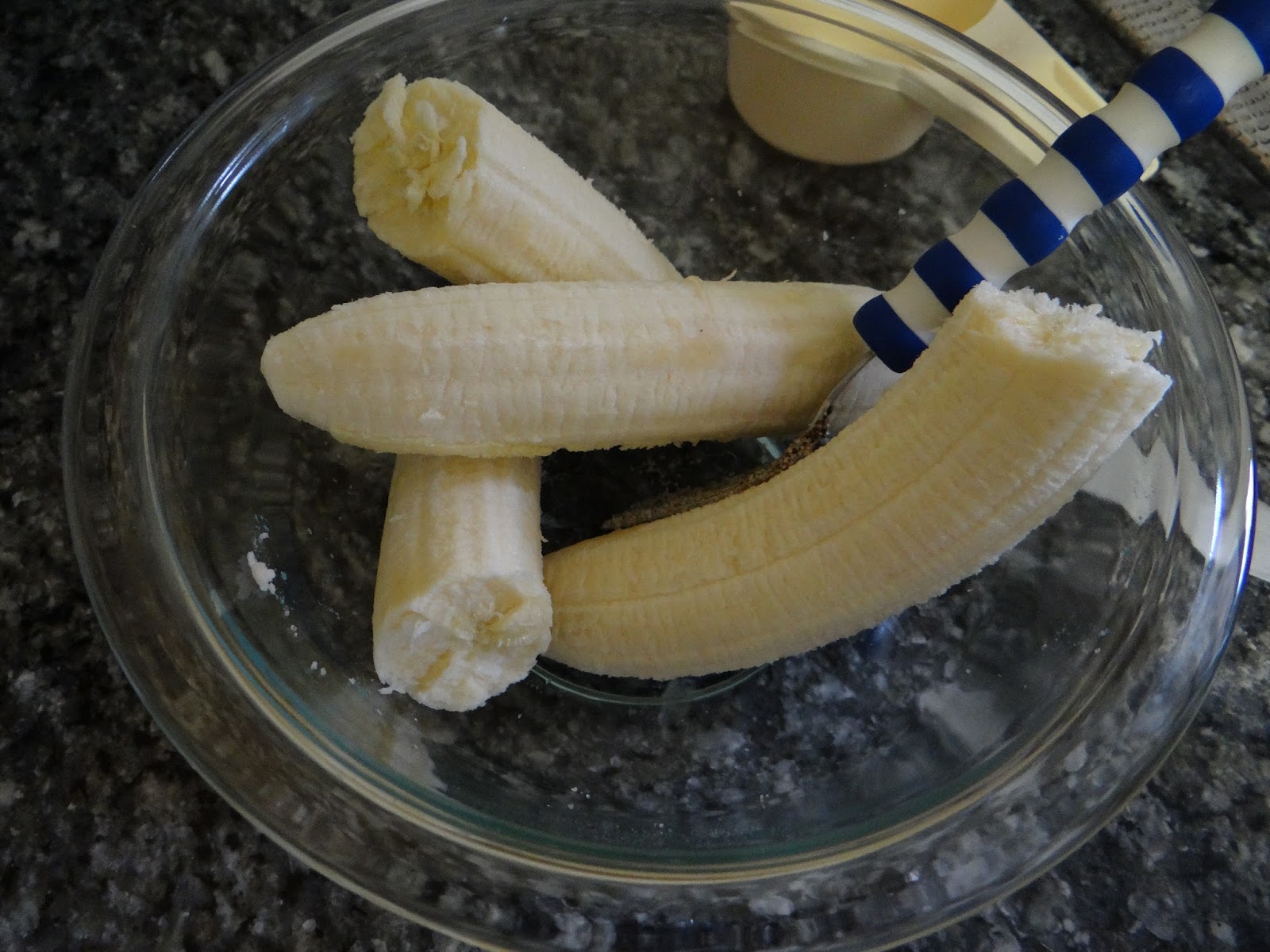
      2-3 ripe bananas (about 1 1/3 cups), smashed
      1/2 cup white granulated sugar + 1 teaspoon molasses (or instead of sugar + molasses, 1/2 cup brown sugar)
      6 (or more) tablespoons cooking oil
      1 splash vanilla extract
      1/2 cup prunes, quartered

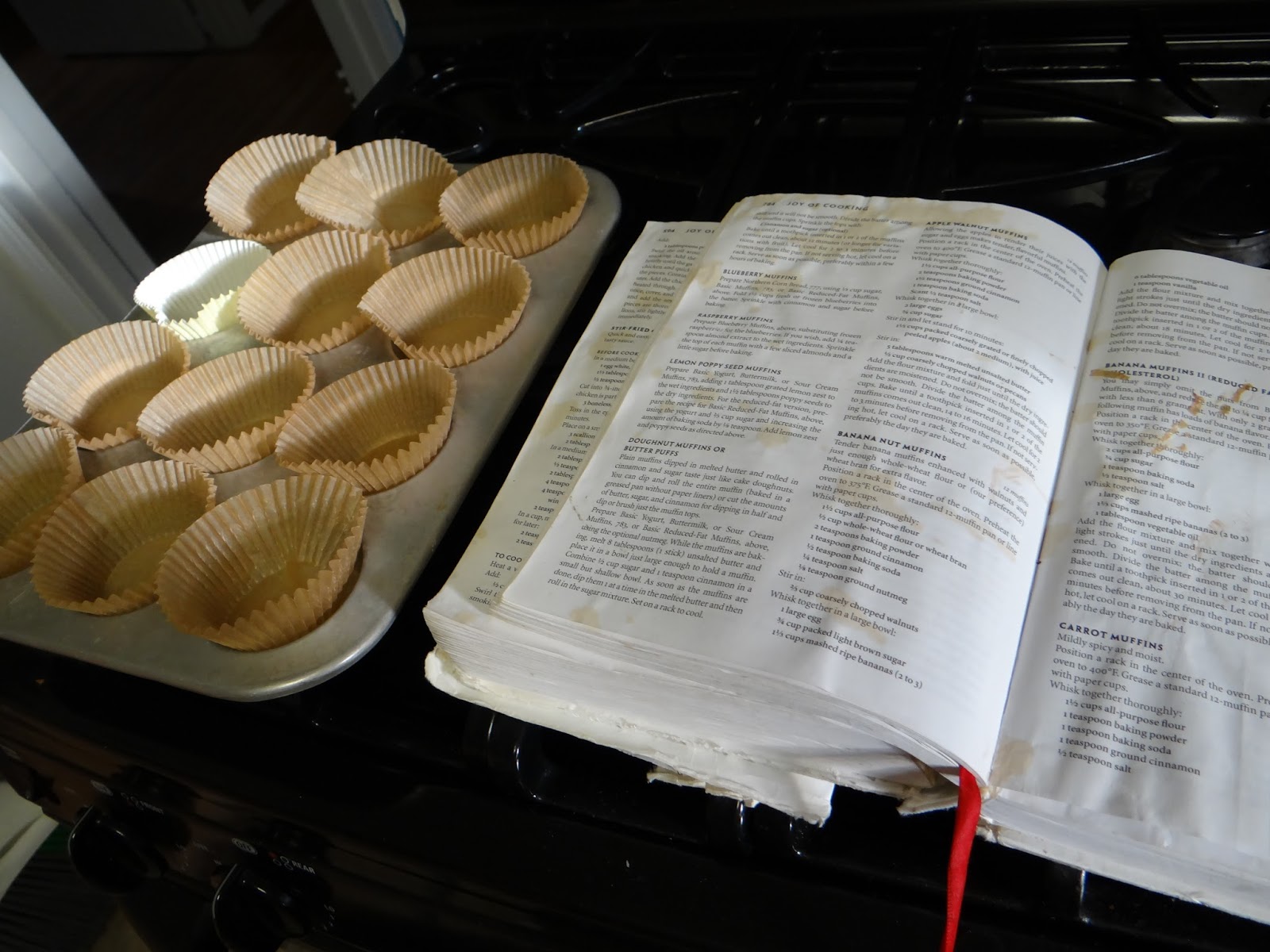
      1. Preheat the oven to 375 degrees F and position an oven rack in the center of the oven.  Line a muffin pan with liners or use butter.

      Or hire a lovely assistant like Little Bread Boy to line the pan for you

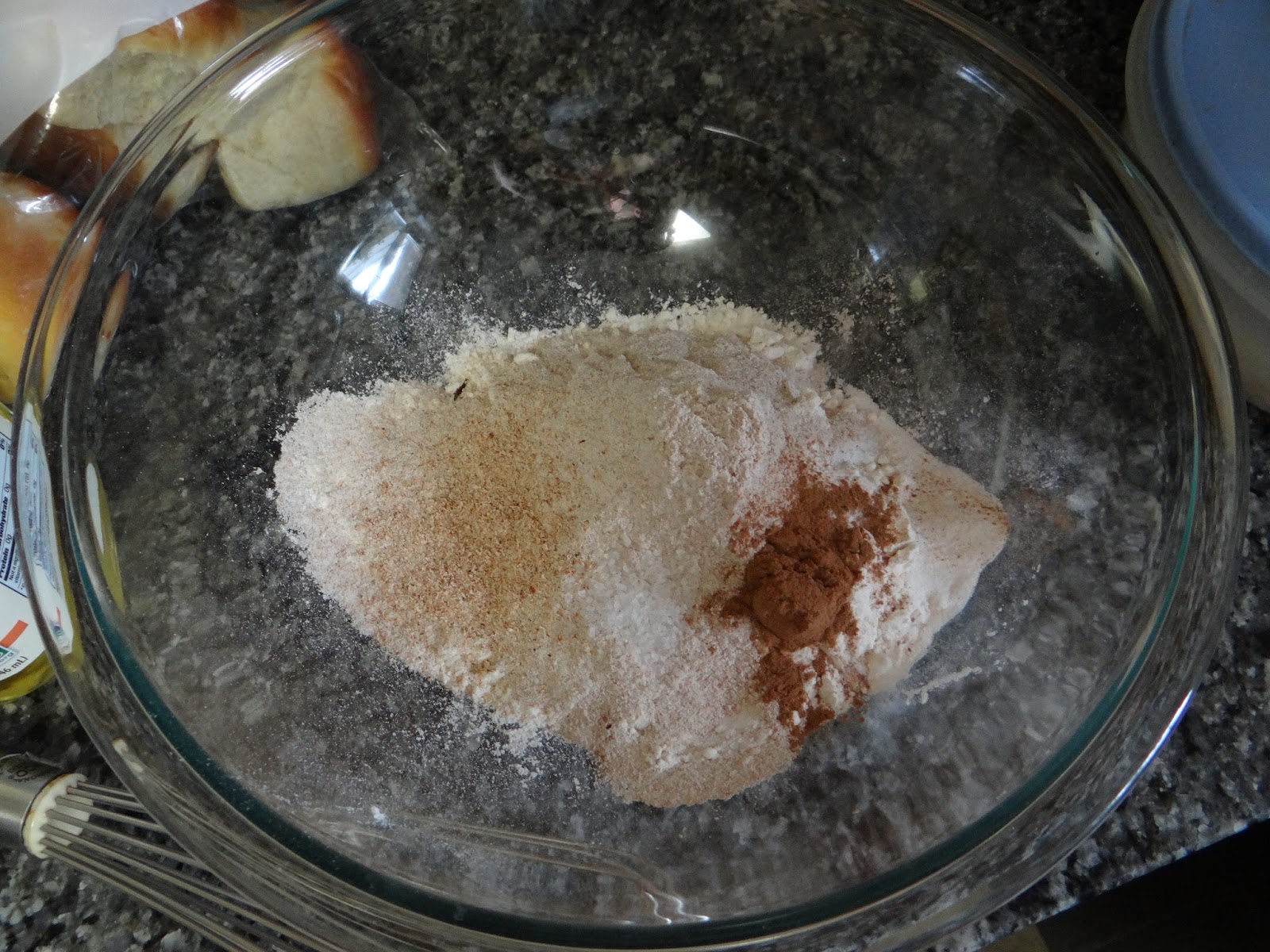
      2. In a large bowl, whisk together the all-purpose flour, wheat flour, baking powder, baking soda, salt, cinnamon and nutmeg.  Set aside.

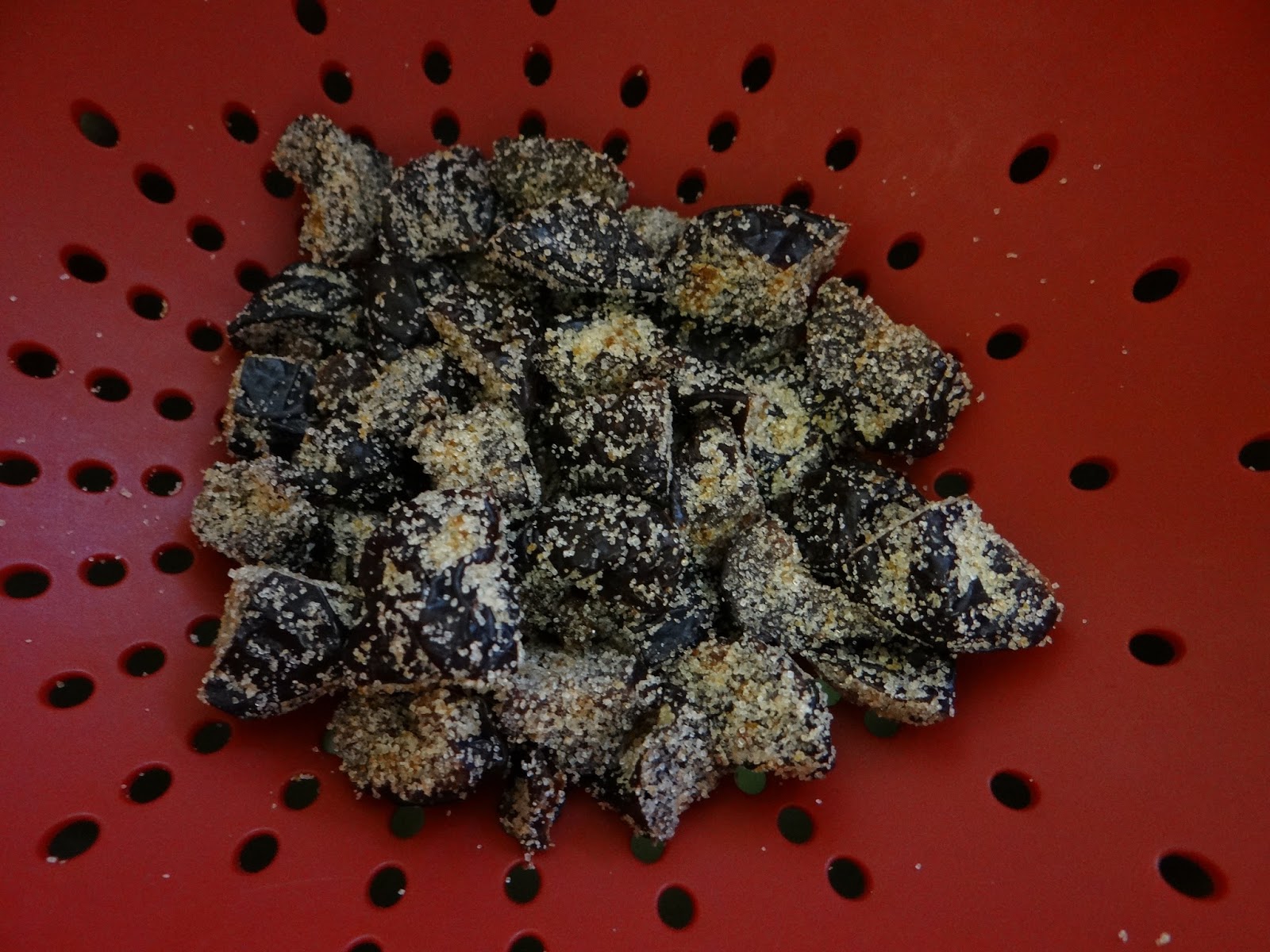
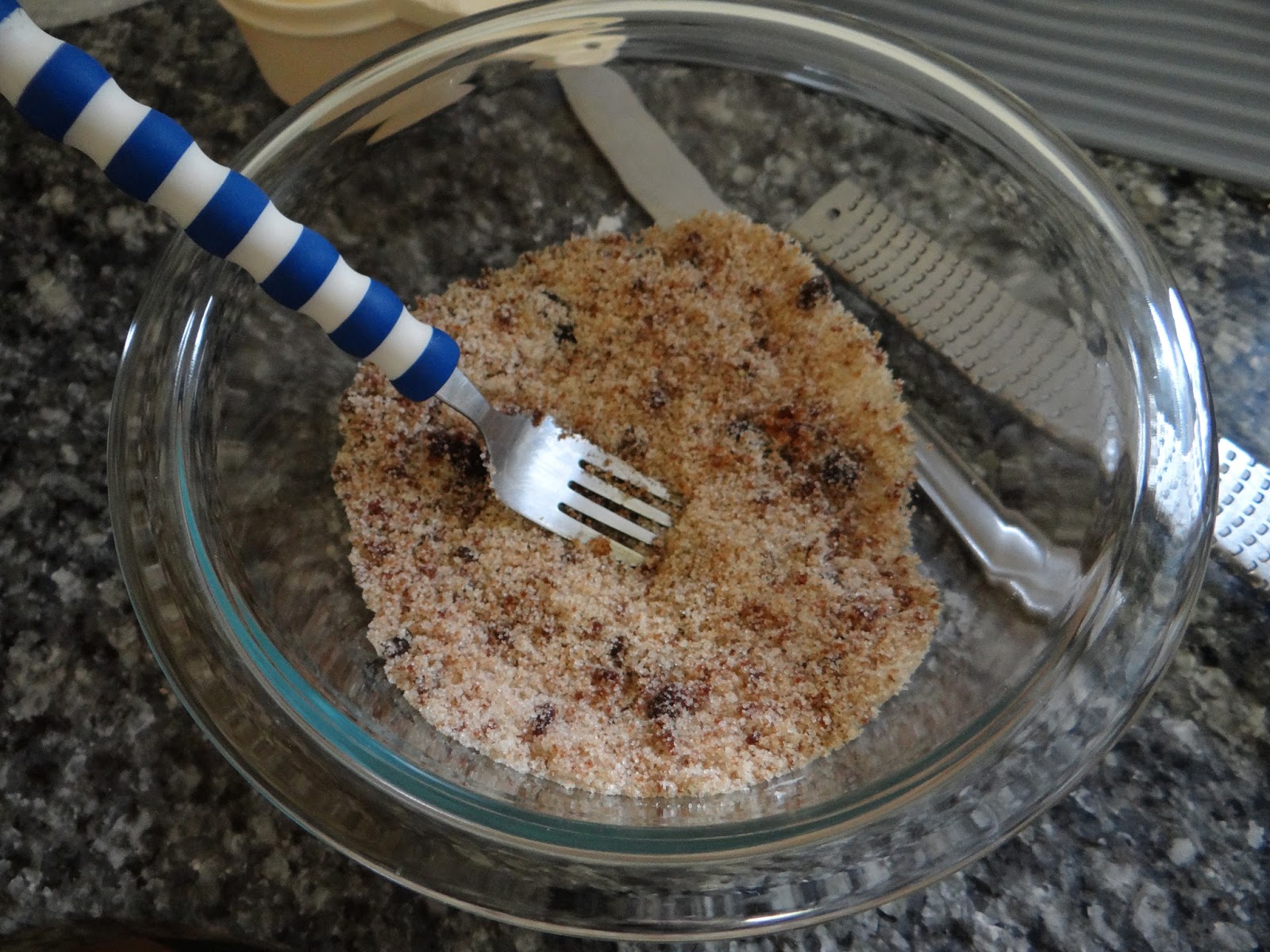
      3. In a small bowl, mix together the granulated sugar and molasses with a fork.  Add the prunes and toss until the prunes are coated with brown sugar.  Use a colander to sift out the prunes, retaining the sugar.  Set the coated prunes aside.

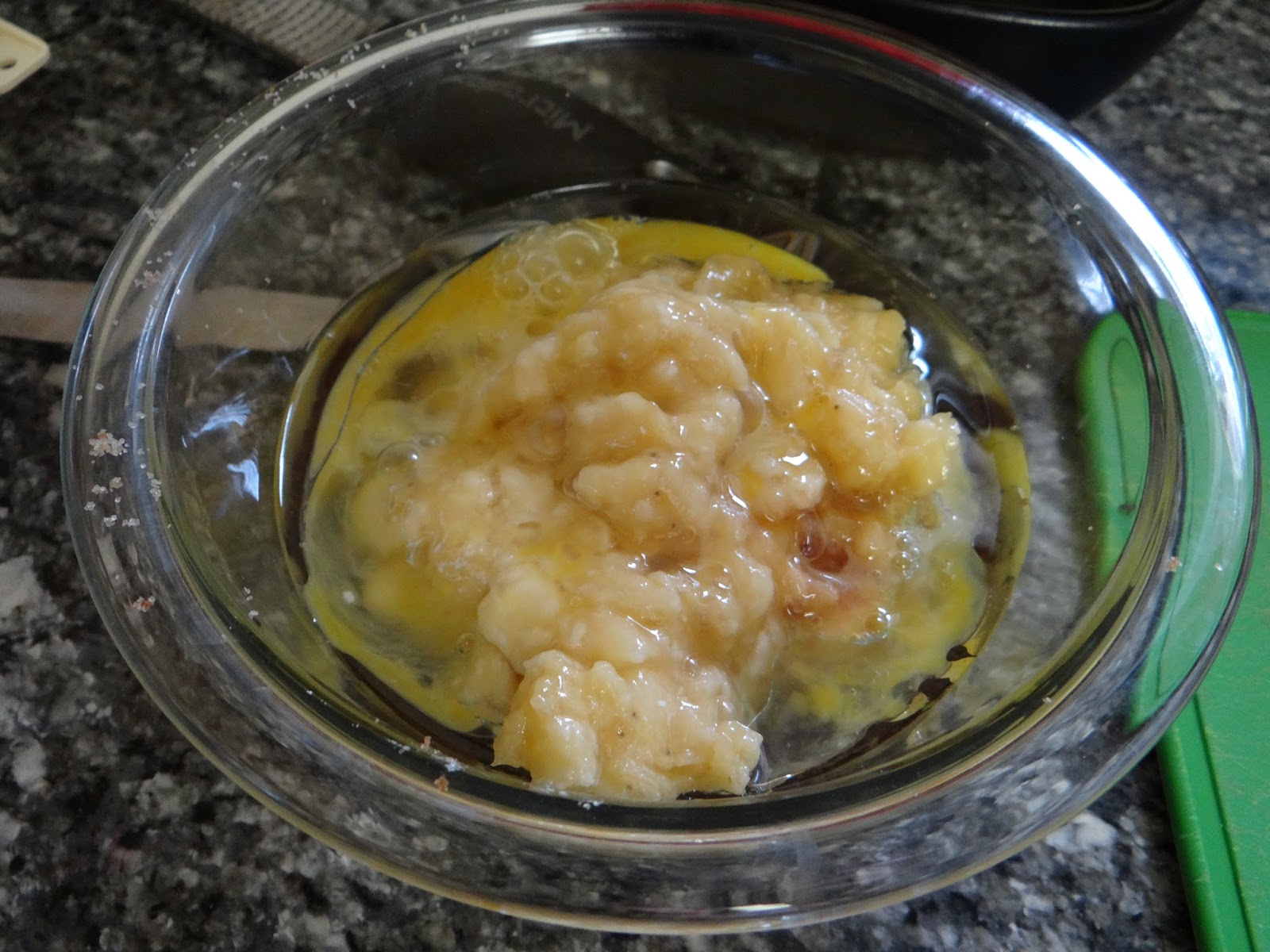
      4. To the brown sugar, add the smashed bananas, egg, cooking oil, and vanilla.  Stir to combine with a fork or whisk.

      5. Add your brown sugar mixture to the flour mixture.  Use a wooden spoon or spatula to combine.

      At this point, take a look at your batter.  Is it watery?  Add more flour, 1/4 cup at a time, until it is the consistency of mashed potatoes.

      Or does it look like this?

      If it looks like this, there’s only one thing to do.  Add more oil.  I’ll explain why in a “The Science Behind…” post.

      I added another 1/4 cup of oil until it looked like this:

      I added the prunes then corrected with oil

      6. Add the prunes into your batter last.

      Now we’re ready to bake.  For regular muffins and muffin cups, I use 1/4 cup of batter for each.  As with rolls, it’s important for all the muffins to be the same size so they cook evenly.

      Taking your 1/4 measuring cup, scoop some batter and then SCRAPE the top of the measuring cup along the side of the bowl so it’s a level 1/4 cup.  Then use your finger to get all of the batter out of the cup into your muffin pan.

      Now- have you ever made a recipe that called for 12 muffins (or however many the recipe calls for) and you end up running out of batter, or conversely having too much batter left over after filling the muffin tin?  There’s an easy way to fix that – using bread (muffin) math!

      You want 12 muffins, and you are using 1/4 cup of batter per muffin.

      12 muffins x 1/4 cup = 3 cups of batter.

      This is easy to check – just pour the batter into a large measuring cup.  Is it about three cups?  You’re good to go.  Muffins are very forgiving- taking two minutes to measure your batter is not going to mess them up.

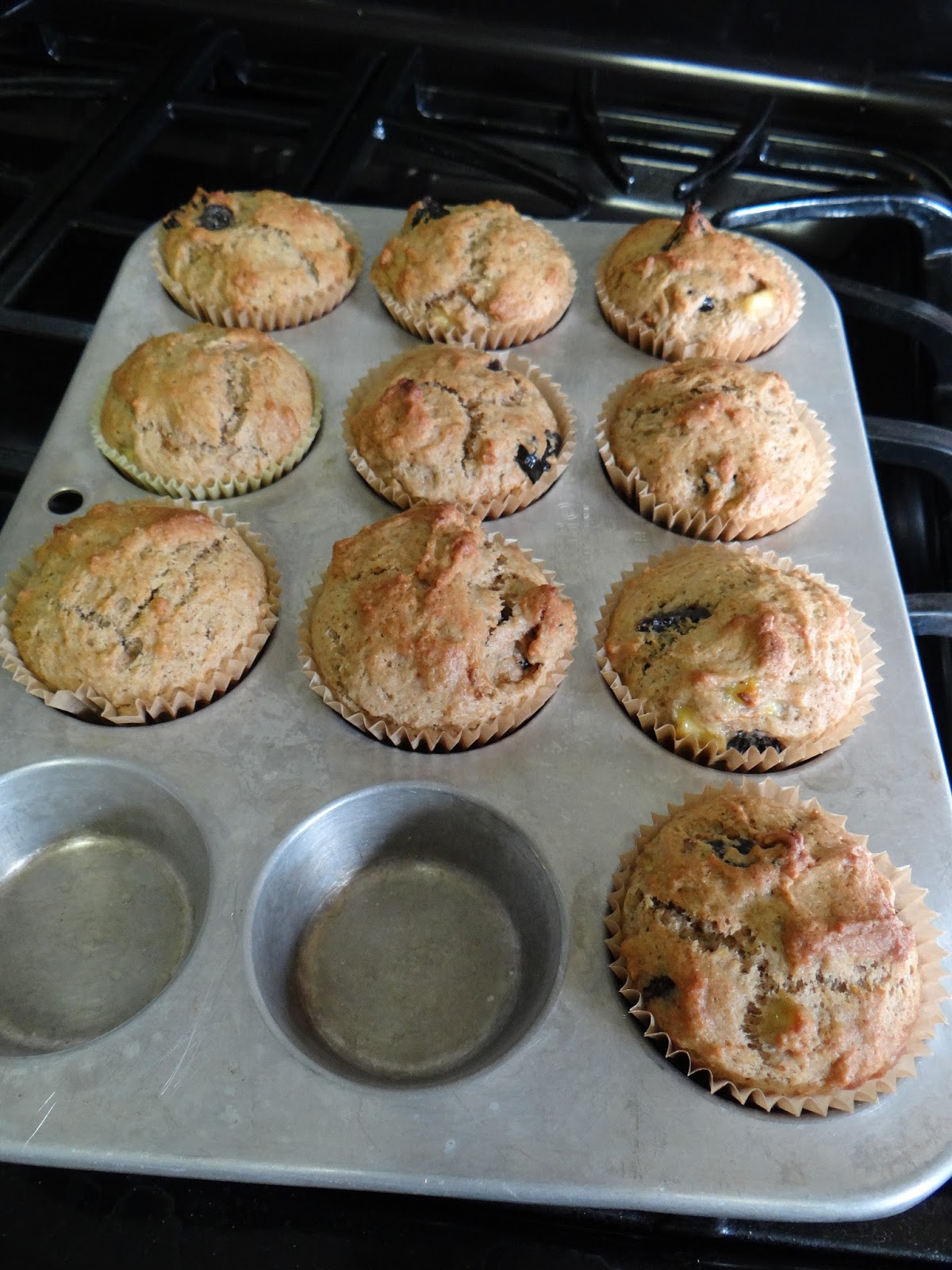
      7. Now pop those bad boys in the oven for 18+ minutes.  I say 18+ because the recipe says 18 minutes, but I had to bake them for an additional 5 minutes for them to set up and get a nice brown top.

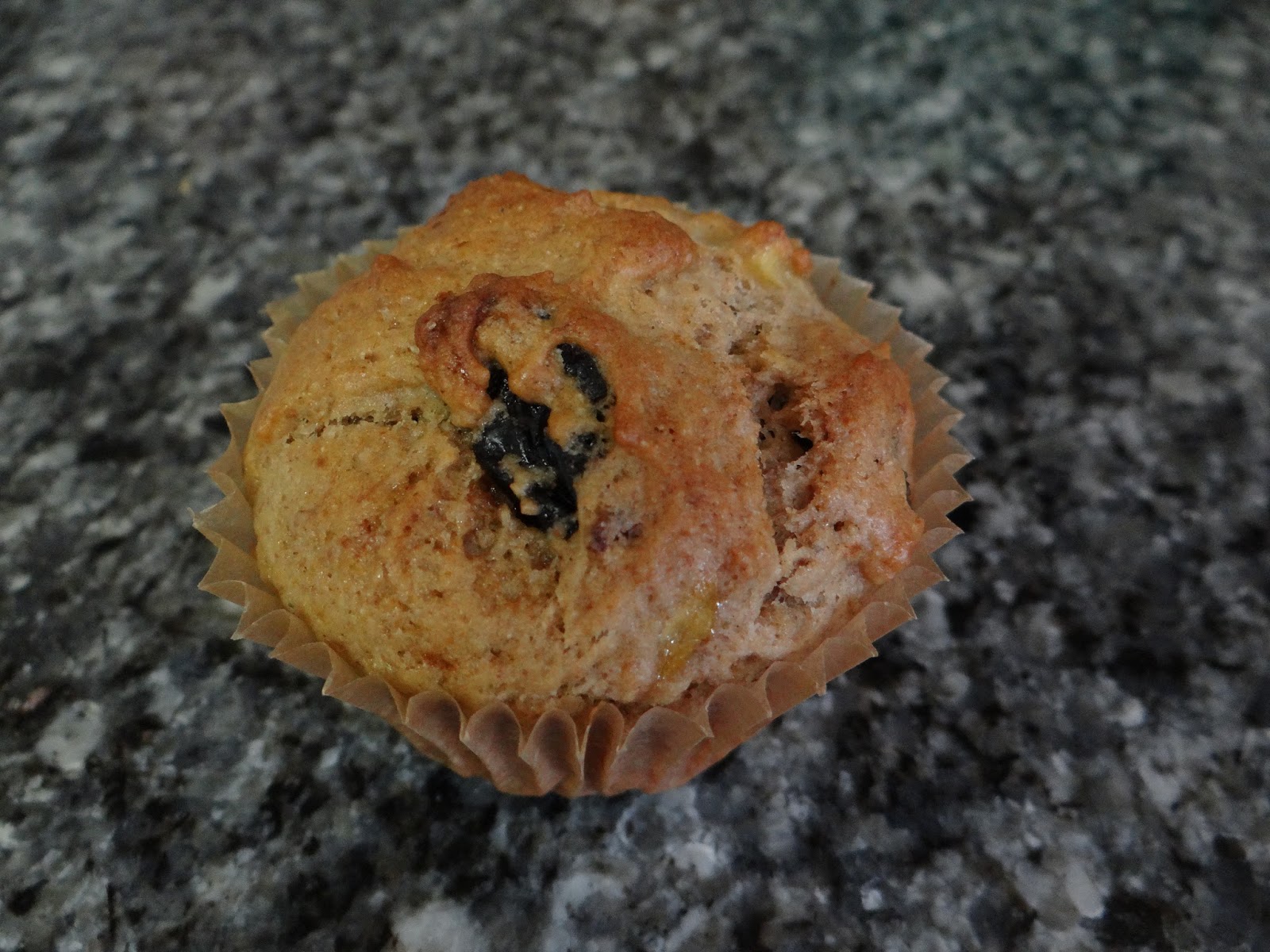
      When they’re ready, take them out and let them cool for about 10 minutes.  Then peel the paper off and enjoy your healthy, post-Thanksgiving health tonic in edible form.

      If you want to know the science behind these muffins, check out this post!

      My favorite recipe for hamburger buns and rolls – UPDATED!

      With Thanksgiving just days away, I thought I would re-post my hamburger buns recipe.  This recipe is perfect for rolls with just a few tweaks.

      Since I first published this recipe three years ago, I’ve made a number of changes to the ingredient list and the baking process I use. 

      Revision 1. Substitute back in the milk.  Last time I said to use chicken stock for lighter buns, but I think the recipe can work either way.

      2 1/4 tsp yeast (one packet)
      3 tablespoons warm water
      3 tablespoons sugar
      1 tsp salt
      one large egg
      5 tablespoons (or 71g) softened butter
      1 cup chicken or vegetable broth, or milk
      2 cups bread flour
      1-2 cups all-purpose flour
      dash of olive oil
      one large egg (for egg wash)

       The Joy of Cooking is one of my favorite cookbooks.  I learned to cook from this book.  The Bread Maiden Clan’s favorite roast chicken, pancake, and chili recipes can all be found in this book.

      Not to mention, the following hamburger bun recipe.  Over the years I have made this recipe a bunch of different ways, substituting wheat flour for white, vegetable oil for butter, and so on. I find myself using this recipe for all kinds of things.

      It’s technically the “milk bread” recipe, but I’ve made one big alteration here.  Instead of using milk, which results in a dense, chewy bun, I use chicken or vegetable stock, which makes them lighter and fluffier.  If you need a chicken stock recipe, here’s mine (scroll down to CHICKEN STOCK).

      YOU WILL NEED:

      2 1/4 tsp yeast (one packet)
      3 tablespoons warm water
      3 tablespoons sugar
      1 tsp salt
      one large egg
      5 tablespoons (or 71g) softened butter
      1 cup chicken or vegetable broth, or milk
      2 cups bread flour
      1-2 cups all-purpose flour
      dash of olive oil
      one large egg (for egg wash)

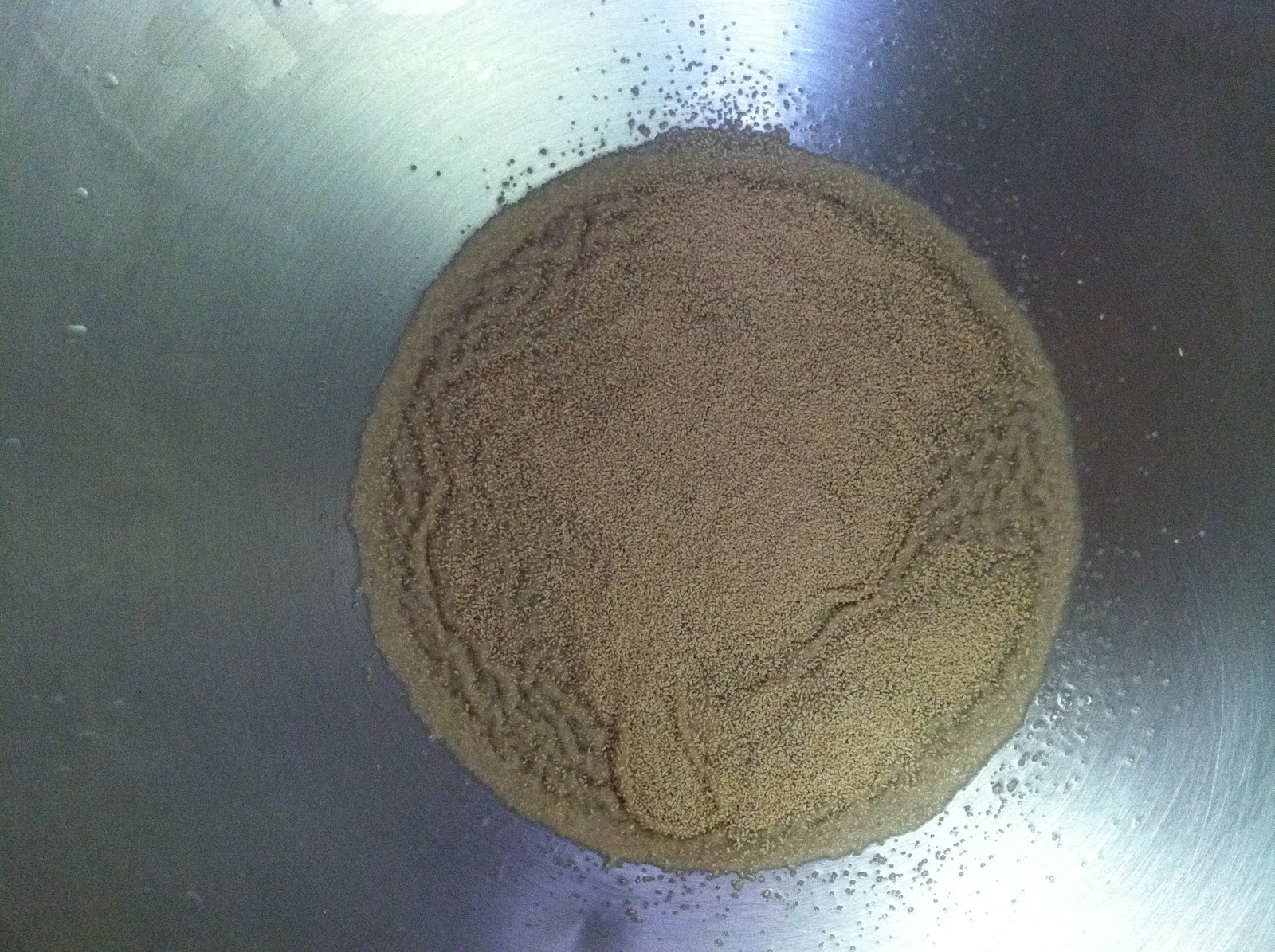
      1. Proof the yeast by putting the water in the bottom of a bowl (or the bowl of your stand mixer) and sprinkling the yeast on top.  Let it sit for about five minutes.

       
      After five minutes, it should be puffed up slightly and have a yeasty smell.

      2. To the bowl, add the milk or broth, softened butter, sugar, salt, and egg.

      3. Using the paddle attachment on your stand mixer or a spoon, mix thoroughly.

      4. Slowly add the 2 cups of bread flour with the stand mixer on low speed. Mix until the dough is moist but not sticky, about a minute or two.

      Before we get to step 5, let’s talk about baking for a second.

      Most people who don’t like baking say, “I don’t like baking because it’s too technical and you have to measure things exactly or else it won’t work.”

      These people think as long as you measure out the ingredients exactly as indicated in the recipe, it will come out perfect, but if you stray too far from the recipe, all is lost.

      Not so, my friends.

      Baking actually calls for a great deal of flexibility, depending on the weather, the strength of the other ingredients, how they work together, and even how adventurous you’re feeling that particular day.

      I’m not saying you can just throw in or omit ingredients willy-nilly.

      But the way to bake is by following the dough and how it feels and looks.  It takes time to figure out.  It takes making a recipe more than once.  But once you get comfortable seeing the signs for how something should look and feel, I guarantee you will always have success baking.

      Now back to these dinner rolls.

      5. With your stand mixer still on the low setting, slowly add the remaining two cups of all-purpose flour.

      BUT WAIT!

      This is important.  Add the all-purpose flour about a half cup at a time. WATCH the dough.

      Around the 1 1/2 cup mark, it should start gently pulling away from the sides of the bowl, forming a ball on the paddle.

      If it isn’t doing this, add the final 1/2 cup of flour.

      Once it is slightly pulling away from the bowl, turn off the stand mixer and remove the paddle, replacing it with the bread hook.

      6. Once the bread hook is on, turn the mixer onto medium-low speed and mix the dough for about 10 minutes.

      After five years, my mixer needs a little assistance.

      The dough should really pull from the sides of the bowl and form a ball on the bread hook. 

      After ten minutes, the dough should be elastic and smooth.

      7. Pour a dash of olive oil into a large bowl.  Take the ball of dough out of the mixer and spread it in the bowl to coat it in oil.  Cover with plastic wrap and a kitchen towel and let it rise for about 90 minutes to 2 hours.

        After two hours:

      Perfect!

      8.  Once it has risen to twice its original size, gently punch the dough down, take it out and knead it in your hands a little bit, then return it to the bowl, recover with plastic, and refrigerate for 30 minutes.  You’ll probably want to preheat your oven at this point to 425 degrees F.

      9. Take the dough out of the refrigerator and move to a flat surface.  You will need a pastry cutter and a kitchen scale for this part, if you want perfectly evenly-cooked buns.

      Take the plastic wrap off the bowl and use to cover your kitchen scale, so it doesn’t get all greasy from the dough.

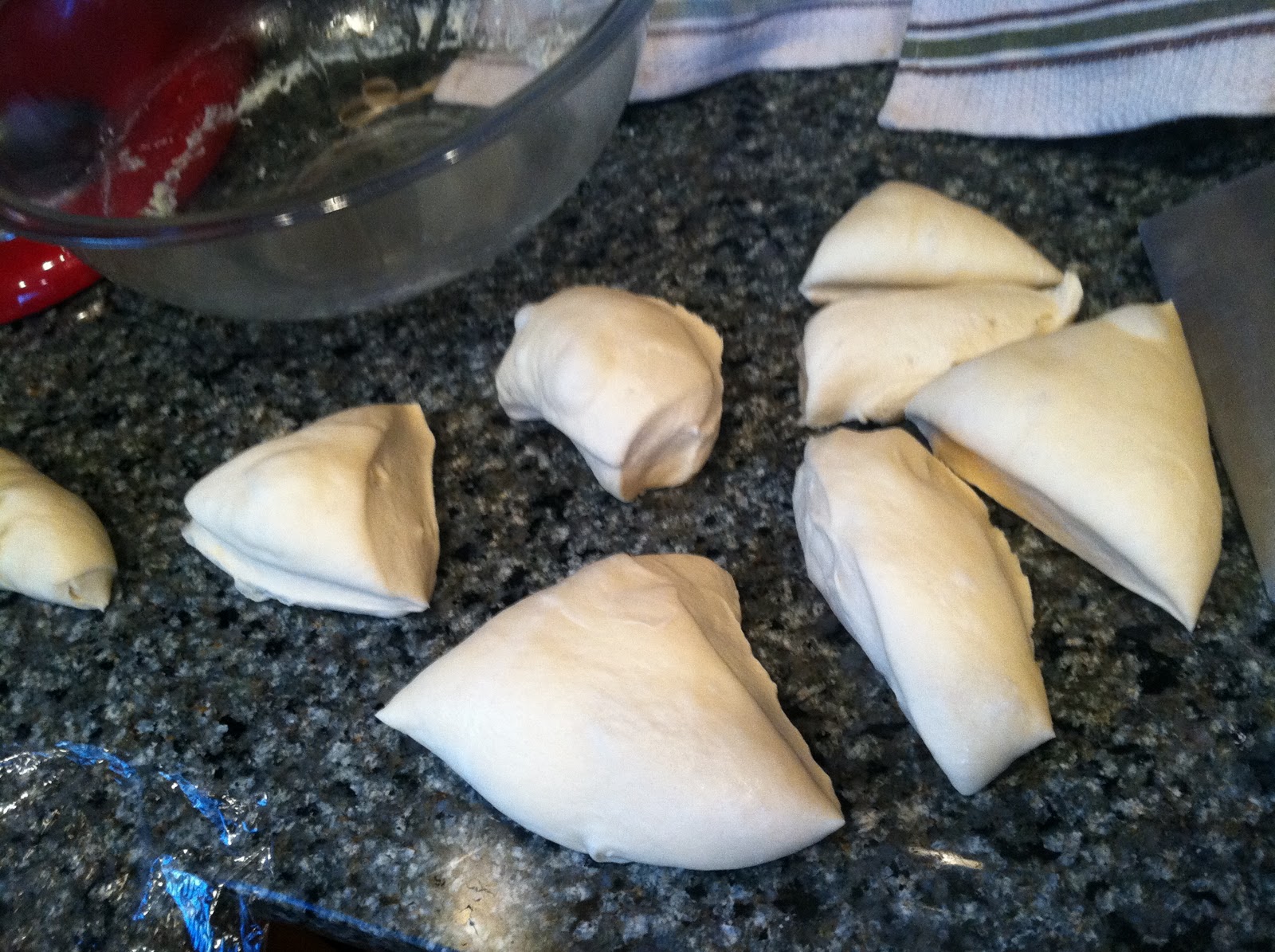
      Using the pastry cutter, divide your dough into quarters or so.

      Revision 2.  Rolls should be smaller.  Last time I said rolls should be about 75g.  Now I make them about 58g.  Hamburger buns still should be about 95 to 100g.

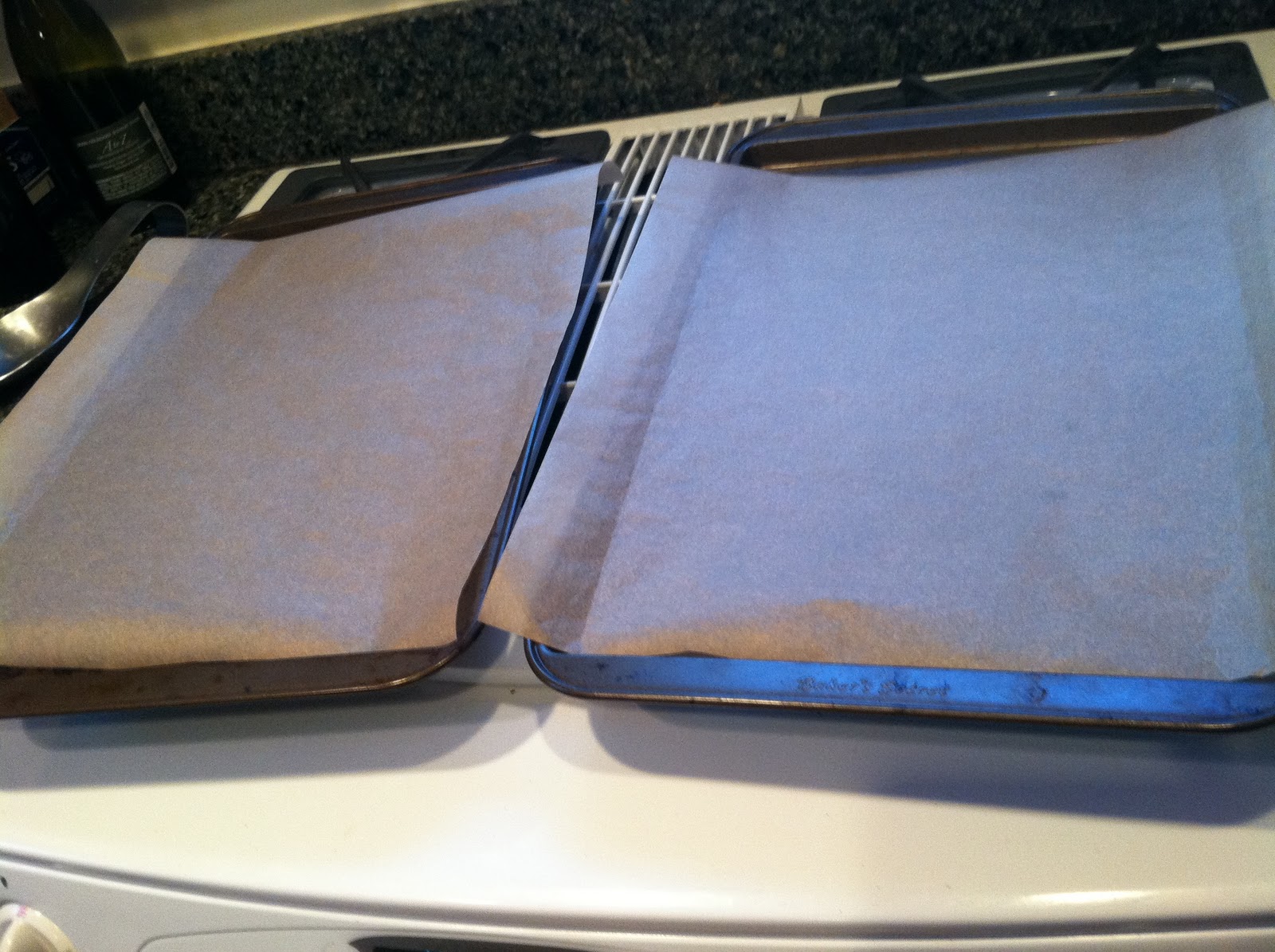
      Weigh each piece of dough and adjust accordingly until each piece is uniform in weight.  Roll into balls and put on your…

      …parchment-lined baking sheet.

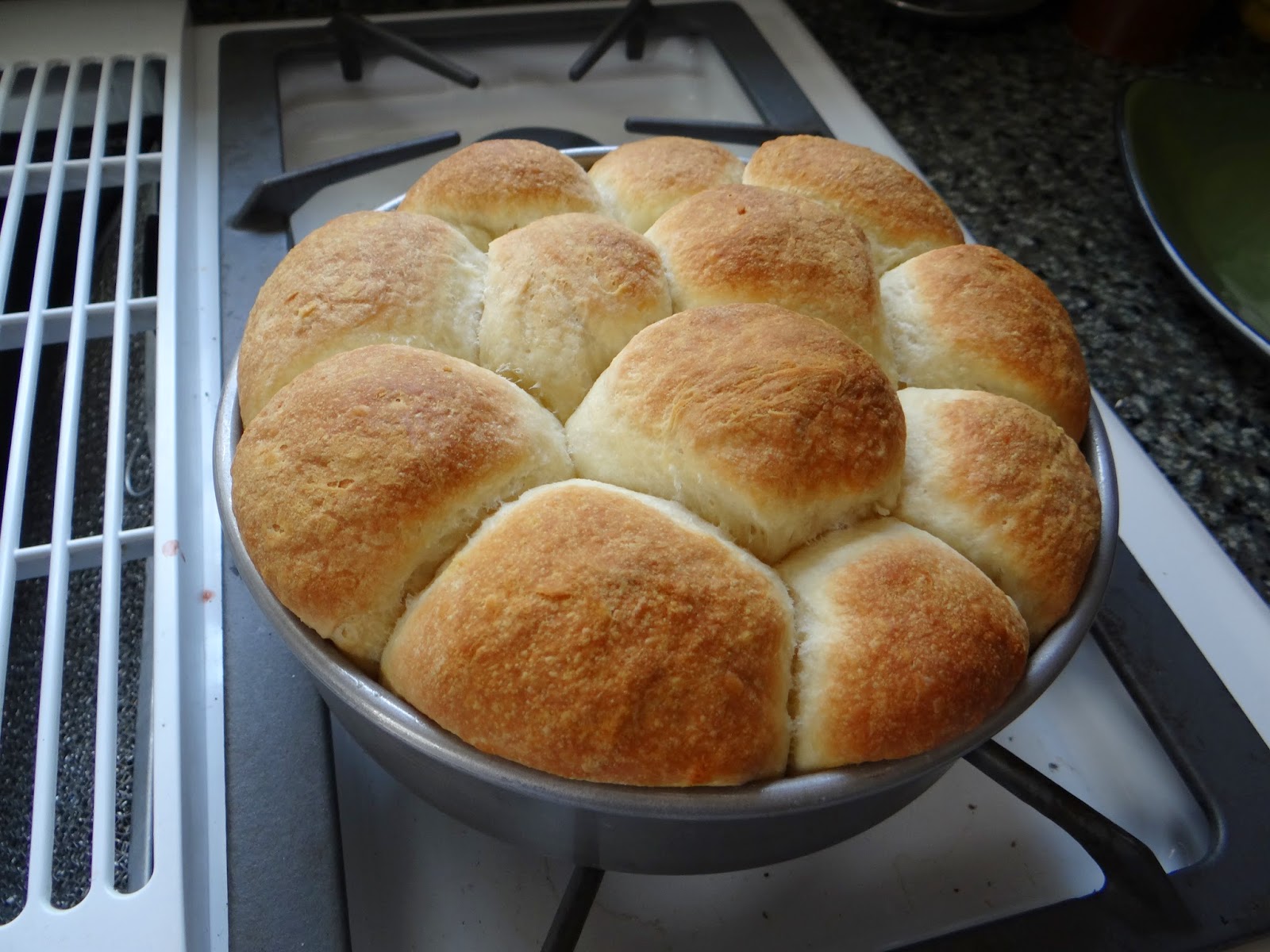
       Revision 3. If you are making rolls, use a parchment-lined baking dish and place all 18 rolls in one baking dish so they lightly touch each other.  The rolls will bake together and have soft sides when they are peeled apart. 

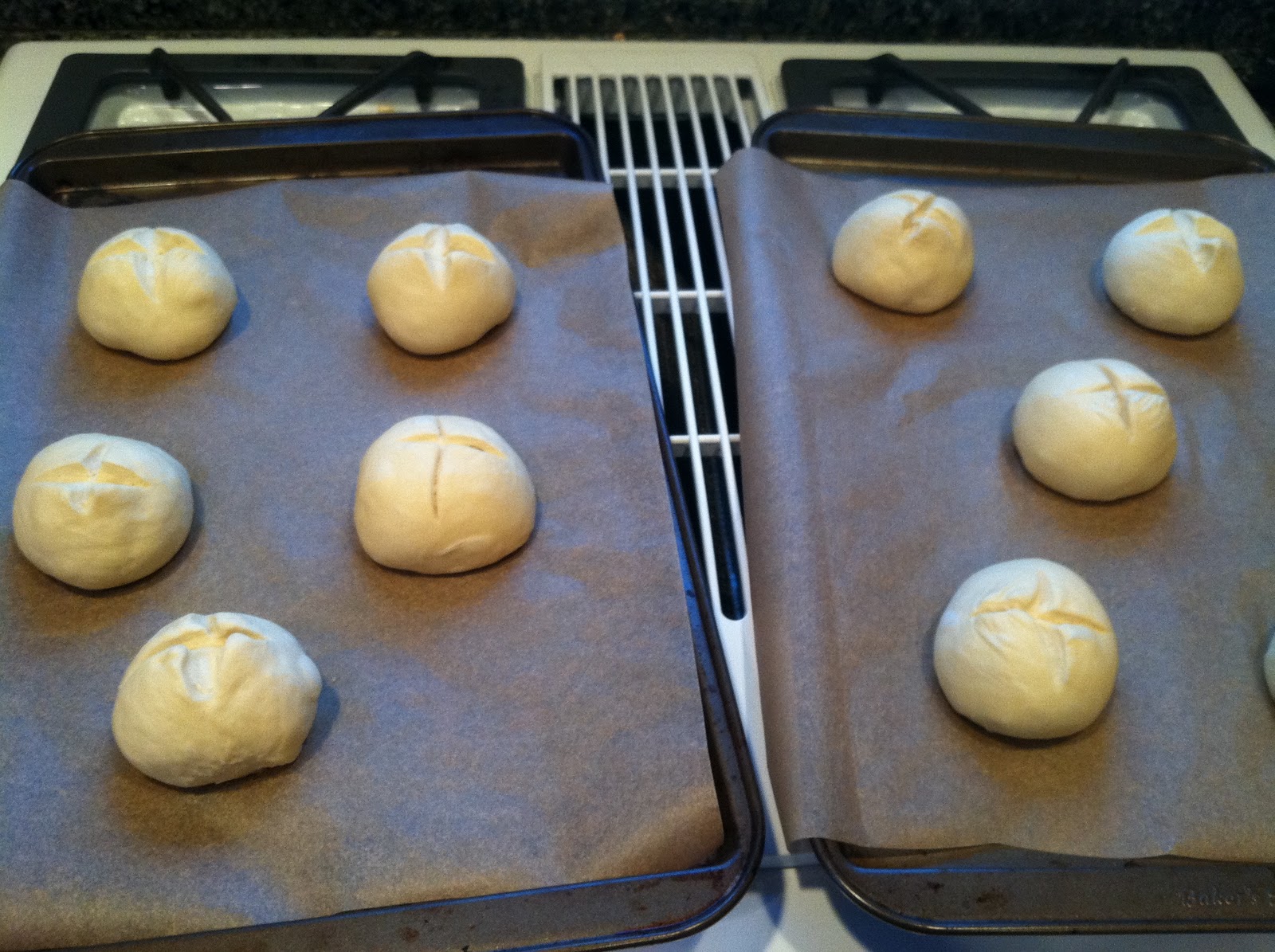
      Once you have your buns on the baking sheets, score them using a sharp knife.  Just draw a little cross on the top.

      If you are making rolls in the baking dish you can skip this step.

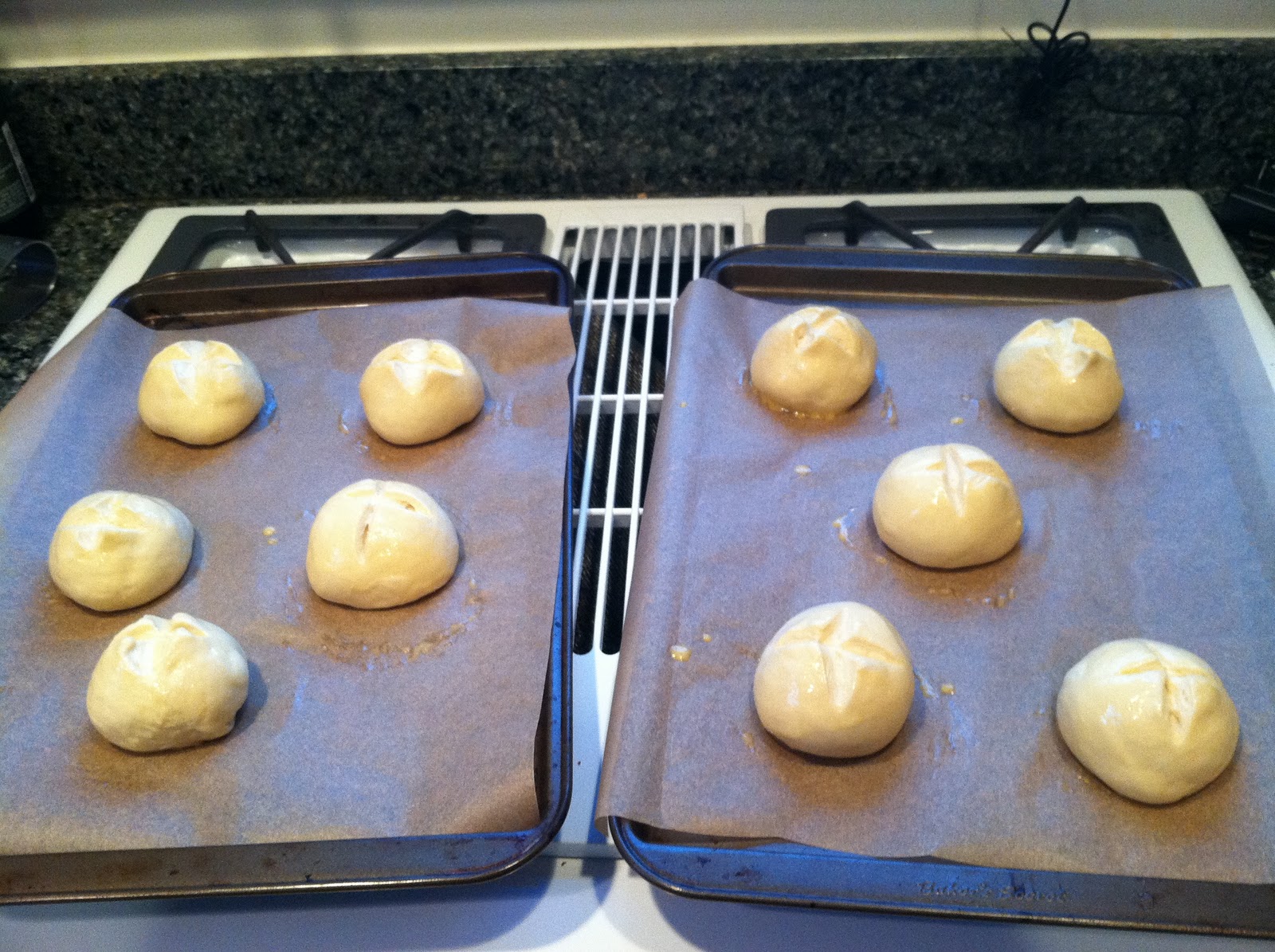
      Take your second egg and crack it into a small bowl.  Whisk with a fork, then use a pastry brush or piece of paper towel to apply the egg wash to the top of each bun.  This will make the buns nice and brown and give them a shiny coating.

      Stick these in the oven for about 15 minutes, rotating the baking sheets once they’ve done all the rising they’re going to do, at about 12 minutes.  Once again, you want to rely on sight, not just what the recipe says, to determine when to take the buns out of the oven.  Because these hamburger buns are pretty big, I’m going to bake them for longer than the allotted time, about 17 minutes instead.

      These buns look great!  And they’re so easy to make.  I hope you have a great Thanksgiving everyone, and I’ll see you next time!