The Science Behind… flour

I really feel like I’m hitting my stride with these The Science Behind… posts.

After getting feedback from the first two, about sandwich bread and raspberry breakfast cake, I decided each post had maybe a little TOO much science.  I don’t want these posts to be overwhelming to someone who is new to breadbaking.  So for the next few posts, I’ll focus on one aspect of the breadbaking process or one ingredient or element.

If you haven’t already, please check out my post on hydration and baker’s percentages.

So now: let’s talk flour!

In this post, I’ll be discussing:

1. What is flour?
2. What are the types of flour and how are they different?
3. What happens to the flour when you make bread?
4.  How can I use flour to change up a recipe?

Flour.  It’s the most important ingredient in bread.  Flour comes from grain that has been ground up into very small pieces, sometimes with one or more parts of the kernel removed so that the flour has a different taste, texture or protein level.
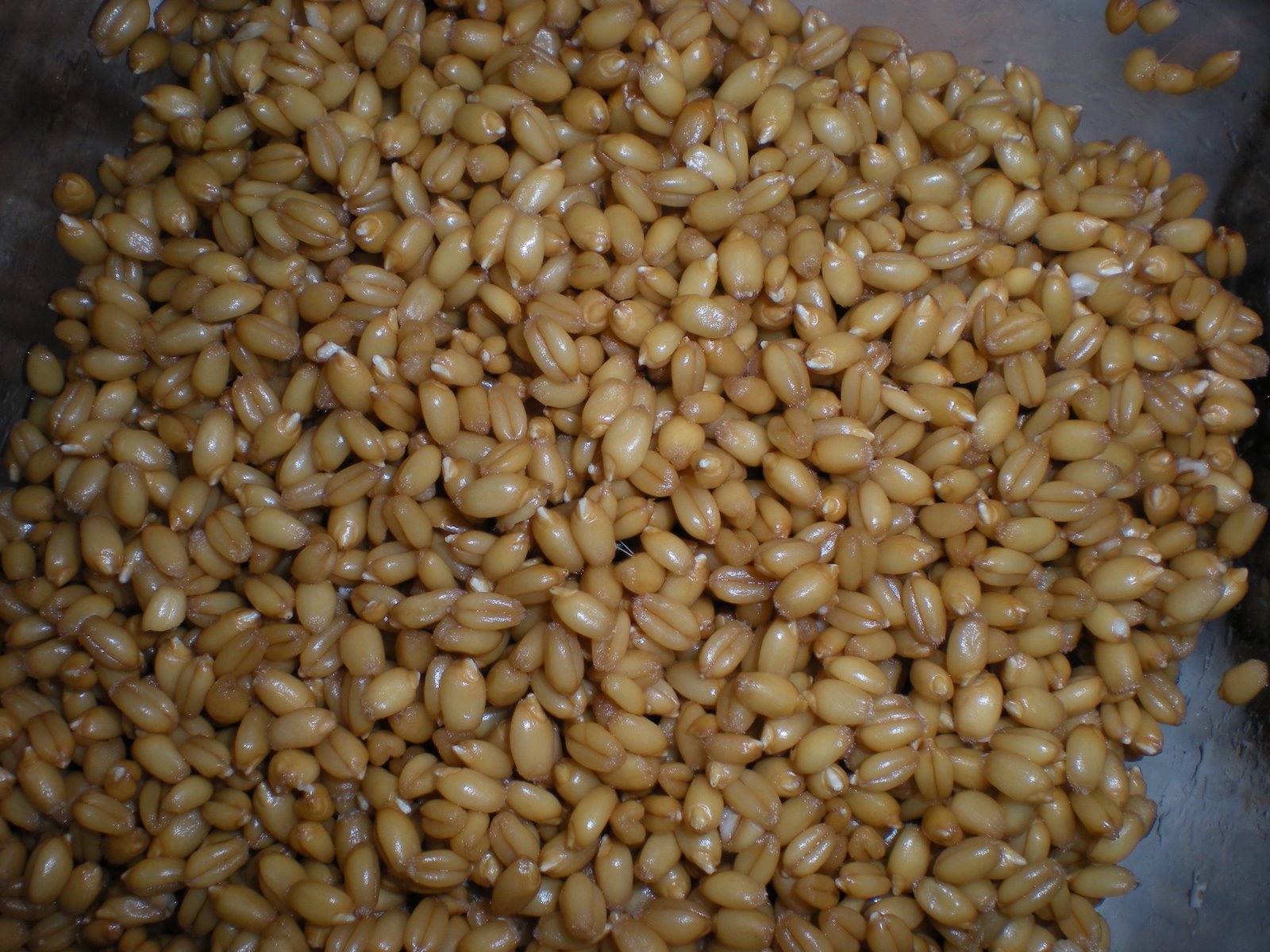
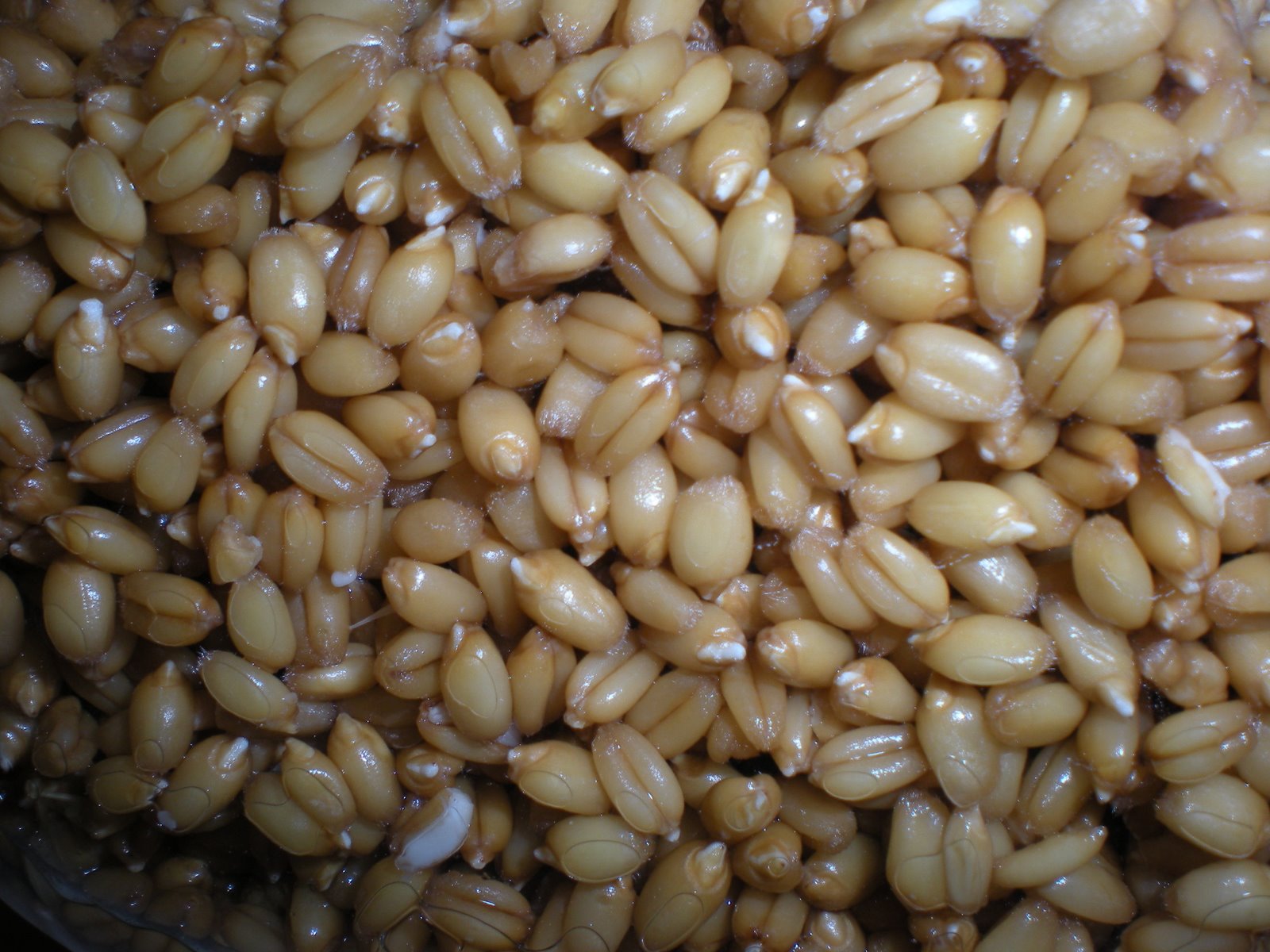
close-up of wheat grains, or “kernels”

2. The differences between flours can be chalked up to:

  • The type of grain used (rye, wheat, spelt, corn, barley, buckwheat, etc.)
  • What varietal of a particular grain is used.  For example, two common varietals for wheat flour are hard red winter (highest protein content) and soft white wheat (low protein content).
  • What part of the grain is used.
  • Any additions to the flour (such as “self-rising flour”)

Take wheat, for example.
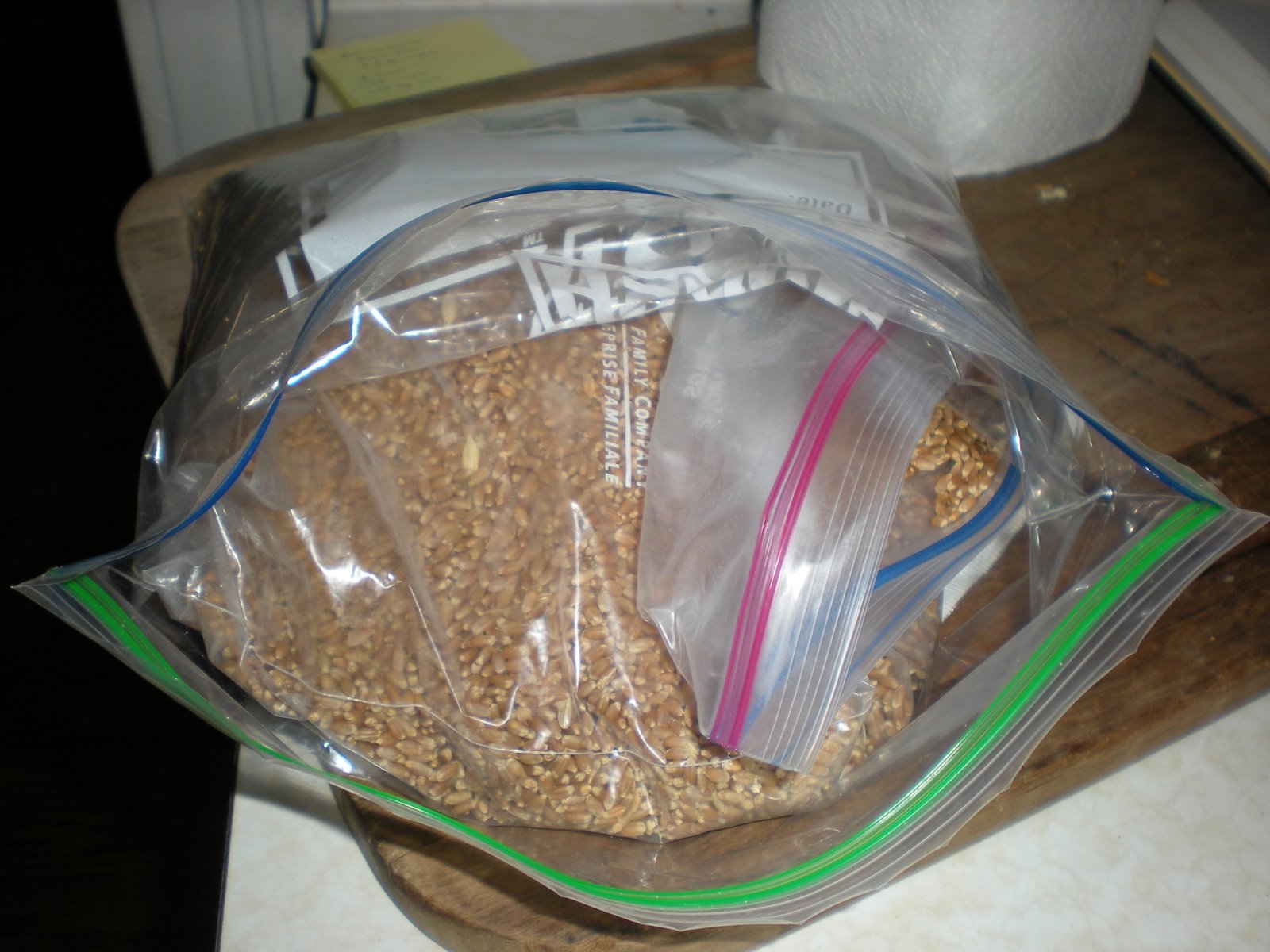
I used to be able to buy whole wheat kernels at the Austin Farmer’s Market

There are three parts to a grain of wheat:

https://runnerbeans.files.wordpress.com/2010/04/wheat-berry-diagram.jpg

Bran, Endosperm, and Germ.

Bran has lots of fiber, but not much protein.  (hint: when you see me use the word protein, think “gluten” even though flour itself does not contain gluten but instead two proteins that form gluten in contact with water)

Germ has some protein, but not much.

Endosperm has high protein and high starch.

If you ground up all three together, you get whole wheat flour.  If you remove the bran and germ, you get all-purpose or bread flour.

This is simplifying a lot, since some varietals of wheat have high protein content in their endosperm, good for all-purpose and bread flour, and some have low protein content, which is good for cake and pastry flour.

What about self-rising flour?  This type of flour includes baking soda and baking powder already mixed in.  However, since we want to be able to control how much of each is in our dough, and we want to guarantee that the baking powder and baking soda are fresh, it’s better to add it yourself.  Skip the self-rising flour.

3. So what exactly happens to bread when it’s mixed into a dough?

It depends on the flour you choose and the type of bread you are making.  For the purposes of this discussion, let’s assume we want to make a yeast bread like my recipe for 66% hydration bread, and not a quick bread like banana bread.  If you want to read about what happens (or doesn’t happen) to flour in quick breads you can check out my post here.
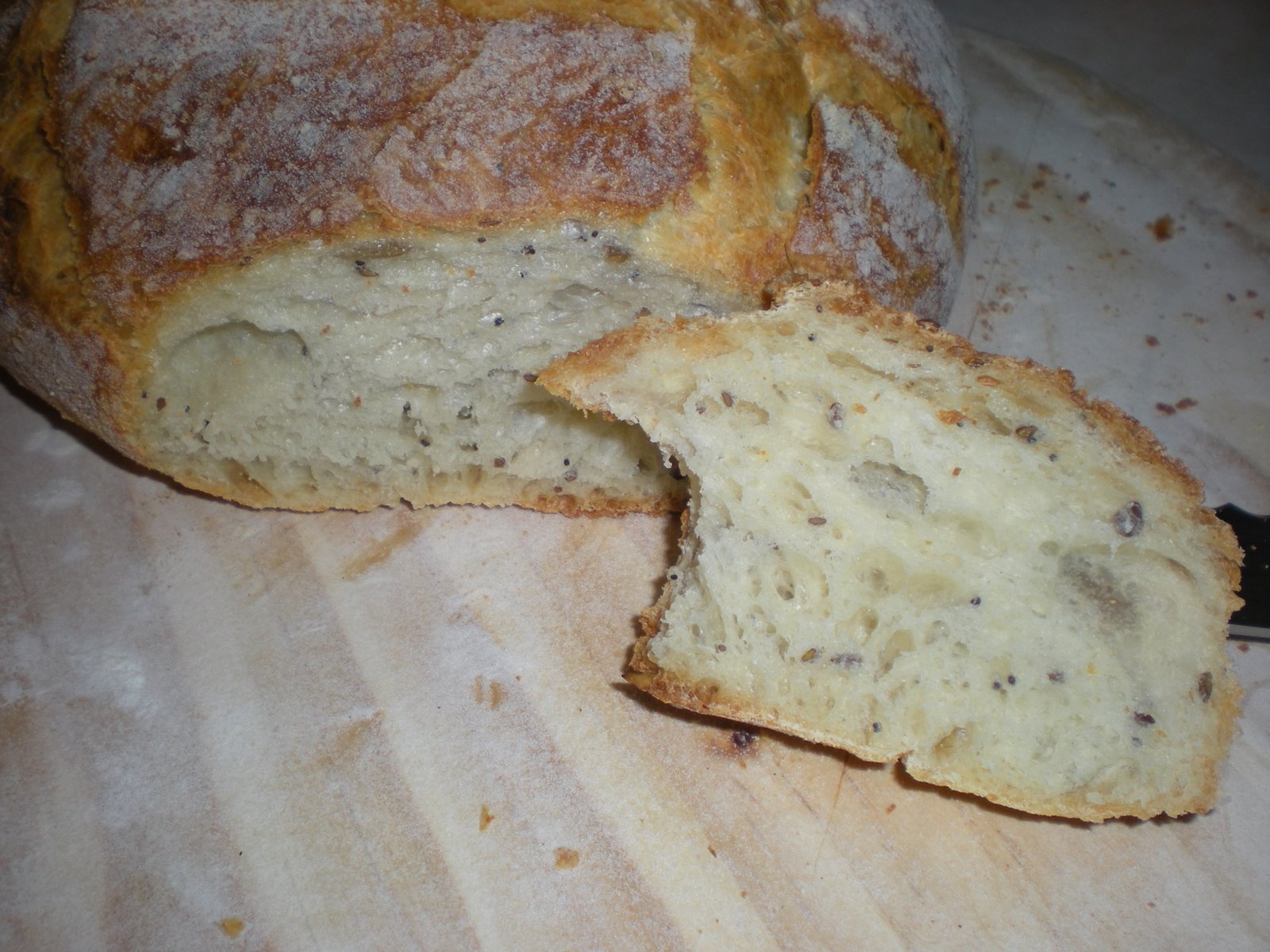
Still with me?

Ok.  For my typical bread using wheat flour, water, salt and yeast, the all-purpose flour and bread flour are interchangeable.

Since both all-purpose flour and bread flour are made of endosperm and contain high levels of protein and starch, they are the perfect medium for yeast bread.  First, the sugary starch is yeast’s favorite food.  So the yeast get to work chowing down on the starch and releasing carbon dioxide gas which makes the bread rise.  Second, the proteins contained in endosperm, glutenin and gliadin, combine with water to form long protein strands called gluten.  The gluten creates a net.to capture the carbon dioxide.
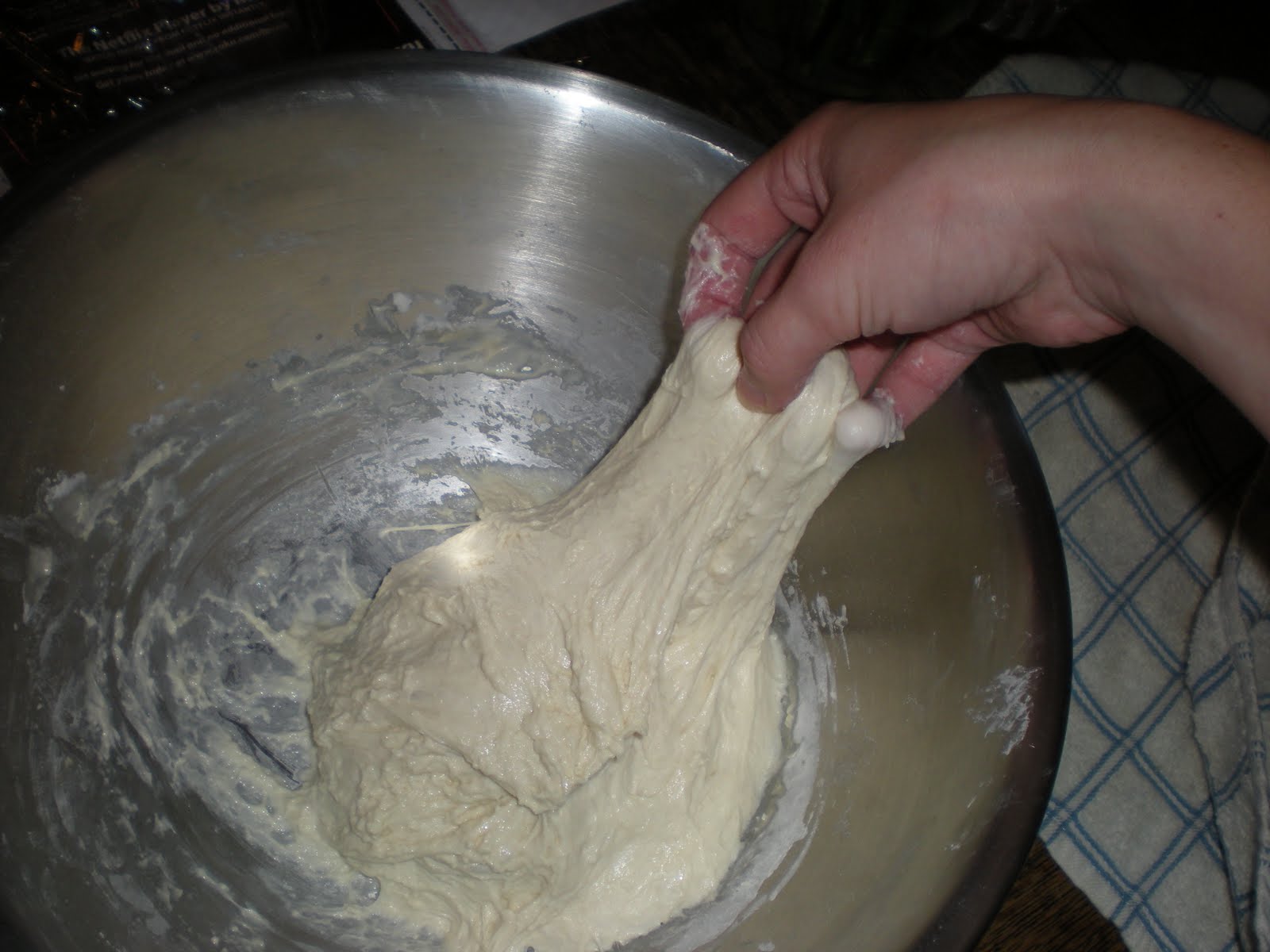
bread flour creates very stretchy gluten strands

The reason you can substitute all-purpose flour and bread flour in this recipe is because we use a small amount of yeast and give the gluten a long time to form.  It forms naturally over time, meaning you don’t have to knead a great deal (or at all) in the beginning.  If you are in a greater hurry, you would want to add more protein to speed the process along, and knead the dough more.  You might want to use all bread flour, or a mix of bread flour and all-purpose flour.

High protein is good because it creates a stronger net to not only trap carbon dioxide, but provide greater structure for your loaf.

4.  How can you change up your bread using flour?

Flour is a great way to change up your daily bread and keep things interesting.

If you want a particularly chewy bread, such as pizza, or very large holes in your dough, like for ciabatta or french bread, you will want high protein flour.  Ciabatta and french bread are high hydration doughs, so structure is particularly important for preventing a watery mess.

Let’s say you are looking for greater flavor or more nutrition.  You would use whole wheat, buckwheat or rye flour.

HOWEVER: these flours are LOW protein flour.  Meaning they do not create a strong net of gluten.  These doughs tend to do better in bread pans, which help contain them and assist with structure before they are baked, rather than in boule or baguette form.  They also do better when allowed to rise slowly.

Something else to consider about using bread flour OR whole wheat when compared to all-purpose flour is that they both require more water than all-purpose flour, but for different reasons.

I have not had success making 100% rye loaves.  I do like their flavor, so I might throw in 100g or so into an all-purpose flour loaf.  You can read about my rye bread quest here.

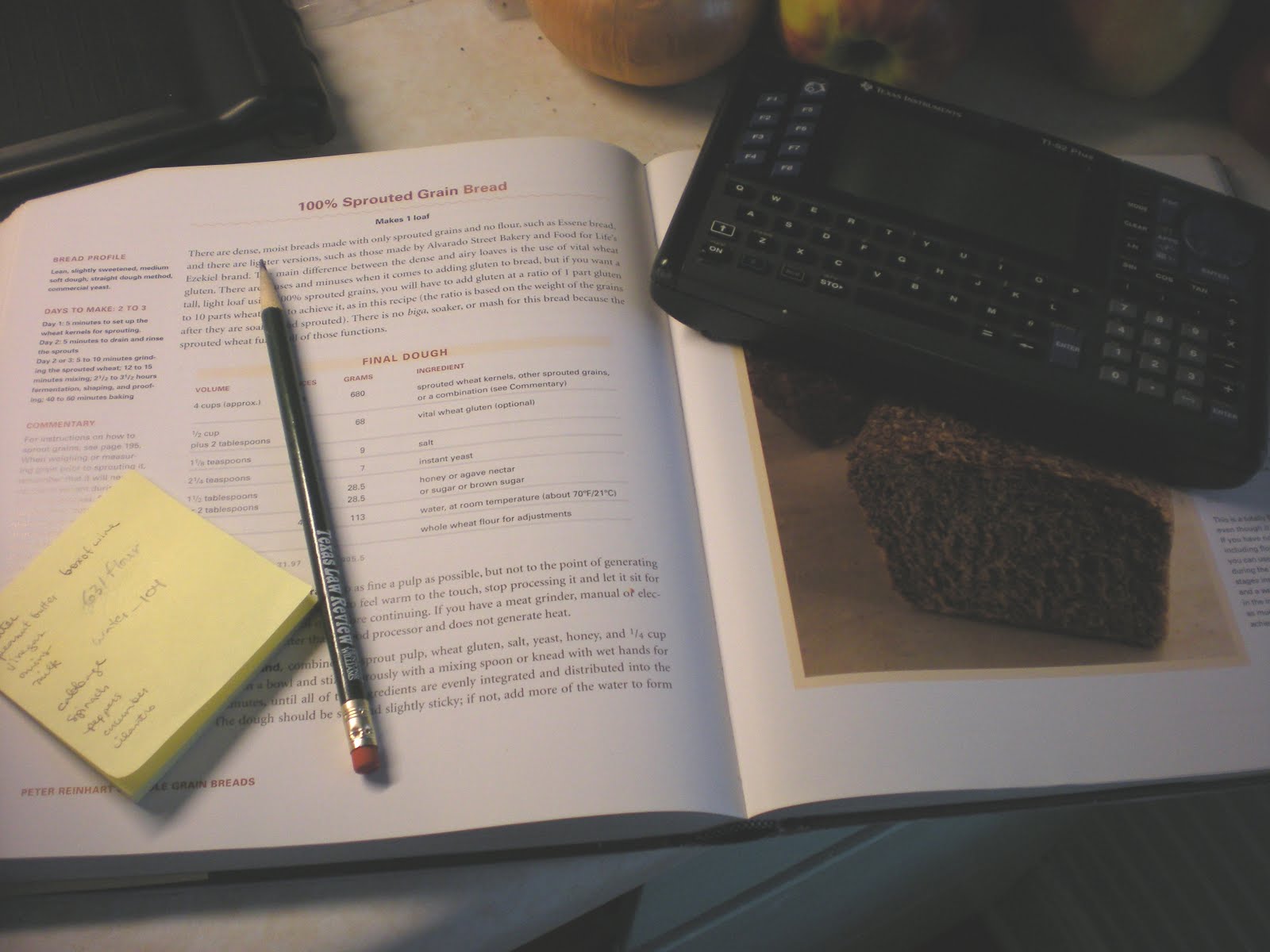
If you are interested, Peter Reinhart’s book on whole grain breads is fantastic.
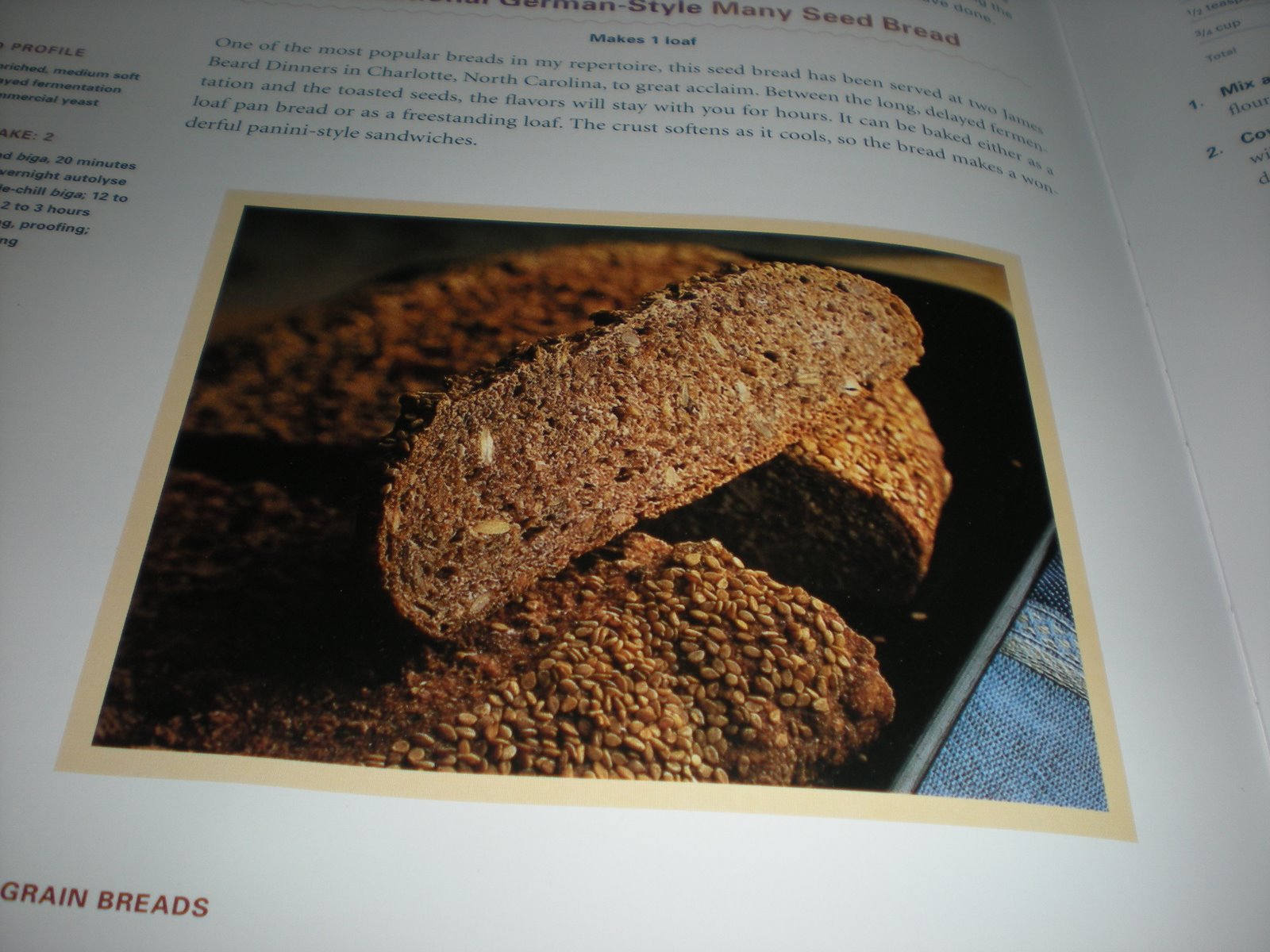
Experiment!  Throw 100g or so of rye, buckwheat, wheat germ or bran, or other flour into a basic bread flour or all-purpose flour dough and see if you can taste a difference.

If the taste of rye or whole wheat flour is too strong, experiment with honey to sweeten it or eggs, oil or milk to soften your dough.

Check out Peter Reinhart’s biga and soaker technique for getting the most flavor and rise from your whole wheat dough.
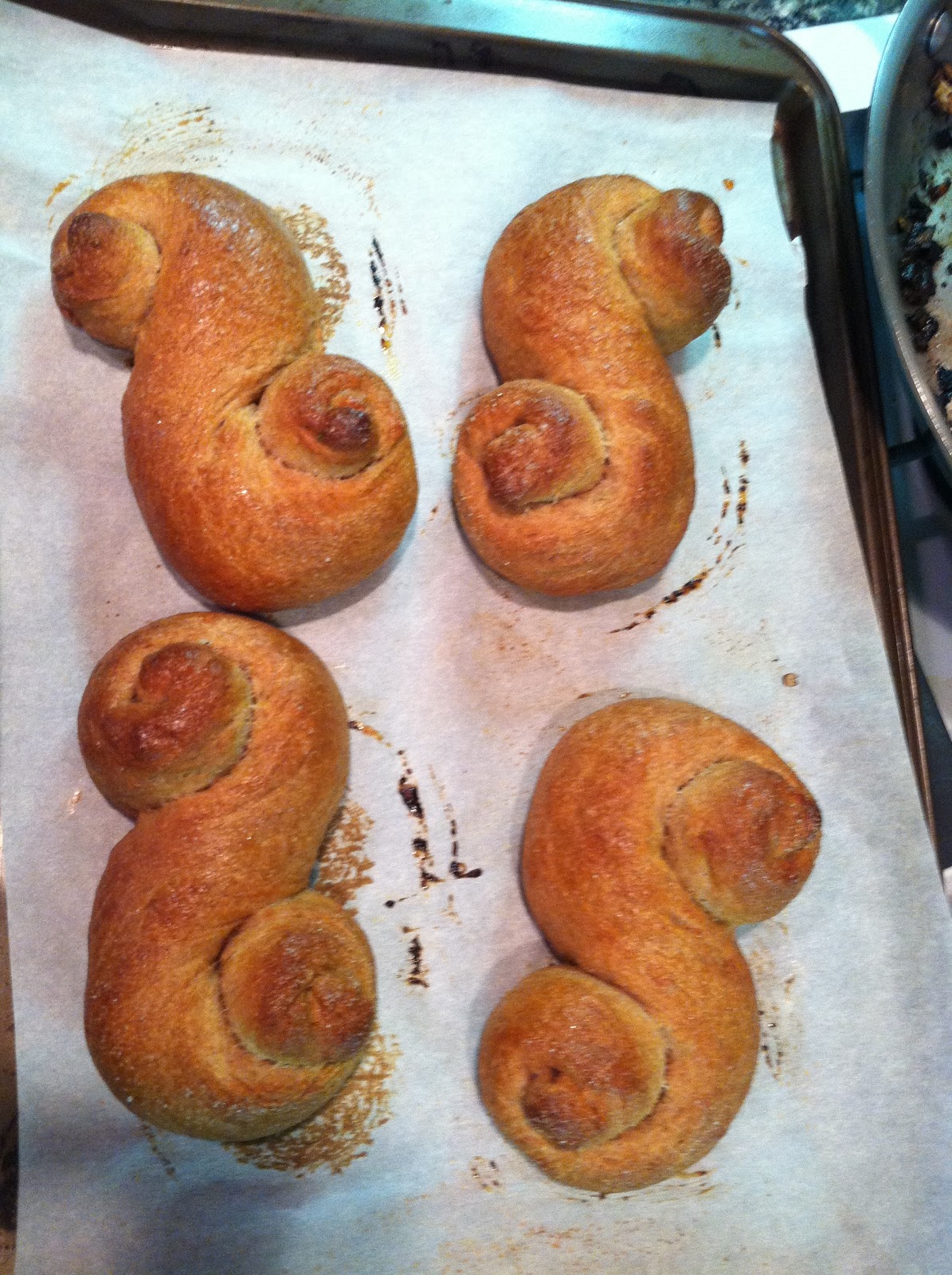
Peter Reinhart’s whole wheat St. Lucia buns

That’s it!  I hope you have lots of ideas for changing up your dough and have learned a lot about flour!
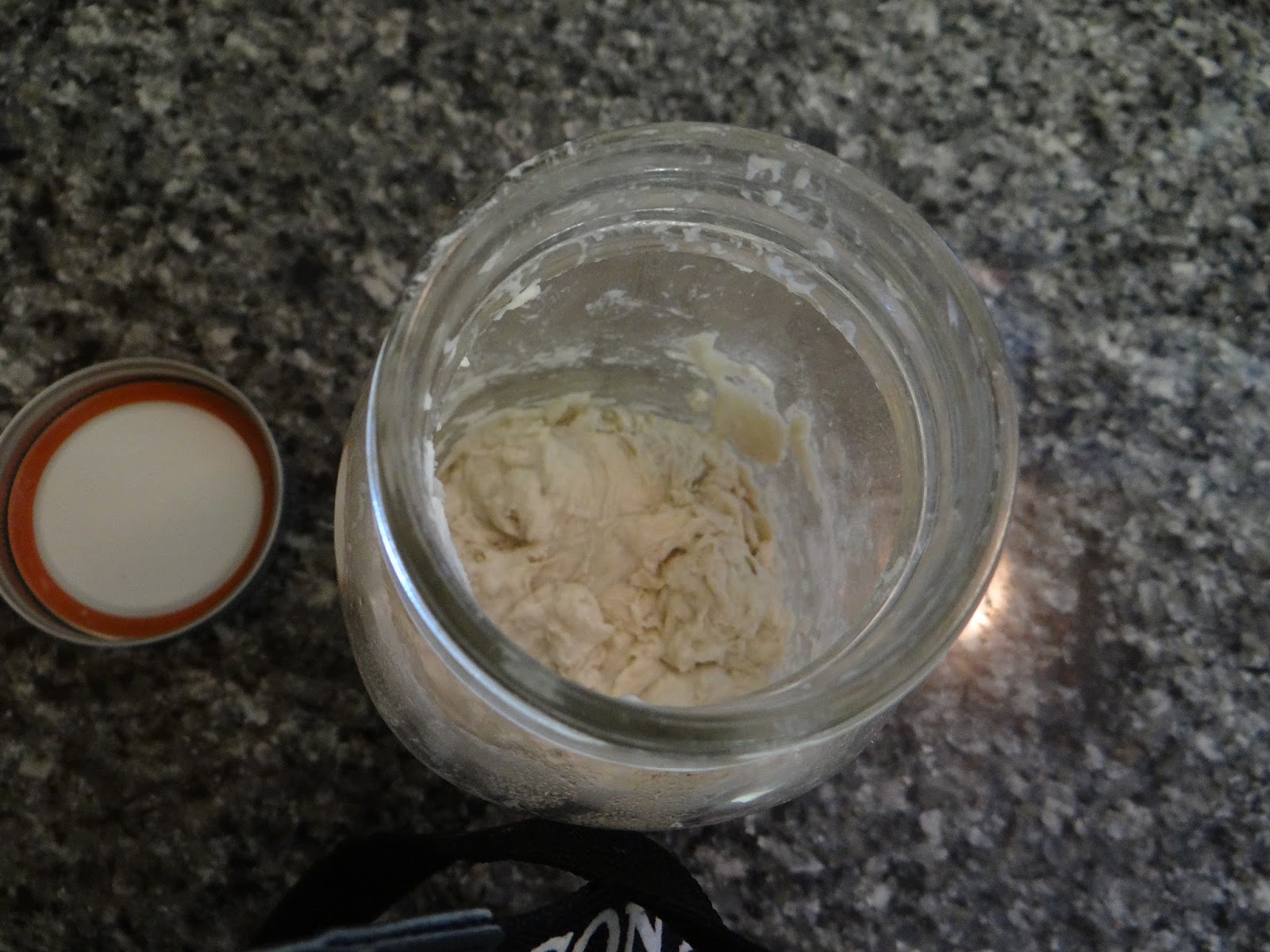
The Science Behind… sourdough starter

I’m so excited to share with you the science behind sourdough starter!  It can be a bit intimidating at first, but baking with sourdough isn’t hard at all.  The taste is worth the added effort.

Feel free to check out my recipe for making your own sourdough starter and a simple sourdough recipe.

Here’s what this post will cover:

1. What IS starter?
2. Why is it called SOURdough when it’s not sour?
3. Why do I have to feed it?
4. Why do I have to discard most of the starter each time I feed it?
5. How do I know when my starter is ready to use?
6. What do I do with it?  How can I convert a recipe that uses commercial yeast to one that uses starter?

Ready? Let’s begin!

1. What is starter?

Starter is known by several names – mother, poolish, levain, pre-ferment.

It’s basically a mixture of flour and water that provides food and a place for natural yeasts and lactobacilli to eat and reproduce.  Yeast and lactobacilli release carbon dioxide which causes bread dough to rise.

The most common yeast found in sourdough is Saccharomyces Cerevisiae (Latin scholars will note Cerevisiae means beer, indicating that the first yeasts may have been discovered first for brewing and later in bread).   The most famous lactobacillis is L. sanfranciscensis, which gives sourdough in San Francisco its strong flavor.

2. Why is it called SOURdough when it’s not sour?

It depends – some sourdough starters are sour!  The lactobacilli release lactic acid which gives sourdough its characteristic taste.  Starters become more sour over time, and the longer you go between feedings the sourer (?) it will become.   If you are actively feeding and discarding the starter frequently, it will not taste as sour.
3. Why do I have to feed it?

Yeast is alive — and to stay that way, it needs to eat!  What does it eat?  Flour, and you mix it in ratio with water.  The hydration of your starter can be anywhere from stiff (66% water to flour ratio) to watery (100% ratio water and flour) The frequency of feedings depends on how often you will be using your starter.  If you plan on baking a loaf or two every few days, your starter can sit on your counter and you will need to feed it every day.  If you don’t bake that much, you can store your starter in the fridge and feed it once a week.  If you know you plan to bake with it soon, you will need to revive your starter from its fridge dormancy for a few days before it will be active enough to use again.

4. Why do I have to discard most of the starter each time I feed it?  It feels so wasteful!

The yeast organisms need something to eat, and as they eat they reproduce, eventually filling your flour and water mixture with yeast.  Flour has both sugars (carbohydrates) and protein (glutenin and gliadin) in it.  The carbohydrates give the yeast something to eat, and the proteins provide the net to capture the carbon dioxide released by the yeast and cause the dough to rise.  If the yeast get too numerous, they will run out of sugars to eat.  They will start eating the protein strands instead, which is disastrous for your bread!  Once the yeast have converted to eating protein, your bread will always turn to mush and never form the gluten net.  By discarding most of your starter before you feed it, that will prevent the yeast from getting too numerous and eating up all the carbohydrates.

If you’re worried about wasting all that flour and water, you can still use the discarded starter in other recipes to add flavor.  You just won’t be able to rely on it for its leavening properties.  King Arthur flour (not an ad) has some ideas for using up discarded starter here.

5. How do I know when my starter is ready to use?

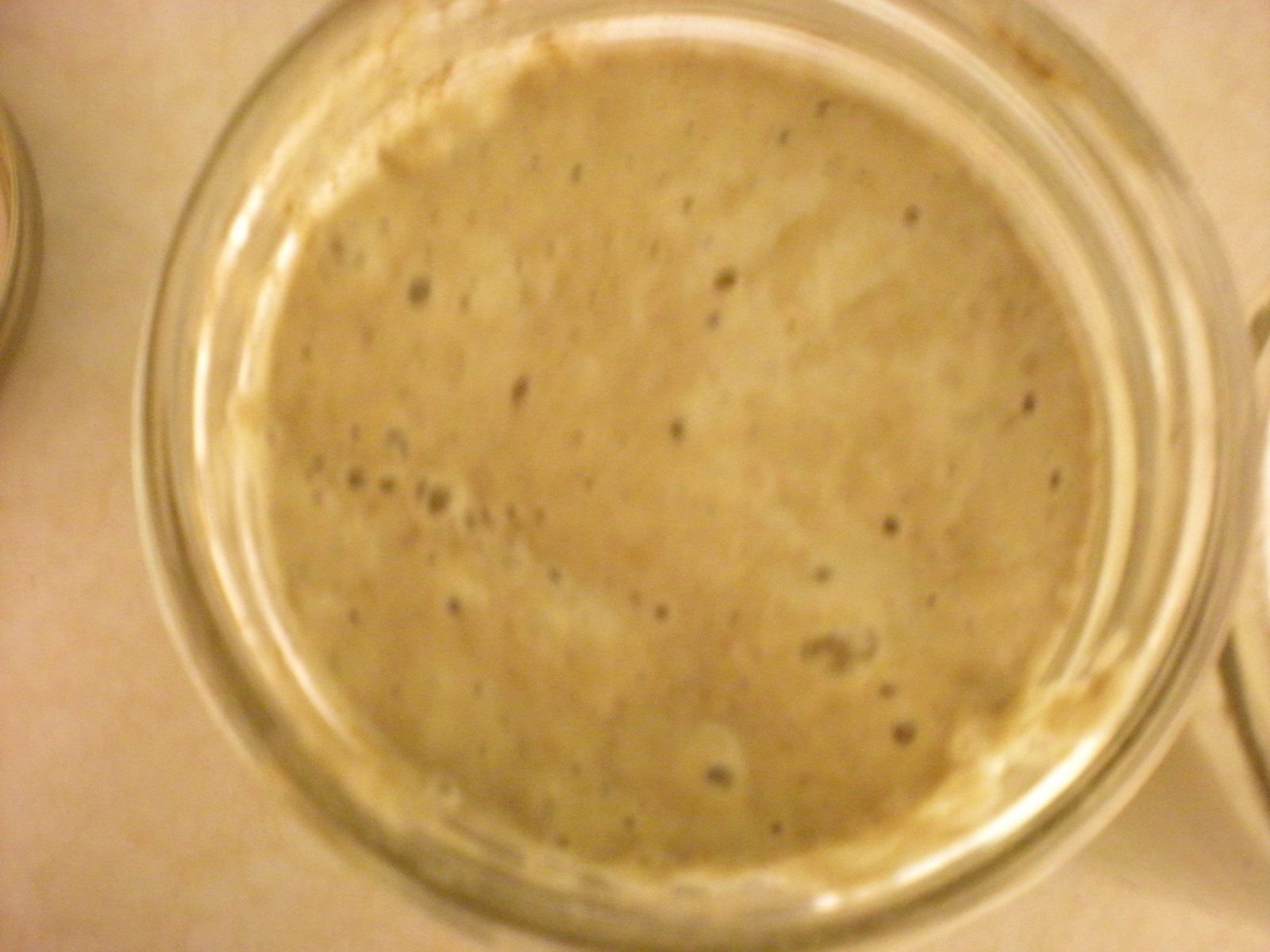
You will know it’s ready to use when it’s very bubbly and visibly rises in the twelve hours (or sooner) after a feeding.  Sometimes it’s easy to tell the starter is ready – when you try to open the lid of the jar you use, there will be pressure released from all the carbon dioxide building up inside.

6. How do I use starter?   How do I convert recipes that use commercial yeast to use sourdough starter instead?

Here is where bread math comes in!  For most recipes, it is very easy to swap sourdough for commercial yeast.  Where you DON’T want to do this is in very sweet and enriched breads; the sourdough can give a sweet bread an “off” or stale taste.  I’ve also found that when I make the small pieces of bread for communion, sourdough tastes stale.  By keeping the ingredients spare, you will allow the sourdough flavor to shine through.  My 1-2-3 sourdough is perfect for this.

By feeding the starter 100g of flour and 75g of water, you have made a 75% hydration starter.  This might be just fine for a dough that is 65-80% hydration.  You can just add a 1/2 cup of starter and you’ll be good to go.  But if you are looking to make a bread that requires a very wet dough, such as a ciabatta, you will want to calibrate your dough so the final dough will be the hydration you want.

Say you want your final dough to be 100% hydration, but your starter is 75% hydration.

What you’ll do is use the following two equations to figure out:

1) how much flour and water by weight is in your starter
2) how much extra flour and water you need to add to your starter to get a dough that is 100% hydration.

An average bread will weigh about 750g.  If that’s the case, a 100% hydration dough will have (minus 9g of salt) equal weights of water and flour.  So that’s about 370g of water and 370g of flour TOTAL, including the flour and water in the starter.  so you need to figure out how much water and flour to add to your 75% hydration starter to get a final loaf that is 100% hydration.

So here’s what we have to start with (if you’re still following me):
total dough weight (minus salt) = 741g
starter hydration=75%
total dough hydration=100%
starter weight= let’s just say you plan to use 125g of starter

1) For the first equation, you will need the following pieces of information:
starter weight=125
starter hydration=75%

Since we’re familiar already with baker’s percentages, we know that flour always equals 1, or 100% compared to the other ingredients. So:
Flour = 100%
Water = 75%

Add them up, and you get a total of 100%+75%= 175%.

125g of starter ÷ 175 = 0.714
Flour wt. = 100 x 0.714 = 71.4g
Water wt. = 75 x 0.714 = 53.5g

125g of starter = 71.4g of flour + 53.5g of water.

2) Now that we know the weight of the flour and water in the starter, it’s a simple subtraction problem to figure out how much flour and water to add to the dough to get a final dough that is 750g and 100% hydration.  

For this equation, we will need the following pieces of information;
Total dough weight (minus salt) = 741g

Total flour weight = 370g
Total water weight = 370g
Flour weight starter = 71.4g
Water weight starter = 53.5g
now set up the equation like this:

Extra flour needed to add to dough = 370g – 71.4g = 299g
Extra water to add to dough = 370 -53.5 = 317g

So to reach our desired 750g dough, we will need:
125g of starter
9g of salt
299g of flour
317g of water

And we will have our 100% hydration loaf!

Whew!  I hope you found this post helpful… or at least not too terrible!  I’ll try to follow this up with a recipe post to give your brain a break. Thanks for staying with me to the end.

Update on the sourdough starters

I have some sad news, y’all.
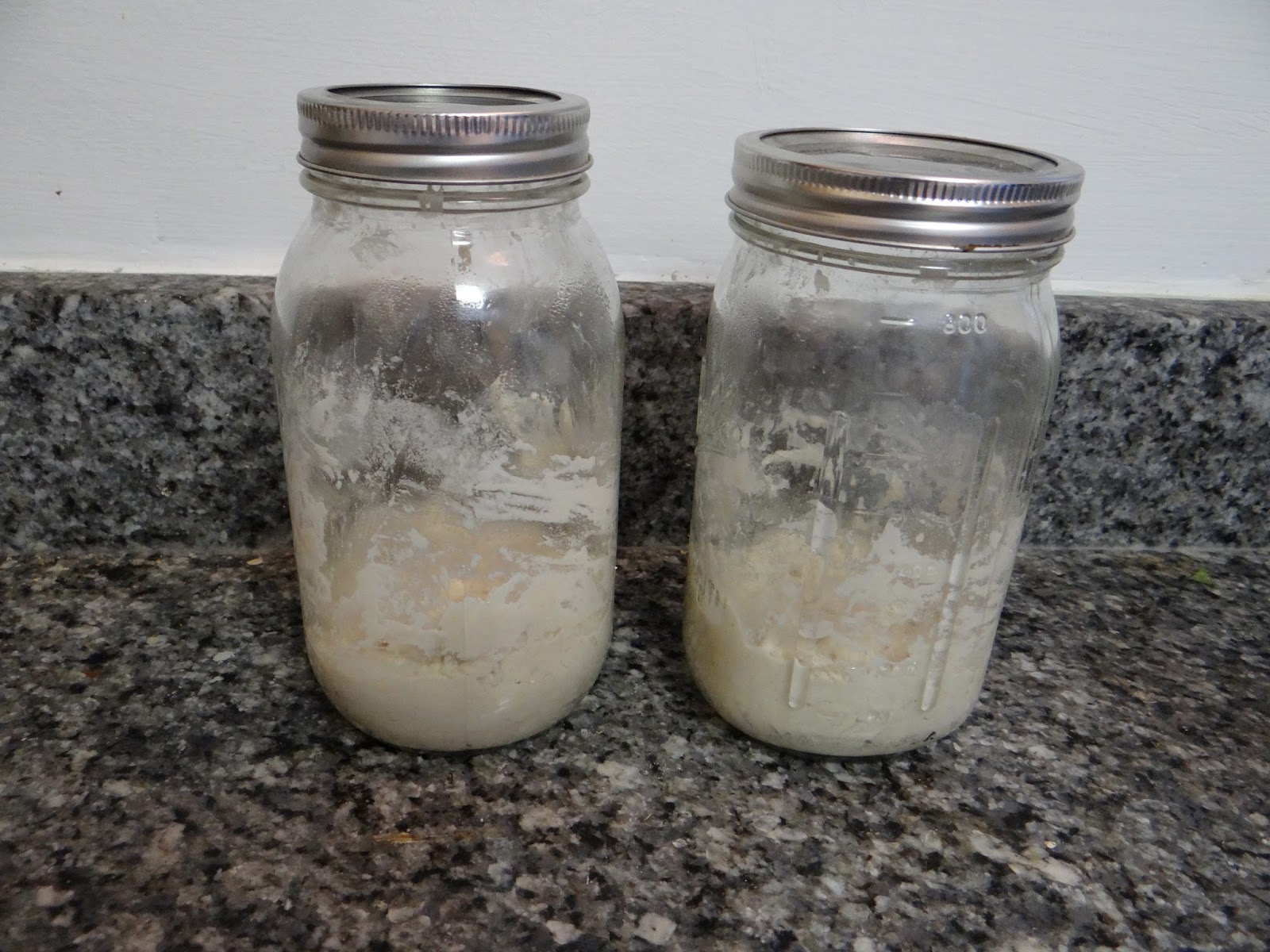
For the past week, I have been feeding these starters in an attempt to revive them after dragging them from Texas to Virginia FIVE YEARS AGO.
We’ve been through a lot together, these starters and I.
Two states.  Four homes.  Three moves.  Two children.  Lots and lots of bread.
I thought they would pull through.  There was some visible activity at first.  But after zero activity for the past three days, I removed the lid and smelled acetone.  That means the starter has converted, in the absence of food for the past five years, to eating gluten protein instead of starch.  So even if I did somehow manage to get the starter active and bubbly, I couldn’t bake with it because it would eat the gluten and create a gloppy mess.

But there is a happy ending to this story.  
In this post, I mention that at some point in 2008, I gave some of my starter to Mr. Bread Maiden’s mother, aka Slow Learner (her chosen nickname, not one I would EVER call her!).  I killed off my starter at some point in 2009, after which she gave me some of her starter, which had begun with my seed culture.  Since then, she has continued to keep hers going strong, and I will probably get another sample from her this weekend.  So even though I’m a terrible sourdough starter parent, I will try my best not to neglect it quite so long this time.
Expect a post from me (a chastened sourdough parent) about sourdough starter next week.

The Science Behind… hydration and baker’s percentages

One of the most important aspects of baking is the ratio of flour to water.  Getting the ratio right can mean the difference between a loaf that rises correctly and bakes nicely in the oven, and one that is too dry or too limp to shape correctly.

In this post, I will be discussing:

1. What is hydration?
2. Why is it important?
3. How do I calculate a baker’s percentage?
4. How does hydration affect my bread? 

This ratio of flour to water is called hydration (naturally), and once you get the hang of it, bread baking is easier, cleaner, more successful, and faster.

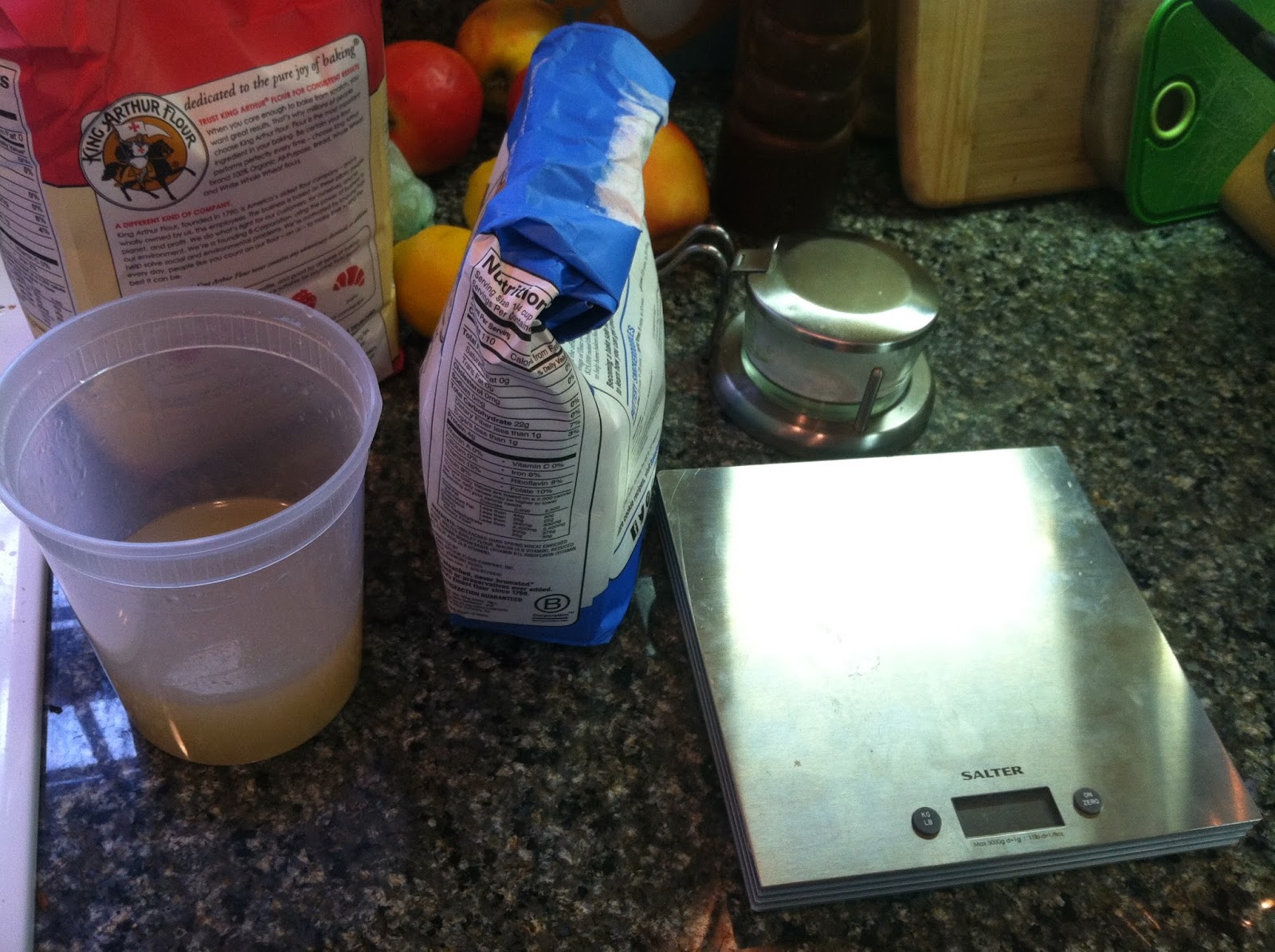
When I teach Bread Camp, the first thing I tell participants is to go out and buy a kitchen scale.

Don’t worry, I’ll wait while you go to the store.

Why is a kitchen scale so awesome?

Because you can measure ingredients more accurately with a scale, measuring them by weight, than you can by measuring their volume.

When you measure flour by volume, so many things can throw off an accurate measurement.  How you scoop the flour, whether you sift it first, the humidity in the air, etc.  When you measure it by weight, however, it is always the exact amount regardless of these interfering factors.

Also, measuring ingredients by weight means you can measure everything into one bowl, instead of getting every spoon and cup in your drawer dirty.  You only have one unit of measurement, grams or ounces (whichever you prefer), instead of having to convert spoons to cups, or milliliters, or fluid ounces.  Just zero out your scale after each ingredient.

Having a kitchen scale also makes calculating hydration easy.  But we might be getting ahead of ourselves.

First, what is a good ratio of flour to water?

Good question.  It depends on what type of bread you want to make.  It also depends on the type of flour you want to use (more on that in a second).

In a baker’s ratio, the flour is always the 1 in the ratio.  The hydration level tells you the percentage of water in relation to the flour.  Workable hydration levels for bread fall between about 66% and 100% hydration.  So for every 100g of flour, for example, your recipe might call for 66-100g of water.  My usual go-to bread, that I can make with my eyes closed, calls for 375g of flour and 250g of water.

250/375=.66

Therefore, it’s a 66% hydration dough.

Hydration can affect the pliability of your dough and how easily you are able to handle the gluten strands to shape the bread into a nice shape for baking.  A low hydration dough is easier to handle than a high hydration dough.

What is so awesome about baker’s percentages?

1) If you know the hydration of the dough you want, it is easy to scale up or down depending on the number of loaves or the size loaves you want to make.  Volume measurements are easy to double or triple, but if you want to make a single loaf slightly bigger, you are out of luck.

2) If you make a mistake, it is easy to correct.  I REPEAT: IF YOU MAKE A MISTAKE, IT IS EASY TO CORRECT.  This is so major.  Sometimes, when you measure out ingredients by weight into the same bowl, accidents can happen.  You can pour too much of this or that, and if you were using volume measurements, you would be stuck.  How would you know how much water or flour you had added?  You could try to scoop out some of the extra, but you still don’t really know how to fix it for certain.  With a scale, if you’ve been zeroing out between each ingredient, then you know exactly how much you added.  And even better, it’s a snap to compensate for the mistake using a simple equation.

I think I’ll just use this picture from now on to warn readers that bread math is coming up.

Let’s say you want your bread to have a 66% hydration level.  If you accidentally added 500g of flour, you just need to solve for the amount of water.

x/500g = .66
.66*500=333.3

So to compensate, you would need to add 333g of water (give or take; there’s no need to measure to the decimal level with grams)

See?  Super easy.

Here’s a little secret: you can go up or down twenty or so grams of flour or water from the exact ratio weights and your dough will be just fine.

Ok, sure, but what does it mean that your bread has 66% hydration?  What does that look like?

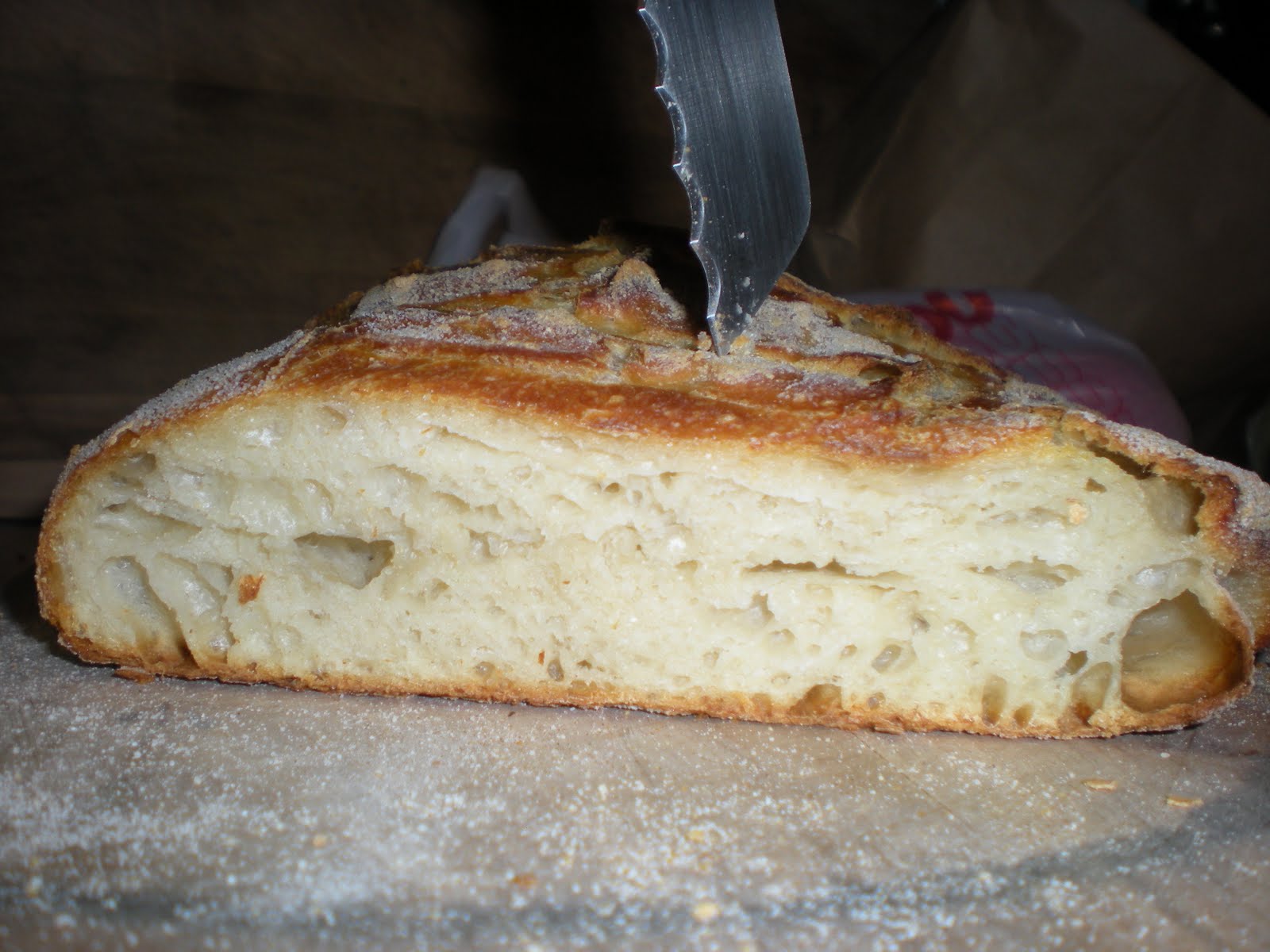
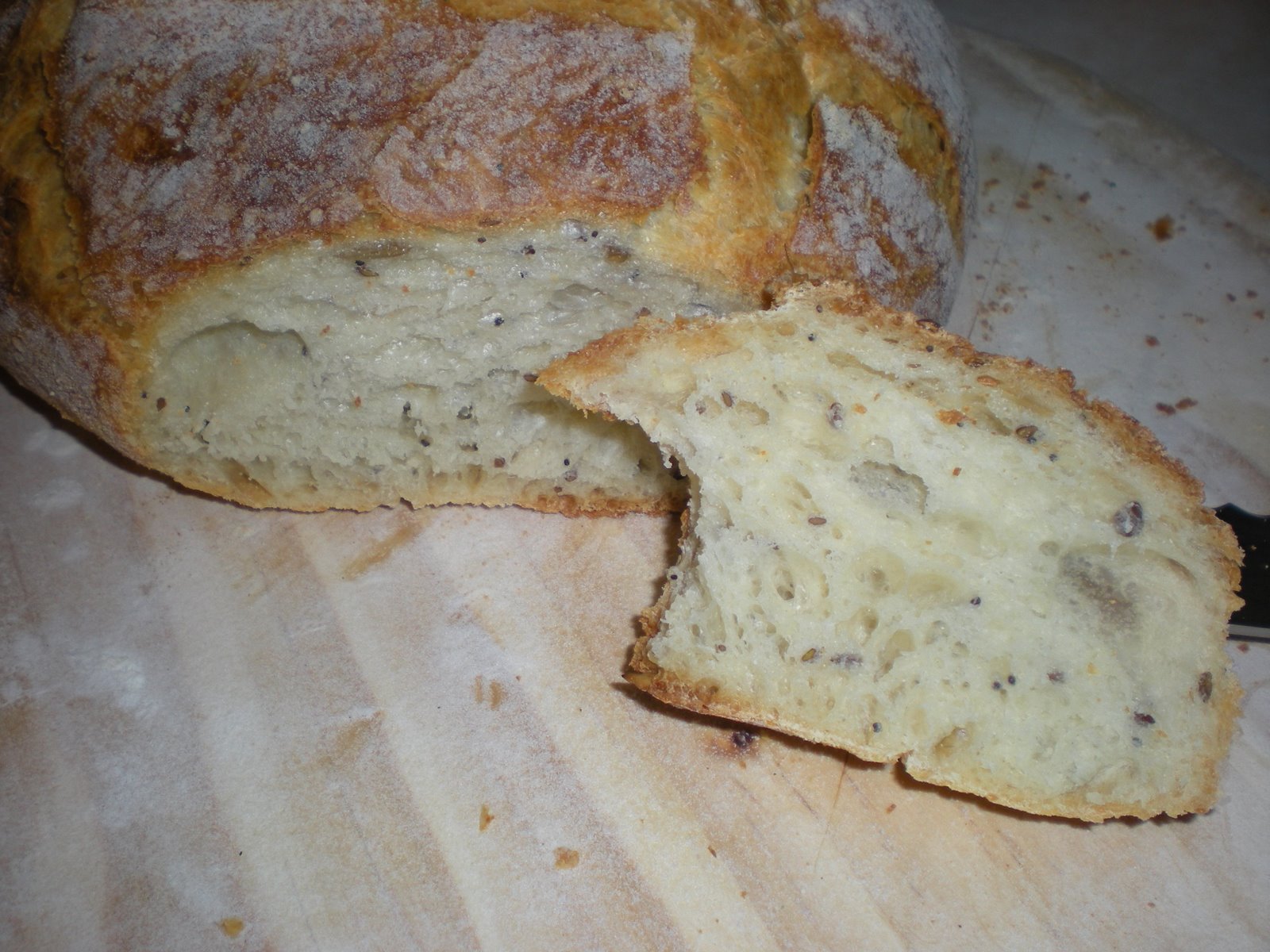
When you’re working with all-purpose flour, a 66% hydration dough is going to be your standard sandwich bread, with a tight crumb and small holes.  The dough is easy to shape and the gluten strands hold the shape tautly.

A 75-85% hydration bread is going to have bigger holes.  This is your french bread or other boule-type bread with crackly crust and large holes inside.  This dough requires a few stretch and folds over the course of the first rise in order for it to maintain its taut gluten structure.

Anything above 85% is going to be tricky to shape.  These are your ciabattas or some pizza doughs.  The dough is very slack and does not maintain its tautness at all.  It doesn’t stay in a ball shape as it rises.  It develops the largest holes and a crispy crust.

Dough doesn’t retain shape during rise

https://i0.wp.com/www.kingarthurflour.com/blog/files/2009/02/img_a3558.JPG
link to pizza recipe here
quick breads always have high hydration levels – over 100%
But the high hydration of quick breads doesn’t affect their structure because eggs provide most of their structure, not gluten.

I’m super excited about hydration!  Is it really that easy?

Well, yes and no.  As I hinted at earlier, hydration levels stay the same no matter what type of flour you use, but how the dough looks and feels at each hydration level is going to be different if you use bread flour, whole wheat flour, or all-purpose flour.

wheat berries
sprouted grains
whole wheat bread

For bread flour or whole wheat flour, you will need to add MORE water to achieve the same results as you would with all-purpose flour.  Both bread flour and whole wheat flour absorb more of the water, so at a given hydration level the dough will feel drier.  How much more water should you add?  About twenty grams or so more should be about right.  However, do keep in mind that you will never get big holes from whole wheat flour.  It just doesn’t have a high enough percentage of glutenin and gliadin proteins to form long, strong gluten strands, even with heavy kneading.

But what about the other ingredients? Salt and yeast? How do those factor into hydration?

Well, short answer is, they don’t.  Hydration is purely the relationship between flour and water.  But baker’s percentages do account for salt and yeast as a percentage of the weight of the flour.  I personally don’t use baker’s percentages for yeast and salt because I find it’s much easier to just throw in a teaspoon of yeast and a teaspoon of salt per ball of dough and call it a day. Yeah, I’m lazy like that.

Hydration is affected by other liquids which are added to the dough, such as milk, eggs, butter or oil.  I talk about calculating for those ingredients in this post.

As for adding a starter to the dough, you can check out this post for more information (a biga is another word for a firm starter – one with low hydration).

So, that’s about it for hydration.  I hope this post was useful to you and gives you more confidence in the world of baking!

Raspberry Breakfast Cake

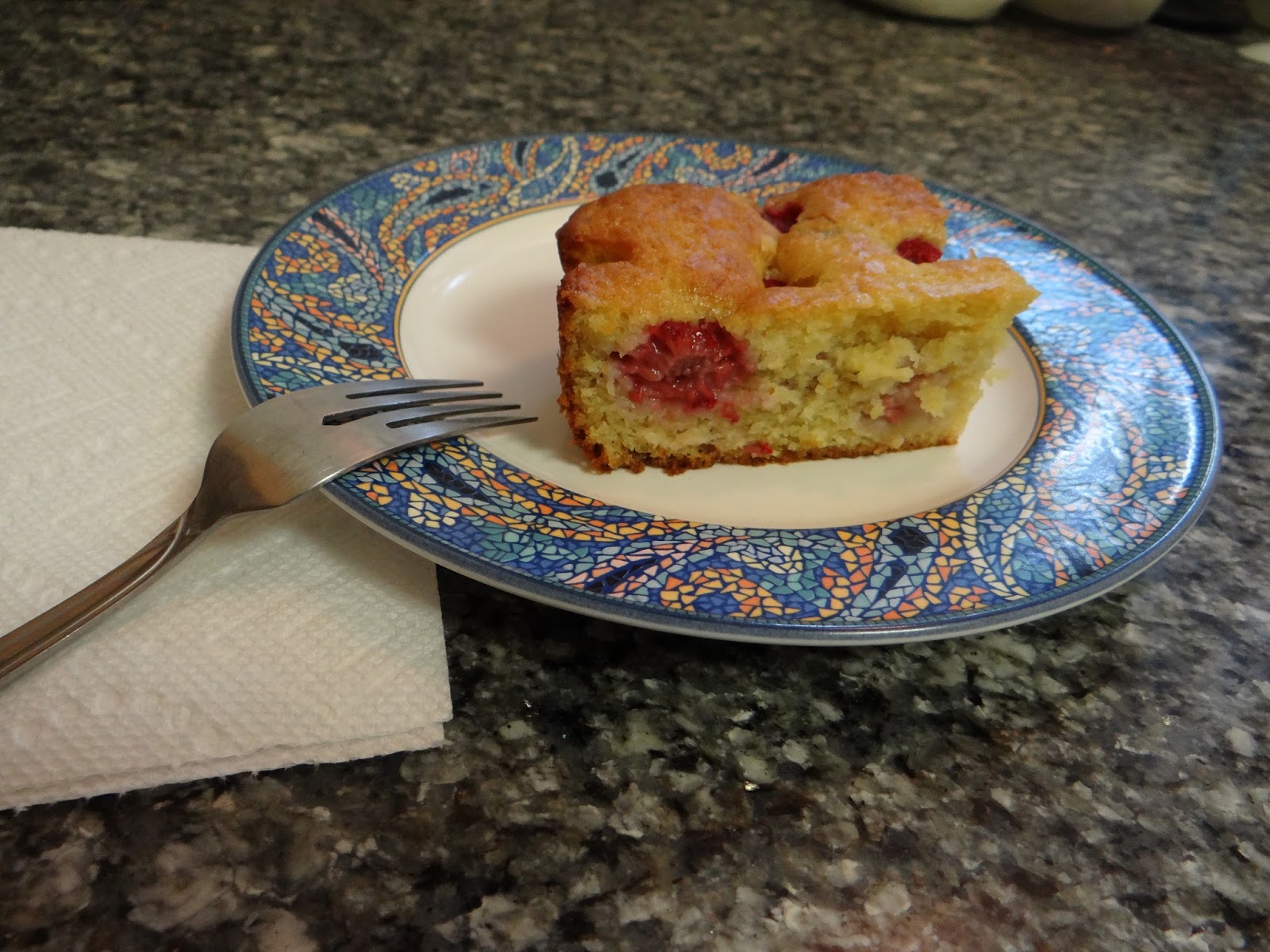
I’ve been wanting to blog about this recipe for a long time.  It’s quickly become one of my family’s favorites in its original iteration – blueberry yogurt cake.

This recipe comes from a book I got as a gift from my pastor- Shauna Niequist’s Savor.

It’s not a cookbook – it’s a devotional with recipes in it.  So far, her blueberry yogurt cake has been my hands-down favorite.  It’s easy and delicious, and lends itself well to adaptations.  My family eats it practically all day long – for breakfast, as a snack, or as a dessert after dinner.  It has some sugar, but I feel it’s better for them than Halloween candy.  Sometimes I’ll eat it toasted with butter or even peanut butter on it.  Delicious!
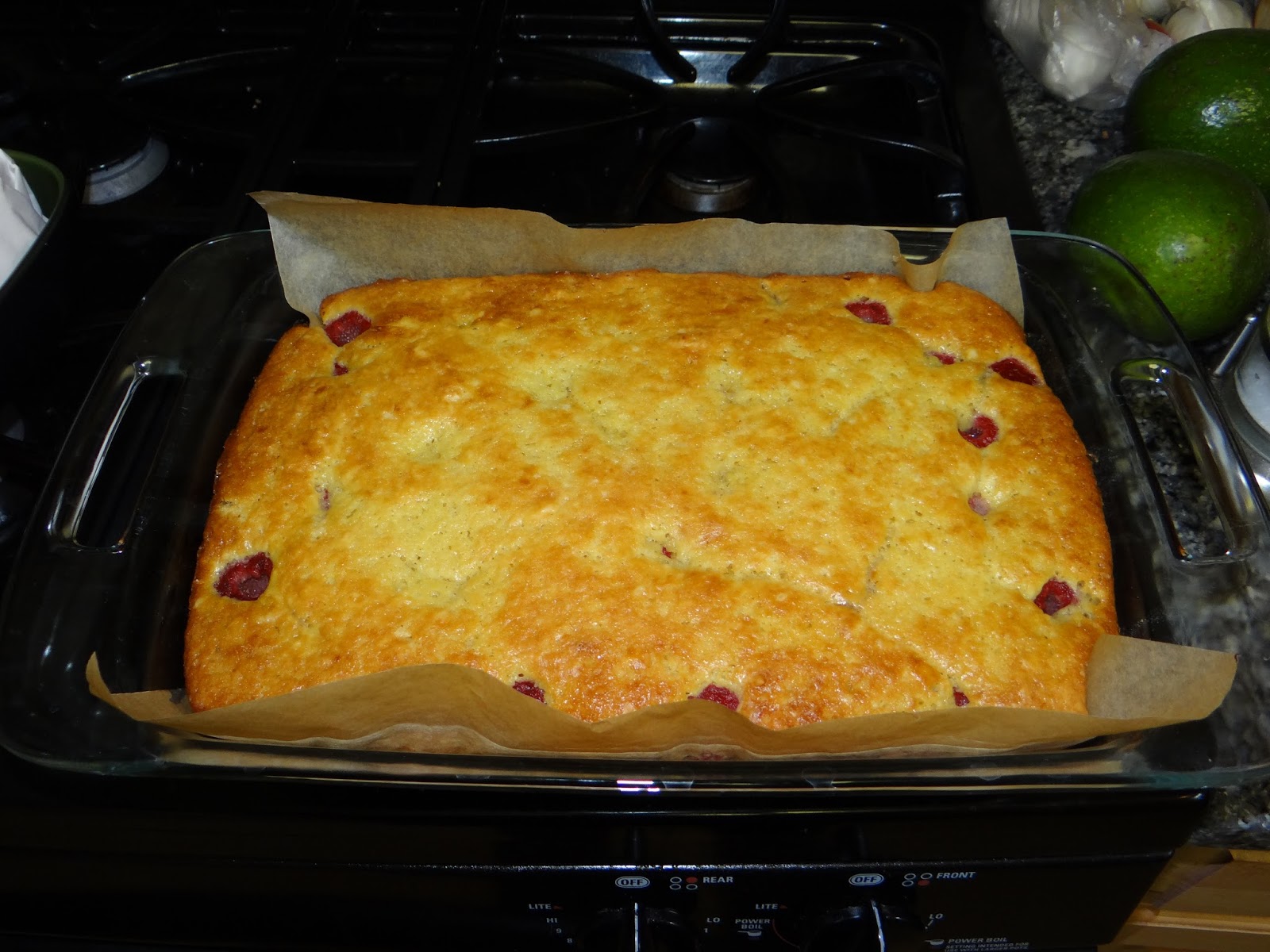
In the background you can see my attempts to revive my sourdough starters.  Stay tuned!
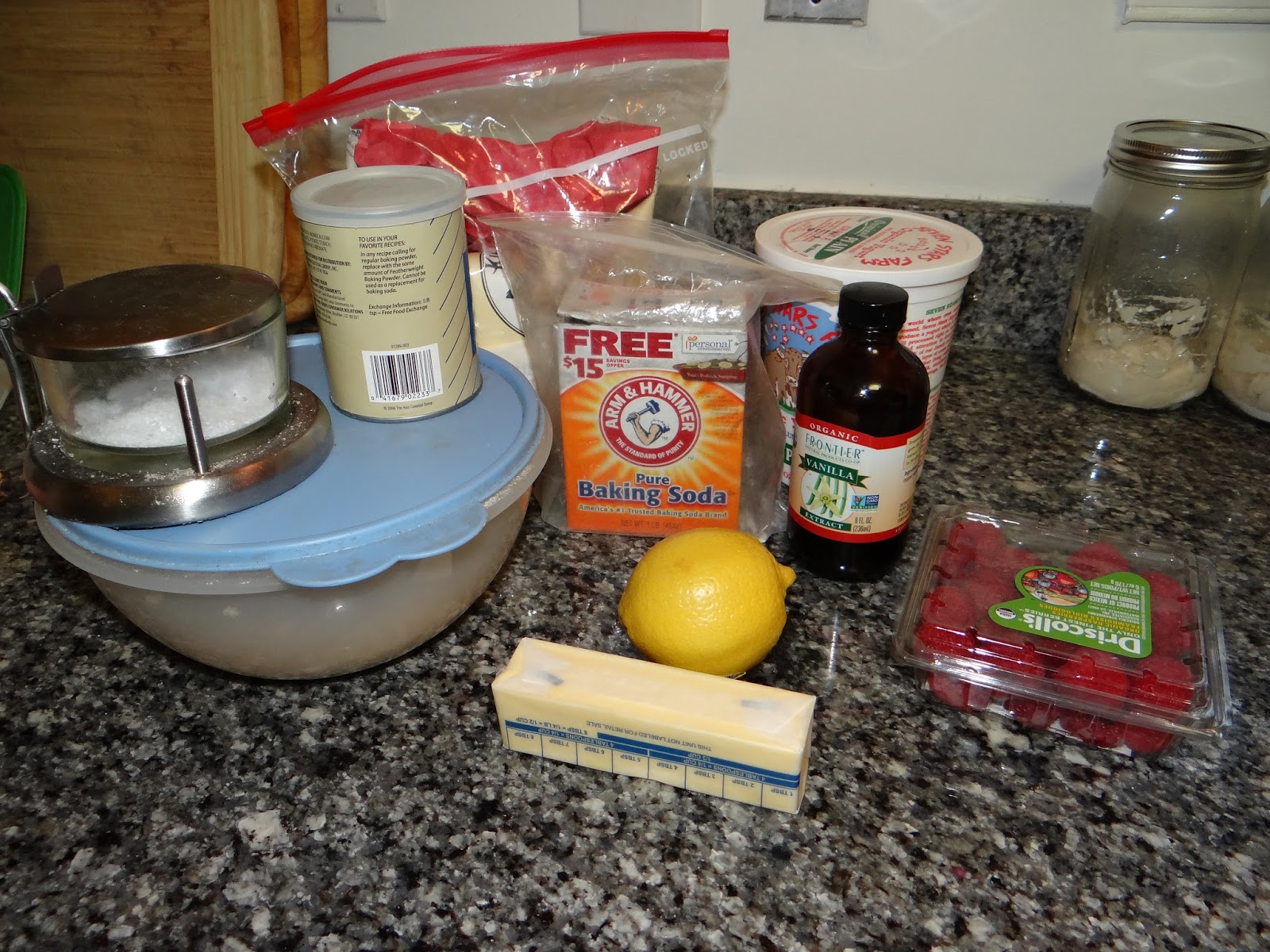
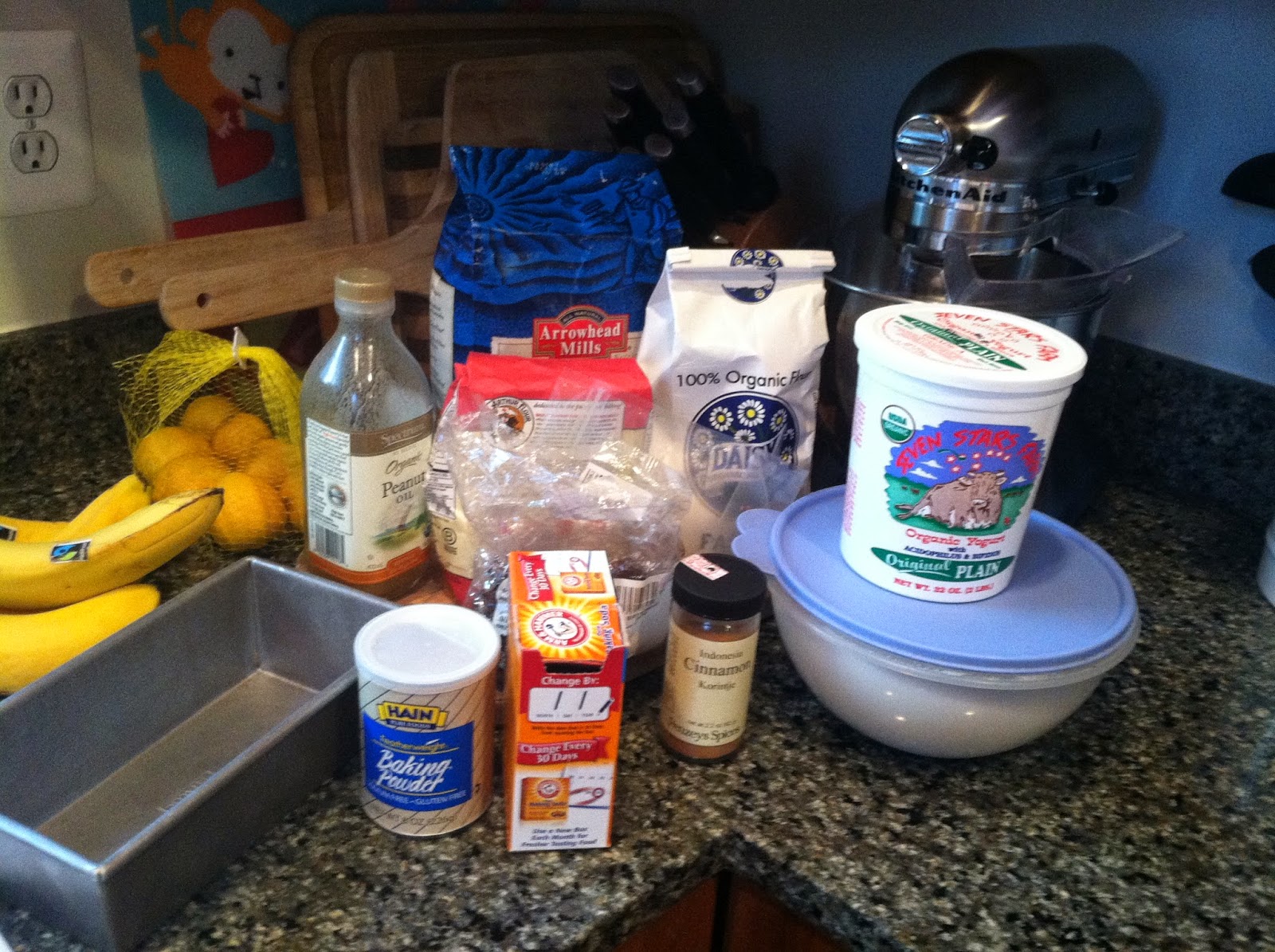
You will need:
1/2 cup butter, softened or melted
1 1/2 cups plain yogurt – I’ve also used vanilla yogurt or sour cream and it turns out fine
1 cup sugar plus 2 tablespoons
lemon zest from one lemon
3 eggs
splash of vanilla
2 cups all-purpose flour
1 1/2 teaspoons baking powder
1 teaspoon baking soda
1/2 teaspoon salt
1-2 cups of blueberries or other kind of berry (I used raspberries; it really is spectacular if you use blueberries but all I had on hand was raspberries and I wasn’t going to let that hold me back!)
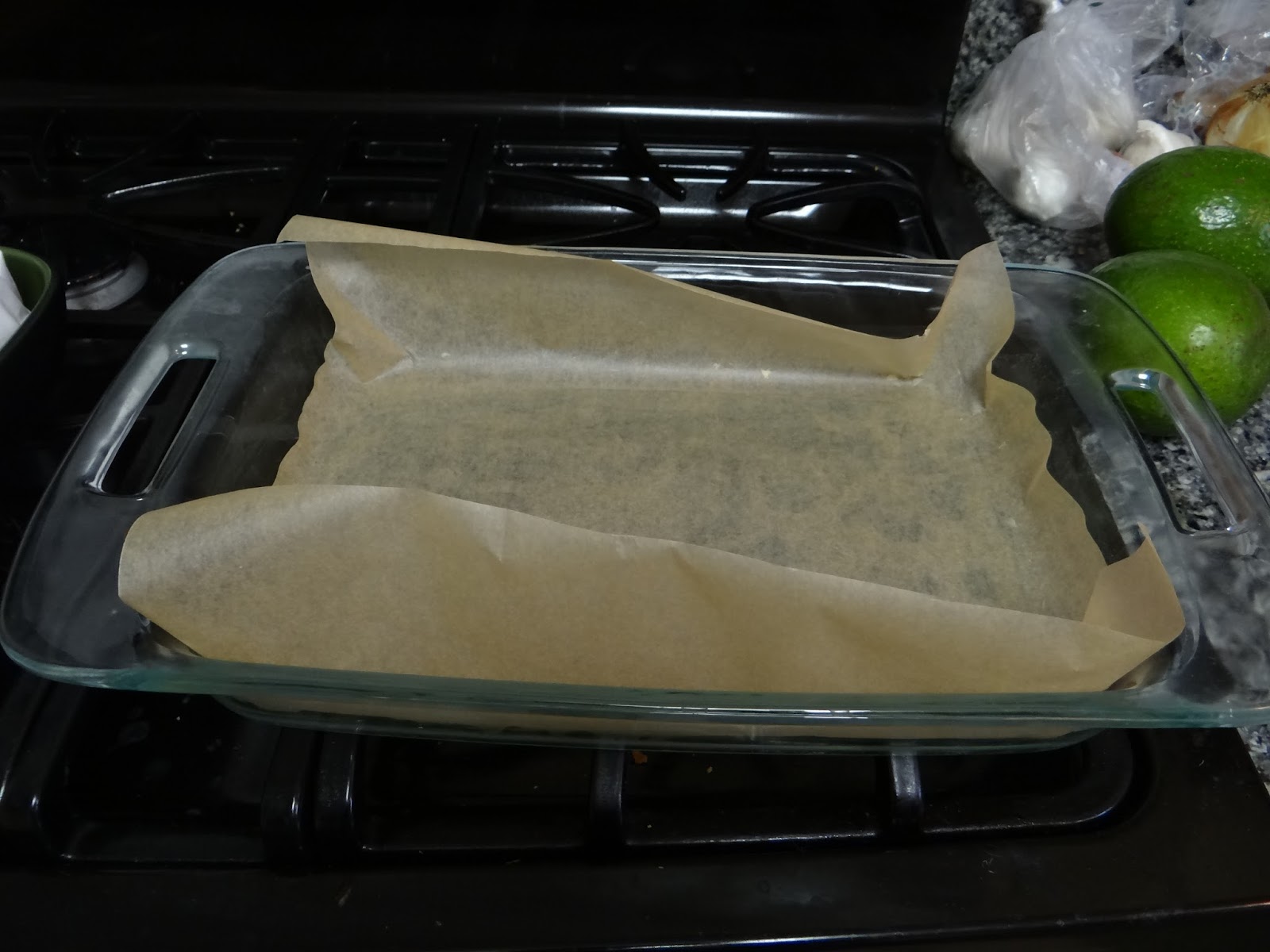
1. Preheat the oven to 350 degrees F.  Butter a large, 9×13 baking dish and line with parchment paper.
2. Toss the raspberries or blueberries with two tablespoons of sugar.  Set aside.
3. Combine the butter, yogurt, 1 cup sugar, lemon zest, splash of vanilla and eggs in a large bowl.
4. Add the flour, salt, baking powder and baking soda to the yogurt mixer and stir to combine.  It should be a little lumpy.
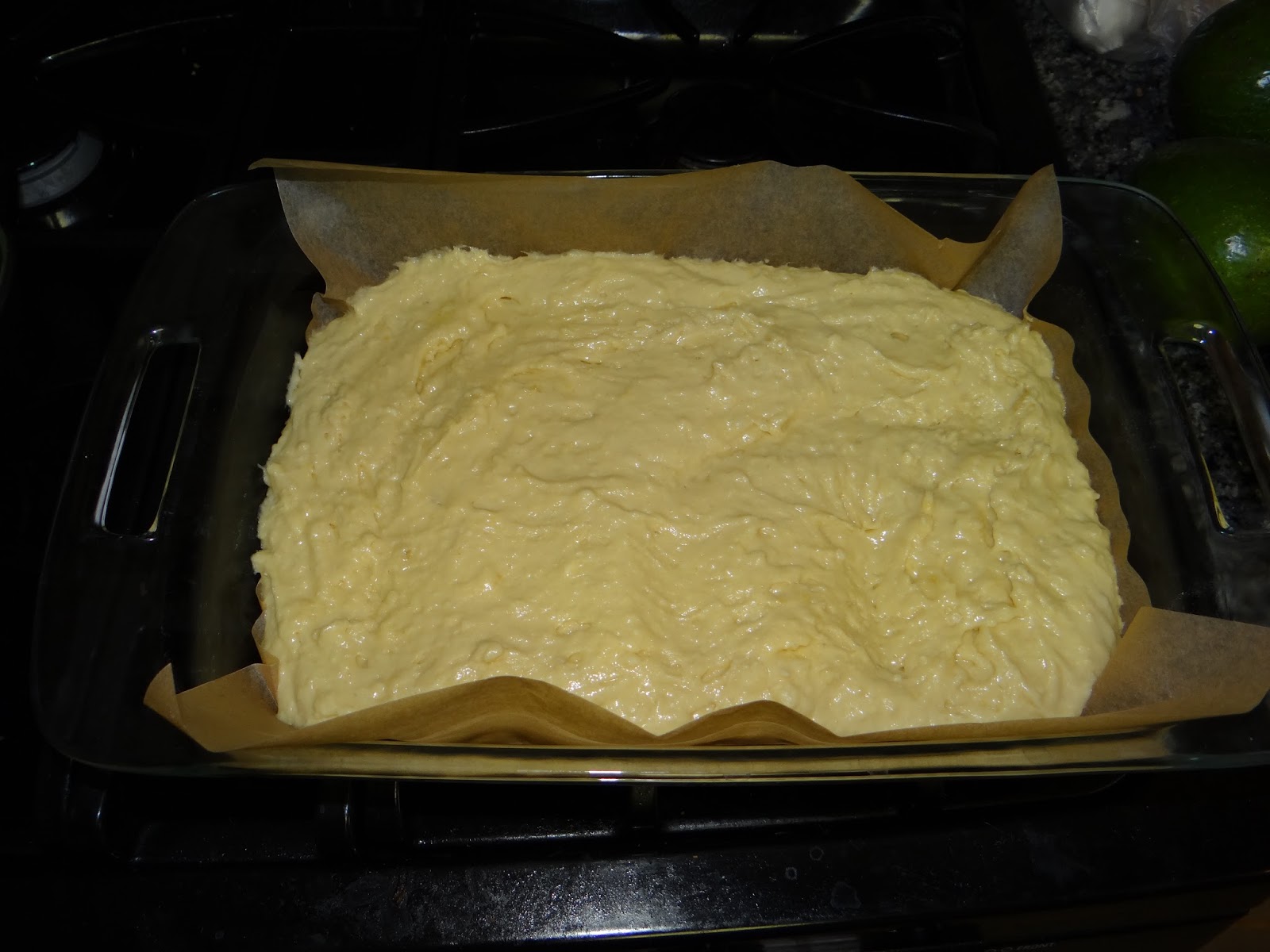
5. Using a spatula, pour the batter into your prepared baking dish and even out the top.
6. Toss the berries on top of the batter.  As it cooks, the berries will settle into the batter so they are evenly distributed throughout.
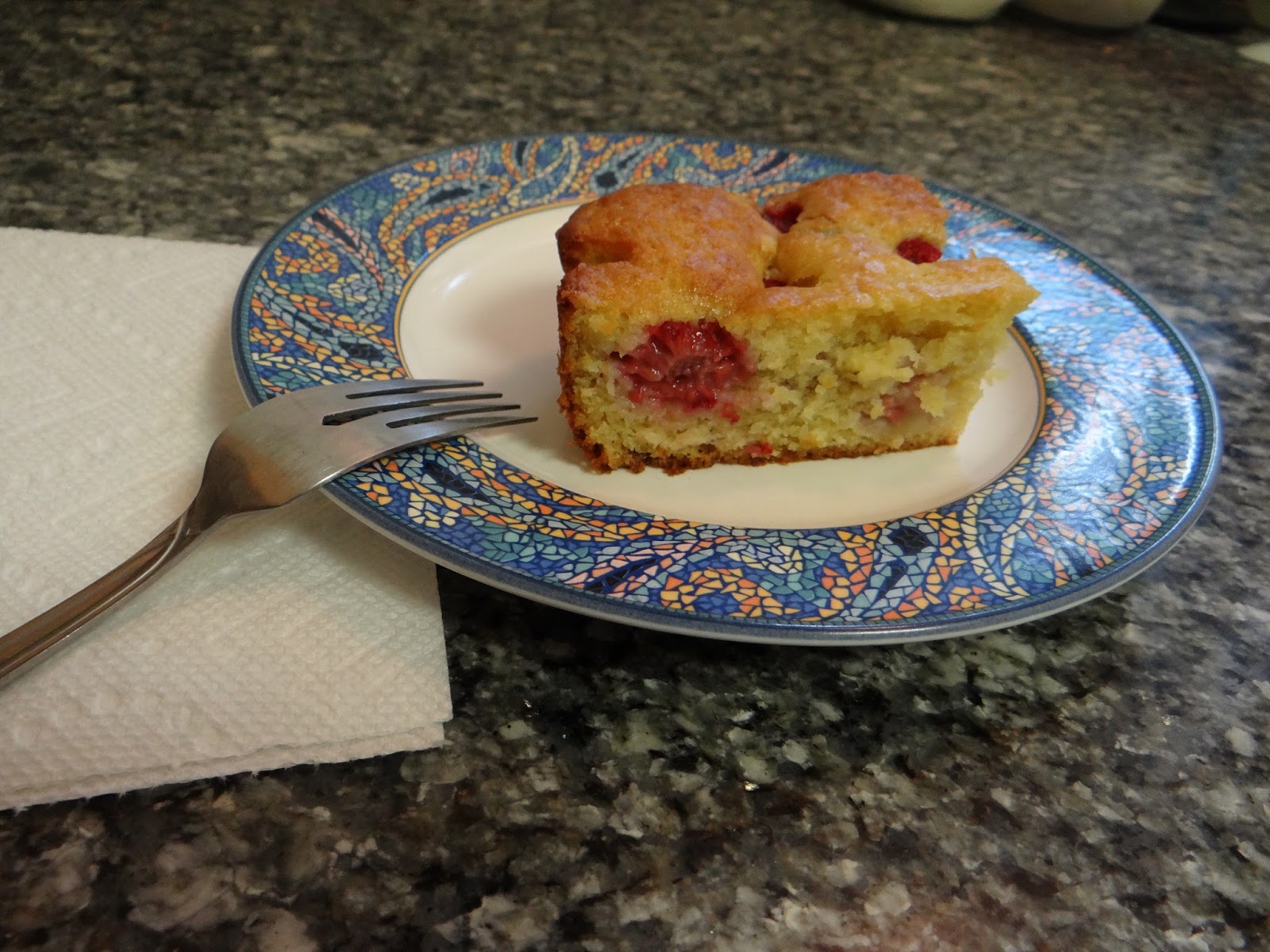
7. Put the baking dish in the oven and cook for 40-50 minutes.  Remove when it’s nicely browned and feels “set” or when a toothpick comes out clean.  Let it rest for an hour before serving.

If you want to know more about the science behind raspberry cake, check out this post!  

The recipe: sourdough starter and 1-2-3 sourdough

As I explained in this post, I’m hoping to revive my long-dormant sourdough starters, that have been sitting in my fridge for the past five years.  If they do not survive, I will have to start from scratch again.  There are several ways to do this.

1. Ask a friend who has one. Seriously, this is probably the easiest and best way to obtain a starter.  As I will explain in a future “The Science Behind…” on sourdough”, you only need a small bit, maybe 20-50 grams, to start.  And since your friend has to get rid of most of their starter every time they feed it (I’ll explain this too), it won’t be a burden for them to give you some.  Easy peasy!

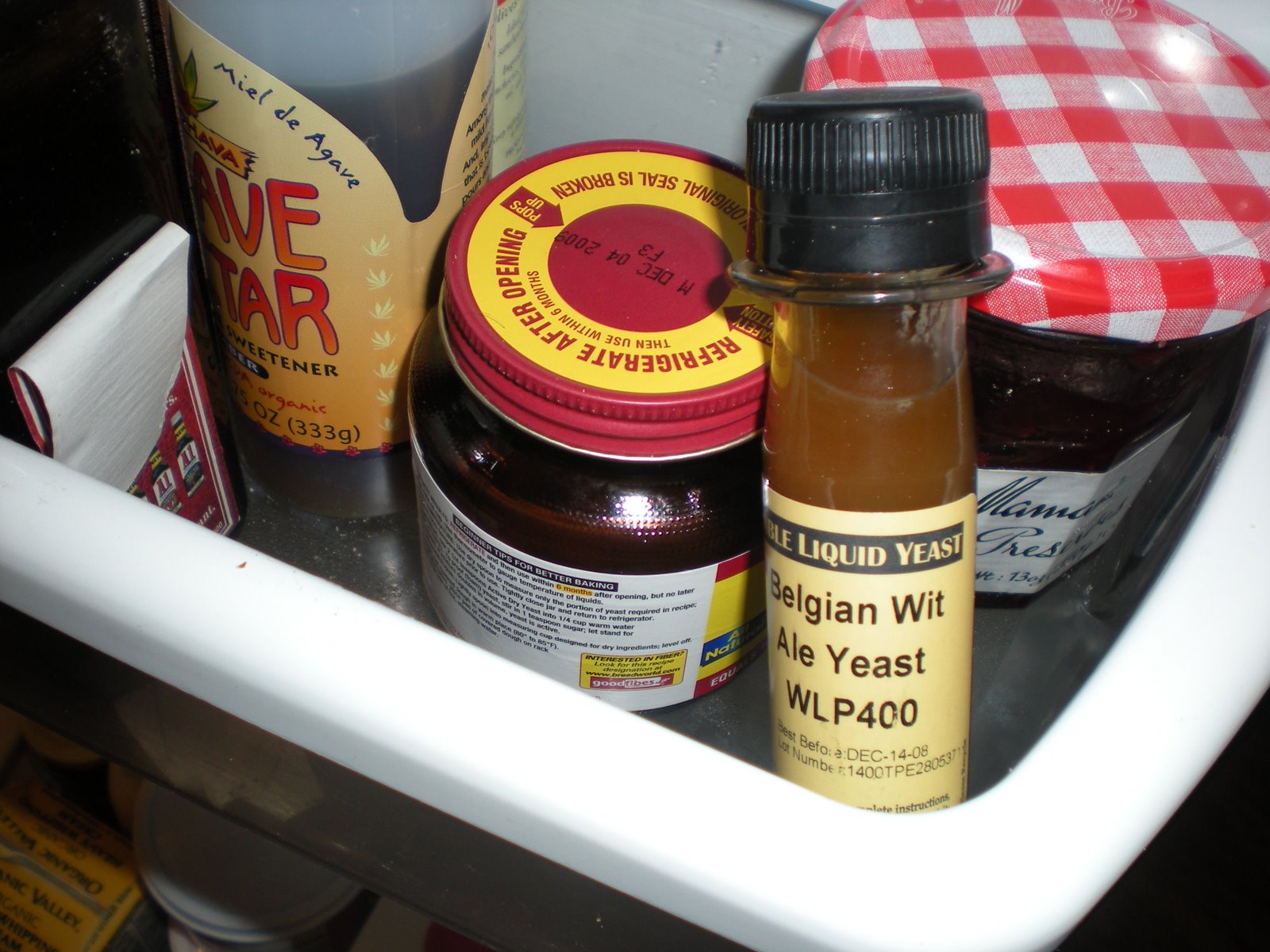
commercial yeast and brewer’s yeast side by side in our Austin fridge
we did a lot of this when we lived in Austin

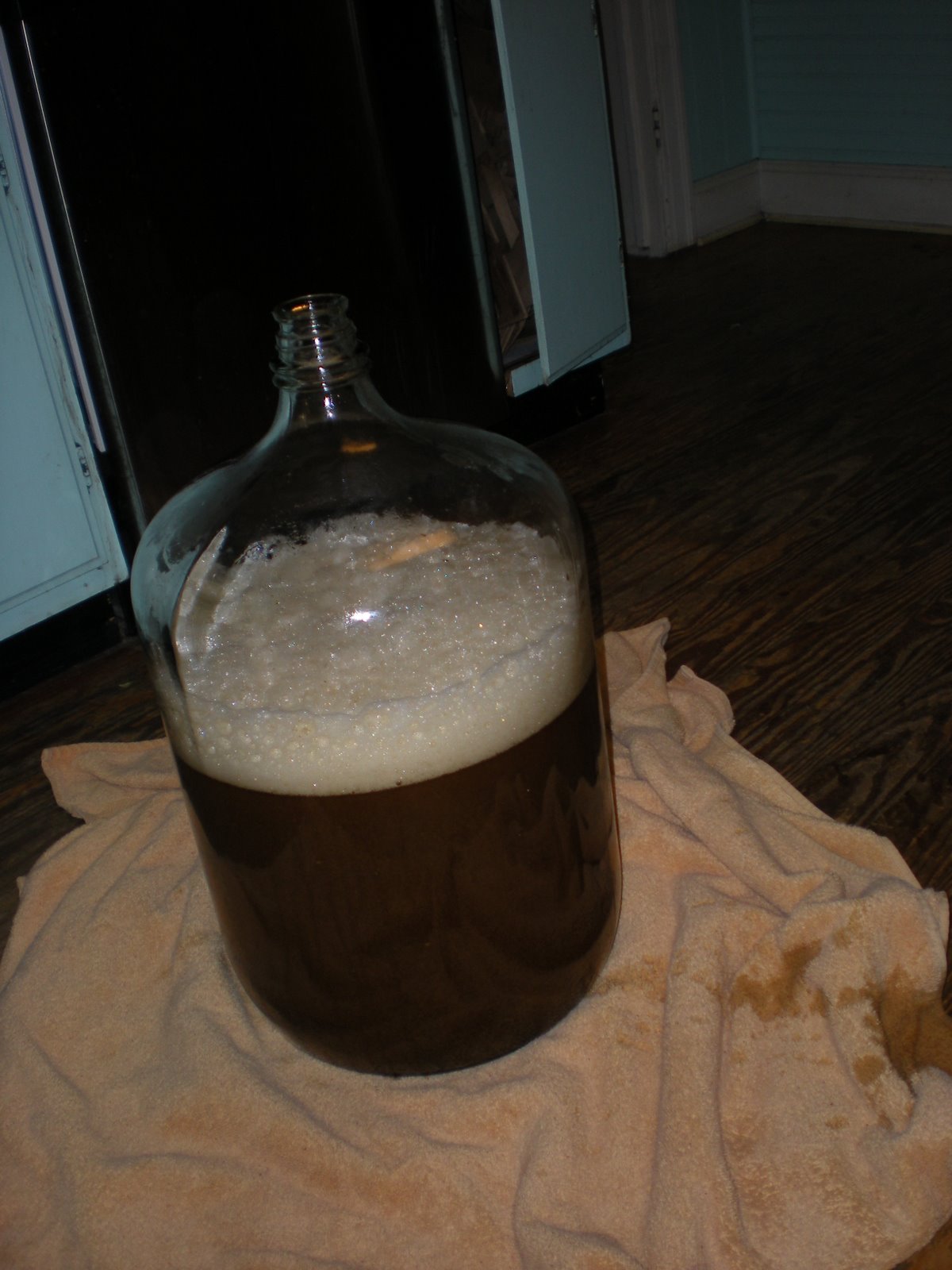
2. Another option is to try to grow a starter naturally.  You might use leftover yeast from brewing beer if that’s your thing.  Peter Reinhart has a recipe that involves pineapple juice.  You could even take a jar of flour and water into a bakery and shake it in the air to try to collect some airborne yeast.  My original starter began as beer yeast so I can vouch for that method but I’ve never tried the other two.

My beer yeast starter when it first began

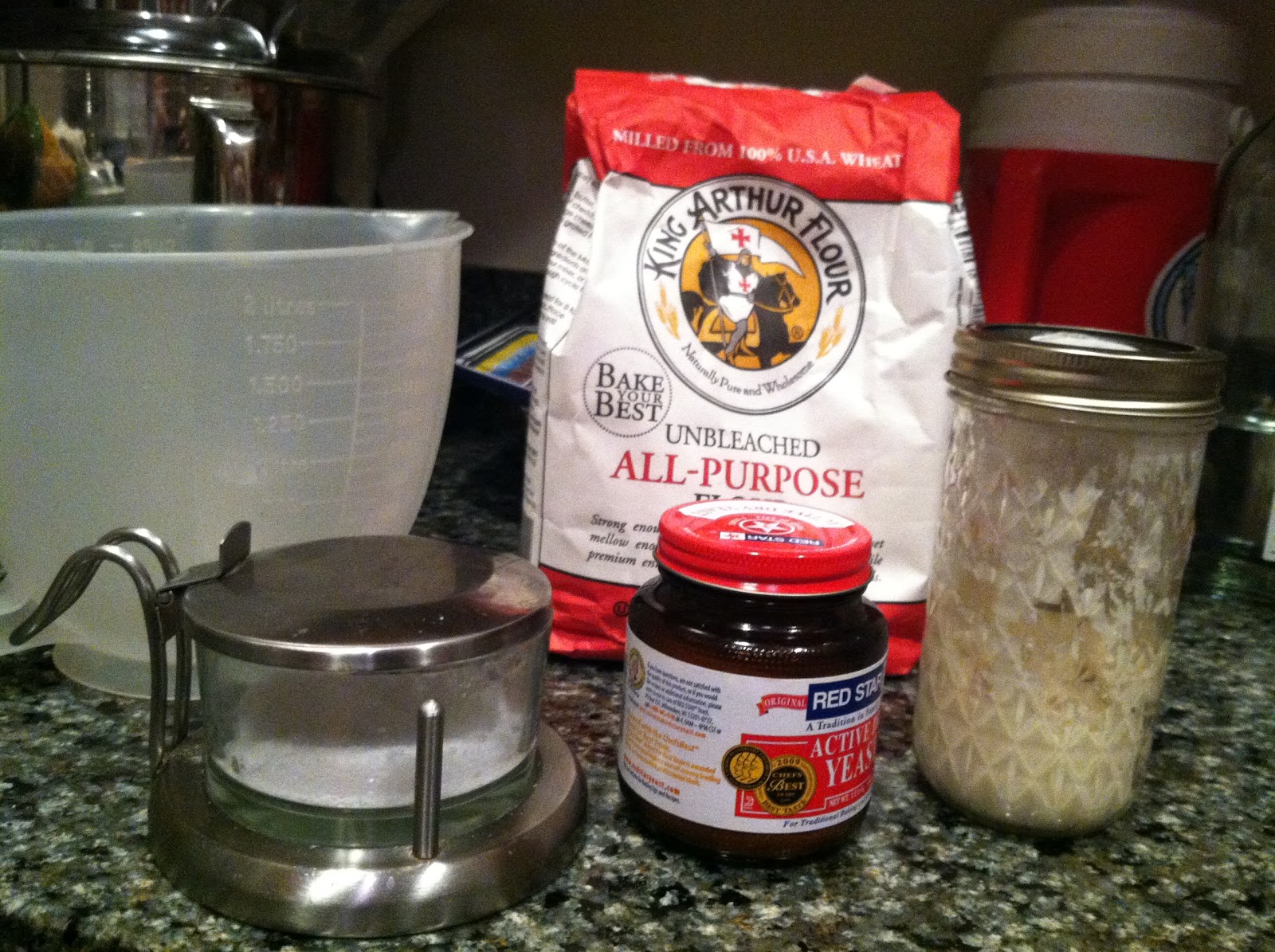
3. Or there’s always the cheat method: give the starter a little head start (ha!) with a pinch of commercial yeast.  Some people don’t consider this a true sourdough starter since the strain of yeast is different, but I believe that over time, if you keep using it and feeding it, true sourdough yeast from the air will find its way into your starter.  

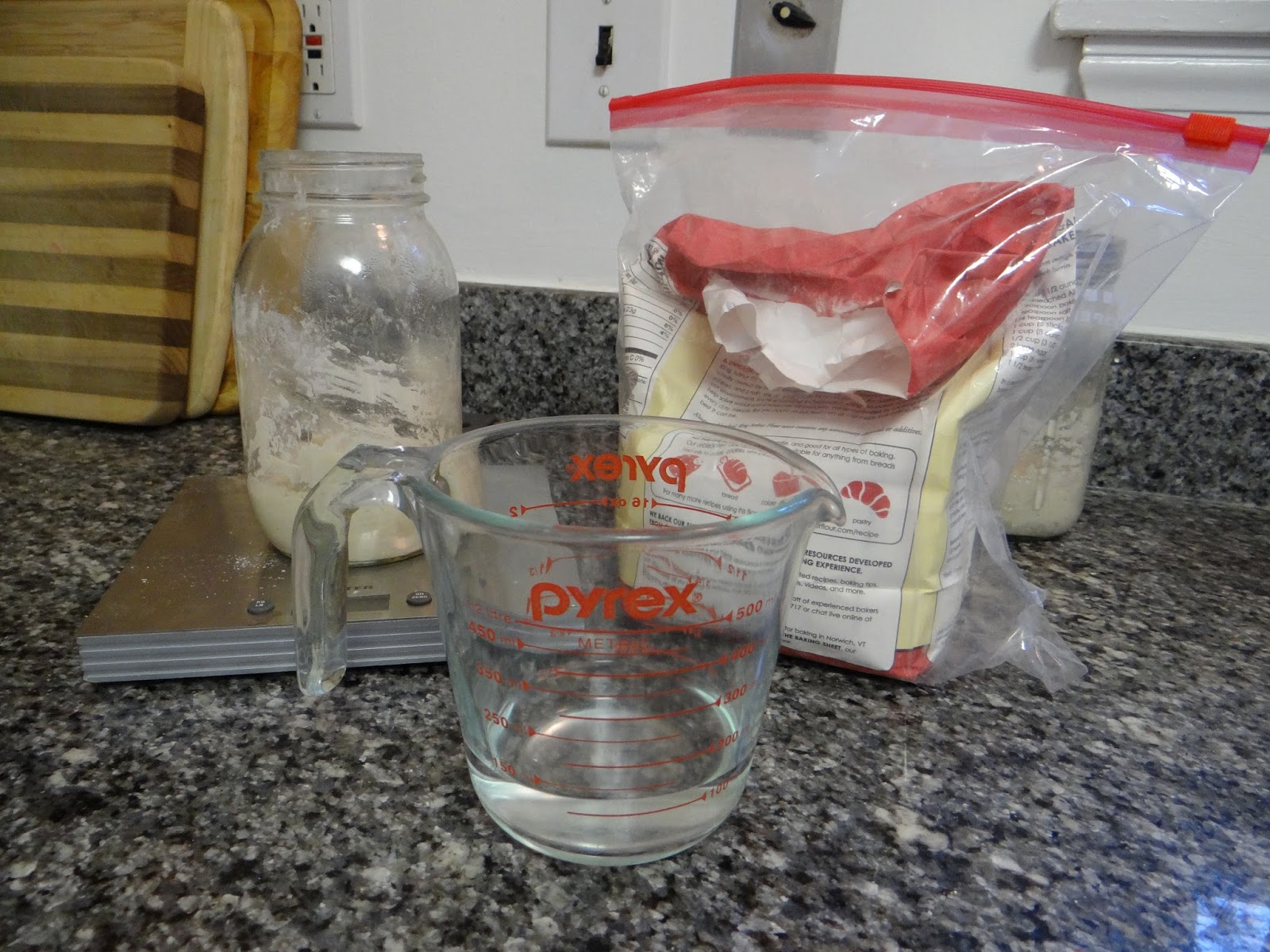
You will need:

A clean glass jar with a tight-sealing lid
75g water
100g all-purpose flour
1/8 tsp commercial yeast

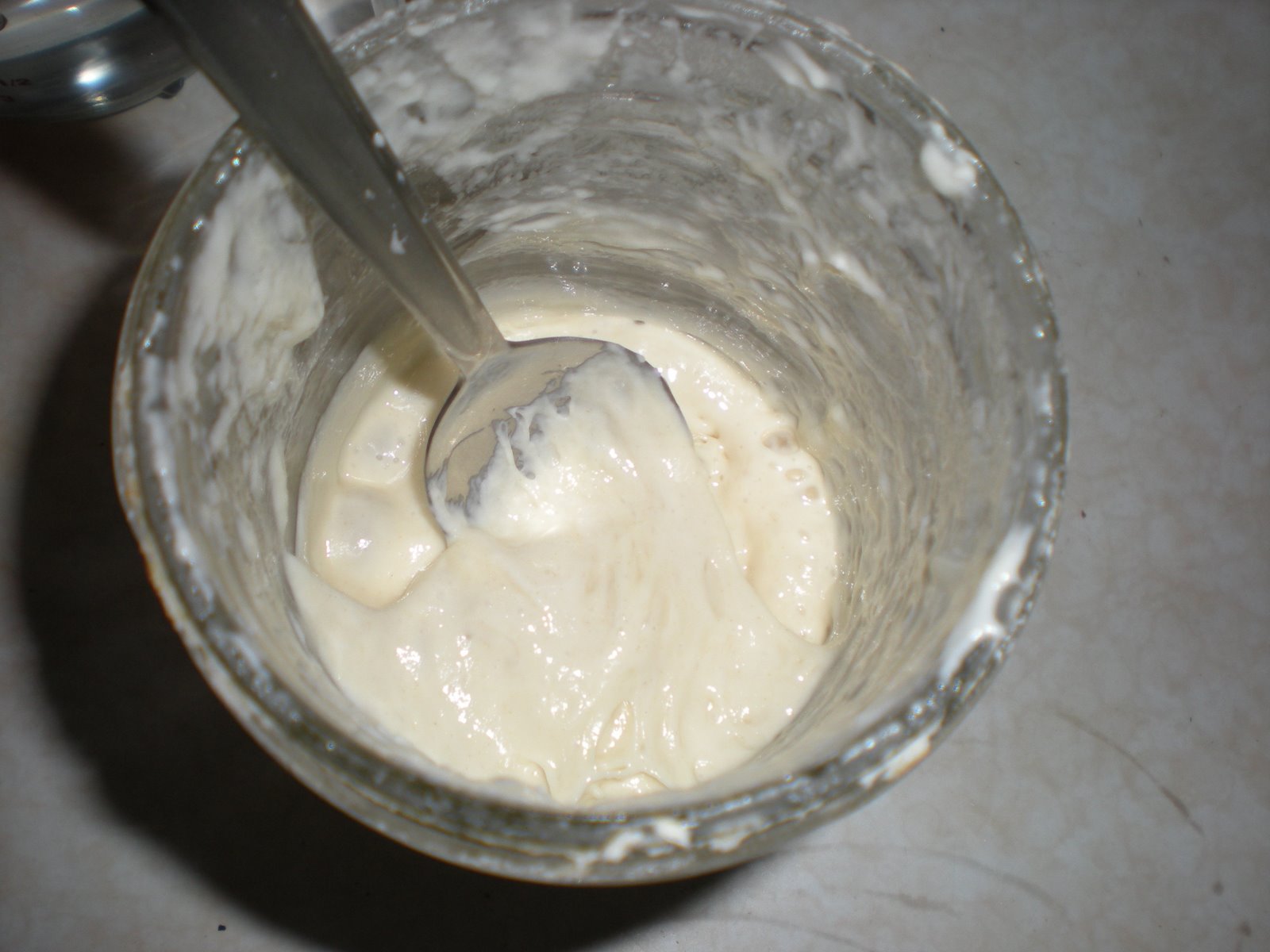
1. In the glass jar, mix together the water, flour and yeast.  Close the lid and let sit for a day.

2. On the second day, remove most of the starter, leaving only about two tablespoons of starter at the bottom of your jar.  What to do with your discarded starter? Anything you want! Use it in something like sourdough pancakes. You’ll still need something else, like commercial yeast, baking powder or baking soda since it’s not ready to leaven anything quite yet.  King Arthur has some great ideas here for using up discarded starter.

Then, just add the same amounts of water and flour as you did on the first day, mix well, close the lid, and let it sit again until day 3.

3. At this point, things should start to happen.  There should be more bubbles in the mixture and it should’ve risen a few inches.  If the starter has risen three or four inches, it’s probably ready to use.  If not, just repeat what you did on day 2: discard most of it, and feed the small amount left over with the flour and water.

4. If you’ve gone a week of discarding and feeding the starter and it’s not bubbly and active, it’s probably not going to.  Throw it out and start over.  If, however, it’s looking like it’s pumped and ready for action, then you’re ready to make my favorite sourdough bread: 1-2-3 bread!
You will need:
125g of active sourdough starter
250g of water
375g of bread or all-purpose flour
1 tsp of salt
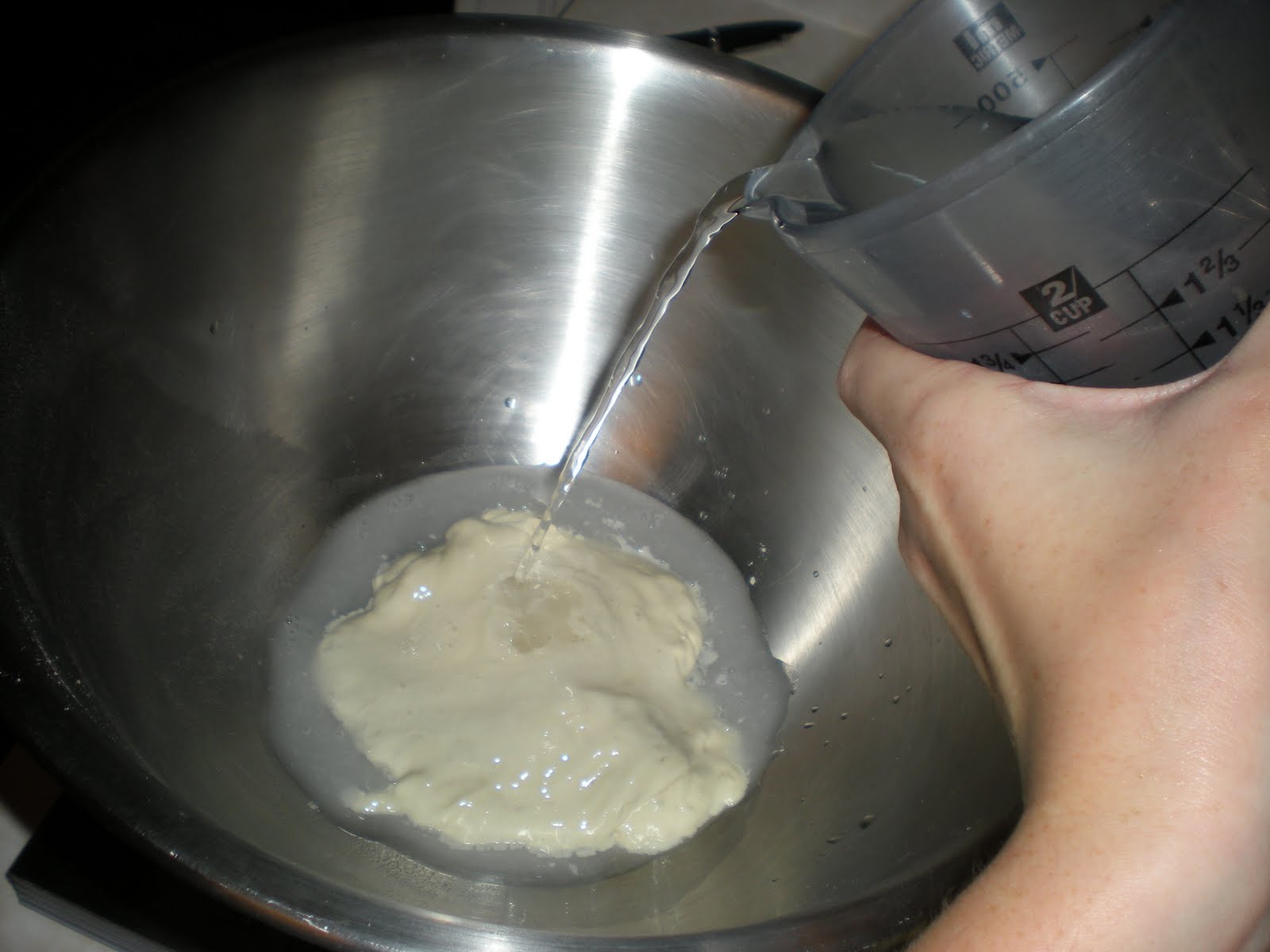
1. Mix all the ingredients together, cover the bowl with plastic wrap or one of the food-grade stretchy shower-cap-like covers and let rise.  I find an overnight rise is the best.

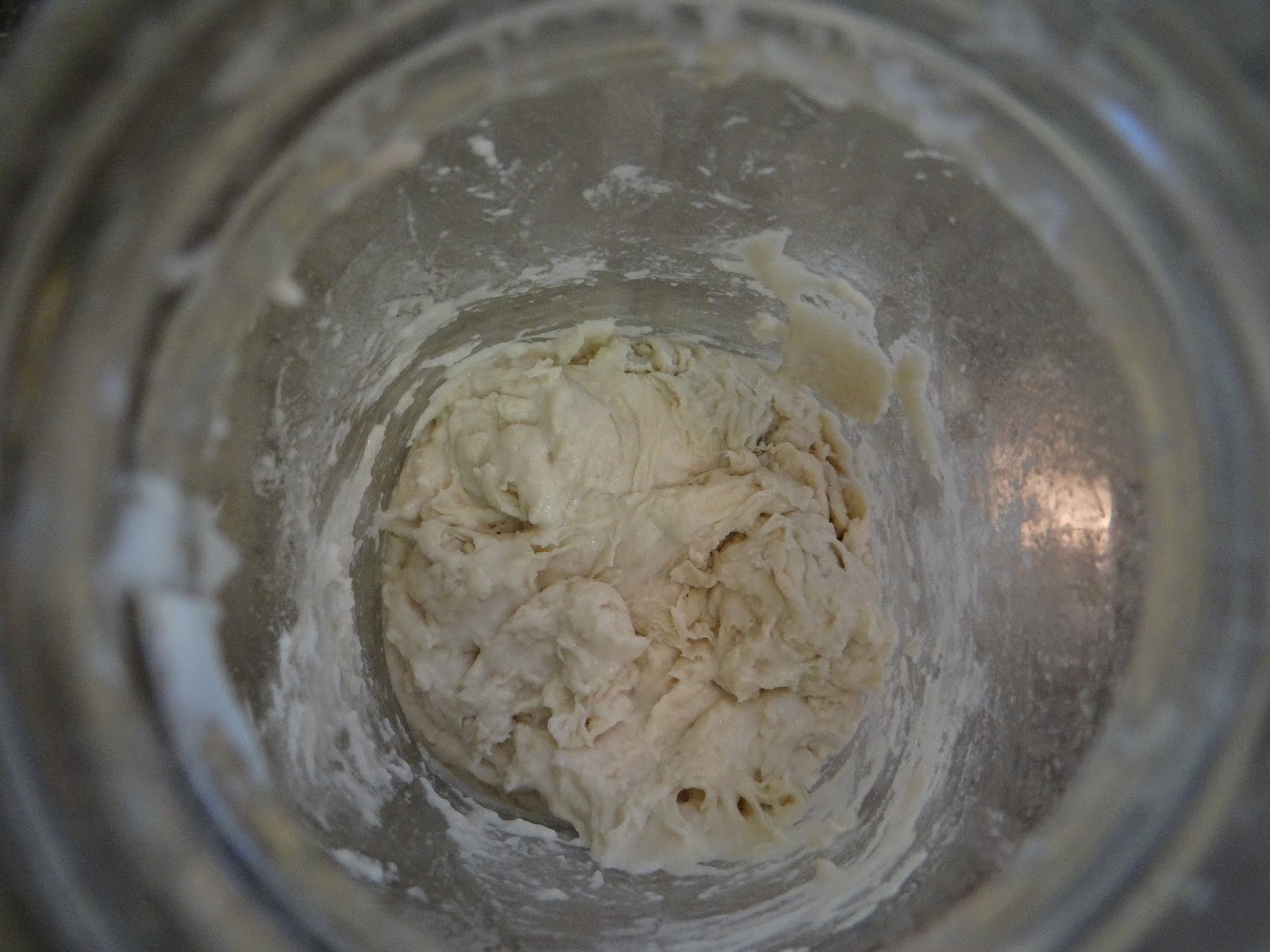
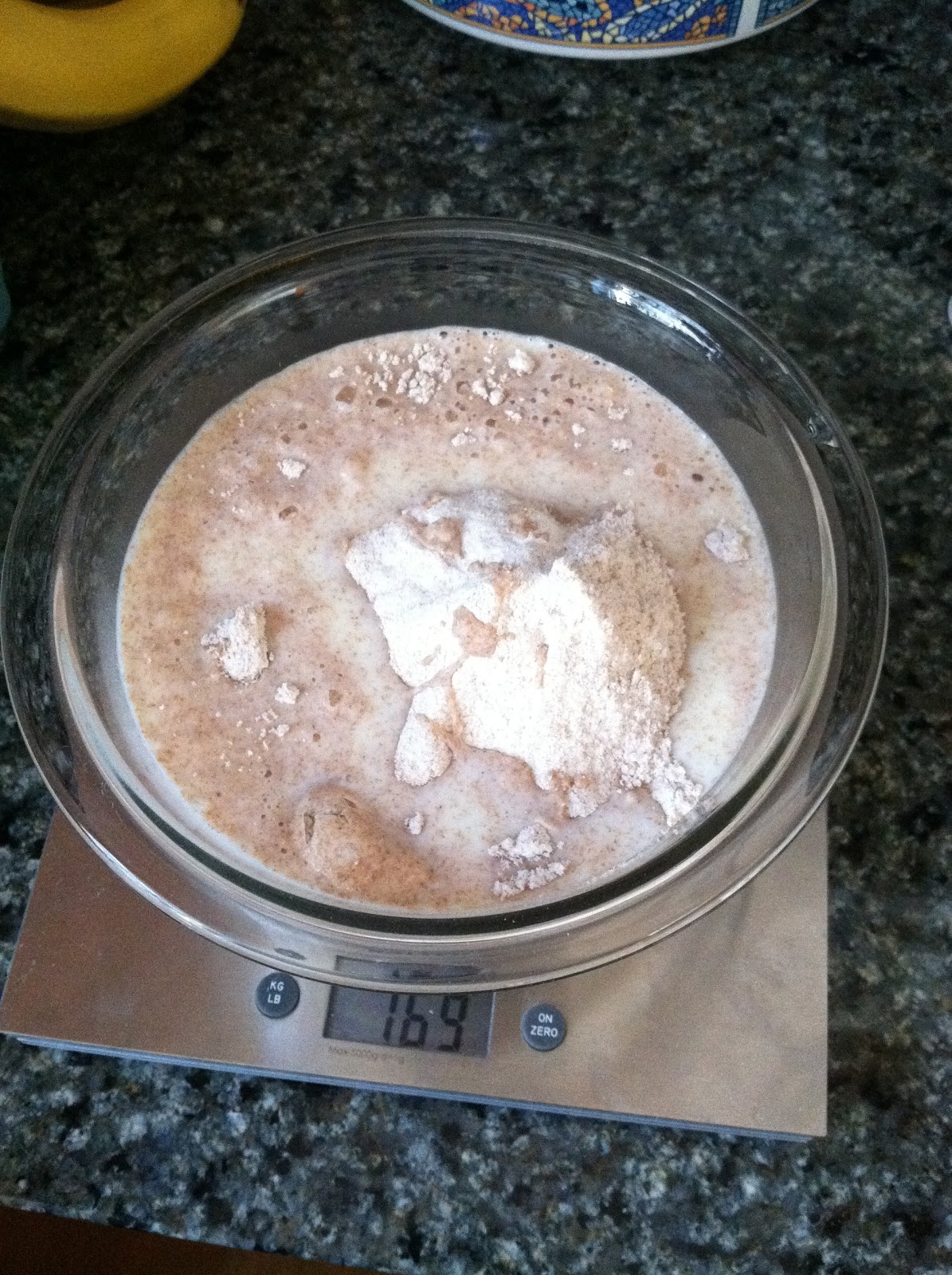
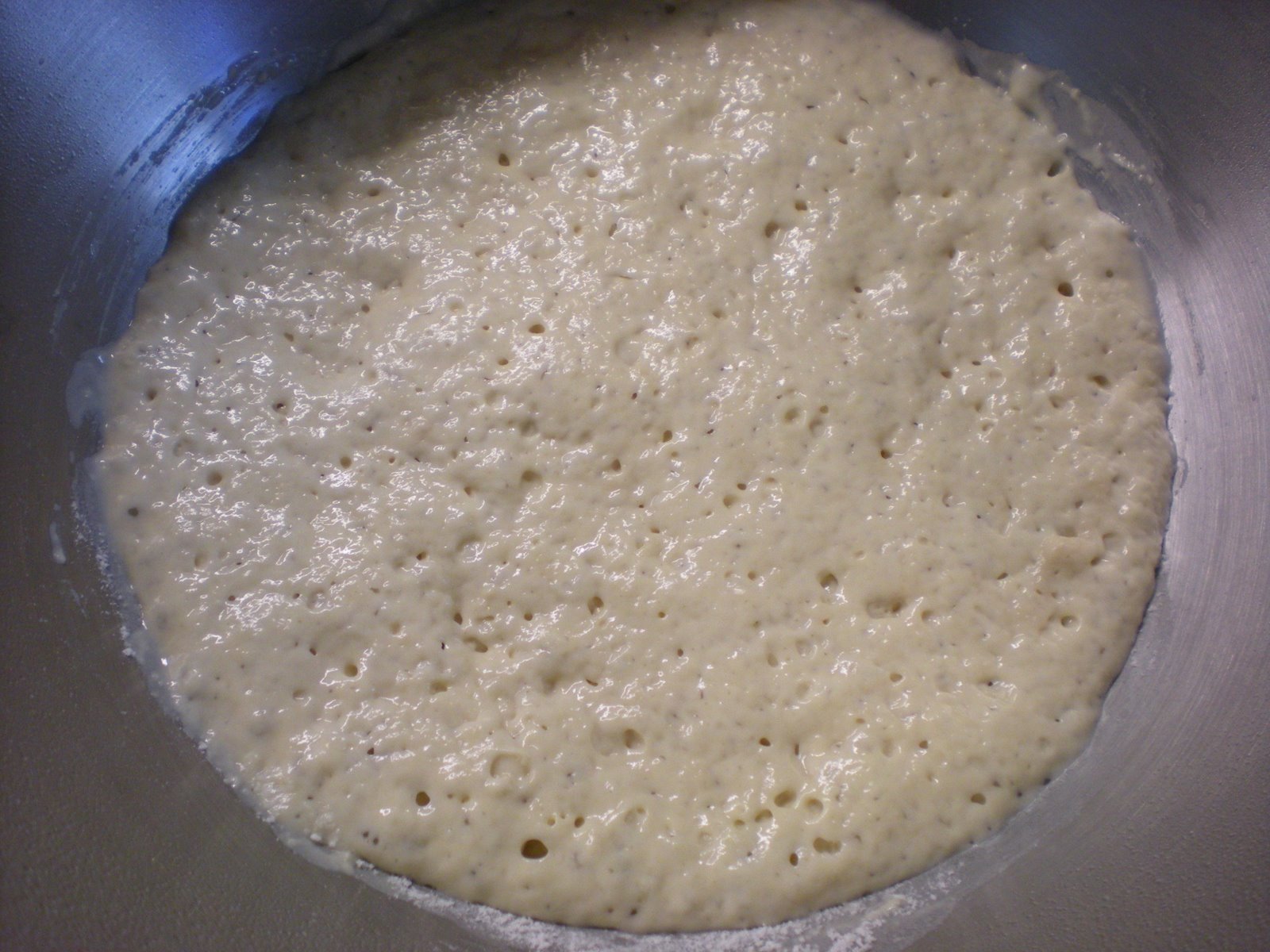
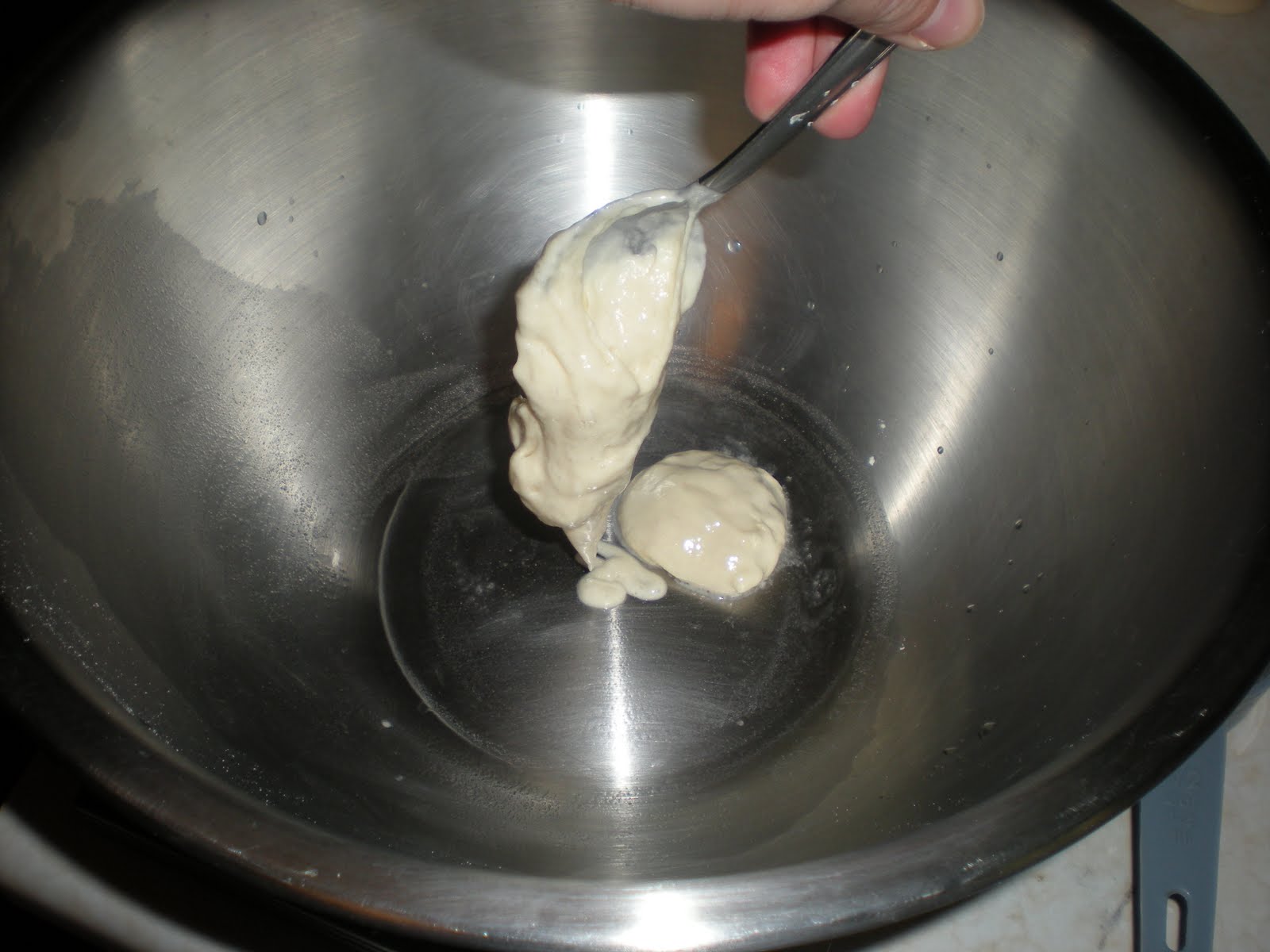
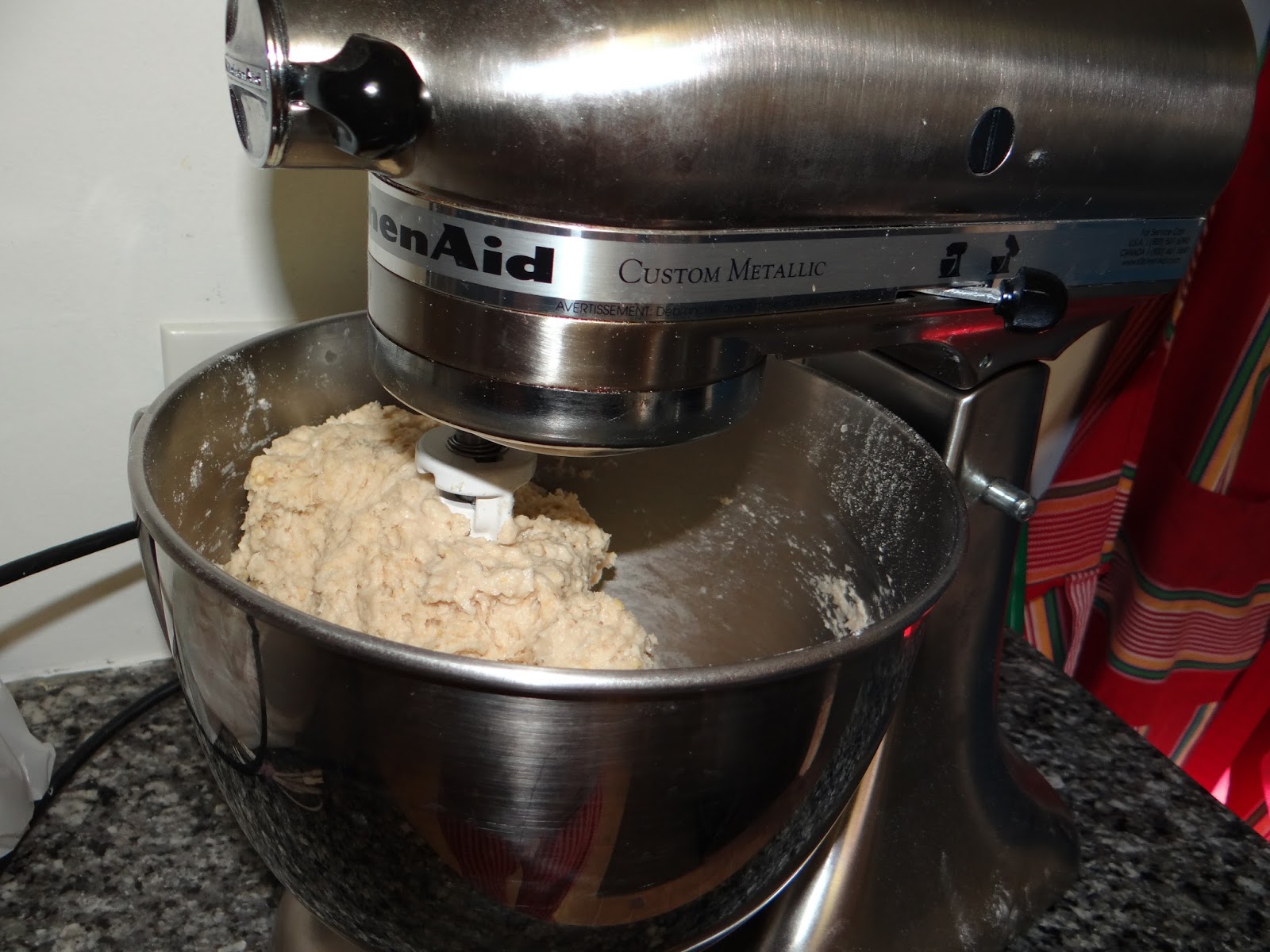
Immediately after you mix the ingredients, your dough will look shaggy like this.
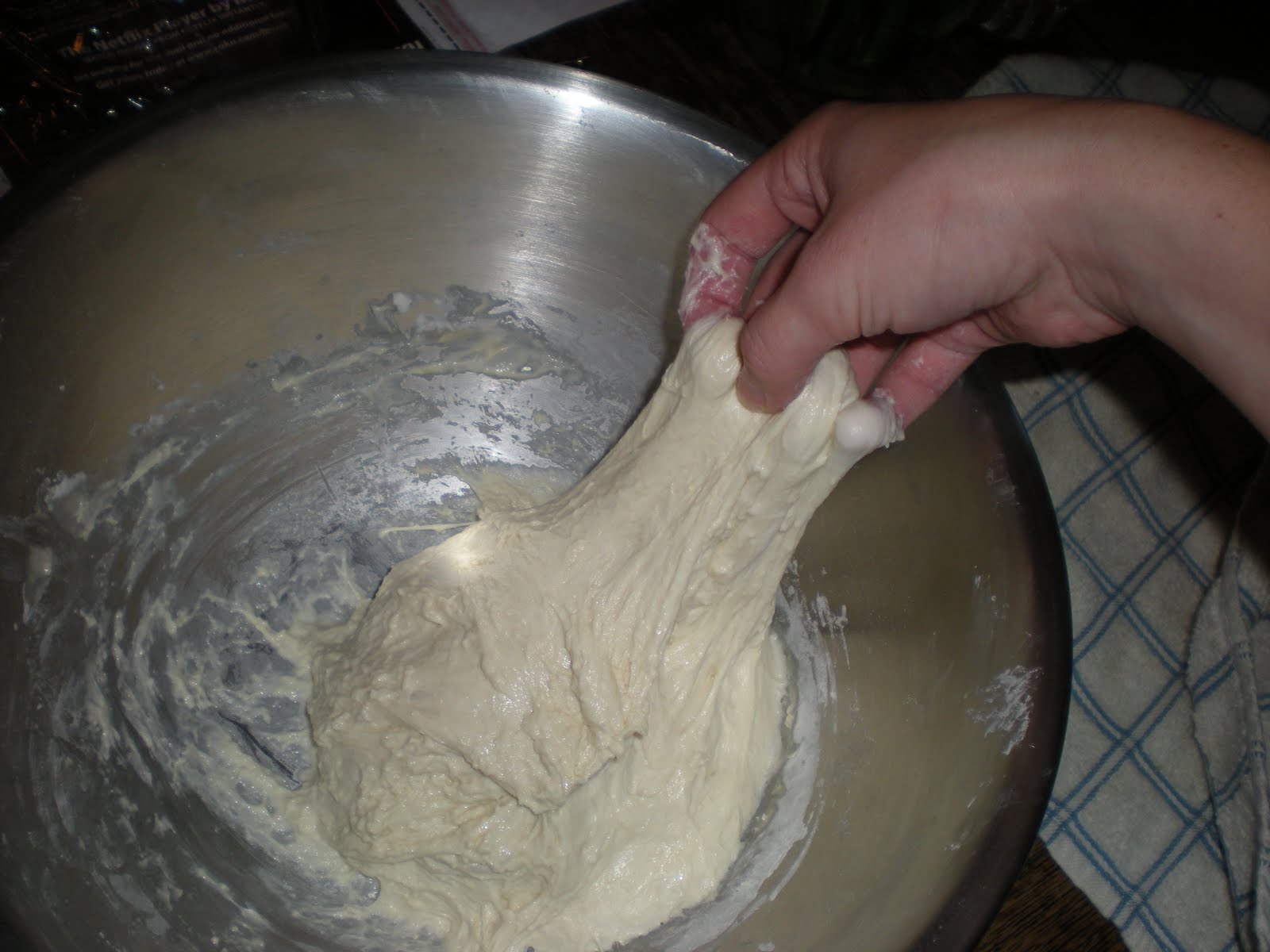
Let it rest 15 minutes or so, and it will have transformed into this!

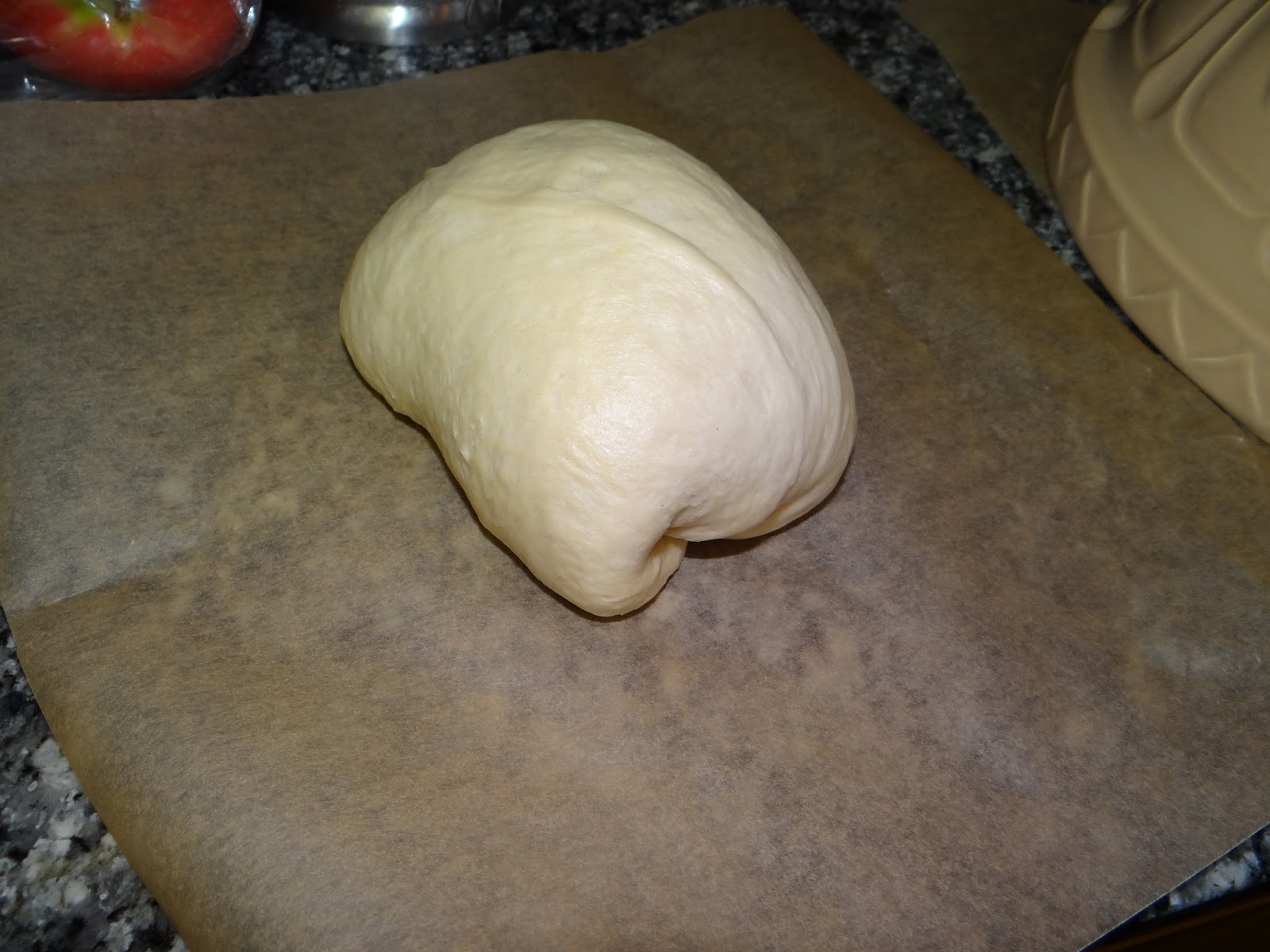
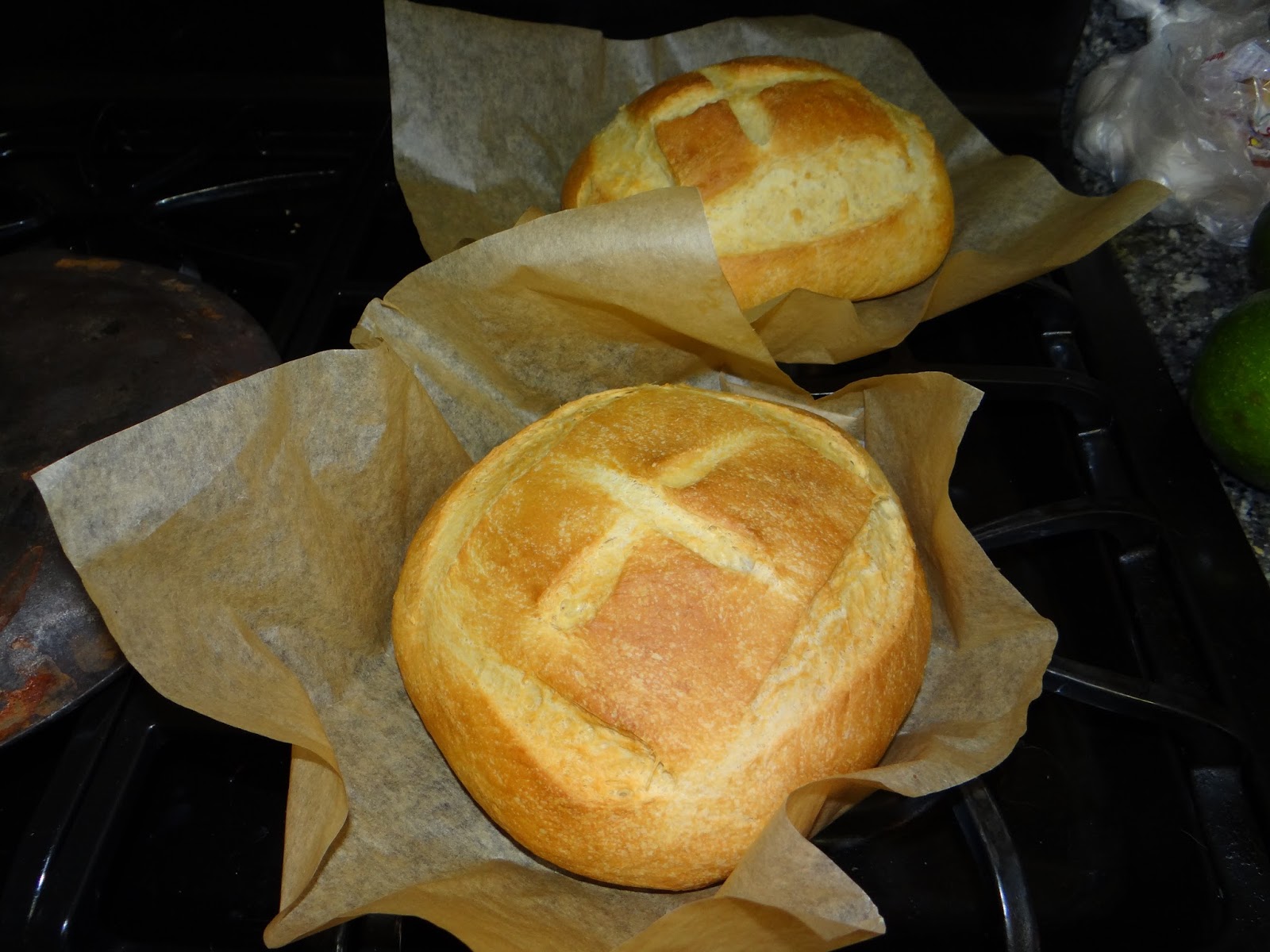
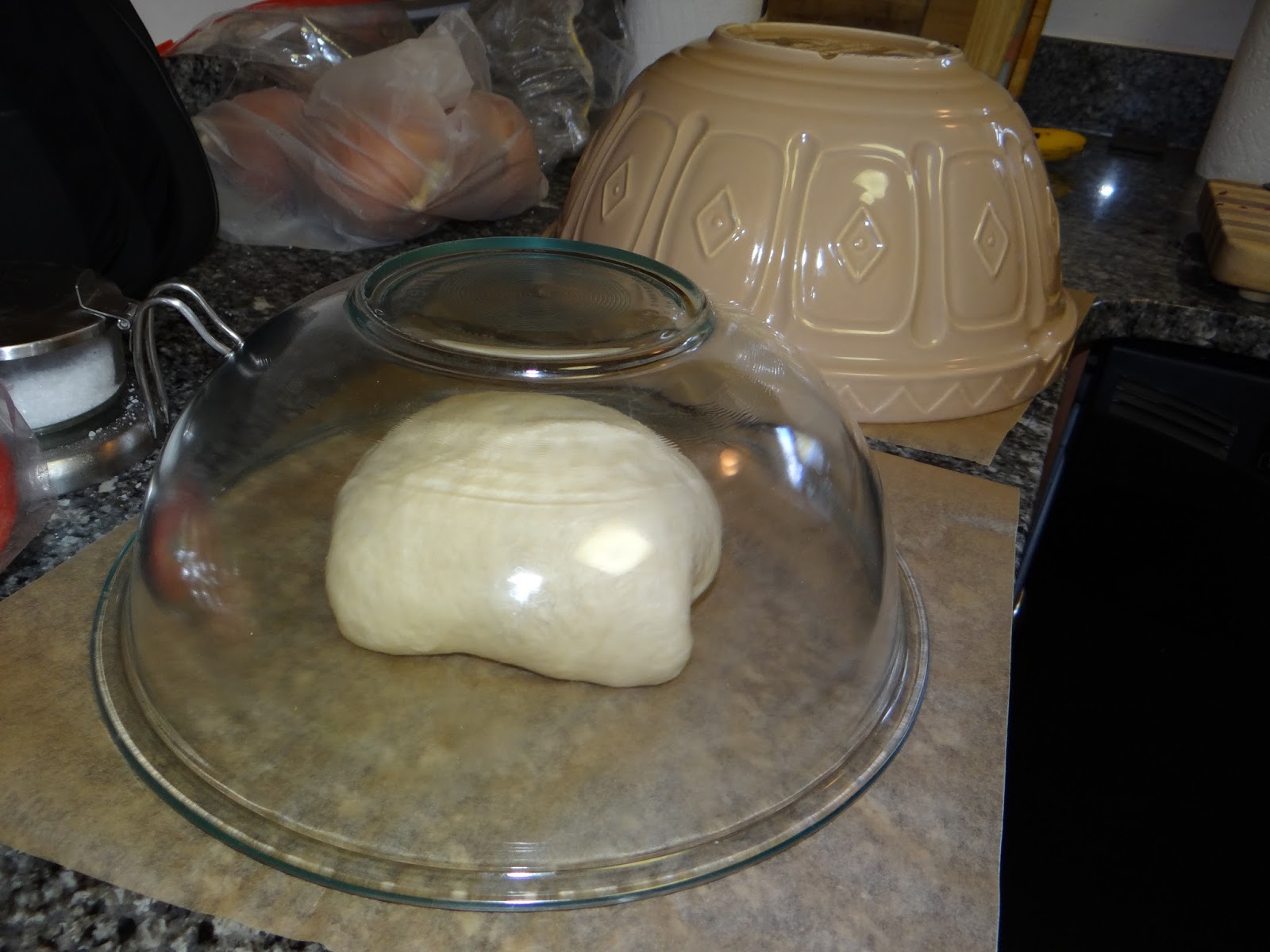
 2. On day two, carefully shape your dough into a boule and transfer it to a piece of parchment paper (NOT wax paper).  Take the bowl that your dough rose in and flip it over so it forms a dome.  Cover the dough with the bowl for the second rise, about an hour or two.  Preheat the oven to 450 degrees F and slide your dutch oven into the oven to preheat.

I used to cover my dough with plastic wrap for the second rise until I learned the domed bowl trick.  I don’t have to waste plastic wrap anymore, and the dough doesn’t stick to the bowl like it does to the wrap!

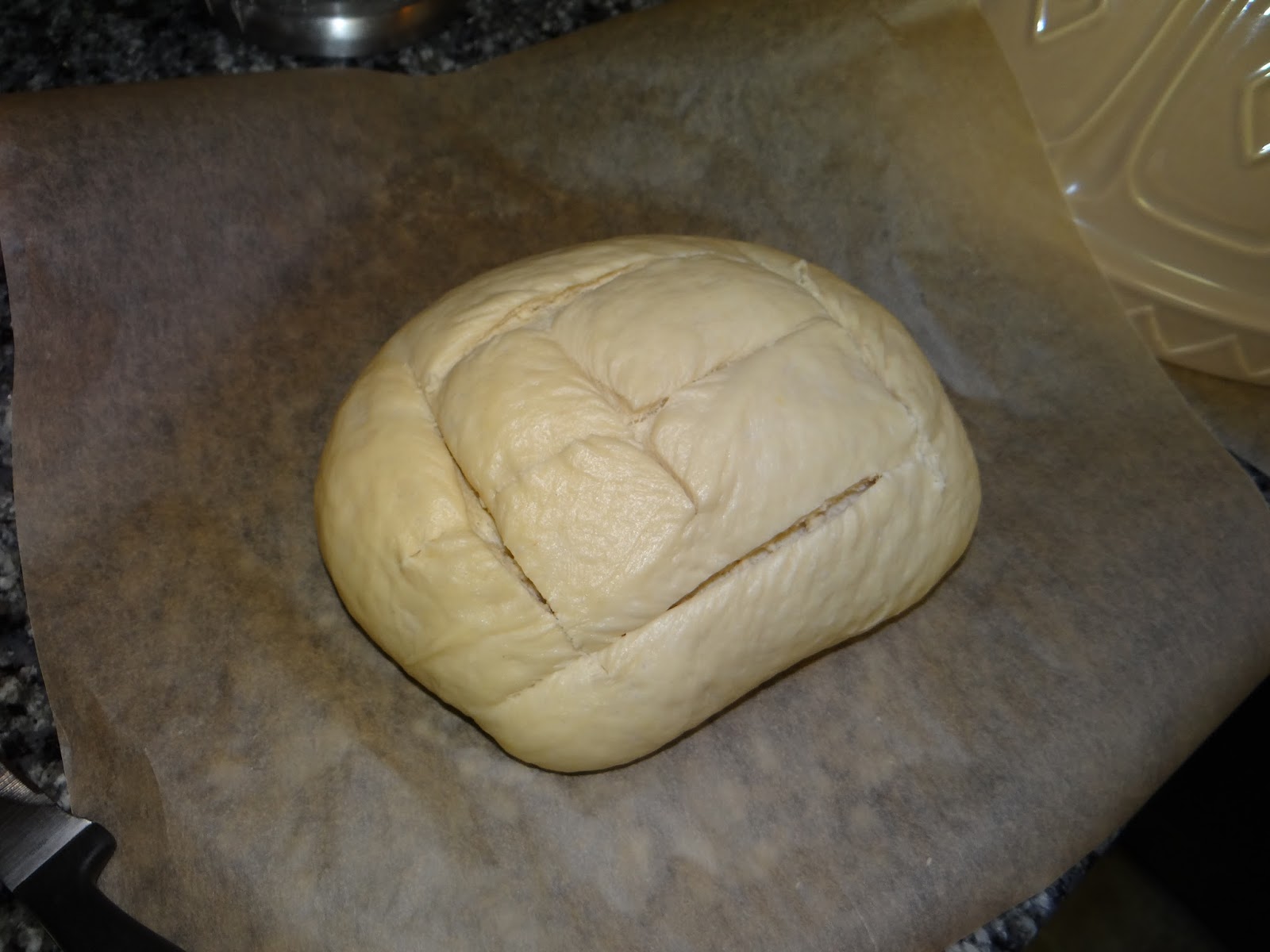
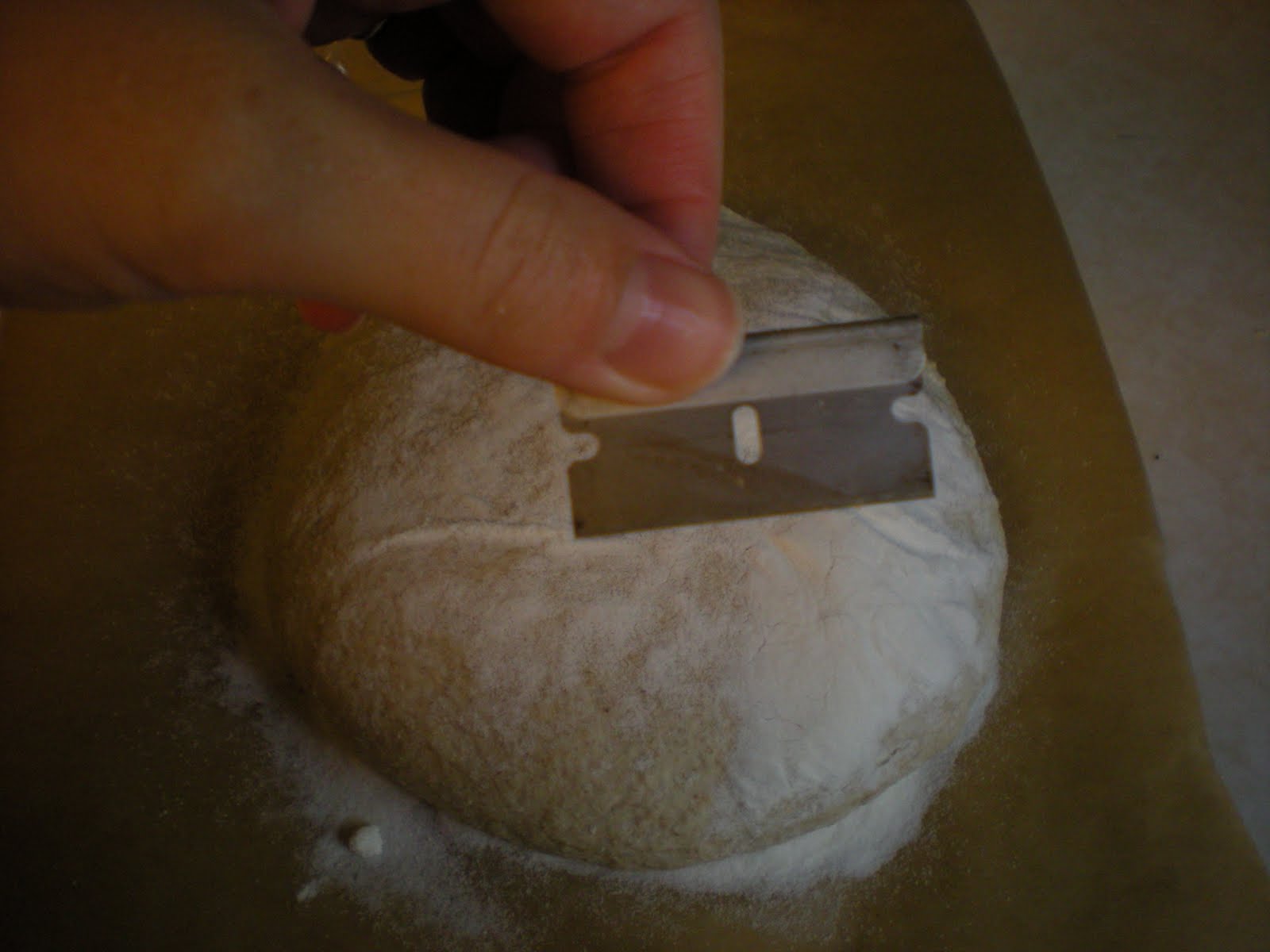
3. When the dough is ready, score a pretty pattern using a serrated knife or razor blade.  We don’t keep razor blades in the kitchen anymore because we have a very curious little helper now 😉

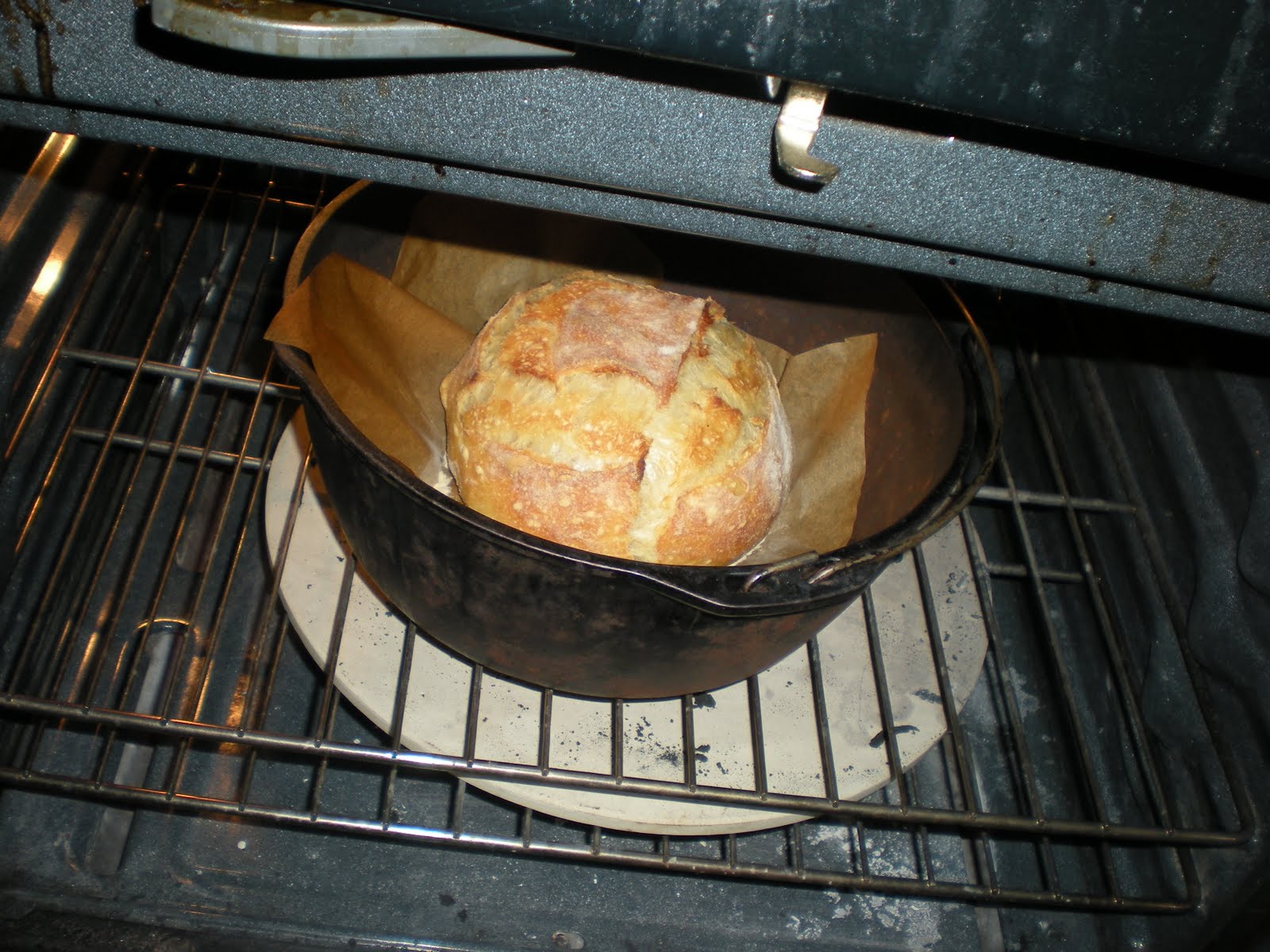
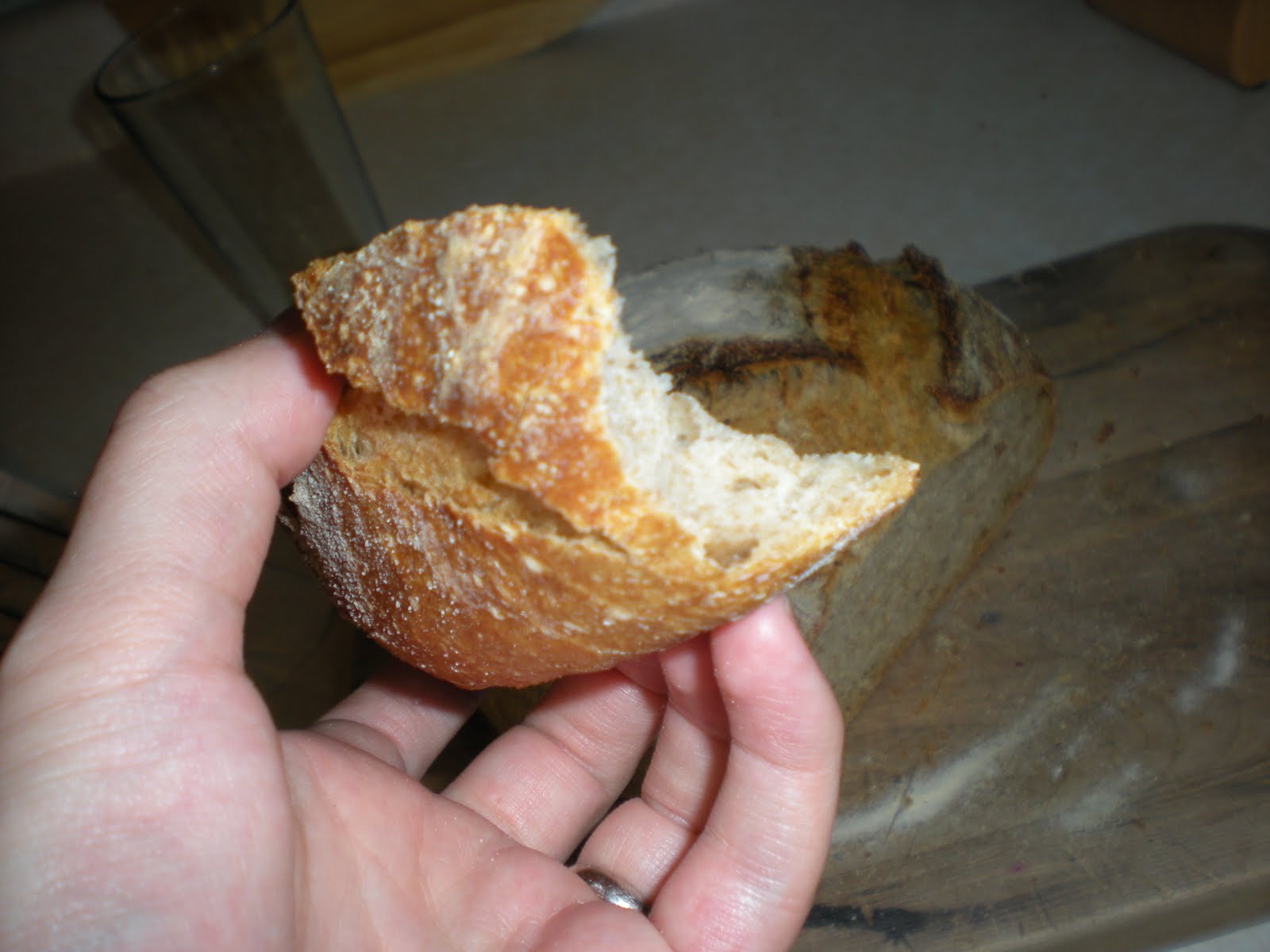
4. Bake for 25 minutes with the lid of the dutch oven on.  Then remove lid and continue baking for another 20 minutes or so until the bread is crusty and golden brown.

That’s all there is to it!  Stay tuned for The Science Behind… sourdough starter!
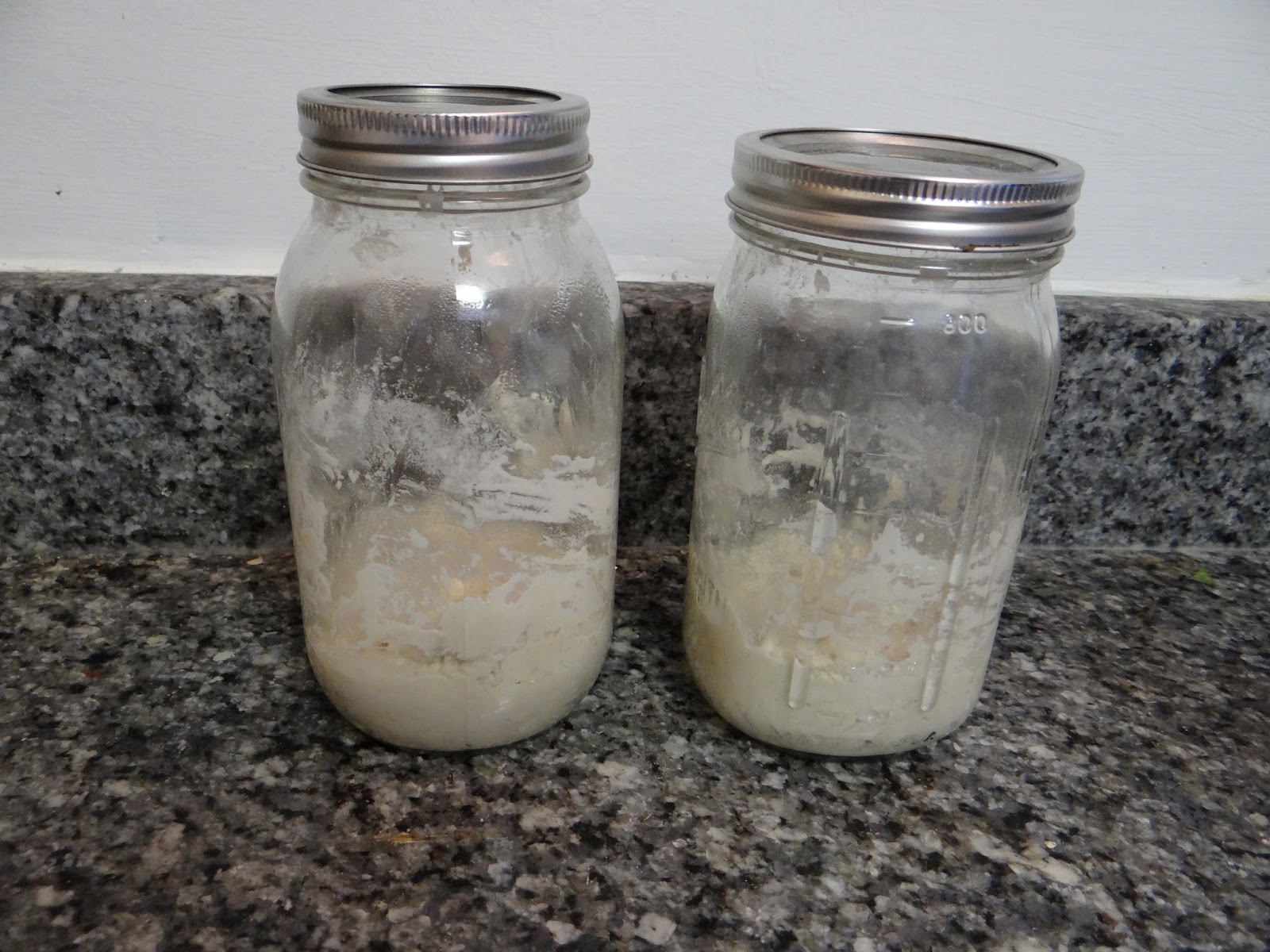
Bringing my sourdough starters back from the grave

we’ve been missing this

If you thought my nearly one-year hiatus from the blog was long, you haven’t heard about my nearly five year break from making sourdough.

The last time I blogged about sourdough, it was May of 2011, my very first mother’s day.

http://thebreadmaiden.blogspot.com/2011/05/mother.html

My last substantive post about sourdough starter was here, back in 2009:

http://thebreadmaiden.blogspot.com/2009/05/sourdough-starter-troubles.html

If you peeked at that last post, you’ll see part of the reason why I waited so long to get back into working with a starter, even though I’ve continued to bake bread with commercial yeast.

For one thing, it’s a living organism.  Unlike commercial yeast which is dormant until activated by liquid, starter is alive and needs to be fed once a day for several days before it can be used.

Because it takes two to three days for a starter to get nice and active, then another day to rise a dough and bake, it requires knowing you will have a chunk of time to bake on the starter’s schedule.  Bread with commercial yeast generally rises consistently, evenly, and takes about the same time, all the time.  So you can plan the bread baking around your schedule.

A starter is its own animal.  It is fussy.  It is messy.  It has a learning curve.  And if something goes wrong, it’s one more part of the bread baking process that you need to troubleshoot.

But I think it’s time.  I’m at a pretty good spot with Little Bread Boy and Little Bread Baby, where I might have a chunk of time here or there to feed the starter or bake the bread.

That said, these starters have been sitting in my fridge for the past five years, and who knows if they will come back.  Will they rise again after three days?  We’ll just have to have faith.  Taste and see!
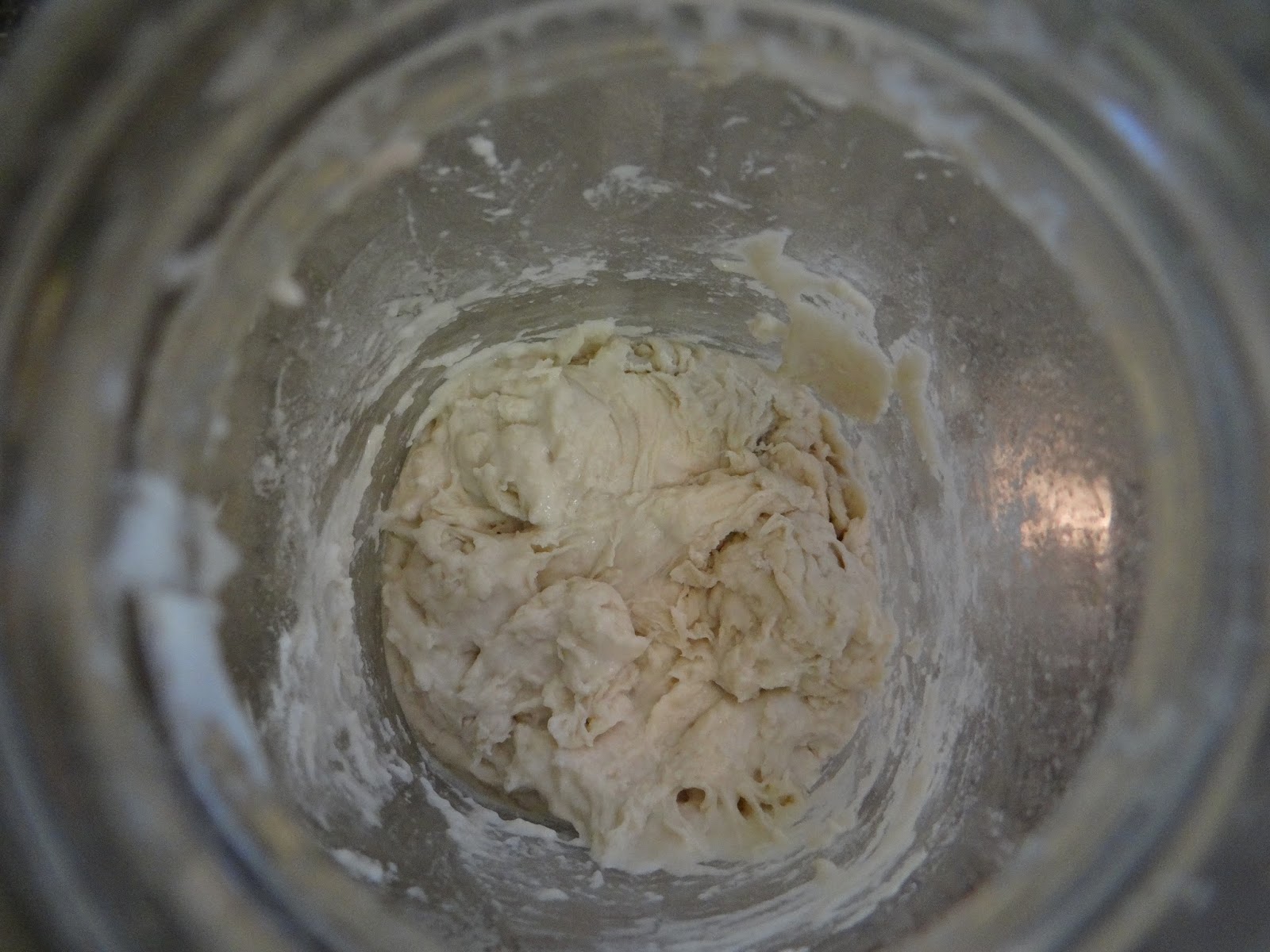
For The Science Behind…sourdough starter, check out this post.

The Science Behind… Raspberry Breakfast Cake

Welcome to my second post of the “The Science Behind…” series!

If you haven’t read it yet, please CHECK OUT the recipe for Raspberry Breakfast Cake, then come back here for the science.

This post will touch on the following topics:

1. How is baking with baking powder/baking soda different from baking with yeast?
2. How come I can substitute the yogurt with sour cream or buttermilk and get the same result?  What else can I substitute out from the recipe?
3. What gives this bread its cakey texture?
4. What gives quick breads their structure?
5. Quick breads often have you separate wet and dry ingredients and then combine them at the last moment.  Why is that?

That’s a lot to cover.  So let’s get started!

1. What is the difference between baking with yeast and baking with baking soda or baking powder?

Baking soda, baking powder and yeast all achieve the same end result: they help rise the dough or batter by releasing gas.  How they do this, however, is really different.

Yeast is an organism that lives and reproduces from eating the sugar in flour (or any added sugar you use).  As it eats, it releases carbon dioxide gas which builds up inside your dough over time.  Then, when bread is baked in the oven, the heat causes the yeast to release more gas a second time.  This reaction can take place over many hours.  If you try to bake a loaf of bread without letting the yeast gases form, your loaf will be very dense and not taste very good.

Baking soda is sodium bicarbonate.  When mixed with an acidic liquid, it too forms carbon dioxide gas.  Unlike yeast which takes time to release gas, the chemical reaction between baking soda and acid is immediate and so the batter must be baked right away.  For this reason, breads that use baking soda or baking powder are called quick breads.  Yes, this raspberry cake is actually a quick bread!

Baking powder is baking soda mixed with a starch (typically cornstarch) and a powdered acid (typically cream of tartar).  That means you don’t need to add a separate acidic liquid to start the chemical reaction – any will do.  Because baking powder also has starch and powdered acid, you typically add more of it to a recipe than baking soda, about three times more.  So a recipe that uses baking powder and baking soda together might say 1 1/2 teaspoons baking powder, 1/2 teaspoon baking soda.

2. How come I can substitute the yogurt with sour cream or buttermilk and get the same result?  What else can I substitute out from the recipe?

Once you have a handle on the reasoning behind baking powder and baking soda, the sky is the limit! Any acidic dairy liquid will have the same effect as the yogurt.  For example:

the recipe for this cake called for sour cream, but I used crema
buttermilk is just milk or cream with a little vinegar
yogurt

in the case of beer bread, the carbon dioxide in the beer is the leavening ingredient!  Like baking powder and baking soda, the chemical reaction takes place immediately so you need to bake beer bread quickly. 

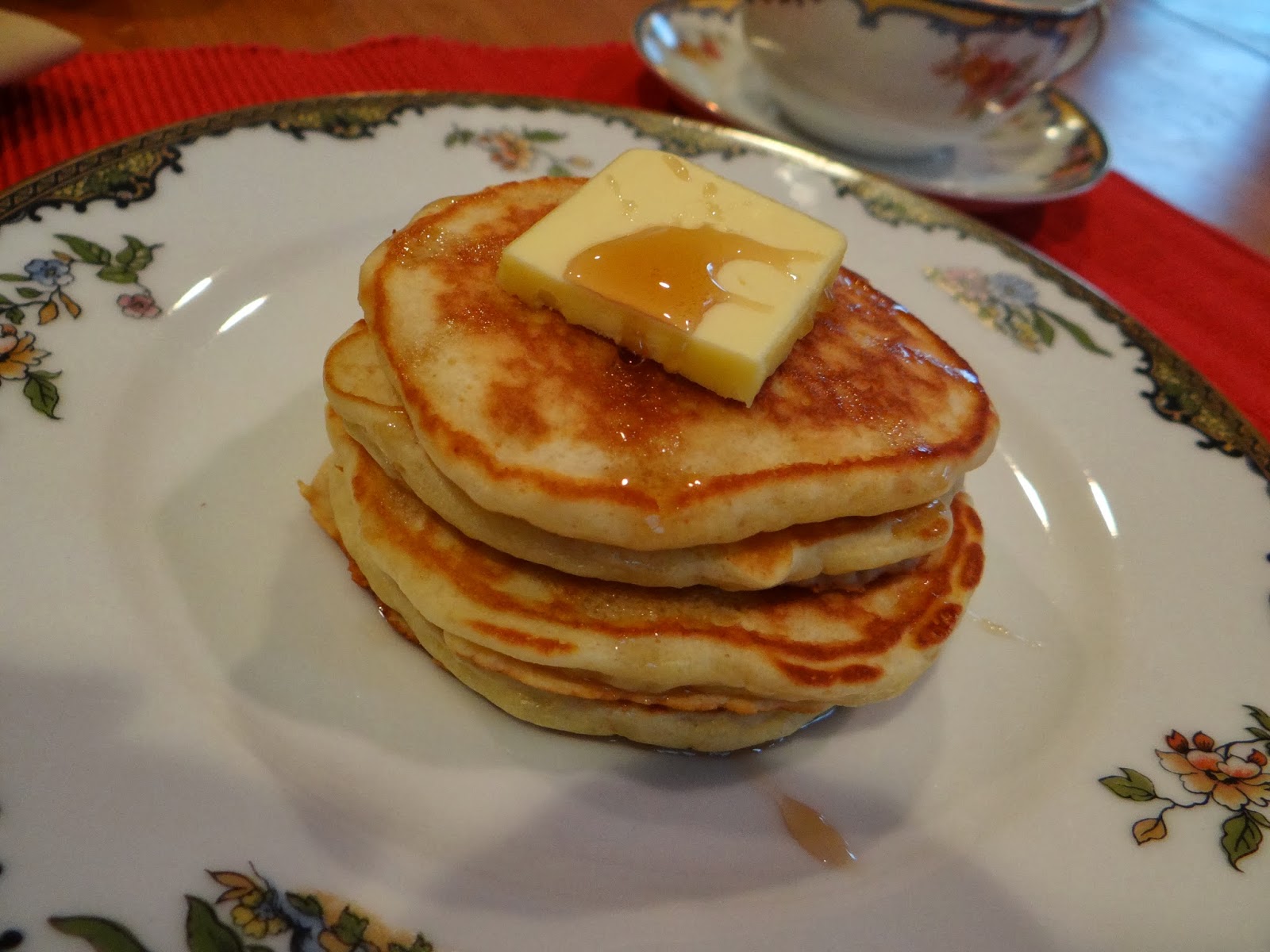
I also adapted my pancake recipe from one that used milk to one that also included sour cream by adding 1/2 teaspoon of baking soda to offset the additional acid in my new recipe.

Other things you can substitute in the recipe without interfering with the chemical reaction of the leavening agents are: the seasonings (cinnamon would be a good addition), the extract (I throw in vanilla but Niequist calls for almond extract), the berries you choose to use, and the type of sweetener you use.  Because almost no gluten formation takes place, you don’t have to worry about hydration levels.

lemon zest

3. What gives this bread its cakey texture?

You may have already guessed why this bread (and all quick breads) have a cakey texture; it’s because the gluten doesn’t have time to develop if you have to mix and cook it right away.  Also, quick breads tend to have very wet, runny batters (sometimes called “pour batters”) which provides lots of room for small air bubbles to form.

4. So if gluten doesn’t get a chance to form, what provides the structure for this bread?

The eggs!  If you remember from the last “The Science Behind…,” eggs contain both fat and protein.  Protein is mostly found in egg whites, and like gluten strands in flour, it traps the carbon dioxide released by the baking powder or by the baking soda + acidic liquid.

5. Quick breads often have you separate wet and dry ingredients and then combine them at the last moment.  Why is that?

Again, because the chemical reaction between the baking powder or baking soda and the acidic liquid takes place the minute they are combined, recipes often instruct the cook to combine all the wet ingredients together, then all the dry ingredients together before combining the wet and dry into the final batter.  This isn’t always necessary, but with two Little Bread Offspring, I find it is a lifesaver.  Often I will mix up the dry ingredients, then I can walk away and do something else knowing nothing chemically will happen while I’m gone.

That’s about it for this episode of The Science Behind.  If you want to learn more about baking with baking soda and baking powder, this tutorial from King Arthur Flour is really good.

And now you know a bit more about your Raspberry Breakfast Cake!

The Science Behind… soft sandwich bread with bacon drippings

Welcome to the first post of my new series, “The Science Behind…”!

This post will touch on a few subjects:
1. What makes sandwich bread different from my basic 1-2-3 bread
2. How to incorporate fat into your dough’s hydration ratio
3. How the addition of fat impacts the baking process

If you haven’t read the recipe I’m referencing here, CHECK IT OUT then come back.

1. How is sandwich bread different from bread that only consists of flour, water, yeast and salt?

Think of the bread you probably ate sandwiches on as a kid – it’s soft, slightly sweet, and has what’s called in the business a “tight crumb.”  That is, very small holes as opposed to the large holes in french bread or ciabatta.  After all, we can’t have the jelly leaking out!  Fat and high protein content are what give sandwich bread their characteristic softness and tight crumb.  This recipe has three sources of fat: milk, egg yolk, and bacon drippings.  It has two sources of protein: the high protein content of bread flour, and the egg white.  The sweetness comes from the honey.

2. How can I incorporate fat into my bread without messing everything up?

  • The most important factor in making successful bread is maintaining the right ratio of water and flour.  This ratio is called hydration, and it’s super important for the development of gluten, which gives loaves of bread their structure.  

What do you see in this recipe?  There’s no water as such.  There’s milk. Bacon drippings. Egg.  Honey.  This recipe has a lot of different wet ingredients, but none of them are the same as water.  Because of this, they aren’t absorbed in the same way water is.  Milk, egg yolks and bacon drippings all have fat in addition to water (milk also has a negligible amount of protein), and egg whites have protein.

it’s bread math time

Milk is 85-95% water
Bacon drippings are about 30% water
Eggs are 90% water
Honey is about 20% water

If you add up the total weight of the wet ingredients in this recipe, you get 425+85+85+50=645.  645/795 = 81% hydration.  Clearly that isn’t right, because at 81% hydration, the dough would be very wet and difficult to manage.  This dough is supple and easy to handle.  So we need to calculate what the actual hydration is by taking into account each ingredient’s percentage of water.

Milk is 425*.95 = 404 (rounding up)
Bacon drippings are 85*.3 = 26
Egg is 50*.9=45
Honey is 85*.2=17

Therefore, the actual hydration of this loaf is 404+26+45+17 =  492/795 = 62% hydration.

Ok, confession time: in this case, you really didn’t need to do all this math.  Peter Reinhart already did the math and figured out that the recipe would work with the water content of the above ingredients.  But if you wanted to make up your own recipe or figure out what would happen if you added an egg to another recipe, you would need to use the water content of the egg to figure out the total hydration of the dough and make sure it would work and not become a gloppy mess.

BUT WAIT!  Before we leave the topic of fat and hydration: Eggs are a special case.  Because the yolk has fat and the white has protein, you need to be careful just adding it to a dough that isn’t enriched with anything else.  While the egg yolk adds softness to a dough, whites add protein strands which increase the chewiness of the loaf.  Too much protein and the loaf will be too tough.  For this reason, Peter Reinhart adds milk and oil, butter or bacon grease in addition to the egg.  Another adaptation I’ve seen has you add one egg plus an additional egg yolk to increase the fat.  It’s up to you which you prefer.

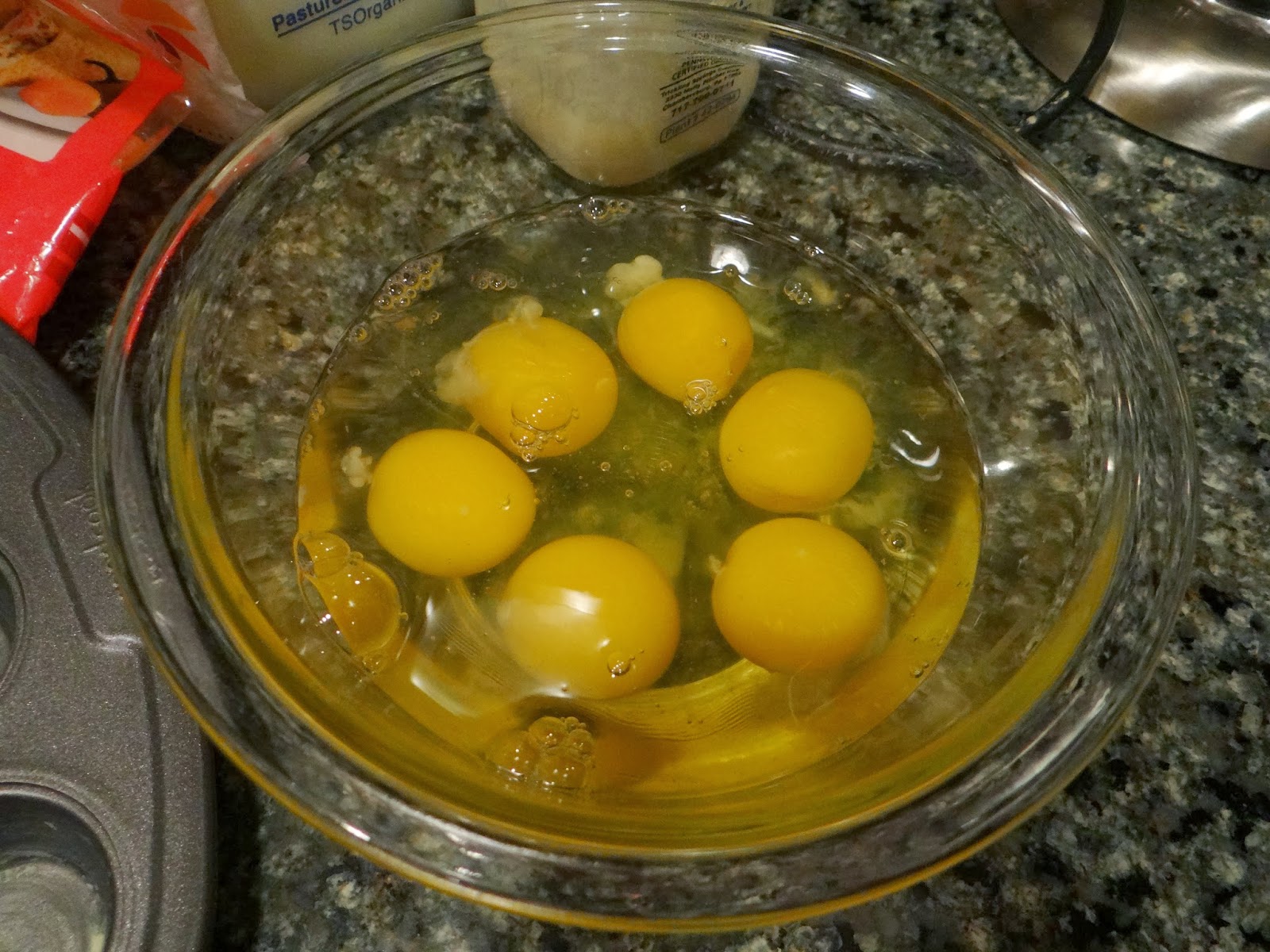
this is just a random picture of eggs; the recipe only calls for one egg

  • Knead, knead, knead!
Most breads are improved by letting the dough rise for a long time with a little bit of yeast.  The USDA cautions against leaving raw egg and milk out on the counter for long periods of time, so this recipe cuts down on the time the bread needs to rise by adding more yeast than usual.  When you add more yeast, it is vital that the gluten “net” be formed quickly by kneading.   Otherwise, all that gas created by the yeast will escape and the dough will not rise, or it will quickly deflate when it bakes. 

3. How does the addition of fat impact the baking process?

If you already read the recipe for soft sandwich bread, you saw that the baking temperature is 350 degrees F, a much lower temperature than loaves without fat can withstand.  There are two reasons for this:

  • Dough with fat and sugar will brown more quickly than un-enriched dough.  Therefore, in a hotter oven you run the risk of burning the crust while the inside of the loaf is still raw.
  • For sandwich bread, you want a soft crust.  A hotter oven produces a crustier crust.

I hope you enjoyed this first post in “The Science Behind…” series!  If there’s another aspect of bread science you wish to explore, please let me know in the comments.

Bread for Communion Part V: Soft sandwich bread with bacon drippings

Hello all!

After a lengthy hiatus, Bread Maiden is back.  Now with double the bread baby action!  That’s right, we’ve added a second baby and we’re high on life (also lack of sleep).  Unlike with my first bread baby, I’ve actually been baking since #2 was born and didn’t go through quite the cataclysmic adjustment period as I did with #1.  A few months ago I also returned to baking communion bread for my church.

Little bread baby makes his blog debut

Last month, I decided to try something new for the “look pretty” loaf for communion.  If you have no idea what that means, go here.  I wanted to mix things up and decided an easy way to do that was to swap one type of fat for another.  So instead of using butter or oil, I decided to use bacon drippings, which we save and store in the refrigerator.

tastes better than it looks

The recipe I used comes from Peter Reinhart’s Artisan Breads Every Day.  I love this book in particular because it has the best biscuit recipe ever, with the fastest method of cutting in the butter I have ever seen (seriously, it saves SO much time).  The recipe I tweaked is his Soft Sandwich Bread and Rolls recipe.

You will need (for two loaves):

1 3/4 cup lukewarm milk
1 Tbls yeast
795 g Bread Flour
1 Tbls kosher salt
1 egg
1/4 cup honey
85 g melted butter, oil or bacon drippings

1.  In a small bowl, sprinkle the yeast on top of the milk and let sit for five minutes.  If it smells yeasty, it’s working.

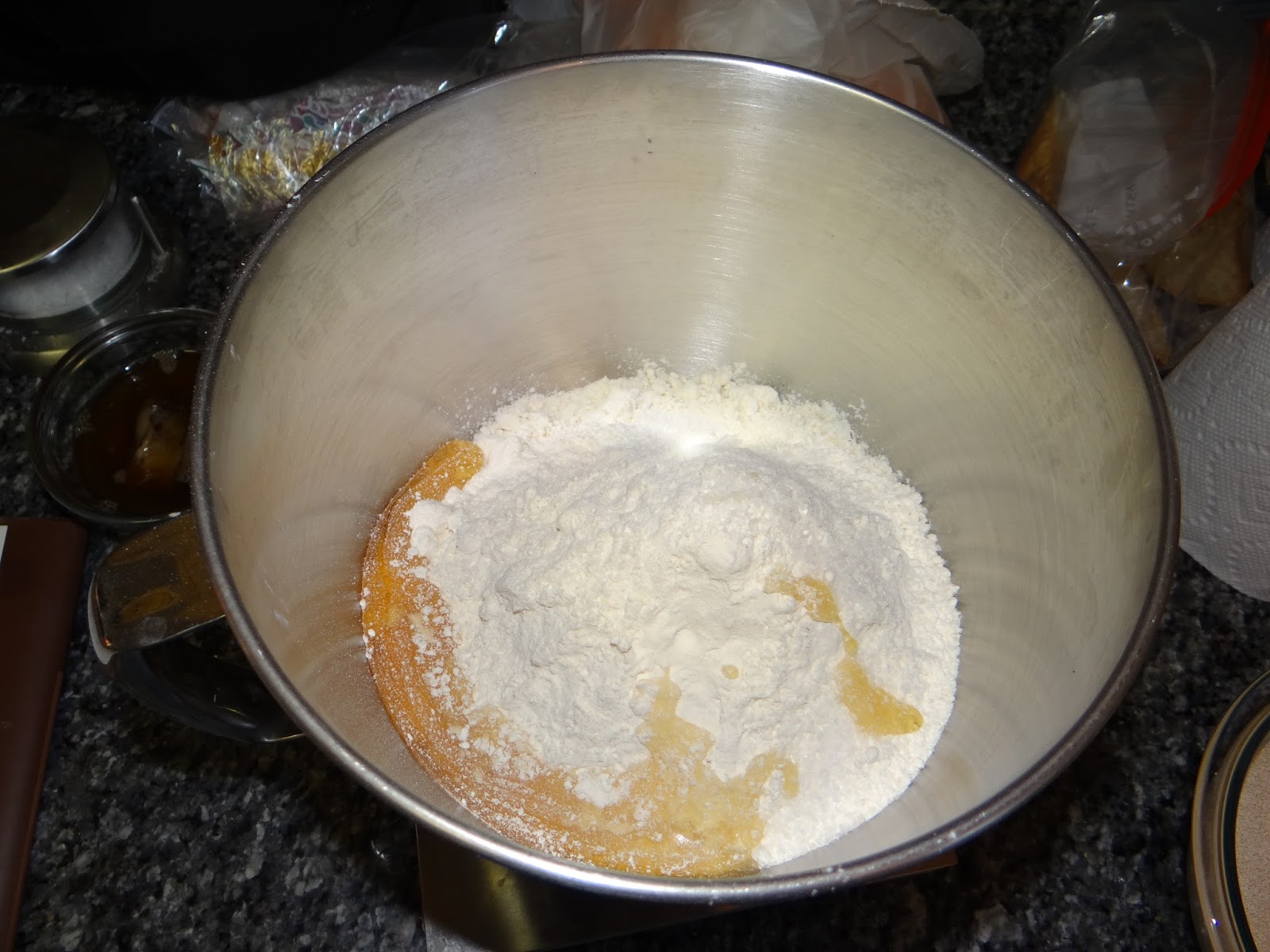
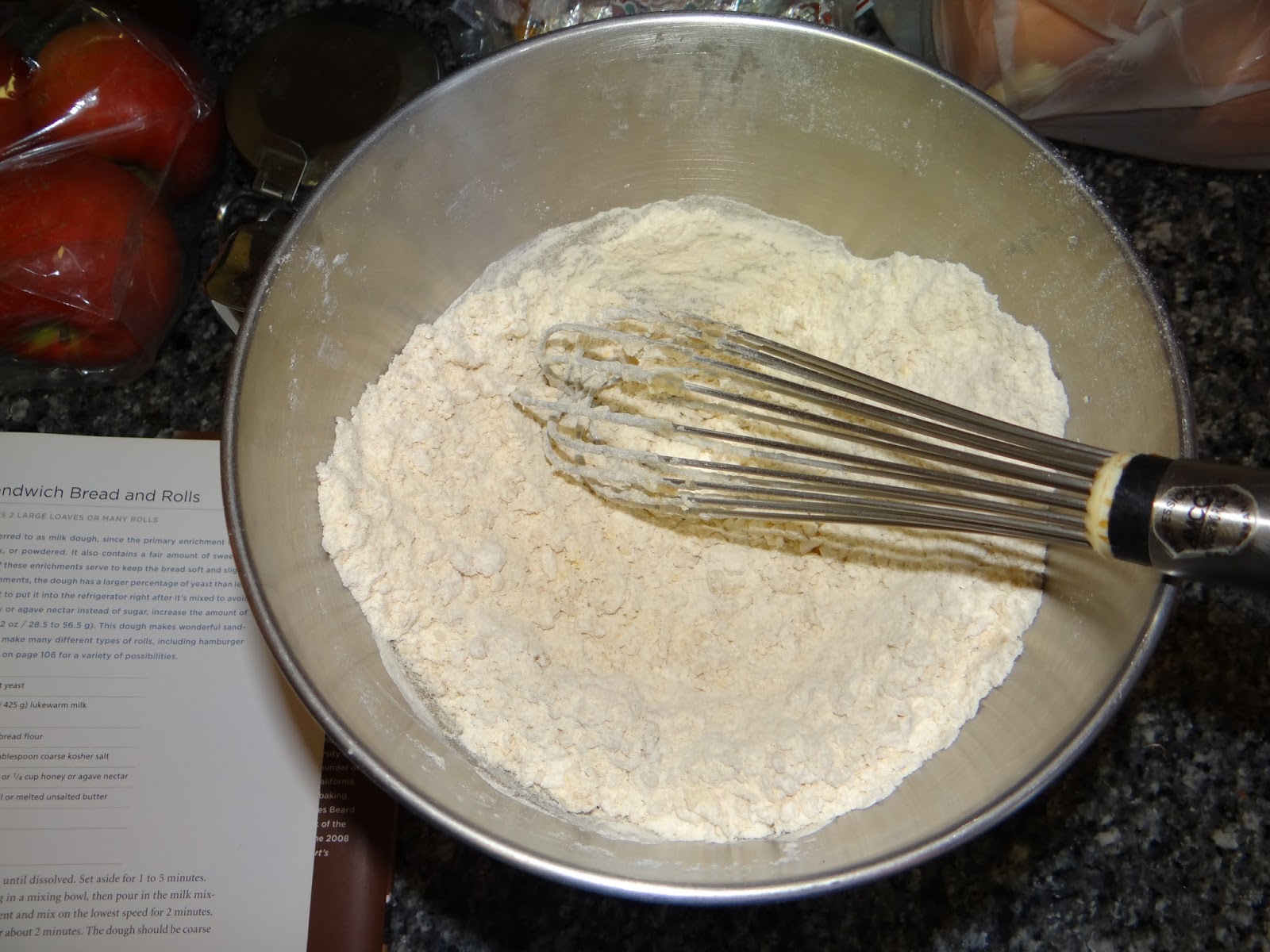
2. In a large mixing bowl or the bowl of your stand mixer, combine the flour, salt, egg, honey and bacon drippings and set aside until your yeast mixture is ready.  Then add the yeast and milk into the mixing bowl.

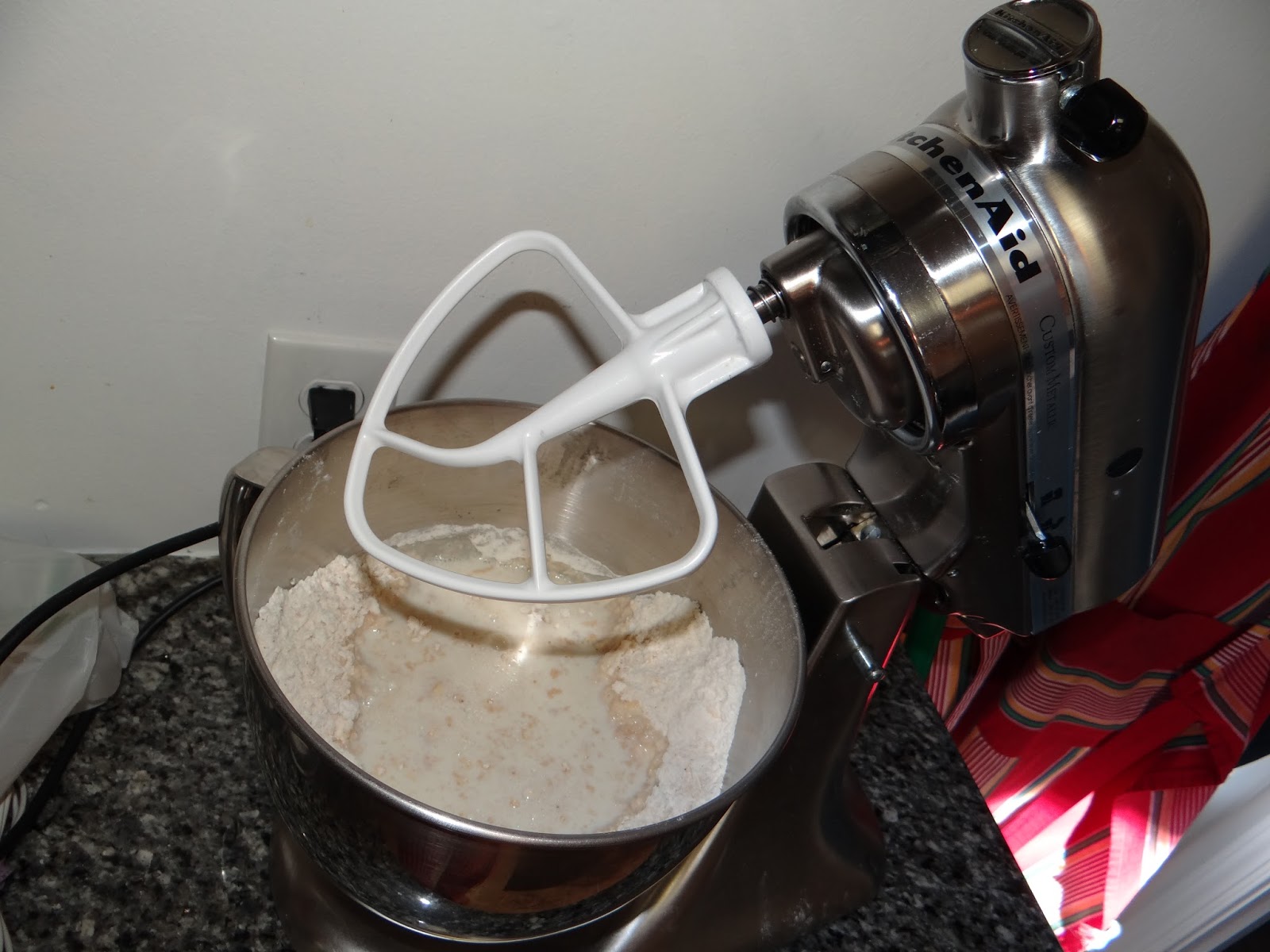
3. If you are using a stand mixer, get everything nice and combined using the paddle attachment.  When it becomes a ball, switch to the dough hook and knead for about five minutes.  If you don’t have a stand mixer, just knead the heck out of it for five minutes.  You really do want to knead here – there is so much yeast that things are going to move quickly and you’ll want to make sure the gluten has really developed a strong net to trap in those yeast gases!

before

after

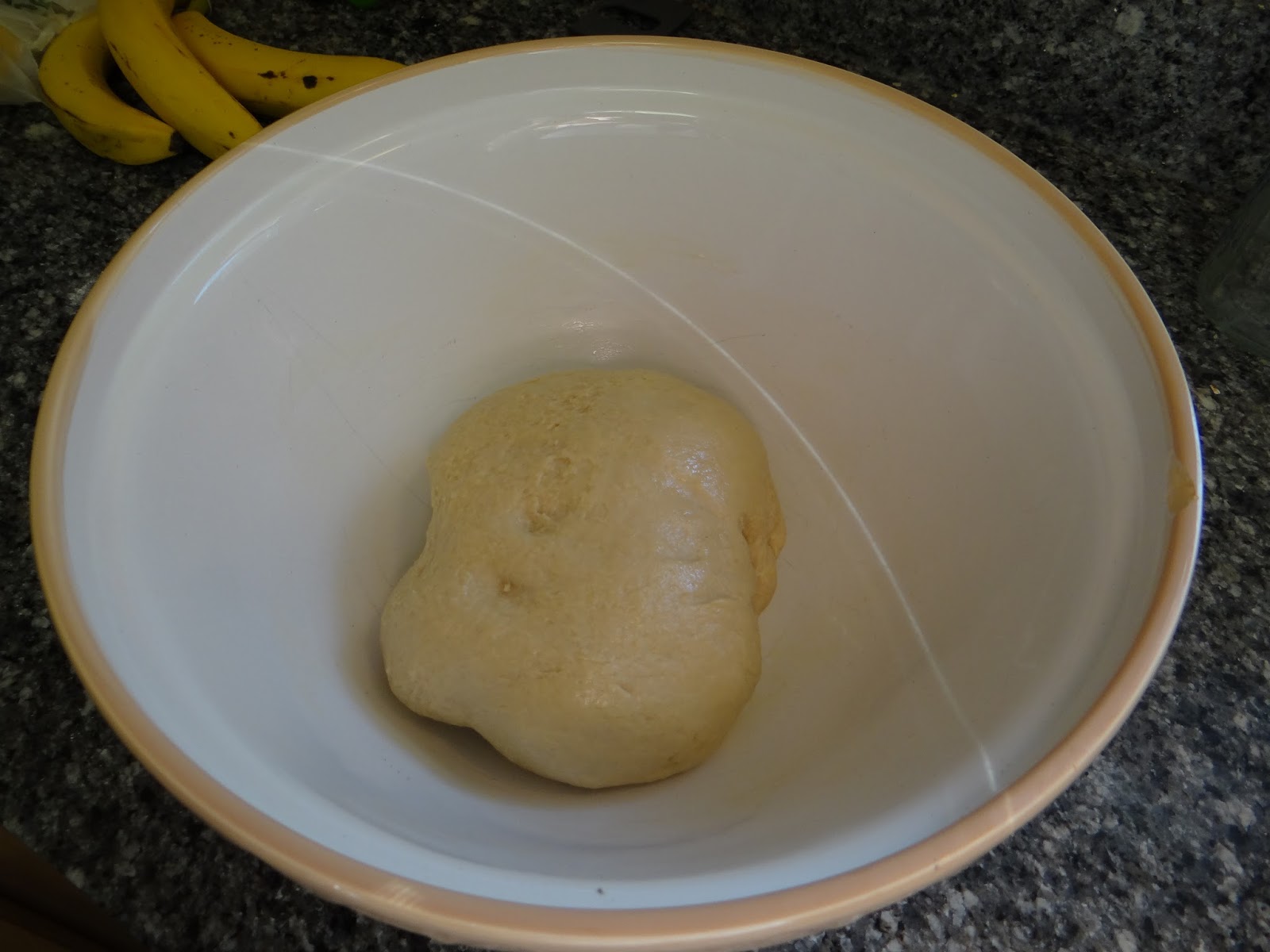
4. Place the dough in an very large oiled bowl and cover with plastic wrap.  Let rise until doubled in size.

before

after

5. Once the dough has doubled, punch it down and divide it into two equal parts.  This is more important if you plan to use loaf pans; if you are baking both loaves at the same time they need to be exactly the same size or they won’t bake evenly.  Weigh out the dough after punching it down and then divide into two equal halves.  If you are making boules, you can just eyeball the two halves.  Shape the loaves as you wish.  If you want to use the dough to make sandwich bread, flatten it out and then roll it up and place it for the second rise into two buttered bread pans.  If you want boules, shape the loaves into balls and place for the second rise onto sheets of parchment paper and cover each loaf with a large bowl to form a dome.

6. After about an hour rise, preheat the oven to 350 degrees F.  Score the boules in a pretty pattern or score the sandwich loaves with one long line down the middle.

look at all that condensation on the inside of the bowl!

I use a serrated knife to score the loaf

I tell Bread Camp attendees that the most important part of scoring the loaf is Not Being Afraid!

7.  Bake for 40-50 minutes until the top of the loaf is golden brown and it can withstand a nice hard thump with your nail.  Remove from the oven and let rest until cooled.

Voila!  A loaf of bread that is nice and flaky with no bacon flavor.  Everyone who tried this loaf loved it, and it’s nice sometimes to tweak favorite recipes and see what else they can do.  You could even take the bacon to the next level (if bacon flavor is what you’re after) and add bacon bits (cooled of course) to the dough after the first rise but before you divide the loaf in two.  Let me know how it works out.

If you’re interested in more of the science of baking enriched breads like this sandwich bread, check out my “The Science Behind…” post here.