Bread for Communion part V: Easter Bread

When I was little, my favorite part of Easter Sunday was the children’s story, when we all got a little bun that we could use to tell the story of Easter.  It was the most delicious bread I had ever tasted: sweet, rich, and beautiful with the deep color of the dyed egg contrasting with the light color of the bread dough.  It was a sad year when my parents said I was too old to go up for the Easter children’s story (I think I was 13 at the time, so definitely way too old).  Also if I recall correctly I was wearing a mini skirt to church, so yeah.  I think by that point I was already opting out of church, but once Easter rolled around, I WAS going to get one of those breads, faith or no faith.

Since then, it’s been a long, slow process getting back to church.  What has helped this time around is that it’s been on my terms.  Don’t ever, ever, EVER ask me to lead a prayer circle or a bible study, but bake bread for communion?  That I can do.  I’m still figuring out how I feel about the whole Jesus thing.  But serving others?  That is where I feel happy and capable and spiritual.

Anyway, this year there was a call put out for anyone who wanted to help make Easter Bread, and I jumped at the opportunity.

At the request of the recipe’s creator, I will not be posting about the recipe or the process.
I recently read an article on Jezebel called something like, “This is why we’re the atheist generation.”  The point basically was that people my age are tired of the hypocrisy of organized religion, but are still looking for the elements of worship, specifically things that are meaningful.

While on the surface, making bread for my church could be seen as a chore, to me it’s not at all.  It’s symbolically feeding my community.  Making the Easter breads is my way of connecting my childhood to the next generation of kids, of providing memories of being loved and cared for.  Also, it’s something that only the kids get, so they feel special.

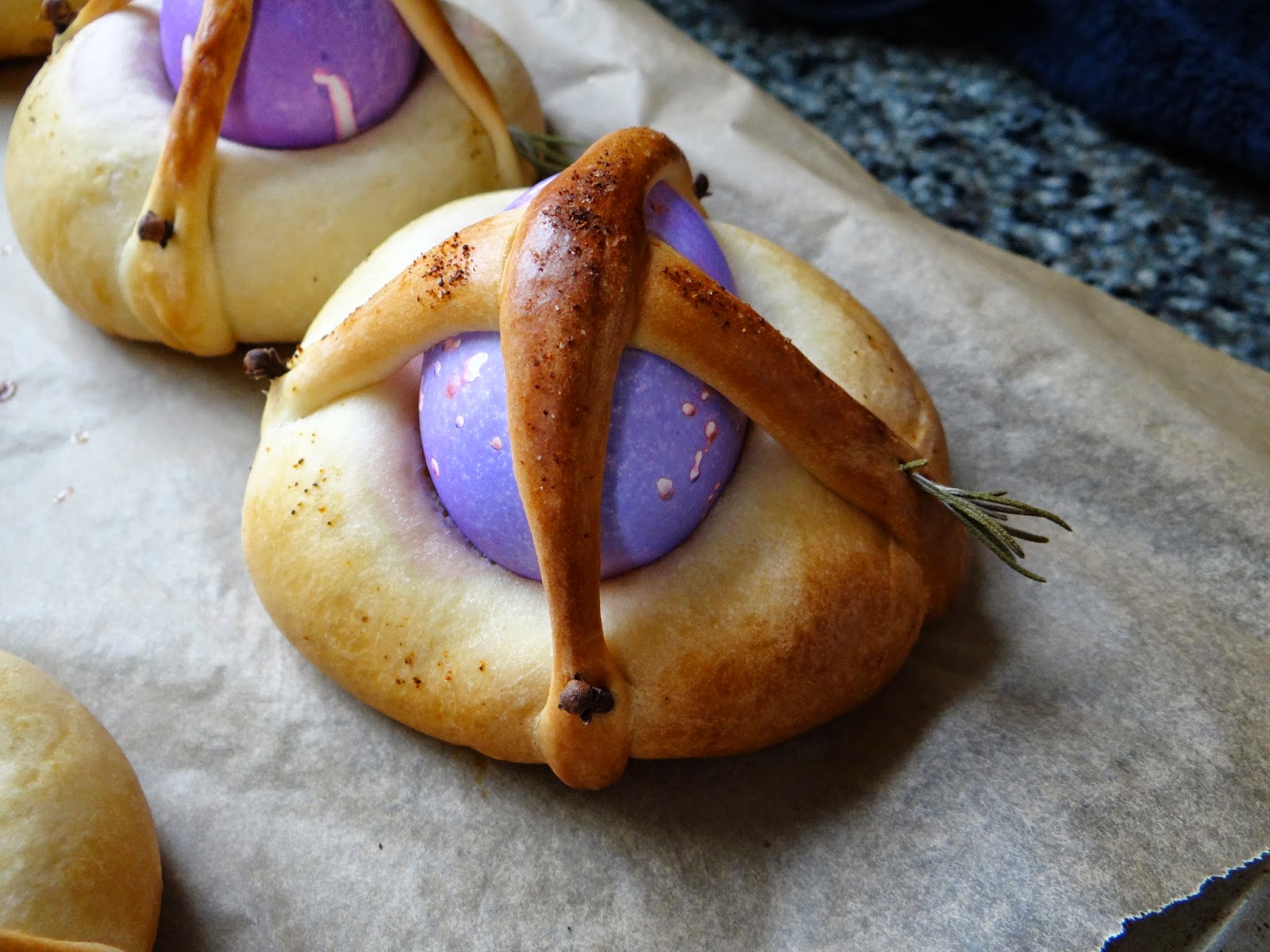
Anyway, so the neat thing about these breads is that each element is symbolic.  The cloves, the rosemary, the cayenne pepper, the egg.  The recipe creator has added to and perfected this recipe over time, and it shows.

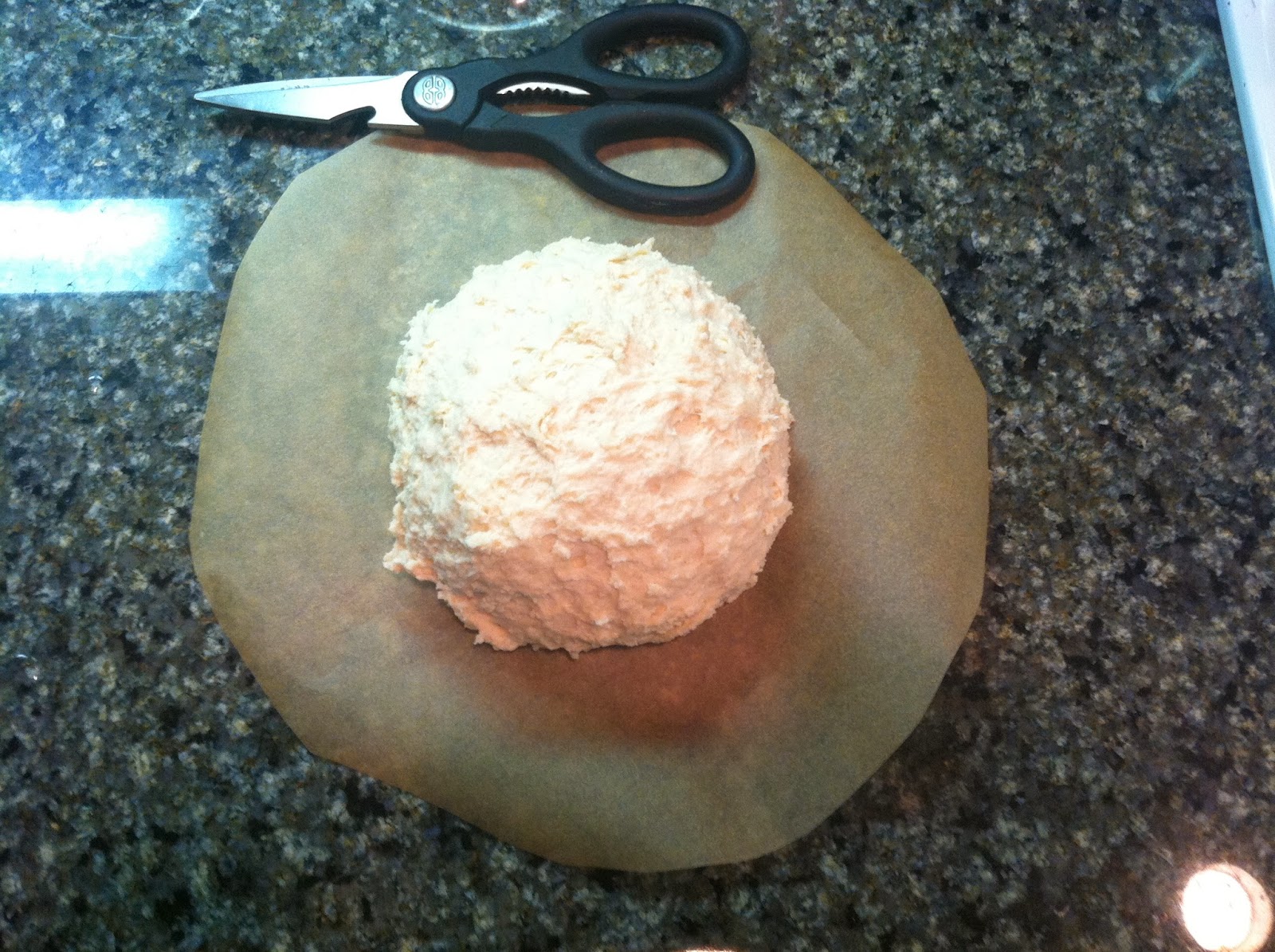
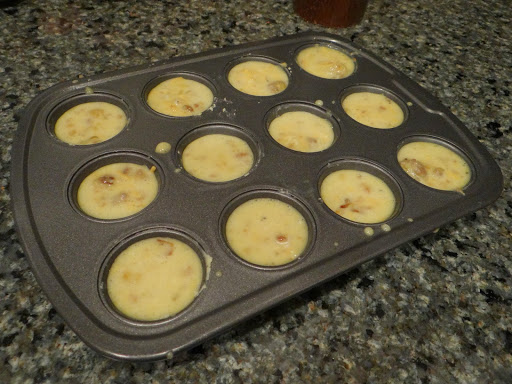
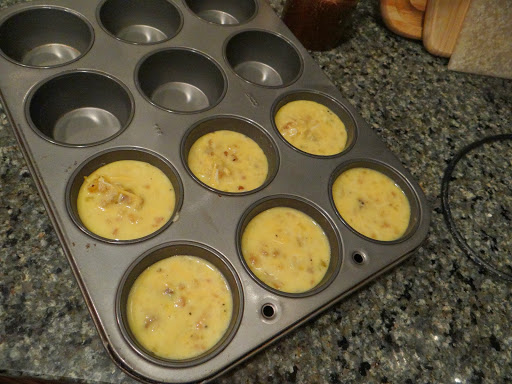
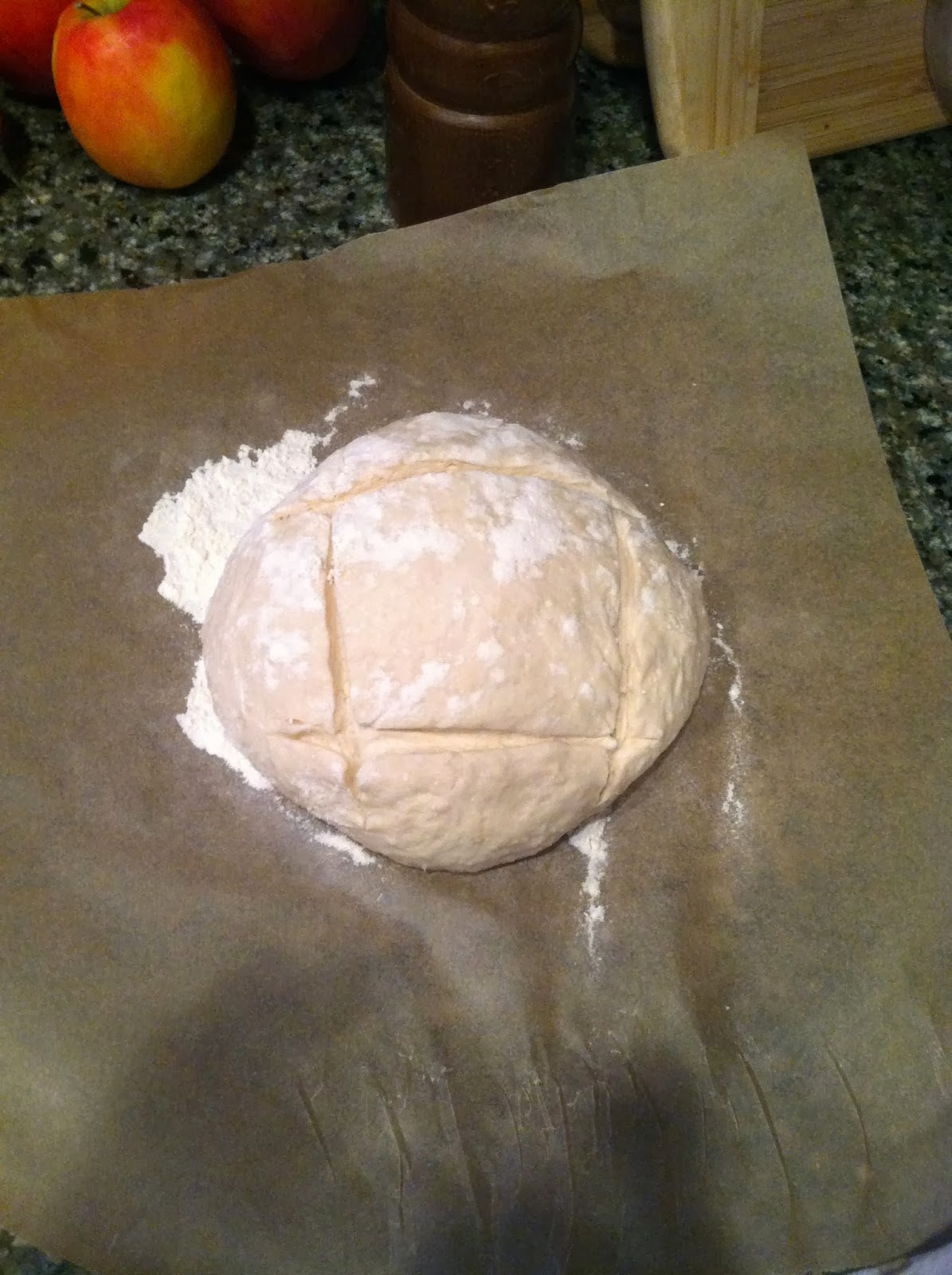
Here is what they look like assembled and ready to go into the oven:

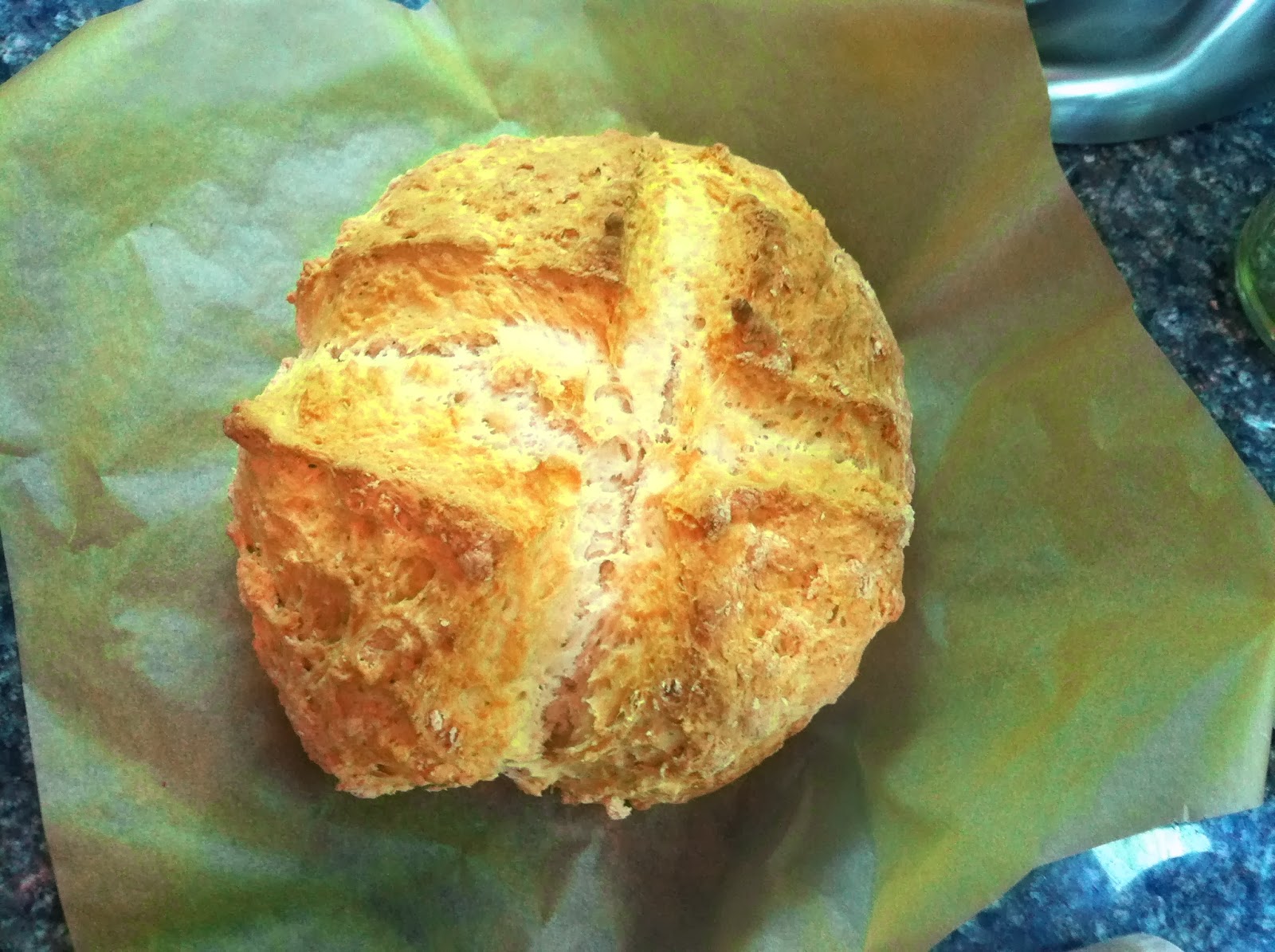
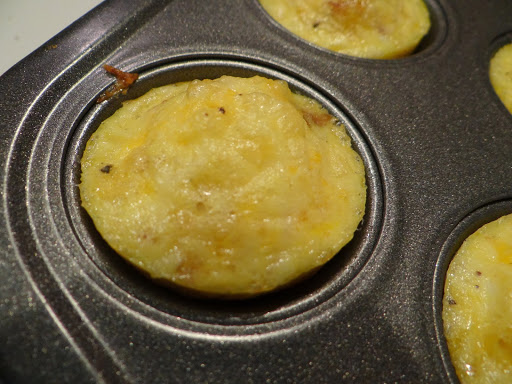
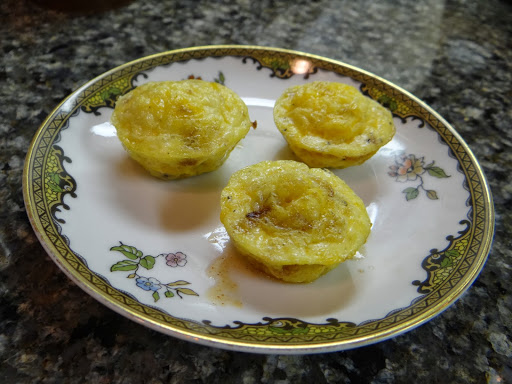
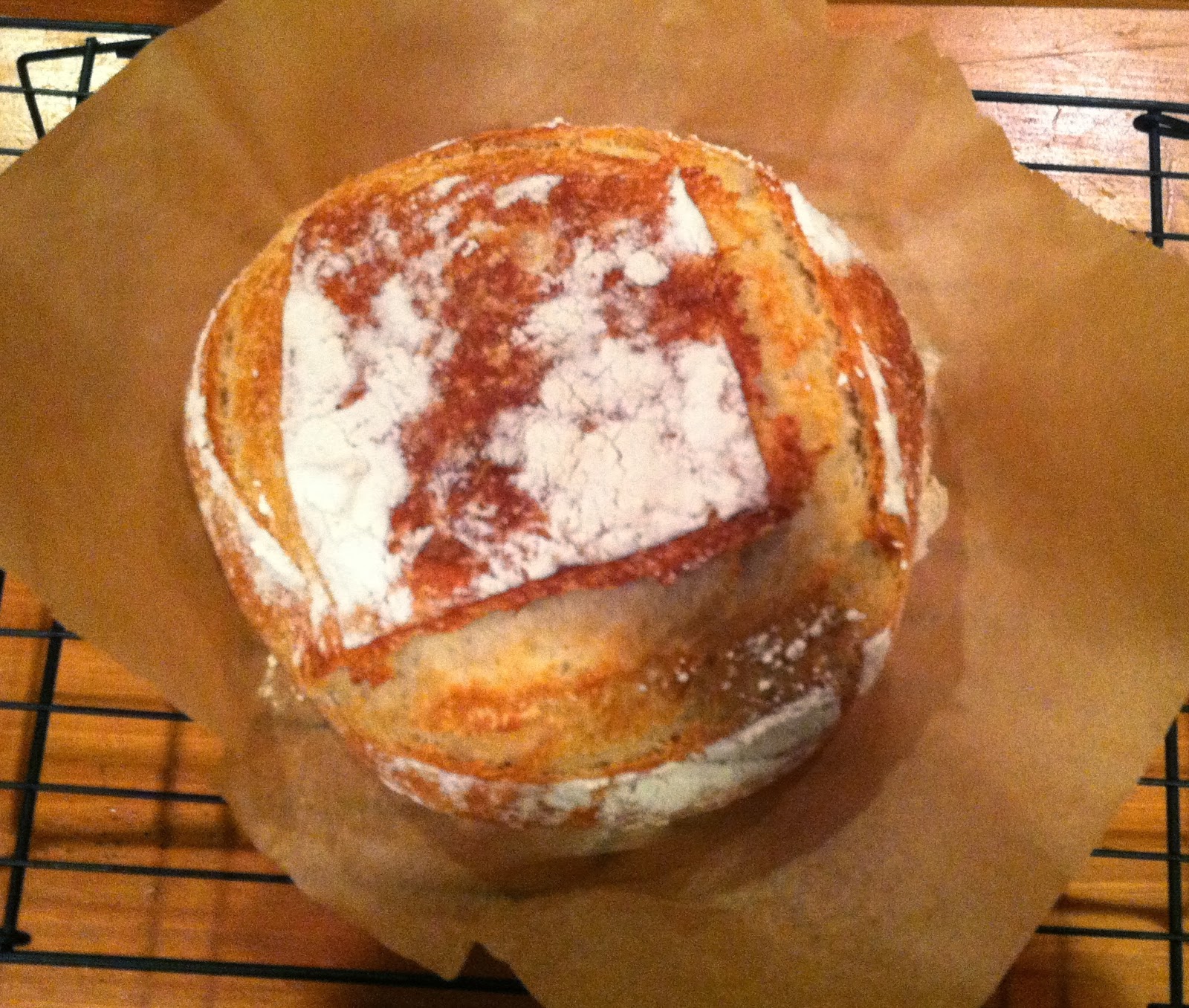
Here is what they look like out of the oven (obviously a different set of six buns, ha ha):

I hope I can help make these Easter Breads again.  The experience of making them was deeply meaningful to me.  Happy Easter (and Passover) everyone.

Banana Bread a la Crescent Dragonwagon

In our house, overripe bananas are always an occasion for making banana bread.  Usually I only have one or two ripe bananas, so I throw them in the freezer until I get three.

But this time I actually had three ripe bananas on the counter, so it was time.

Also, I’m celebrating Mr. Bread Maiden, who is back to eating carbs again after a two-year abstention.  Bread Maiden is quite happy, as you might expect.

I’ve already covered one banana bread recipe here.  But now that I’ve made this one by Crescent Dragonwagon, I’ve become a convert to CD’s method!

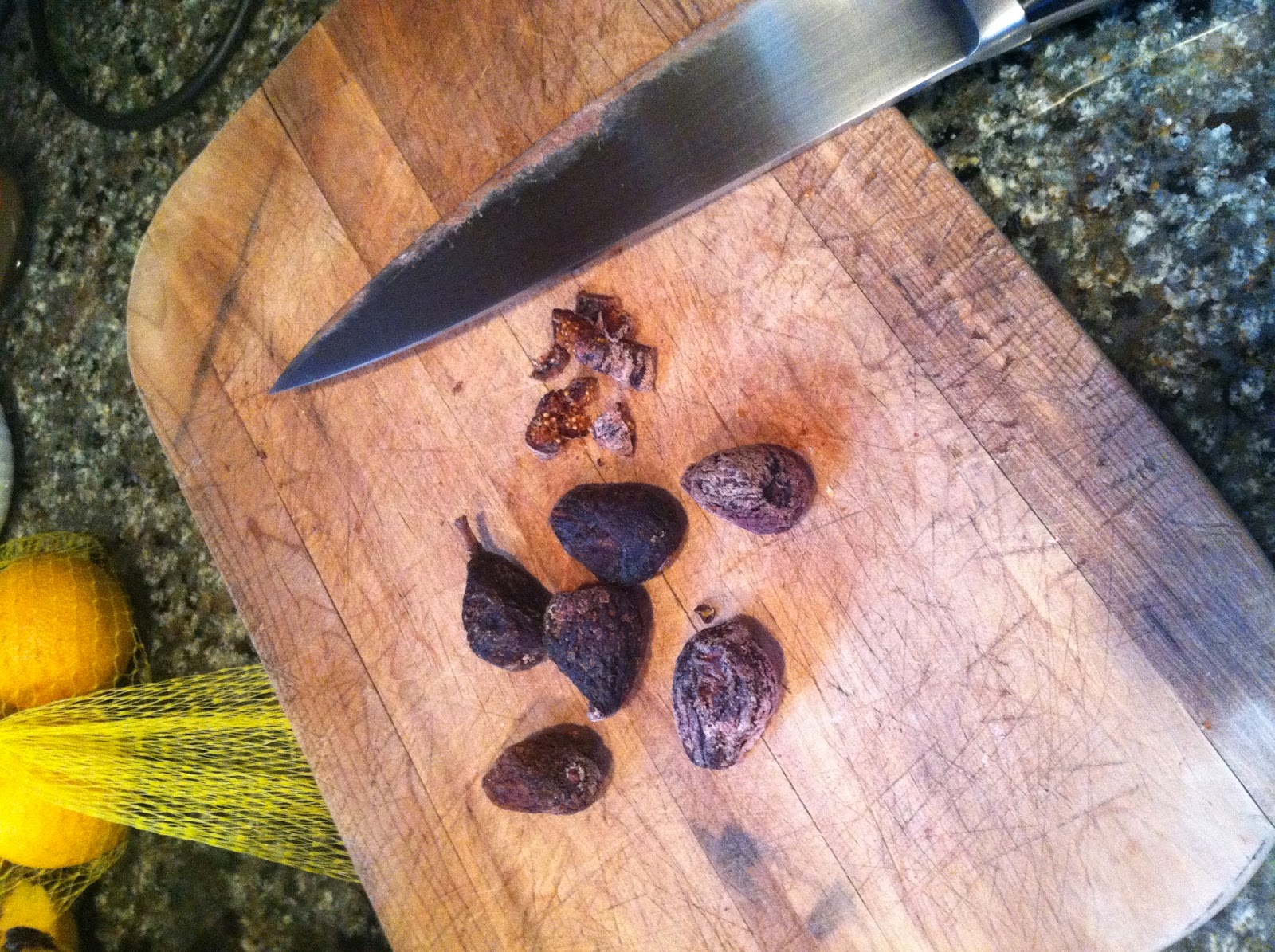
She calls it: Spice Islands Banana-Date-Walnut Bread.  I nixed the walnuts since I don’t like them, and I was halfway through chopping dates when I realized I was actually chopping figs.  Oops! I used them anyway and they were fine.  Also I did a mix of AP flour, whole wheat flour and pastry flour since I didn’t have whole wheat pastry flour.

The recipe makes one average-sized loaf.

You will need:

little bit of butter (or cooking spray)
one teaspoon of flour (doesn’t matter what kind)
3 ripe bananas
Grated rind and juice of one lemon
1/4 cup peanut oil
1/2 cup brown sugar or 1/2 cup white sugar and 1 tsp molasses
3 tablespoons of buttermilk or plain yogurt
2 cups unbleached AP flour, whole wheat pastry flour, or some other low-protein combination of flours
1/2 tsp salt
1/2 tsp baking powder
1/2 tsp baking soda
fresh nutmeg
1/2 tsp ground cinnamon
1 cup chopped dates (or figs)

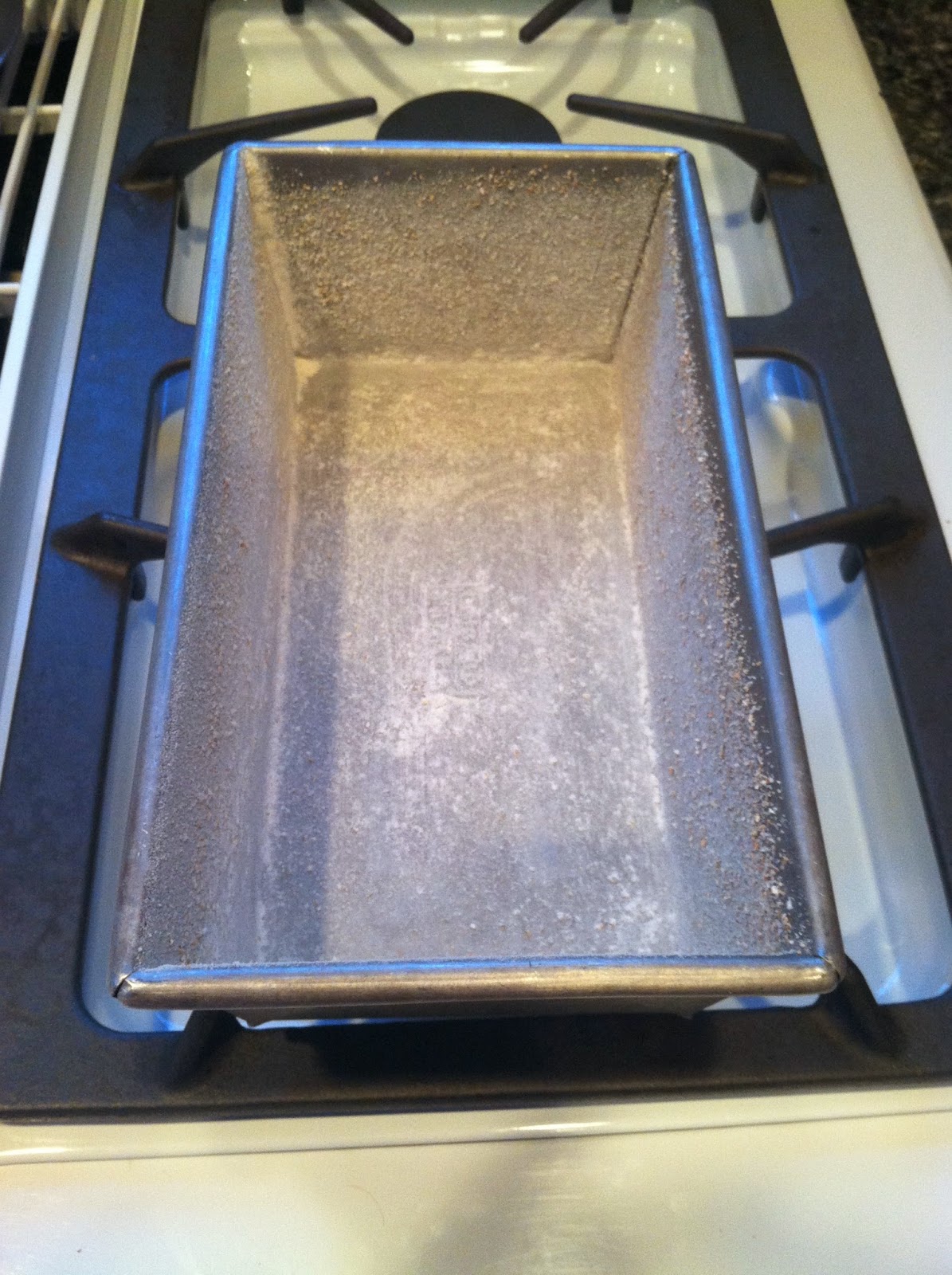
1. Preheat the oven to 375 degrees F.  Butter and flour your pan and set aside.
2. Put your three ripe bananas, lemon rind, lemon juice, oil, brown sugar, and buttermilk in the food processor.  Buzz to make a smooth puree.
3. At this point I should probably back up, for those who thought, “brown sugar? I thought you said I could use white sugar and molasses.”  And I did.  Here’s why.

You can take a fork to white sugar and molasses to make your own brown sugar.  It’s super easy and it’s actually how they make commercial brown sugar too!

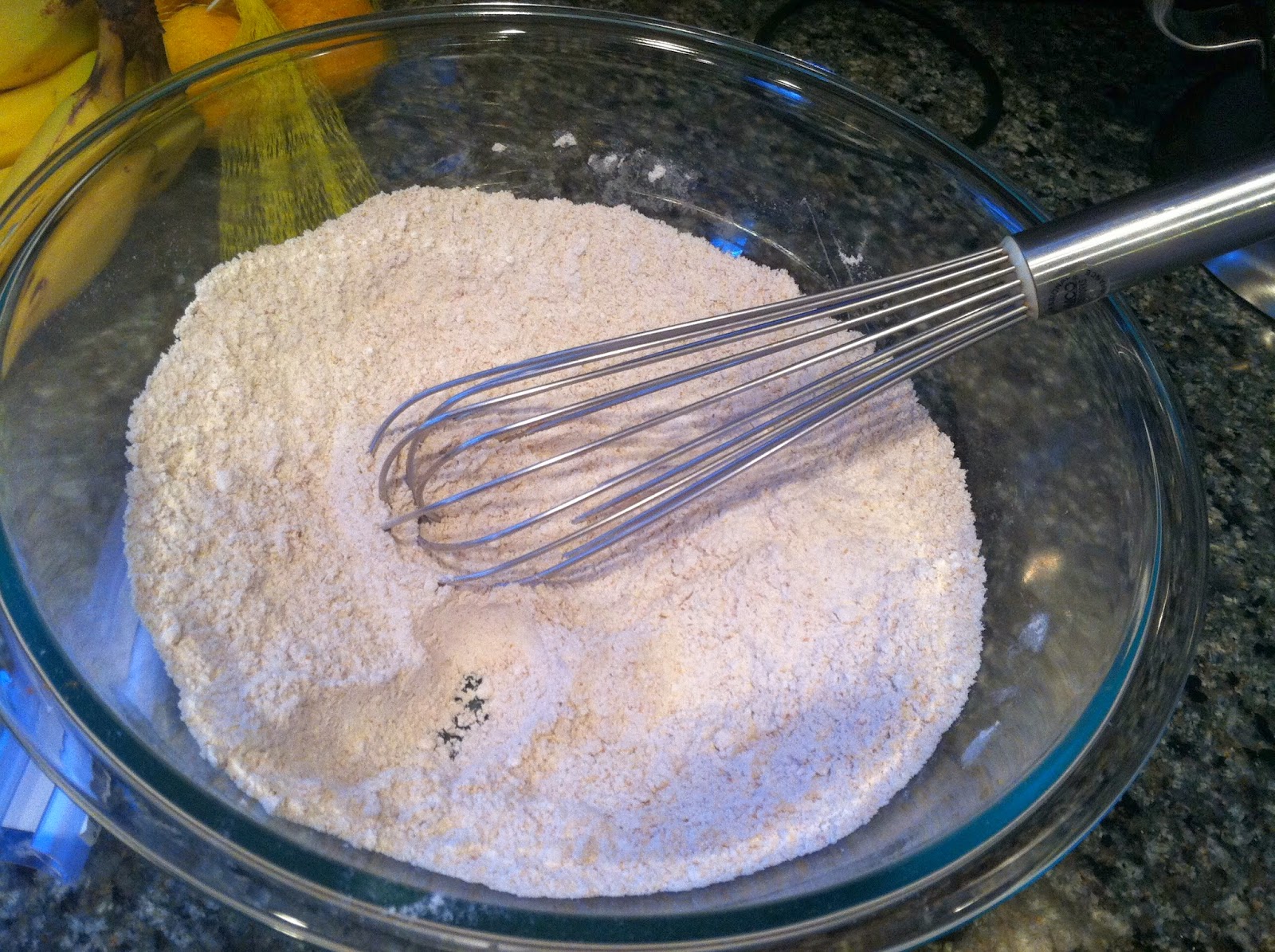
4. Ok, once you have set aside your banana puree, you can move on to the dry ingredients.  Whisk together the flour, salt, baking powder, baking soda, nutmeg and cinnamon in a large bowl.

5.  Take a tablespoon of flour and mix it with the chopped figs until they are fully coated with the flour.

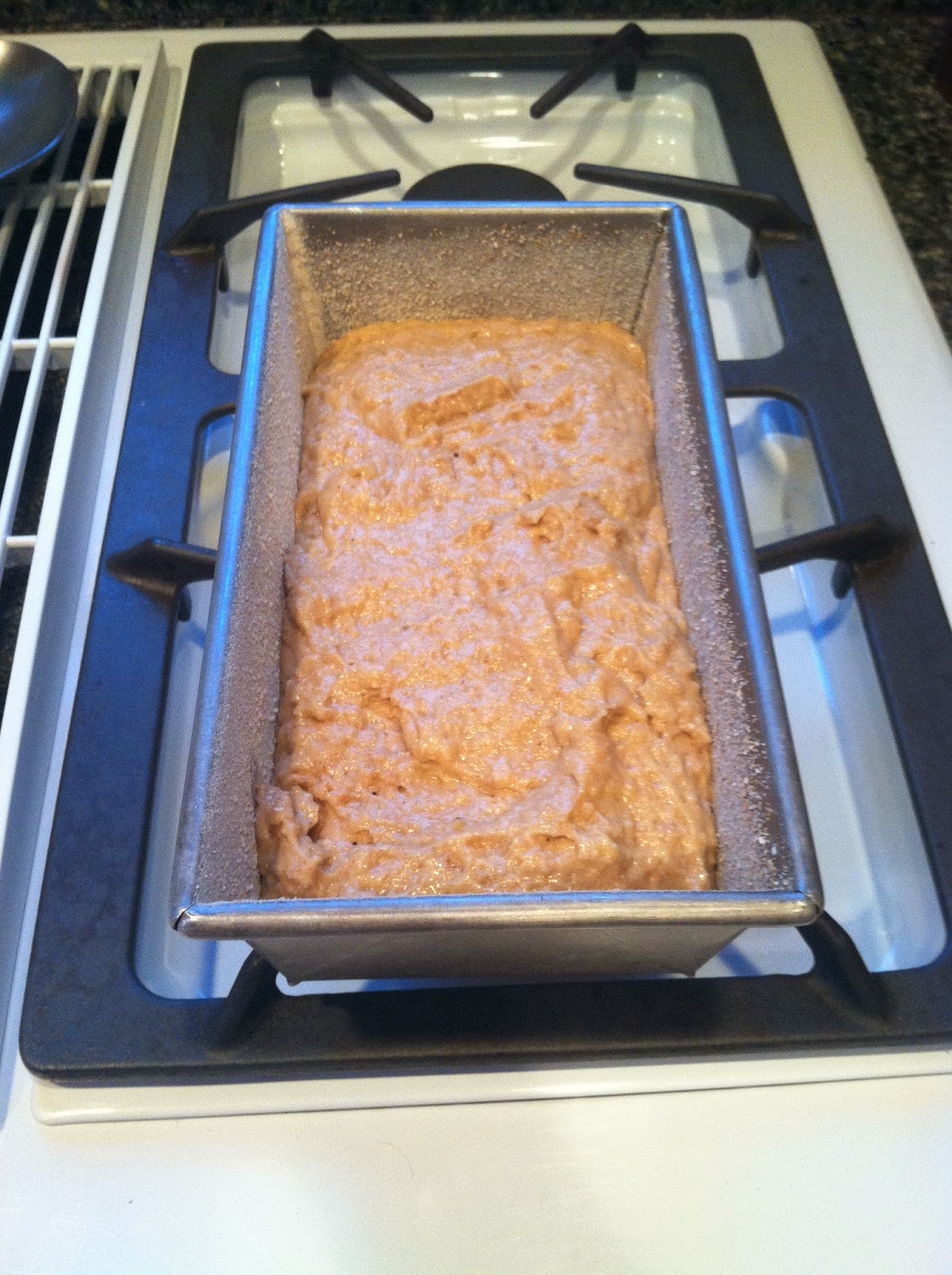
6. Pour the banana mixture into the flour mixture along with the figs and stir to combine but not too much!  Pour the batter into your pan and smooth out the top.

7.  At this point I was set to put the pan in the oven when I realized I hadn’t added the figs.  Oops!  I dumped the figs on top and tried to squish them in the best I could.

8.  Put in the oven and bake for about 40-50 minutes.  Take it out and let it rest for ten minutes before turning it out onto a cooling rack.

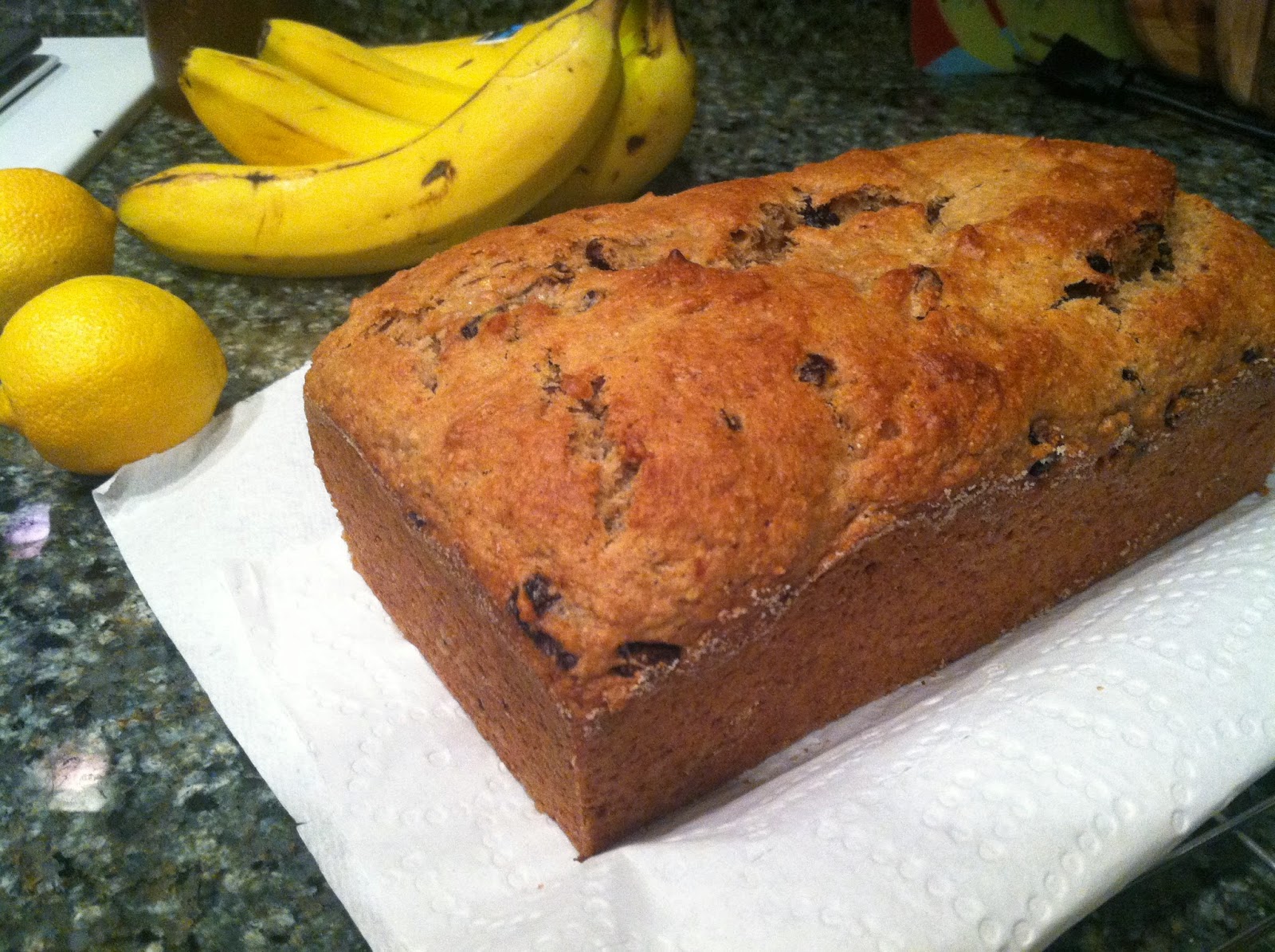
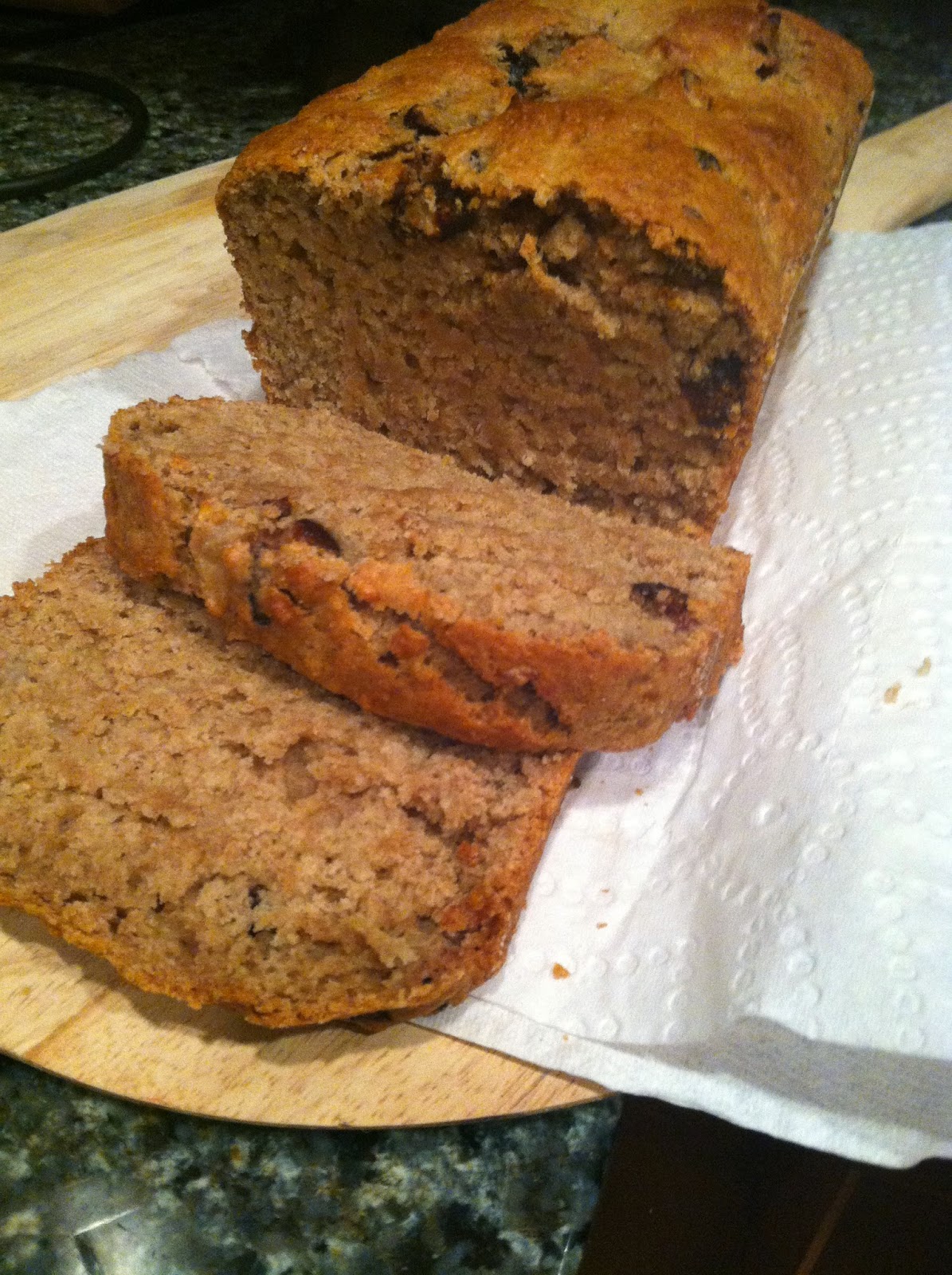
Looks pretty good!  Here it is once it cooled and I could cut it into slices.

Because I forgot to fully incorporate the figs, they weren’t evenly distributed throughout the loaf.  But the next few slices I cut after this had more fig pieces in them.

I like banana bread toasted with butter or peanut butter. Yum!  This recipe is a keeper.  I like the addition of a little fiber 🙂

Bread for communion part IV: Irish Soda Bread

One of the things I love about my church is that each new pastor adds their own flair.  Just for example, in the past five years we’ve had one pastor (Ben), a transitional pastor for six months (Stephen), and a husband-wife pastor team (Marty and Robin).  Even though the church is Baptist in denomination, Ben taught at Catholic University and many members of the congregation were former Catholics.  He introduced some of the Catholic rituals, such as Ash wednesday and communion by intinction.  Then, Stephen introduced a time during the service for the congregation to share joys and burdens.  Marty and Robin, our current pastors, have introduced a Blue Christmas service for those who are grieving during the Christmas season, and are now hosting a Shrove Tuesday event.

What is Shrove Tuesday?  Until recently, I had no idea!  It’s basically the British Isles’ version of Mardi Gras and Carnival. You serve pancakes and have pancake races.  I’ve read that pancakes are traditional because they use up milk and eggs before the period of Lent.

As you can see from the title, this article is not about pancakes.  I’ve already written about my favorite pancake recipe here.

Reading about the British Isles made me start thinking about Irish Soda Bread!

It turns out, I’ve actually written about Irish Soda Bread before.  But this is very different.  I decided to go with a traditional recipe this time, without the raisins and orange zest since it’s only for display purposes.  That said, since trying out this recipe for the blog I’ve made it three more times.  It’s a great breakfast bread since it has the taste and texture of a biscuit, and it bakes up quickly.

According to this NYT article, Irish Soda Bread typically only has four ingredients: flour, buttermilk, baking soda, and salt.  So that’s what I went with.

Where I deviated from this NYT recipe is that they suggest using a baking sheet.  The comments said you should use a cast iron skillet instead.  I tried the cast iron skillet method and found the top of the loaf browned way too quickly in the high heat.  So I tried again using my dutch oven and the loaf came out perfectly.

You will need:

450 grams all-purpose flour, I used a mix of bread flour and AP flour.  I’ve also thrown in some whole wheat and pastry flour at times and it’s turned out fine.

3 grams sea salt (about 1/2 teaspoon)
4 grams baking soda (about 3/4 teaspoon)
1 1/2 cups buttermilk, more as needed.

A note about the buttermilk:  I don’t buy buttermilk anymore.  The first time I tried this recipe, I added a tablespoon of white vinegar to whole milk and let it sit for an hour to curdle.  The second time, I used a cup of plain yogurt and a 1/2 cup of milk. Both worked out fine and served the same function.  You just need something acidic to create the chemical leavening reaction with the baking soda.
1.  Preheat the oven to 450 degrees F and slide your dutch oven into the cold oven to warm up.

2. Whisk together the flour, salt and baking soda in a large bowl.

3. Pour the buttermilk (or milk concoction) into the flour mixture and use a clean hand to mix everything together.   The dough is pretty sticky, so use a folding motion.  Let the dough sit while you clean your hands.

4. Cut a square of parchment and transfer your dough to the parchment.  Gently fold the dough until it forms a smooth loaf.  Flatten it down until it’s about 1 1/2 inches tall all around.  This was one of my mistakes the first time around.  I shaped it into a ball and it really didn’t work.

Wrong:

Right:

5. When it’s time for the loaf to go into the oven, take a knife and cut a large, deep cross in the top.  Transfer the loaf to the dutch oven and bake, with the lid on, for 15 minutes.

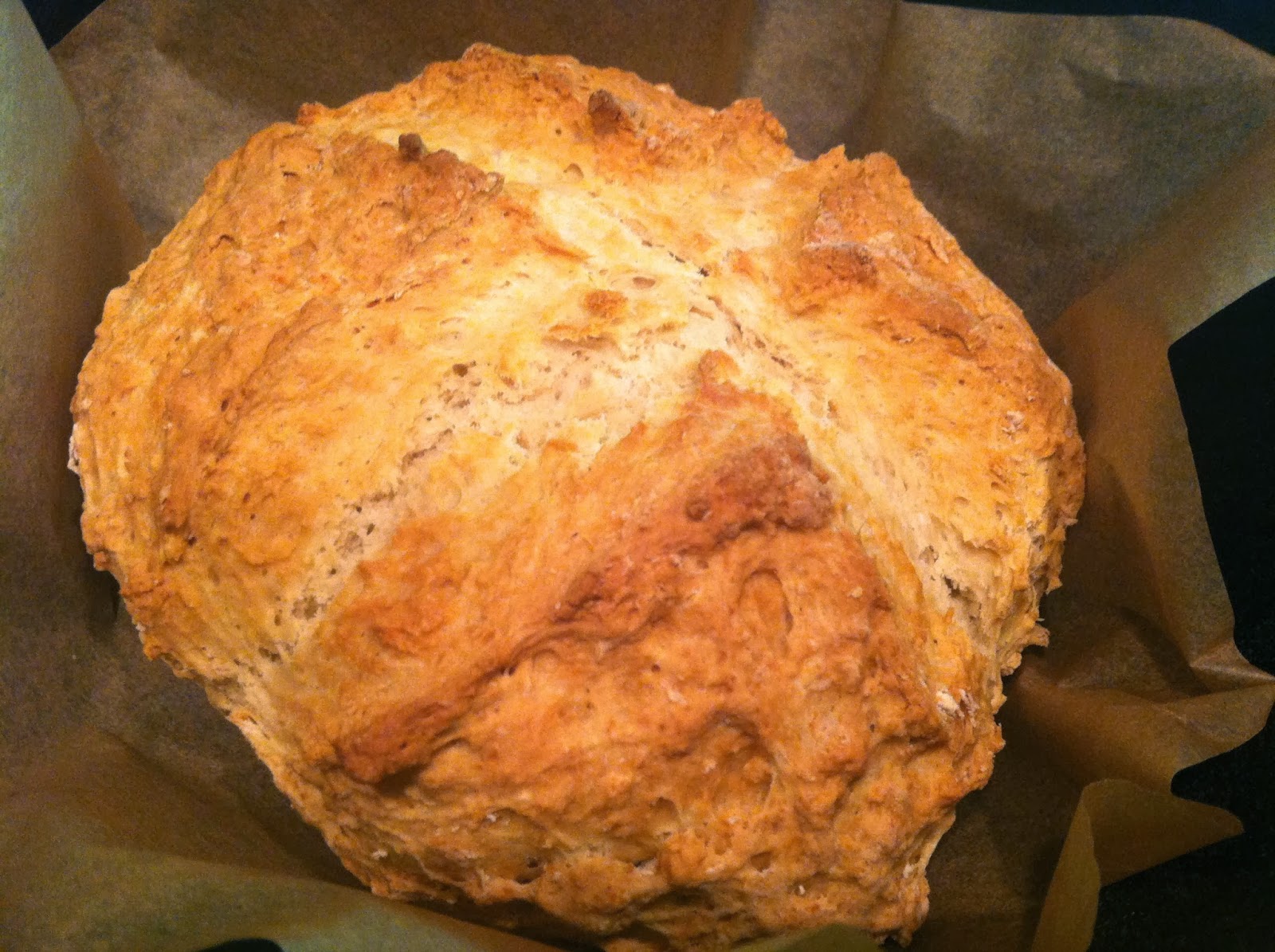
6.  After 15 minutes have elapsed, remove the dutch oven lid, drop the temperature to 400, and continue baking another 20-30 minutes, until the loaf is brown and it makes a satisfying thump when tapped.

7.  You can eat this bread warm or let it cool.  The bread is more like a biscuit or scone than a regular loaf of bread.  I like it toasted with butter and jam (as does Little Bread Toddler).

8.  I don’t know if anyone on Sunday will necessarily appreciate my thought process for making Irish Soda Bread, but I do think they will appreciate when I try something new.  After all, we call ourselves an uncommon church 🙂

If people like the Irish Soda Bread pieces during communion, it may become a regular recipe I use.  It’s easy, the texture is nice and soft, and did I mention it’s easy?

Leftover Bean Water (Pot Liquor) Bread

I wasn’t really sure what to title this post.  I know the term pot liquor but it’s not a term I grew up with.  However, bean water just sounds weird.  I dunno.

Let me back up.

Pot liquor (or pot likker, or potlikker) is the water that remains after cooking beans or greens.  It’s a term mostly used in the South.  It forms a flavorful base for soups.

We found ourselves with a little over three cups of bean water after Mr. Bread Maiden made a batch of beans for cassoulet.  Since he was already making stew, there wasn’t much point in using the bean water to make another soup.

But what about using it for bread?

I recalled a recipe for potato water bread in Peter Reinhart’s book, which relied on the starchiness of the potatoes leaching into the water.

I put “bean water bread” and “bean pot liquor bread” in google but didn’t come across any recipes for how to use it, except a commenter on this thread who said it “might” work.  Like me, he/she was familiar with Peter Reinhart’s potato water recipe.

Other recipes I found called for bean water AND beans, but I didn’t want to do that.  Plus Mr. Bread Maiden had used all the beans.

I figured if it didn’t work, I would’ve thrown the water out anyway so it wasn’t a huge loss.

I used my usual 2/3 hydration loaf, as seen here.   However, I did have to add extra bean water.  The extra protein doesn’t dissolve into bread as easily as straight water.

You will need (for one loaf):
375g mix of AP flour and bread flour
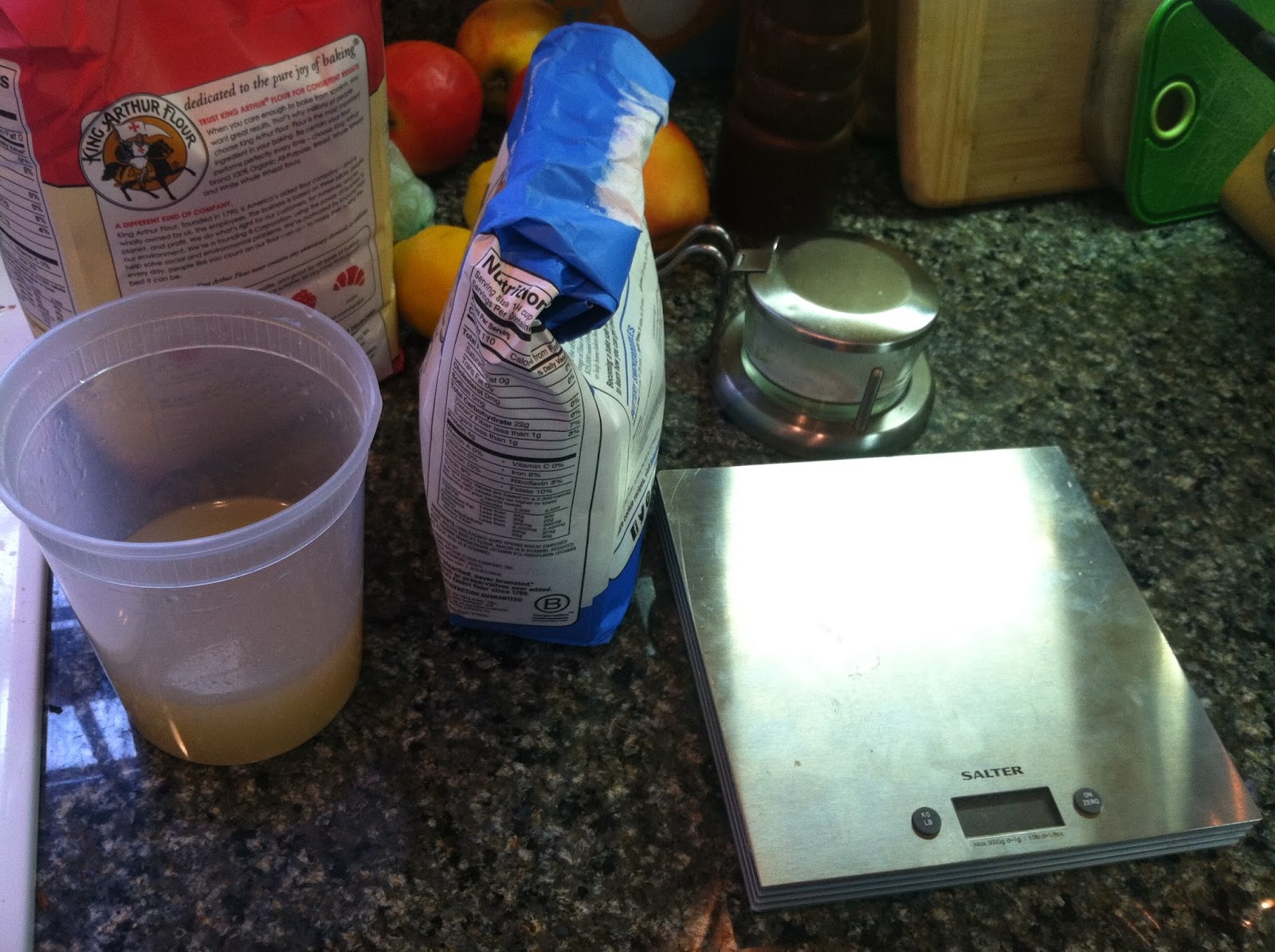
250g of leftover bean water, maybe more
7g instant or active dry yeast
7g salt

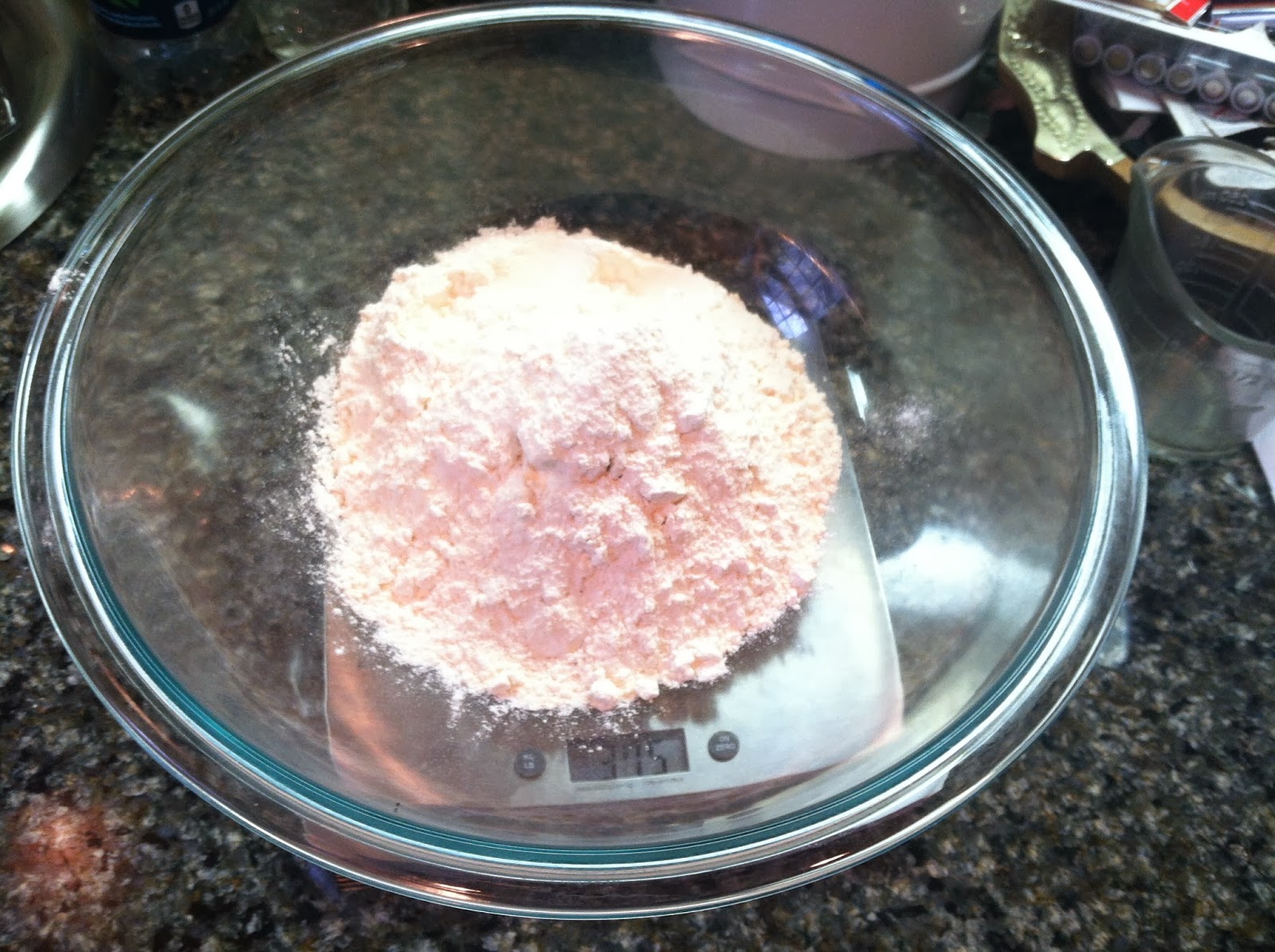
1. Weight out your flour in a large bowl.  Add the salt and yeast to the flour and whisk thoroughly.

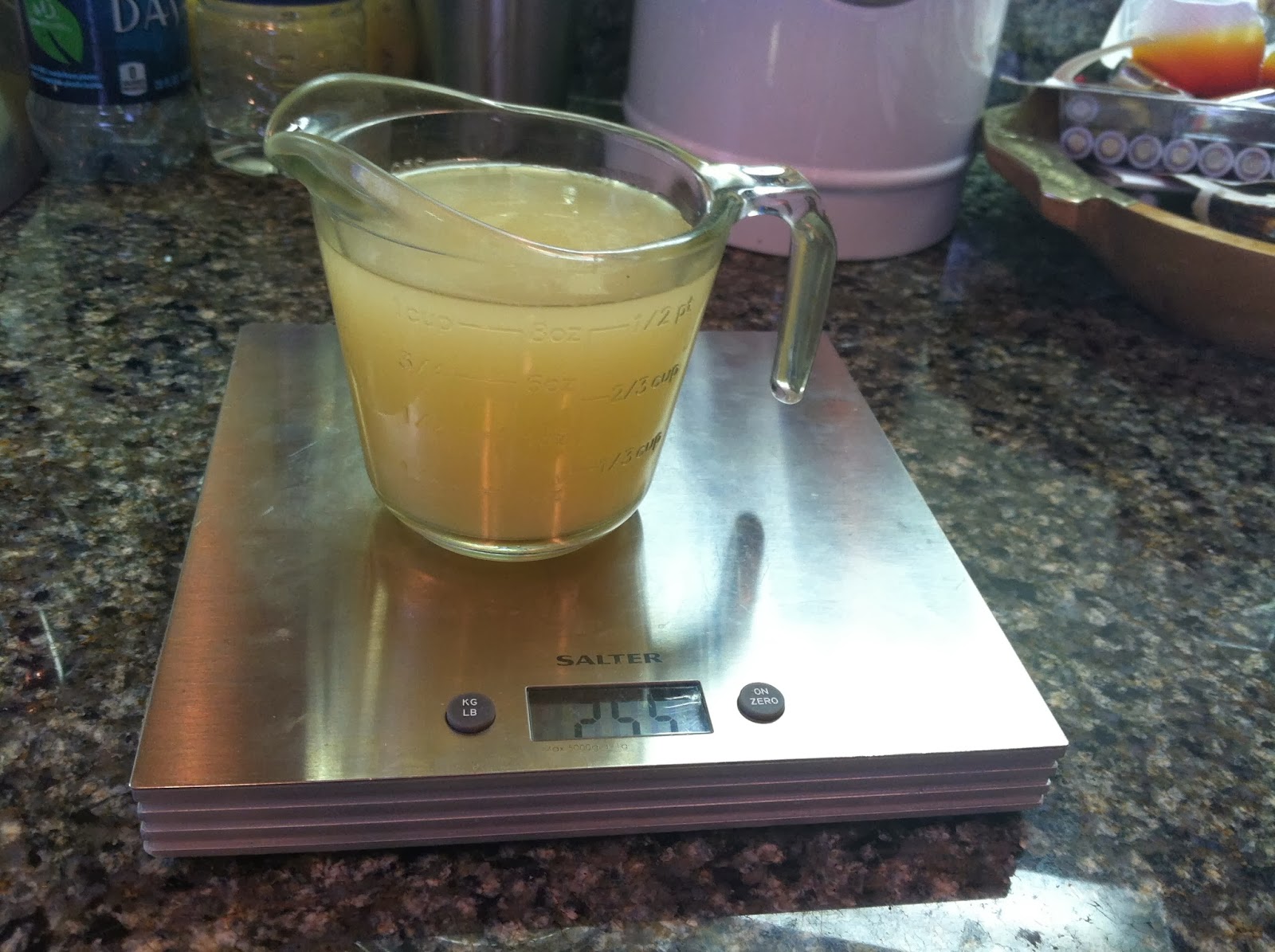
2. Weight out 250g of the bean water, keeping some on hand in case you need it.  As you can see, it’ll be about one cup.

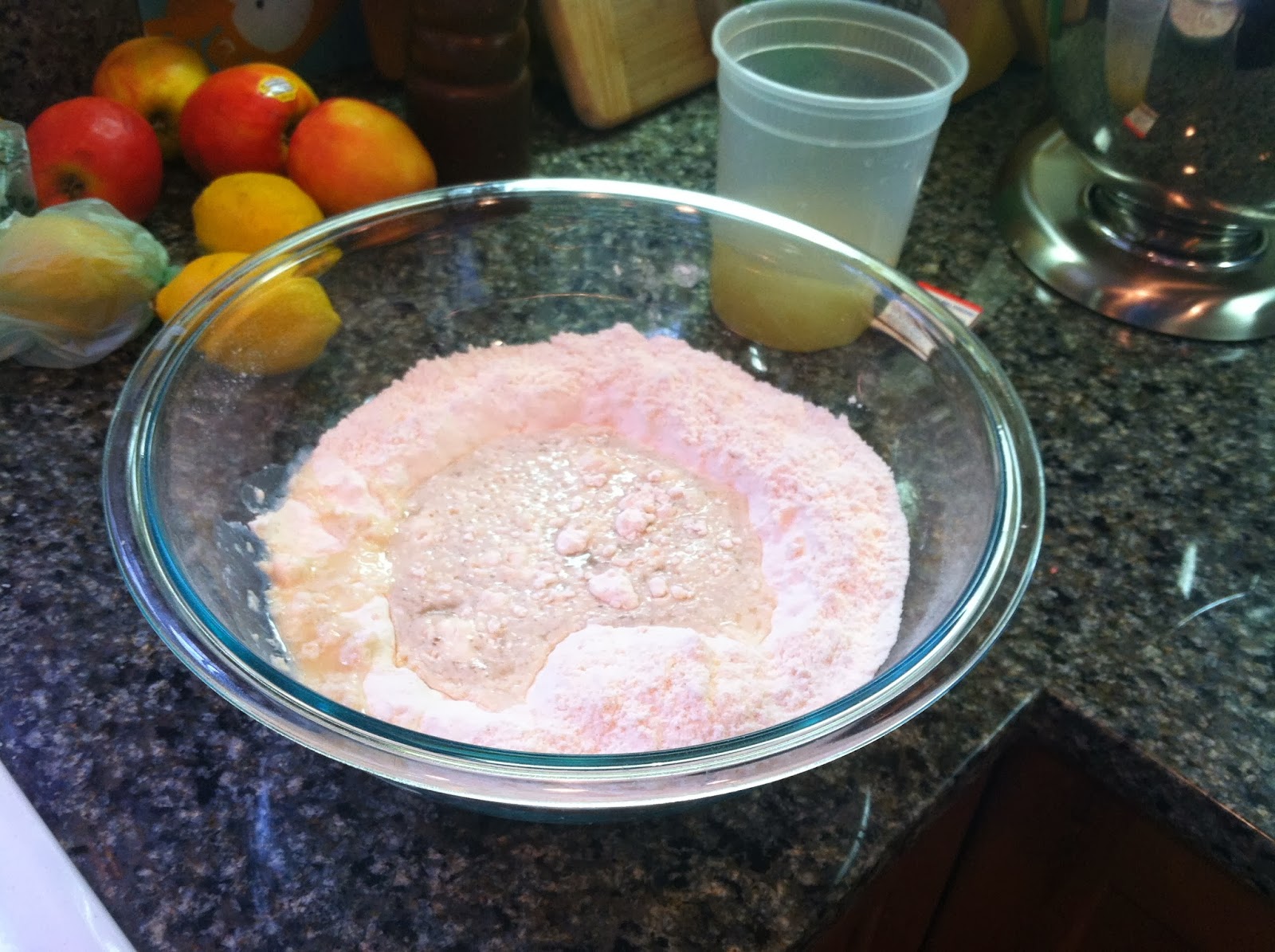
3. Pour the bean water into the bowl with the flour, salt and yeast.

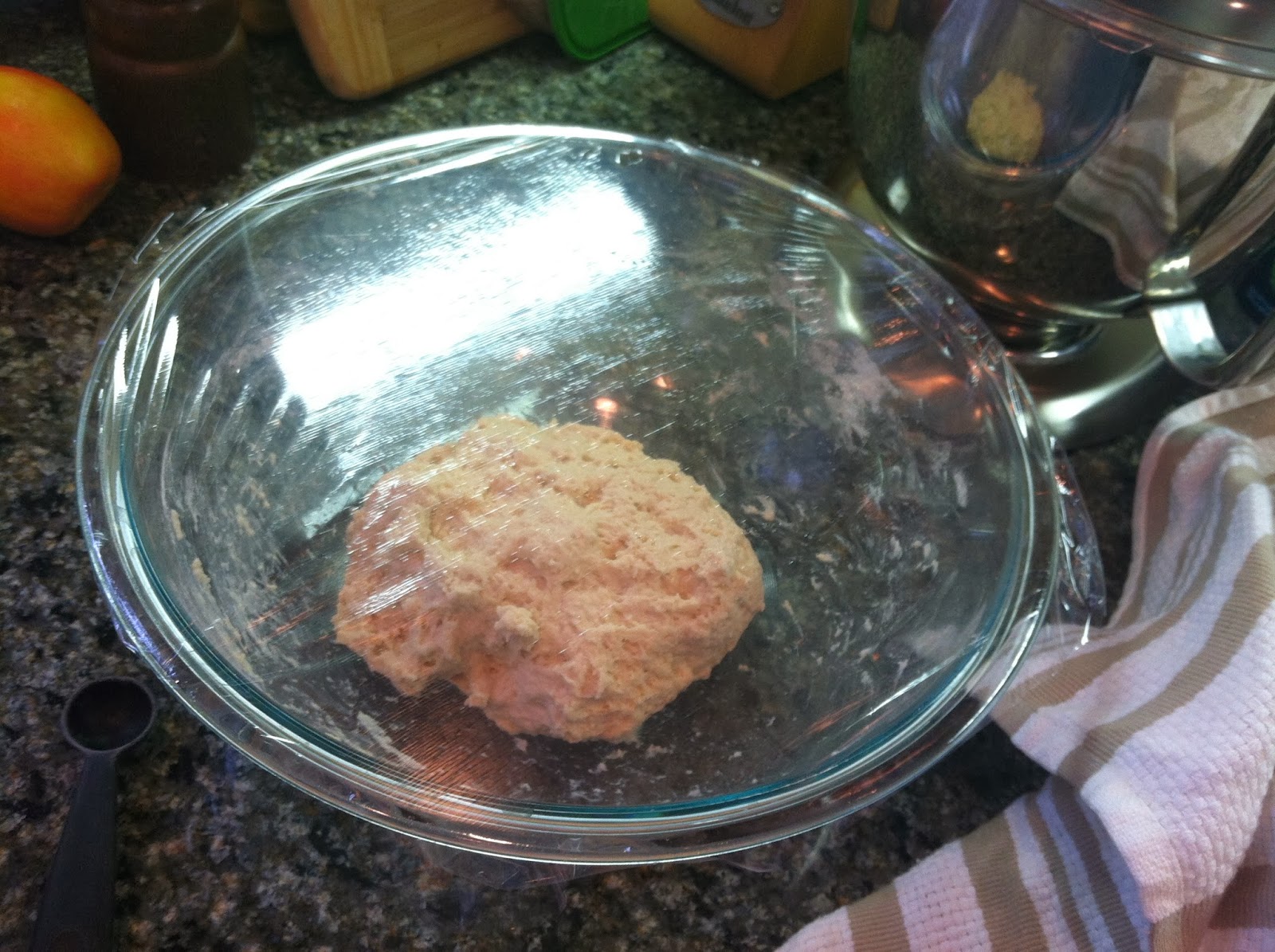
4. Grip the bowl with your left hand. Using your right hand, vigorously stir to incorporate the dough.  If it seems dry, add a splash more of your bean water.  When it comes together easily, cover the dough with plastic wrap.

5.  Here is where I feel sorry for people who insist on kneading their bread for 15 minutes.

After 15 minutes of resting, take the plastic wrap off the bowl (don’t throw it away!) and gently fold the dough a couple of times.  See?  The dough is smooth and pliable like you just spent 15 minutes kneading it into submission, and you didn’t do a darn thing.  Ok, now put the plastic wrap back on and let it rise another 2-3 hours, until it has doubled in size.

6. After it has doubled in size, punch it down ONCE (one punch to deflate it!) and then gently shape it into a ball.  Transfer it to a sheet of parchment paper to rise a second time.  Preheat the oven to 425 degrees F and slide your dutch oven inside the oven to heat up.

7. When the oven is ready, remove the plastic wrap and score the top of your loaf with a sharp knife.

8.  Transfer the loaf on the parchment paper to the dutch oven and bake, covered, for about 25-30 minutes.  Remove the dutch oven lid and bake another 10-15 minutes until the loaf is nicely browned and the top is solid when tapped.

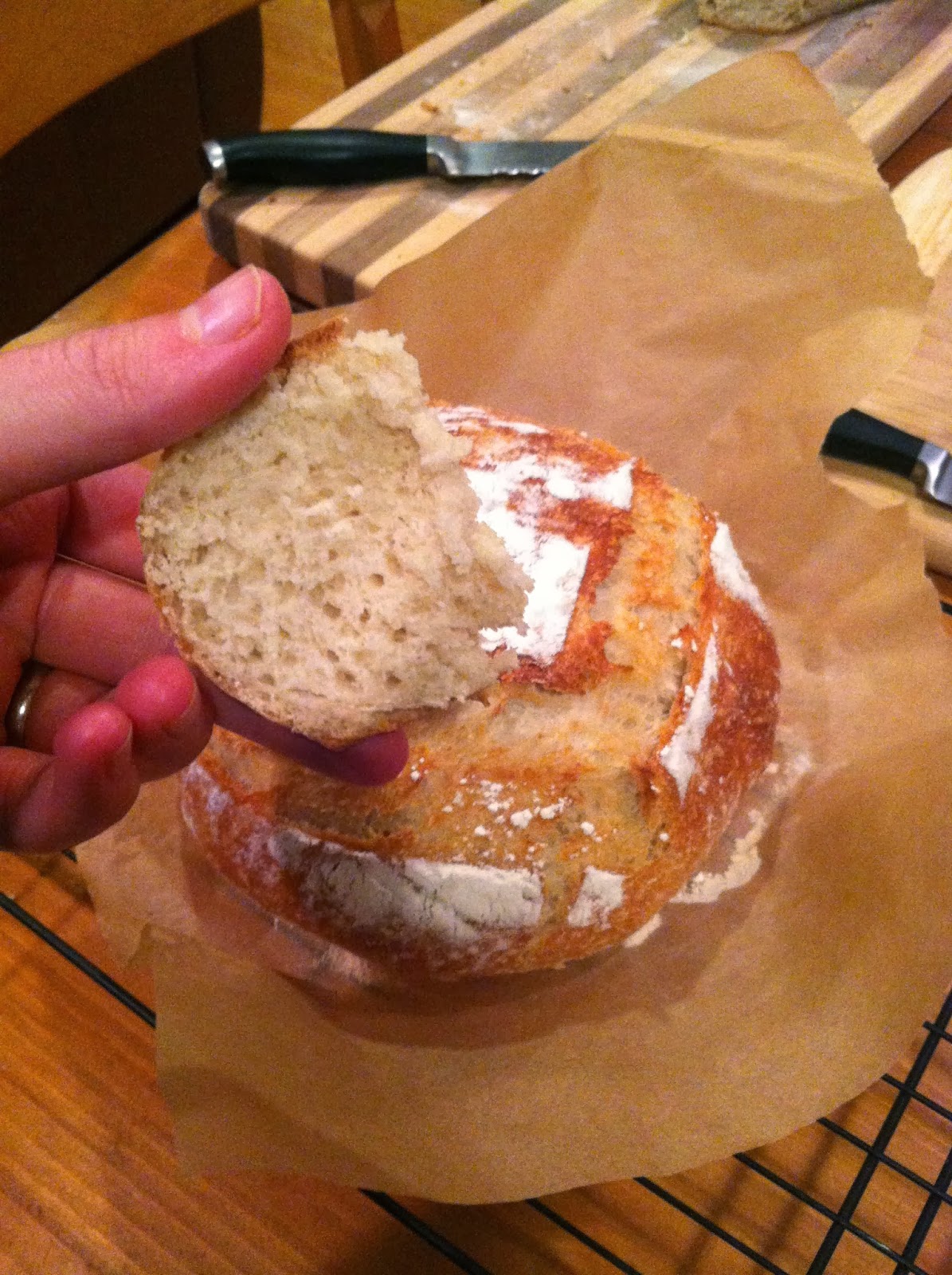
This loaf has a very soft crumb, which I believe is due to the bean water.

I have been using it all weekend for sandwiches, french toast, and just spreading with butter and sprinkling with sea salt.  There is no detectable “beany” taste.

So, Mr. or Ms. Commenter on that website: it can be done!  You can successfully use leftover bean water in bread, and I plan to do it whenever I have bean water on hand.  You should too!

mini puffy pancakes

When I was a kid, I loved silver dollar pancakes.  They are just regular pancakes, only smaller.  Yet the fact that they were small and cute made them special.  Mini puffy pancakes are kind of like that.

I made puffy pancakes in a cupcake pan ONCE for Little Bread Toddler and now he requests them all the time.  He calls them puffy pies (I think because when I make a big puffy pancake I use a pie dish.  They are the kind of thing you make on a weekend when you have absolutely nowhere to be.  This makes enough for two people, I would say.

You will need:
A cupcake pan (or two mini cupcake pans, you high achiever you)
1/2 cup milk
1/2 cup AP flour
2 eggs
pinch of sugar
pinch of small-grain salt (not kosher salt)
dash of vanilla (optional)
pinch of cinnamon (optional)
butter

1. Preheat the oven to 425 degrees F.
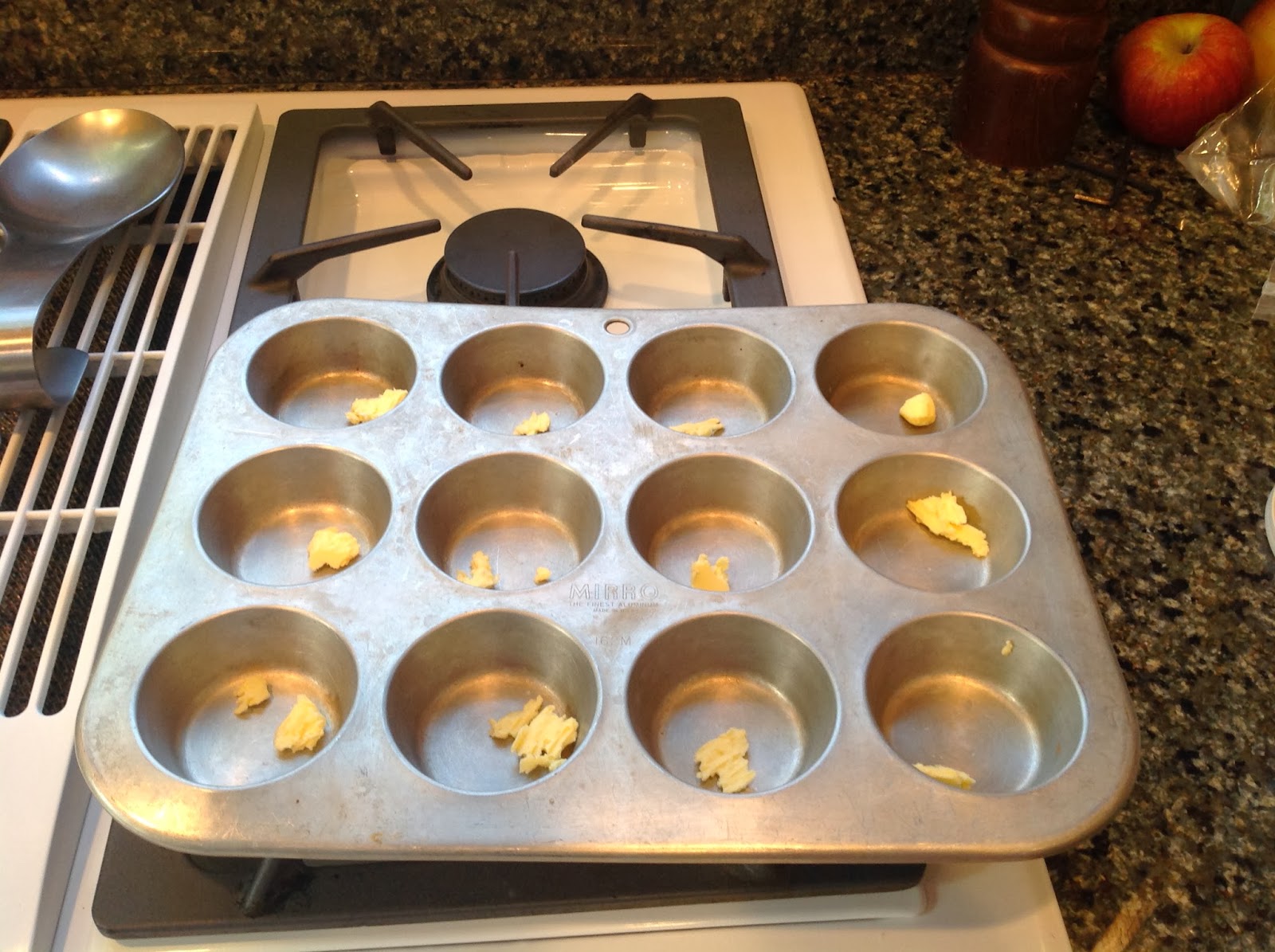
2.  Take your butter and flick a tiny piece (maybe 1/8 teaspoon size) of butter into each of the cupcake holes of your pan.  Set aside.

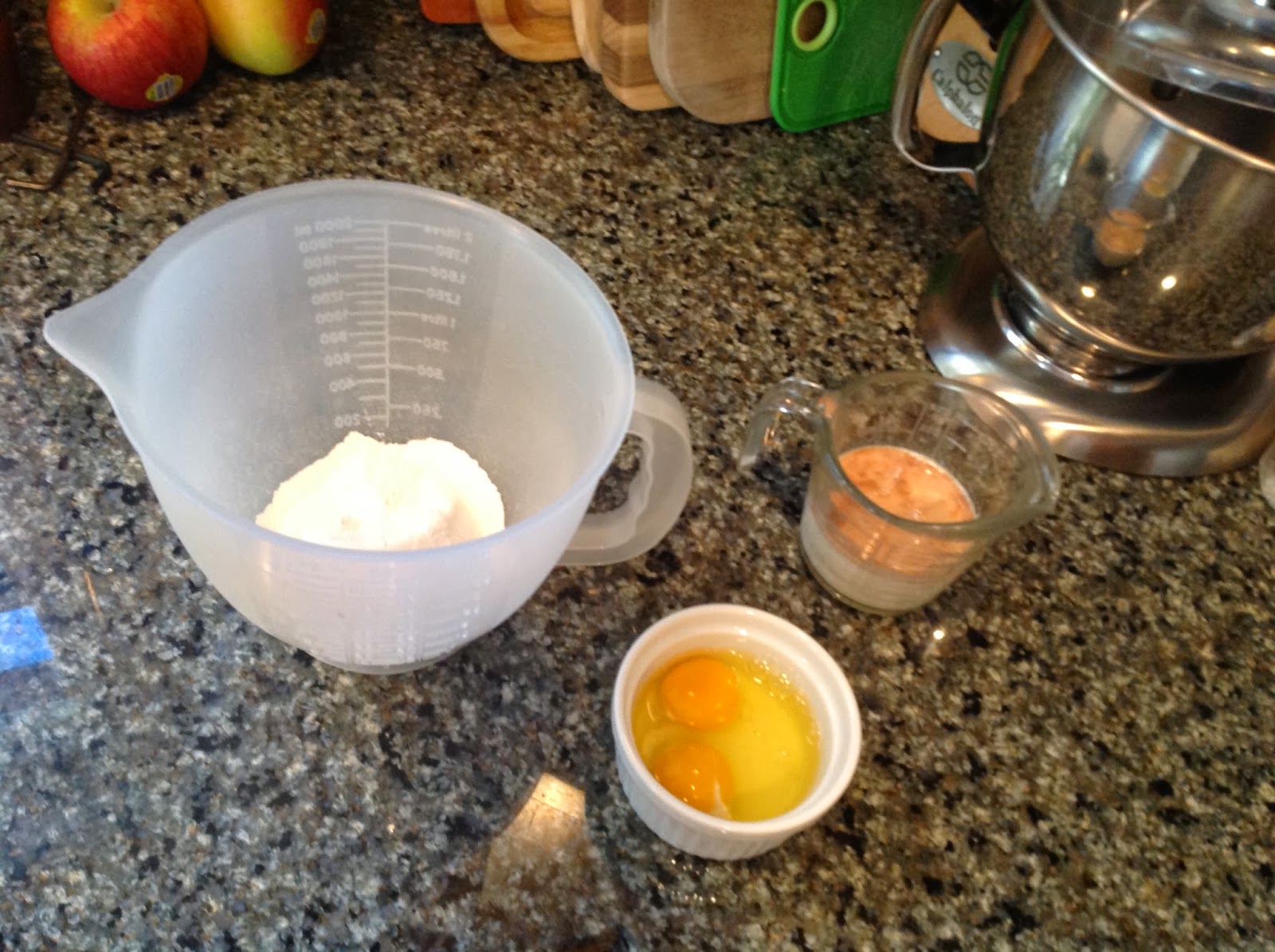
3. Whisk together the flour, salt and sugar (and cinnamon) in a large measuring cup.  Set aside.

4. Combine the milk and vanilla in a small measuring cup. Set aside.

5. Crack the eggs into a small bowl.  Set aside.

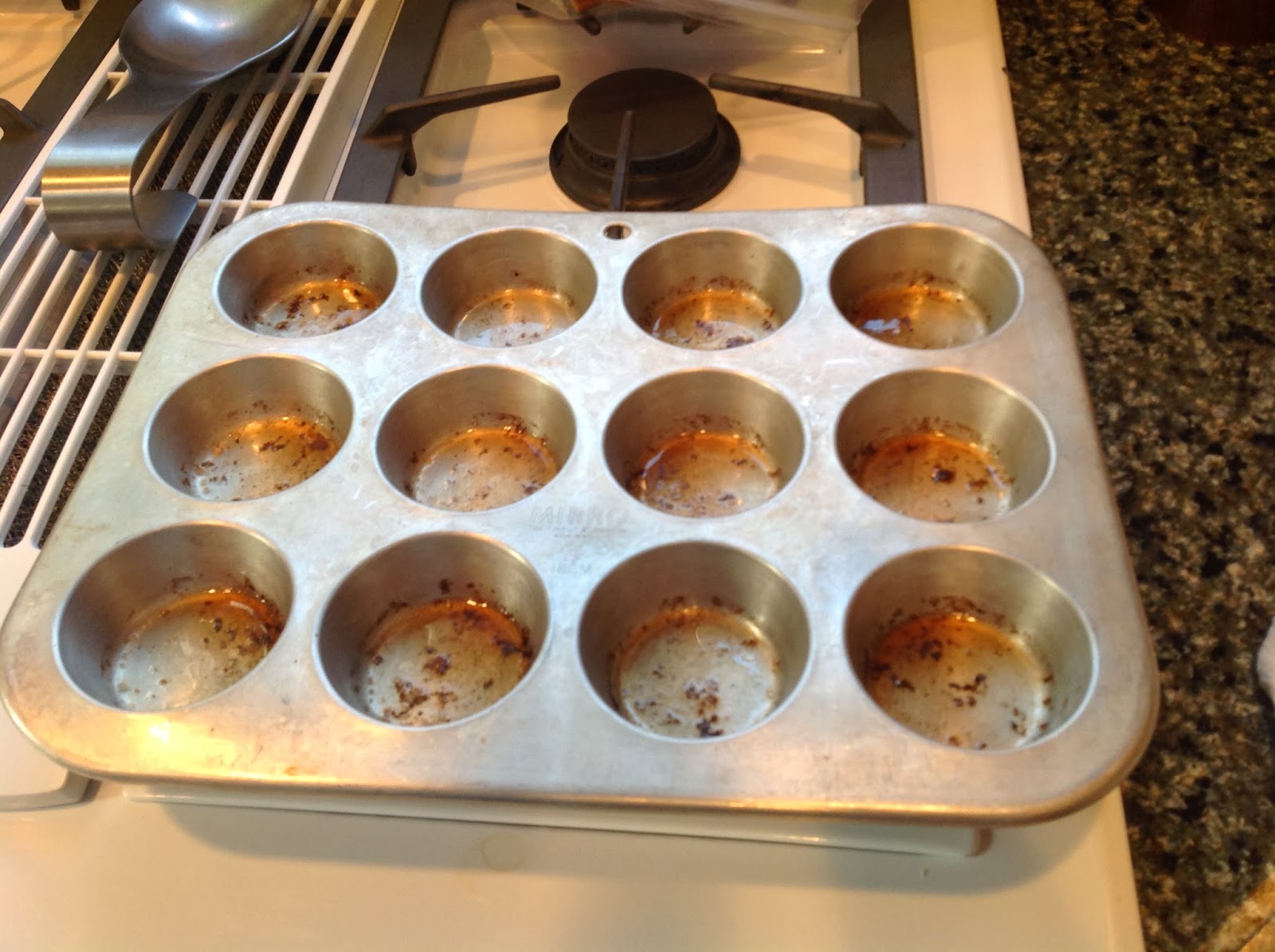
6.  When your oven is at about 400 degrees F, slide your cupcake pan into the oven to heat up.

7. Once the oven is preheated, pour your milk mixture and eggs into the large measuring cup with the flour.  Whisk to combine.

8.  Now take out your cupcake pan (be careful- it’s hot!)

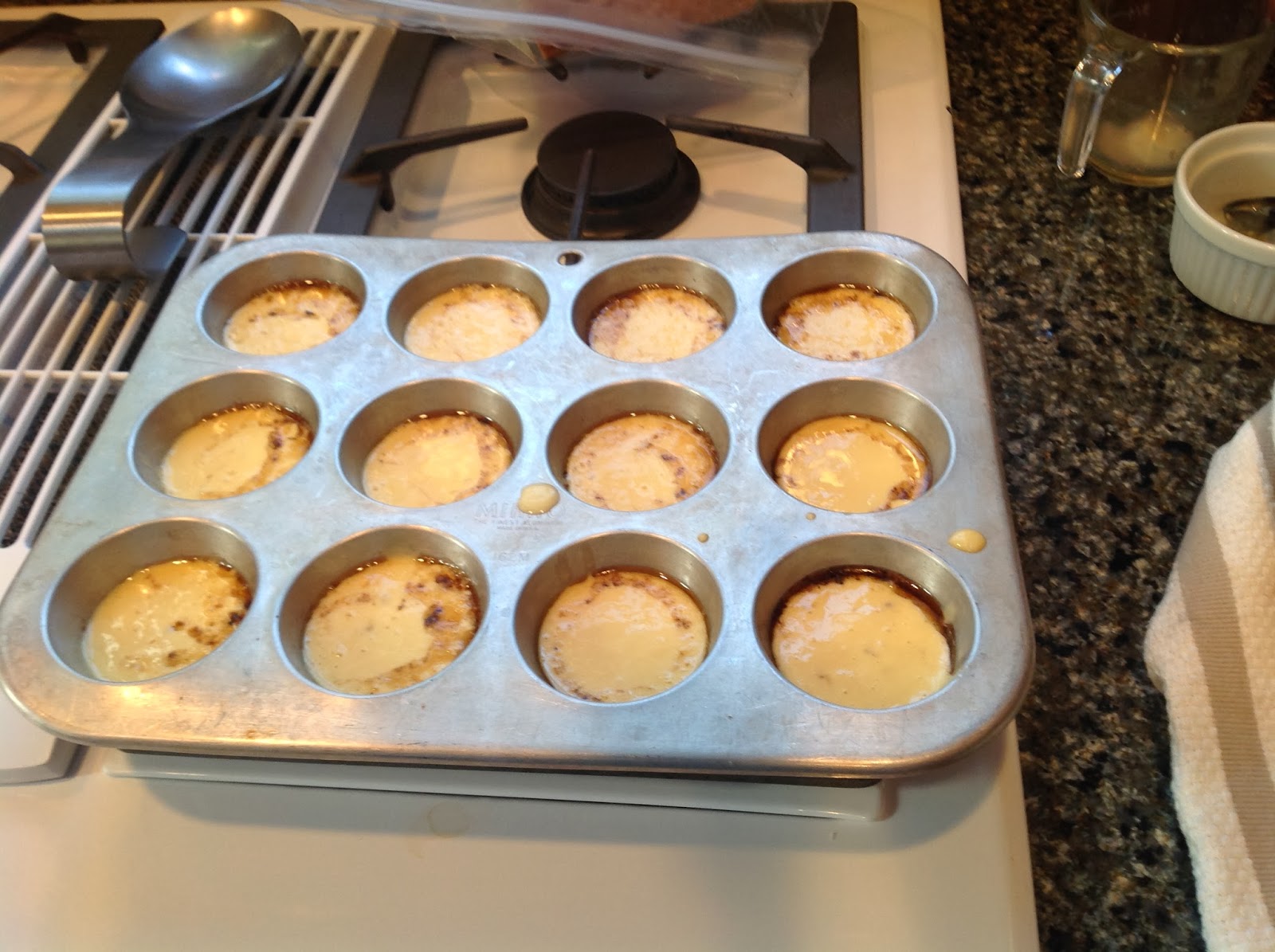
and carefully ladle a little of the batter into each cupcake.

9.  Return the cupcake pan to the oven and set your timer for 12 minutes.

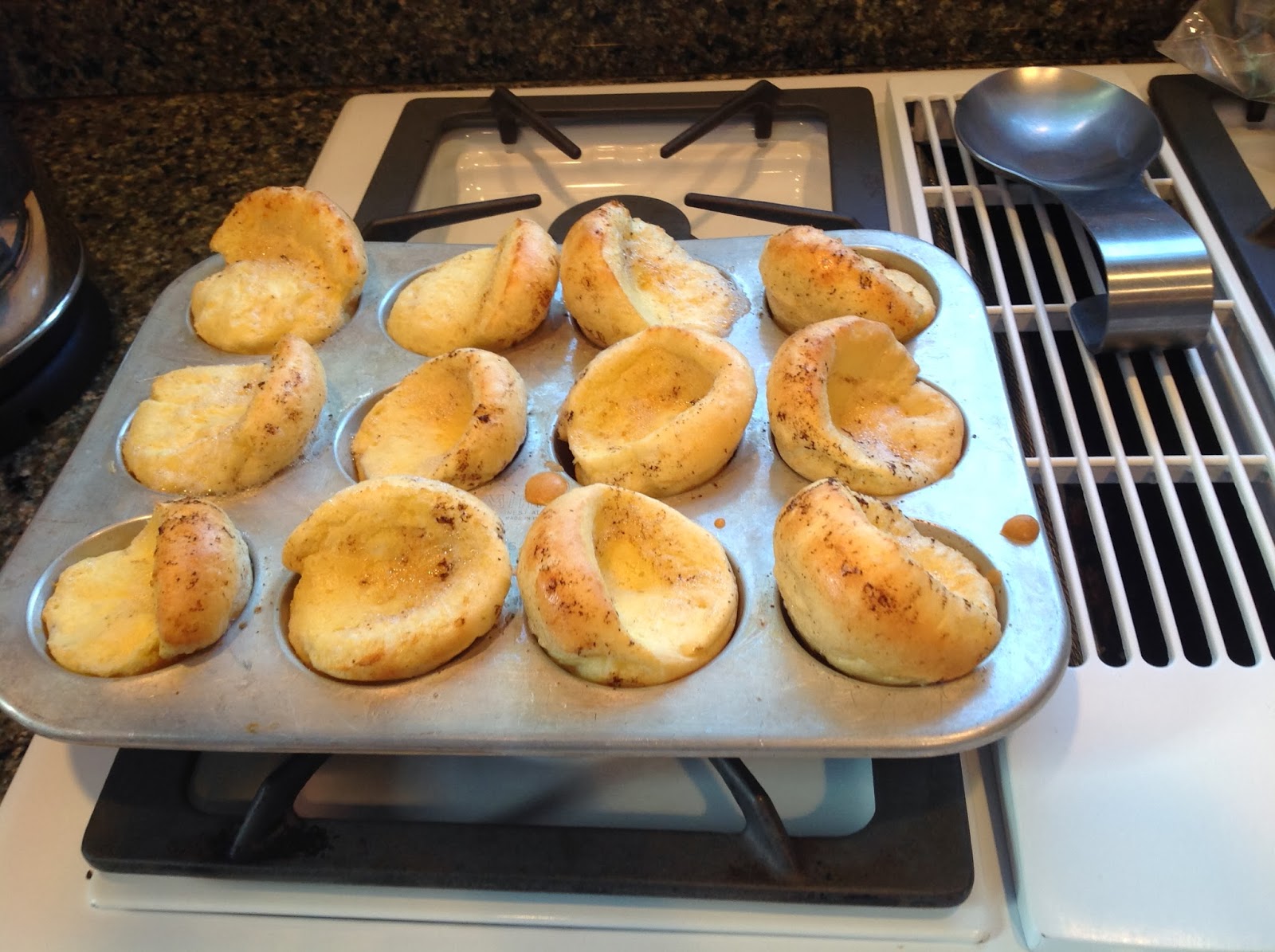
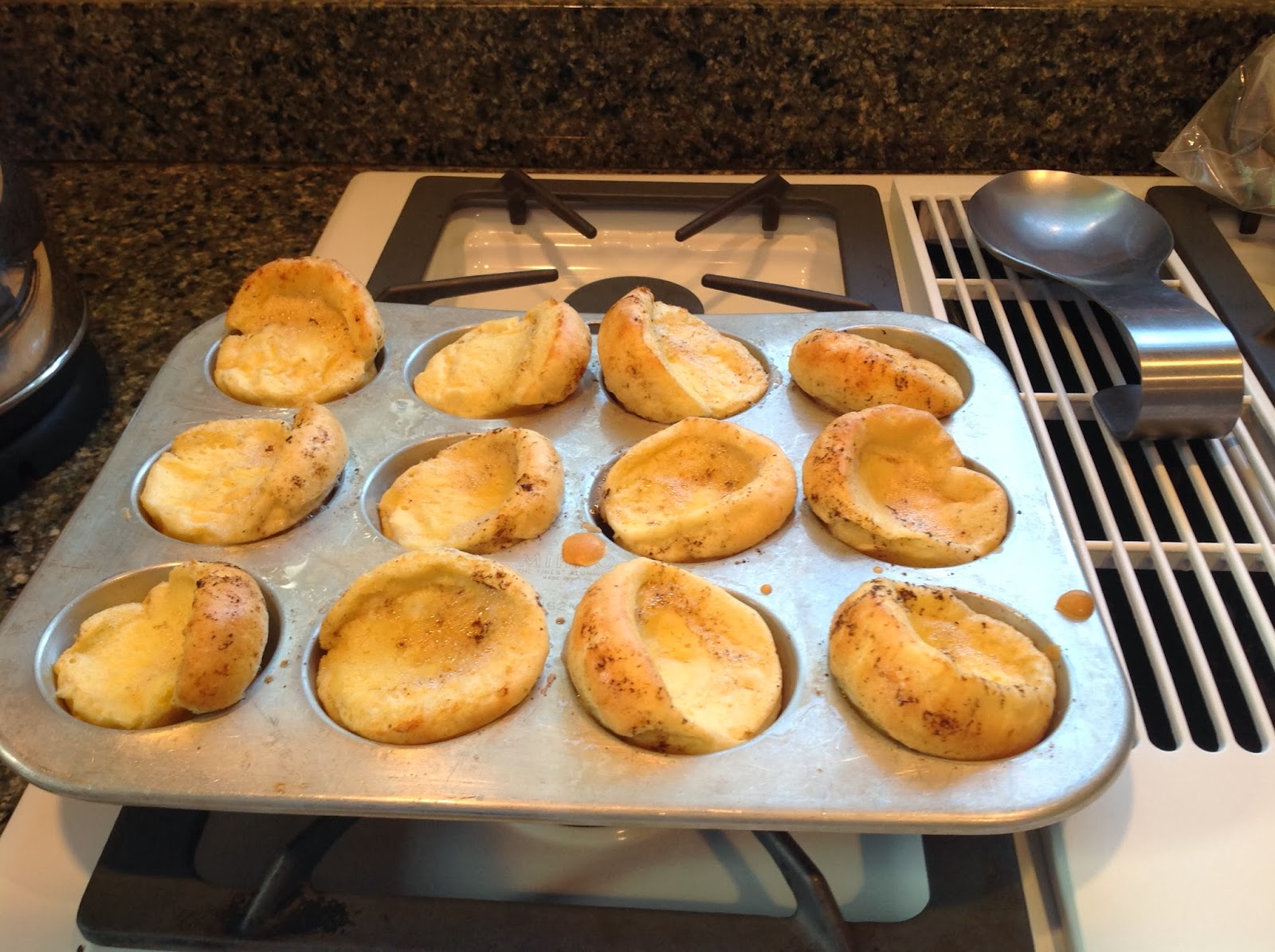
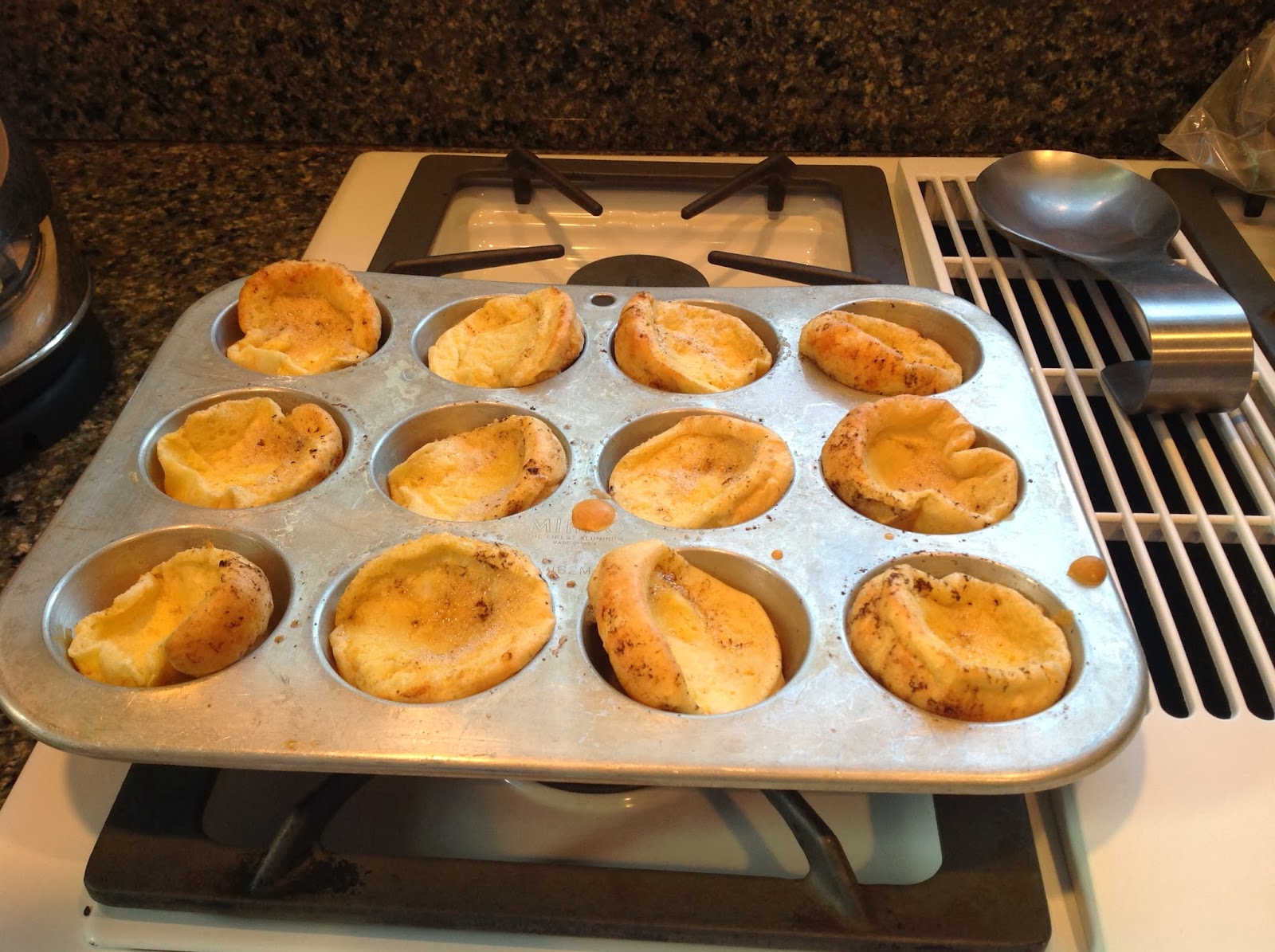
10.  When your timer goes off, call everyone into the kitchen to see you remove your creation.  This is very important because in the span of less than a minute, they go from looking like this:

To this:

To this.

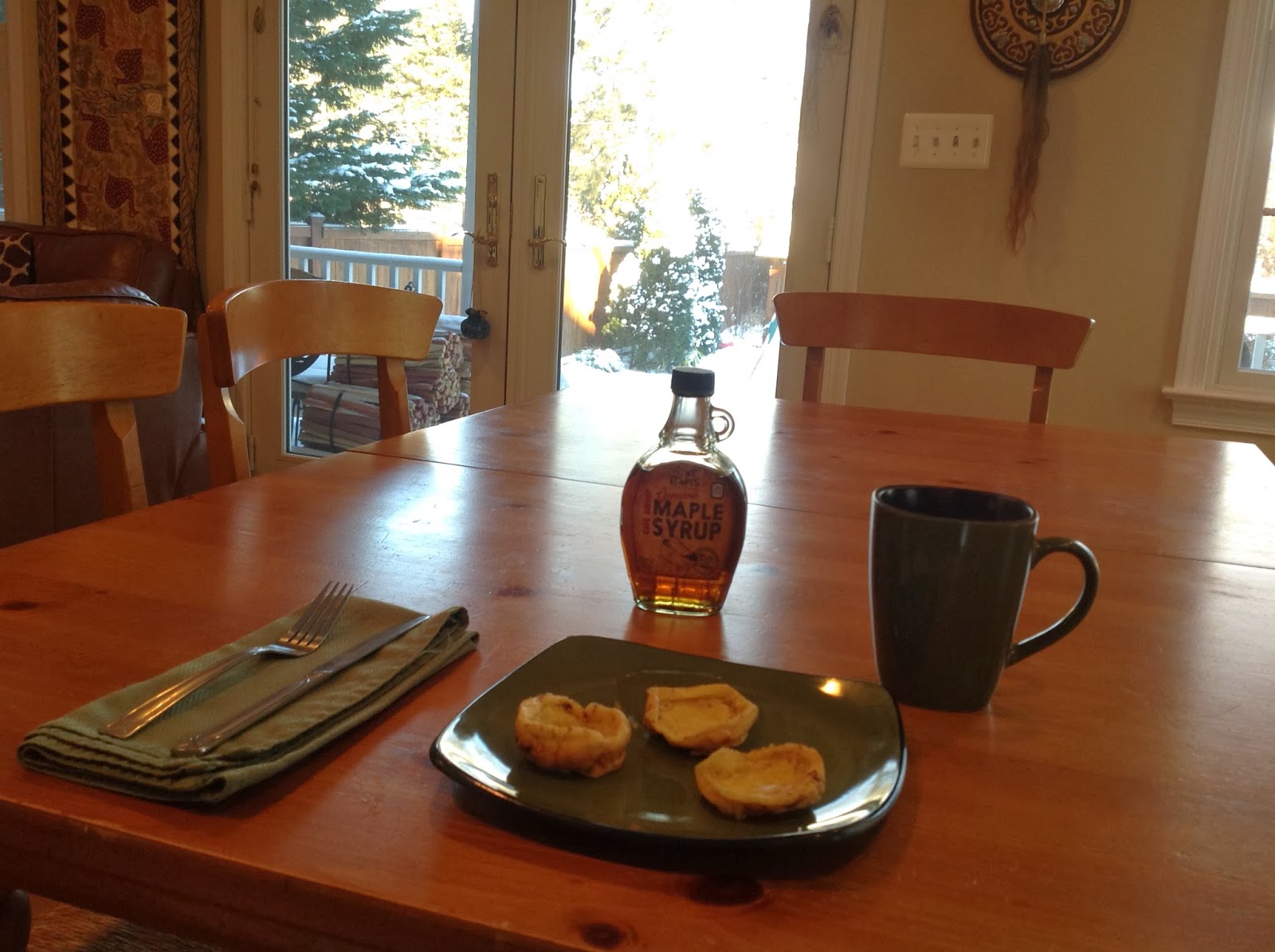
But they are still tasty, don’t worry!  I like them with syrup.  The nice thing about mini puffy pancakes is that they are bite size, so no cutting involved.

One last thought: the past couple of times I’ve made these, as I was flicking butter into the cupcake pan, I would think to myself that this is the kind of thing I will make for my firstborn but probably no subsequent children, because it’s also kind of a PITA.  But as I thought more about it, sometimes as parents we happily do things for our children that are a PITA.  And I probably will make these for future additions to the Bread family, as PITA-ful as they are.  Sometimes a child’s joy trumps PITAness.

Toddler-approved Chinese fried rice on a weeknight

Fried rice has become a staple dinner in our house.  It’s my go-to dish once a week, and it’s great because it makes lots of leftovers and can be scaled up or down.  Our favorite Indian take-out place always gives us extra rice, and this recipe uses it up beautifully.  The recipe is best with pre-cooked and cool rice, not hot rice.  If you already have the cooked rice, the rest takes at MOST 15 minutes from start to finish.
Little Bread Toddler LOVES this recipe, which is great because I use it to sneak in all manner of vegetables and eggs for protein.
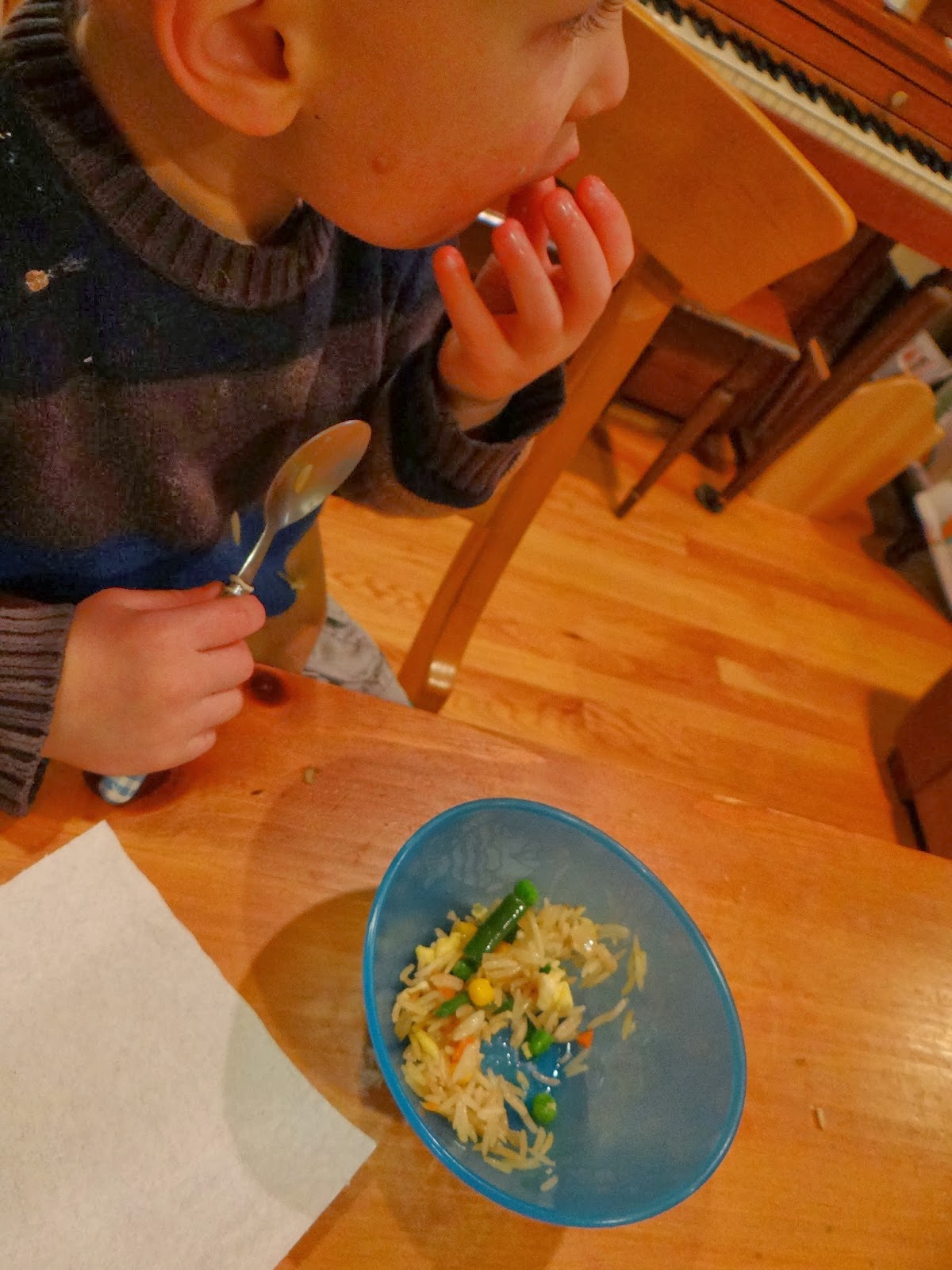
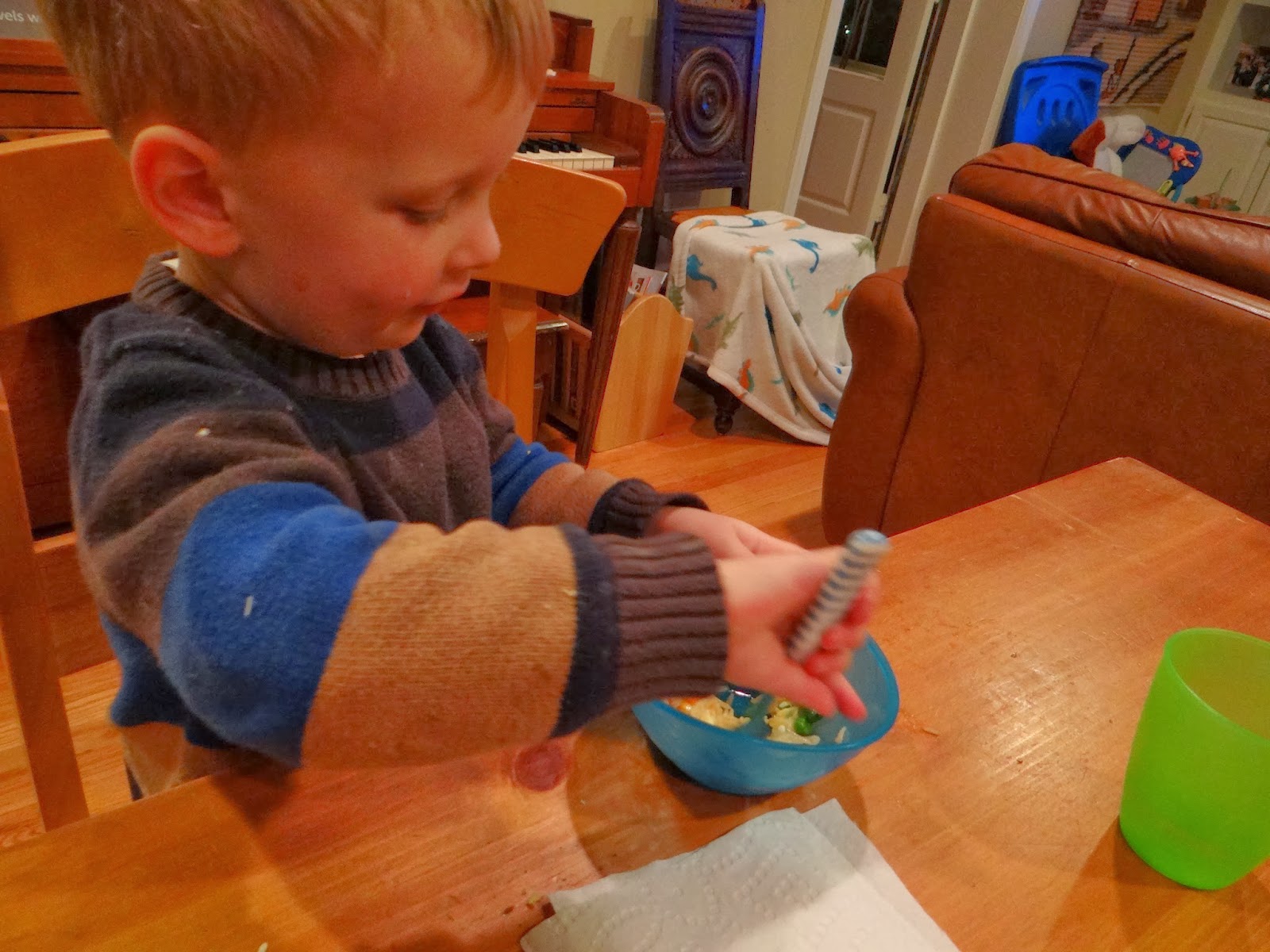
He’s a messy eater.

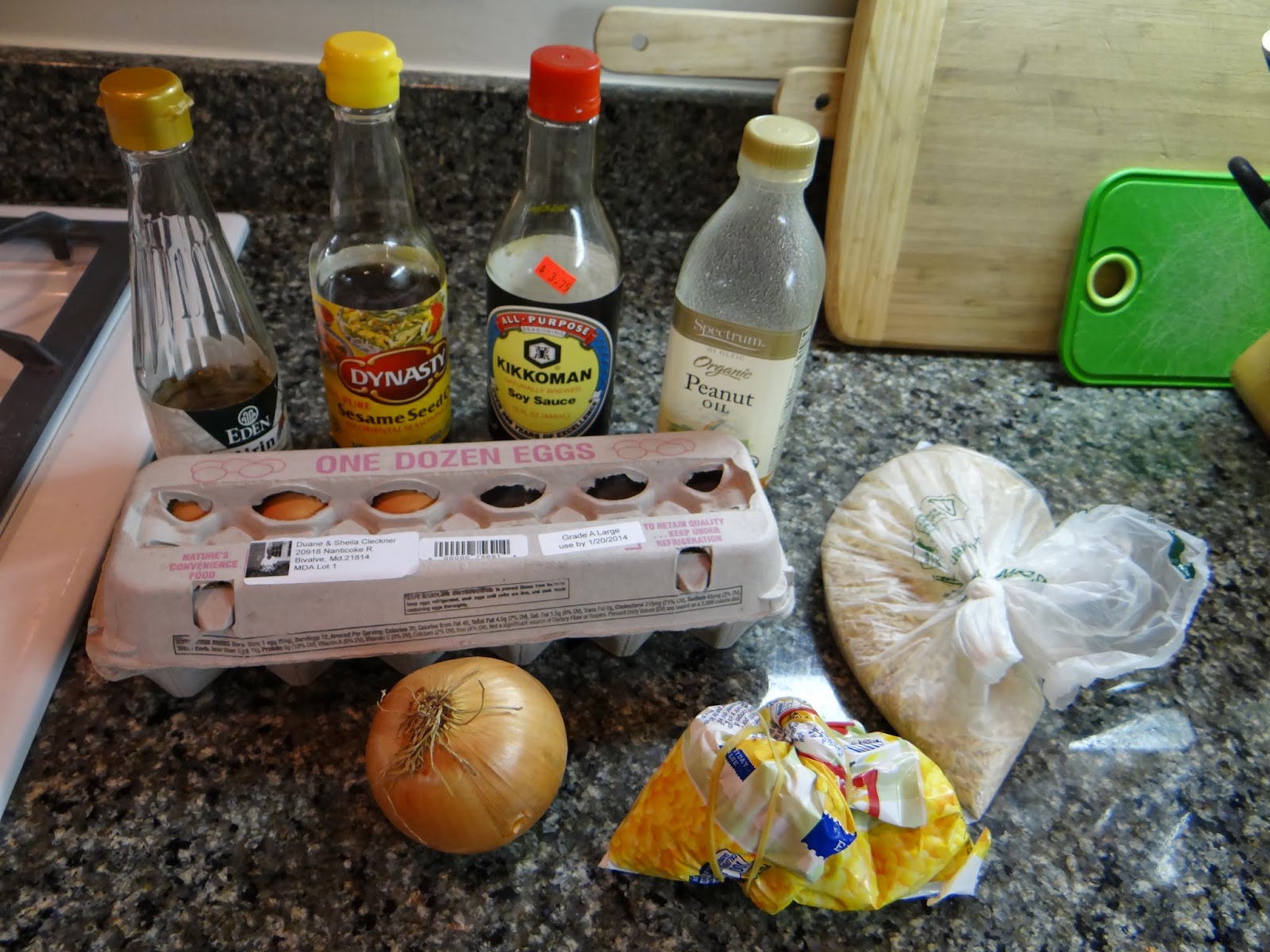
You will need:
One yellow onion
One bag frozen vegetables
Three cups of cooked, cold rice (Jasmine is best, but whatever you have on hand is fine)
Three eggs (lightly beaten)
Three tablespoons each of mirin, sesame seed oil, soy sauce, and peanut oil
1. Dice the onion.
2. Pour the peanut oil into the skillet on medium-high heat.  When the pan is ready (the oil is shimmering) add the onion and saute until translucent.
3. Add the vegetables to the skilled and coat with the oil.  Cook for a few minutes until they seem not frozen.
4. Add the rice to the skillet and toss around to combine.  
5. Remove the vegetables and rice to a large bowl.  Use your spatula to scrape most of the rice and vegetables out of the skillet then return to the fire.  Add more peanut oil, about a tablespoon.
6. While you’re waiting for the peanut oil in the skillet to heat up, add the soy sauce, sesame seed oil and mirin to the bowl of rice and vegetables.  Stir to combine.
7.  Add the eggs to the skillet and scramble them.  Then using your spatula, break the scrambled egg into small pieces and add them to your rice and vegetables.
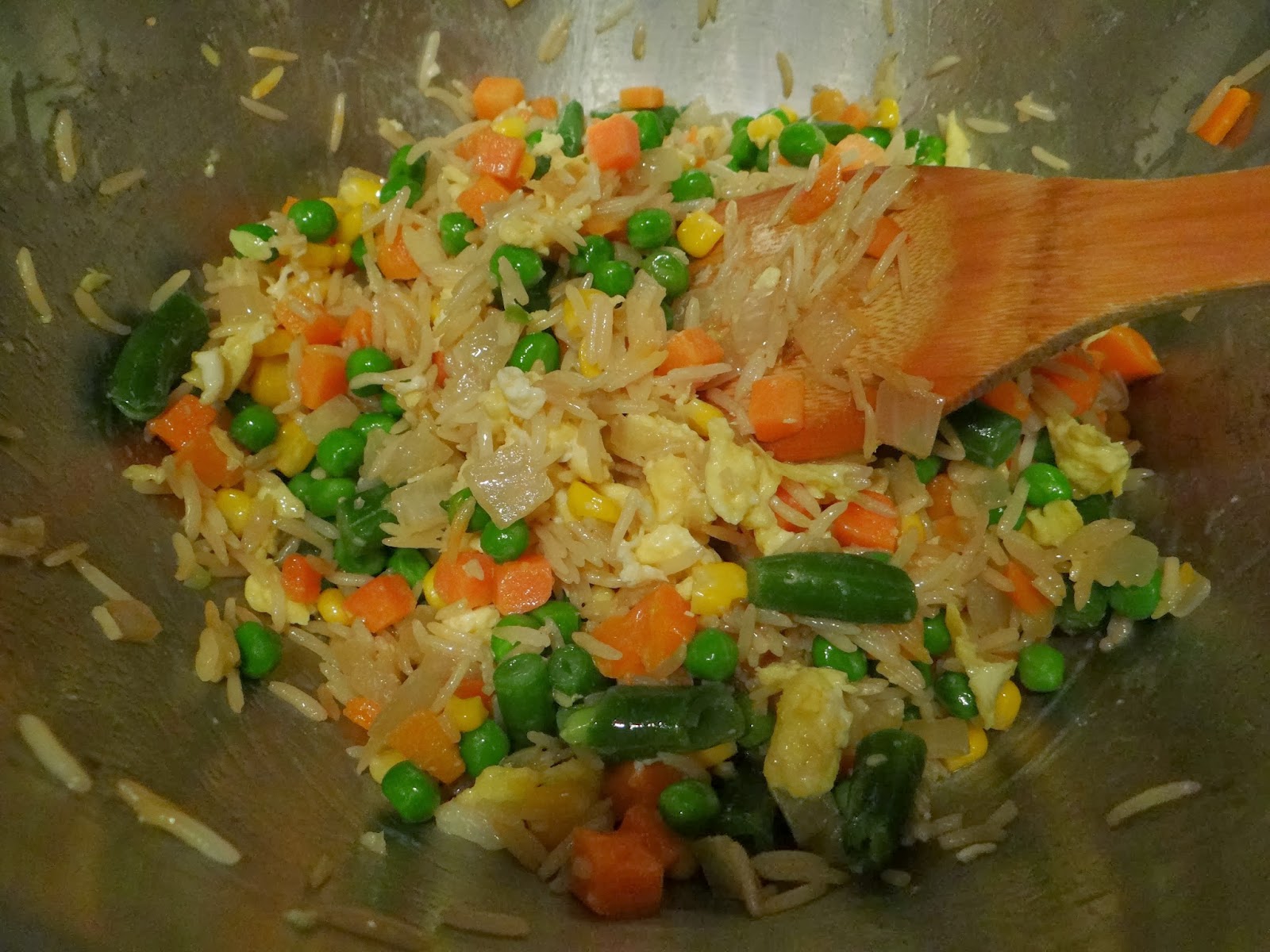
8. Tada! You’re done!  Time to eat!
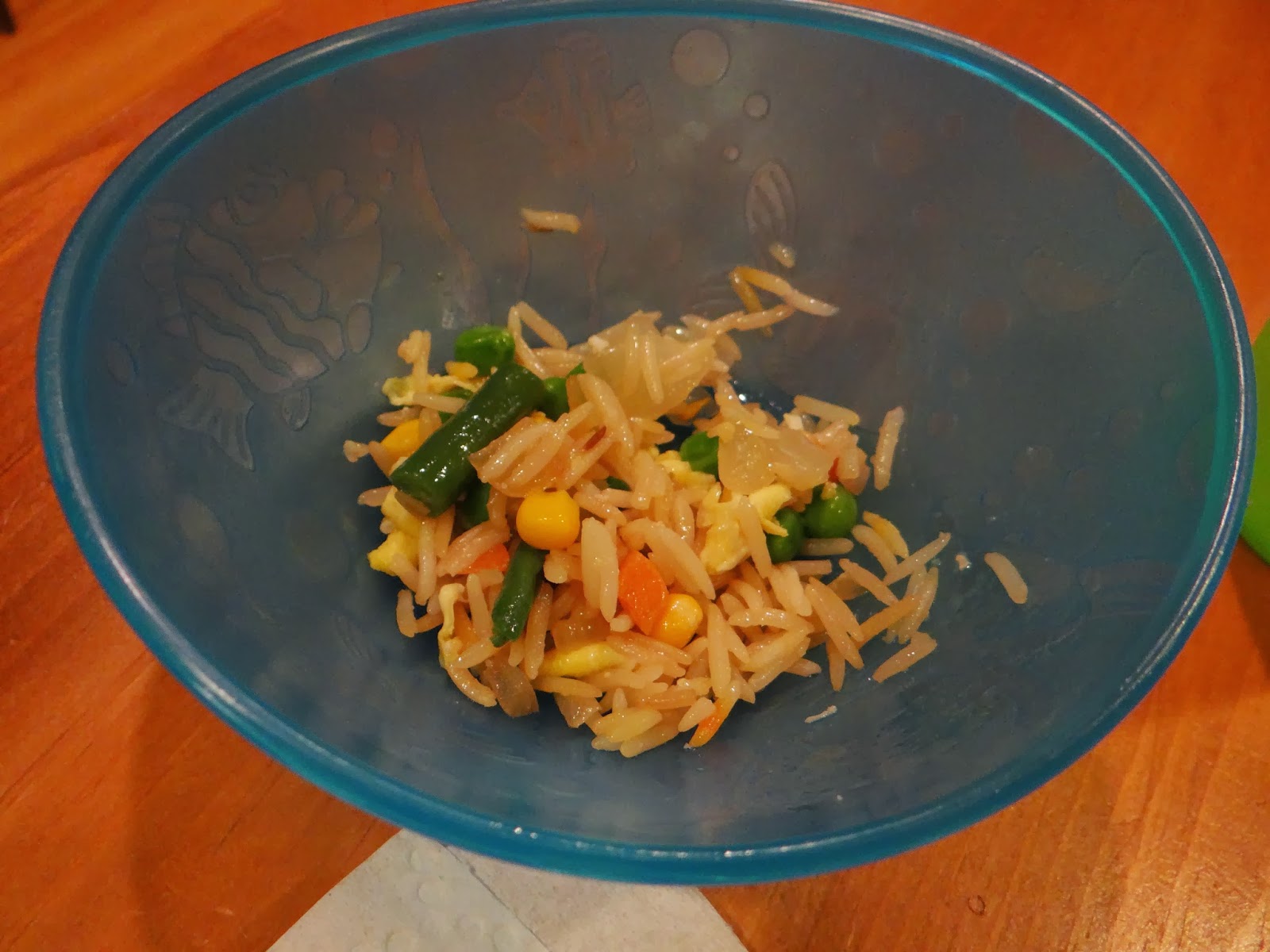
How awesome does this look?  
Little Bread Toddler saw it in the skillet and said, “I want something else,” then proceeded to eat four bowls of the stuff.  Again, he’s a messy eater.  
It’s that good!

Sour cream pancakes – Best Pancakes EVER

I make a lot of pancakes.  This is my pancake journey.

Back when Little Bread Toddler wasn’t drinking milk, it was a way for us to sneak it into his diet.  Now he alternates between scrambled eggs and pancakes most mornings.

For about years, I used the Joy of Cooking’s pancake recipe.  It was pretty easy and I was able to improve my technique making a batch a week.  However, they weren’t great.  They tasted good but they kept coming out flat.  I wanted nice, puffy pancakes.

I tried Smitten Kitchen’s pancakes, which rely on beaten egg whites for lift.  While they have a delicious tangy taste and do puff up when they cook, they also immediately deflate as they cool, which means they are wonderful freshly cooked but the pancakes I freeze don’t do so well.  Also the extra step of beating the egg whites to stiff peaks takes too much time.

Then a few weeks ago, I ran out of milk.  All I had was some sour cream, so I added it in and compensated for the decreased liquid by throwing in an extra egg.  I also added some baking soda to account for the added acidity from the sour cream.  The results were amazing.  So much so that I annotated my Joy:

These sour cream pancakes are so delicious, puffy and light.  They also keep really well in the freezer (more on that later).

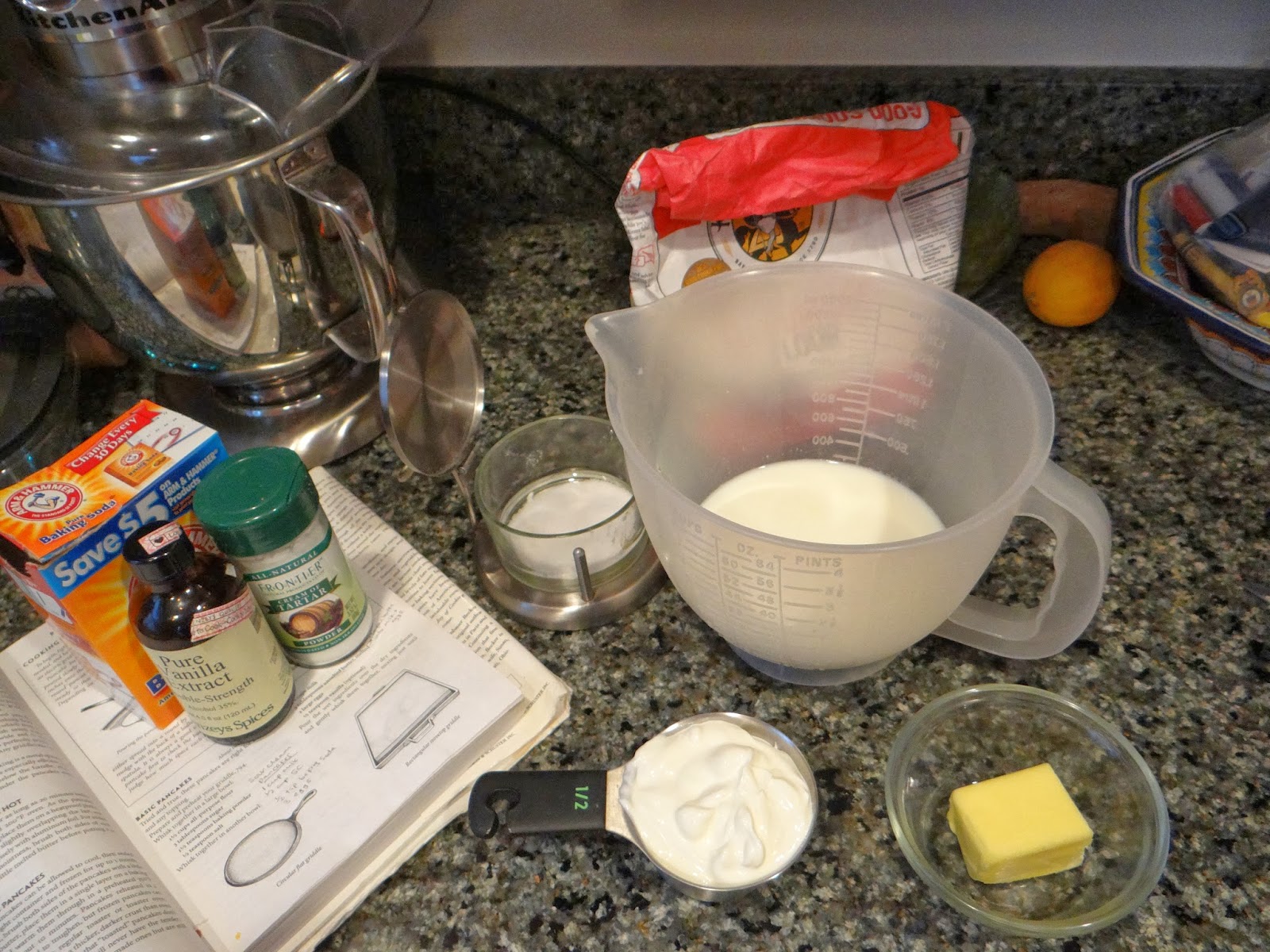
To make these, you will need:

Sorry.  For some reason I pulled out the cream of tartar instead of baking powder when I took this picture.

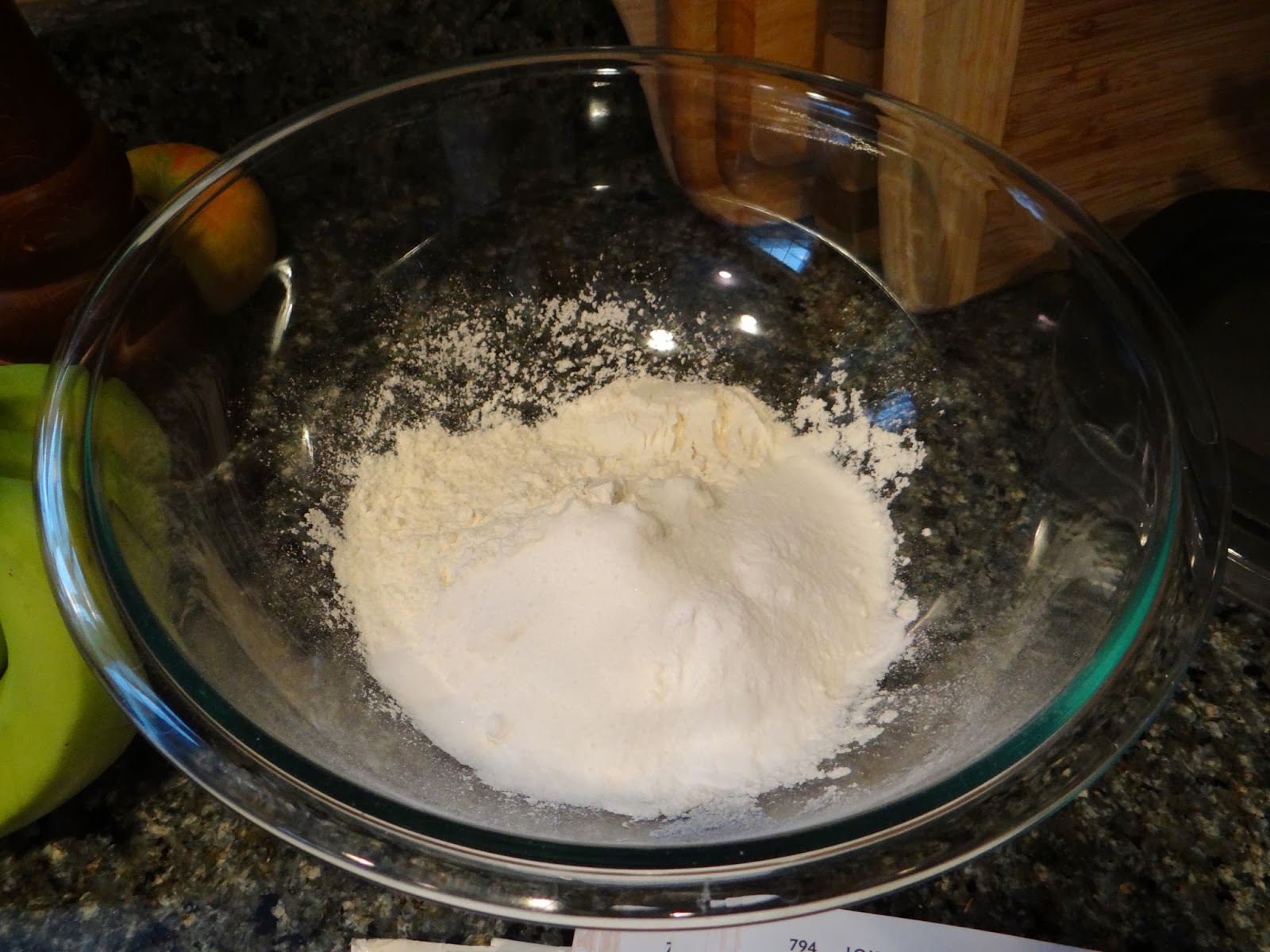
The dry ingredients:
1 1/2 cup AP flour
3 tablespoons sugar
1/2 tsp salt
1/2 tsp baking soda
1 1/2 tsp baking powder

The wet ingredients:
1 cup milk
1/2 cup sour cream
3 eggs
3 tablespoons butter (melted)
splash of vanilla extract

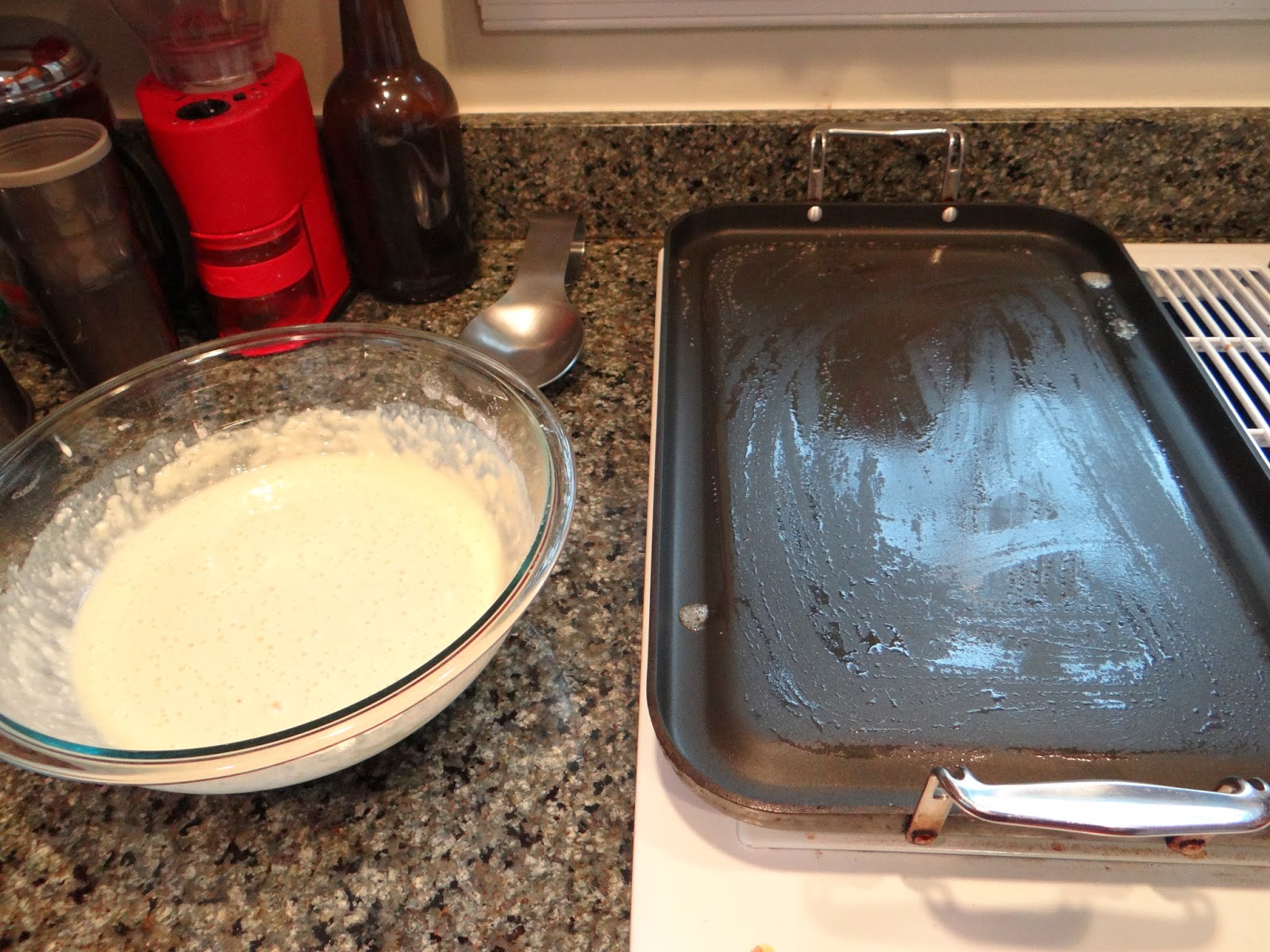
1.  Pull out your griddle and get it heating up while you combine the ingredients.  I usually like the griddle to be at about 400 degrees F.  If you don’t have a thermometer, you will know the griddle is ready when water or butter starts sizzling upon contact.

2.  Mix together your dry ingredients in a big bowl.  The dry ingredients can sit for a while.

3. Test the griddle to see if it’s ready.  If it’s ready or almost ready, you can start mixing together the wet ingredients.  Measure your milk into a large measuring cup.  Gently beat your eggs and add them to the milk along with the vanilla extract.

4.  Here is where the technique comes into play.  Presumably you’ve just added cold eggs to the cold milk.  And now you’re going to add warm, melted butter?  That butter is going to congeal up right away, or the eggs will curdle.  Either way, not a good situation.  What you’re going to want to do is temper the butter so it is lowered to the temperature of the eggs and milk.

5. First, take your whisk. This is very important.  Also a tablespoon.   Start gently whisking the melted butter.  Scoop up a tablespoon of the egg/milk mixture and drizzle it into the butter as you’re whisking.  Add another tablespoon of mixture and keep whisking it in.  Keep whisking and adding milk until the butter is lukewarm.  Congratulations, that’s tempering!

6.  Now that your butter has cooled off, you will do the opposite thing you just did: drizzle the butter into the milk and eggs while you are whisking to combine thusly:

7.  If the griddle is ready, now is the time to add the wet ingredients to the dry ones.  Whisk to incorporate all the flour but stop while there are still a few clumps.  The batter will be very wet.

8.  If the griddle is good and hot, take a dollop of butter and grease the griddle.  I use a paper towel to push the butter around.

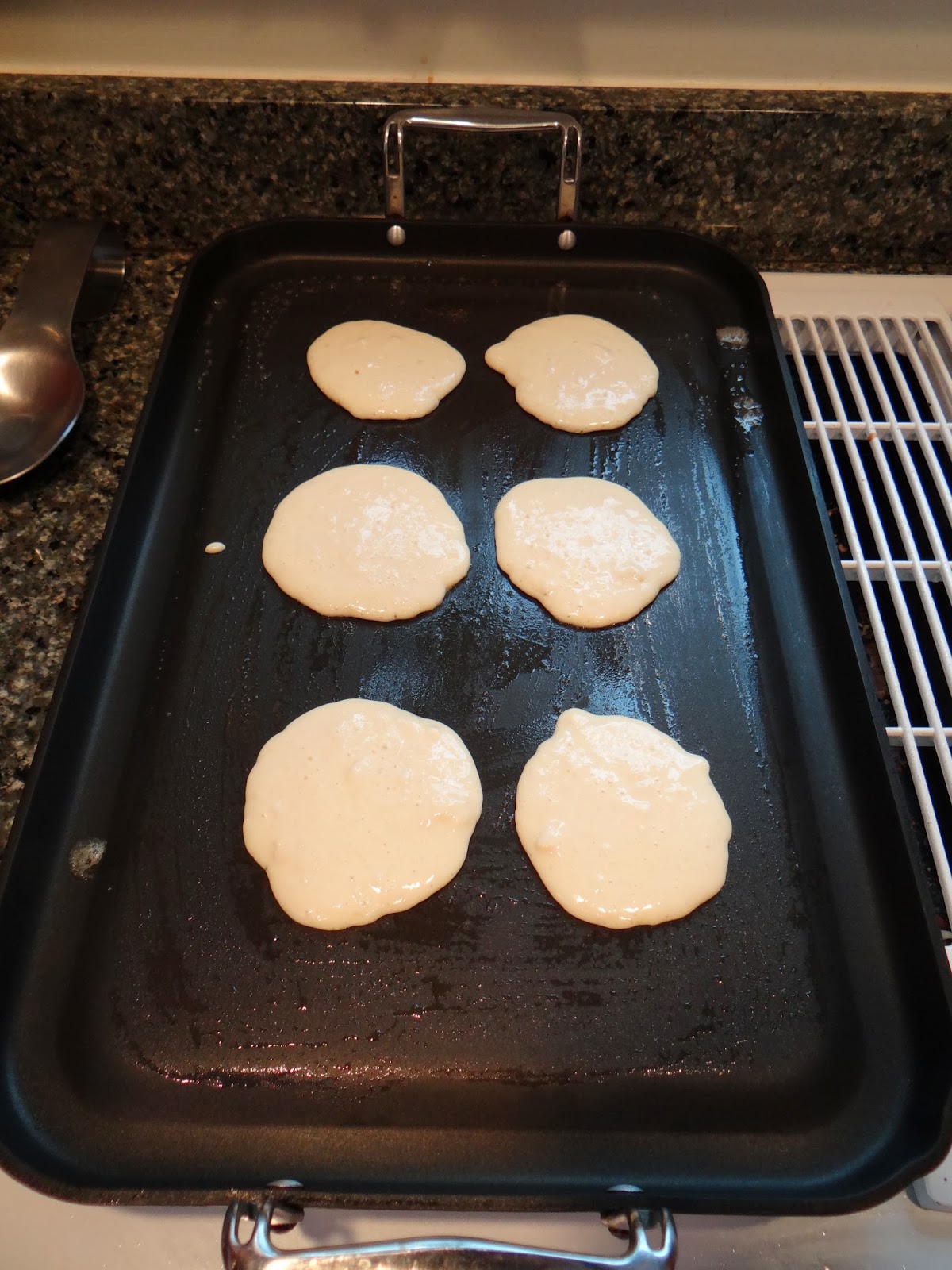
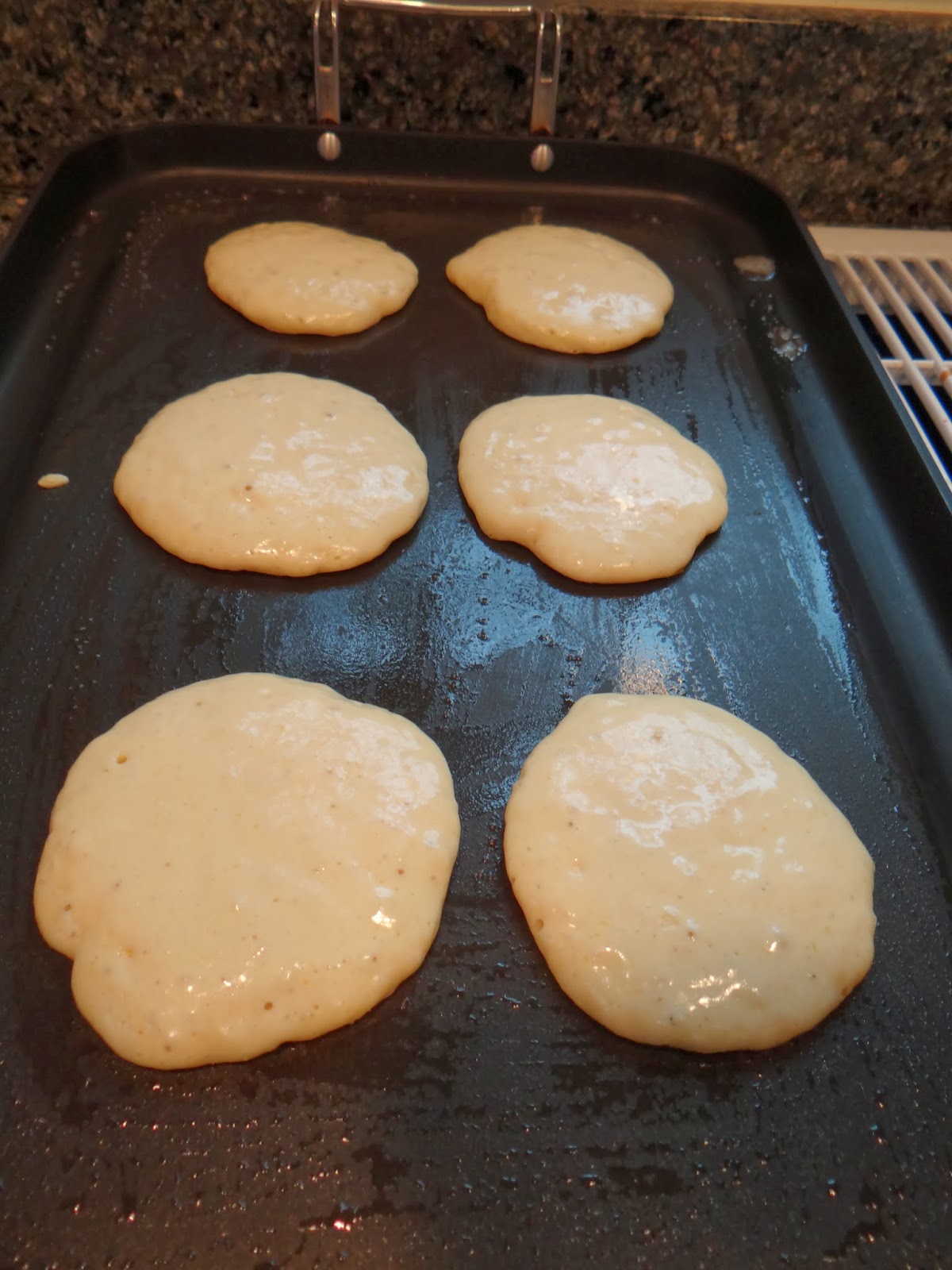
9.  Using a serving spoon or ladle, pour some batter onto the griddle from a height of about one or two inches. That helps the batter form a nice round shape.

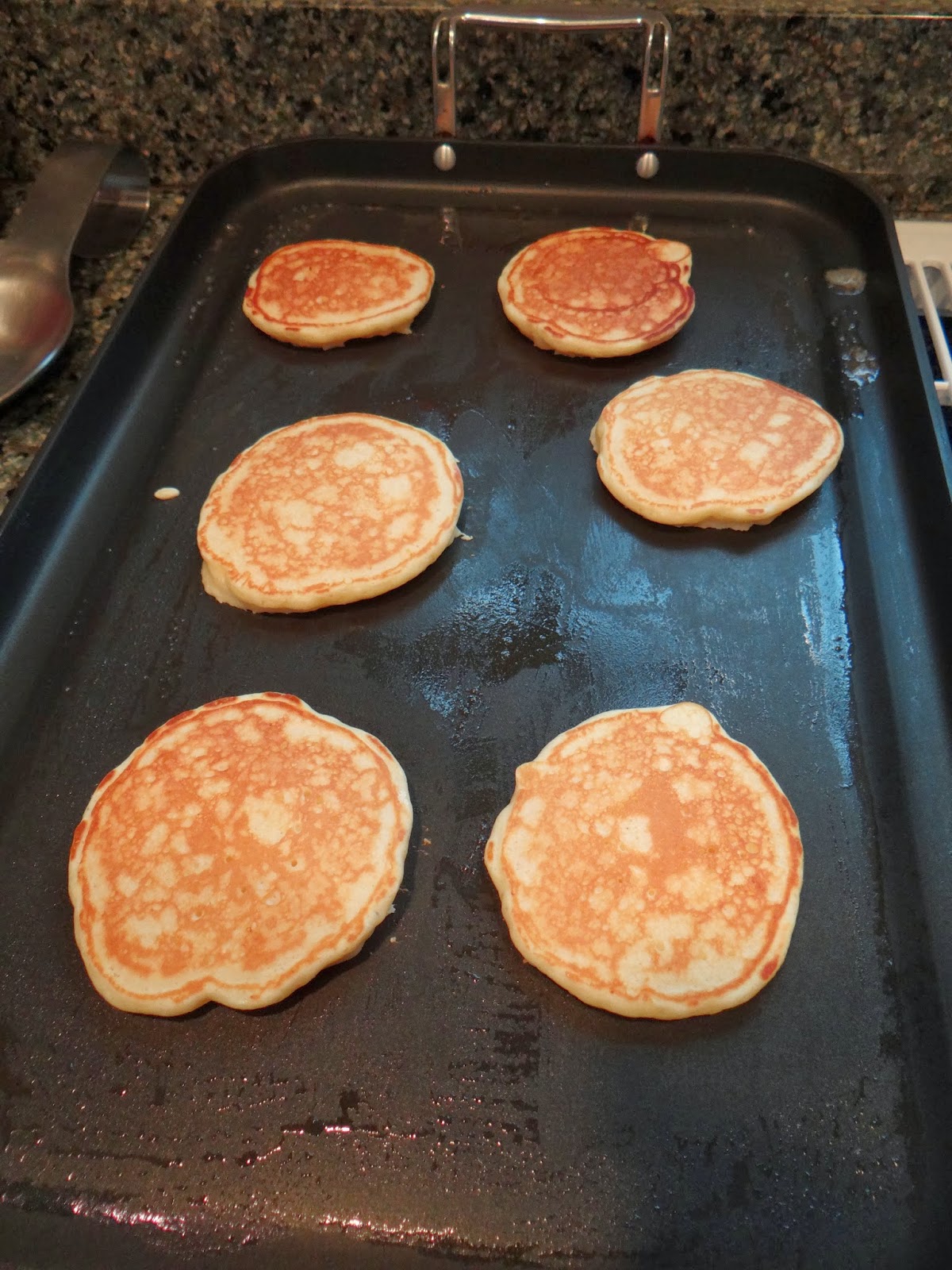
10.  You will know it’s time to flip when the top has some popped bubbles but mostly when the top stops being slick and shiny.

The sides of these are also pulling away from the griddle, so I knew they were ready to flip.  It just takes practice for you to really tell when they’re ready.

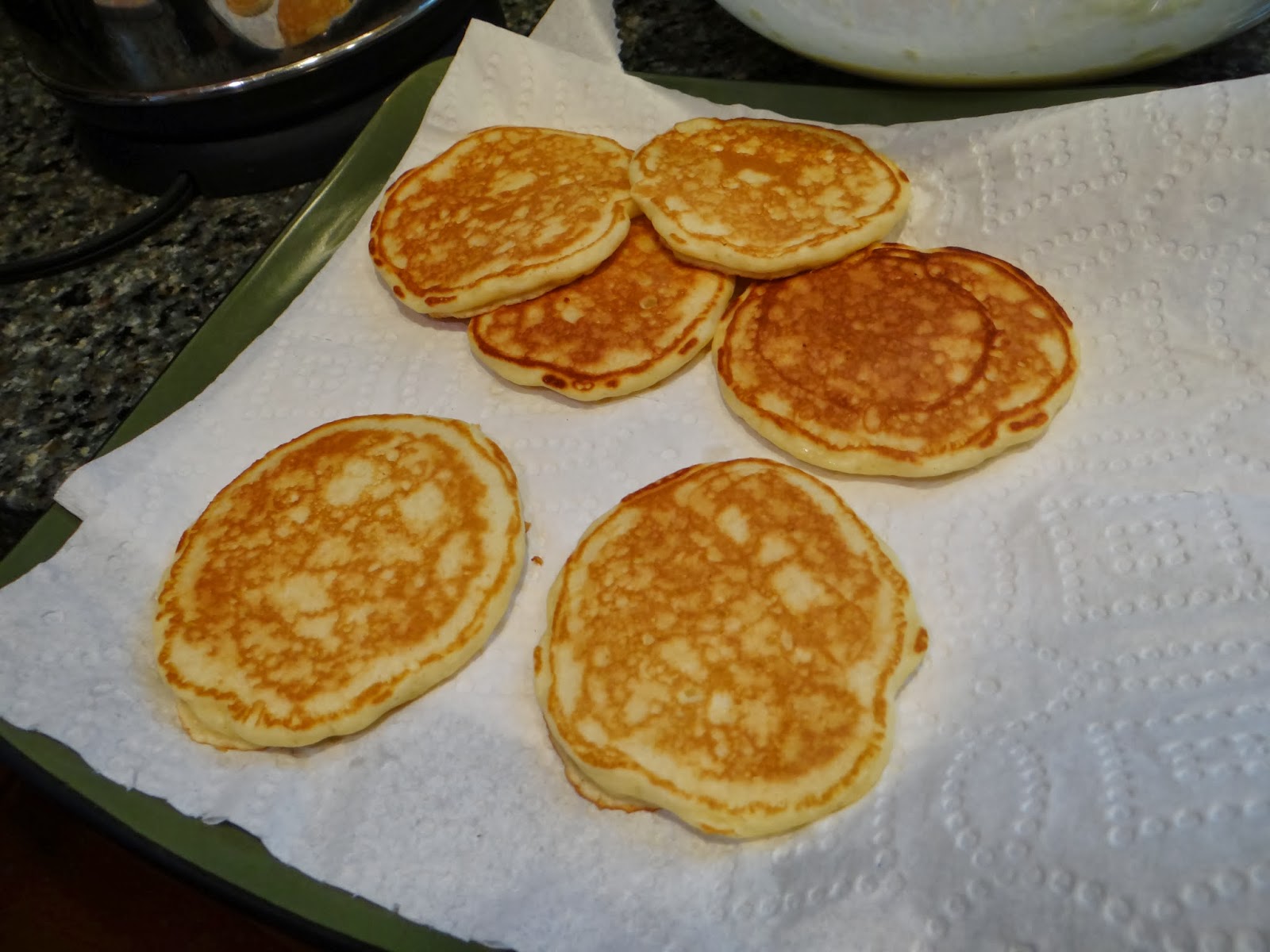
The second side takes less time than the first.  When they are done, put them on a plate to cool.  You can even put them in a warm oven until you are done with the whole batch and then serve them later.

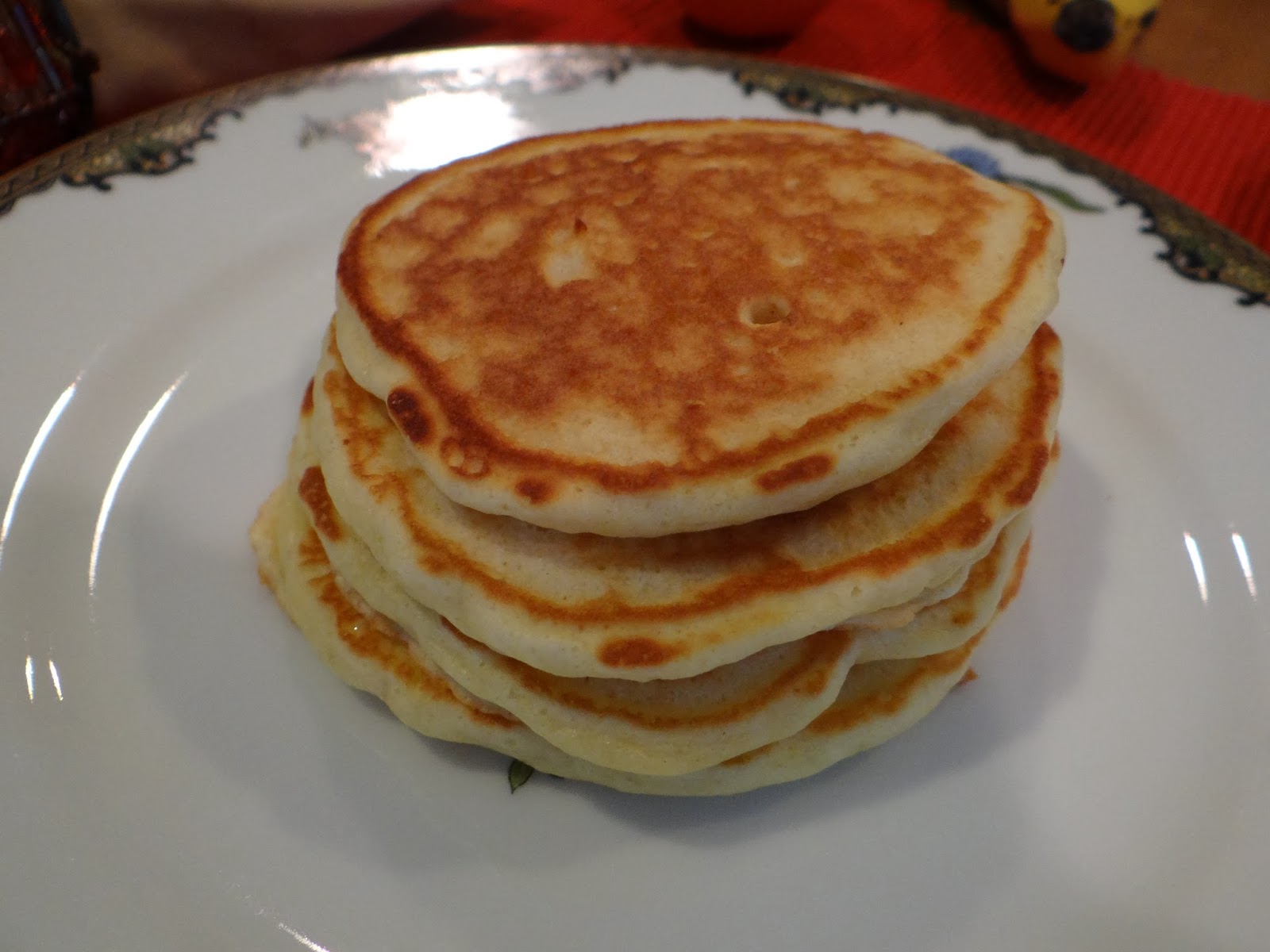
PUFFAY.

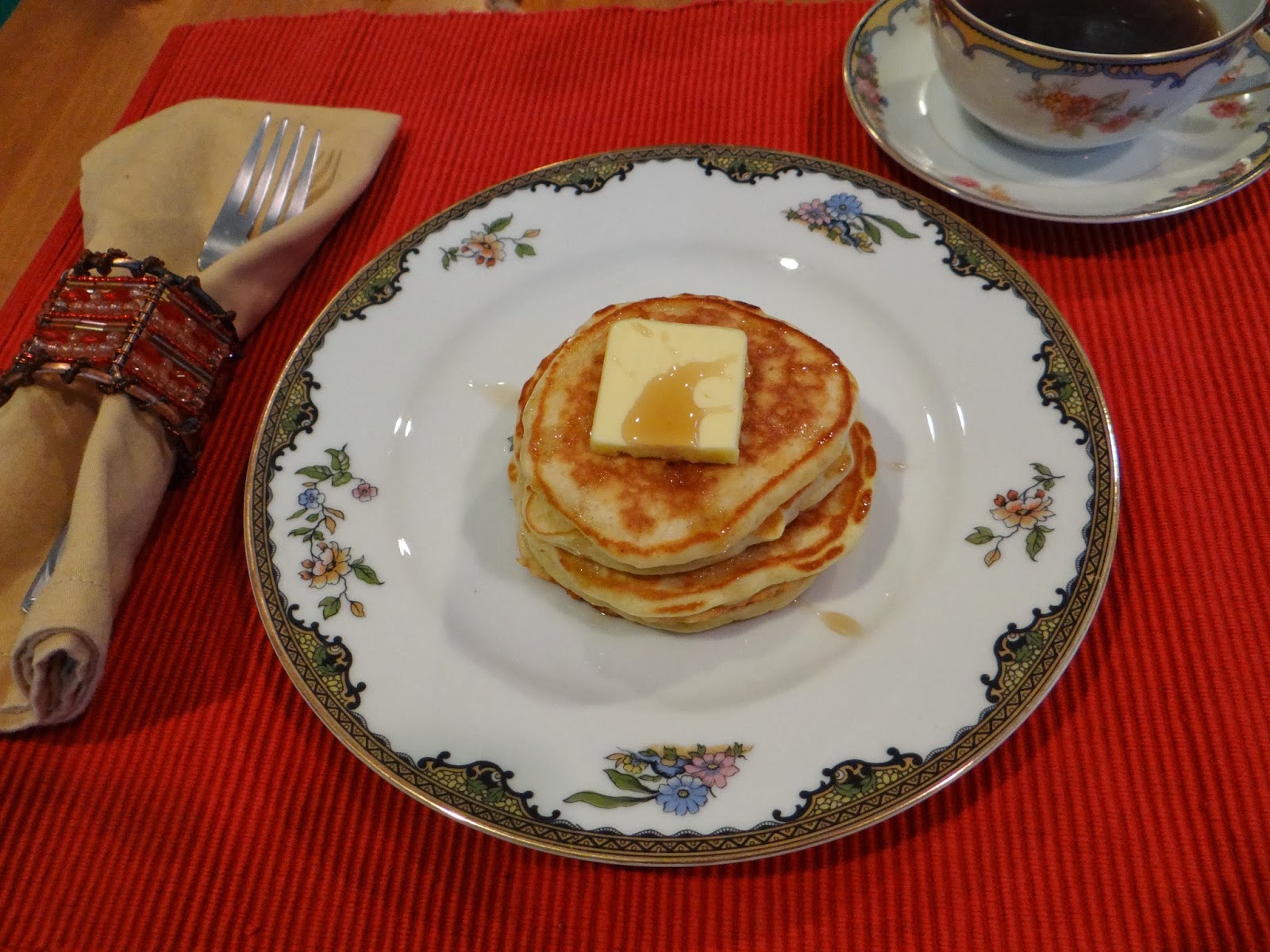
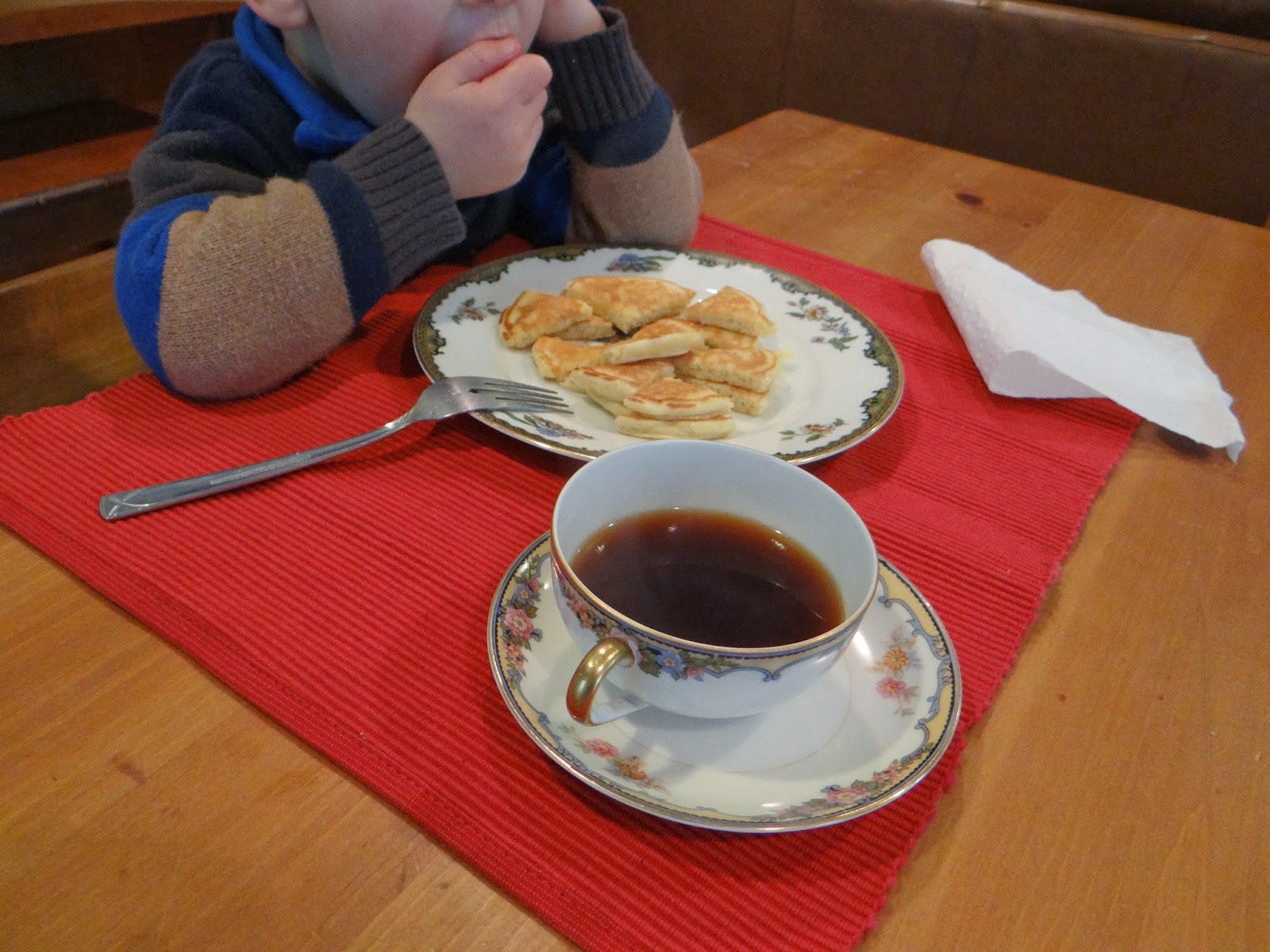
Here is my beautiful set-up to showcase my lovely pancakes:

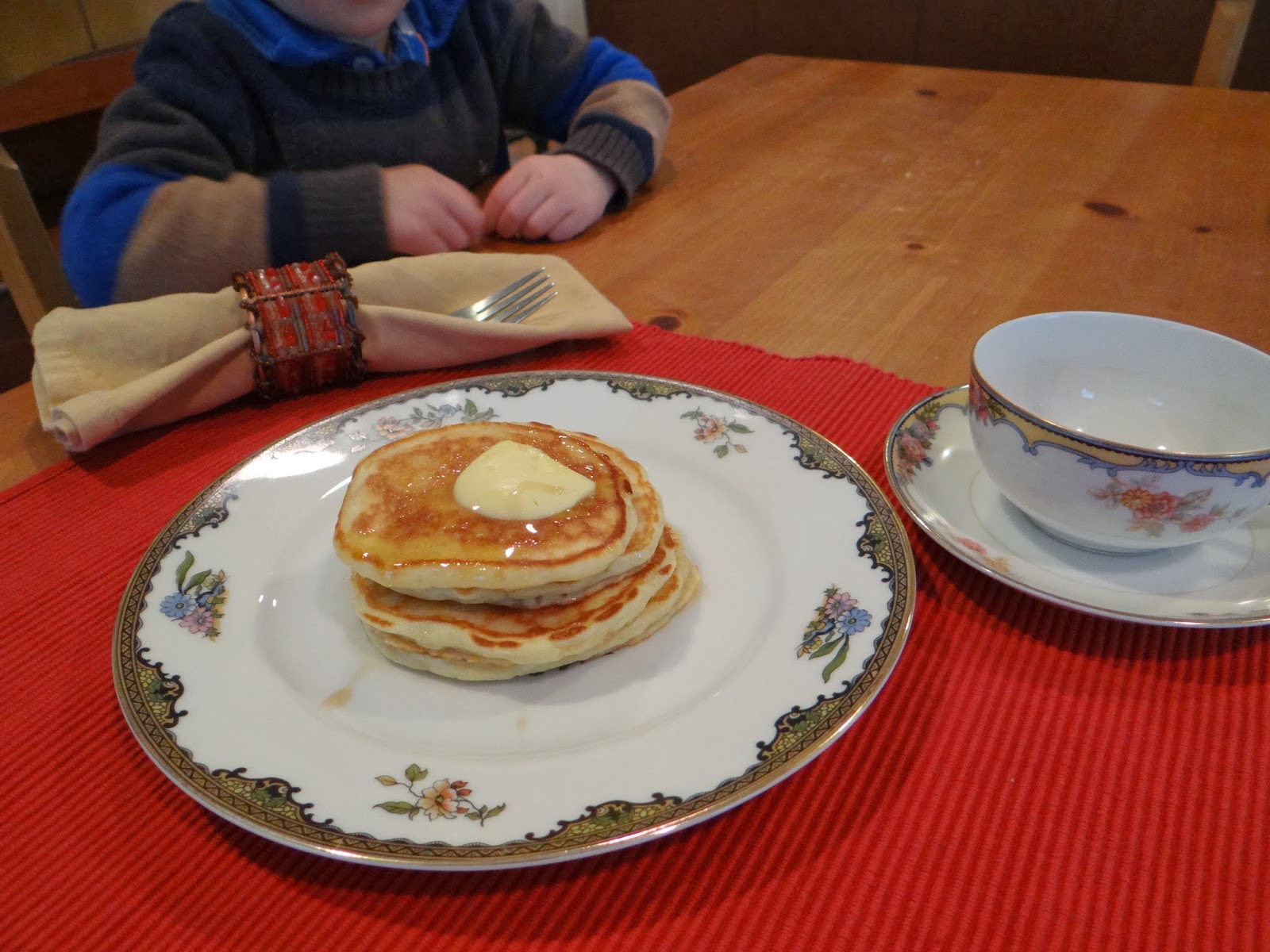
Attracting some attention

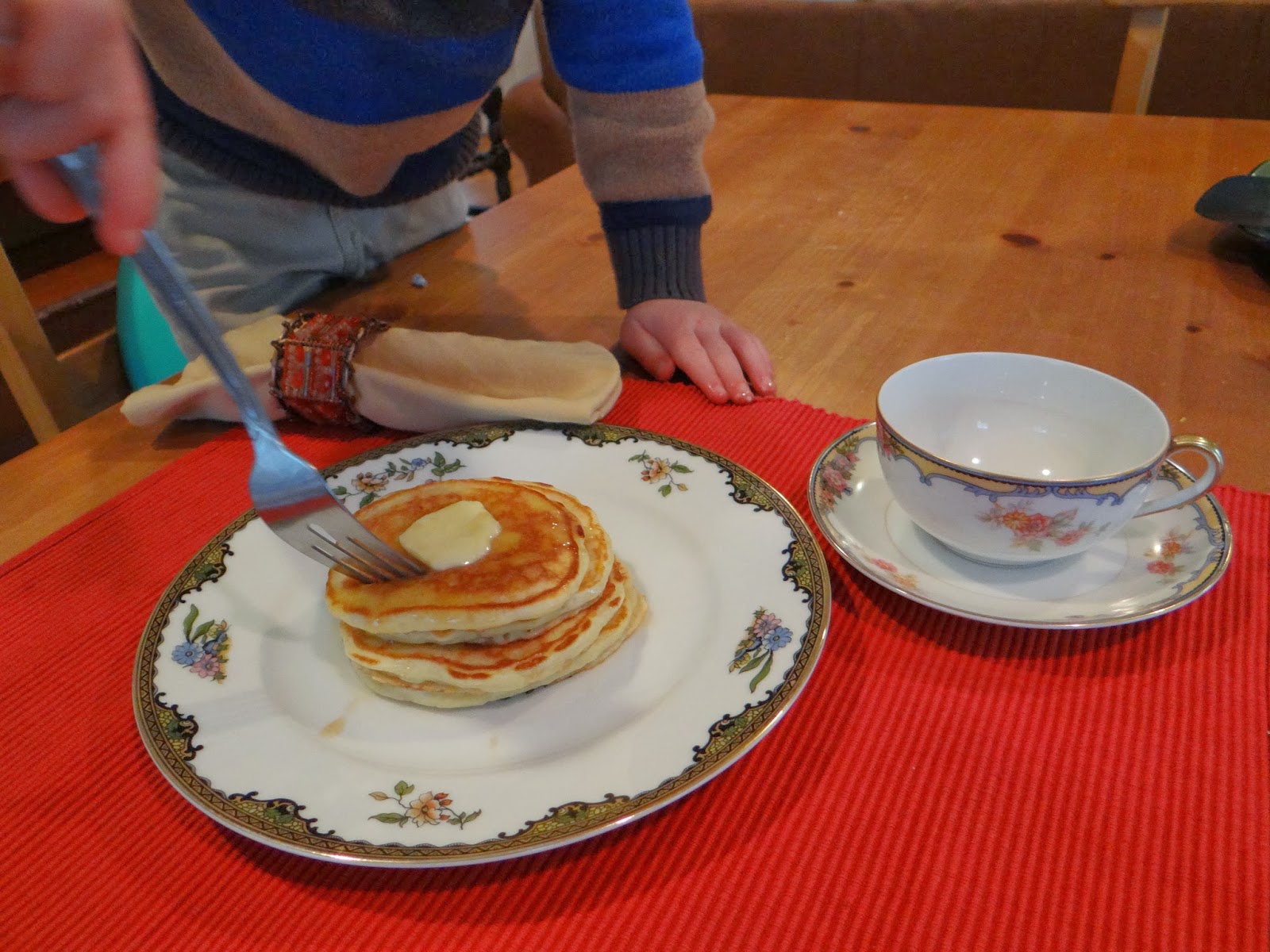
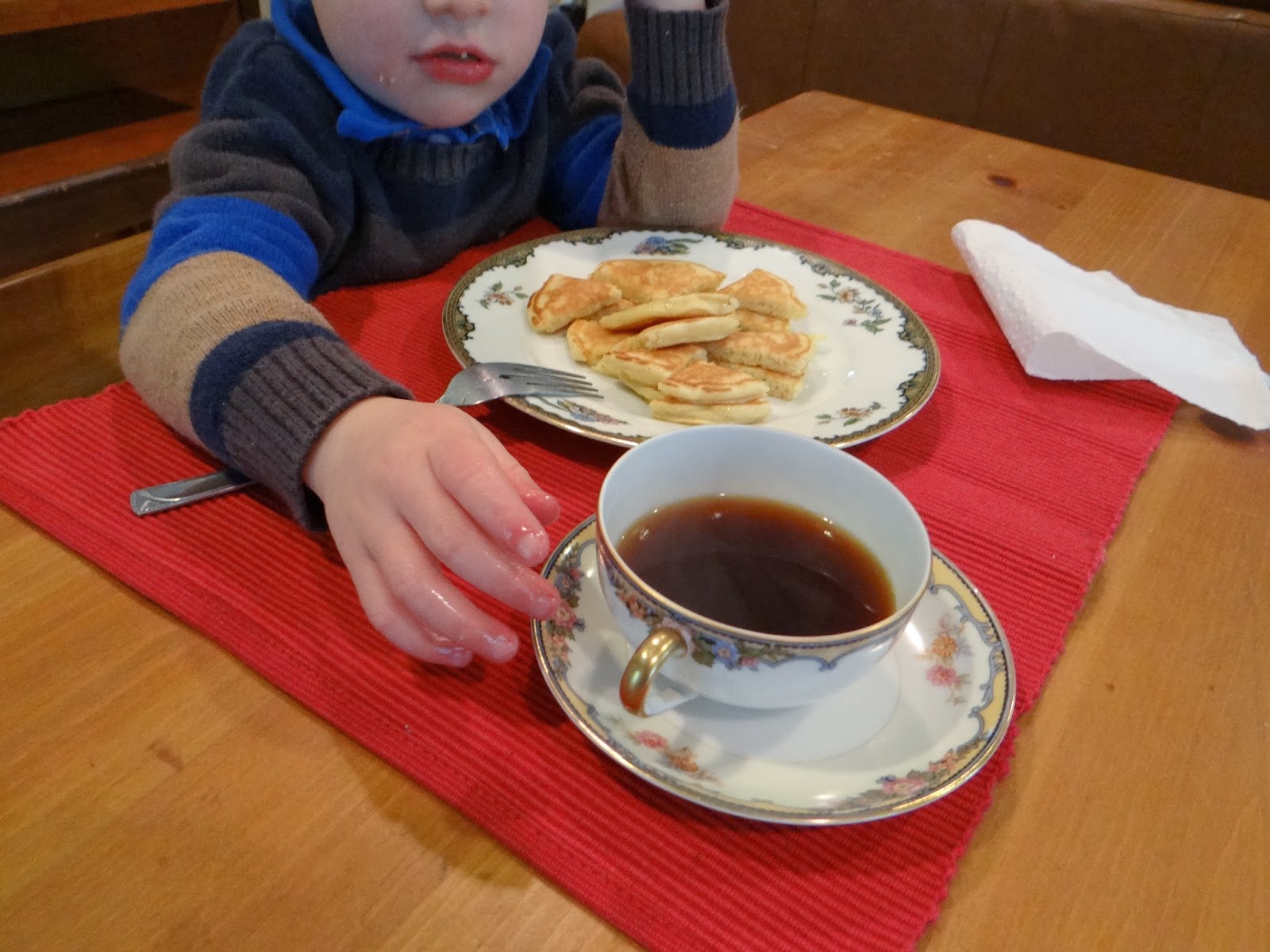
Wait. STOP.  I’m trying to get a picture here…

No no no… that fork was part of my beautiful tablescape …

Oh well.  That’s the way it goes with pancakes in this house.

Sometimes he drinks coffee and pretends he’s a grown up

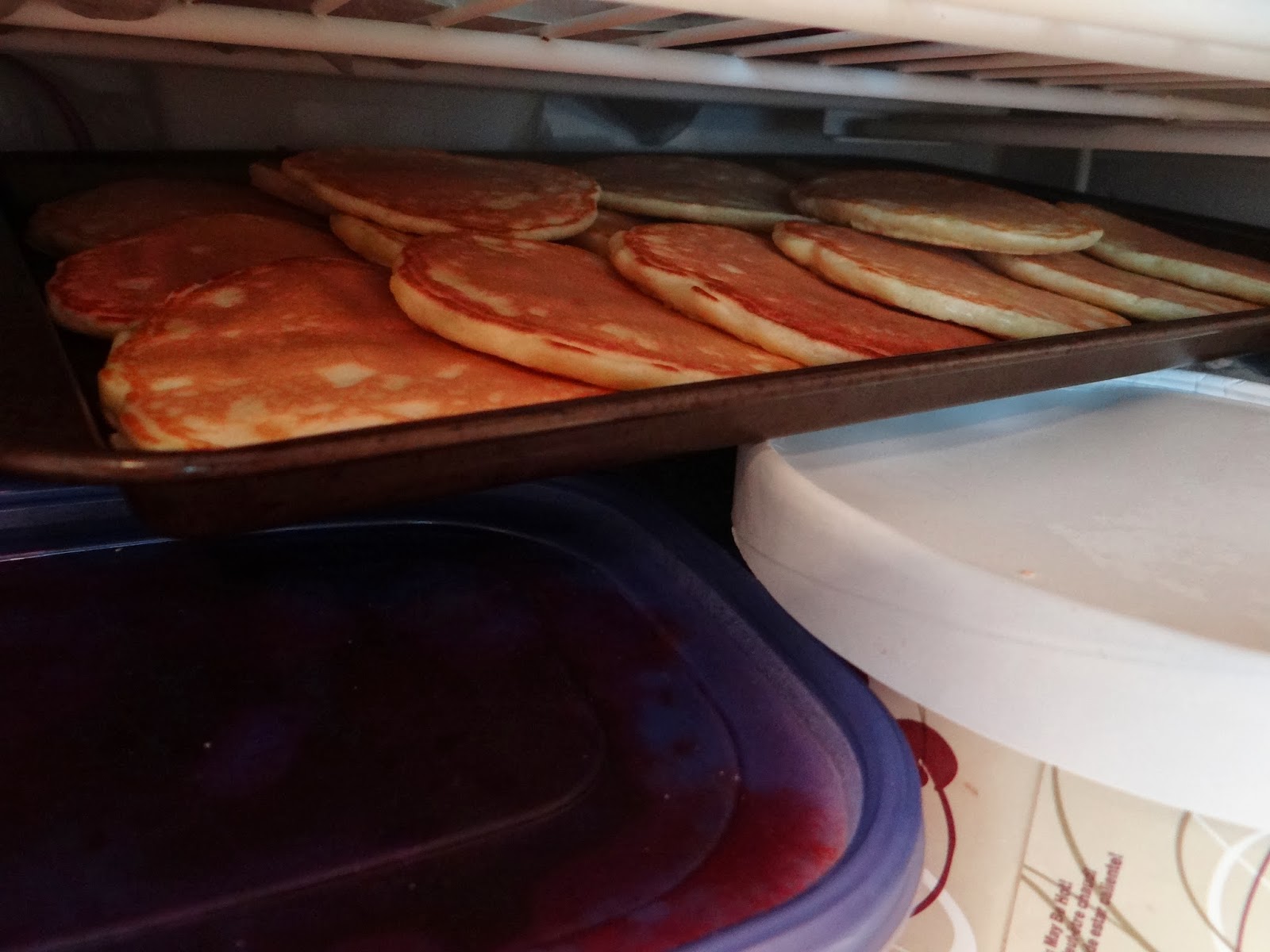
I know I promised some tips on freezing pancakes.  The easiest way is just to throw them in a ziploc bag and call it a day, but I have found that makes them stick together.  The BEST way is to lay them out on a cookie sheet in the freezer, then transfer them to a ziploc when they are a little frozen.  That way they don’t stick together.

It’s weird but it works.  And that way LBT gets pancakes any day of the week he wishes.

I hope you try these sour cream pancakes.  I bet they would work with yogurt too.  Go crazy!

Homemade cronuts

I hesitated to publish this post because those who are looking for a recipe for cronuts from start to finish are going to be disappointed.  However, it may prove helpful for those looking for clarification on how to take puff pastry and use it to make a fried doughnut-shaped but croissant dough-based delicacy.

First things first: what is a cronut?

 The Cronut (TM) is a trademarked name for a croissant-doughnut hybrid created by Dominique Ansel in May of this year.  It immediately sparked an international craze and fans flocked to his bakery, sometimes standing in line for hours, for the chance to score one of the limited number of treats made each day.  Many other bakers and bloggers have attempted to recreate the cronut.

Here is a picture of a Cronut (TM) from the website:

Also, Cronuts (TM) are filled with cream and topped with glaze, as you can kind-of see from the picture.  However, I don’t want to give myself a heart attack and I don’t really like super sweet pastries, so I limited embellishment to a sprinkling of powdered sugar.

I myself have never eaten a true cronut so I can’t say for certain that what I made tastes anything like one, but it is tasty.  I ended up making these because my sister made a huge amount of puff pastry for a Thanksgiving dish she was making, and ended up with a lot leftover.

Here is how we took the puff pastry and made it into our version of cronuts.

You will want to start with cold but not frozen puff pastry dough.  Our dough was unleavened and made with salt, water, butter, and flour.

1. First, pour some oil into your pot so that it rises about two inches.  You are going to be almost deep-frying the dough, but not quite.  Let it slowly warm up to about 330-350 degrees F.

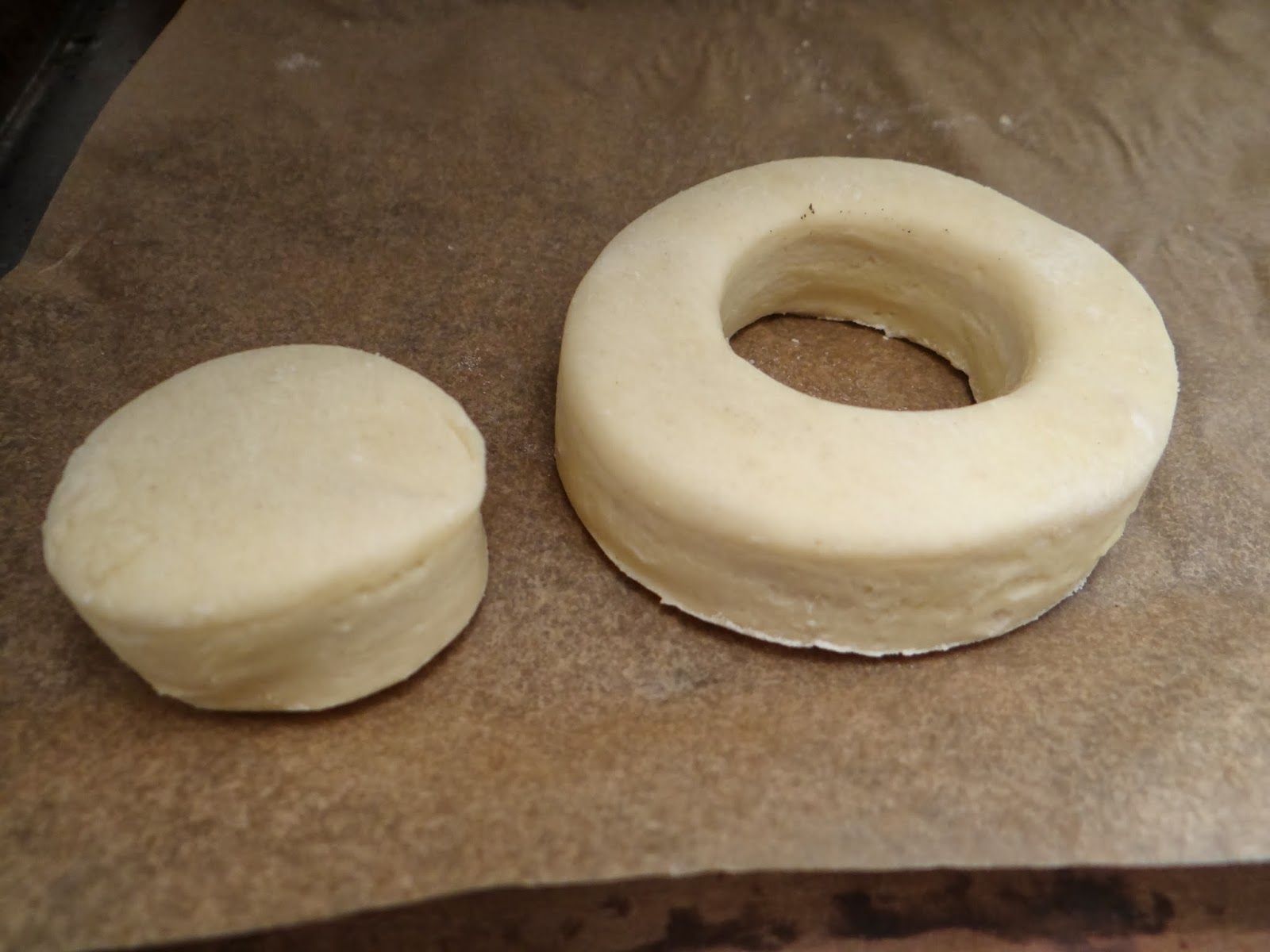
2. Now, take your puff pastry and roll it out.  I think the reason my cronuts did not rise as high as Dominique Ansel’s is that I rolled the dough out too flat.  Maybe next time I will leave it thick.  Using one large and one small round pastry cutter, cut out the dough into circles.

3. When the dough and the oil are ready, carefully place the dough into the pot.

4. The first cronut was a little wonky, but I got better about timing as it went on.  Once the first side is nicely browned, flip it over.  The cronuts will puff up as they cook because of the butter trapped between the layers of puff pastry.

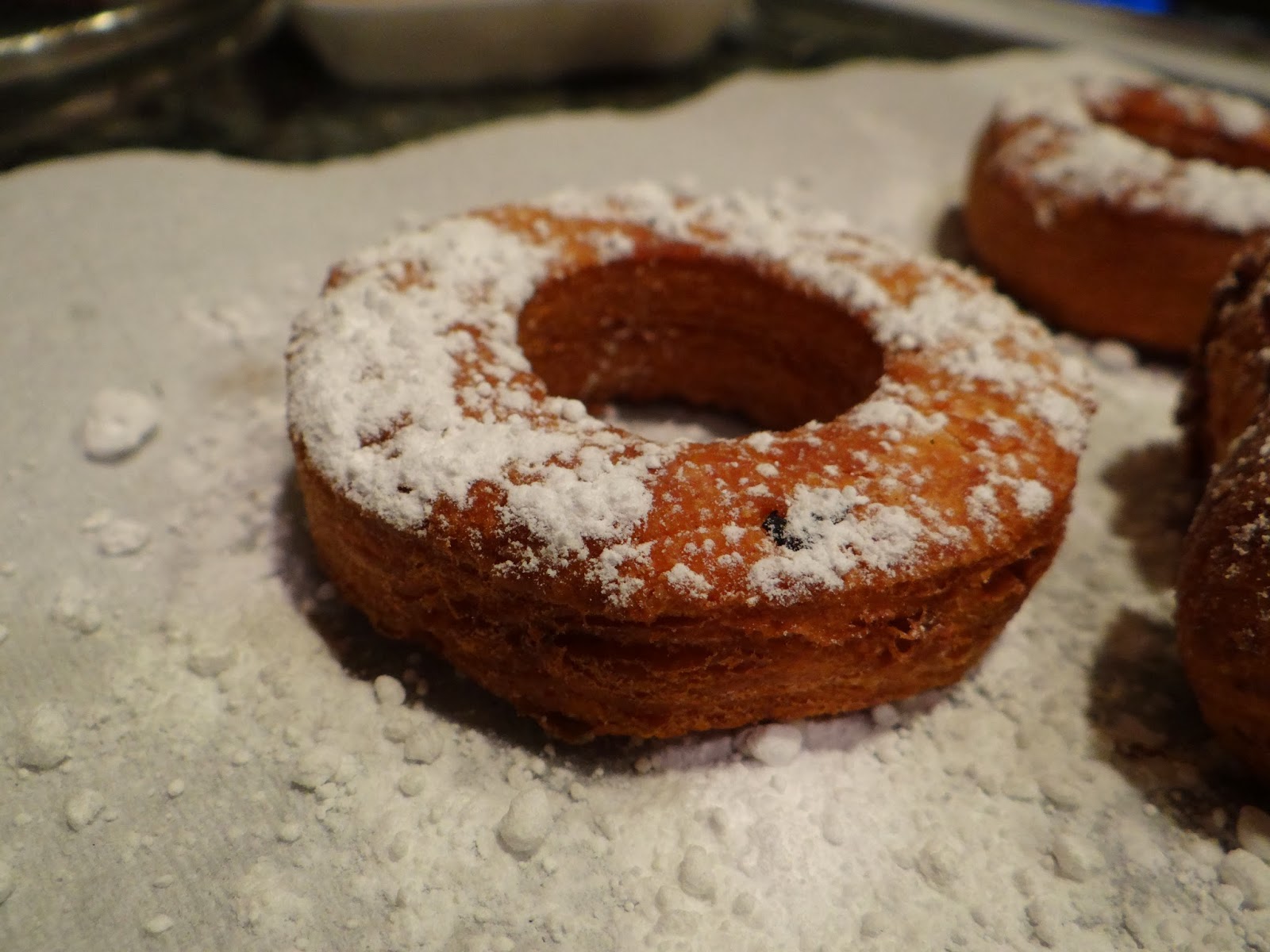
5.  As they finish, use the handle of a wooden spoon to remove the cronuts from the pot and let them cool on a paper towel over a plate or a cooling rack.  Sprinkle the hot cronuts with powdered sugar.

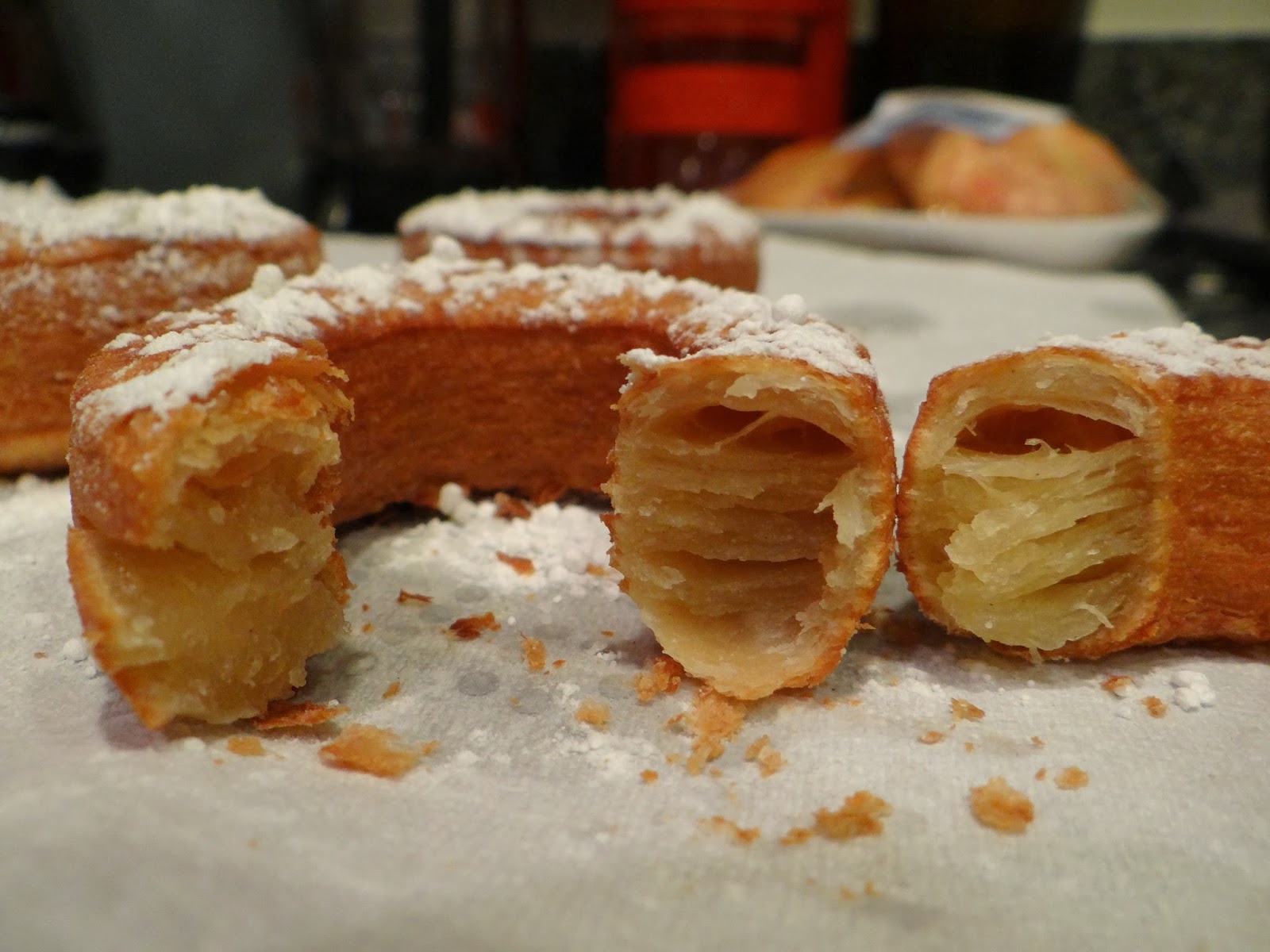
6. I love seeing the layers of dough!

On the outside they mostly resemble doughnuts and doughnut holes.  But when you open them you can really see the difference:

So, obviously this is not a perfect recreation of the Cronut (TM).  But that didn’t stop us from eating way, way too many warm cronuts the night we made them.  And Little Bread Toddler ate two this morning.   The nice thing about these is that they aren’t jumbo sized, so you don’t feel your arteries clogging as you eat them (sneaky cronuts).

I have to say, these are a fun, special occasion treat.  I’d probably still make regular doughnuts though.  Maybe I just need to try the real thing?

Using up Thanksgiving leftovers: cornbread stuffing mini muffins

I don’t know if this is going to become a series, but with most people this week staring down a fridge full of leftovers, it seemed the thing to do.

These aren’t really muffins.  Sorry if the title is misleading.

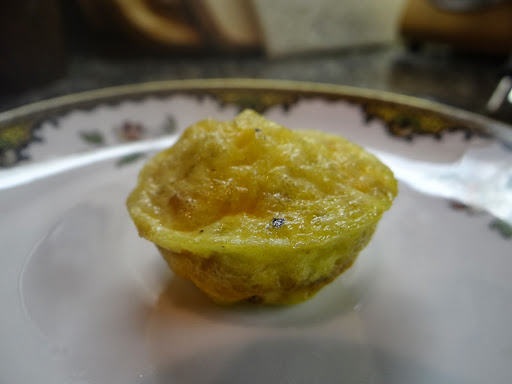
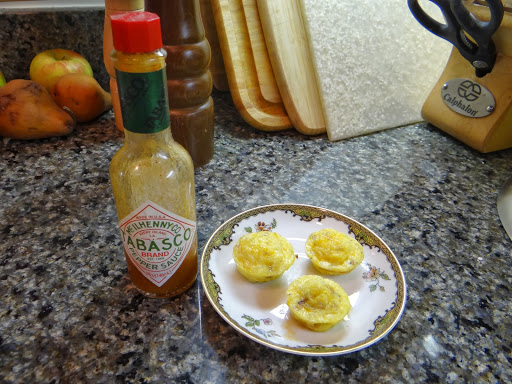
Technically they are mini frittatas, since they are mostly bound by eggs.  They are delicious though, which is the important thing.

I made them because I had a ton of crumbly cornbread stuffing made by my brother that wasn’t going to eat itself.

This recipe is loosely based on one by Heather at Kitchen Concoctions.  I made them mini instead of regular-sized, used cornbread stuffing instead of regular stuffing, and skipped the spinach since I didn’t have any on hand.

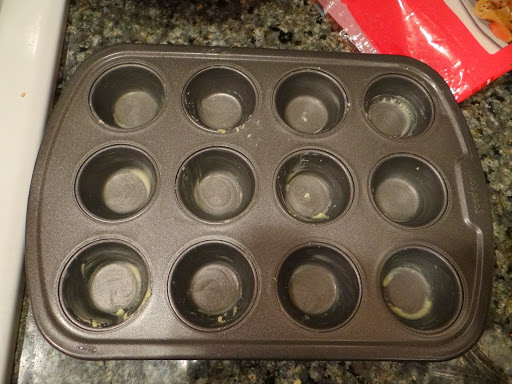
My motivation for making these as mini muffins (mini frittatas, sorry) was two-fold.  First, I wanted to use my new mini muffin pan which was an impulse buy at Harris Teeter last week.  Second, I am always on the lookout for breakfast foods Little Bread Toddler might like.

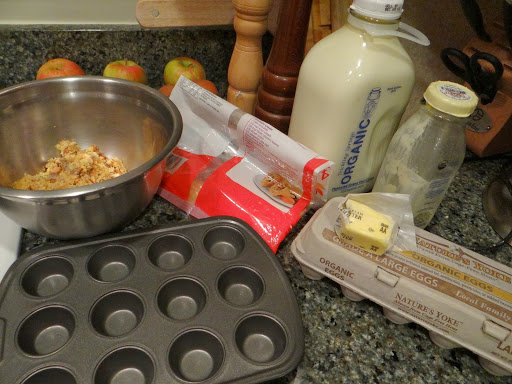
You will need:

6 eggs
about a cup of stuffing, any kind will do
1/3 cup milk or cream
1 cup shredded cheese
pinch of salt
pinch of pepper
Butter or cooking spray

1. Preheat your oven to 400 degrees F.
2. Grease up your muffin pan using the butter or cooking spray.

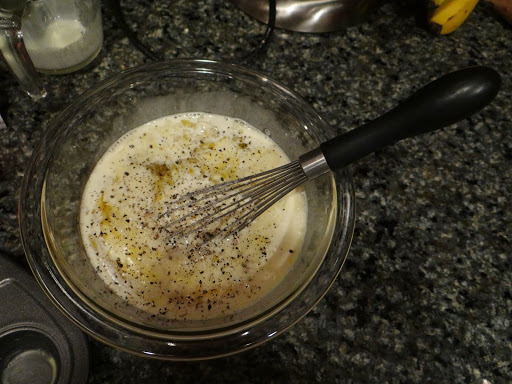
3. Mix together your eggs and cream/milk. Add the salt and pepper.

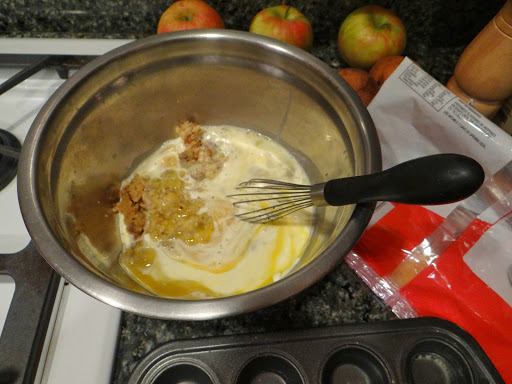
4. Pour over the stuffing and mix to combine.

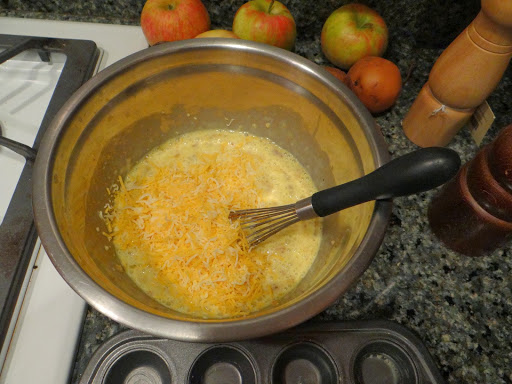
5. Now add the cheese.

6. Pour the batter into the muffin pan until each cup is about 3/4 full.

I had too much batter so I had to make a few regular-sized frittatas too.

7. Bake in the oven for about 10 minutes for mini muffins or 12-15 minutes for regular sized, until the muffins start to pull away from the edges of the pan.

And there you have it.

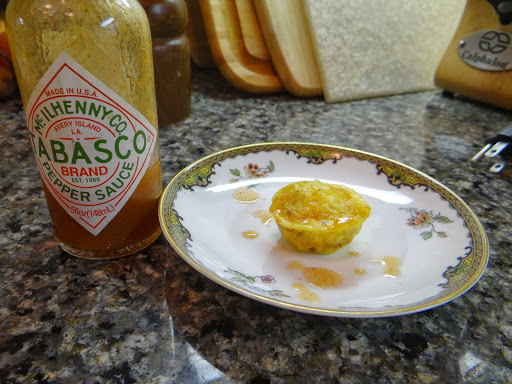
I like them drizzled with tabasco sauce. It just seemed fitting with the eggs and cornbread.

Look how little they are!

Little Bread Toddler liked them with ketchup.  I think these mini frittatas were a hit!  We don’t have very many left but I’ll definitely be making them again.  I think they would be good as appetizers too.  I hope this post has inspired you to think of new ways to use your leftovers.

Bread for communion by intinction part III: making the bread bowl

Now that I have detailed the process for making my “look pretty” and “be tasty” loaves, I will post here about how to make the workhorse of the whole intinction set-up: the bread bowl.

Again, if you have no idea what I’m talking about, click here to learn about the project and what communion by intinction looks like at my church.

If you just want a recipe for decent challah, click here.

If you want to learn how to incorporate fats while developing your own bread recipe, click here.

Ok, now that that’s over, I will tell you why you need this bread bowl.  It will become your favorite vehicle for dips and soups.  Not to mention tiny pieces of bread, if you find yourself ever needing to prepare bread for communion by intinction.

What is great about this recipe is that it uses a combination of bread flour and AP flour, and doesn’t have any fat.  These two factors make the gluten development really strong so it can hold more and won’t fall apart while the inside crumb is being hollowed out.

You will need:

375g of bread flour
375g of AP flour
500g of water
14g of salt
14g of yeast

That’s it!

Put the ingredients in a large bowl and mix with your hands until it forms a rough dough.

Let the dough sit for about fifteen minutes, then knead a little.  It should be much smoother.  Shape it into a ball, cover the bowl with plastic wrap and let sit until doubled in size.

After it has risen once, punch it down and transfer it to a piece of parchment paper and cover it with plastic wrap.  Throw your dutch oven into the oven and preheat it to 450 degrees F.

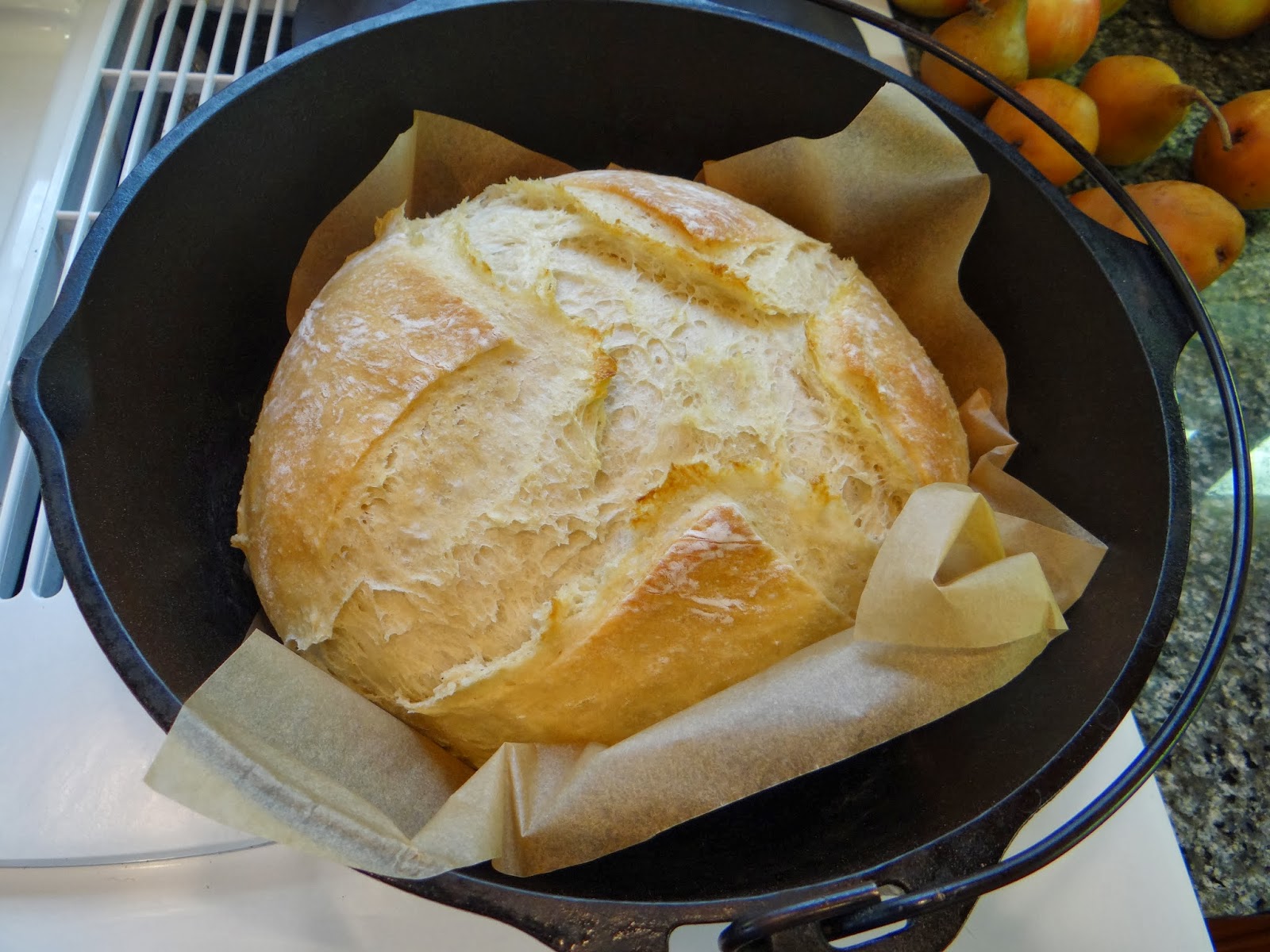
When the oven is preheated, take the plastic wrap off and put your dough (and parchment) into the dutch oven with the lid on.  Bake for 25 minutes with the lid on, then remove the lid and cook another 15 minutes until the dough is golden and hard when you tap it with your fingernail.

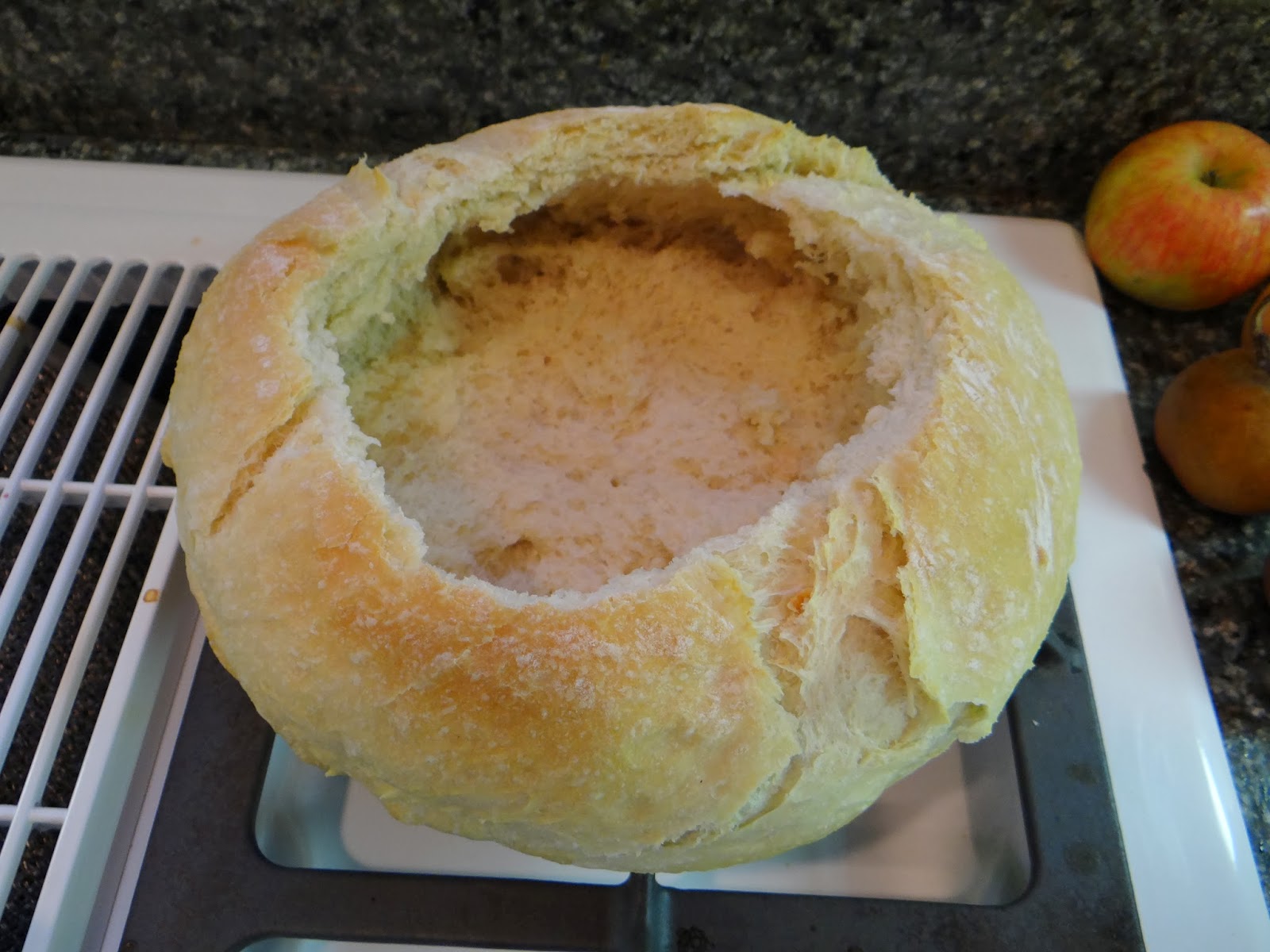
Let the loaf cool completely, then use a sharp knife to cut a circle around the top and remove it.  Use your hands to pull out the rest, working around the sides and the bottom to make it even.  Once you hollow it out, it will look like this:

If you accidentally cut through the bottom or sides of the bread bowl, don’t worry.  You can hide a small bowl inside and no one will know!

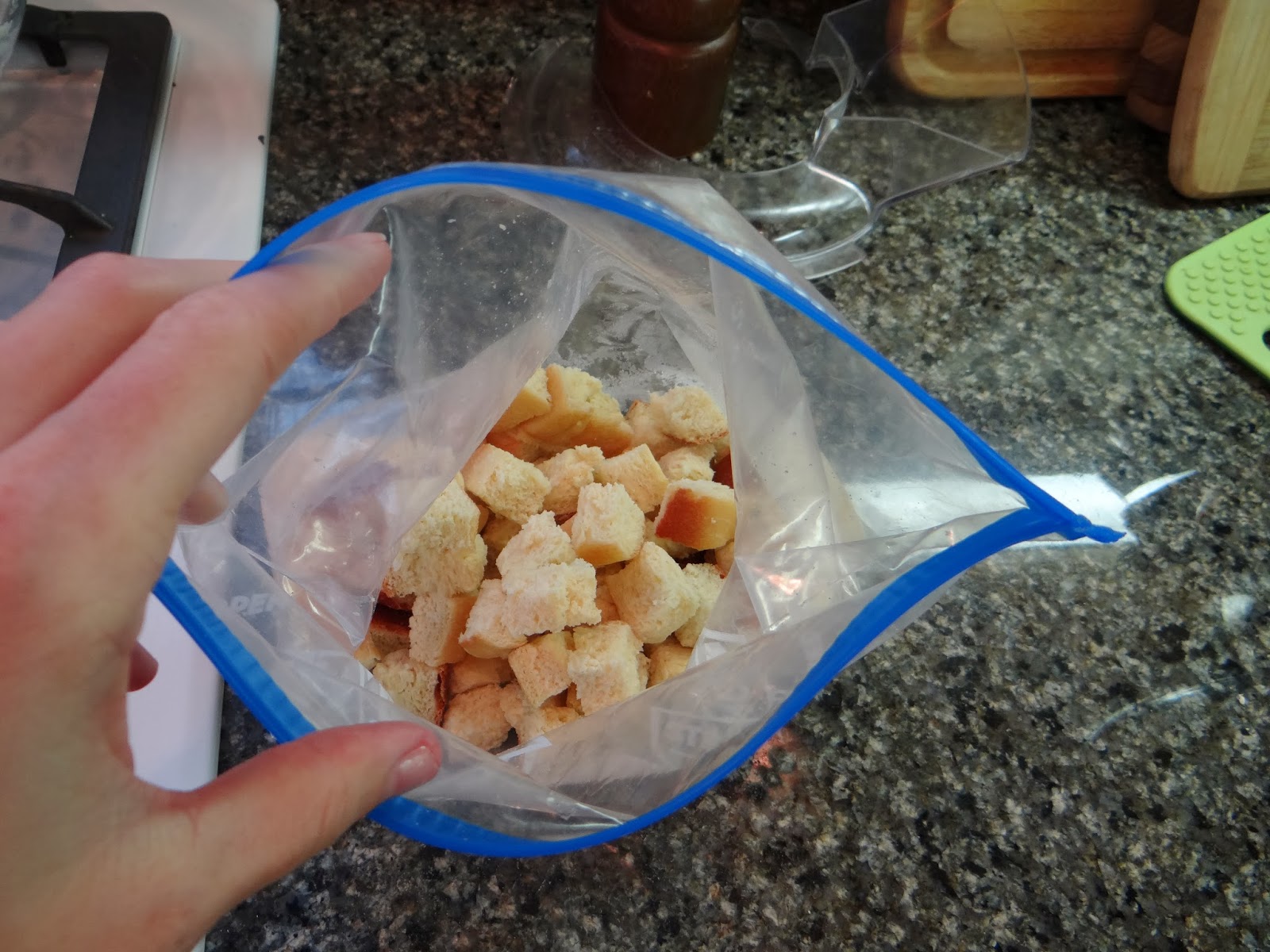
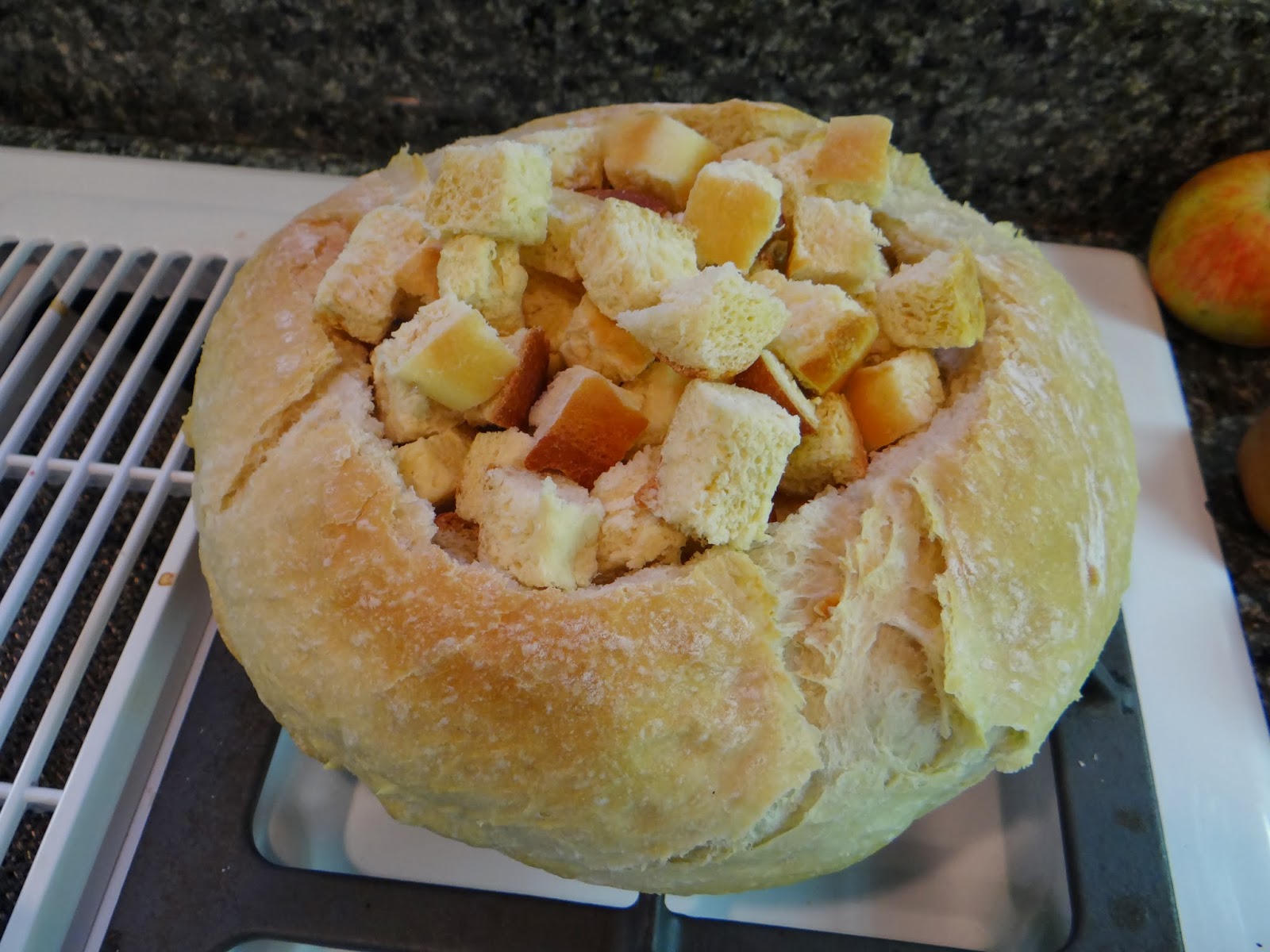
Here it is all filled up with bread.  I had to measure it to make sure it held about 80 pieces of bread, about this size:

My brother and Little Bread Toddler ate all the hollowed-out bread.  So no saved bread crumbs for me.  That’s ok though, I still have a lot left over from the last bread bowl 🙂