Hamburger Buns

 The Joy of Cooking is one of my favorite cookbooks.  I learned to cook from this book.  The Bread Maiden Clan’s favorite roast chicken, pancake, and chili recipes can all be found in this book.

Not to mention, the following hamburger bun recipe.  Over the years I have made this recipe a bunch of different ways, substituting wheat flour for white, vegetable oil for butter, and so on. I find myself using this recipe for all kinds of things. 

It’s technically the “milk bread” recipe, but I’ve made one big alteration here.  Instead of using milk, which results in a dense, chewy bun, I use chicken or vegetable stock, which makes them lighter and fluffier.  If you need a chicken stock recipe, here’s mine (scroll down to CHICKEN STOCK).

YOU WILL NEED:
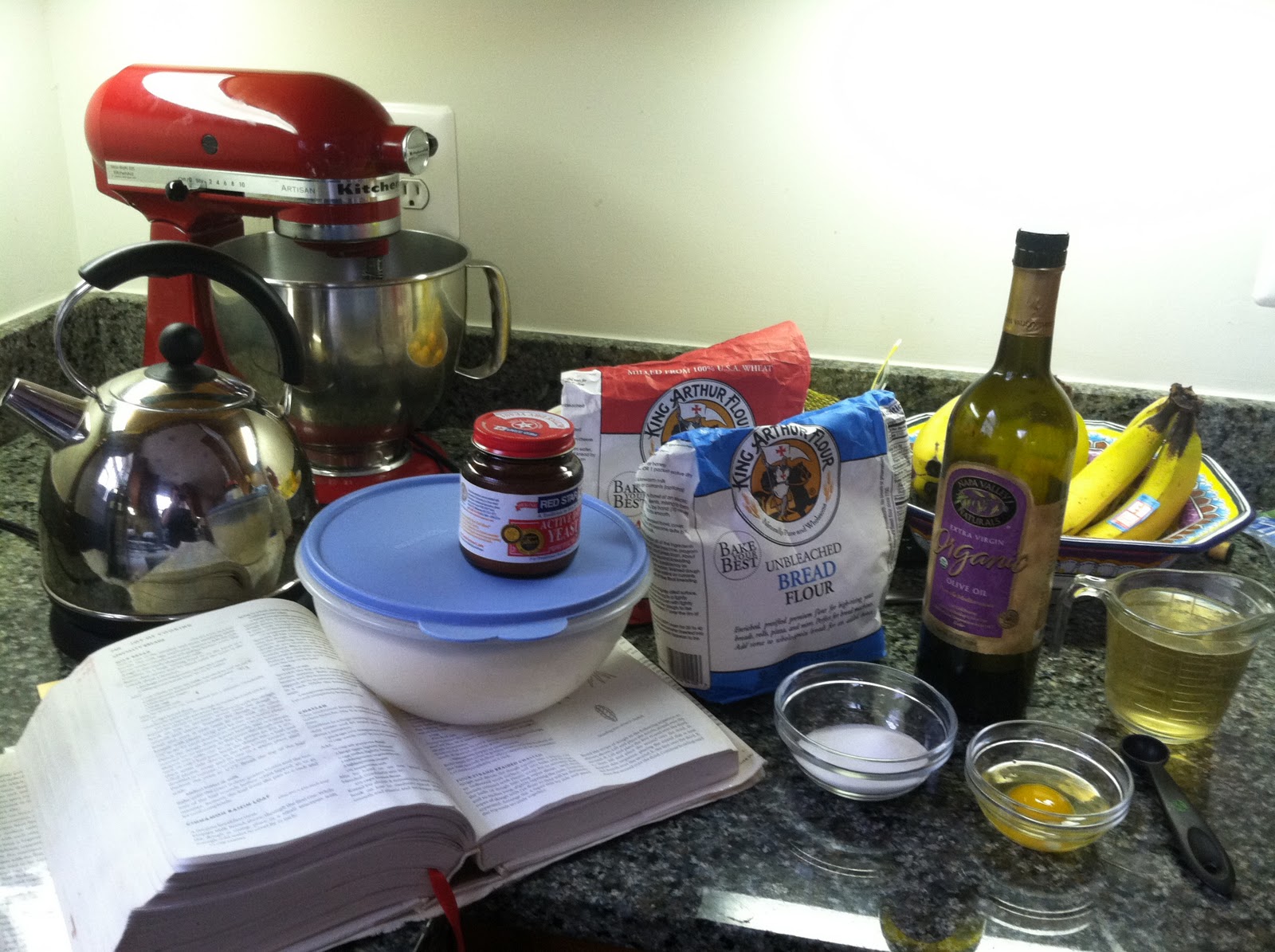
2 1/4 tsp yeast (one packet)
3 tablespoons warm water
3 tablespoons sugar
1 tsp salt
one large egg
5 tablespoons (or 71g) softened butter
1 cup chicken or vegetable broth, or milk
2 cups bread flour
1-2 cups all-purpose flour
dash of olive oil
one large egg (for egg wash)

1. Proof the yeast by putting the water in the bottom of a bowl (or the bowl of your stand mixer) and sprinkling the yeast on top.  Let it sit for about five minutes.
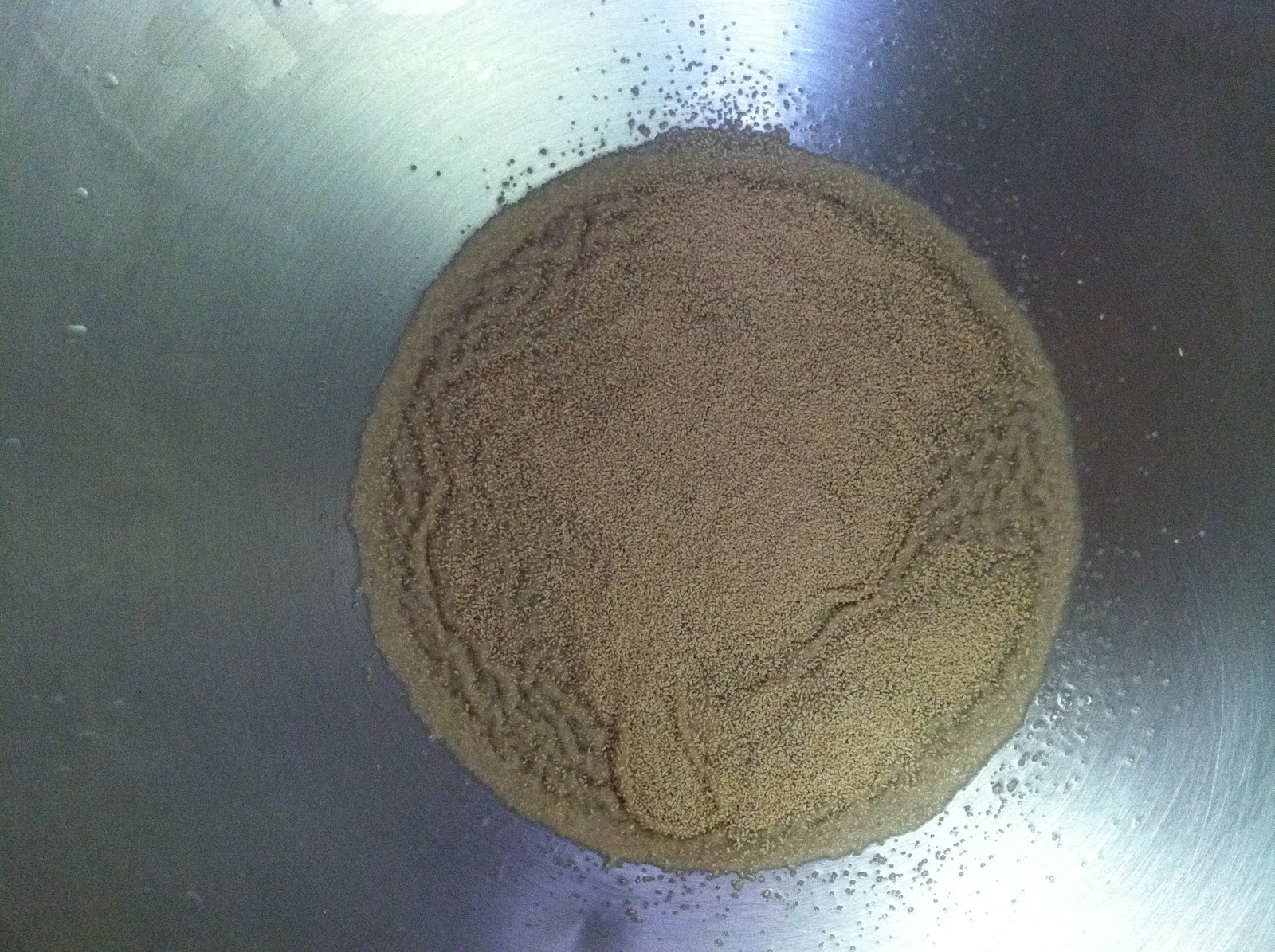
 
After five minutes, it should be puffed up slightly and have a yeasty smell. 
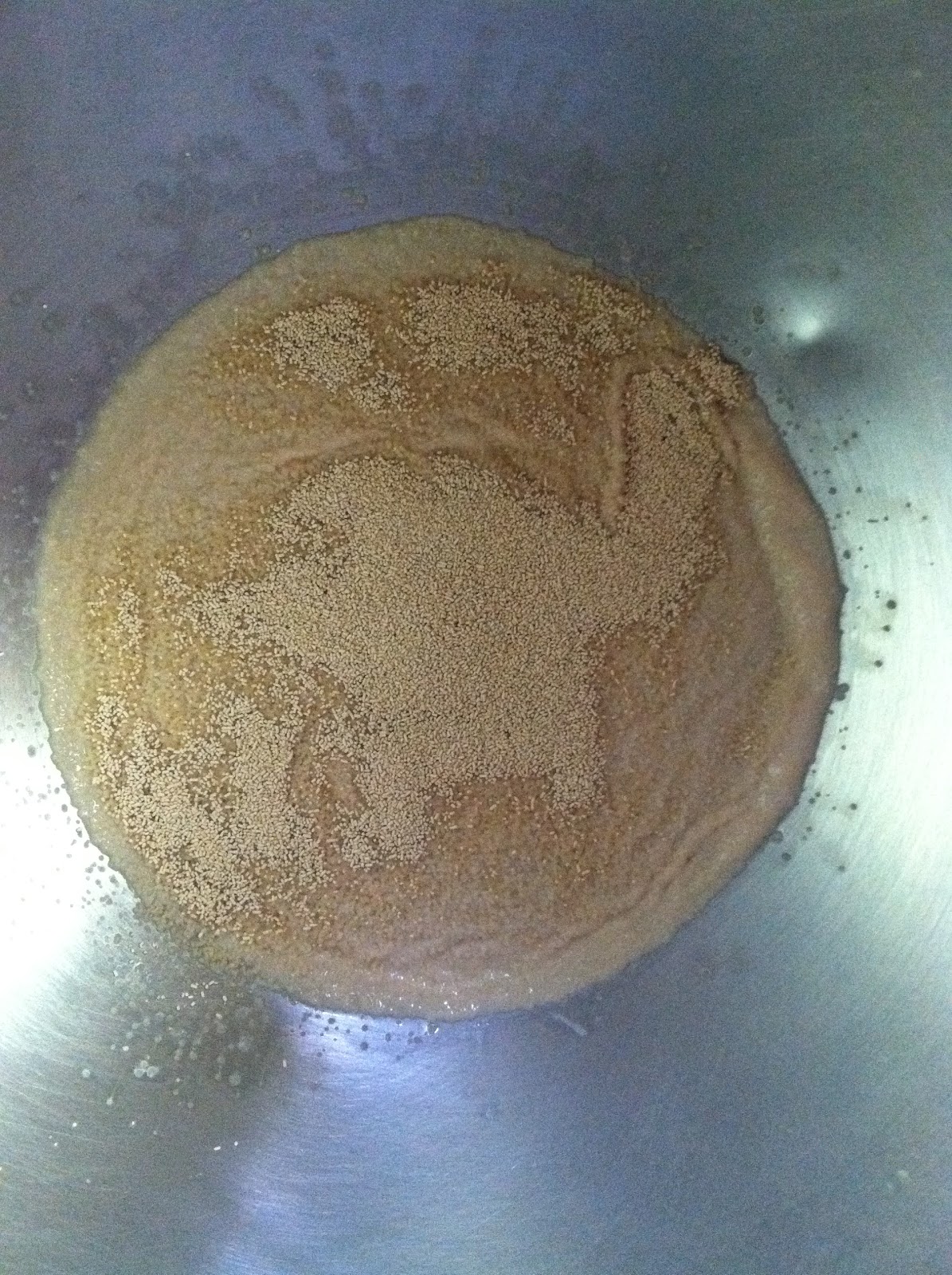
2. To the bowl, add the milk or broth, softened butter, sugar, salt, and egg.
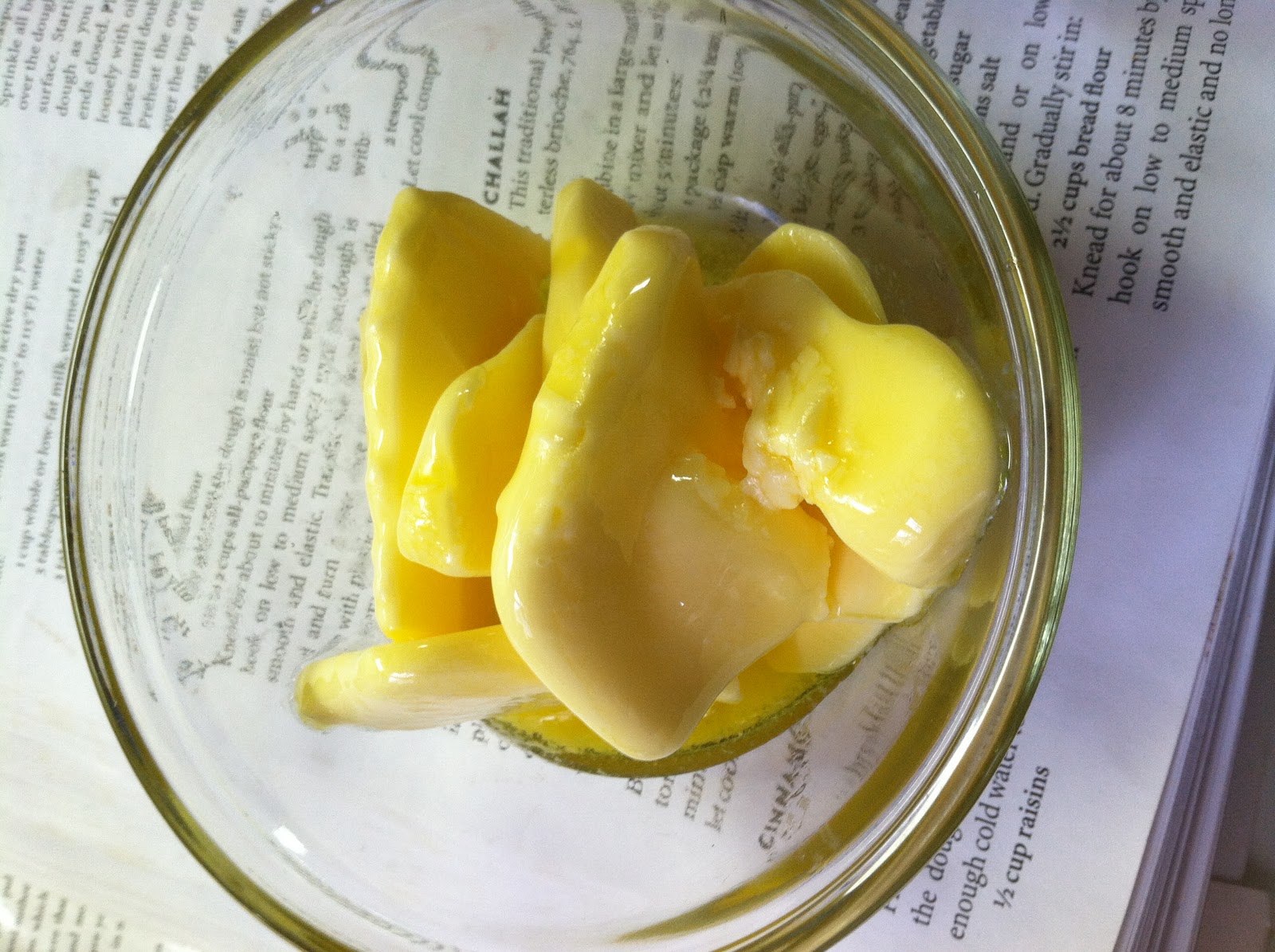
3. Using the paddle attachment on your stand mixer or a spoon, mix thoroughly.
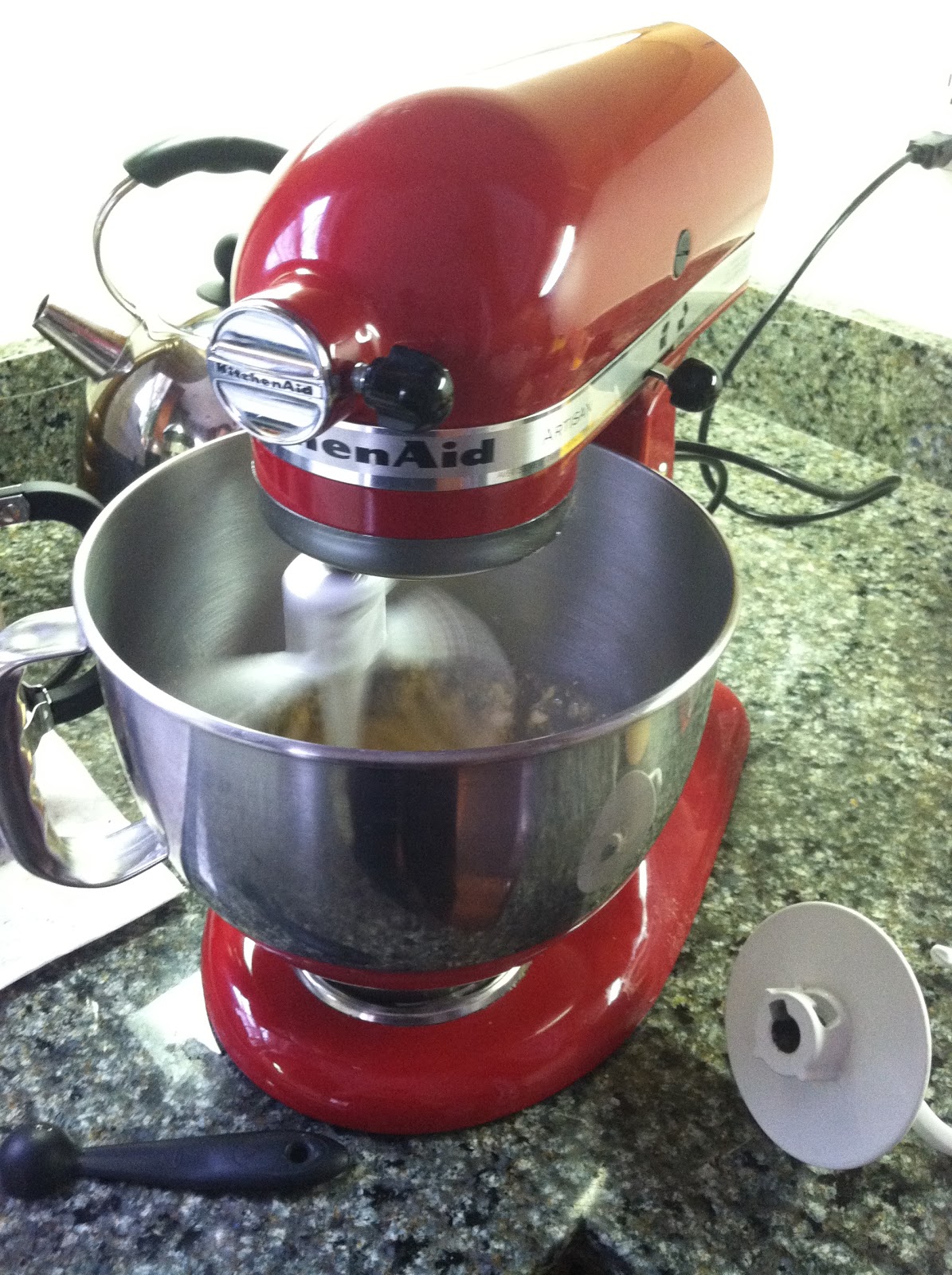
4. Slowly add the 2 cups of bread flour with the stand mixer on low speed. Mix until the dough is moist but not sticky, about a minute or two.

Before we get to step 5, let’s talk about baking for a second.

Most people who don’t like baking say, “I don’t like baking because it’s too technical and you have to measure things exactly or else it won’t work.” 

These people think as long as you measure out the ingredients exactly as indicated in the recipe, it will come out perfect, but if you stray too far from the recipe, all is lost.

Not so, my friends.

Baking actually calls for a great deal of flexibility, depending on the weather, the strength of the other ingredients, how they work together, and even how adventurous you’re feeling that particular day.

I’m not saying you can just throw in or omit ingredients willy-nilly.

But the way to bake is by following the dough and how it feels and looks.  It takes time to figure out.  It takes making a recipe more than once.  But once you get comfortable seeing the signs for how something should look and feel, I guarantee you will always have success baking.

Now back to these dinner rolls.

5. With your stand mixer still on the low setting, slowly add the remaining two cups of all-purpose flour.

BUT WAIT! 

This is important.  Add the all-purpose flour about a half cup at a time. WATCH the dough.
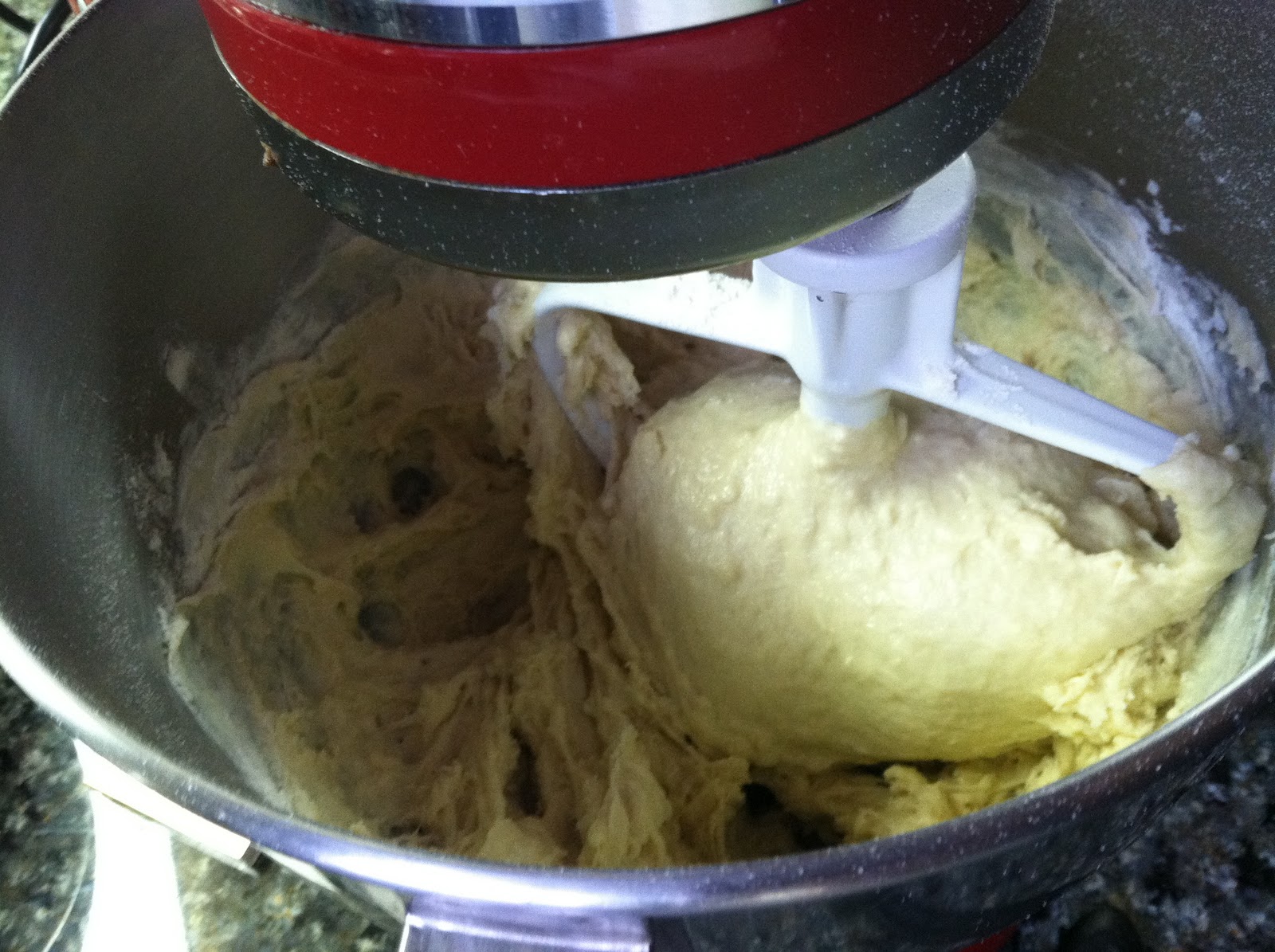
Around the 1 1/2 cup mark, it should start gently pulling away from the sides of the bowl, forming a ball on the paddle.

If it isn’t doing this, add the final 1/2 cup of flour.

Once it is slightly pulling away from the bowl, turn off the stand mixer and remove the paddle, replacing it with the bread hook.
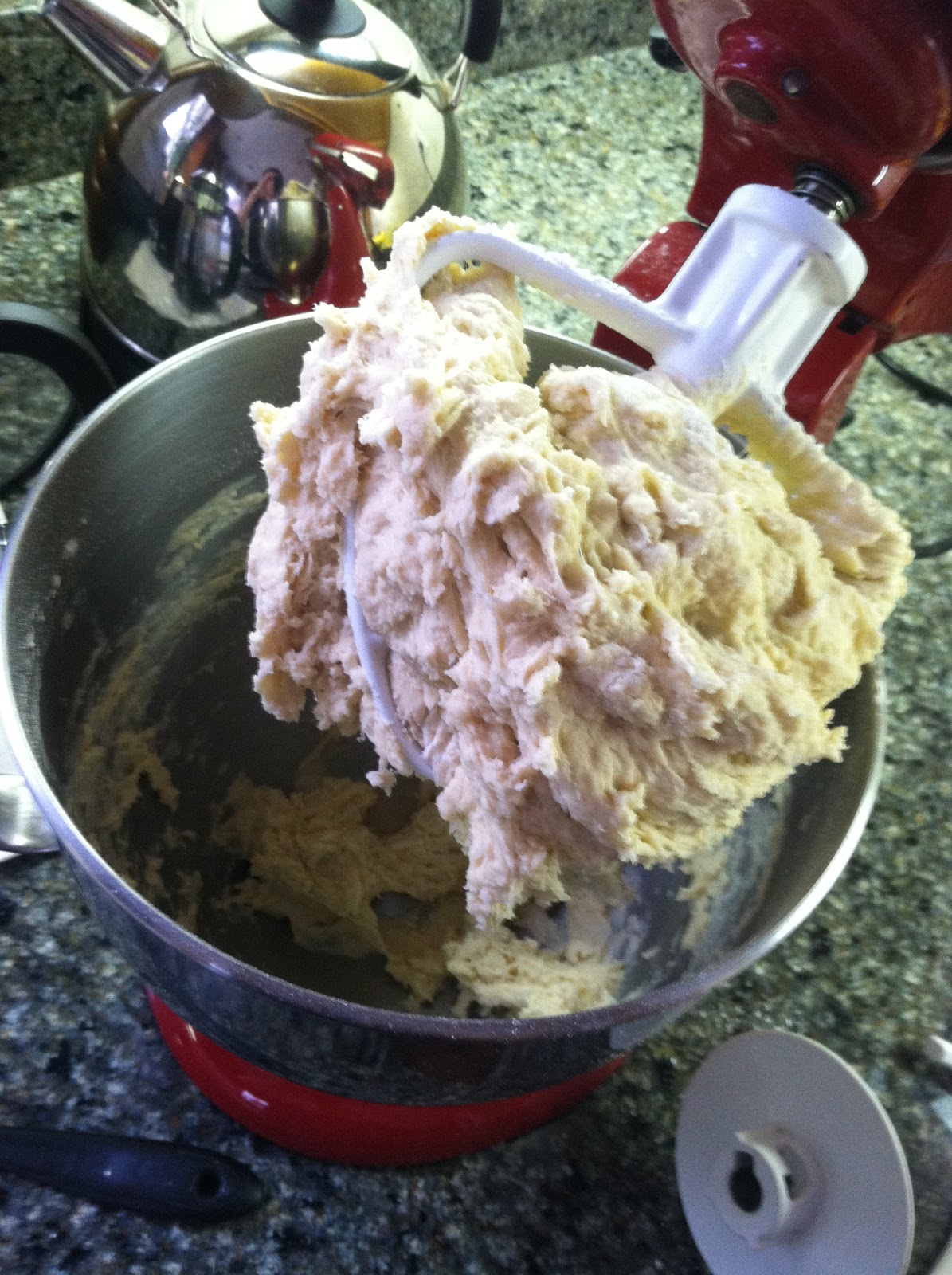
6. Once the bread hook is on, turn the mixer onto medium-low speed and mix the dough for about 10 minutes. 
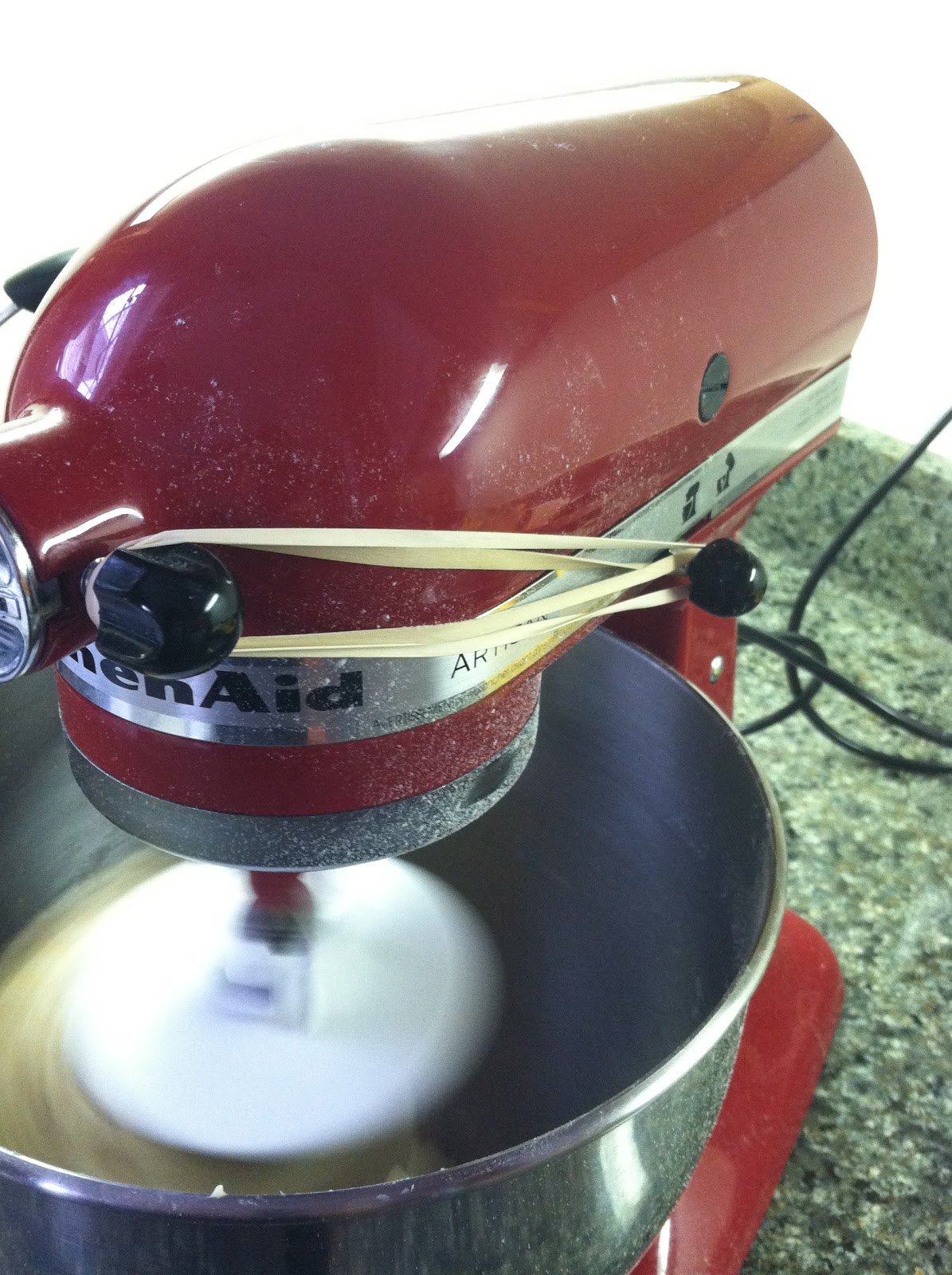
After five years, my mixer needs a little assistance.
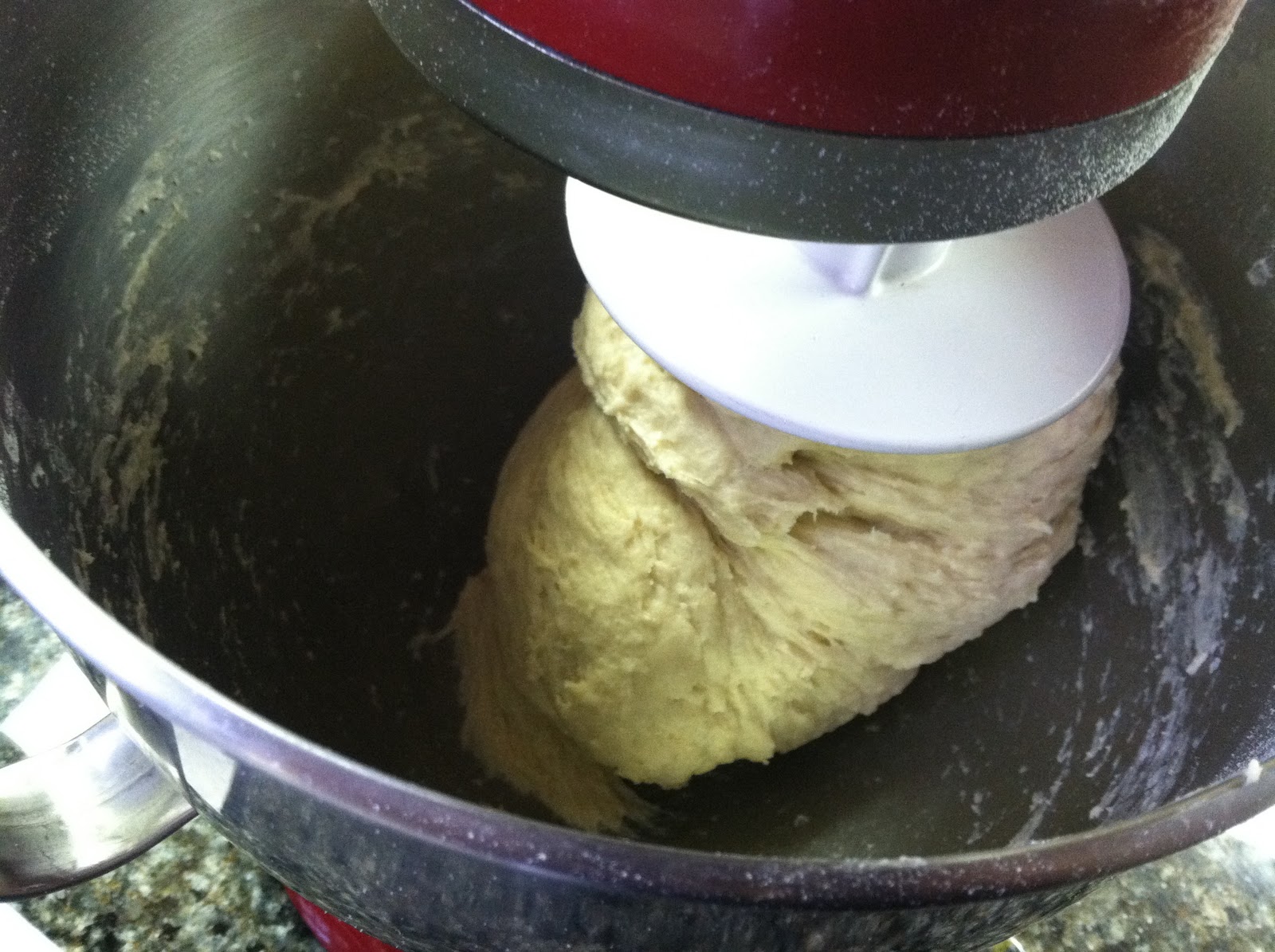
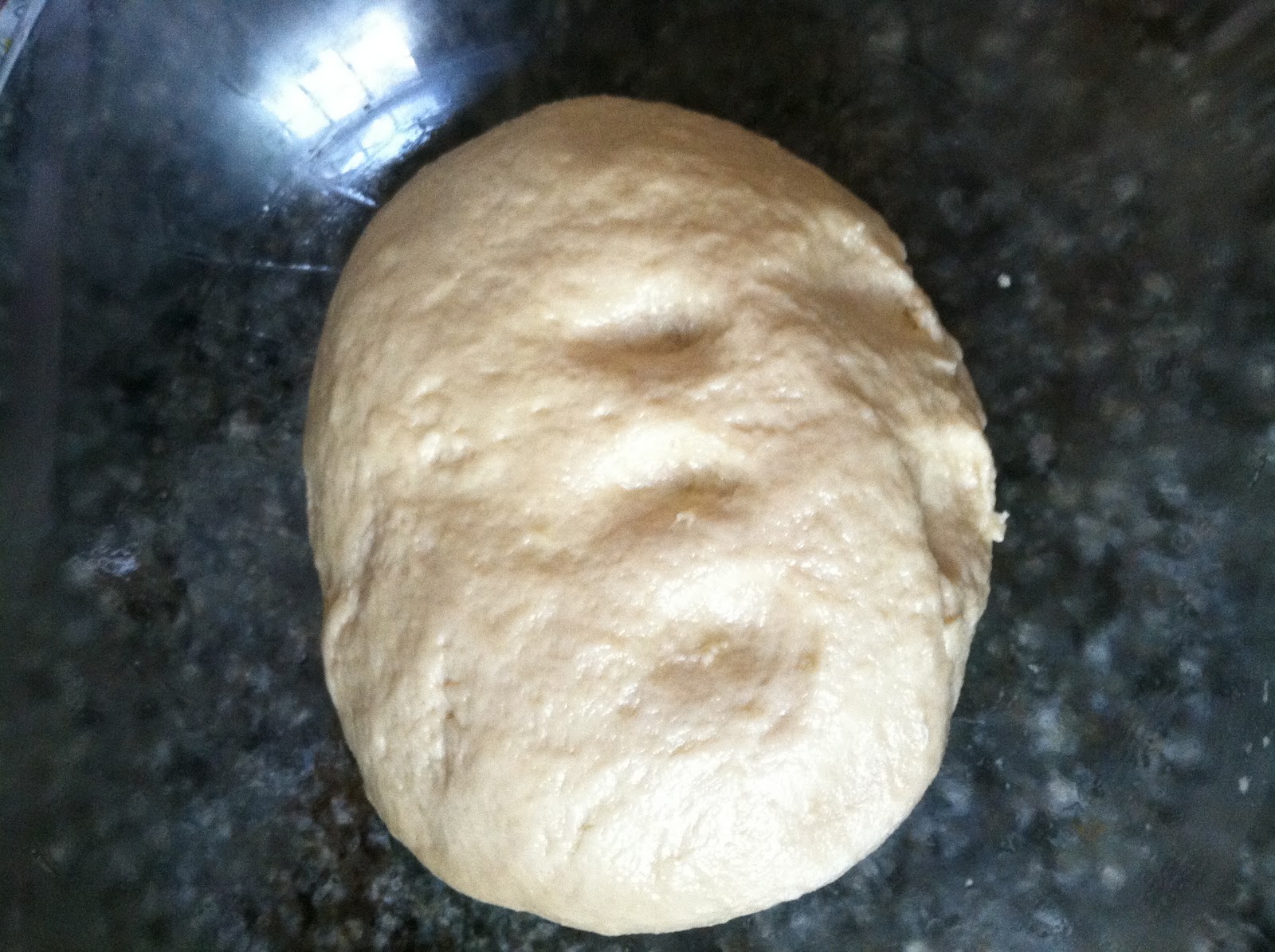
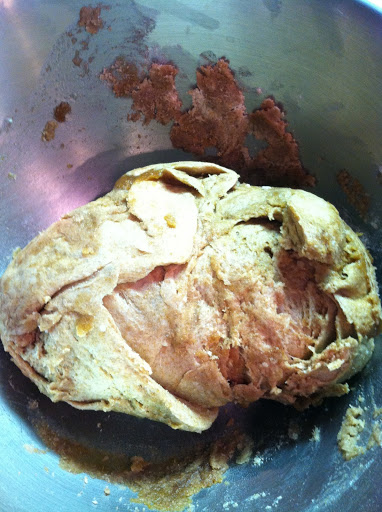
The dough should really pull from the sides of the bowl and form a ball on the bread hook. 

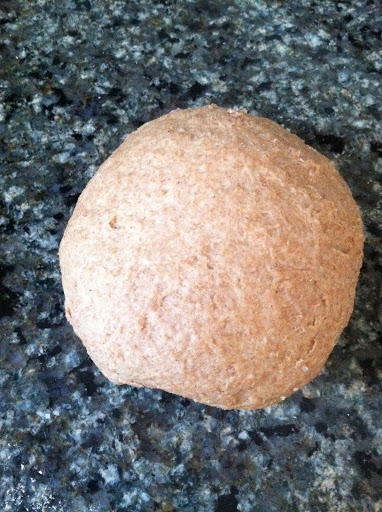
After ten minutes, the dough should be elastic and smooth.
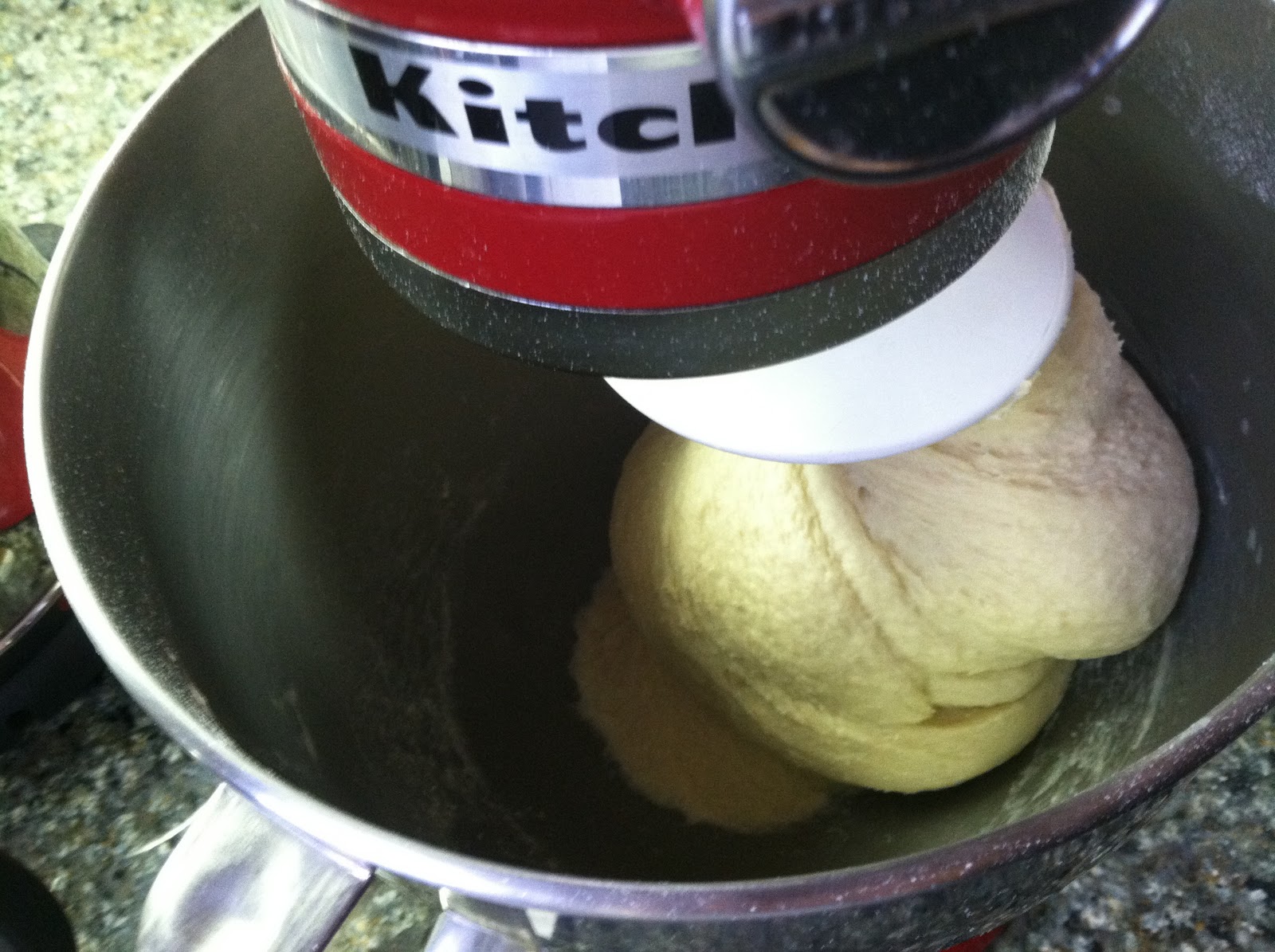
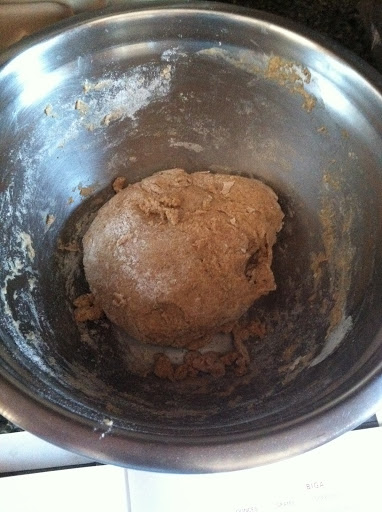
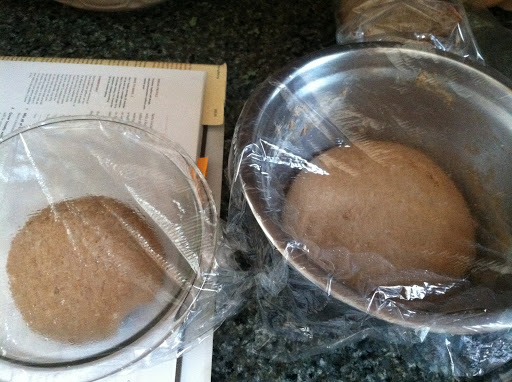
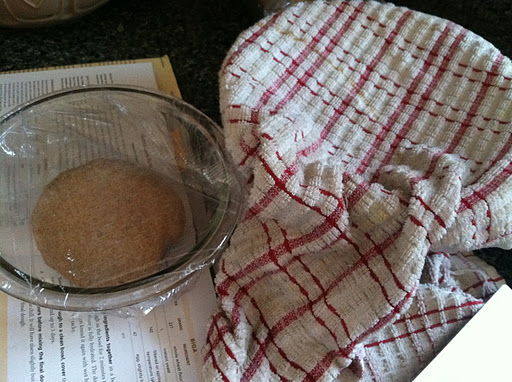
7. Pour a dash of olive oil into a large bowl.  Take the ball of dough out of the mixer and spread it in the bowl to coat it in oil.  Cover with plastic wrap and a kitchen towel and let it rise for about 90 minutes to 2 hours.
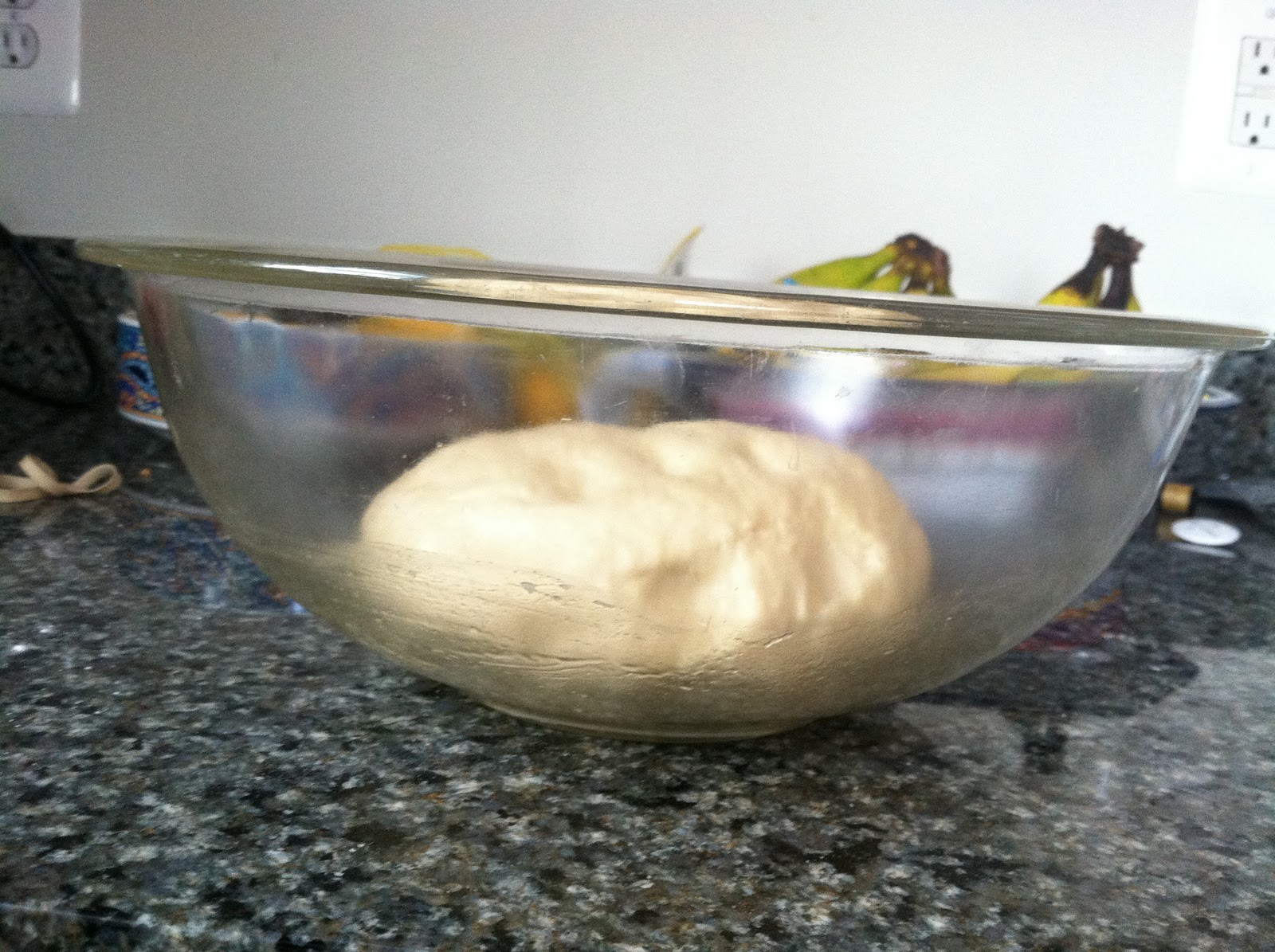
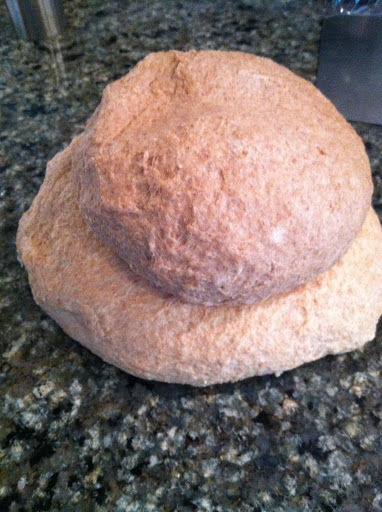
  After two hours:
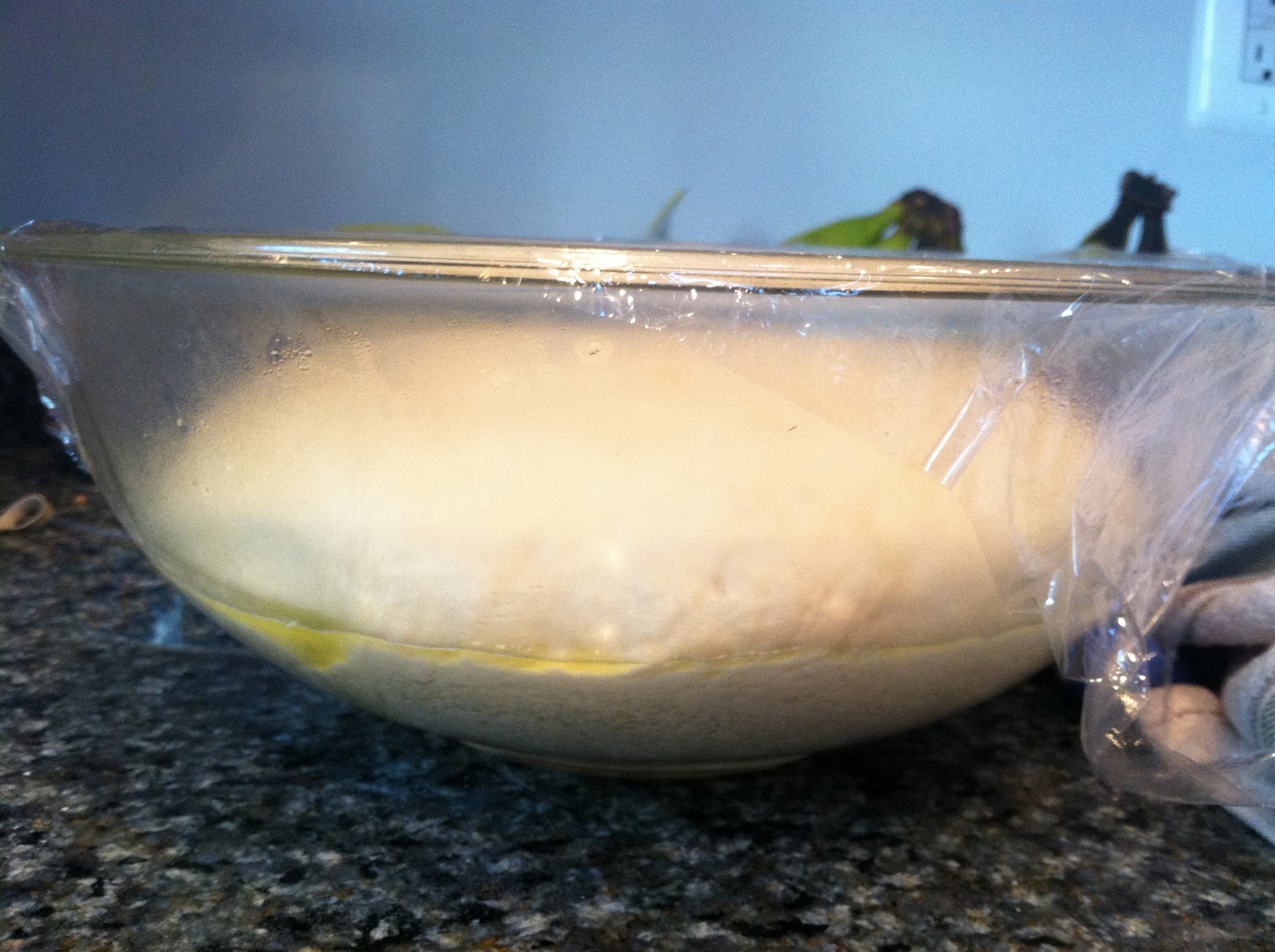
Perfect!

8.  Once it has risen to twice its original size, gently punch the dough down, take it out and knead it in your hands a little bit, then return it to the bowl, recover with plastic, and refrigerate for 30 minutes.  You’ll probably want to preheat your oven at this point to 425 degrees F.

9. Take the dough out of the refrigerator and move to a flat surface.  You will need a pastry cutter and a kitchen scale for this part, if you want perfectly evenly-cooked buns.
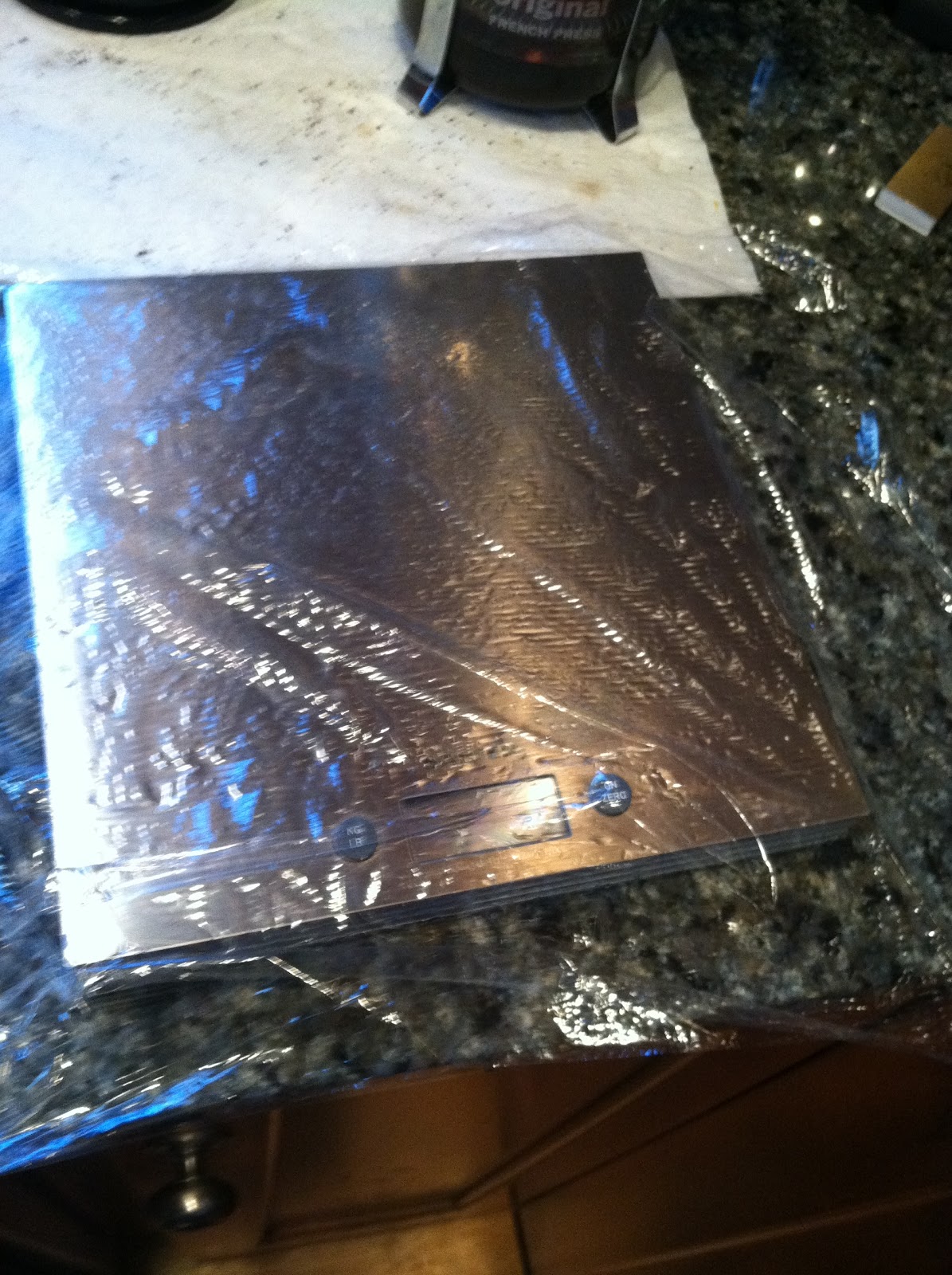
Take the plastic wrap off the bowl and use to cover your kitchen scale, so it doesn’t get all greasy from the dough.

Using the pastry cutter, divide your dough into quarters or so.
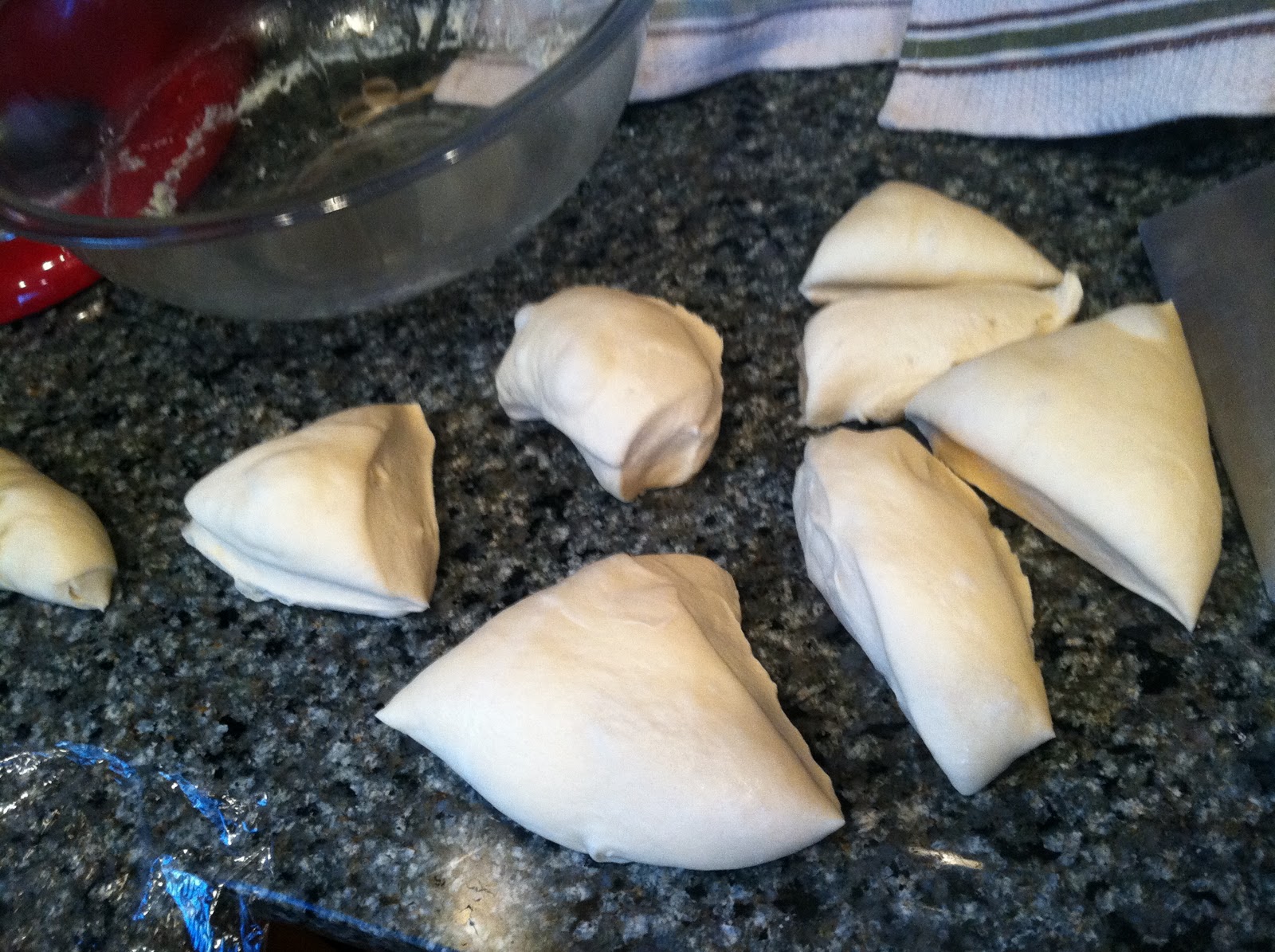
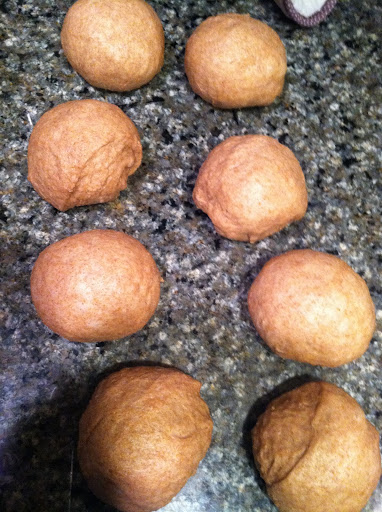
Now, decide how big you want the buns to be.  For small dinner rolls, you’ll want them to be about 75 grams each.  For hamburger buns, you’ll want them closer to 95 or 100g.

Weigh each piece of dough and adjust accordingly until each piece is uniform in weight.  Roll into balls and put on your…
…parchment-lined baking sheet.

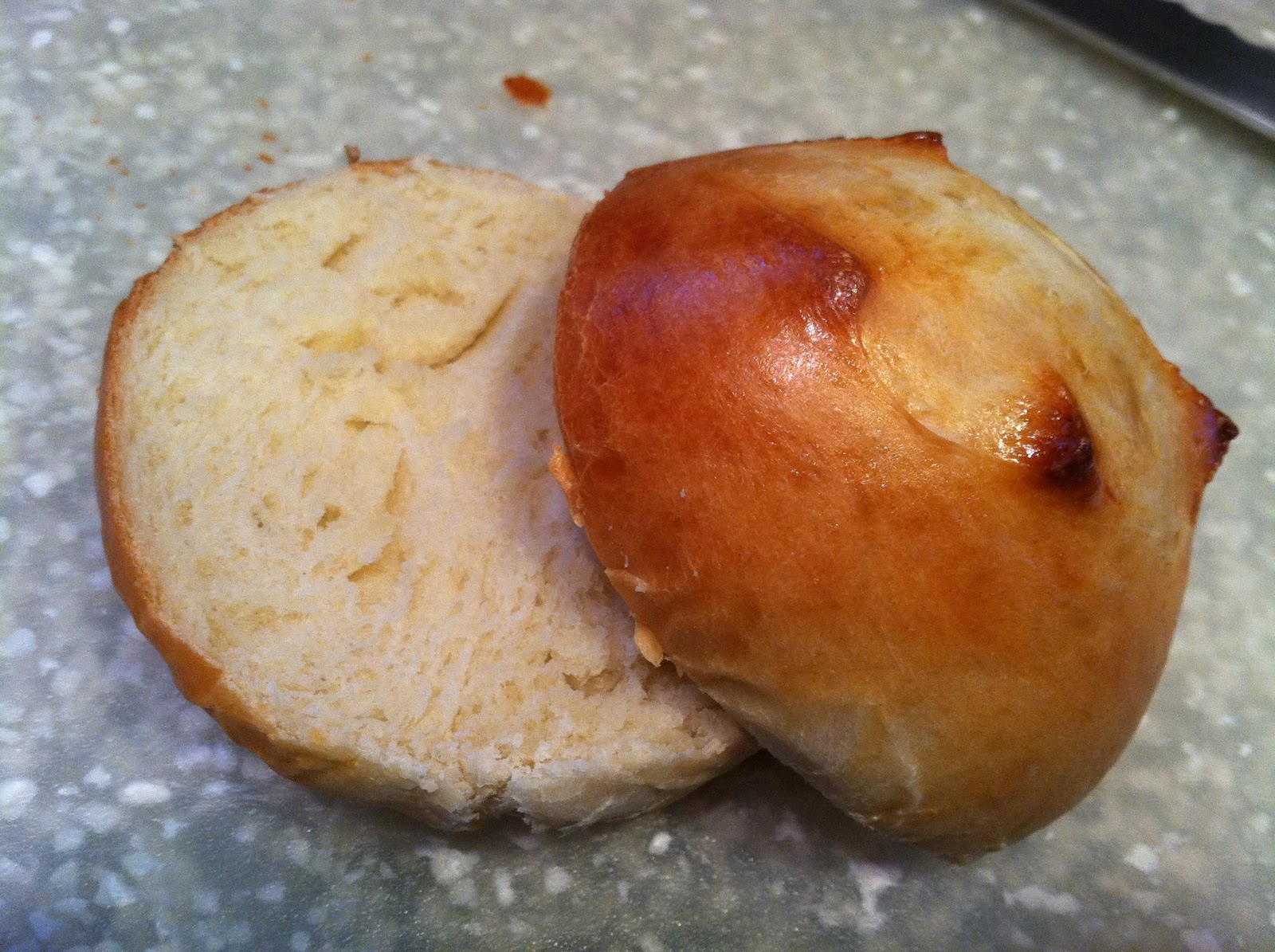
Once you have your buns on the baking sheets, score them using a sharp knife.  Just draw a little cross on the top.
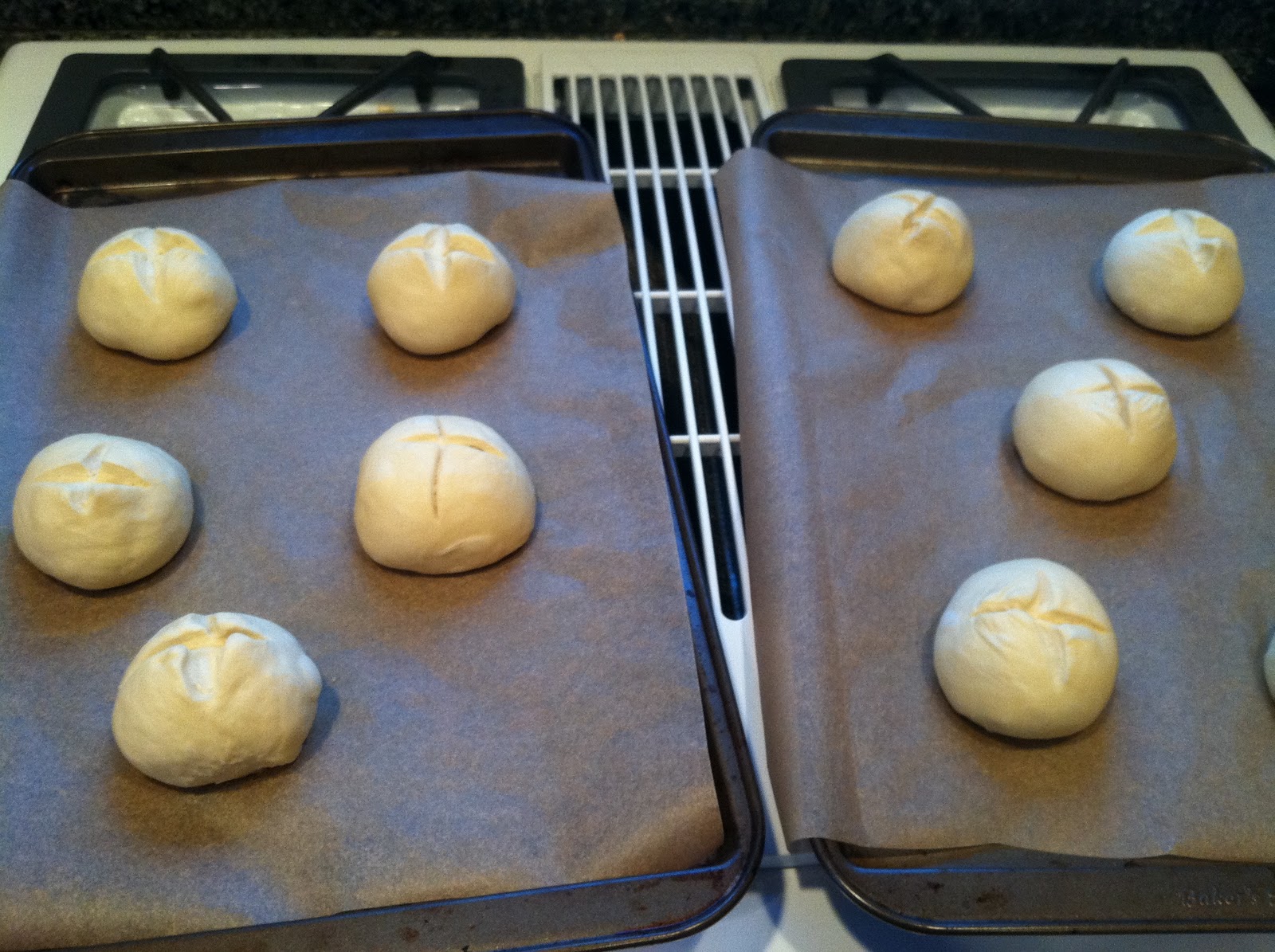
Take your second egg and crack it into a small bowl.  Whisk with a fork, then use a pastry brush or piece of paper towel to apply the egg wash to the top of each bun.  This will make the buns nice and brown and give them a shiny coating.
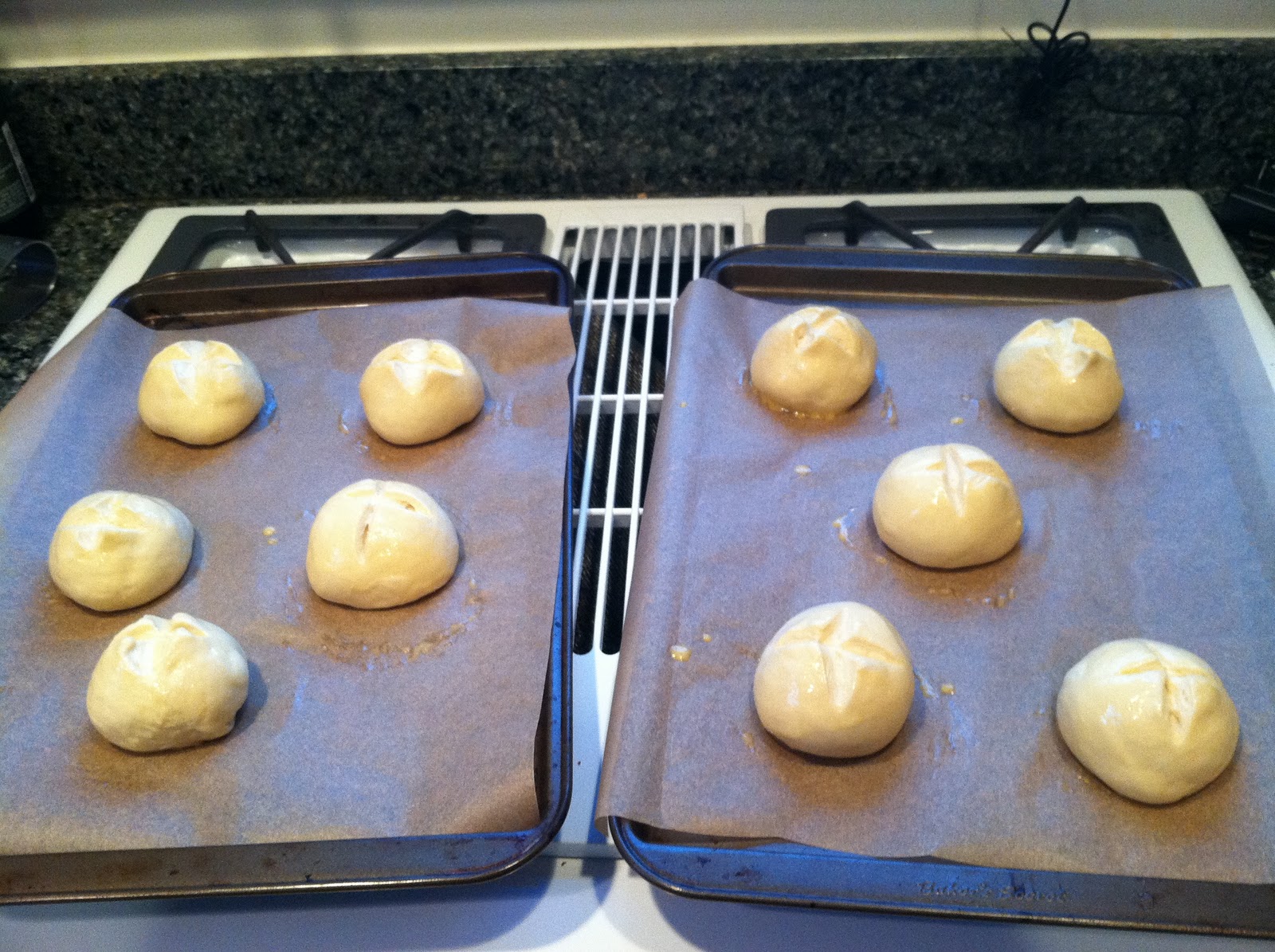
Stick these in the oven for about 15 minutes, rotating the baking sheets once they’ve done all the rising they’re going to do, at about 12 minutes.  Once again, you want to rely on sight, not just what the recipe says, to determine when to take the buns out of the oven.  Because these hamburger buns are pretty big, I’m going to bake them for longer than the allotted time, about 17 minutes instead.

These buns look great!  And they’re so easy to make.  I hope this puts you in the mood to have hamburgers this week, to go with your homemade hamburger buns!
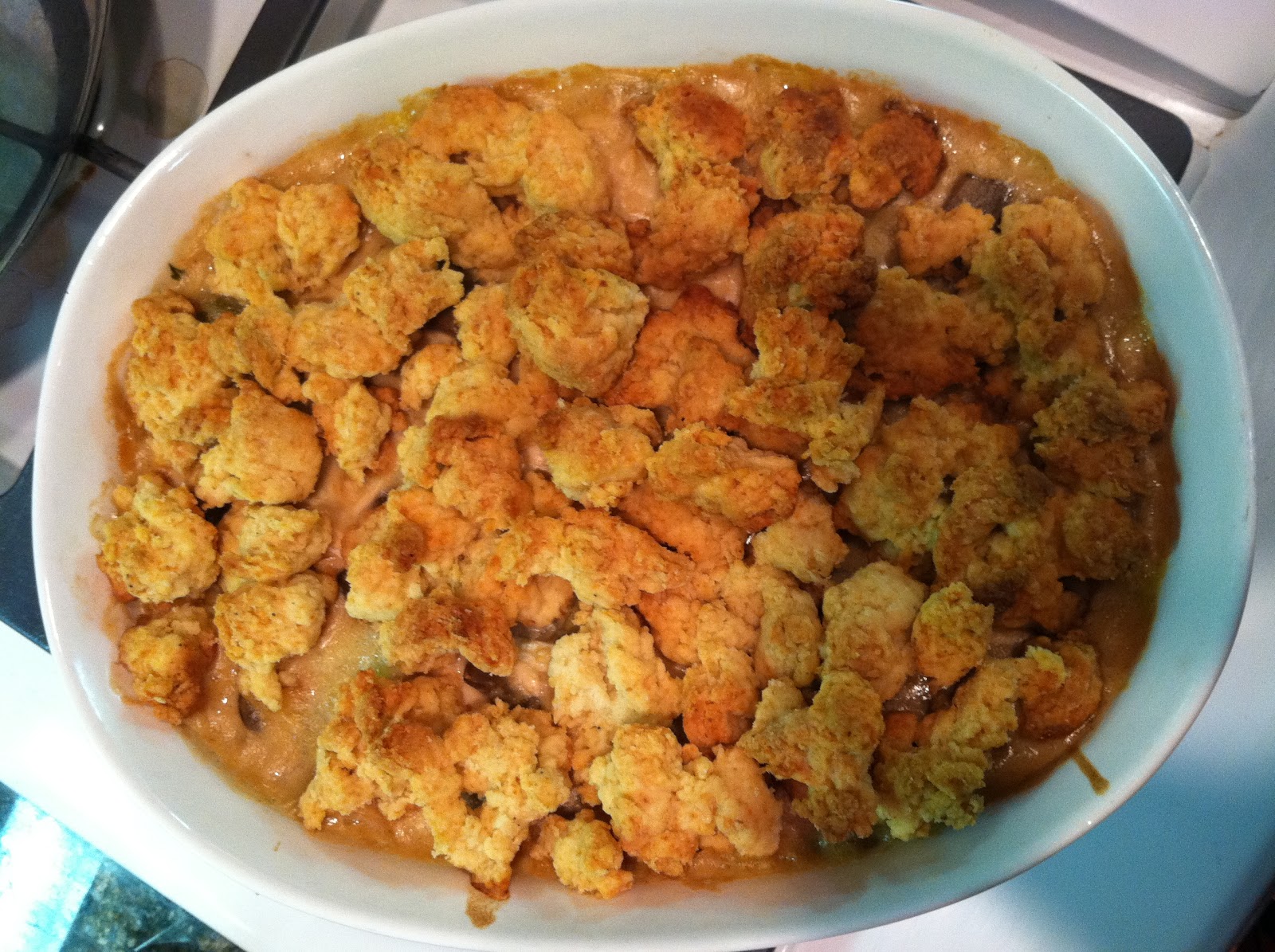
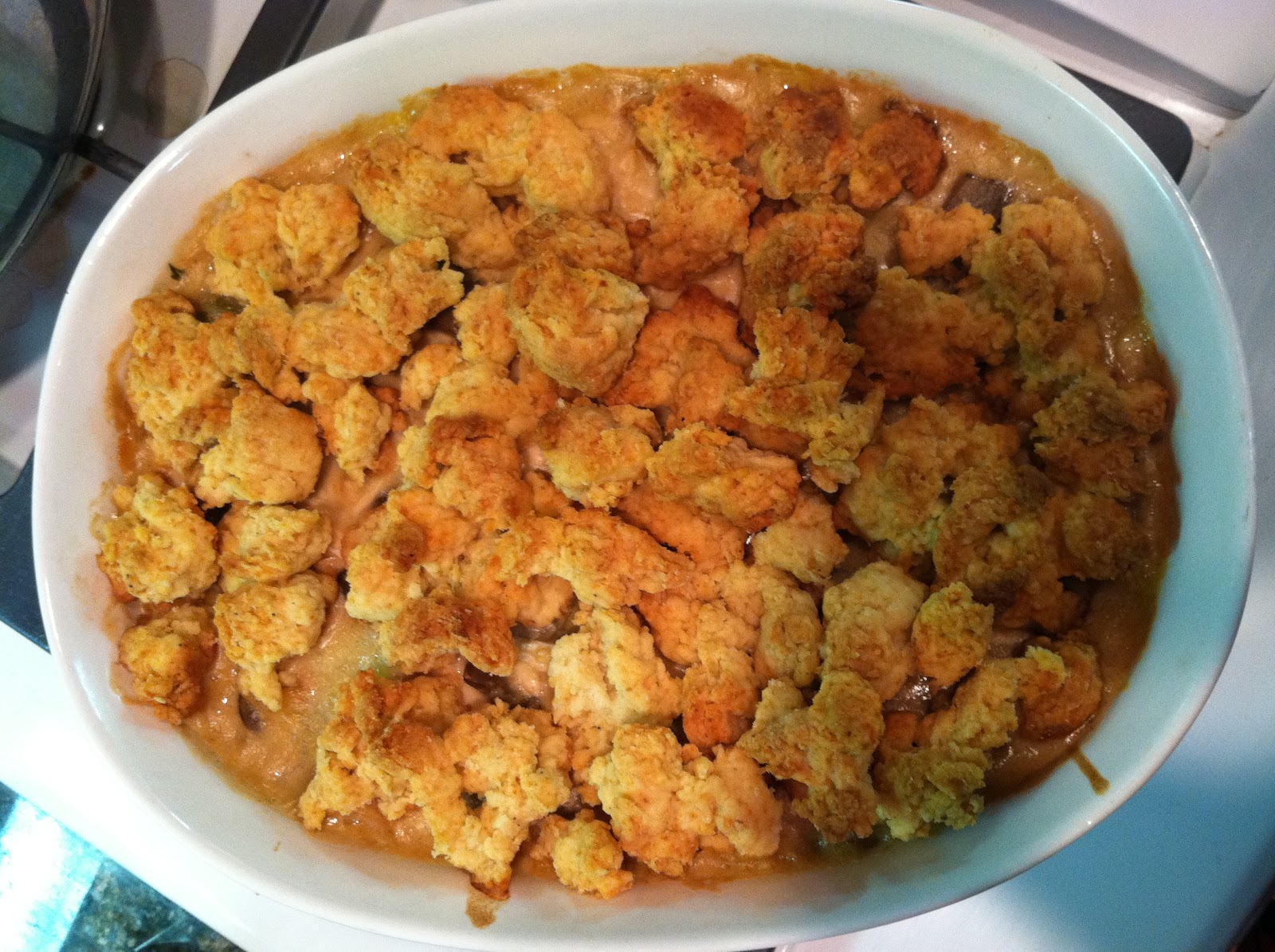
Chicken Pot Pie, Version I

 Chicken pot pie is a great recipe for leftovers.  It does take a weekend afternoon-to-night to assemble everything and bake it, but once it’s done you can freeze it and reheat it on an especially busy weeknight.  If you have some of the ingredients (chicken stock, cooked chicken) lying around the house, it might take an hour to assemble. 

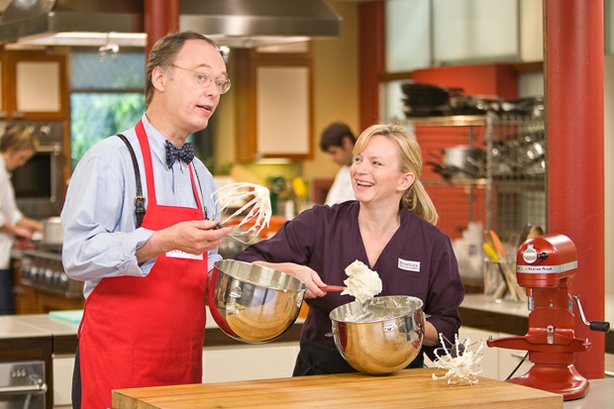
This recipe comes from America’s Test Kitchen. 

credit: America’s Test Kitchen

 When Mr. Bread Maiden and I were watching the episode, I thought the way they used a crumble topping instead of a biscuit topping was sacrilege.  That could not POSSIBLY be the best chicken pot pie.  You know why? Because *I* make the best chicken pot pie, and it uses the biscuit recipe I outline here.

But, you know what?  ATK’s crumble may not be the *best* topping.  But I thought about what it would take to make my biscuit topping, and how I had already made chicken stock from scratch, and roasted a chicken from scratch, and cooked vegetables and mushrooms and made a sauce, and it was 8:30pm and there were tons of dishes in the sink … and I went with the crumble.

If you want to be a domestic goddess and make all the elements yourself, I suggest you make one element per day so you don’t go crazy and exhaust yourself, like I did.

By the way, even though this recipe comes from America’s Test Kitchen, they put their recipes behind a paywall.  So I found the recipe here, at Food, Folks and Fun.

YOU WILL NEED:

1 1/2 pounds cooked chicken or one whole raw chicken
3 cup chicken broth (or some carrots, some celery, an onion and a head of garlic)
2 tbls vegetable oil
1 medium onion, chopped fine
3 medium carrots, peeled and cut crosswise into 1/4-inch-thick slices
2 small celery ribs, chopped fine
salt and ground black pepper to taste
10 ounces cremini mushrooms, stems trimmed, caps wiped clean and sliced thin
1 t soy sauce
1 t tomato paste
4 Tbls (1/2 stick or 56g) unsalted butter
1/2 cups unbleached all-purpose flour
1 cup whole milk or cream
2 tsp juice from 1 lemon
3 Tbls minced fresh parsley leaves
3/4 cup frozen baby peas
2 cups or 10oz all-purpose flour
6 Tbls or 86g butter, cut into chunks and chilled
3/4 cups plus 2 Tbls cream
1/2 cup or 1 oz parmesan cheese
2 tsp baking powder 
1/8 tsp cayenne powder
3/4 tsp salt
1/2 tsp black pepper
 

If you already have chicken stock and leftover cooked chicken, please feel free to skip the next two steps.

ROAST CHICKEN

1. Preheat the oven to 425 degrees F.
2. Set a roasting or baking rack into a deep roasting pan.
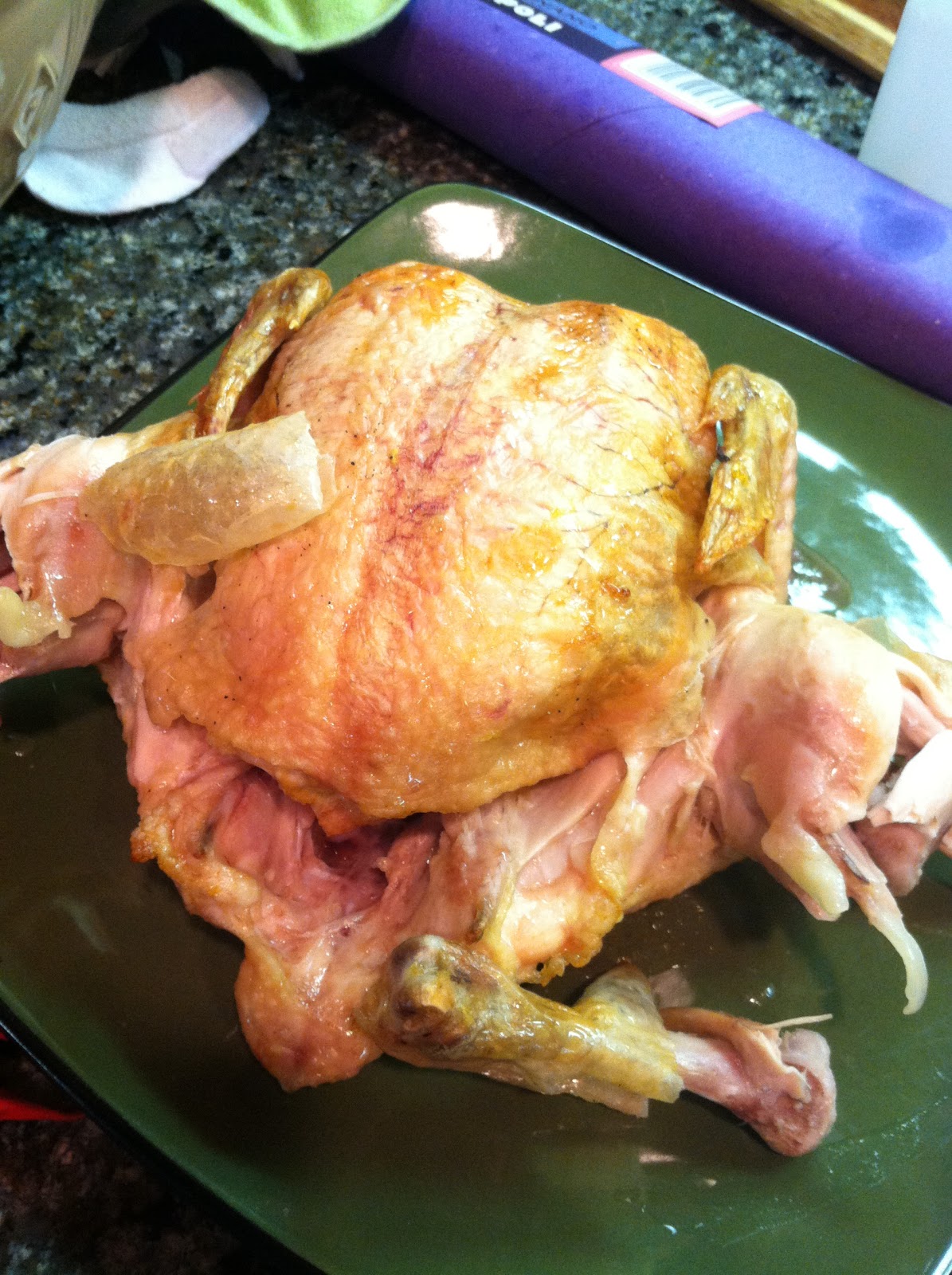
3. Rub a chicken with melted butter, salt and pepper and place on the baking rack.  Put the pan in the oven for about 10 minutes.

4.  Turn the temperature down to 375 and bake another 30 minutes or so, until the internal temperature is about 145-150.  It doesn’t matter if the skin isn’t crispy; you’re just going to discard the skin anyway.  Take it out and let it cool before you take the meat off the carcass and shred it up.  Place the chicken meat in a bowl and set aside.
 
 
5. You aren’t finished with the oven yet!  Turn it back up to 450!  If you don’t have chicken stock available, make this easy stock recipe and let it simmer while you cook the vegetables and mushrooms and bake the topping.
CHICKEN STOCK
 
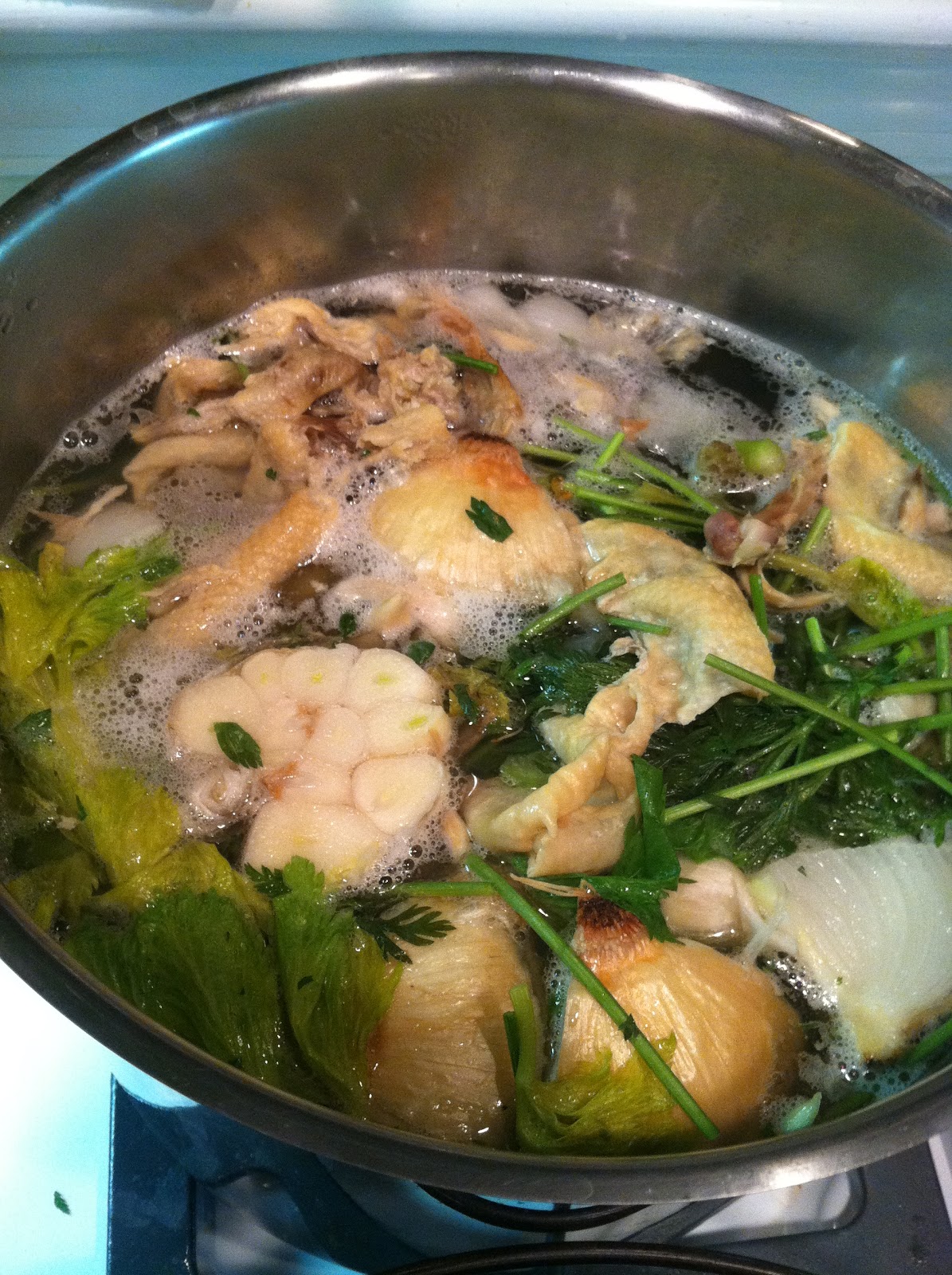
1. Take the chicken carcass and place in a large stock pot.  Cover with cold water, turn your stove up to high heat and let the water come to a boil.
2. While it’s coming up to a boil, cut up a carrot (or just use the stems and leaves from the carrots you plan to use in the filling), some celery (or the leaves from the celery in the filling), cut up an onion into quarters and a head of garlic in half, and add to the water.
 
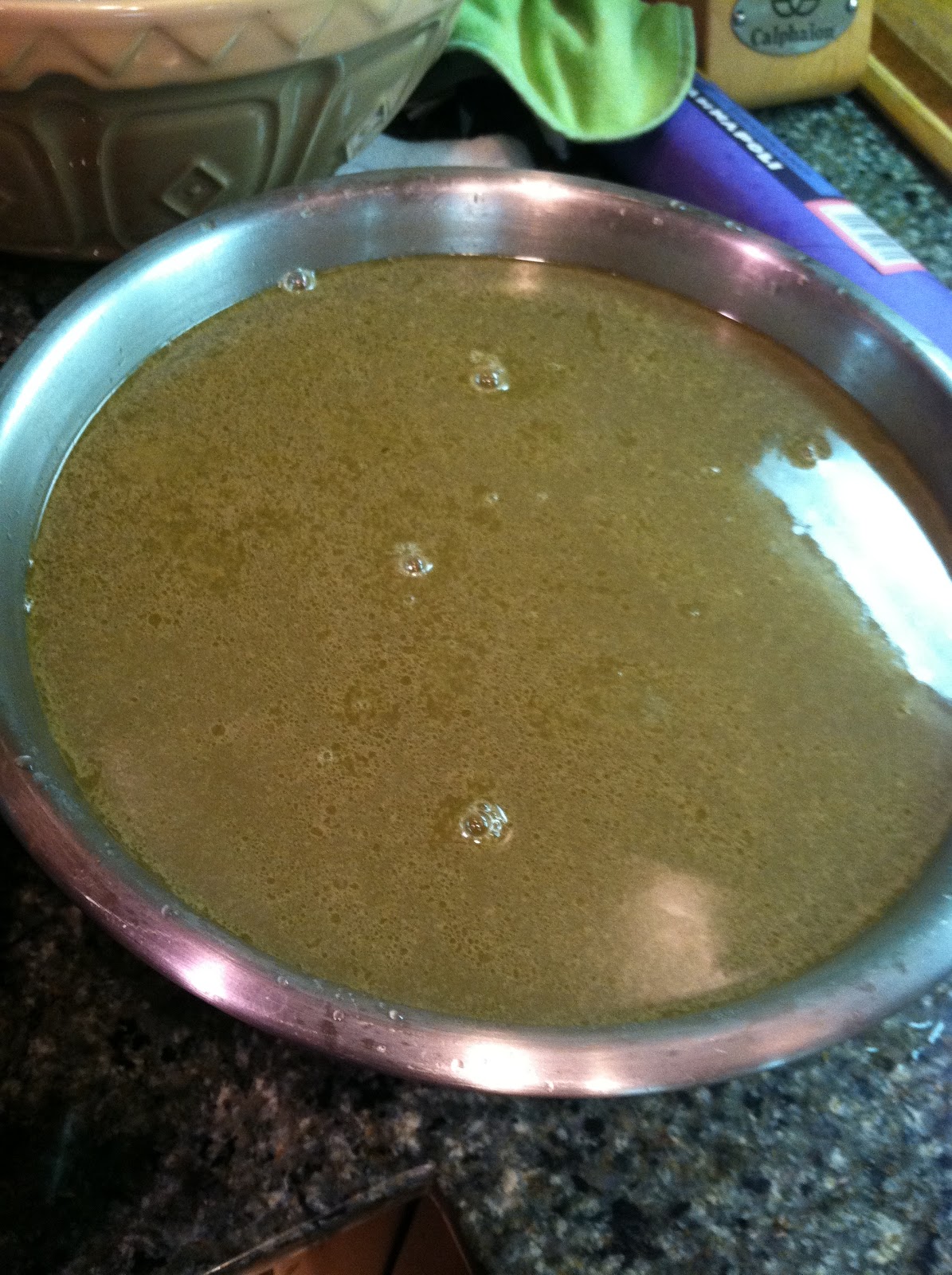
 3. Once it comes to a boil, turn the heat down and simmer for about an hour.  Turn off the heat, let the stock cool a little bit, and then pour the stock through a sieve into a very large bowl or a large measuring cup.
 
 
4. Measure out three cups of stock, then pack up the rest into plastic containers and then refrigerate or freeze.
VEGETABLES
1. Heat 1 tablespoon oil in a Dutch oven over medium heat until shimmering. Add onion, carrots, and celery.  Cover and cook, stirring occasionally until just tender, 5 to 7 minutes.  Set aside in the bowl with the chicken pieces.
 
 
2. Add a little more oil if you need it, and put the cremini mushrooms in the Dutch oven.  Stir until the mushrooms are covered with oil, then throw the lid on and let them cook until mushrooms have released their juices, about 5 minutes. 
 

3. Remove cover and stir in soy sauce and tomato paste. Increase heat to medium-high and cook, stirring frequently, until liquid has evaporated, mushrooms are well browned, and dark fond begins to form on surface of pan, about 5 minutes. 
4. Transfer mushrooms to bowl with chicken and vegetables. Set aside.
 
 
 TOPPING  
 
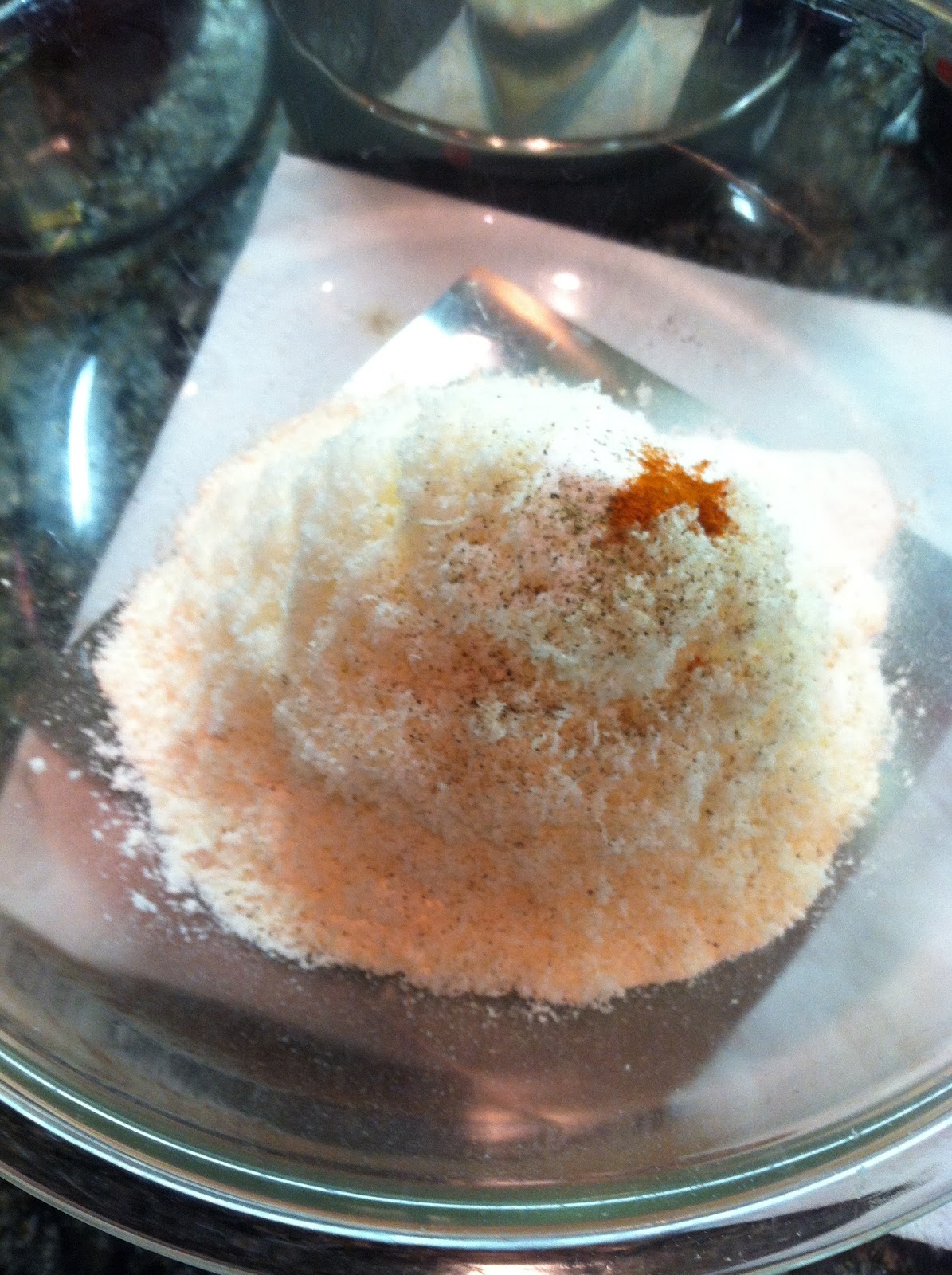
1. Combine 10 oz flour, baking powder, salt, black pepper, and cayenne pepper in large bowl. Sprinkle 85g of chilled butter pieces over top of flour. 
 
 
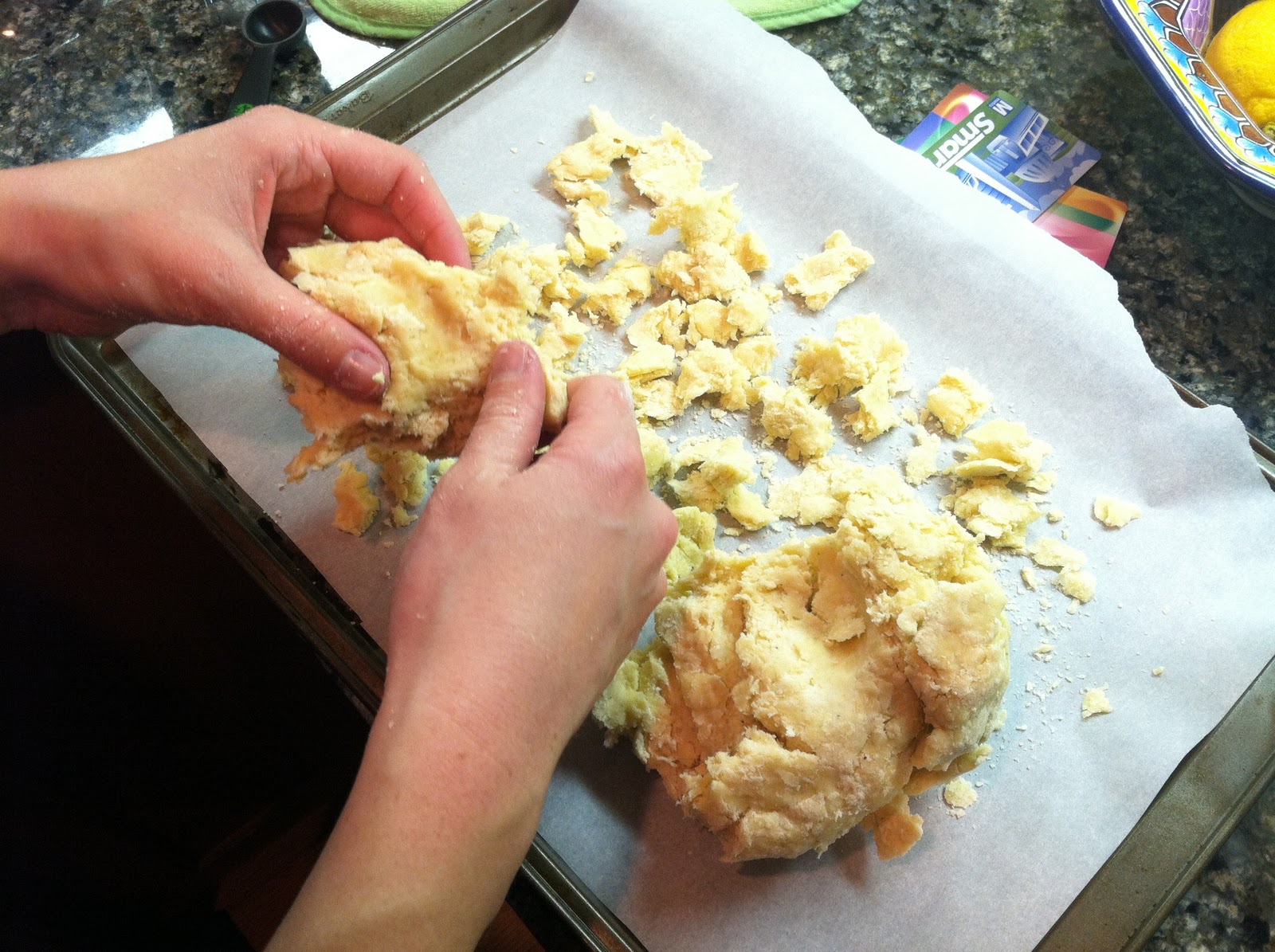
2. Using fingers, rub butter into flour mixture until it resembles coarse cornmeal. Stir in Parmesan. Add 3/4 cup plus 2 tbls cream and stir until just combined. 
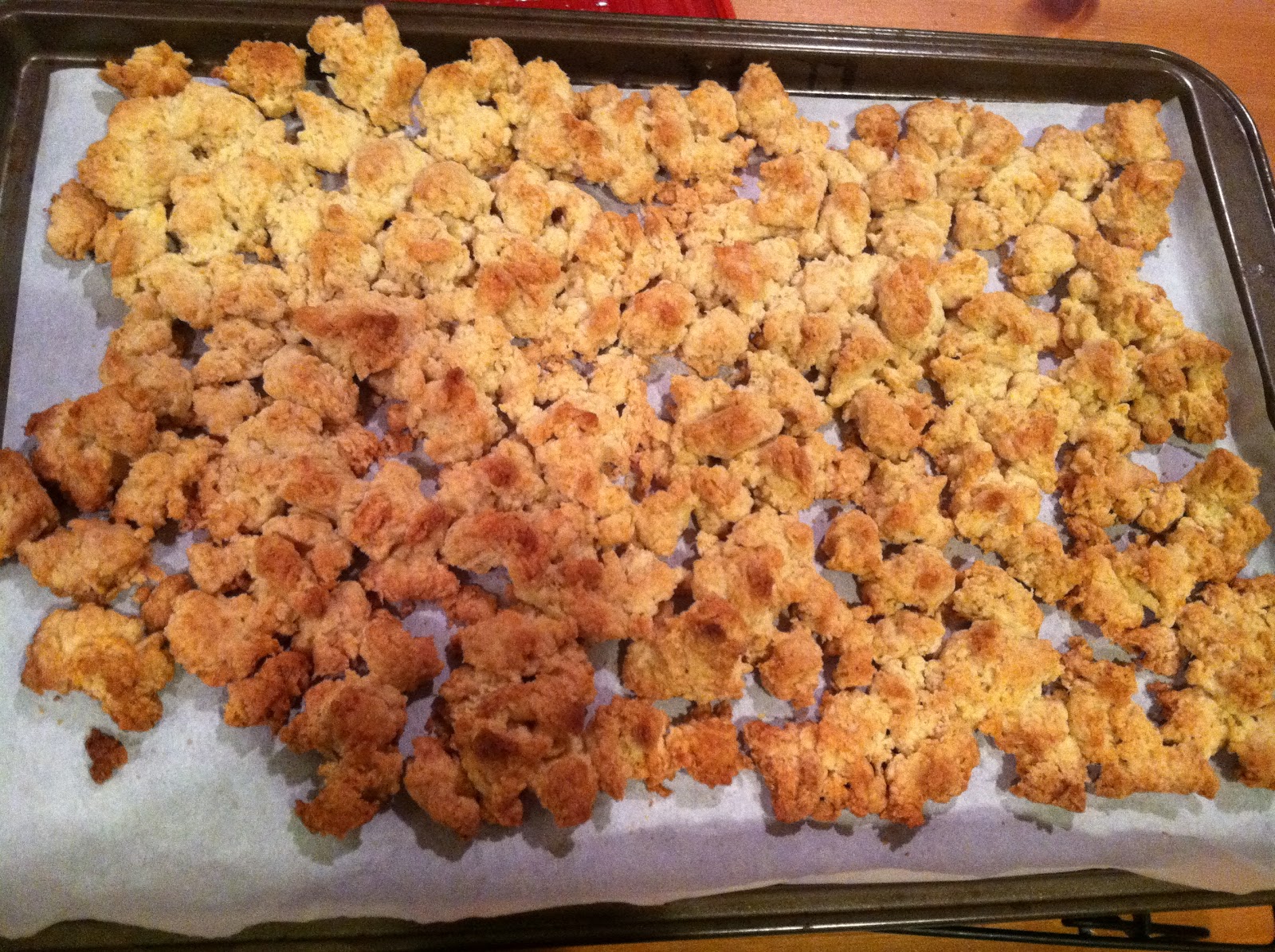
3. Crumble mixture into irregularly shaped pieces ranging from 1/2 to ¾ inch each onto parchment-lined rimmed baking sheet. 
 
 
4. Bake at 450 degrees F until fragrant and starting to brown, 10 to 13 minutes. Set aside to cool, then break up into chunks.
 
 
FILLING
 
1. Heat 1/2 cup of butter in empty Dutch oven over medium heat. When foaming subsides, stir in 1/2 cup of flour and cook 1 minute. 
 
 
2. Slowly whisk in reserved chicken broth and milk. Bring to simmer, scraping pan bottom with wooden spoon to loosen browned bits, then continue to simmer until sauce fully thickens, about 1 minute.
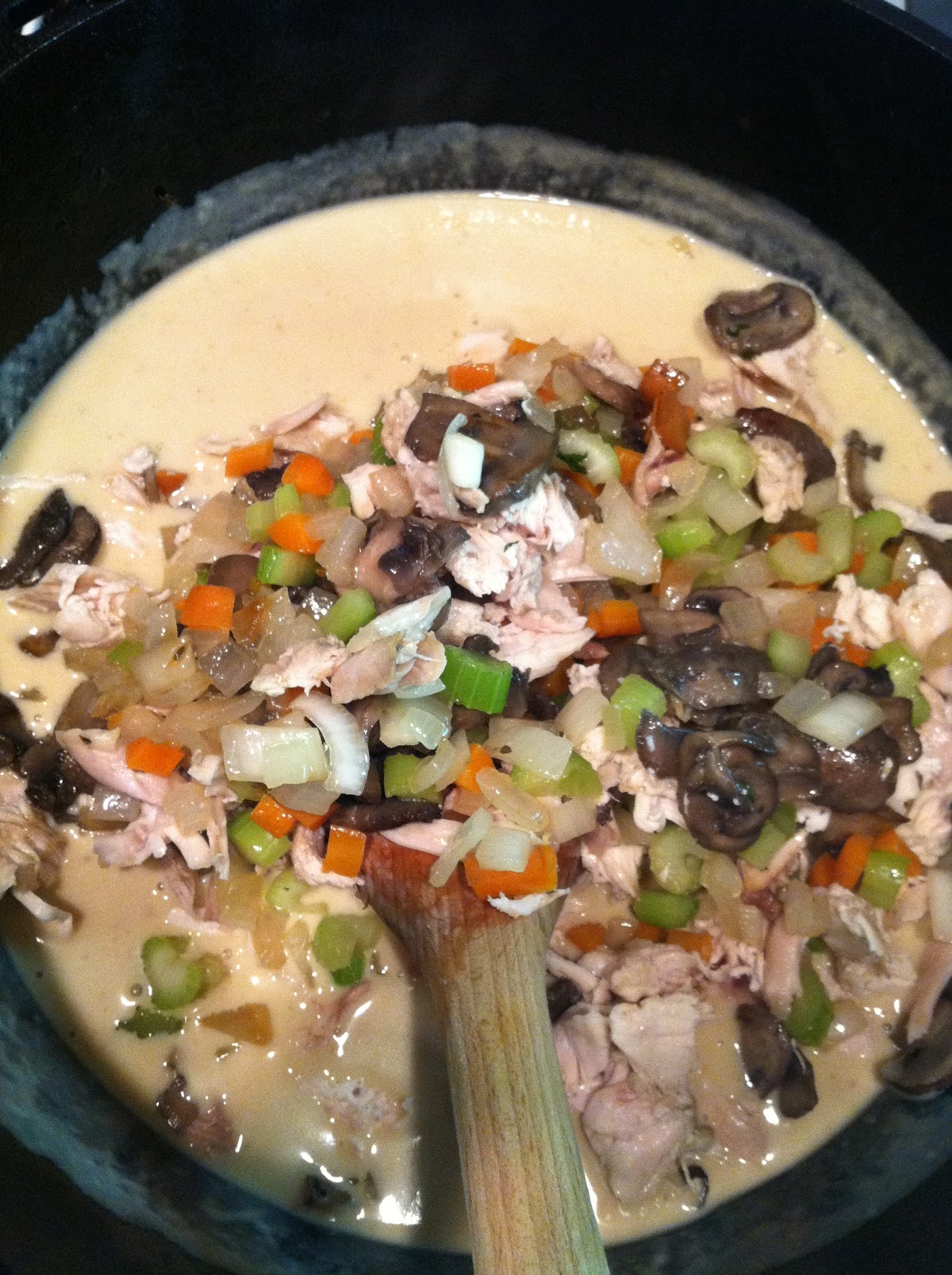
3. Remove from heat and stir in lemon juice and 2 tablespoons parsley.  Stir chicken-vegetable mixture and peas into sauce. 
 
4. Pour mixture into 13 by 9-inch baking dish or casserole dish of similar size. 
 
 
5. Scatter crumble topping evenly over filling. Bake on rimmed baking sheet until filling is bubbling and topping is well browned, 12 to 15 minutes. 
6. Sprinkle with remaining tablespoon parsley and serve, or let cool, cover with foil, and stick in the freezer. 
 
 
The filling is nice and creamy, and the crumbles stay nice and crunchy on top.  All in all, a fabulous meal that I will definitely make again!

Pressure-cooker wheat berries

When Mr. Bread Maiden and I lived in Austin, we got to a point in our first year when we made the switch from mostly grocery-store bought meals, to mostly farmer’s market-bought meals.

It wasn’t easy.  Well, in a way it was.

We had an amazing garden for all our herbs and vegetables, and we would buy our meat and dairy at the farmer’s market.

Austin was also where I began my bread journey on the way to becoming Bread Maiden!

I miss this place

 The Austin Farmer’s Market was unique in that it had weird things like, say, wheat berries for sale. 

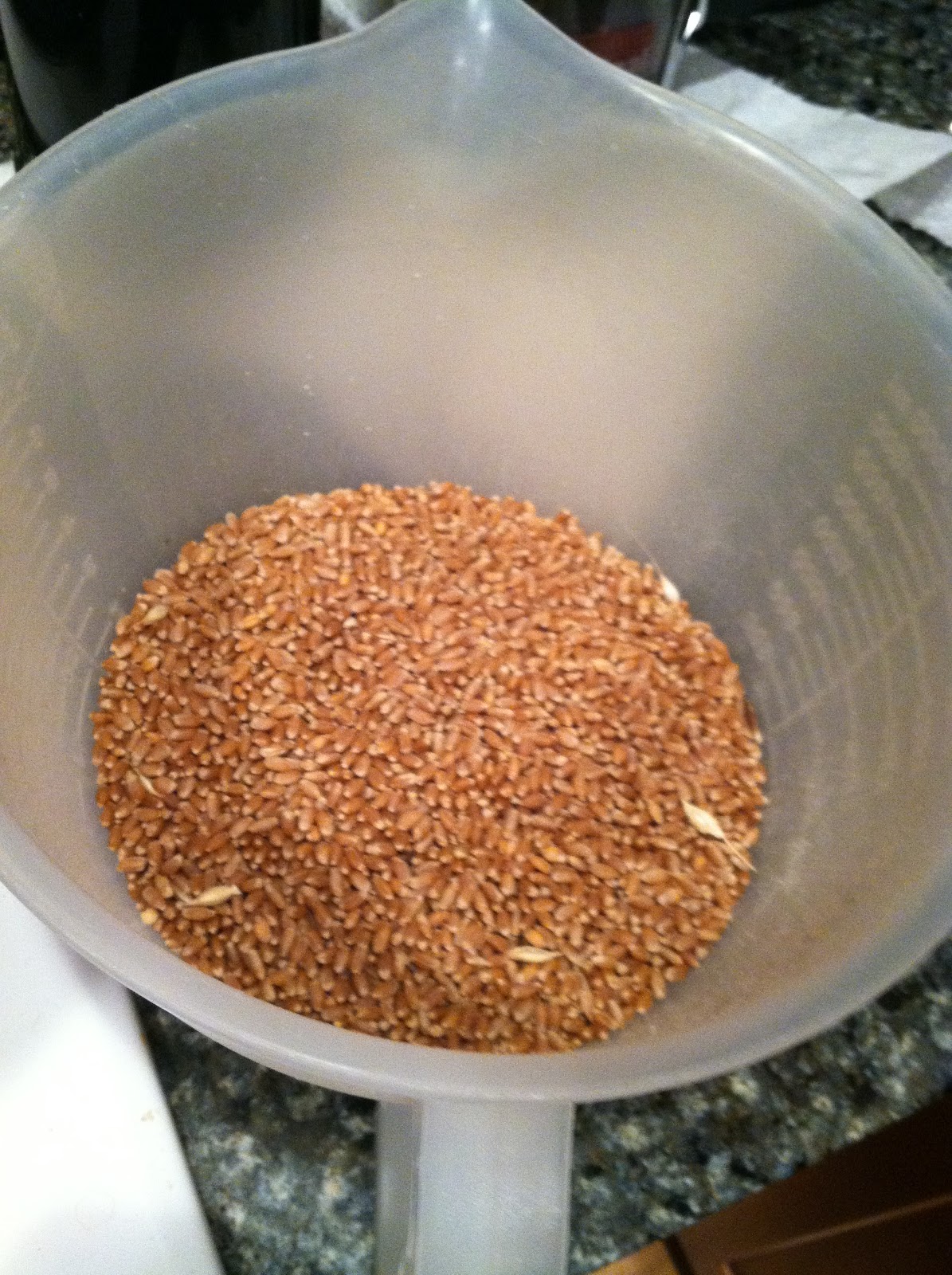
Wheat berries, according toWikipedia, are “the entire wheat kernel (except for the hull), comprising the bran, germ, and endosperm.”  

http://www.ncwheatmontanacoop.com/order/bronzechiefwheatberries25lbbag-p-190.html

 I tried using wheat berries for baking by grinding them up, but they didn’t have enough gluten to rise a loaf of bread.  So there’s been a bag of them in my pantry from Austin, to Warwick Village, and now to Del Ray.

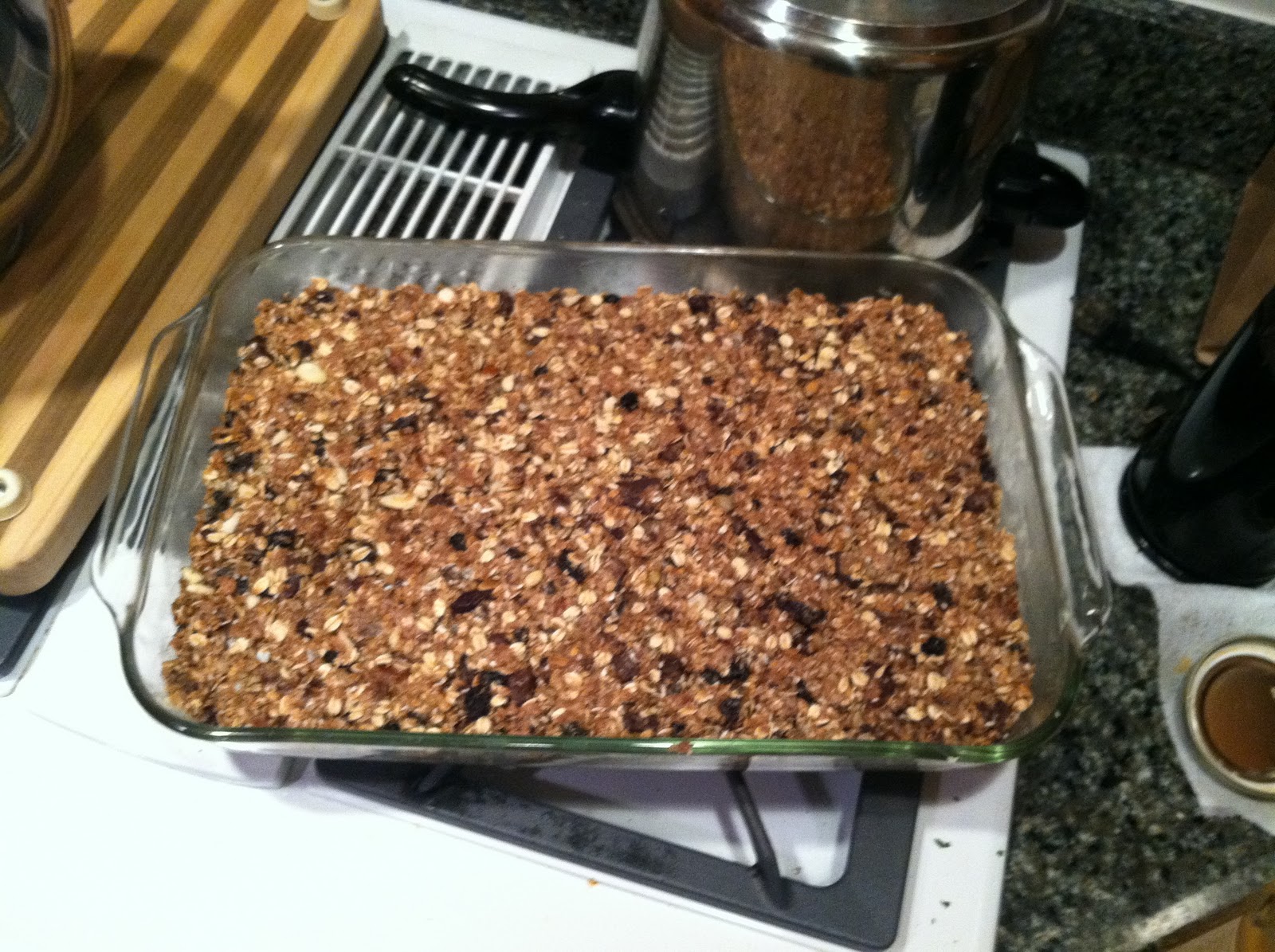
Don’t tell Slow Learner, but Mr. Bread Maiden and I are making her a ton of granola bars for her birthday.  Post to come!

But anyway, we were rooting around the pantry for grains to use in the granola, and we came across the wheat berries.

Mr. Bread Maiden suggested we cook them as a grain for dinner, which is exactly what we did.

We turned to this book: Passionate Vegetarian, by (no joke) Crescent Dragonwagon.

The book is really excellent and a nearly comprehensive review of vegetarian cuisine, whether bean, grain, seed, or rhizome.

Basically, by following her recipe we didn’t follow her recipe at all.

First, I rinsed the wheat berries and picked out all the hulls.  It’s easy to do; cover the berries with water and swish it around with your hand; the hulls rise to the top and you can pick them out.

I threw about two cups of wheat berries into my pressure cooker, then poured in about 8 cups of water and chicken stock.

Put the pressure cooker on medium-high heat until you reach pressure, then turn it down to medium and cook for about 35 minutes.

Apropos of nothing, my pressure cooker is a “presto.”  I like it.

Once the wheat berries are done, remove the pressure cooker from the heat and wait for the pressure valve to release.

Wheat berries, once cooked, have a nice, chewy texture.

Rinse the berries and chop up an herb (we used parsley).

Throw the parsley and salt into the wheat berries, and you have a dish rich in dietary fiber, iron, vitamin C and whole grain.

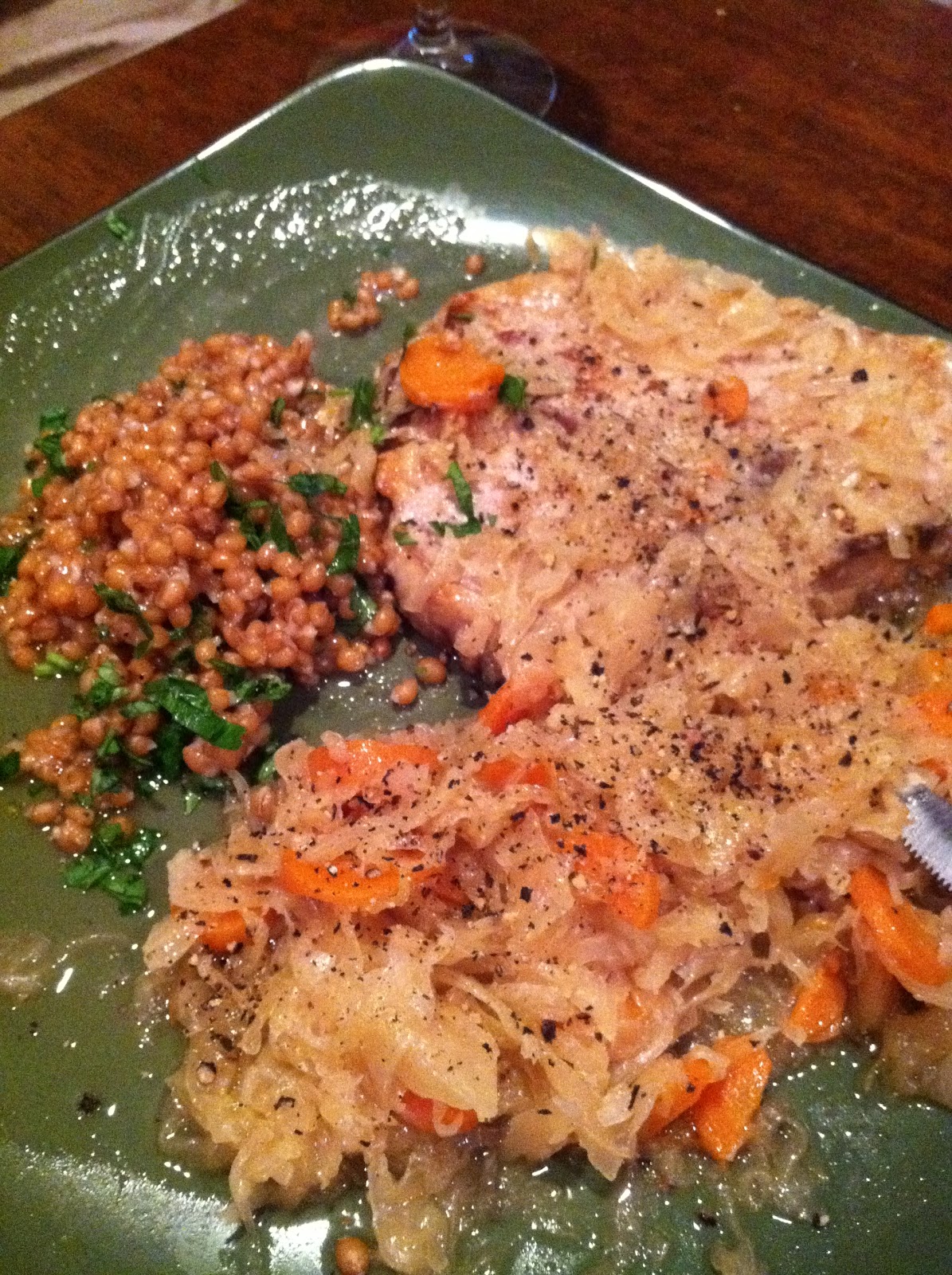
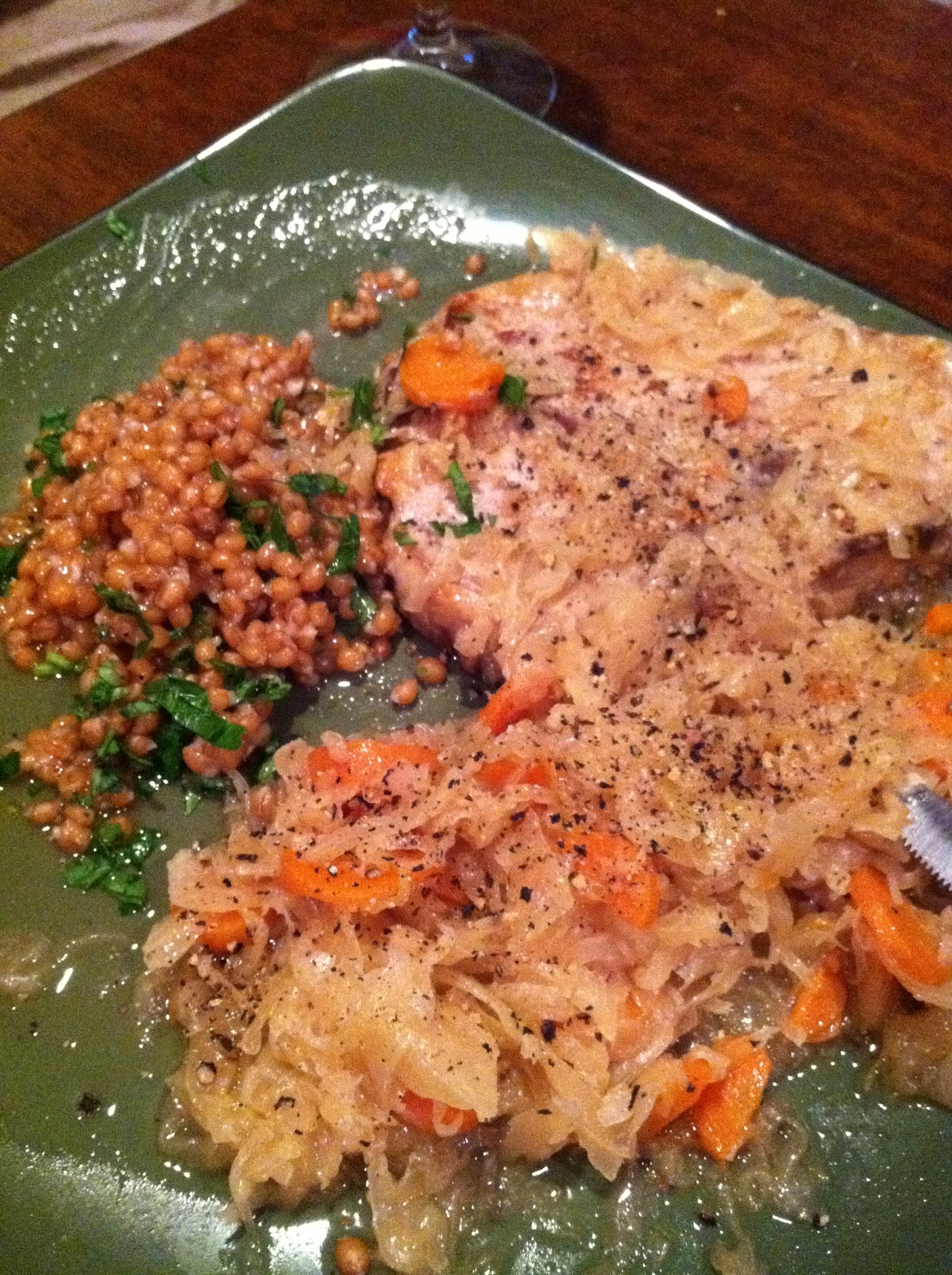
We ate ours with sauerkraut and pork chops.  Very tasty and incredibly easy!

Beef Liver Paté

I know, I know.

This is not a post about bread.

BUT!


It is a post about what to put ON bread.

The Bread Maiden family has a ton of beef liver in the freezer, just looking to be made into paté.

When I found this recipe on Casa Veneración, I knew I just had to try it.

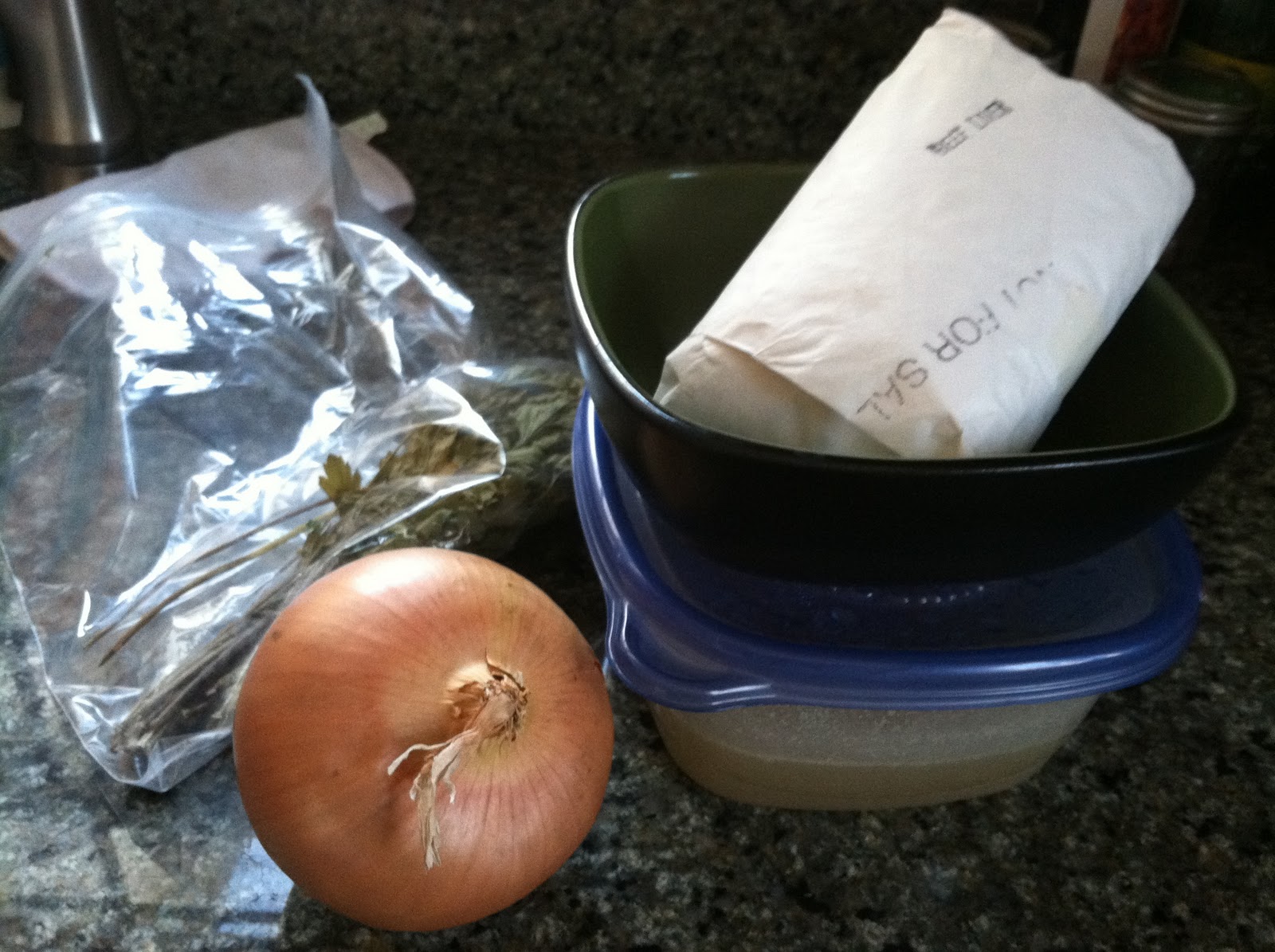
I made some modifications.  You will need:

Ingredients

This picture includes two things you will not need in the recipe.  Sorry.
  • 1 lb beef liver, cut into chunks
  • 1 large onion, finely chopped
  • 1/2 shallot, chopped
  • One stalk of celery, chopped
  • 1/4 c. of butter
  • 1 pinch of salt
  • 1/2 tsp. of freshly cracked black pepper
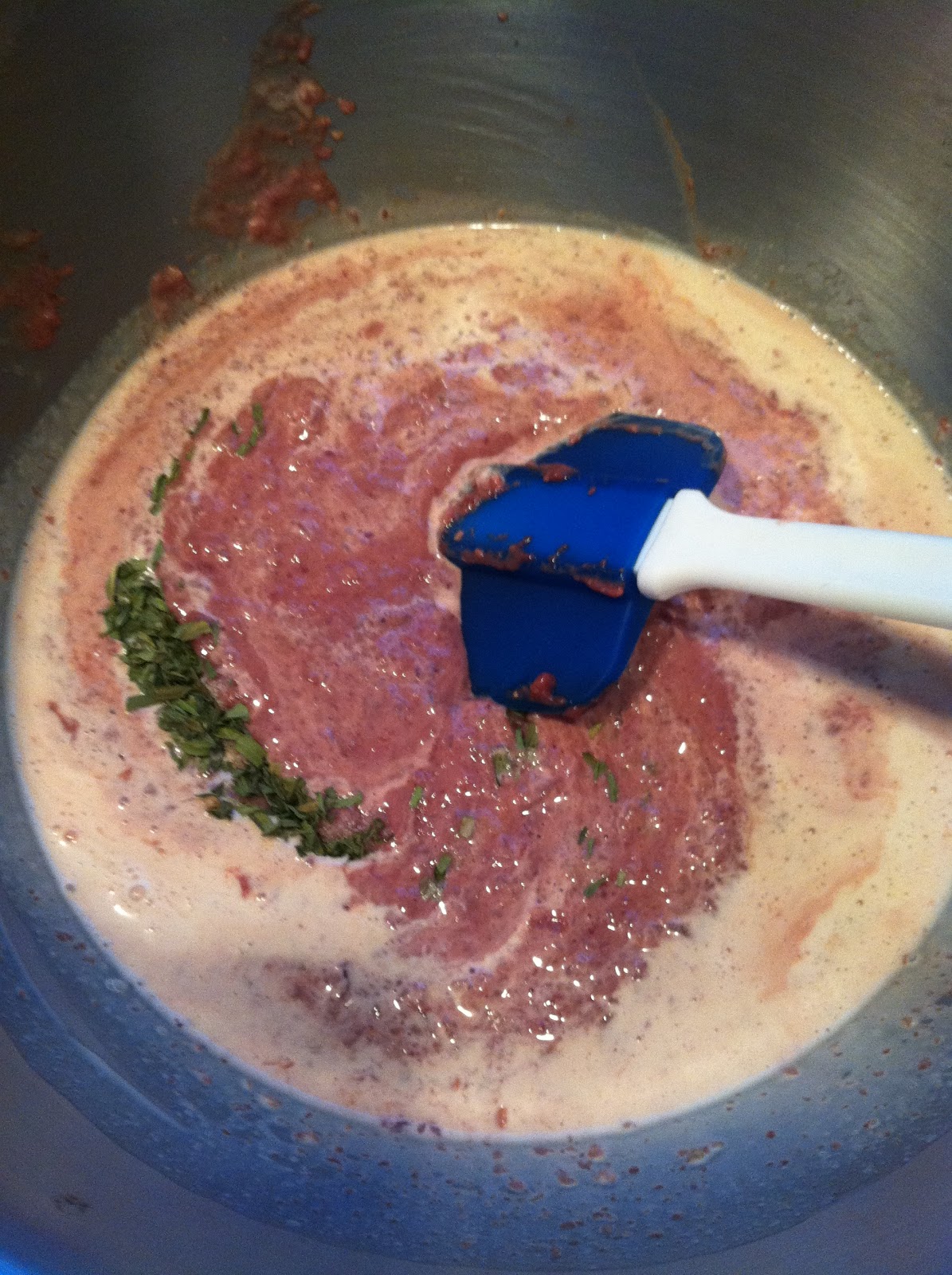
  • 1/2 tsp. of dried tarragon
  • 3/4 c. of cream

Instructions

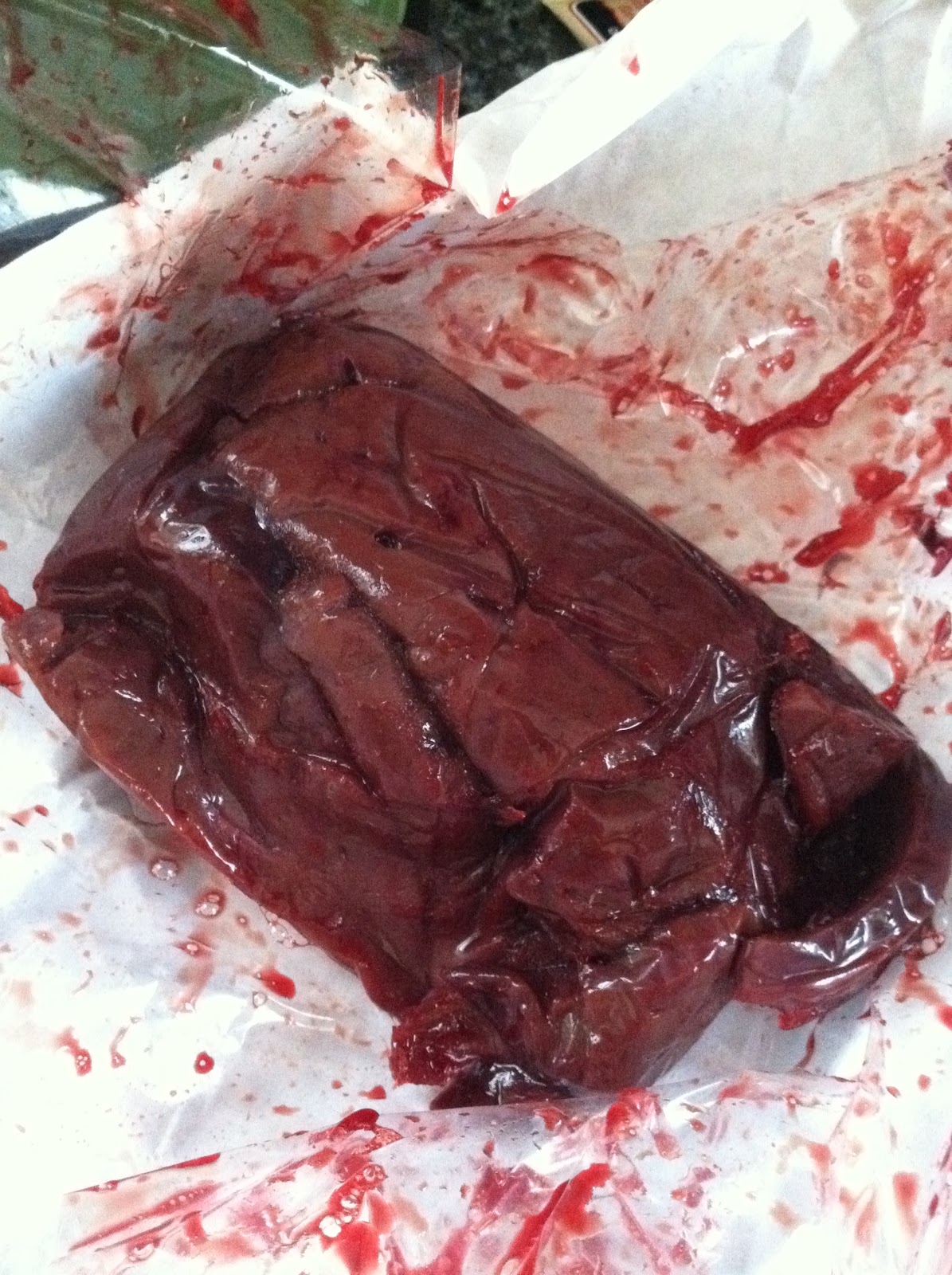
1. Unwrap beef liver.


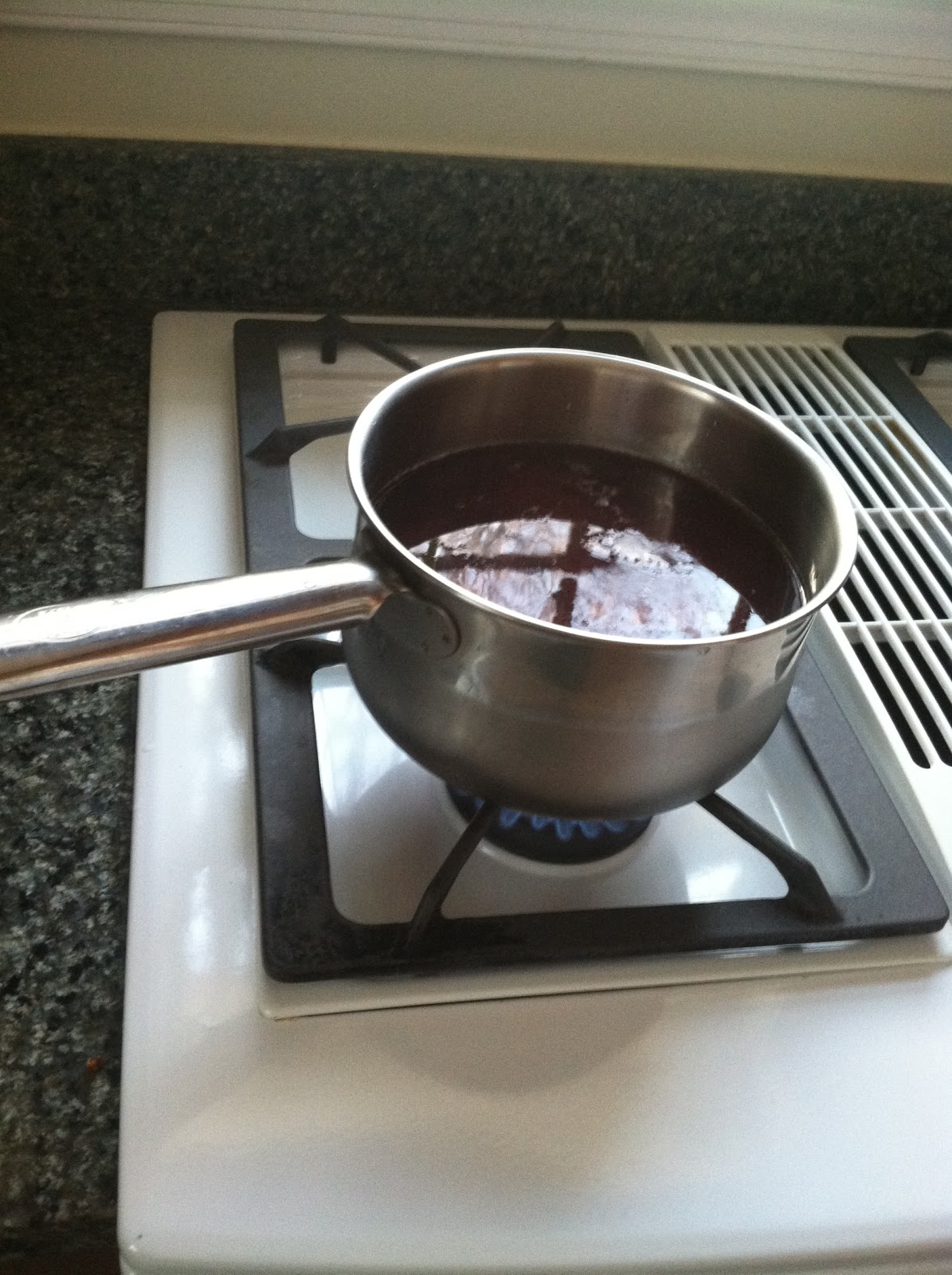
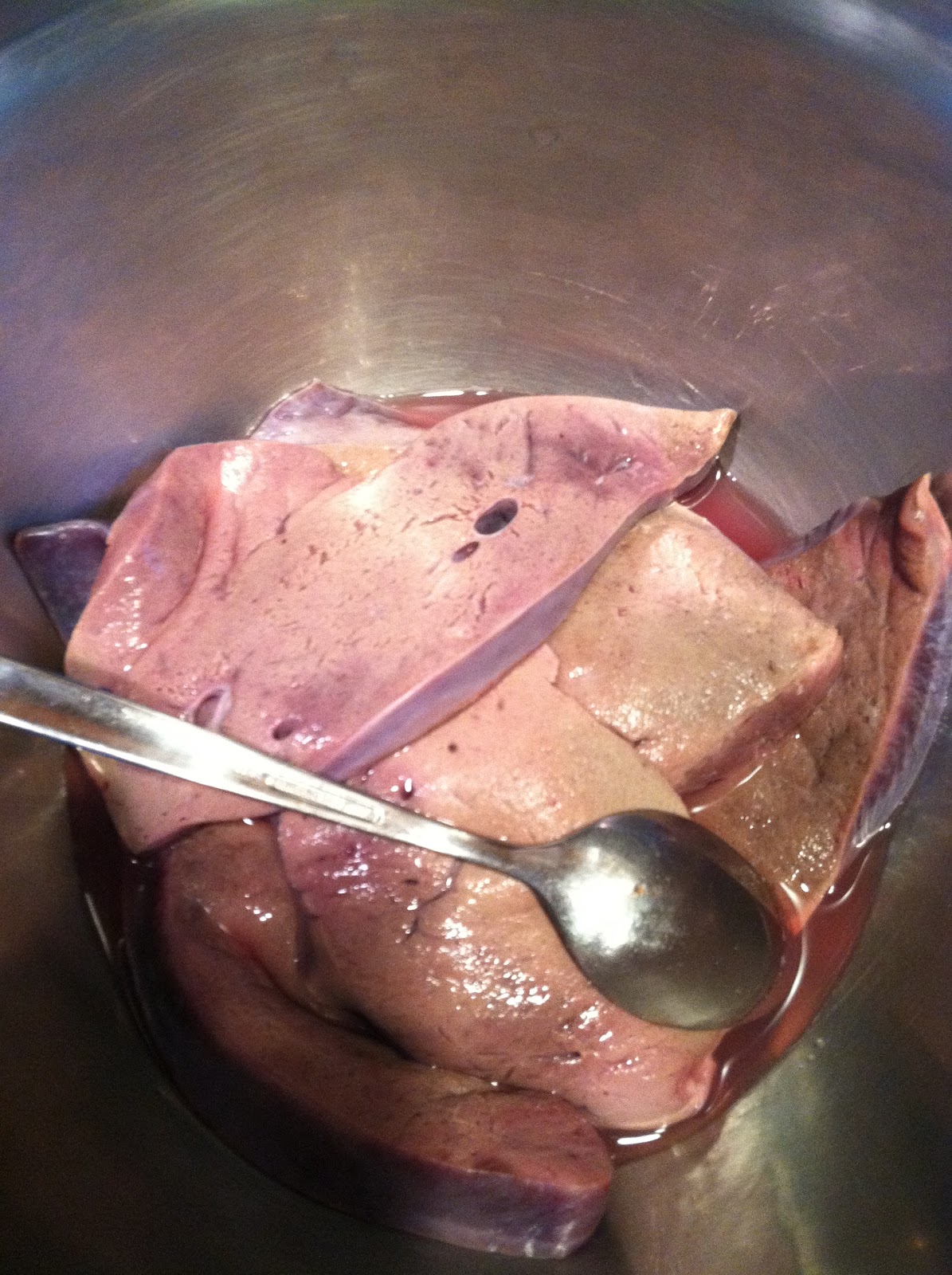
2. Place the liver in a small pan and cover with water. Bring to the boil, then simmer GENTLY until one side of each piece of liver is a light tan.  You need to pay attention during this step.  
 
 
3. Remove each piece as it reaches this color and place in a bowl.  Do not overcook. Don’t worry about not cooking them; they’ll get about 20 minutes in the oven later on.
 
4. Preheat the oven to 375F.
 
5. Start boiling a kettle of water.
 
6. Melt half of the butter in a small frying pan. Saute the onion, shallot, and celery until translucent. Turn off the heat and add the rest of the butter. Let cool.
 
 
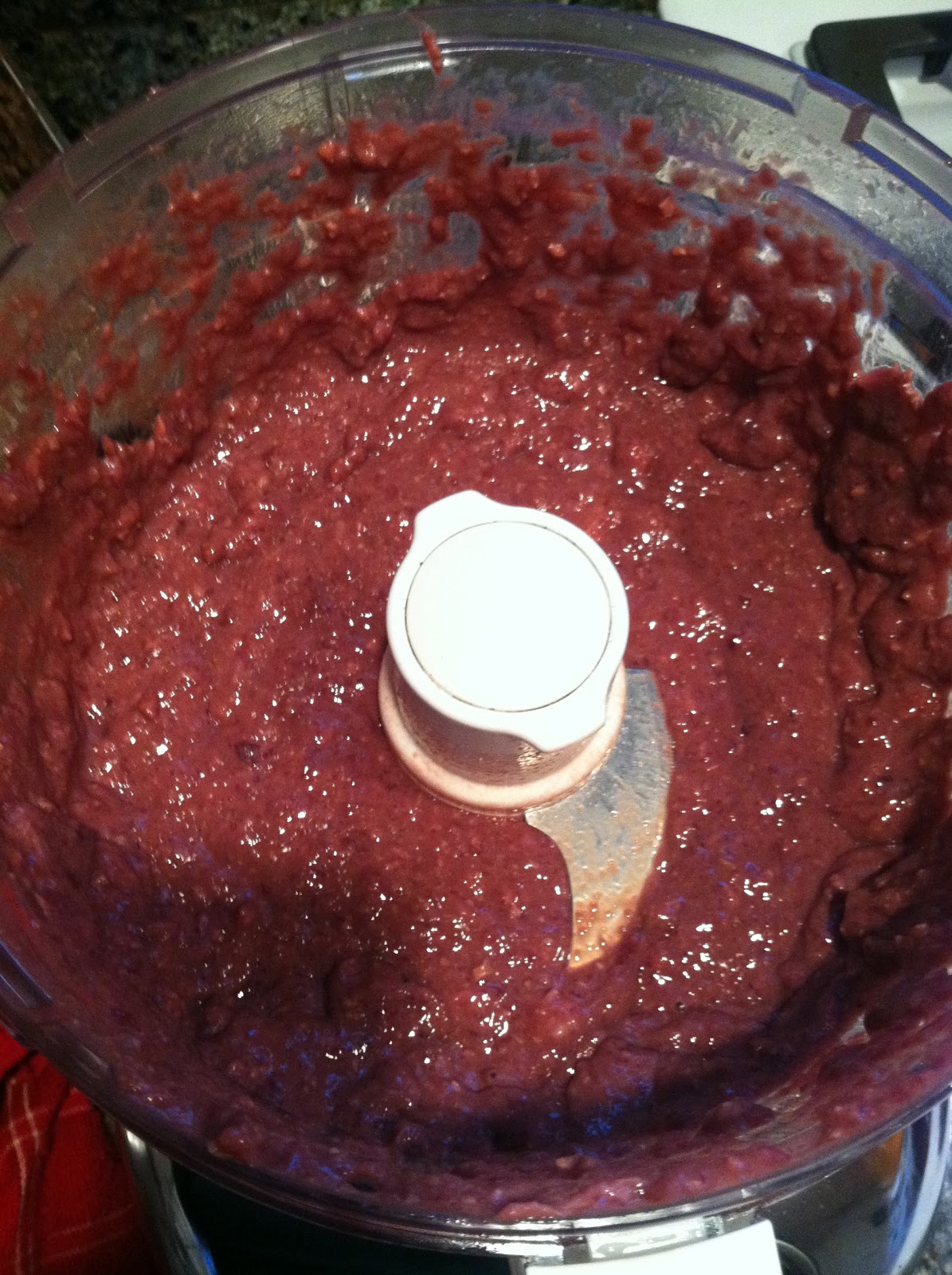
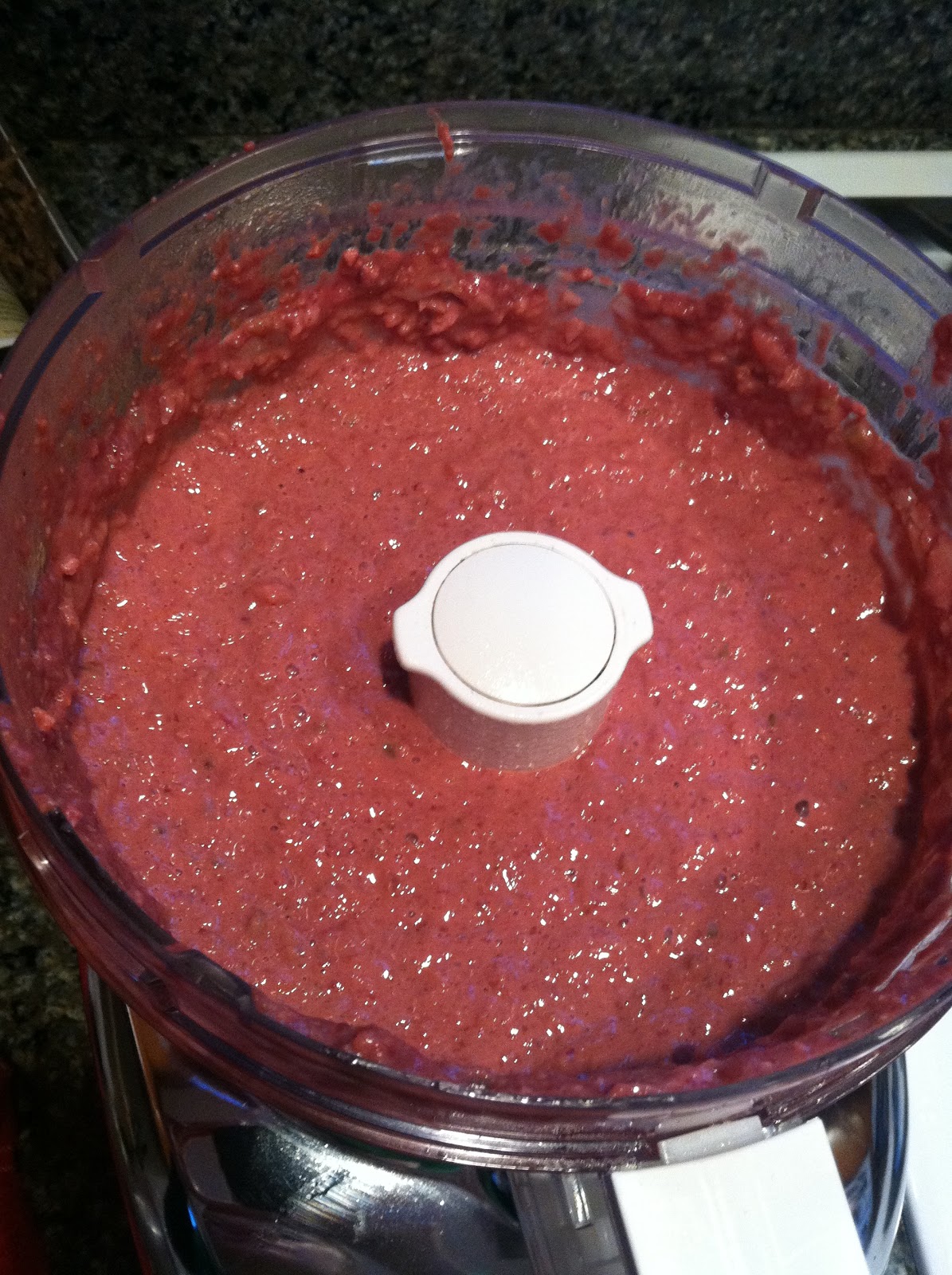
7. Throw the sauteed mixture and the liver in a food processor and pulse until smooth. Transfer to a mixing bowl.
 
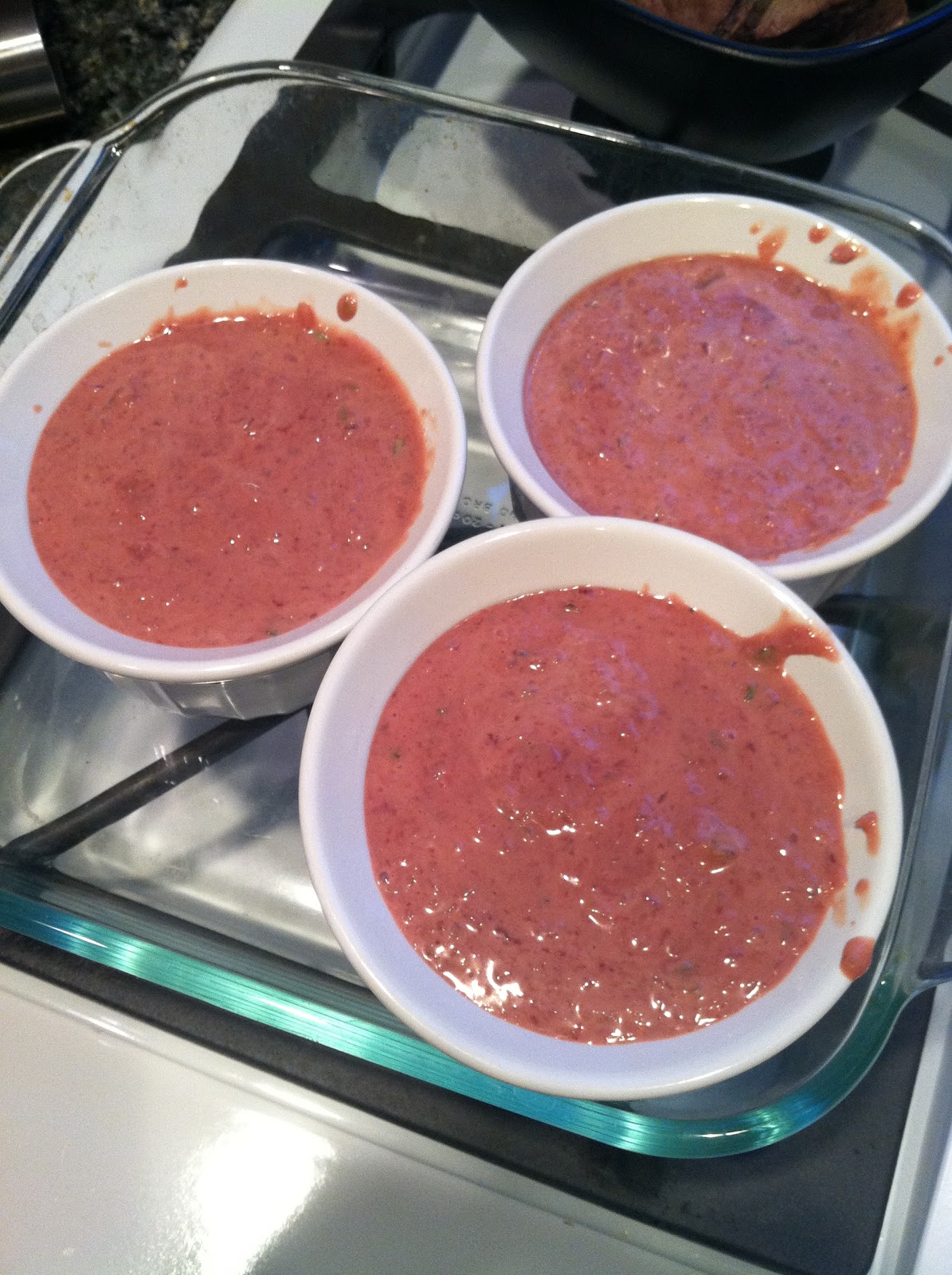
I pureed the liver first.
 
Then added the vegetables.
8. Add the rest of the ingredients. Stir. 
 
 
9.  Spoon into ramekins.
 
 
10. Prepare the water bath. Place the ramekins in a baking dish. Pour boiling water into the baking dish, taking care not to spill any on the liver mixture, until the depth is about three-quarters of the height of the ramekins.
 
10. Bake at 375F for 25 to 30 minutes.
 
 
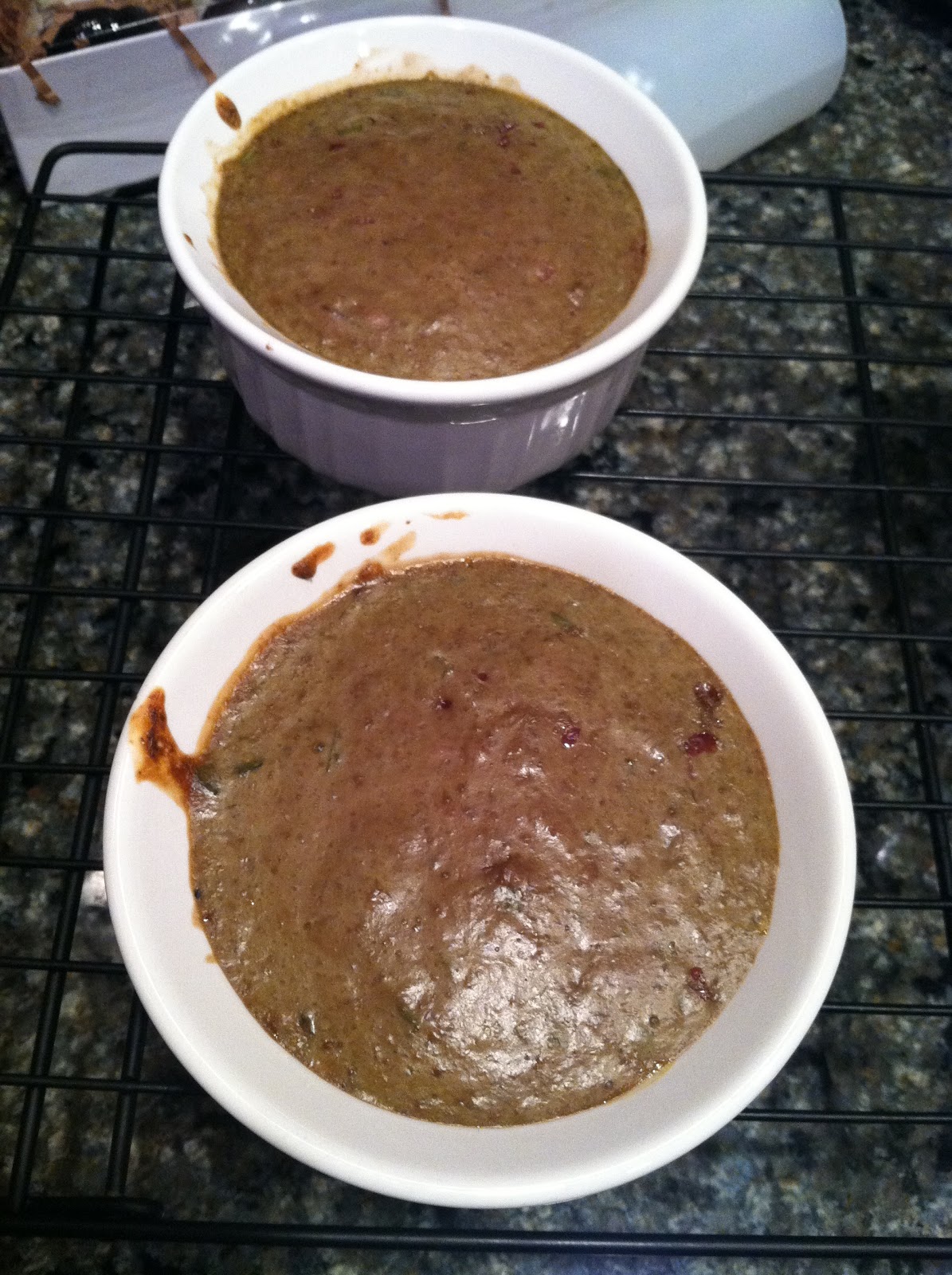
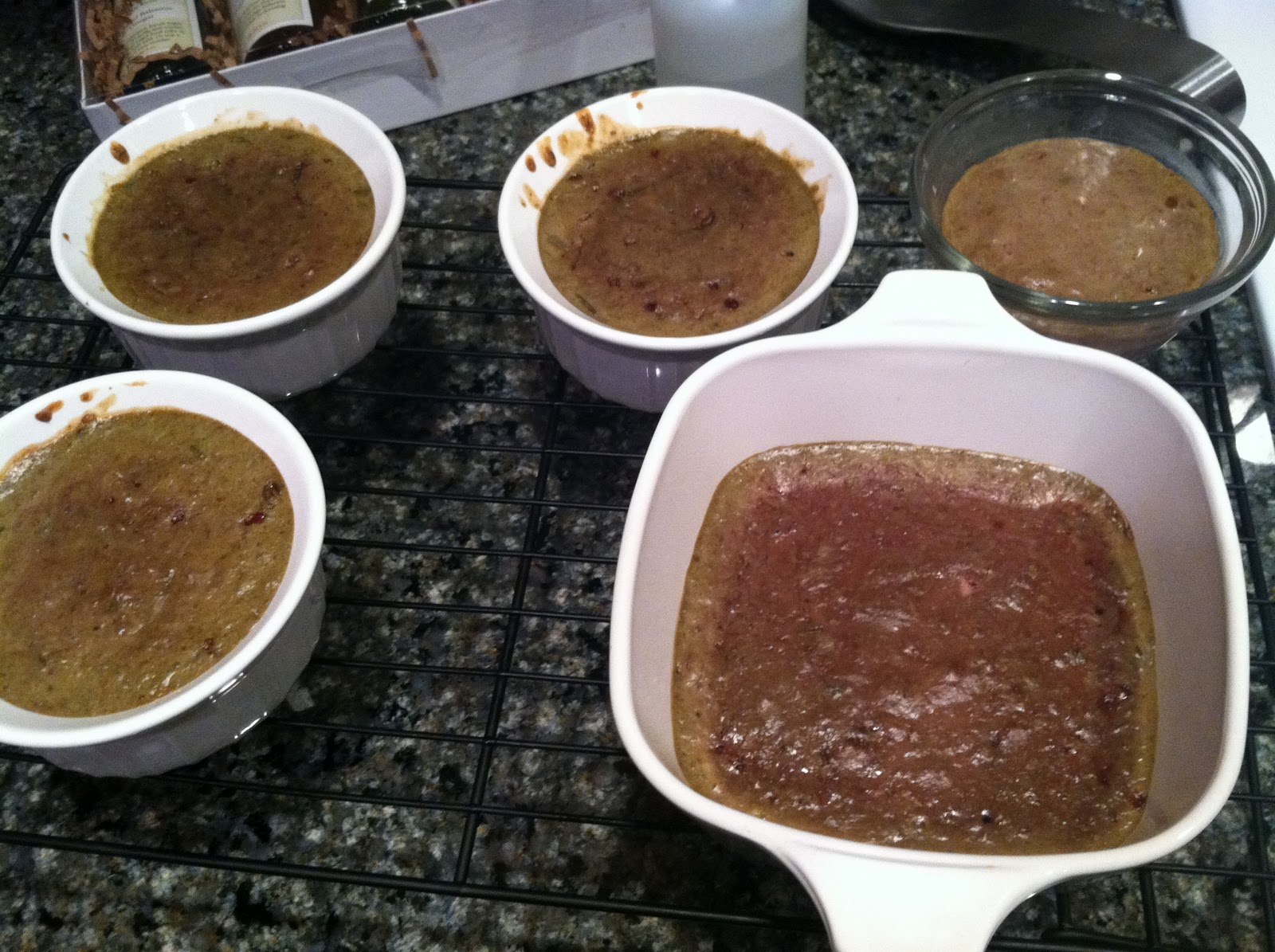
11. Cool the liver paté on a cooling rack. Touch the top of each paté gently to make sure it has set up properly.  Once they are cool, cover the ramekins with cling wrap and store in the refrigerator.
 
 
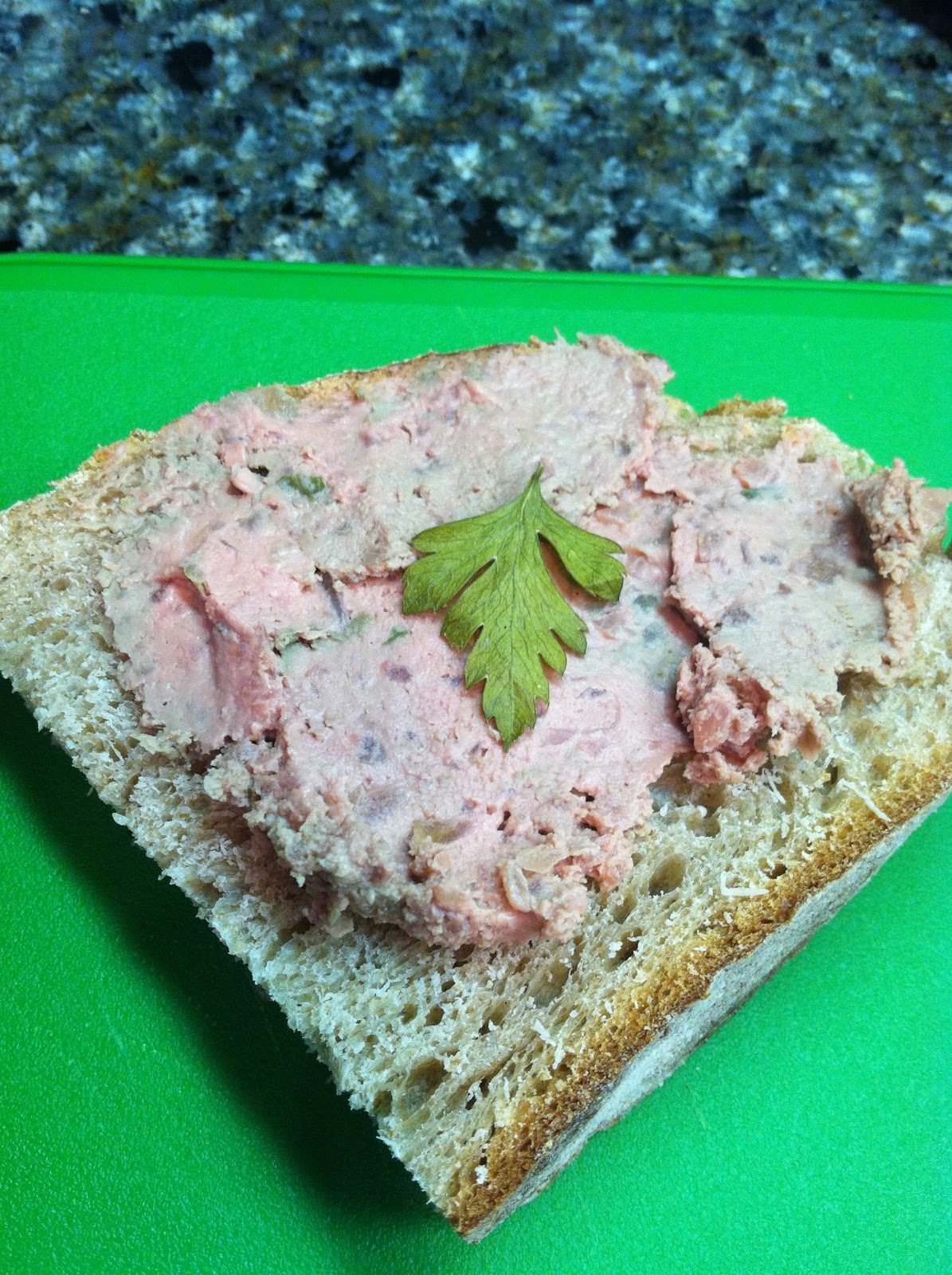
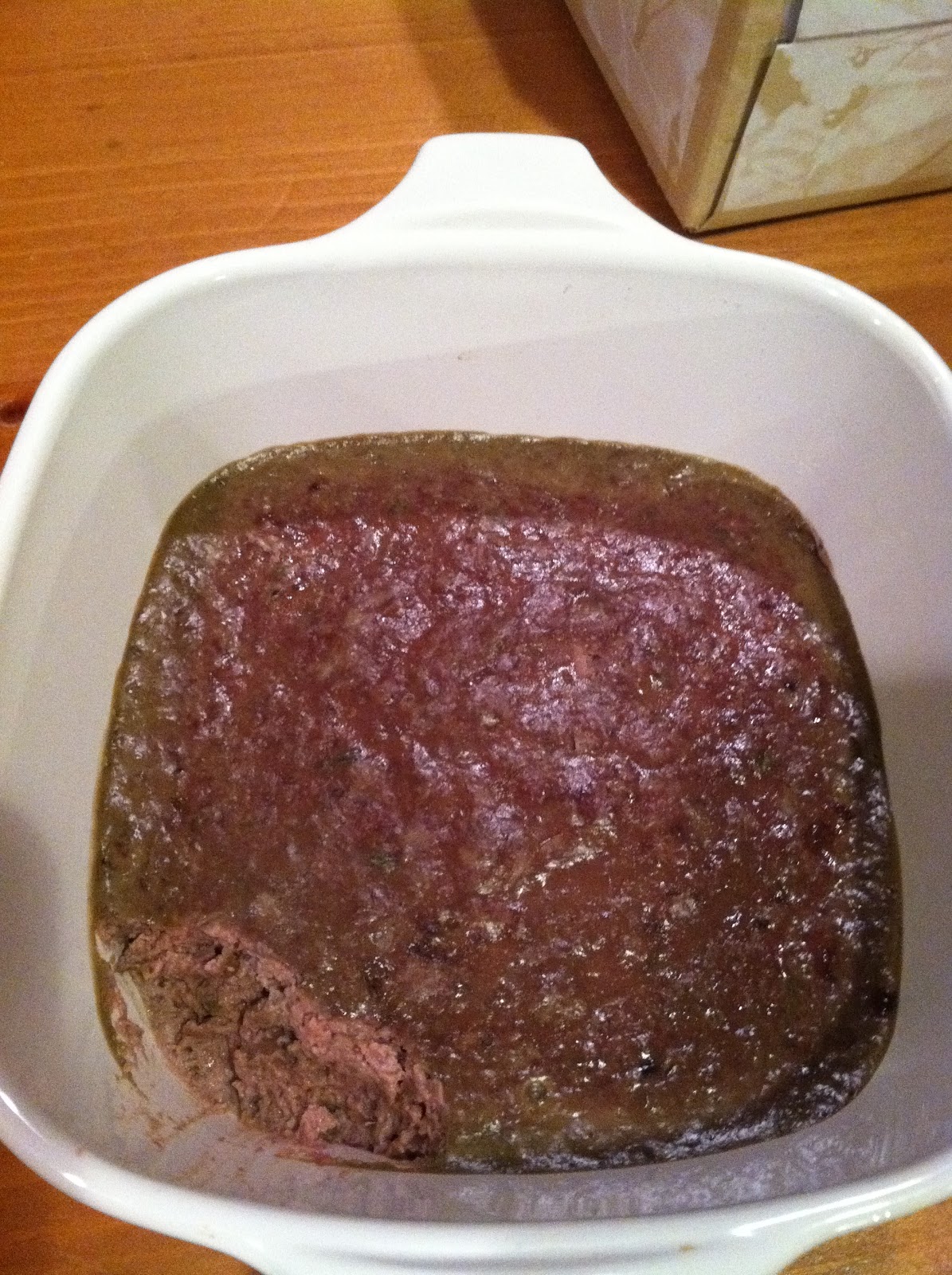
12. Use the liver paté as a spread or for liver-based sauces. When they come out of the oven they are sort-of an unappetizing gray-brown, but once you spoon into the paté, it’s a beautiful pink color.
 
 
I should mention at this point that I dislike the taste of liver.  Really don’t like it.  But Mr. Bread Maiden and Little Bread Baby like it, so I make it.  And this really wasn’t too bad.  This piece of bread with paté on it, in the photo below? I ate that once I snapped the picture.  Topped with lots of cheese to mask the flavor of the liver, of course.

The original recipe calls for chicken livers instead of beef liver, so that would work equally well here.  I think if a liver recipe is good enough that even *I* will eat it, then it’s a winner!

Other dried fruit bread

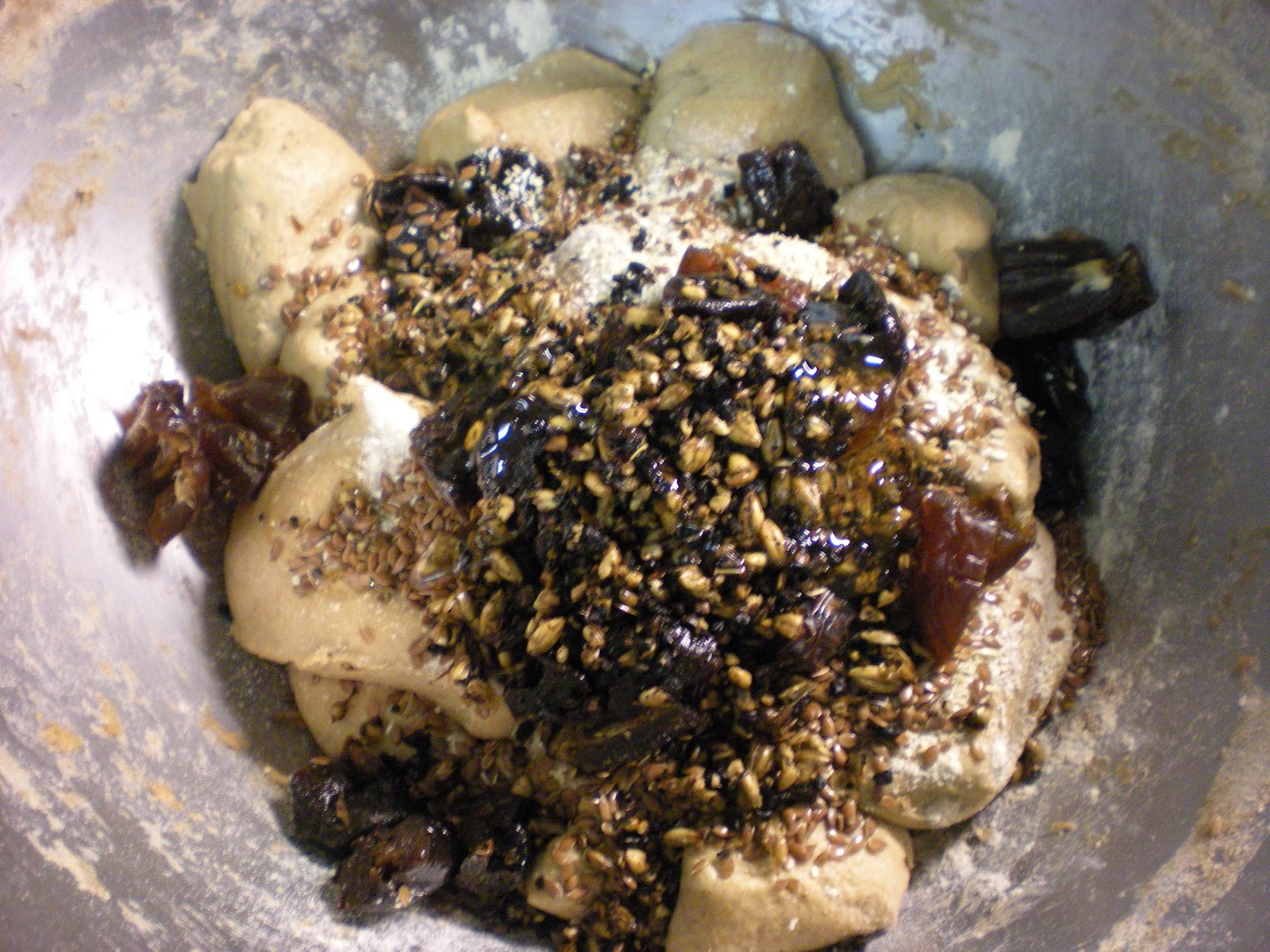
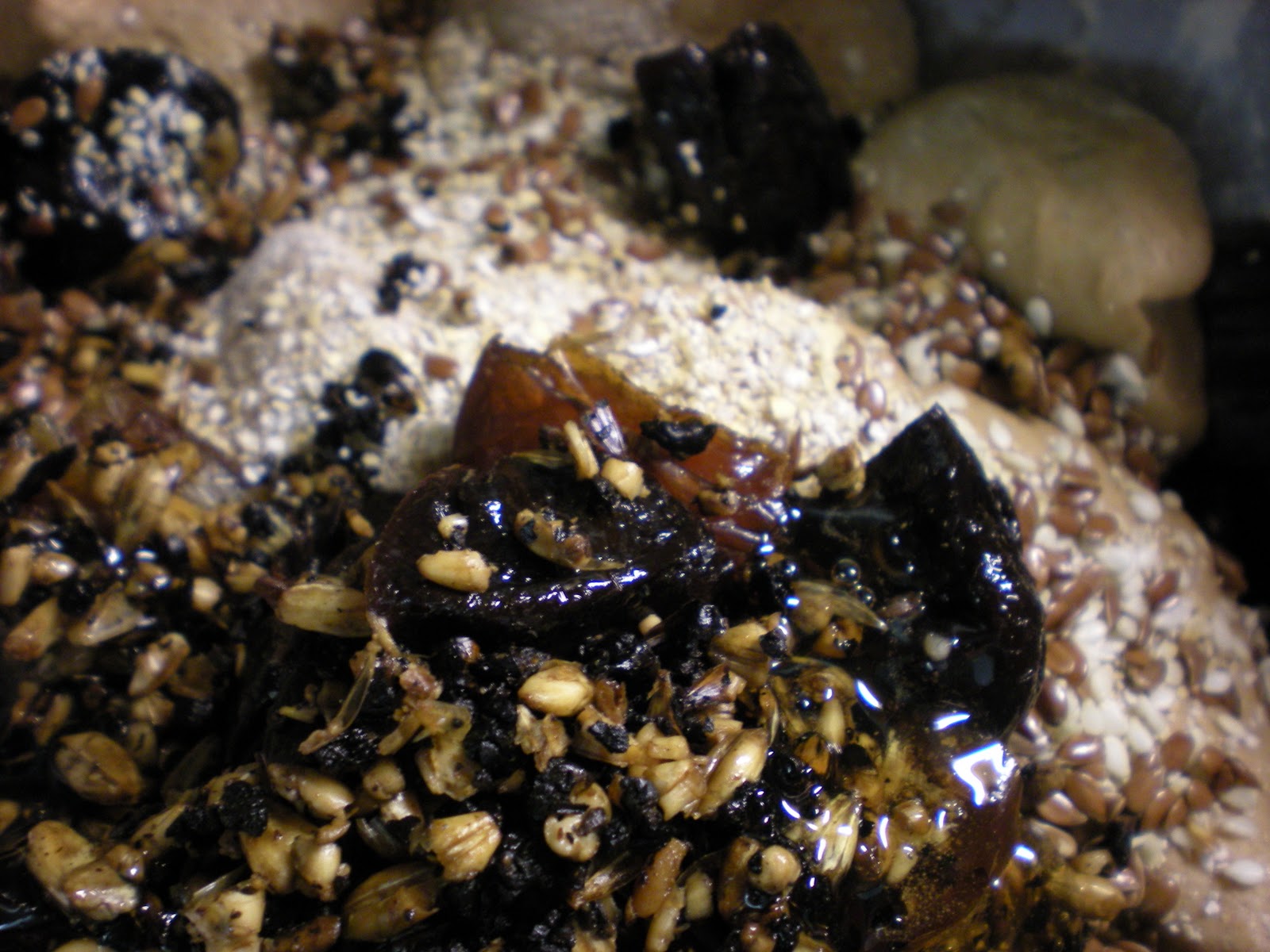
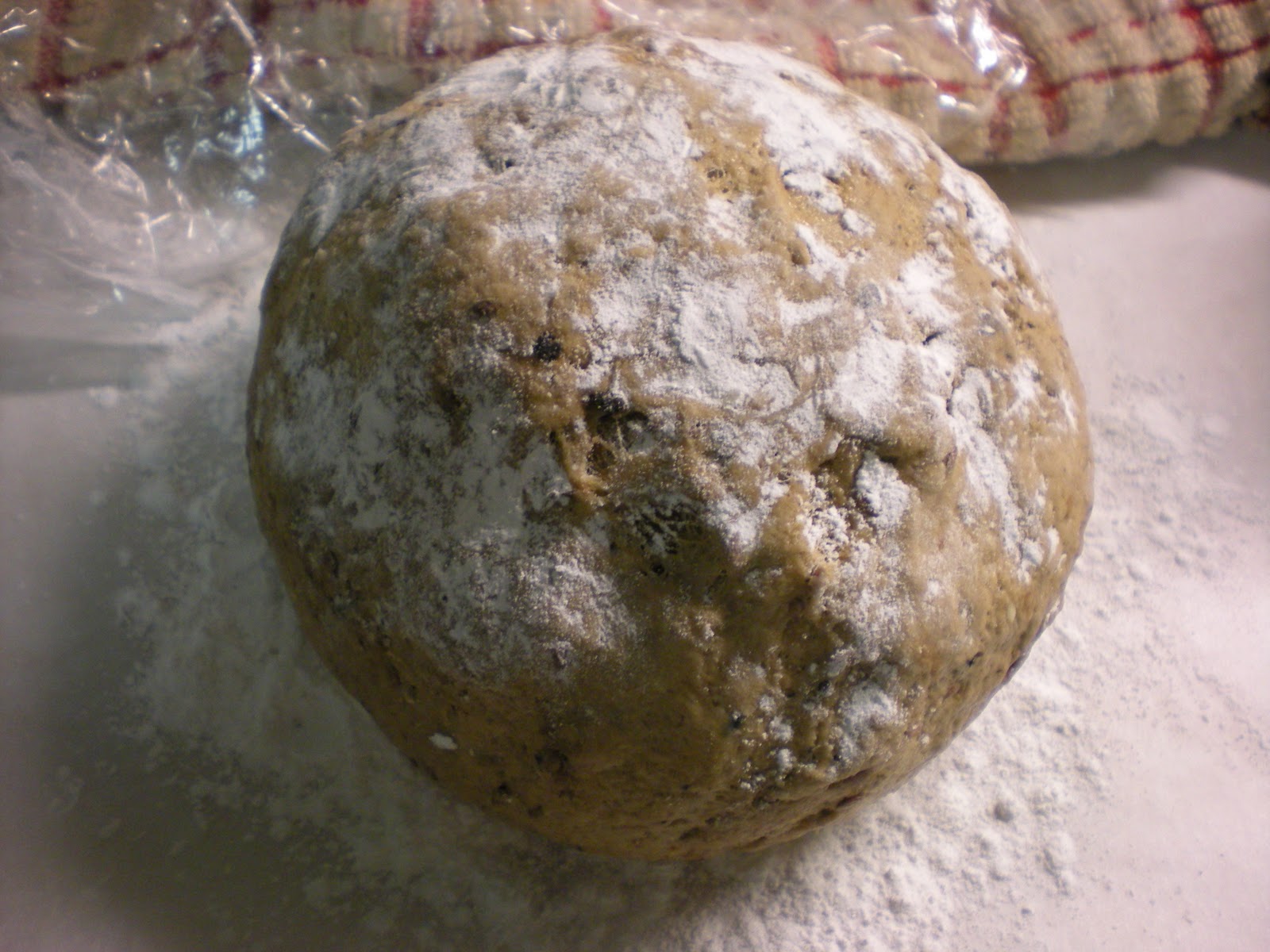
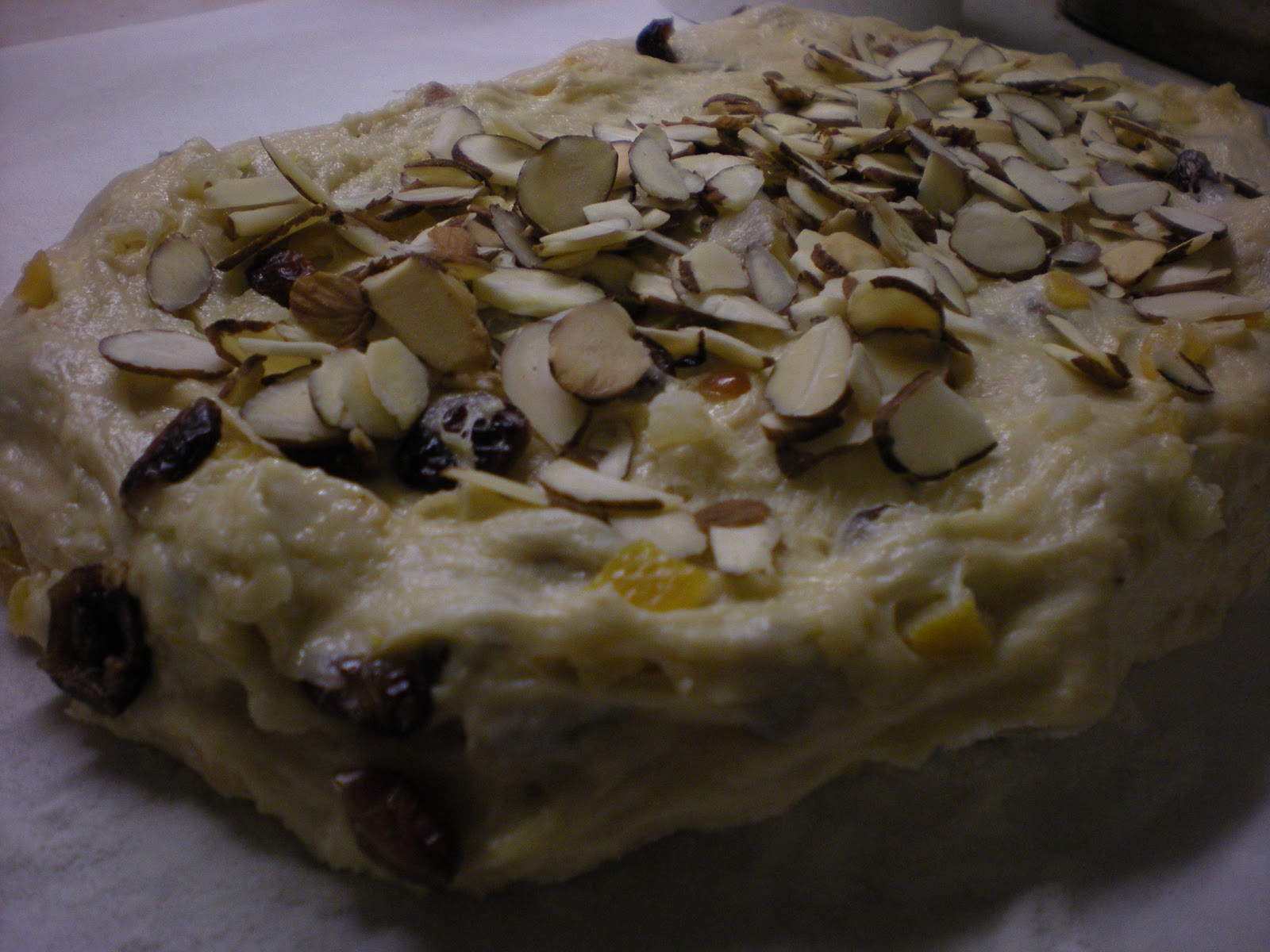
Some of you might be interested in other fruit bread I’ve made in the past.  Here are two that I love that I’ve already blogged about, and I’m sure there are more to come.  One day I’ll post about our fruitcake recipe, and there’s a Peter Reinhart whole grain bread recipe that uses pureed prunes and flax seeds. One year I made a cranberry walnut bread that was tasty.
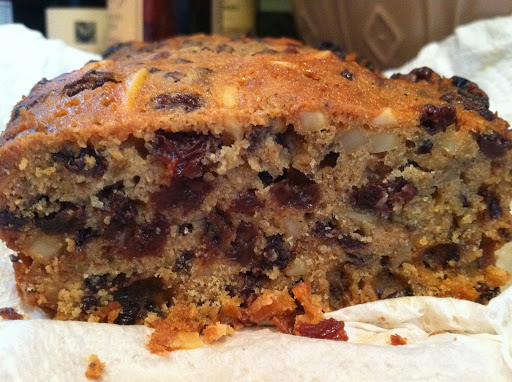
Prune and Flax seed Bread 

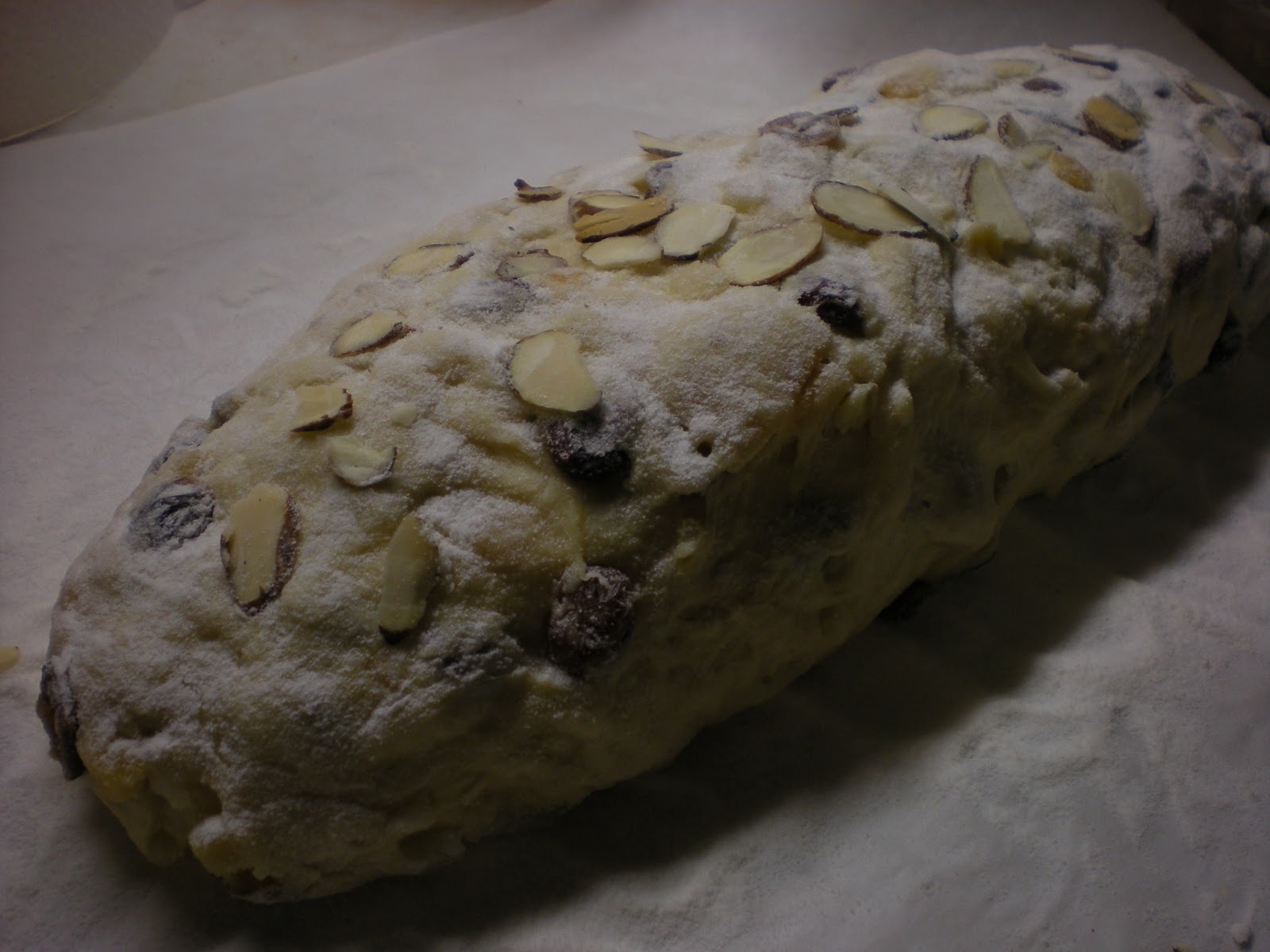
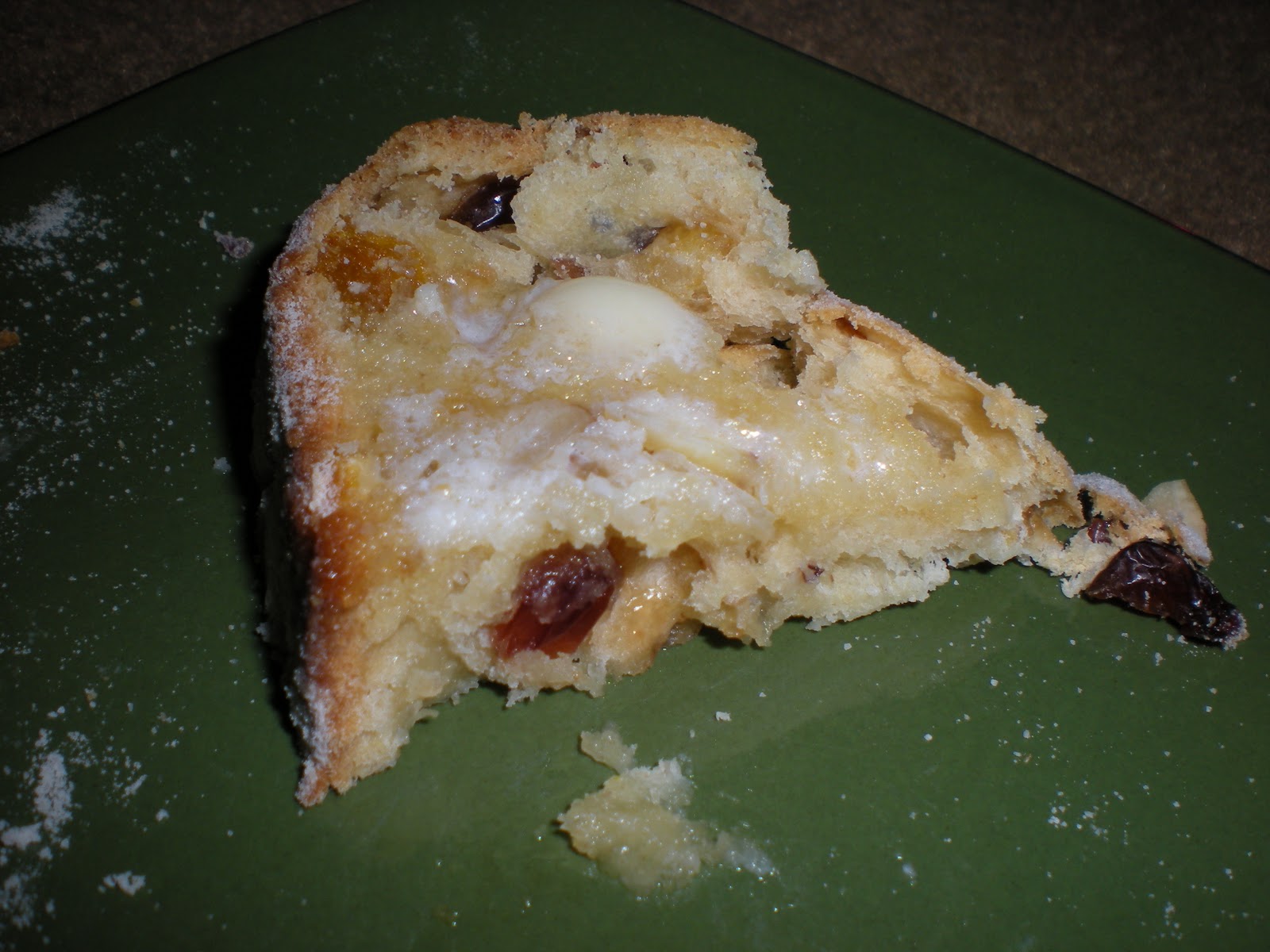
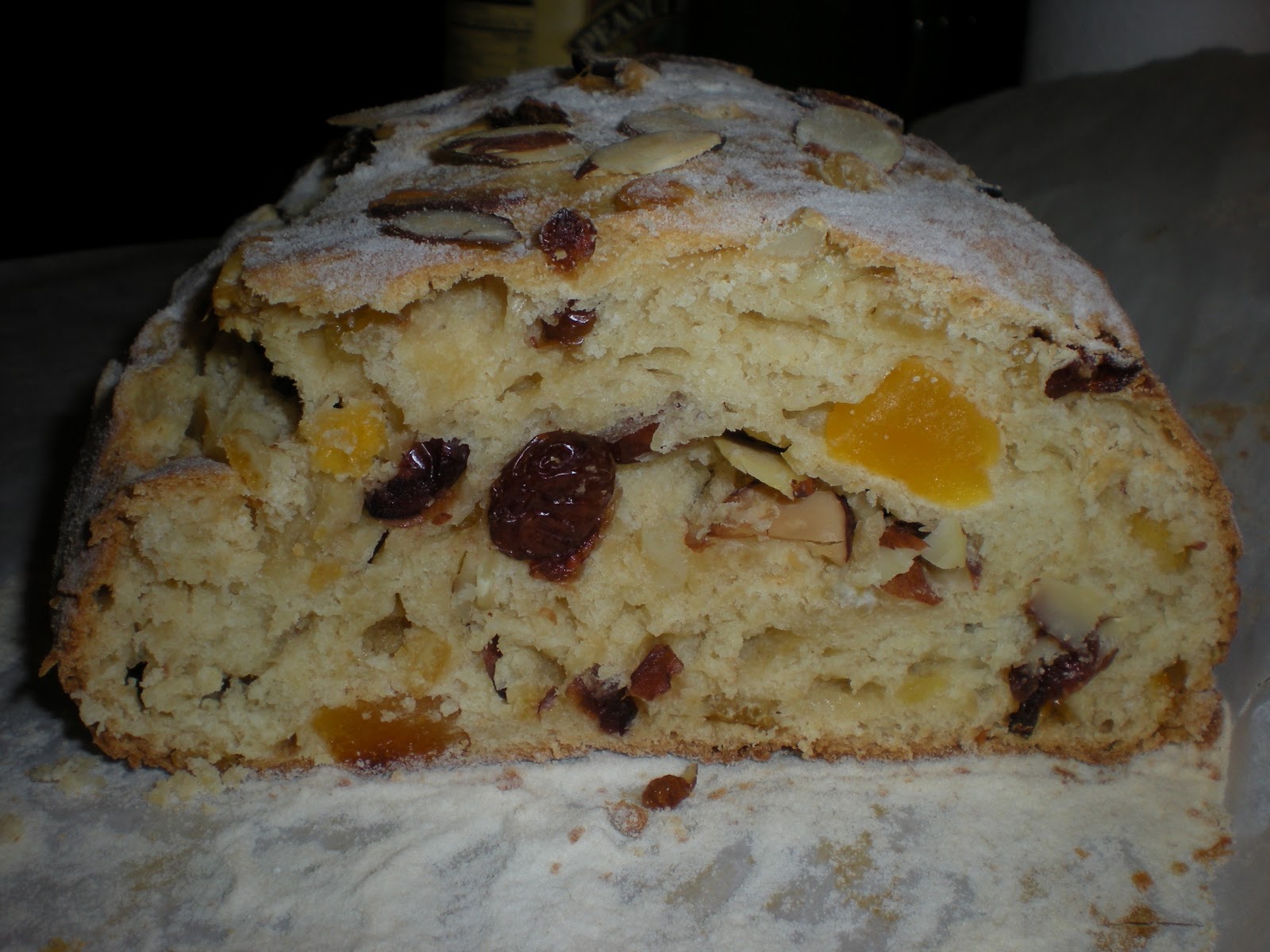
Stollen


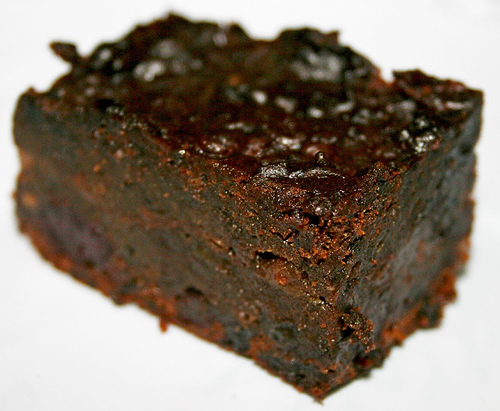
Jamaican Black Cake

 The past few years, Slow Learner (actually Mr. Bread Maiden’s mother) and I have been celebrating Christmas by baking a batch of fruitcake.

Fruitcake, if you don’t know, is that much-maligned dessert bread chock full of fruit, nuts, spices, and a whole lotta alcohol.  When you think (or, before meeting Mr. Bread Maiden’s kin, what I THOUGHT) of fruitcake looked something like this:

http://whatscookingamerica.net/Q-A/fruitcakesec.htm

I don’t even know what those green and red things are.

But all that changed.  Well, not the part about the green and red things.  I don’t know if I want to know what those are.

The story goes, Slow Learner got the recipe from (you guessed it) Alton Brown.

http://www.politico.com/click/stories/0910/brown_gets_political.html

Starting a few months ahead, she bakes the loaves and then once a week gives each loaf a spritz of brandy, which as an added bonus helps preserve it.  By the time Christmas rolls around, those things are good and smothered in the stuff. She serves it with whipped cream and more spritzes of brandy.

If you want to make the world’s best fruitcake, Alton’s recipe is here.

This year I’ll be leaving the fruitcake-making to the expert.

Instead of making fruitcake this year, I decided to try my hand at a different type of fruit-alcohol-spices-bread combination.

I found a recipe for Jamaican Black Cake, which as one person online so eloquently phrased it, “is what fruitcake wants to be when it grows up.”

I got the above picture from a google images search and then was sucked into this website.  It shows why this cake bears more than a passing resemblance to British Christmas puddings.

Not too sweet, made with spiced rum instead of brandy, and mixed with some heaping spoonfuls of molasses, the recipe made my little Latin Americanist heart sing.

http://www.amazon.com

The recipe began here, but I made quite a few alterations along the way.

The cake also goes by Trinidadian or West Indies Black Cake.

You will need:

FOR THE DRIED FRUIT

3 cups dried fruit
3/4 cup spiced rum
zest from one lemon

A few days before you want to bake the cake, put about zest and dried fruit in a large plastic zip-top bag with spiced rum.  Suck all the air out of the bag before closing.  Let sit in the fridge for a few days.

FOR THE DOUGH

1/2 lb butter (softened)
1 cup sugar
2 tbsps dark molasses (the original recipe calls for browning, but I didn’t have any)
1 tsp vanilla
11/2 cups all-purpose flour
1 tsp baking powder
1 tsp cinnamon
1/2 tsp allspice
1/2 tsp salt
4 large eggs
dash of rum 
1/4 cup slivered almonds 

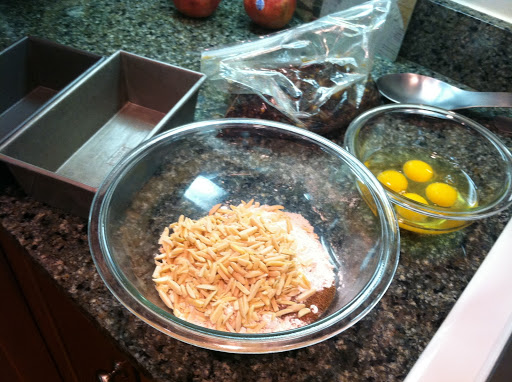
1. Preheat your oven to 325 degrees F and position a tray in the middle of your oven.  Butter two loaf pans. 

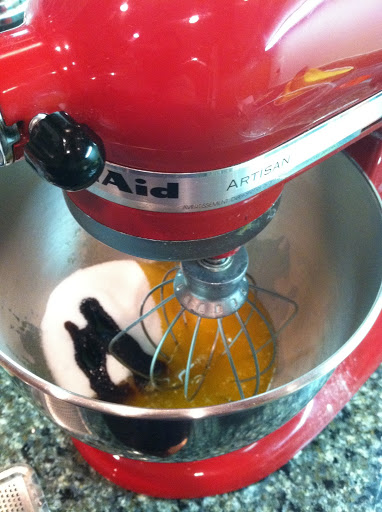
2. In one large bowl, whip the butter, sugar, vanilla and molasses. Set aside.

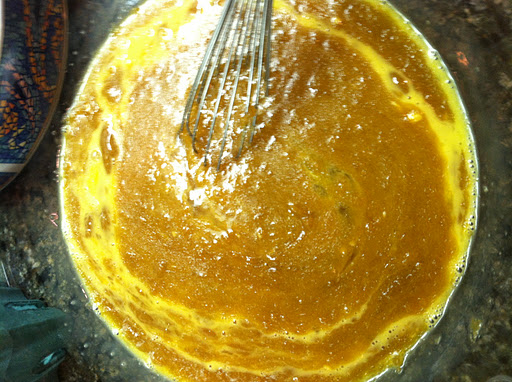
3. In a second medium bowl, whip the eggs with a dash of rum.  Set aside.

4. In a third medium bowl, mix together the dried ingredients.  Set aside.

5. Add the egg mixture to the butter and sugar mixture.

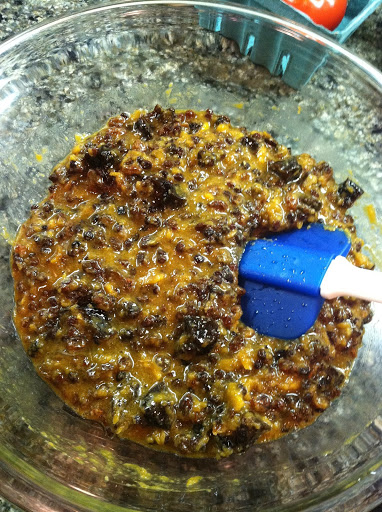
6. Add your rum-soaked fruit and nuts to the wet mixture.

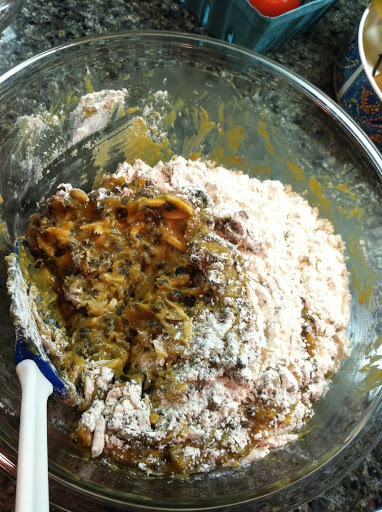
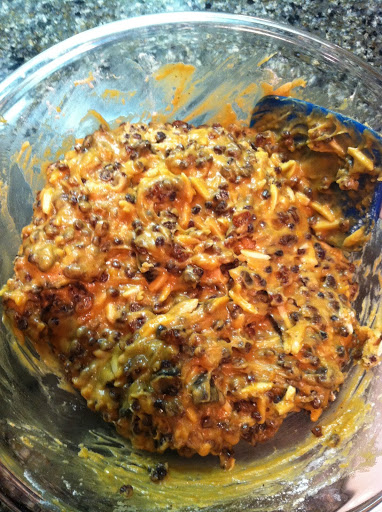
7. A little bit at a time, add the flour to the batter and fold it with a spatula to lightly combine.

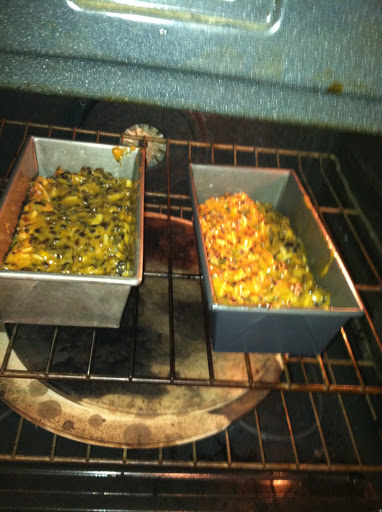
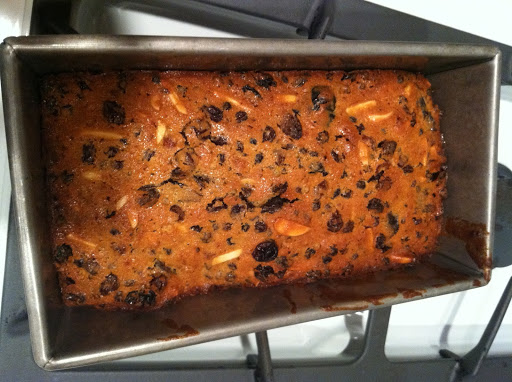
8. Divide your dough into the two loaf pans, and bake for 90 minutes or until the top is firm.

In order to make sure both loaves would bake equally, I used a kitchen scale to divide them by weight.

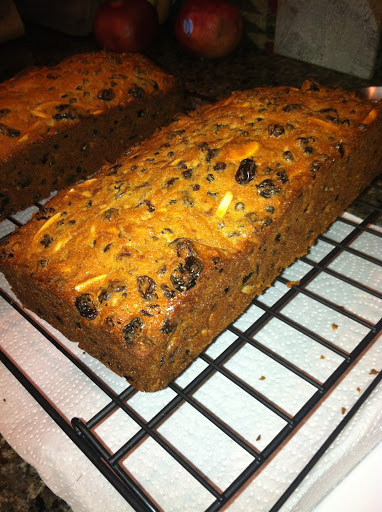
9. Let the loaves cool about 30 minutes in the pan, then take them out and let them rest on a cooling rack.  Since it was already 10:30pm and I was tired, I let them rest overnight.

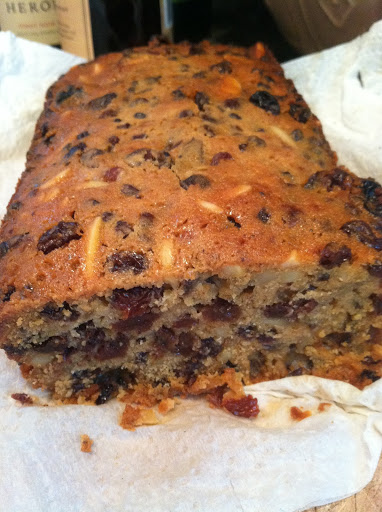
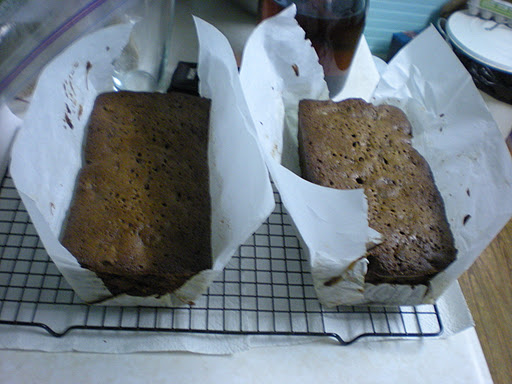
My first thought was, “those aren’t as dark as I was hoping.”  I think if I had used dark rum, the “browning,” brown sugar, or blackstrap molasses, they would’ve been darker.

YUM.

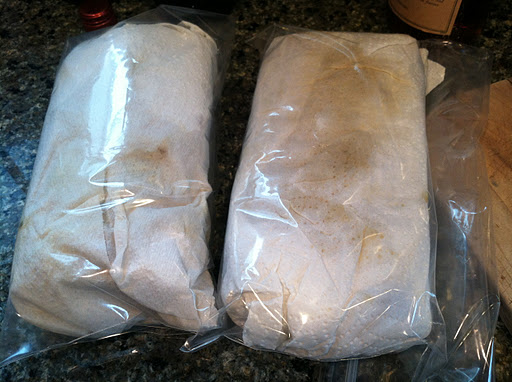
10. After they are cool, pour a good jigger of rum over the top of each cake and store in a plastic zip-top bag.  The alcohol acts as a preservative, so pour on!  The cake really absorbs a lot of liquid, so don’t be stingy.

Even though they aren’t as dark as they’re supposed to be, when we took a bite this morning the cake was very tasty.  Success!  If I don’t post before then, Bread Maiden and family wish you a very Merry Christmas and a Happy New Year!

St. Lucia Buns

It’s getting to be that season when all I can think about is deliciously rich holiday breads.

While I can’t make a decent cookie to save my life, I LOVE traditional breads with loads of dried fruit, maybe some alcohol, some nuts, in a special traditional shape.  I love all the regional variations: kugelhopf, stollen, panettone, pan dulce, yulekage, fruitcake, etc.

These St. Lucia buns are not a bread laden down with all the add-ins, but it is a Christmas bread.  I first learned about these buns when I was seven or eight, and totally obsessed with the American Girl book series.

http://americangirl.wikia.com/wiki/Kirsten_Larson

  Kirsten Larson was a Swedish immigrant girl who came to the United States with her family in the mid 1800s.  They celebrated St. Lucia Day, and so it’s been in the back of my mind ever since.

St. Lucia was a saint from Scandinavia who sacrificed herself for her faith some way or another.  Anyway, the shape is supposed to represent her eyes, and the day (December 13) serves as a reminder that the dark days of winter are almost over (Lucia means light).  According to custom, the eldest daughter wakes up the family with St. Lucia buns and tea or coffee.  This post from someone I’ve never met makes me tear up a little.  What a sweet and dutiful girl! 

I wish I had an eldest daughter 😦 Although I am glad my family never celebrated St. Lucia day, because I AM the eldest daughter and when I was younger I would’ve been loathe to wake up early to make breakfast for my family.  Good thing we’re not Swedish.

http://indiebeauty.com/profiles/blogs/the-origin-of-candles-on-st

I think it is important to point out that I have never eaten St. Lucia buns, made by someone Swedish or otherwise.  But Peter Reinhart has a recipe for whole wheat buns, and I’m always interested in trying another of his recipes from the Whole Grain Breads book.

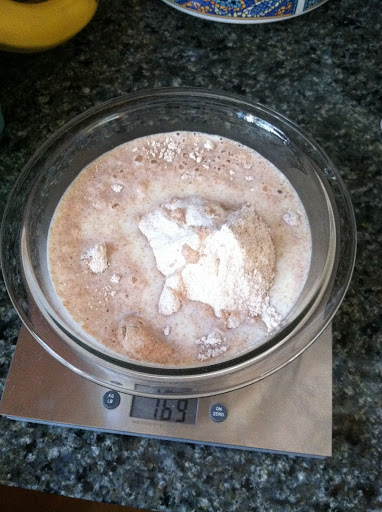
The recipe starts out similarly to his other WGB epoxy method breads, with a soaker and a biga.  However, he uses scalded milk in the soaker and an egg in the biga, so that’s a little interesting.

To make St. Lucia Buns a la Peter Reinhart, you will need:

BIGA
227g whole wheat flour
3/4 cup scalded milk (heat the milk up to just below a boil, then let cool and skim off the top)
1g yeast (I used 4g since I began the dough in the morning and wanted to bake them in the afternoon)
1 egg, lightly beaten

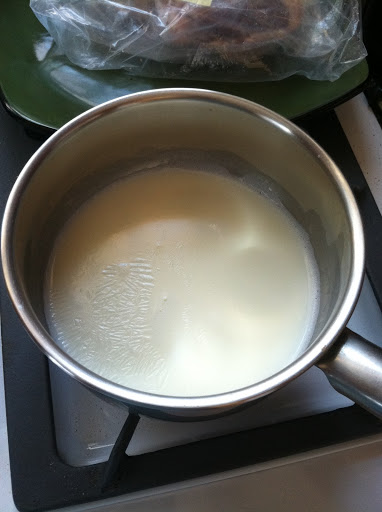
Here is the scalded milk, in case you were interested.  This is before I skimmed off the film.

SOAKER
227g whole wheat flour
142g lukewarm water
5g salt

This is the soaker dough first mixed up.
Here is the dough after a 15 minute rest.

One thing that I’ve learned since making a whole bunch of Peter Reinhart’s WBG recipes is that you want the biga and the soaker to be about the same hydration and texture.

If one is overly runny, that is not a good sign.  You want to be able to stack one dough on top of the other to cut them into little pieces before adding them to the final dough.
 

If you want to make the final dough and bake these buns the next day, you can throw the biga in the fridge and leave the soaker out on the counter overnight.

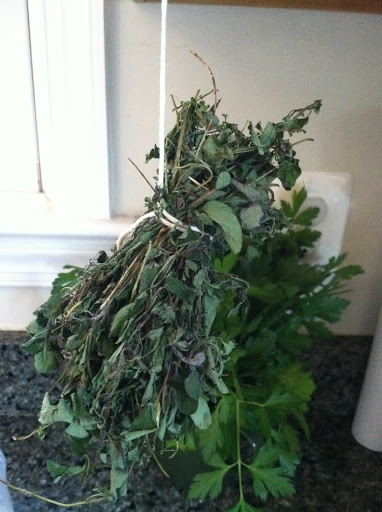
While you’re waiting, here are some pictures of herbs from our garden that Mr. Bread Maiden has tied up and hung in our kitchen.

 If, like me, you want to make the dough after a few hours (and you’ve added the necessary extra yeast) you can proceed to the next step, which is:

FINAL DOUGH
All the biga
All the soaker
113g whole wheat flour
5g salt
7g instant yeast (Mr. Bread Maiden was making cassoulet during the time I meant to bake the buns, so I omitted the extra yeast in an attempt to draw out the rise time until the oven was free)
71g honey, agave nector, sugar or brown sugar (I usually add both 71g of sugar and 71g honey)
56.5g vegetable oil or melted butter
1 egg (for egg wash)
raisins (for topping)

1. Chop up the soaker and biga into small, tablespoon-size pieces and mix them together with the flour, salt, yeast, honey, and vegetable oil.

2. Dust a work surface with flour, then knead the dough for 3-4 minutes until the dough feels tacky.  Let it rest five minutes, then knead another minute or so and remove to an oiled bowl.  Cover with plastic wrap and let it rise about 60 minutes.

*I let the dough rise for about two hours since oven space was scarce.  I added more yeast in the biga than PR’s recipe calls for, and no yeast in the final dough.

3.  Line a sheet pan with parchment paper and preheat the oven to 425 degrees F.  Divide the dough into 8-12 pieces, and shape each into a ball.  Let each piece rest for 10 minutes.  I’ve found they cook more evenly if I don’t try to eyeball them, but take the total weight of the final dough and divide by the number of buns I want to make.  That is the weight of each bun!

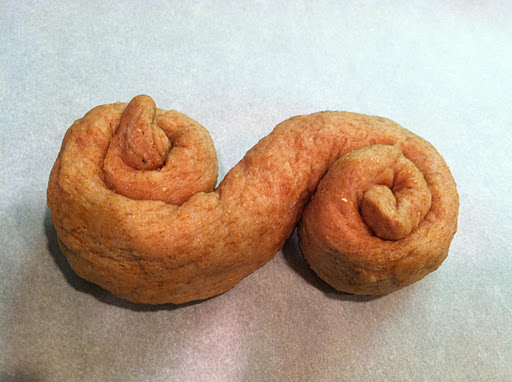
4. Roll out each ball into a tube, like you’re making a strand of challah.  Roll them a little and then let them relax before continuing to roll.  Mine were about 1.5 feet long.

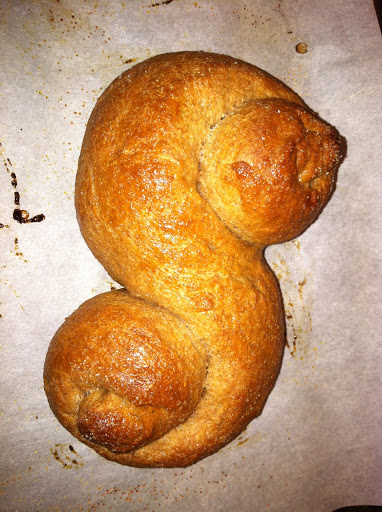
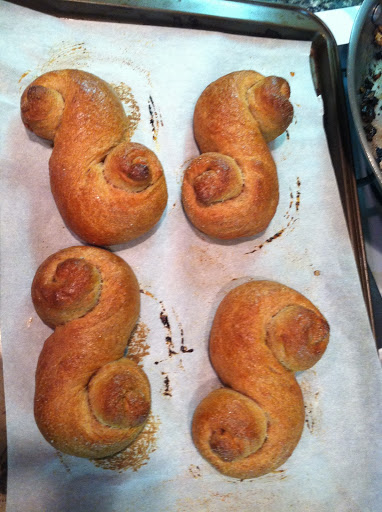
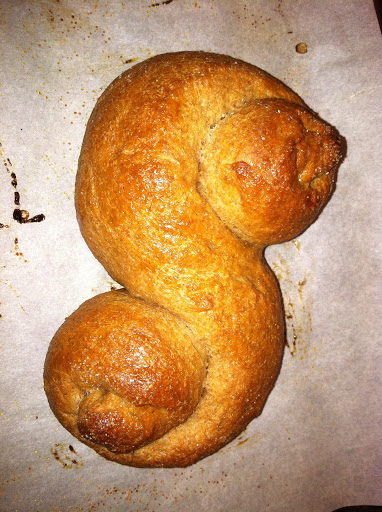
5.  Roll each end back up towards the middle like a yo-yo, into an “S” shape.

6. Place each shaped bun on the parchment paper, cover with plastic wrap, and let rest another hour or so.

After an hour rise

7. Take the plastic wrap off the buns and brush with the beaten egg.  I also sprinkled them with sugar for extra sweetness.  Place the pan in the oven and knock the temperature down to 350 degrees F.  Back for 15 minutes, then rotate the pan and bake another 10-20 minutes until golden brown and hollow when given a good thump.

9. Transfer the buns to a cooling rack and serve when they’re ready or you just can’t wait anymore.  You can pretend with all the whole wheat flour that they are healthy.  Actually, compared to most Christmas confections, they ARE 🙂 

You can eat two for me!  Merry Christmas!
Finger paint

Maybe I should post a disclaimer right here: this is not a post about bread. Those who are looking for a bread recipe should just wait a few more days.  Bread Maiden has a post about biscuits that just needs a few more pictures before it can be published.  Sit tight.

For now, I want to talk finger paint.

When Little Bread Baby gets bored at mealtime, he loves smearing his food around his tray. 

So I was inspired to let him release his creative impulses in a constructive way, and maybe get some art for papa’s office.

There was just one little problem.

How can I keep finger paint out of LBB’s mouth?

I can’t.  And many (most?) homemade finger paint recipes I found online included some sort of detergent or dish soap to give it the right texture and shine.  Even though dish soap is non-toxic, I didn’t really know how much LBB would be eating, rubbing in his eyes, etc.

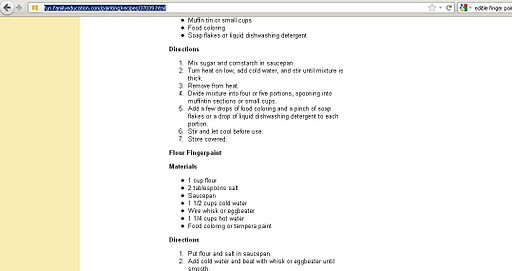
I ended up finding one edible finger paint recipe.

It was here.

The recipe only requires flour, water, and salt.  And food coloring.

I found some all-natural food coloring at MOM’s.

Here’s what you do.

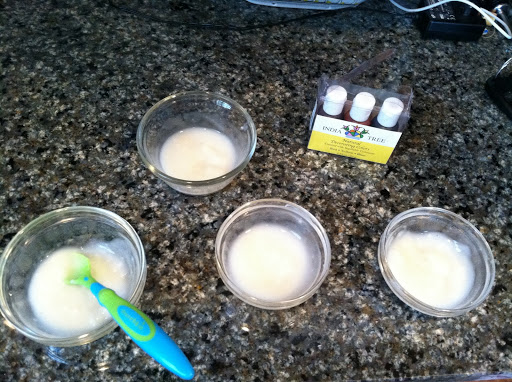
As you can see above, you need:

  • 1 cup all-purpose flour
  • 2 tablespoons salt
  • Saucepan
  • 1 1/2 cups cold water
  • Wire whisk
  • 1 1/4 cups hot water
  • Food coloring

  1. Put flour and salt in the saucepan.
  2. Add cold water and beat with whisk until you get out all the lumps.
  3. Add hot water, turn the burner to low, and stir until it comes to a boil and the mixture is thick. 

4. Let the mixture cool.
5. At this point, you can either leave the mixture uncolored until you want to use it, or color as desired with food coloring.
6. Store covered in refrigerator.

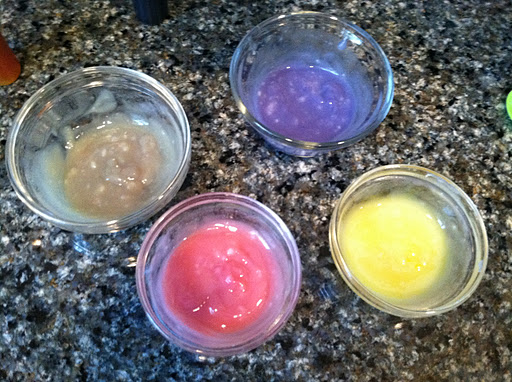
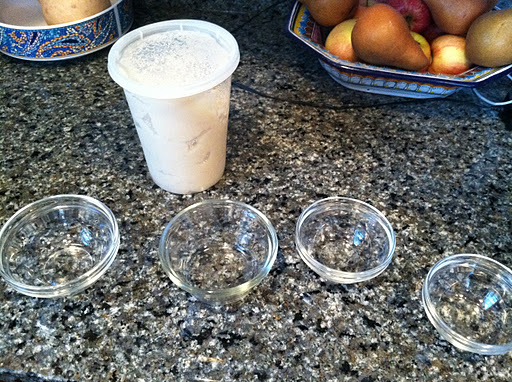
 Here is my chilled finger paint.  After resting for 24 hours, it was pretty thick.  I spooned out about a tablespoon of goo into each bowl, then added about a tablespoon of water and mixed it up until it was the right consistency.

Then I added the food coloring.

The green was a little odd, but fine.  Next time I will probably add more food coloring so the paint is more vibrant.

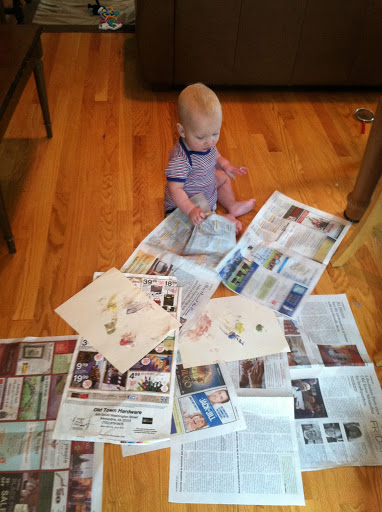
Here is the work station before picture.

More interested in the newspaper than painting.

Ah well.

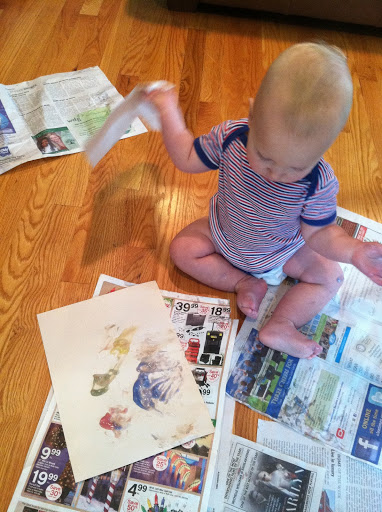
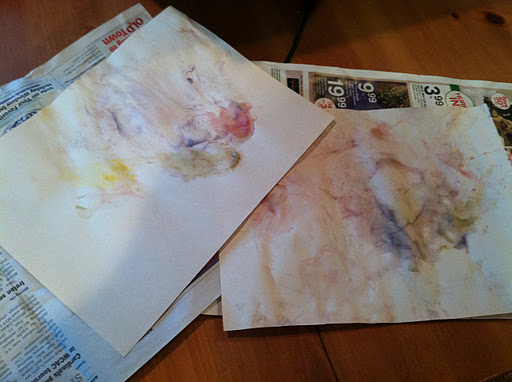
I mentioned adding more food coloring to the paint next time, because the colors were very muted.  Still, a good first effort. Once he decided he was interested in the painting, it held his attention for a good five minutes.  I consider that a success!
This recipe also makes a TON of paint, so we will have enough paint for many more art projects!

Biscuits

Today we are celebrating a belated Thanksgiving with Mr. Bread Maiden’s family.  We spent last Thursday in Hong Kong eating Thanksgiving dinner at a barbecue restaurant with my family, so it was only fair to celebrate once more a holiday that is all about excess.

When I asked what I could bring, Slow Learner (can we please retire this nickname? When your breads are equal and superior to mine, you need a more suitable nickname befitting your status as a co-Bread Maiden!) suggested biscuits.

This is my favorite biscuit recipe.

Not surprisingly, it is from Peter Reinhart’s Artisan Breads Every Day book.

I’ve made it so many times, it’s shocking it hasn’t appeared in this blog sooner.  I use this dough not only for biscuits, but also for pot pie topping.

 Low-calorie these biscuits are not.

But heavens are they tasty, to quote a well-known radio host whose name rhymes with Karrison Geillor.

There are several reasons I like Peter Reinhart’s recipe for biscuits.

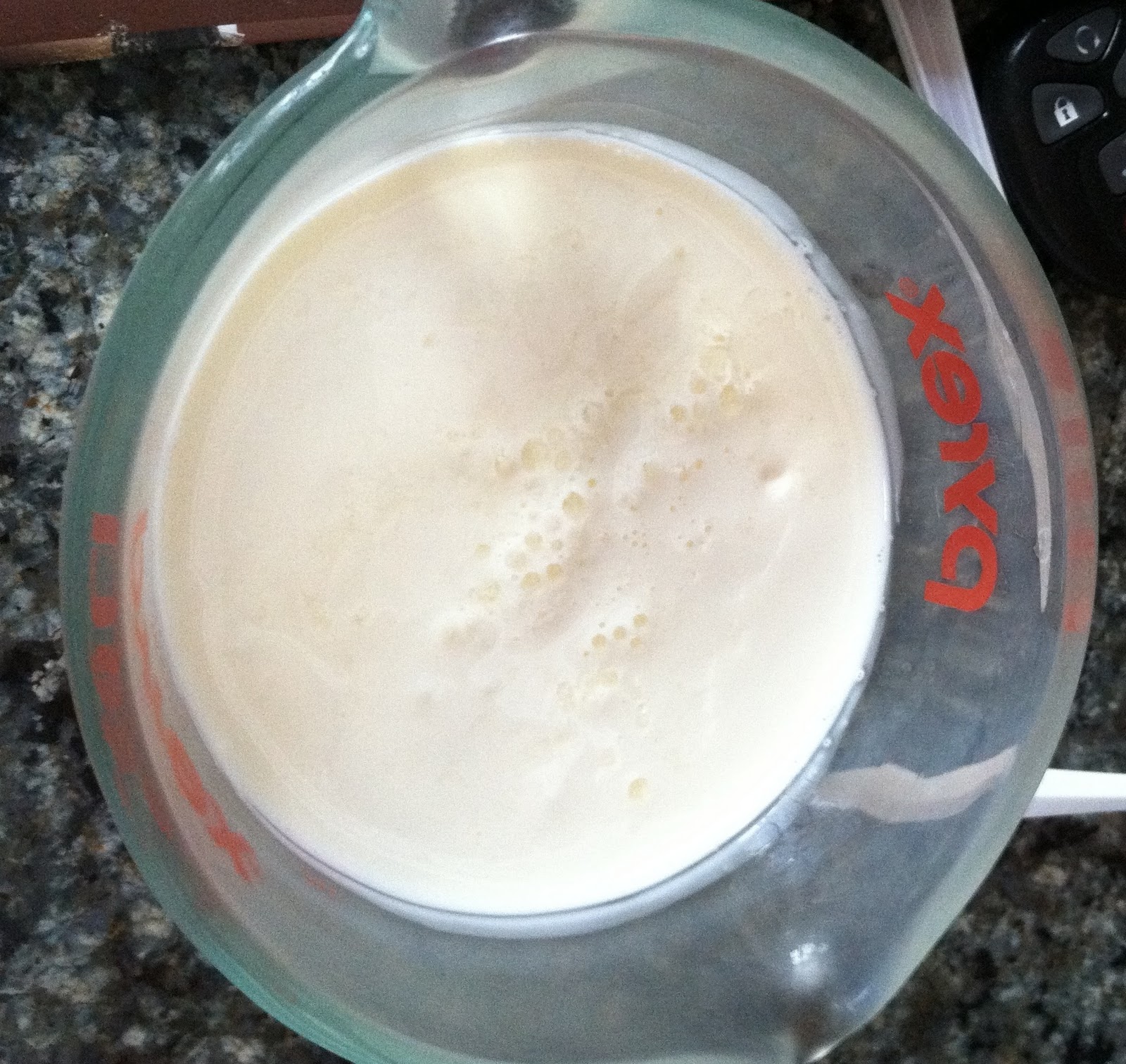
For one, it uses cream laced with vinegar instead of buttermilk, to preserve the high fat content of the cream.

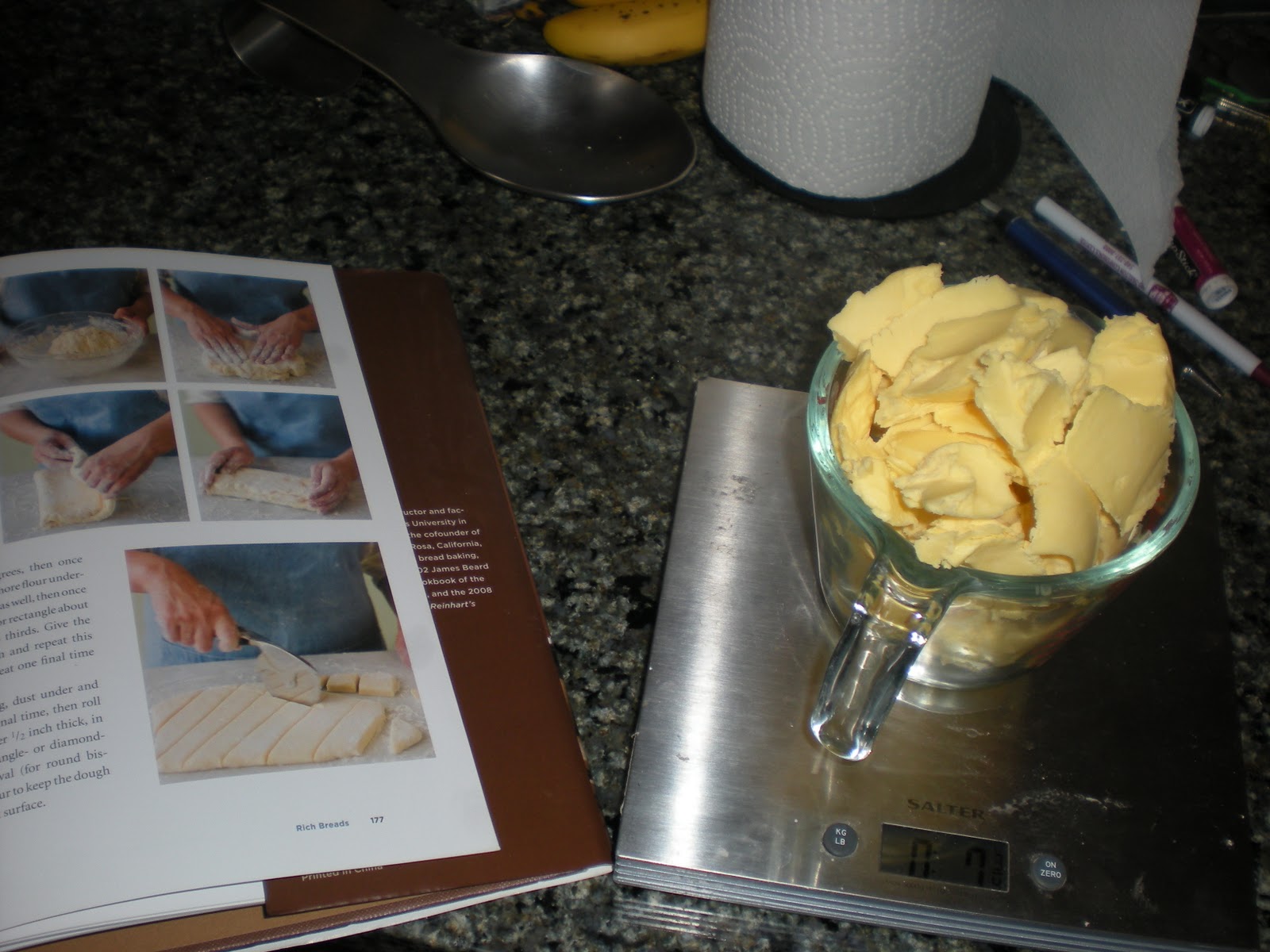
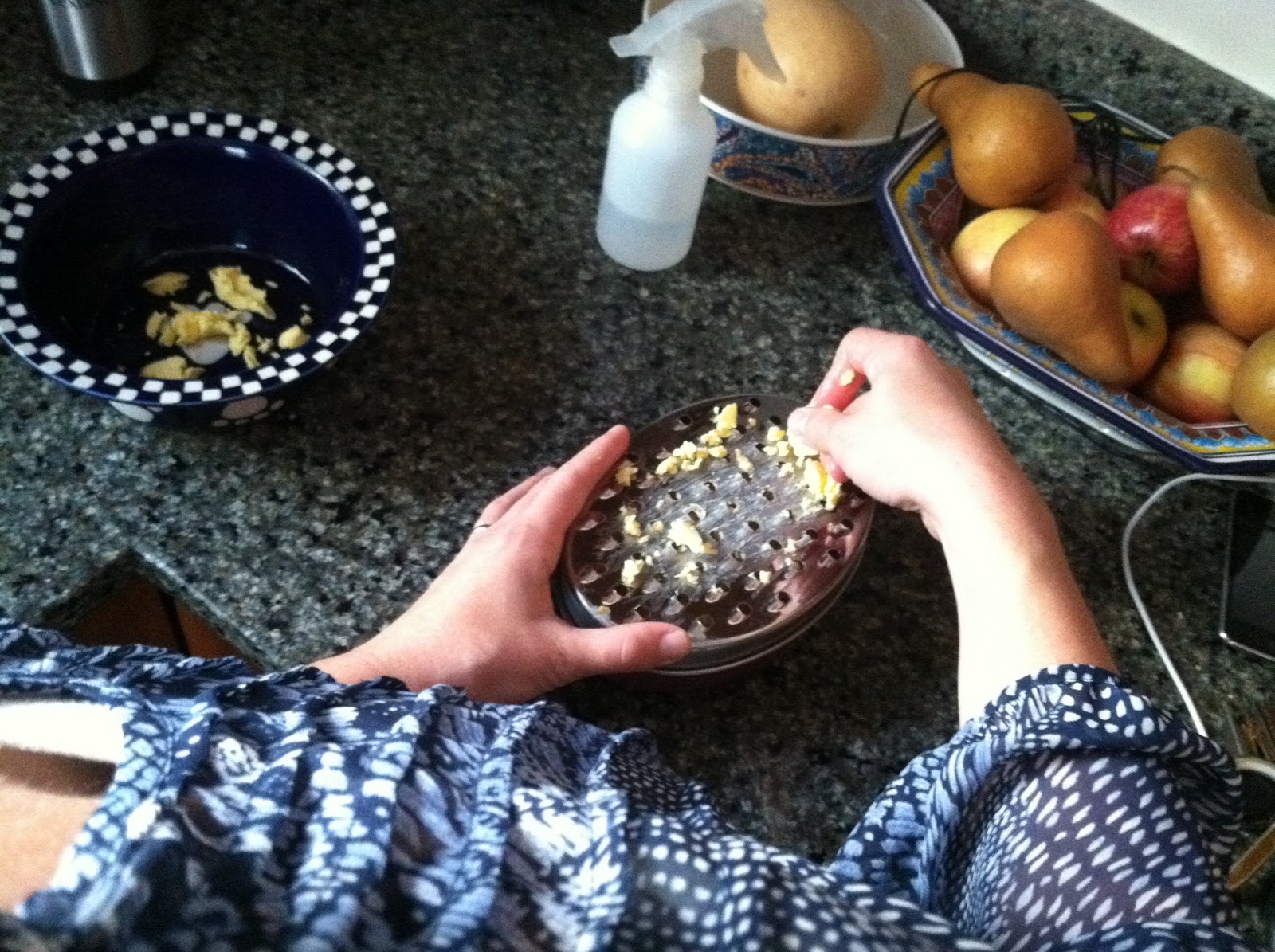
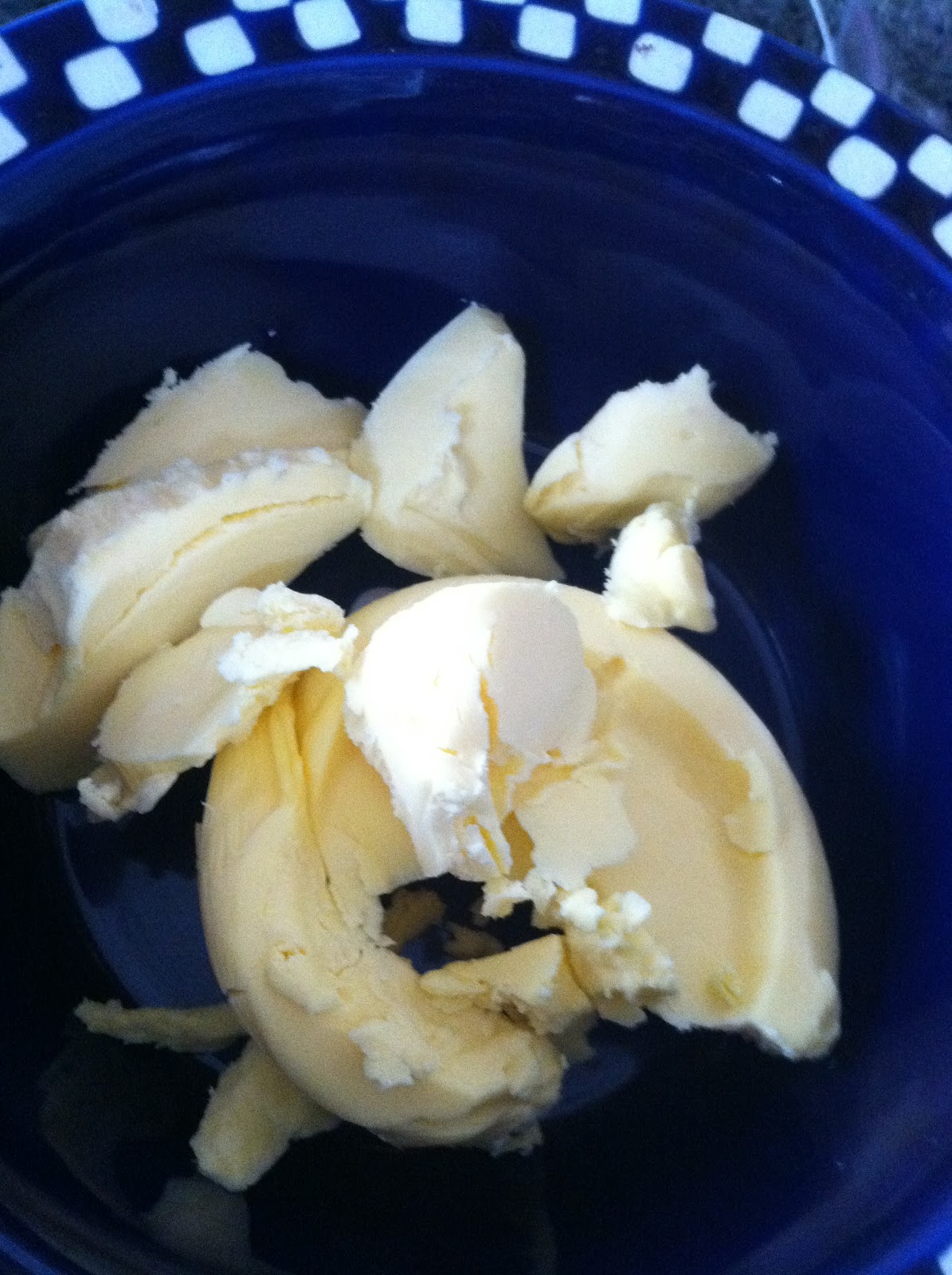
Second, this: he has you freeze the butter, then grate it to cut down on the time spent cutting the butter into the dough.

Ok, so now that I have you convinced this is the holy grail of biscuits, let us proceed with the recipe.

Ok, just a quick note.  There are some of you who like a more crumbly biscuit, one that falls apart in your hands and barely comes together for baking.  This recipe makes a slightly firmer, though still quite tender and very flaky, biscuit.

Moving on.

You will need:

2 tablespoons (you can eyeball this) white vinegar
1 cup cold heavy cream (we used half and half this time, and have used cream-top whole milk in the past)
113g cold unsalted butter
128g AP flour
99g pastry flour
1 tablespoon sugar
2 1/4 teaspoons baking powder
1/4 teaspoon baking soda
3/4 teaspoon kosher or sea salt (mmm sea salt)

1. Add the vinegar to the cream and put in the refrigerator to chill for 30 minutes or so.

2. Put the butter in the freezer (if you haven’t done so already) to get nice and cold.

3. While the butter and cream are chilling, mix up the flours, sugar, salt, baking soda and baking powder in a medium-sized mixing bowl.

4. Once the butter is cold, take a grater and grate the butter into the flour.  Or into a small dish to then add to the flour once grating is done.

5. Stir the butter and flour until the flour coats the butter.  If you have big pieces of butter just break them up a little.


6. Now add the cream until the dough just forms a ball.  I did not do this and thus had to add a lot of flour during the kneading phase.

8.  Place the dough on a well-floured surface and cover with more flour.  Take a rolling pin and roll the dough out to about 1/2 inch height.

9. Fold into thirds like a brochure.  Turn dough 90 degrees.  Roll out again and fold again.  Repeat two more times.

10.  Now wrap the dough in plastic and let it rest in the fridge for 30 minutes while you preheat the oven to 500 degrees.

11.  Take the dough out of the fridge, roll it out to 1/2 inch thickness, then cut using a biscuit cutter or a pizza roller.  Your choice.

12. Move the biscuits to a baking sheet covered in parchment paper.

13.  Pop those bad boys in the oven, then turn it down to 450 degrees.  Rotate the sheets after 8 minutes, then bake another 6-10 minutes until golden brown.

14.  Let rest on a cooling rack, then serve!  These biscuits are so delicious and buttery, and the dough works for so many applications.

I wish I took pictures of these when they came out of the oven.  But since I didn’t, here is another project where I used this dough.

Here it serves as the crust of two delectable chicken pot pies. Really, anywhere you can use short crust, you can use this recipe.  

Graham Crackers

I have been meaning to write this entry for a while.  Finding the time to sit down and write is difficult when you have to wait for naptime.

This entry actually has to do with Little Bread Baby (LBB).  Also Little Bread Niece (LBN).  Here is a story about Little Bread Niece.

This is a picture of Little Bread Niece about a year ago.  She has a soy sensitivity which means her mother needs to be extra vigilant about ingredients in her food.  This usually means most of what she eats is homemade.  Not that that’s a bad thing, of course.

LBB so far does not have any food allergies or sensitivities, but I think it’s safe to say our family is more aware than most people about what goes into our food.  I decided to make graham crackers for Little Bread Baby after reading the labels of so-called natural and organic baby snacks.

These graham crackers are incredibly easy, and have no weird preservatives in  them.  I keep them in a plastic bag that I can throw in my purse or the diaper bag before heading out to the park.

Another bonus is that the recipe comes from Alton Brown, one of our favorite celebrity chefs (the only one we can really tolerate) on Food Network.

It has been slightly modified, but the original recipe is here.

The recipe is basically like a pie dough.

For those of you who think “pie dough is so hard to make,” fear not.

The food processor is your friend.

You will need:

The tools
A kitchen scale
Baking sheets
Parchment paper
Wax paper
Rolling pin
Food processor

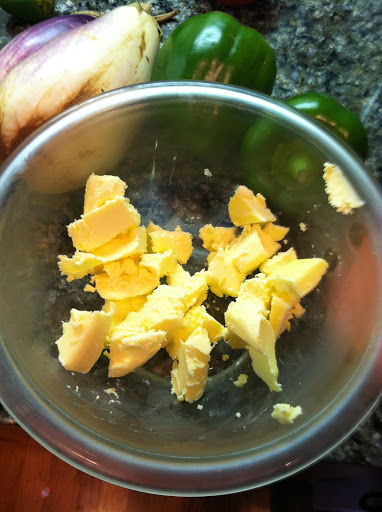
The butter

3 ounces unsalted butter, cut into 1/4-inch cubes and chilled

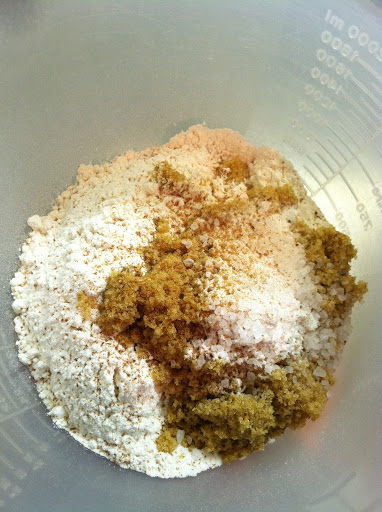
The dry ingredients

8 3/8 ounces graham flour.  You can find graham flour at Whole Foods or other specialty store.
1 7/8 ounces all-purpose flour
3 ounces dark brown sugar
3/4 teaspoon aluminum-free baking powder
1/2 teaspoon baking soda
1/2 teaspoon kosher salt
1/8 teaspoon ground cinnamon

The wet ingredients
1 1/8 ounces molasses
1 1/8 ounces honey
1 1/2 ounces whole milk
1/2 teaspoon vanilla extract

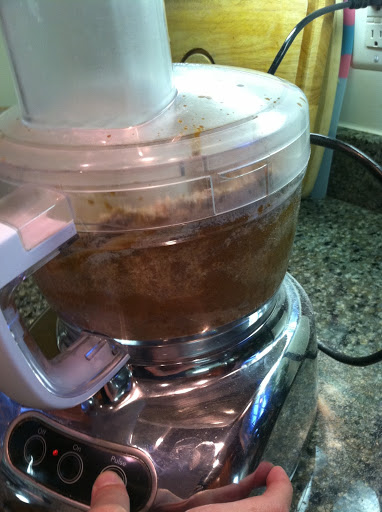
1.  Put the dry ingredients into the bowl of a food processor and pulse several times to combine. 


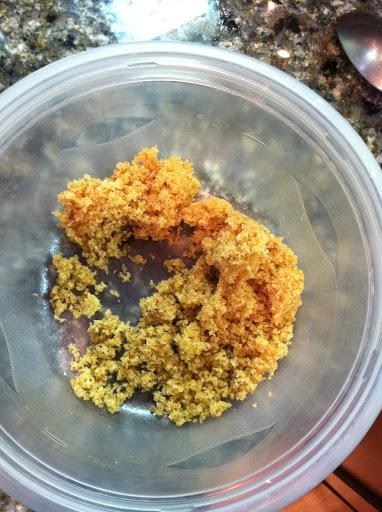
Before I go on, I would just like to point out that for the first time, I MADE MY OWN brown sugar.  Crazy, I know. 
Ok, moving on.

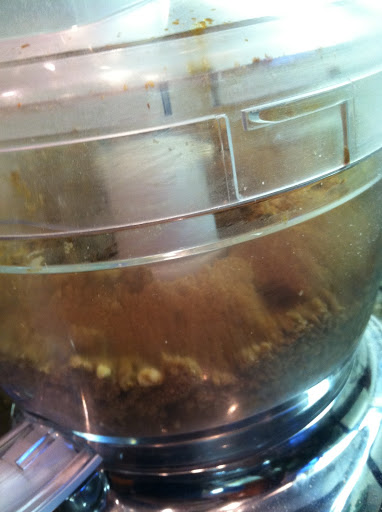
2. Add the butter and pulse until the mixture resembles cornmeal.


3. Add the molasses, honey, milk and vanilla extract.


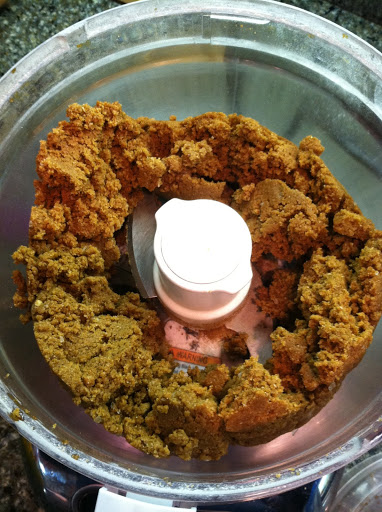
4. Process until the dough forms a ball, approximately 1 minute.

At first, the dough looks like this:

Then this:

Then this.

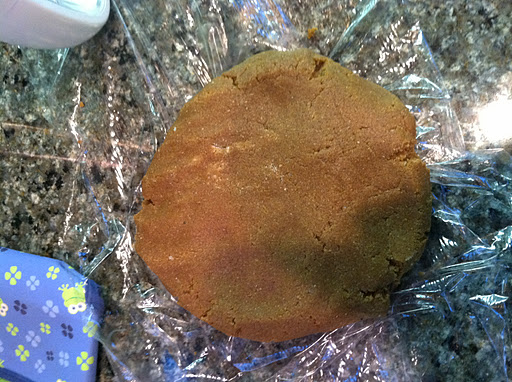
5. Press the ball into a 1/2-inch thick disk, wrap in plastic wrap, and refrigerate for 30 minutes.

6. Preheat the oven to 350 degrees F.  Unwrap the chilled dough and place it onto a large piece of wax paper and top with a second sheet of wax paper.


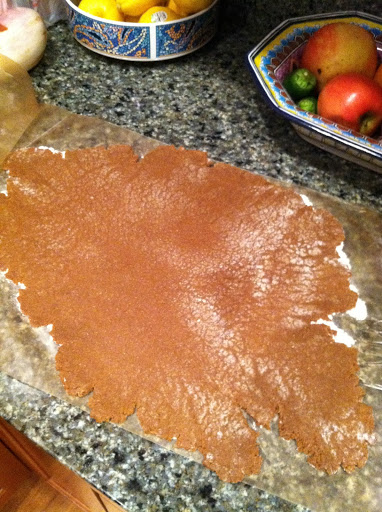
7. Roll the dough out until it is 1/8-inch thick.

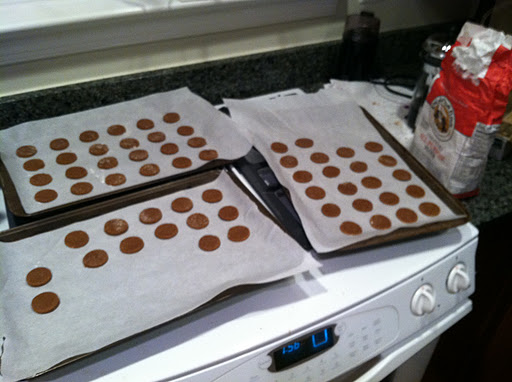
8. Remove the top sheet of wax paper and either cut the dough into squares using a rolling pizza cutter or do what I did, making little circles with a small biscuit cutter.  Your choice.  Put the cookies onto a baking sheet lined with parchment paper. Do NOT use wax paper for baking or your cookies will turn out all waxy and gross.

This is what you get when you ask your husband to take an action shot of you cutting out the cookies.

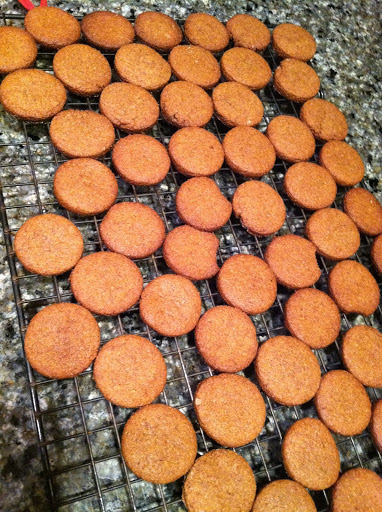
8.  Bake on the middle rack of the oven.  Depending on how thin your cookies are, bake for about 10-15 minutes or until the edges just start to darken. Remove from the oven, set the sheet pan with the crackers on a cooling rack and allow to cool completely. Once completely cool, break into individual crackers and store in an airtight container for up to 2 weeks.


 Aren’t those lovely?  And LBB loves them.  We can take them anywhere for an easy snack that everyone likes.  And even though it does take some time to roll out and bake, the food processor makes quick work of the dough.