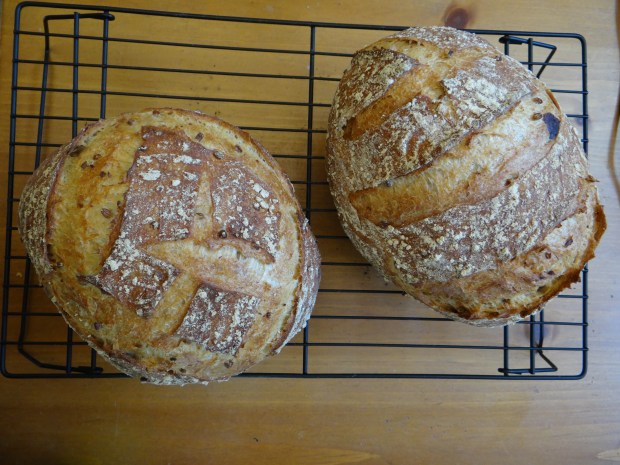
Nifty Thrifty: multigrain with a crazy ingredient

DSC03307

You will never, ever guess the secret ingredient in this bread. Never in a million years.

Ready?

It’s rice pudding.

Rice pudding!

So, let me back up.  Often, I’ll throw uneaten oatmeal into a regular loaf of bread. It has the double benefit of adding nutrient-rich grains, and milk which softens the dough.

This week, I had a craving for rice pudding.  I’d never made rice putting before, and followed a recipe that made a TON.  No one else in the Bread Maiden family likes rice pudding, which means I needed to figure out something to do with it or force myself to eat all of it.

So I did what I do with all my leftovers: figure out a way to throw it in my bread.

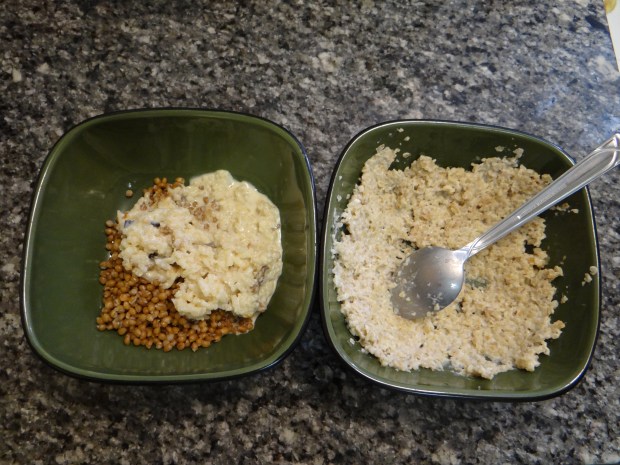
I had leftover wheat berries, leftover oatmeal, and the rice pudding.  I figured, it’s basically the same elements as oatmeal – a grain and milk.  With some sugar.  What did I have to lose?

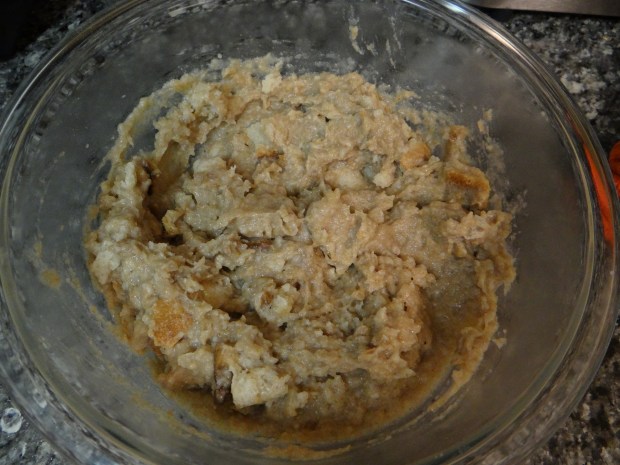
DSC03279

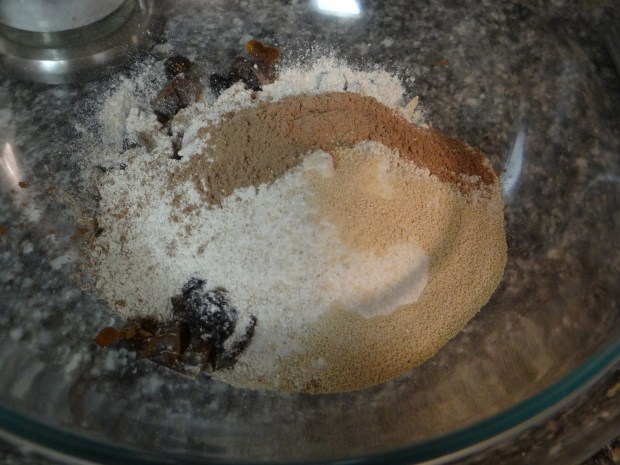
I doubled my usual 2-3 white bread but added about 100g of whole wheat flour.  Then I let it autolyse for 20 minutes.

DSC03280

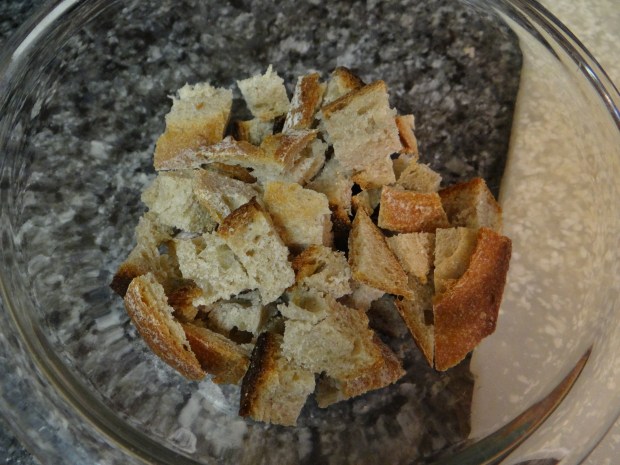
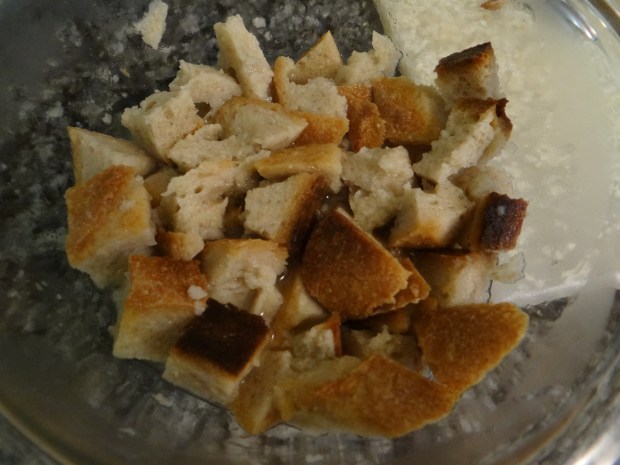
my grains.  On the left, cooked wheat berries and rice pudding.  On the right, cooked oatmeal.

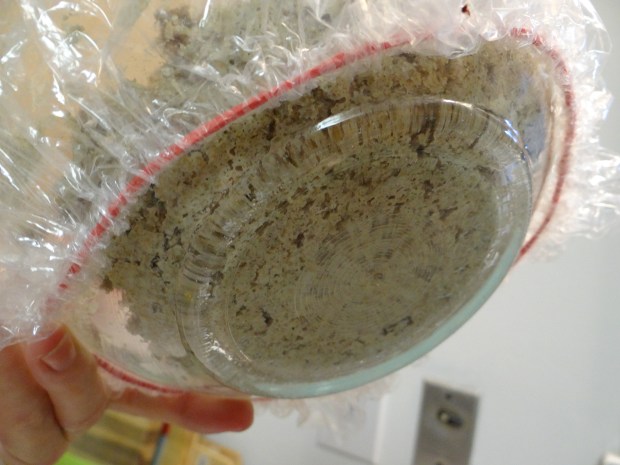
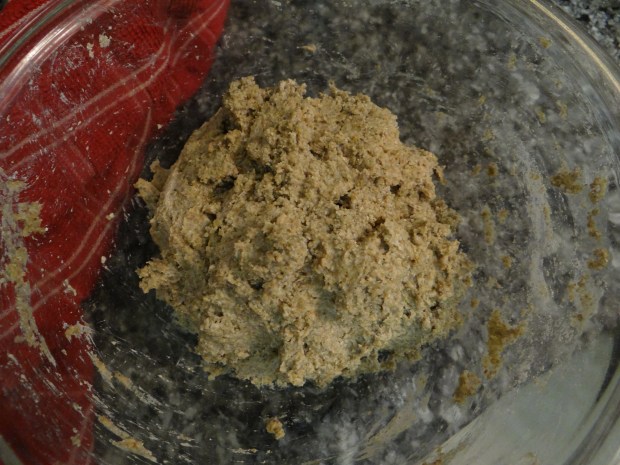
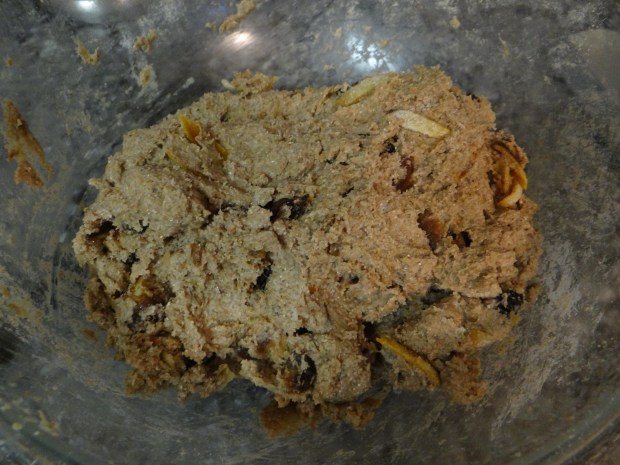
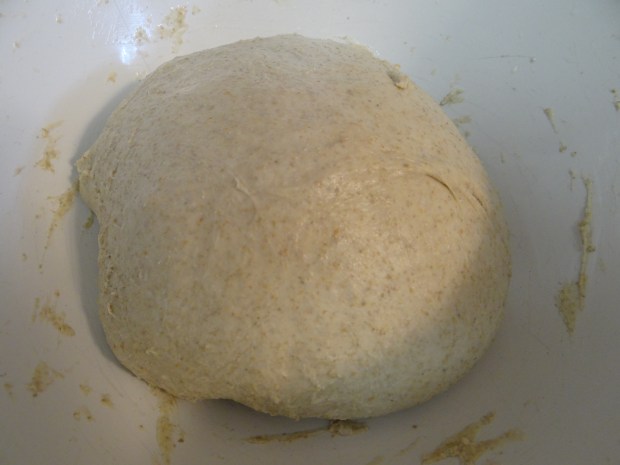
After the autolyse, add the salt, yeast and grains.  Knead until everything is incorporated.

DSC03282

DSC03283

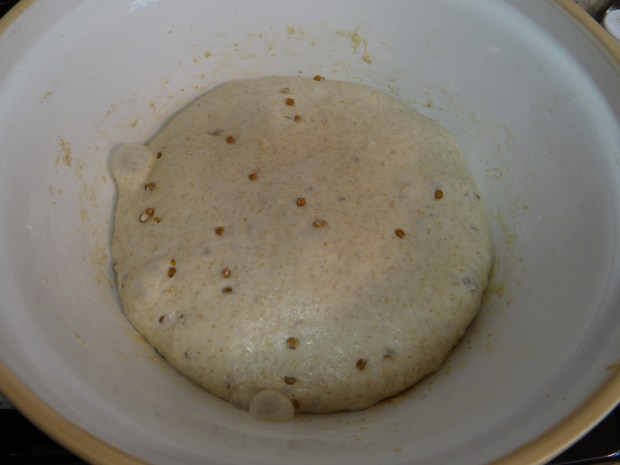
I forgot to mention the rice pudding had prunes.  I managed to pick most of them out but some were hidden.  

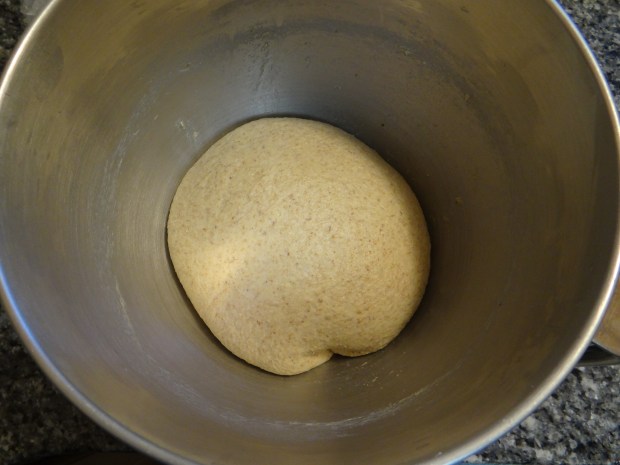
Cover your bowl and let the dough rise about four hours or so.

DSC03303

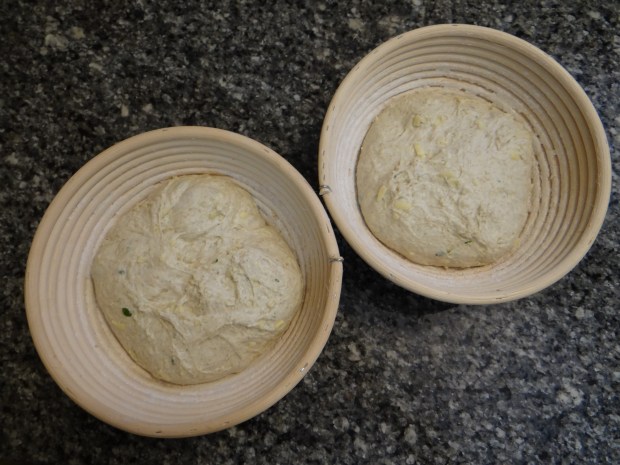
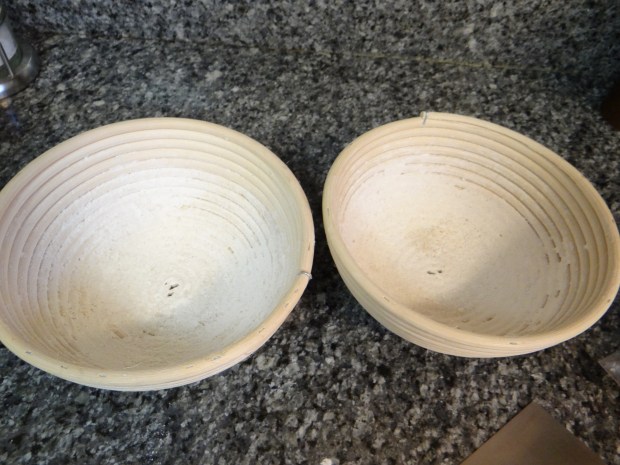
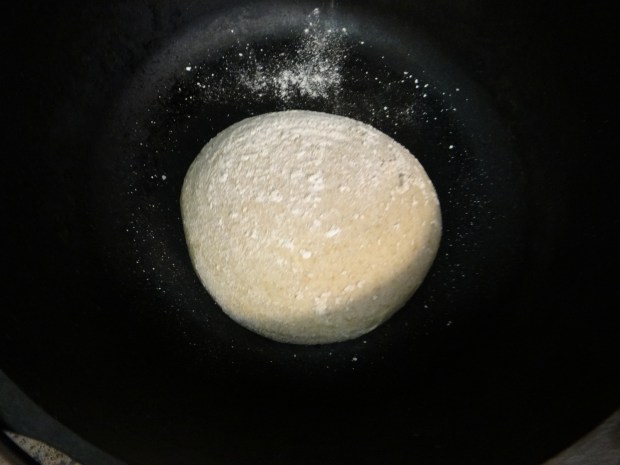
Divide the dough in half and place smooth side down into bannetons.  Cover and refrigerate for an hour while you preheat a dutch oven inside your oven to 500 degrees F.

DSC03304

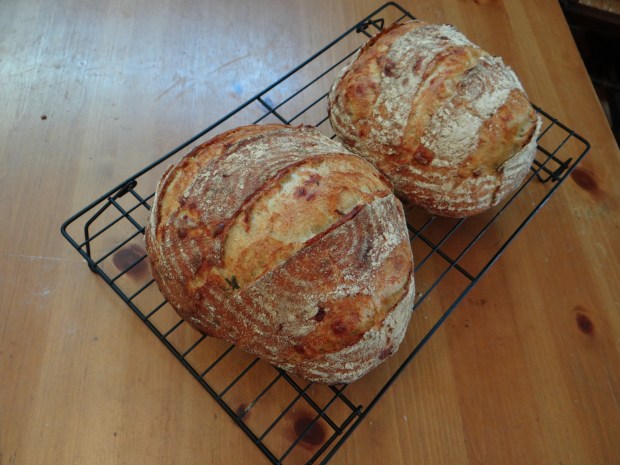
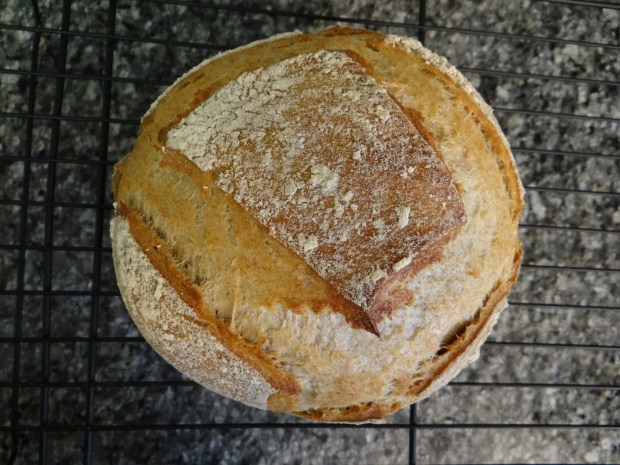
Bake for 15 minutes at 500 with the lid on, 15 minutes at 375 with the lid on, and 15 minutes at 375 with the lid off.  Remove from the oven and let cool before slicing.

DSC03306.JPG

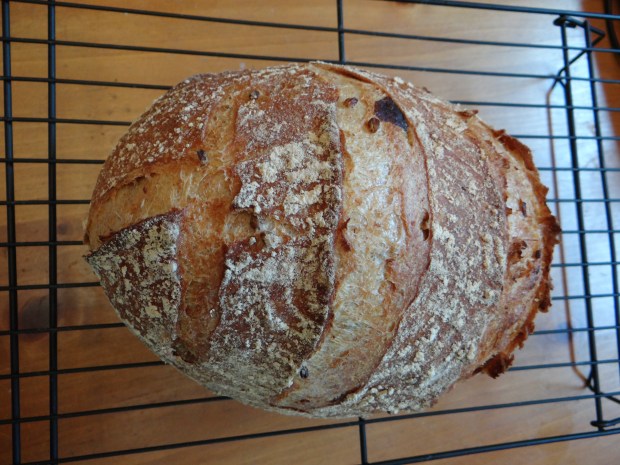
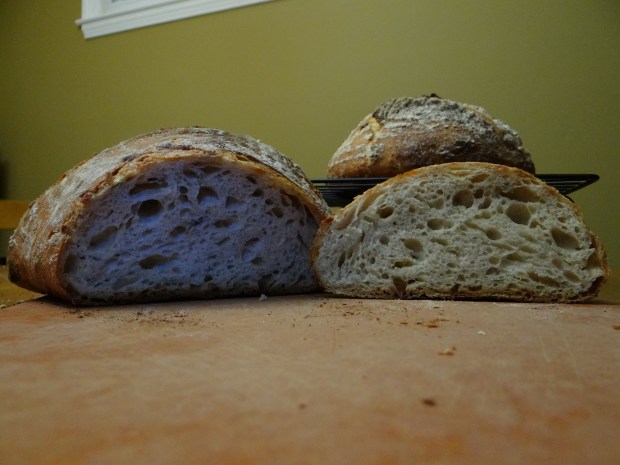
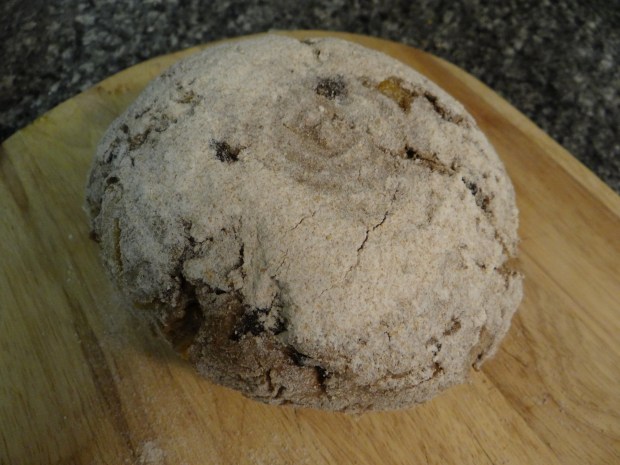
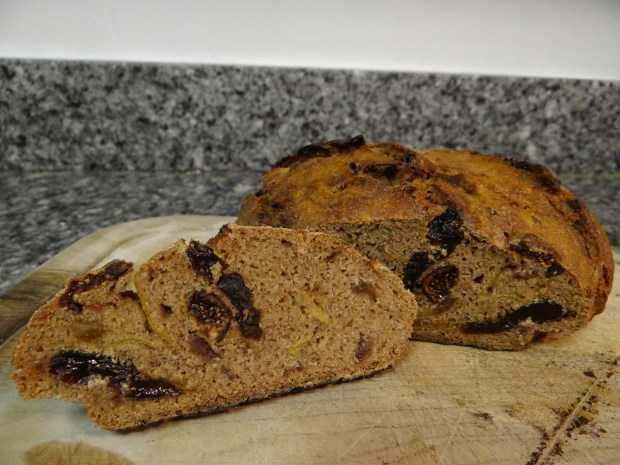
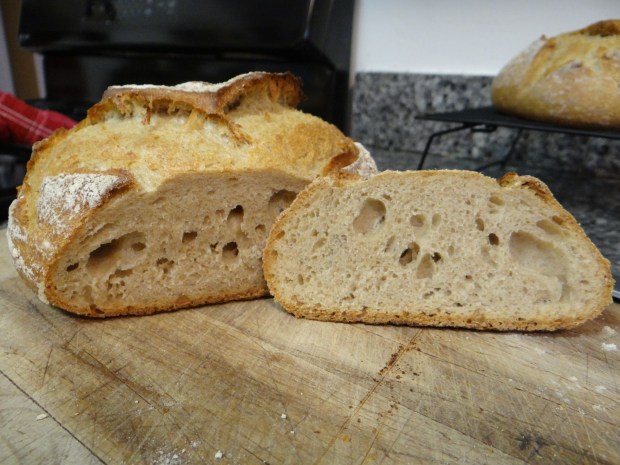
What’s really amazing is that you can’t even taste the rice pudding.  The rice adds to the multigrain flavor, and the milk, sugar and egg yolks make the crumb nice and soft.

DSC03308

I don’t make rice pudding often, but it’s nice to know if I have it, I can use it as another grain in multigrain bread!

Uyghur Flatbread (Nangbing)

DSC03302

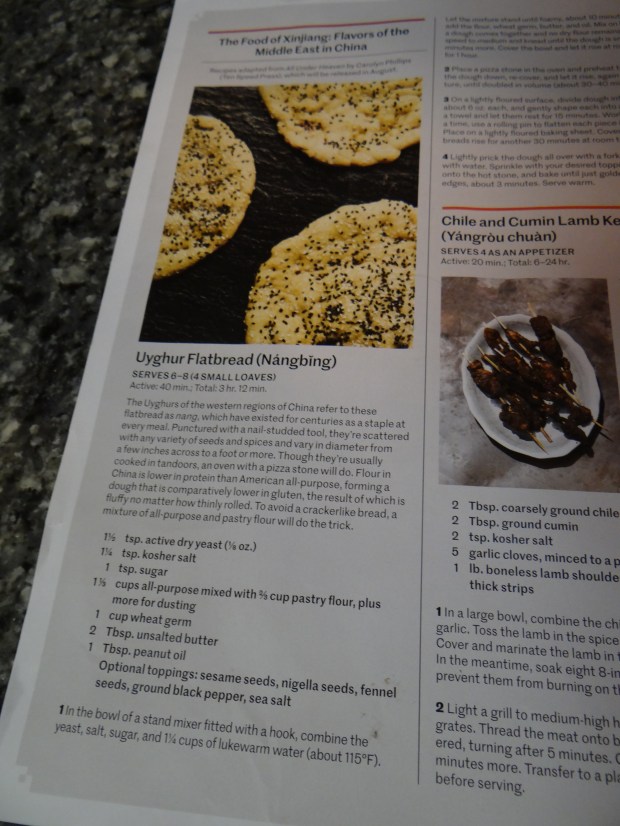
This week, I got my usual copy of Saveur magazine, which I adore.

There was a recipe for this variation on naan that is eaten in Xinjiang, China.

DSC03285

I thought the recipe seemed easy yet interesting, with the wheat germ and pastry flour.  So I jumped right in.  And you can too!  The recipe really is easy.

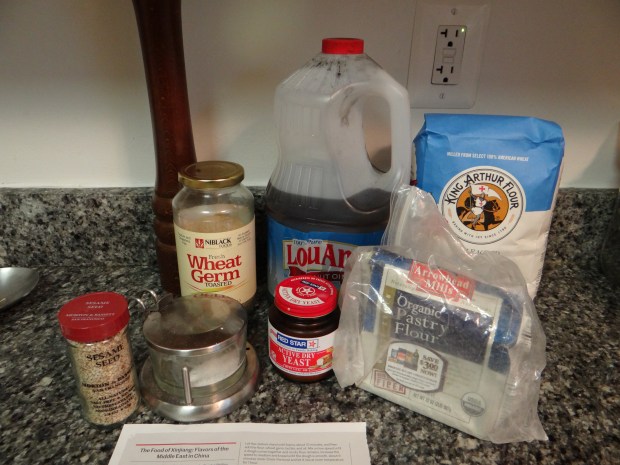
I won’t write out the ingredients because you can see them above.

DSC03284

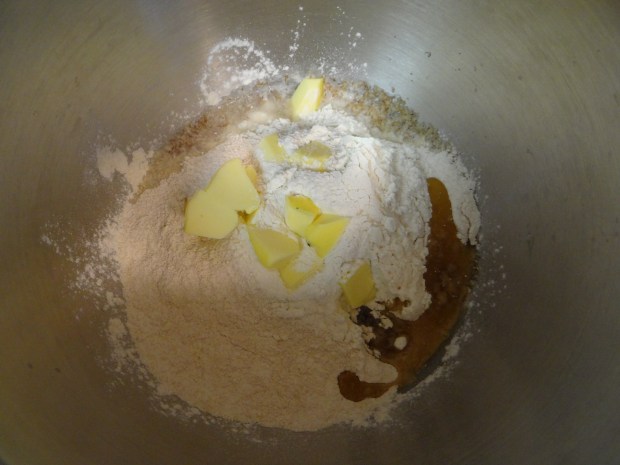
  1. First, mix together the yeast, sugar and water in the bowl of a stand mixer.  Let rise until foamy, about 10 minutes.  After 10 minutes have elapsed, add the flour, wheat germ, peanut oil, salt and butter.DSC03286
  2. Using a paddle attachment, mix the dough together on low, then switch to a bread hook and knead for about six minutes.DSC03287
  3. Cover the bowl with a cloth and let rise for one hour.DSC03289
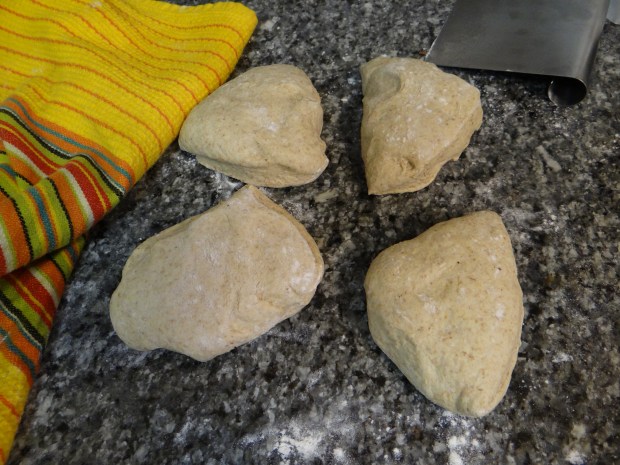
  4. Punch down the dough and cut into quarters.  Cover with a towel and let rest for 30 minutes.  Preheat the oven with a pizza stone or heavy baking sheet at 500 degrees F.DSC03290
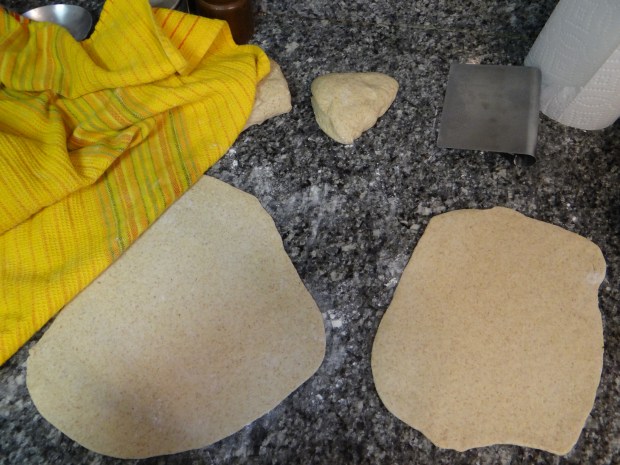
  5. Use a rolling pin to roll out your dough very flat.  Cover and let rest another 30 minutes.DSC03296
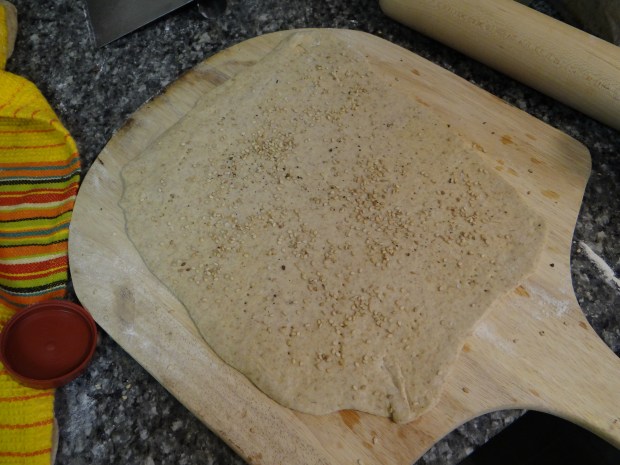
  6. When it’s time for the dough to go in the oven, prick each dough with a fork and lightly rub the dough with water.  Sprinkle sesame seeds, coarse or kosher salt, and fresh cracked black pepper.DSC03297
  7. Slide the dough onto the pizza stone for about 5-7 minutes.  The recipe says 3 minutes, but that was nowhere near enough time.  You can see how my dough looks after three minutes:DSC03298DSC03300
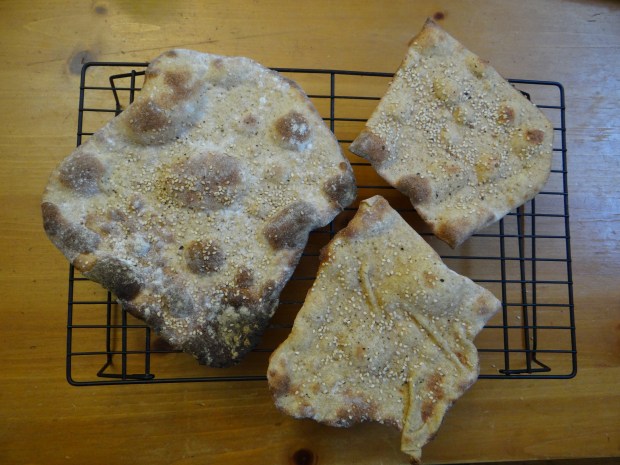
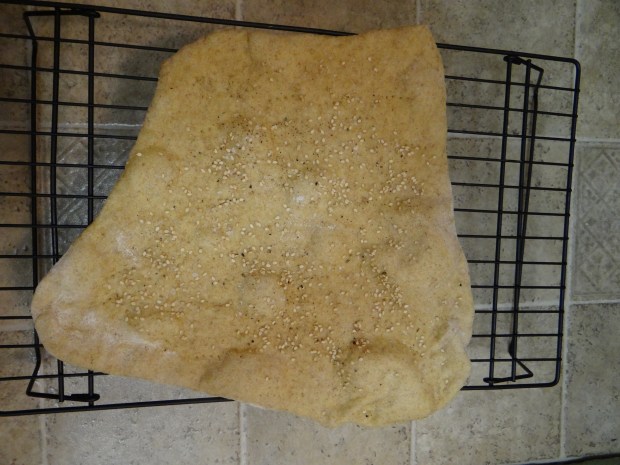
  8. The bread did much better with longer cooking time:DSC03302

I love the crunchy bits and the big bubbles.  However, like naan, it’s not supposed to be eaten by itself but as a means to eat other things like rice and meats.

It’s always nice to try new styles of baking, and I enjoyed making this flatbread.

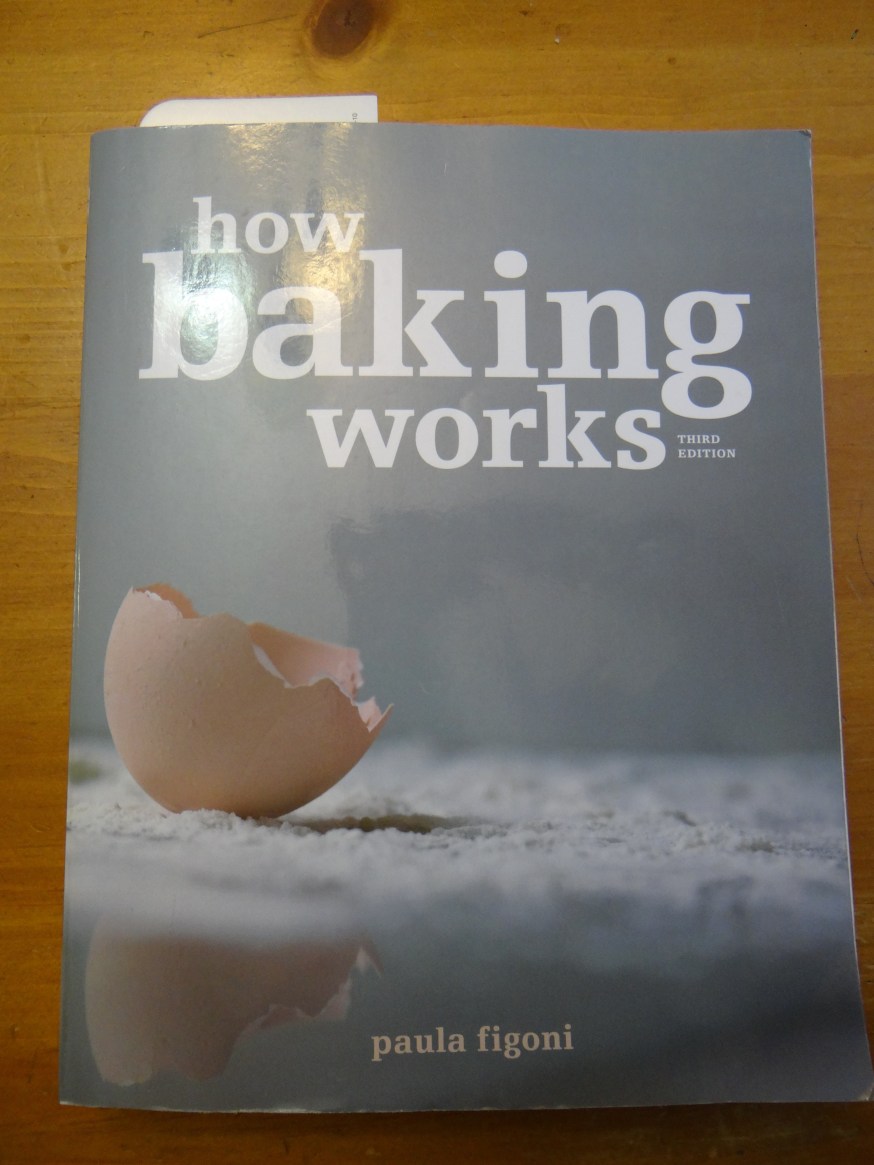
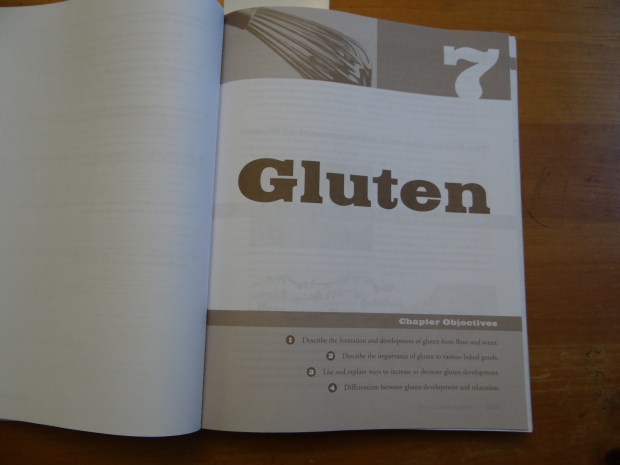
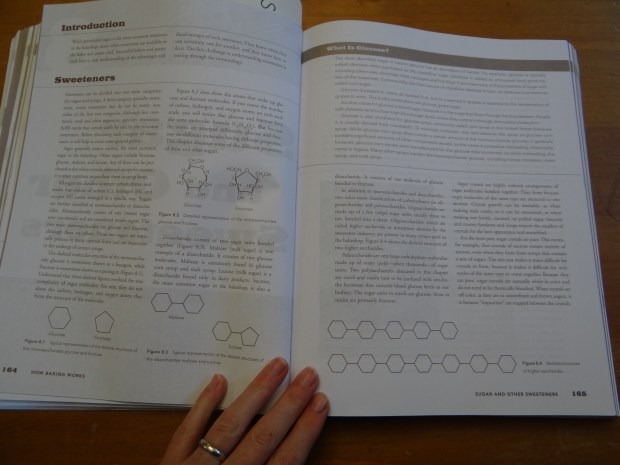
A Bread Library Book Review: How Baking Works

DSC03291r.jpg

I only recently came across this book, and was happy to learn it was available at my public library!

Once it was in my hands, I realized quickly that it’s a baking textbook.

DSC03293DSC03292

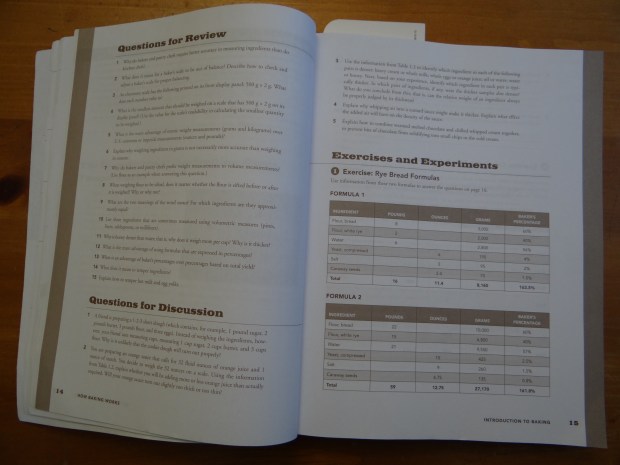
This book is no joke.  It is definitely for the serious baker.  For the home baker, I would still recommend it as a resource but don’t try to read it all in one sitting like I did.

DSC03294DSC03295

It’s divided into chapters mostly based on ingredients – by wheat flour, other flours, gluten, yeast, other leaveners, milk, eggs, sweeteners, other fats, gels and thickeners, etc.

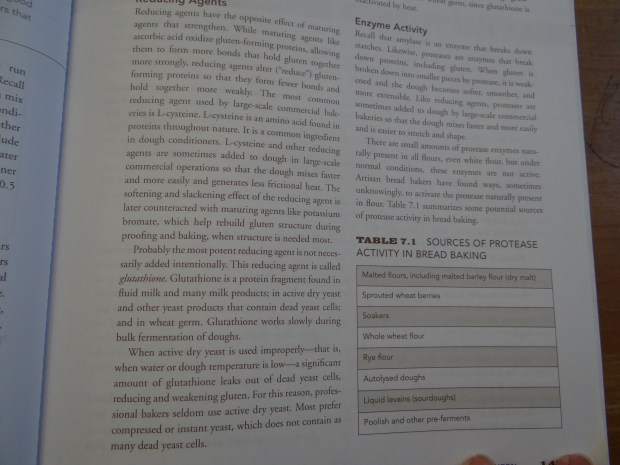
One thing that I noticed is that many of the helpful hints are directed at future owners of bakeries.  For example,

DSC03305

Unlike home bakers who only have to worry that something tastes good, workers in bakeries must also be aware of cost effectiveness and efficiency.  They all must be taken into consideration to make sure the bakery produces quality items but is economically sustainable.

For the serious home baker, who thinks about things like enzymes and egg coagulation, this is a useful book.  If you want to know why your cookies always fall, or your biscuits fail to puff up, or your donuts crack, this is the book for you.

Thyme Gouda Bread

DSC03273

If you didn’t already know, The Bread Maiden is now on Instagram at handle @thebreadmaiden.  It’s very exciting, I know.

Anyway, I’ve been searching for other IG accounts to follow, and @blondieandrye is one that caught my eye.  Particularly this image from yesterday:

I don’t have scallions or feta, but I did have gouda and fresh thyme from our garden.  So I went with those.

This is basically my 1-2-3 bread, using rye starter.

You will need:

750g all-purpose flour

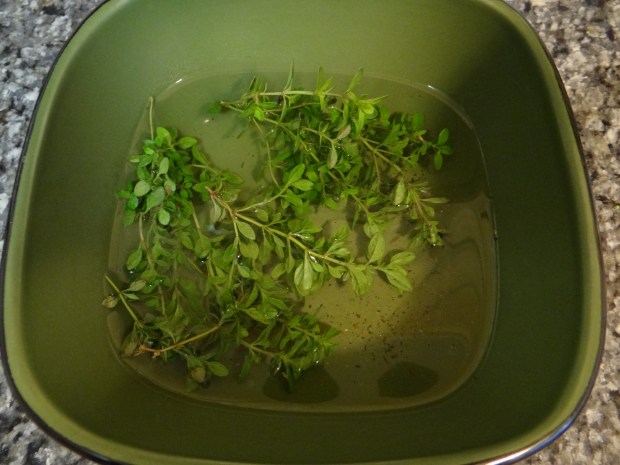
500g water (I used hot water and soaked the thyme in it to give more flavor)

1 tablespoon salt

250g sourdough starter

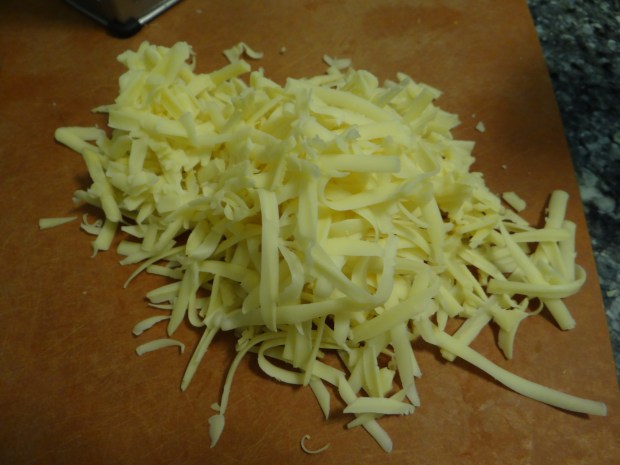
1 cup shredded cheese

a few sprigs of thyme, chopped

DSC03263DSC03262

  1. Mix all the ingredients together in a large bowl.  DSC03264DSC03265DSC03266Cover and let rise, 4-6 hours.DSC03268DSC03269
  2. Divide in half, then shape into boules and place in prepared bannetons or couches.  Cover and refrigerate for one hour.DSC03270
  3. Preheat the oven to 500 degrees F with a dutch oven inside.
  4. Bake each loaf thusly:  15 minutes in the dutch oven covered at 500 degrees F, then bump the temperature down to 375 degrees F and bake a second 15 minutes, then remove the dutch oven lid for the final 15 minutes.
  5. Remove the loaf from the oven and let cool completely or at least an hour before slicing.

DSC03272

DSC03278

This bread came out of the oven smelling really great, but the first piece I sliced off did not have the cheese and thyme flavor I was hoping for.  The second piece was better.  It’s possible because the cheese and herbs are not really strong flavors (like, say, a sharp cheddar and rosemary) they aren’t obvious.  But they are there, and I like the way they came out.  You can still taste the bread without having the cheese and herbs bowl you over.  I’d like to experiment more with different cheese and herb combinations.


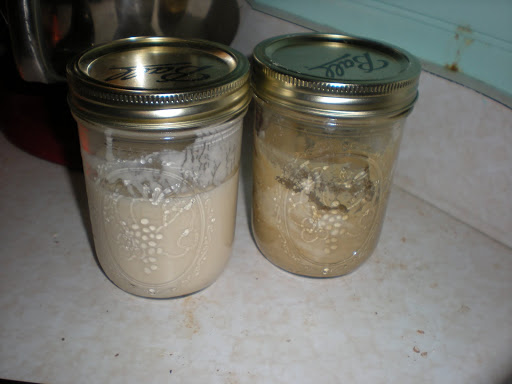
The Science Behind… experimenting with sourdough starters

DSC03238

Necessity is the mother of invention.

A few days ago, I found myself without all-purpose flour or bread flour (I blame Preston Yancey’s white bread – it requires 2.5 lbs of flour each time I make it!).  That’s not too big of a deal for my bread, since I can always switch to making a 100% whole wheat.

Cider Bread & Big Changes *UPDATE

But this time?  I had a sourdough starter to feed!


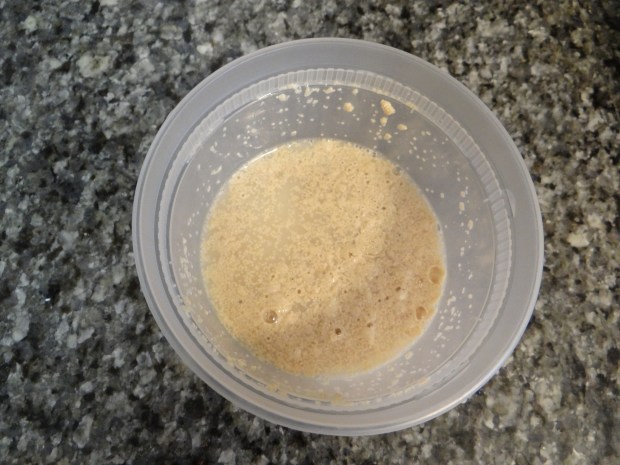
When I feed my starter, I tend to discard nearly all of it, and only feed it enough for the next batch of dough I need it for.  That means, for my 1-2-3 bread, I need 120g of starter.  So I’ll add 75g of flour and 60g of water and that’s it.

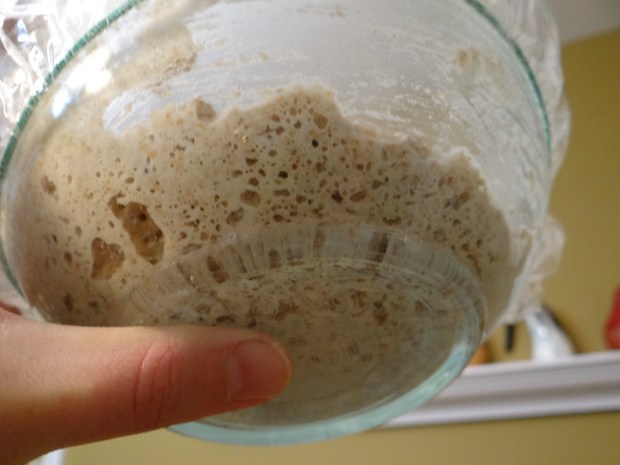
I added the rye flour and hoped for the best.  After letting it sit overnight, the starter seemed active, I added it to my dough, and the bread came out perfectly, with a hint of rye flavor.

DSC02785

It got me thinking – is there a difference between a starter made with white, whole wheat or rye flour?  Can I feed the starter with any type of flour I want, and are the flours interchangeable?

I decided to find out.  First though, a little refresher on what starter is and what it does.

DSC03194

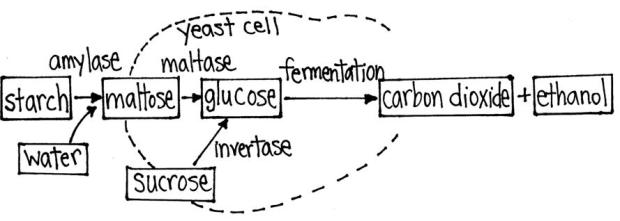
What we call sourdough starter is a combination of wild yeasts (Saccharomyces exiguus, as opposed to saccharomyces cerevisiae found in instant yeast or active dry yeast) and the bacteria lactobacillus acidophilus.  The yeasts and lactobacillus culture live in a symbiotic relationship where the yeasts consume sugars that are broken down by enzymes in the flour, and the lactobacillus regulate the speed at which the enzymes break down the sugars so the yeast always has something to eat and doesn’t release carbon dioxide too quickly, before the gluten has time to form a strong net to trap the gases.

DSC02783

So, what happens if the enzymes break up all the starches into sugars?  If all the starches turn into sugars,  the yeast organisms feed off the sugars in flour and reproduce quickly.  If they grow too numerous, they can exhaust the amount of sugar in the flour and will look for other sources of food – namely, gluten.  This is particularly bad because they don’t convert back once sugars are reintroduced.  Which means, if you add a transformed starter to a regular dough (one that now chows down exclusively on gluten), the dough will start forming gluten beautifully, and look great, until the yeast eat up all the gluten, at which point the dough becomes a runny mess and you can’t do anything with it except throw it out.

Make sense?  We want to make sure the enzymes are slowed down before this happens.  Enter lactobacillus acidophilus.

DSC03200

lactobacillus is also present in yogurt

The lactobacillus isn’t that important in white or whole wheat breads, because wheat flours don’t contain a whole ton of amylase enzymes (the ones that break down the starch into sugars).

Rye flour, on the other hand, has lots of amylase.  Lots of smarter bakers than me agree that rye breads turn out better when they are made with sourdough starter because it regulates the amylase enzymes and prevents it from turning all the starches into sugar which results in rubbery, mushy bread.

So, is good rye bread only possible with rye starter?

Nope.  I’ve had good luck with sourdough starters made from all-purpose flour, whole wheat flour, and rye flour.  The only difference it makes is if you want a 100% rye bread.

DSC03260

What I’ve found from my own experience and corroborated by strangers on the internet (here, here and here) is that the flour you use to feed your starter has very little impact on its overall yeast composition and starch to sugar enzyme action.

Where it does make a difference is in the taste.  If it makes up a substantial portion of your finished dough, (by that I mean more than 20% by weight) it can affect the taste of your dough, but only in a good way.  Breads taste better when they are a mix of different flours – it adds a little more complexity.

DSC03209DSC02883

So feel free to experiment with your sourdough starter when you feed it.  It’s super easy to do.  After I’ve used up most of my starter, I’ll just feed it again with a different flour, and it comes back to life just as vigorously as before.

That’s the science behind… using different flours in your sourdough starter.  If there’s something you didn’t find clear, please let me know in the comments!

Bavarian pumpernickel in a makeshift pullman pan

DSC03260.JPG

Since unlocking the secrets of rye bread (read more here and here), I’ve been making loaf after loaf – first 30% rye, then 50% rye, and even a delicious 100% rye, which I didn’t even think was possible.

DSC03200

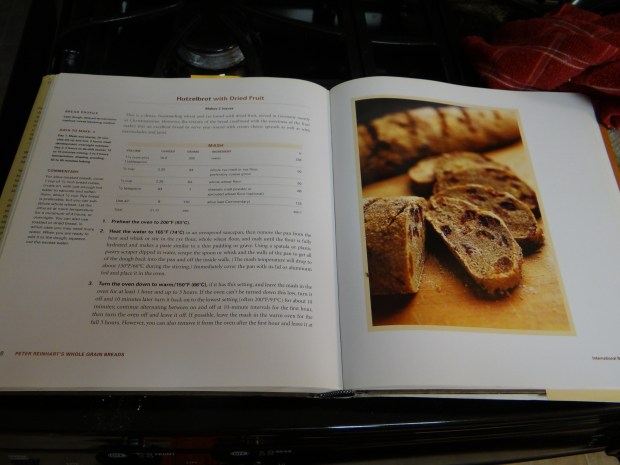
I’ve documented my many mistakes making rye on here, which makes these new successes all the sweeter.  There’s a whole section of Peter Reinhart’s Whole Grain Breads that I’ve been tearing through for the first time.

DSC03245

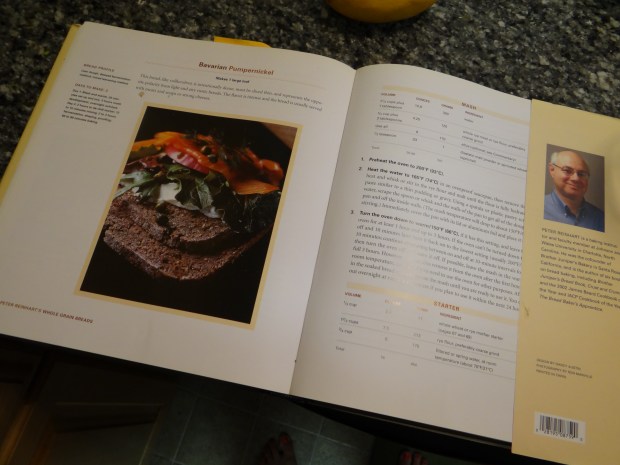
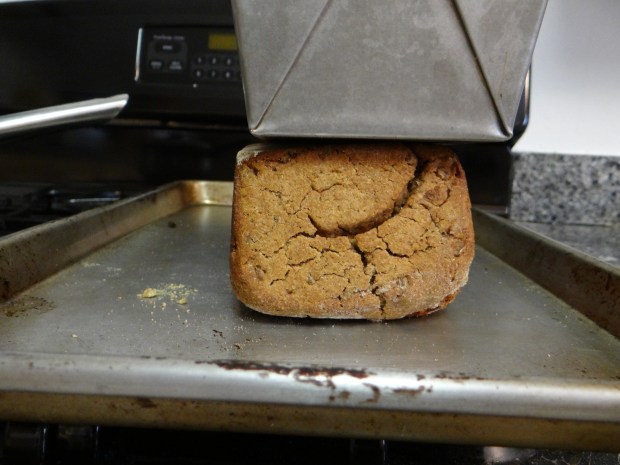
One such recipe that I tried recently was Reinhart’s Bavarian pumpernickel.  It’s intentionally dense, he writes, and the oven spring is inhibited by using a pullman pan.

1248788828424

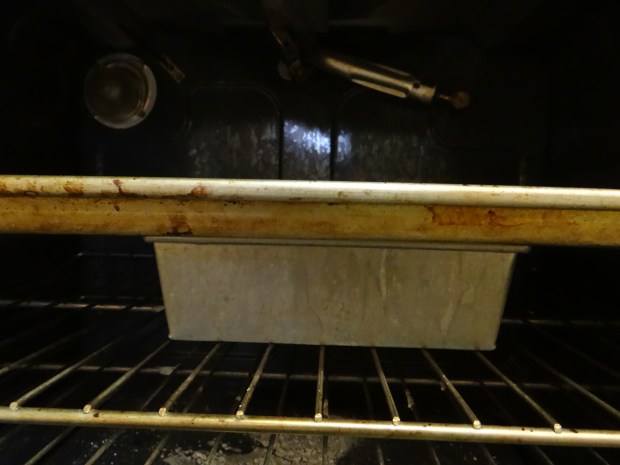
I do not have a pullman pan.  It’s unlikely that my readers do either.  But Reinhart has an alternative – using a regular bread pan with a baking sheet on top.

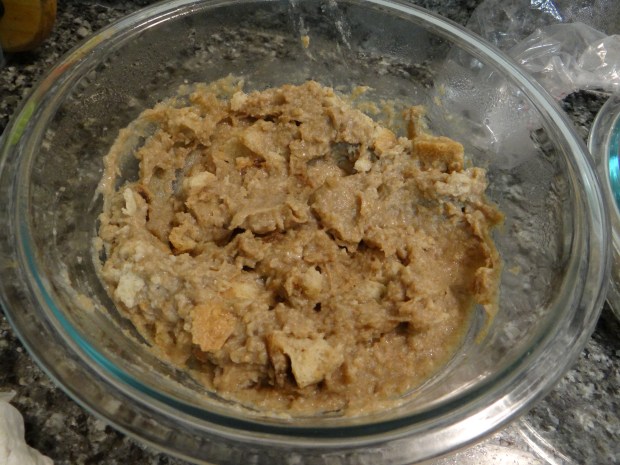
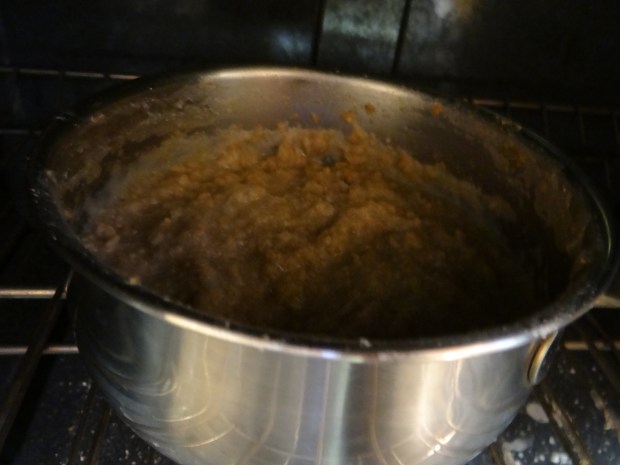
Like the hurtzelbrot, the Bavarian pumpernickel requires some advanced planning.  You need an active rye starter and a loaf of rye bread for the altus.  I happened to have some rye mash left over from the hurtzelbrot, so I didn’t have to make another one.

DSC03239

For this recipe, you will need:

for the starter:

71g active starter

213 rye flour

170g water

for the mash: 

300g water

120g rye flour

170g altus (bread cut into 1/2 inch cubes and soaked in 1/2 cup hot water)

for the final dough:

all of the starter

all of the mash

255g whole rye flour

170g cooked wheat or rye berries

14g salt

7g instant yeast

14g cocoa powder

  1. On day 1, cook the wheat or rye berries in 1.5 cups water and let simmer one hour.  Let cool, then cover and refrigerate until Day 2.  Mix together the starter ingredients, cover and let rise overnight.  Follow the instructions for the mash in the hurtzelbrot recipe.  Cover and let sit at room temperature overnight.
  2. On the morning of day 2, mix together the final dough.  DSC03249Let sit for five minutes, then knead again for about a minute until smooth and fully incorporated.  DSC03251Oil a bowl and roll the dough ball to coat in the oil.  Let it rest for about 20 minutes while you preheat the oven to 400 degrees F.DSC03252
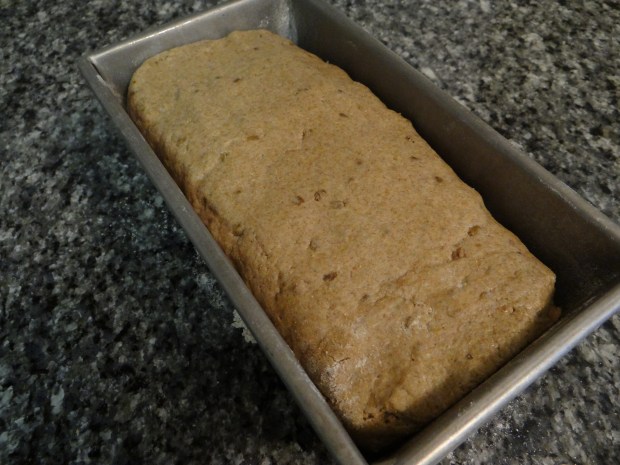
  3. Once the oven has preheated, remove your dough ball to a floured surface.  Pat it down into a disk, then roll it up and place it in an oiled bread pan.  DSC03253Pat it down so the top is flat, then sprinkle flour on the top.  Bake immediately with a heavy baking sheet on top.DSC03255
  4. After thirty minutes, transfer the bread out of the bread pan onto the baking sheet so the top is on the bottom.  Rotate the dough every 10 minutes so it bakes evenly.  Remove after 45 minutes and let cool completely before slicing.DSC03256DSC03258

    DSC03259

    I weighted the bread down a little more while it cooled so it had more of a square shape

Reinhart says this bread is best when it’s sliced thin and paired with meats, soups or strong cheeses.

DSC03260DSC03261

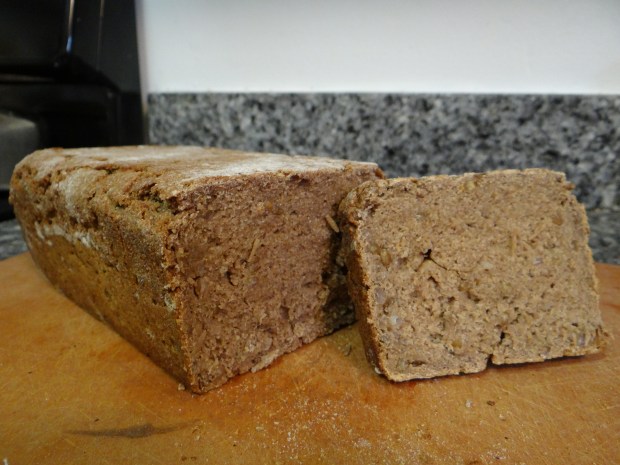
You can see some of the wheat berries in the dough; they add a nice chewiness.  Little Bread Dude saw the loaf on the counter and asked for a slice.  Typically he doesn’t go for hearty breads, but he really liked this!  It might be because there’s some sweetness to it, and it has a soft, rather than crusty, crust.

Due to the extra elements required to have on hand to make this bread (the starter, altus, and mash), it probably won’t ever become an everyday bread for us.  But it’s nice to know I won’t be the only one eating it when I do make it!

The Science Behind… enzymes

DSC03200

As I’ve mentioned several times in the past few posts, I’ve avoided touching on the subject of enzymes for two reasons.

  1. I didn’t really understand them, and therefore
  2. I didn’t think they were that important to breadbaking.  I figured food scientists probably cared about them, but that they aren’t really necessary for the lay breadbaker to understand.

After all, I’ve gotten this far without understanding enzymes, right?

It turns out, I was right on point #2.  You can get along perfectly fine without knowing a lick about enzymes.

However, once I started investigating enzymes, I felt like I understood bread in a whole new way.  The simplicity of flour, water, yeast and salt fell away as I discovered the complex chemical reactions taking place just under the surface.  The elegance of the various bread components and how they work together has been blowing my mind ever since.

hangover

me learning about enzymes

Ok, ok, enough teasing.  So what are enzymes?

In this post, I will address the following topics:

  1. What are enzymes and what do they have to do with baking bread?
  2. What are amylases and proteases?
  3. How can I use my new knowledge of enzymes to improve my baking?

First off, what the heck are enzymes anyway?

Enzymes are (according to the Internets) proteins that act as catalysts to speed up chemical reactions.  In baking, their primary role is to split apart starches, fats and proteins.  Without enzymes, both in the bread dough itself and in your saliva and digestive juices in your stomach, you would not be able to digest bread!

salivary-glands

Enzymes can be found in yeast and flour.  Most of the enzymes at work in flour are activated by water, which is why the chemical reactions don’t take place in the bag of flour sitting on your shelf.  The enzymes move throughout a dough once water is added, and the higher the hydration, the better they move around.  So, not only does higher hydration contribute to bigger holes in bread, but the bread chemical reactions are more efficient too!

There are two main enzymes that are particularly important to bread – amylases and proteases. There are other enzymes too, but I’ll save them for another time.

The enzymes that break apart starches are called amylases.  Their role is to break up the starches in the flour into sugars that can be easily digested by the yeast.  Yeast are able to digest both sugars and protein, which is why amylase is so important.  If yeast do not have enough available sugars to eat, then they start in on the protein, i.e. GLUTEN.  We do not want the yeast eating the gluten, because it would destroy the structure of your bread.

2abcc-yeast

Speaking of proteins, both yeast and flour also contain enzymes that break apart proteins.  These enzymes are called proteases.  There aren’t a whole lot of proteases in bread, but they are important.  By slightly breaking down some of the gluten strands, they give the dough a bit more flexibility and stretch.  Protease enzyme activity is controlled by adding salt.

Yeast also contains enzymes that break down the sugars into carbon dioxide and ethyl alcohol, but again, that’s a topic for another time.  In researching this post, it struck me how very many enzymes there are that contribute to the overall baking process.

A quick aside: the word ‘enzyme’ itself comes from the Greek enzumos, which means ‘to leaven from within.’ I think that’s pretty cool – a reference to baking is literally the origin of the word enzyme.

If you didn’t think enzymes were important before, that etymological factoid alone might convince you otherwise.

At this point, we know what enzymes are.  We know what amylases and proteases are.

How can we harness that knowledge to improve our bread?

The main way we can use our knowledge of enzyme activity is in increasing or decreasing the intensity of certain enzyme activity.  The various bacteria, microorganisms, proteins, sugars and fats work in symbiosis so it’s not always possible to control every chemical reaction, but by balancing the activity of certain enzymes, you can achieve a deeper flavor profile with sweet, bitter, sour, and salty.

For example, I’ve written already about inhibiting some of the amylase activity in rye breads so that there is still starch left in the dough to provide structure to the bread in the absence of gluten.

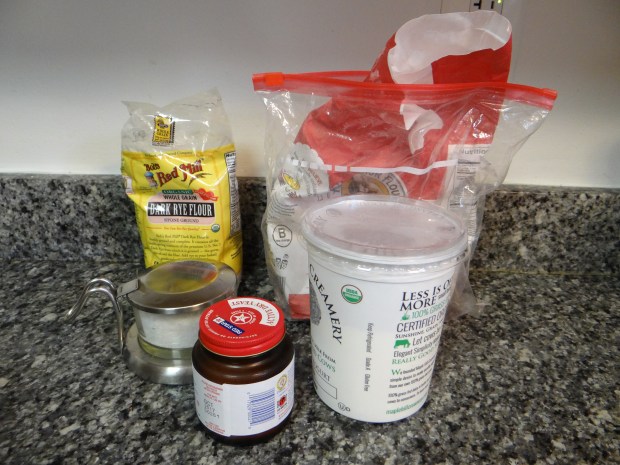
Lactobacillus acidophilus is a bacteria that inhibits amylase by increasing the acidity of the dough.  It’s present in sourdough starter and yogurt.  By using sourdough starter or yogurt in doughs, especially ryes that have a lot of amylase, you can slow down the conversion of sugars so the dough sets up properly when it is baked.

DSC03238Bowl and spoon with yogurt on white background, close up

Another way that we can use our knowledge of enzymes is in knowing how to properly store freshly milled and sprouted grain flours.  Regular all-purpose and bread flour do not have much amylase in it.  Freshly-milled flours and sprouted grain flours have lots of enzymes that get to work breaking down the fats, proteins and starches quickly.  By storing these flours in the freezer, the enzyme activity is slowed down and the flours stay fresher longer.

So, that’s The Science Behind… enzymes!  It’s not all there is to know, but it’s a start.  I hope you have found this post helpful.  As always, if something isn’t clear, be sure to let me know in the comments!

DSC03245

I had a lot of help writing this post from the following websites:

http://www.thebakerynetwork.com/baking-science

http://www.thefreshloaf.com/handbook/rye-flour

Peter Reinhart’s Hutzelbrot

DSC03248

Lately I’ve been making loaf after loaf of rye bread, and I wanted to try something a little different. This rye bread is made with dried fruit for a slightly sweet bread, perfect for topping with butter, cream cheese or jam.

DSC03232.JPG

I looked up the translation of Hutzel, which in German means either “dried pear” or “wrinkled old woman,” ha ha.

Hutzelbrot is a traditional German Christmas bread, not unlike stollen or fruitcake.  However, hutzelbrot is typically made the rye flour and is not soaked like a fruitcake.

Anyway, there are a lot of moving parts to this recipe.  The bare minimum you need is a loaf of rye bread already made for the altus, and a lively rye starter.  Then it gets more complicated from there.

DSC03238

my rye starter, looking lively underneath

If you have rye bread and a lively starter ready to go, this bread takes two days to make.  If you need to refresh your starter it’ll take longer.

On the evening of Day 1, take 71g of your starter and mix it with 213g rye flour and 170g water.  Cover and refrigerate overnight.

DSC03235

Next, cut up a cup of rye bread into 1/2 inch pieces and cover with 1/2 cup hot water.  Let soak until room temperature.  This is your “altus.”

DSC03233DSC03234

Preheat your oven as low as it can go, preferably to 150 degrees F.  Meanwhile, heat 1 cup of water, to 165 degrees F in an oven-safe sauce pan.  Remove from the heat and whisk in 1/2 cup rye flour and 1/2 cup whole wheat flour.  Whisk until it forms a paste, then transfer to the oven and let it mellow for 3 hours.  This is your mash.

DSC03236DSC03237

After three hours, remove the sauce pan from the oven and mix in your altus.

DSC03239

Cover and refrigerate overnight.

On day 2, remove the mash and starter from the refrigerator and let them come to room temperature during the day.

Mix your doughs together in a large bowl along with:

99g rye flour

99g whole wheat flour

1 cup dried fruit (I used apricots, prunes, raisins, dates, figs, and candied lemon peel)

14g salt

7g instant yeast

14g cocoa powder (for color)

DSC03240

This bread was tough to mix together – rye flour is very sticky and doesn’t have any gluten so it doesn’t like to stick to itself.  I muddled through.

DSC03241

After the dough was fully incorporated, I divided it in half and shaped each half into a ball.  Then I rolled each ball in whole wheat flour and placed it in a banneton, then covered and placed them in the refrigerator to rise for an hour.

DSC03242

Peter Reinhart recommends coating the loaves with a paste made from flour and water.  I did that with the first loaf, but I didn’t like how it came out so I didn’t do it for the second loaf.

DSC03243

Dough before going into the oven

DSC03244

Preheat your oven to 425 degrees F with a dutch oven.  Bake your dough for 15 minutes on 425 with the lid of the dutch oven on, then 15 minutes at 375 degrees F, then a final 15 minutes at 375 with the lid off.

DSC03246

DSC03247

The breads were a little flat but Reinhart says they are supposed to be dense.  The dried fruit and candied lemon peel add a nice sweetness to the bread, which is very moist and doesn’t taste like rye.  I like how different this bread is from the other ryes I’ve been making.  It’s going to be perfect for toast at tomorrow’s breakfast!

Hutzelbrot

For the starter: 

71g active starter

213g whole rye flour

170g water

for the mash:

1/2 cup rye flour

1/2 cup whole wheat flour

300g water

1 cup chopped rye bread, cut into 1/2 inch cubes, soaked in 1/2 cup hot water

For the final dough:

454g starter

397g mash

99g whole wheat flour

99g whole rye flour

170g dried fruit

14g salt

7g instant yeast

14g cocoa powder

flour paste (optional)

  1. Mix together the starter.  Cover and refrigerate overnight.
  2. Heat the water to 165 degrees F, then whisk in the flours.  Bake at 150 degrees F for three hours.  Mix in the altus, cover and refrigerate overnight.
  3. Mix together the final dough ingredients, then divide into two loaves and let rise one hour in the refrigerator.  Preheat the oven to 425 and bake in the dutch oven for 15 minutes, then bump the temperature down to 375 for 15 minutes, then remove dutch oven lid for final 15 minutes.  Remove from the oven and let rest until COMPLETELY cool.


1/3 rye loaf with yogurt


DSC03215

Breadbaking is one of those classic dunning-kruger topics: the less you know, the more you think you know about how it works.  The way I’ve been able to claim to be an expert breadbaker for the past 10 years is primarily delusion.  When you don’t know what you don’t know, it’s all very simple!

ha ha.

I guess what I mean to say is that in breadbaking there’s always something to learn.  You can go as far down the rabbit hole as you want, examining the elegant symbiotic relationships between bacterias and enzymes, proteins and starches.  Or, you can just rely on the recipes of others who have figured out these relationships and how to coax the best flavors from them.

This week I decided to make a few loaves of rye bread.  I added 1/3 of the total flour weight as rye flour and proceeded with my typical 2-3 recipe for bread.  But a little voice kept insisting I add some yogurt in there too.  My investigation into why ryes and yogurt go together became my last post on The Science Behind enzyme activity.

In a nutshell, Rye contains lots of amylase enzymes that break down the starches in the flour into sugars to give the yeast something to eat.  “Some starch, though, is needed to form the structure of the crumb, and if too much starch is split up, the texture of the bread suffers and becomes gummy. Traditionally, this is prevented by acidifying the rye dough, which slows down the action of amylases. This is why breads with a high percentage of rye flour are made with rye sour (rye-based sourdough starter), even if commercial yeast is added.” (The Fresh Loaf)

Another way to increase the acidity of your dough is to add yogurt or buttermilk to your dough.  Yogurt is preferable to buttermilk because it gets its acidity from lactobacillus acidophilus, also found in sourdough starter.  Commercial buttermilk’s acidity comes from vinegar.  However, either one is fine.

Anyway, onto the recipe!


DSC03200

Rye Bread with Yogurt

for two loaves, you will need:

500g all-purpose flour

250g rye flour

500g water

100g plain yogurt or buttermilk (or 125g active sourdough starter)

1 tablespoon salt

2 teaspoons yeast (or use the sourdough starter instead)

  1. Mix together the flours and water and let rest for about 15 minutes.DSC03195
  2. Add the yogurt, yeast and salt and stir to combine.  You don’t want to overmix the dough or knead it.  There’s no point because rye doesn’t like to form gluten strands and your hands will just become sticky and gummy.DSC03199
  3. Cover and let rise in a warm place for about four hours.DSC03197
  4. Divide the dough into two loaves, then shape and place into bannetons in the refrigerator for an hour while the oven preheats to 500 degrees F.  Preheat a lidded dutch oven inside the oven.DSC03201DSC03202DSC03203
  5. When the dough and oven are ready, pour out the dough into the dutch oven and score it with a sharp razor blade.  Return the lid to the dutch oven and bake for 15 minutes.DSC03204
  6. After the first 15 minutes are done, bump the temperature down to 375 degrees F and cook an additional 15 minutes with the lid still on.  Then take the lid off for the final 15 minutes, for a total baking time of 45 minutes.DSC03205
  7. Remove the dough and let cool completely before slicing.  This is particularly important, because the pentosans present in rye dough do not solidify like gluten strands do when baked.  They need to cool to set up properly.DSC03214

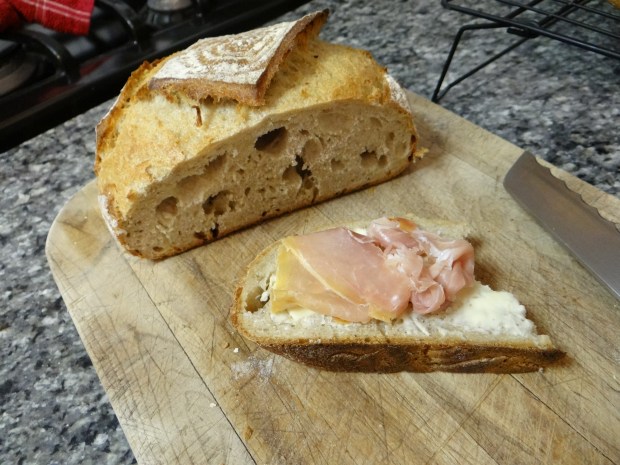
This bread was really delicious spread with butter and salt or a thin piece of prosciutto.

DSC03216

I got help for this post from these sources:

http://www.thefreshloaf.com/handbook/rye-flour

http://www.azeliaskitchen.net/bread-flour-rye-flour-and-rye-dough/

The Science Behind… regulating enzyme activity in rye breads

DSC03215

If there’s one thing I try to get across at Bread Camp, my ad-hoc bread class, it’s this essential fact: In bread, so much of its success lies in getting the right balance between ingredients.

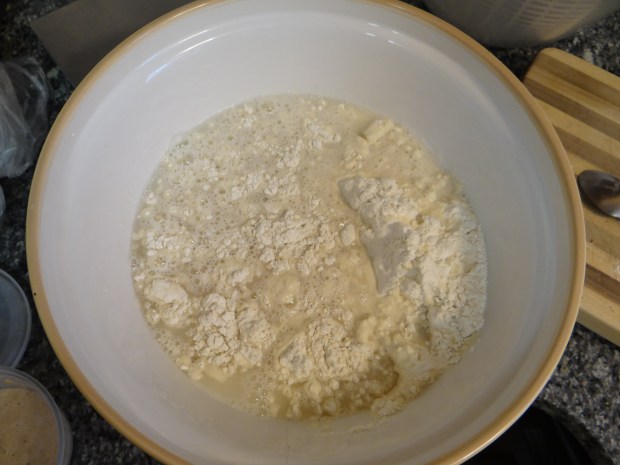
Flour and water.  Too much flour and the dough is too dry and crumbly to knead.  Too much water and it’s a gloppy mess, unable to hold a loaf shape.  Glutenin and gliadin proteins in the flour are activated by water to form long protein chains called gluten, essential for the bread’s ability to rise.
DSC03195

Gluten formation and yeast activity.  Too much gluten formation and the bread is tough, dense, and rubbery.  Too little gluten formation and the bread is a sticky, gummy mess unable to trap air released by the yeast.  Too much yeast and the bread rises too quickly, before good flavor can be developed.  Too little yeast and the dough takes forever to rise, or doesn’t produce any holes in the interior of the bread.

DSC03174

Sugars and Yeast.  Yeast need sugars as their energy source to reproduce and release carbon dioxide and ethyl alcohol.  If the yeast is left to rise too long, it eats up all the sugars and then starts on proteins – gluten.

There is another major ingredient balance, and I’ve hesitated to write about it or even teach about it in my bread camp because I still don’t feel like I understand it fully.  However, it is possibly the most important set of processes, the one that makes bread possible.  Seriously.

Peter Reinhart has a section about enzyme activity in his book, Whole Grain Breads.  I usually skip over this section because my eyes start to glaze over with all the science. I mean, I’ve gotten this far without having to know anything about enzymes.  Why start now?

DSC02813

That all changed the other day when I decided to make some rye bread.  I added some rye flour, some all-purpose flour, and some water to the bowl and mixed it up.

Then I heard a small voice whisper to me.

Add some yogurt.

What?

Add some yogurt.  It needs yogurt to break down the bitter flavors in the rye.

Peter Reinhart, is that you?

200px-peter_reinhart

Shhhh, don’t speak.  I have to get back to Johnson & Wales before they realize I’m gone.

And with that, I was alone again in my kitchen.  I added 100g of plain yogurt to my dough along with the yeast and salt, and prepared it for the first rise.


It got me thinking- what does the yogurt actually do?  While Peter Reinhart may not have actually been in my kitchen, I had made enough of his whole grain breads to be familiar with his use of yogurt or buttermilk in most of them, as the soaker part of his epoxy method for extracting flavor from bitter whole wheat and rye flours.

This, for me, was my Matrix-style red pill or blue pill moment.

Would I just accept that yogurt and rye go together, or would I discover The Science Behind???
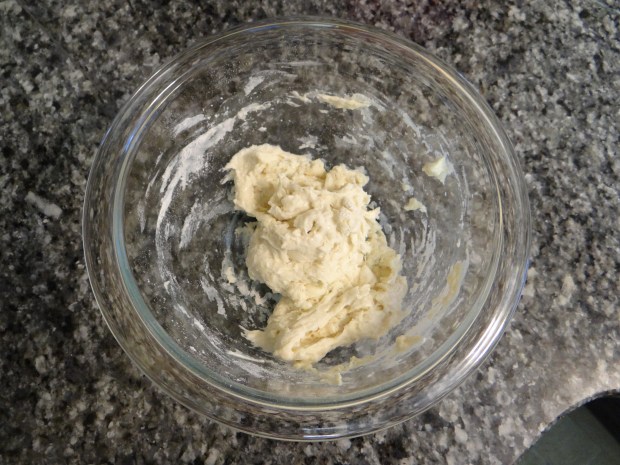
DSC03209.JPG


I began researching, and quickly realized that I would have to devote much more space to the larger topic of enzymes.  In a longer post hopefully coming soon, I hope to answer the following questions:

  1. What are enzymes and what do they have to do with baking bread?
  2. What are amylases and proteases?
  3. How can I use my new knowledge of enzymes to improve my baking?

But for this post, I’m going to focus primarily on the enzyme activity of rye bread, hoping it will serve as a quick introduction to the world of enzymes.

I started by investigating rye flour and what made it different from wheat flour.  From what I could tell, rye flour is different from wheat flour in three major ways:

  1. Rye flour is less able to form gluten strands.  This is because rye flour has less glutenin.  Glutenin is responsible for maintaining the strong bonds between the gluten strands.  Because it doesn’t have much glutenin, what small amount of gluten it can form breaks very easily when you try to knead a rye dough. This is important, because without much gluten, rye flour needs other ingredients to compensate and provide structure.  Those ingredients, as we will learn, are pentosans and starch.
  2. Rye flour has high levels of carbohydrates known as pentosans.  Pentosans absorb tons of water.  Rye flours can absorb as much as eight times their weight in water compared to wheat flour.  This is important, because pentosans compete with the starch that also wants to absorb tons of water in order to gelatinize.
  3. Rye flour has higher amounts of amylase enzymes.  Amylases are responsible for breaking down starches into sugars for yeast to be able to eat.

Ok, did you get all that?  It’s not easy reading for sure.

In a nutshell: rye has less gluten, so it needs to rely on pentosans and starches for structure.  Pentosans want to absorb lots of water, so they compete with starches for the available water in the dough.  Rye flour also has high levels of the enzyme that breaks down starches.
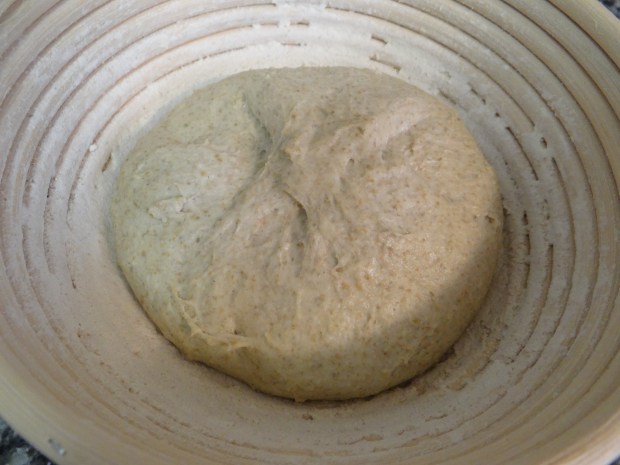
DSC03203.JPG

Does anyone else see a problem here?  If the pentosans aren’t given enough water to absorb, they won’t leave enough water for the starches to gelatinize, and meanwhile amylase is breaking the remaining starches down for sugar, that will have a negative effect on the final loaf.  Not only will it be unable to brown properly, but it also won’t have enough structure if it’s relying only on the pentosans.


There is very little we can do as home bakers to limit the pentosans’ water absorption.  The presence of pentosan carbohydrates is just a necessary fact of rye.  Instead, in order to create a successful loaf of bread, we have to get the amylase enzyme to slow down its conversion of starches to sugars.

This is where our understanding of the science of enzymes comes into play.

Noel Haegens writes on his helpful blog, “Bread and the technology of bread production” writes that, “Because they are proteins, they are heat sensitive and all enzymes have an optimum temperature and pH for activity. Within that range, activity increases with temperature until the denaturation point is reached. At that point the enzyme will lose its functionality. Apart from temperature and pH, enzymes are also dependent upon the availability of water, amount of enzyme used, the availability of the substrate and the time allowed for the reaction.”

Basically, every enzyme has optimal conditions to turn on and will turn off in sub-optimal conditions.  By playing around with temperature and PH, we can turn enzymes on or off to suit our needs.

We could put the dough in the refrigerator, which would lower the temperature.  And, in fact, Peter Reinhart does exactly this during the first stage of his dough- allowing the grains and flour to soak in yogurt overnight in the refrigerator.

DSC03178

However, we can’t keep it in the fridge forever.  After all, yeast does not like cold environments.

So let’s turn to PH.

Amylase, it turns out, does not like lower PHs – acidic environments.

Thinking back to my encounter with Peter Reinhart while making rye bread, I had this revelation: yogurt has lactobacillus acidophilus.

Bowl and spoon with yogurt on white background, close up

What is lactobacillus acidophilus? An acid-loving bacteria (thanks latin!).

An acidic bacteria that slows down enzymatic breakdown of sugars. 

By adding some yogurt to the dough, I made it slightly acidic, which slowed down the enzymatic activity of the amylase.

However, we don’t want the dough to be too acidic.  After all, if we shut down production of amylase completely, then there would be no available sugars for the yeast to consume, meaning the dough would not rise at all.  So we just want to add some yogurt, not substitute all the water with it.  In my recipe, the yogurt only makes up 12% of the overall total weight of the dough.

DSC03210

So in summary: rye breads like yogurt (or sourdough starter) because they lower the PH of the dough, creating a slightly acidic environment that slows down the conversion of starches to sugars. By slowing down this starch to sugar conversion, the dough structure is improved and optimal browning is achieved.
DSC03216


Thanks for sticking with me to the end!  I know this is not an easy topic to wrap your head around.  I’ll be writing a bit more on enzymes and ryes in the future, so stay tuned!  As always, feel free to leave a comment if there’s something that isn’t clear.

I had a lot of help writing this article from these websites:

http://www.classofoods.com/page1_7.HTML

http://blogs.scientificamerican.com/guest-blog/enzymes-the-little-molecules-that-bake-bread/