Easter Dinner


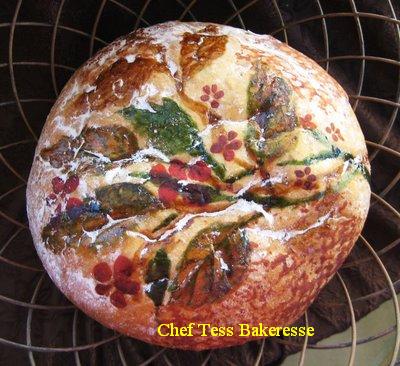
The Bread Maiden’s bread was featured in Food Dilettante’s blog!

Food Dilettante is a friend of mine from grad school. She is a fellow lover of food (as the name shows) and we got together with several friends for an Easter dinner full of delicious food and merriment

To read the post, click here!

Foe no more: Rye Bread, Part III


Some of my older readers know that rye and Bread Maiden have something of a fraught relationship. It has been documented here: Rye Part I and here: Rye Part II

I was ready to give up hope. The loaves didn’t rise and the spices gave it a funky flavor.

Also, they just looked really unappealing.


However, I decided to give it one last try. Peter Reinhart has a recipe for rye bread in his newest book, Artisan Breads Every Day.

Now, this is not 100% or even 50% rye flour. It’s about 20% rye flour. But it tastes good. And sometimes that trumps purity snobbery.


The thing I like about Reinhart’s ABED book is that he seems to have learned a lesson from WGB and now his recipes make enough for two loaves. However, one thing I dislike is that he has taken the water/flour ratios out of the book so you can’t scale up or down the recipes yourself based on hydration.

And as you know, I love bread math.


Peter Reinhart’s Soft Rye Sandwich Bread

Rye Starter
56.5g starter (Reinhart keeps his at 66%, but I used my 75% starter)
213g rye flour
170g water

Dough
all of the rye starter
383g water
28.5g molasses
56.5g vegetable oil
7g instant yeast
680g bread flour
28.5g cocoa powder
17g salt
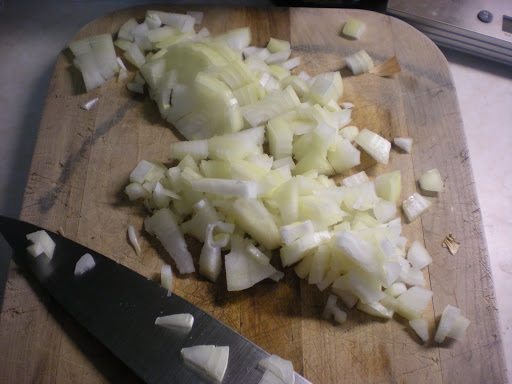
1/4c minced fresh onion
2 tbl poppy seeds

1. mix rye starter together and let sit for 6-8 hours covered.

While you’re waiting for the starter to activate, you can take a look at Mr. Bread Maiden’s new project, homemade sauerkraut, currently stinking up our kitchen.


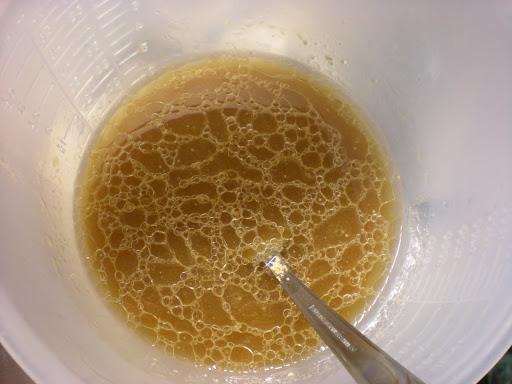
2. mix together the molasses, veg oil, yeast, and water.


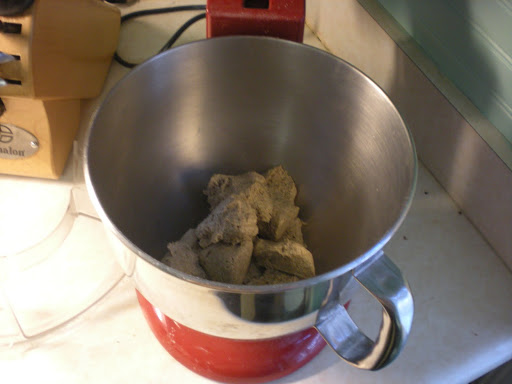
3. chop up the pieces of rye starter.


4. Let the yeast mixture sit for a few minutes, then pour over the rye starter pieces. Mix on lowest speed to soften the starter.


5. Add the flour, cocoa powder, poppy seeds, salt, and onions. Switch to the dough hook and mix on lowest speed for about 4 minutes.


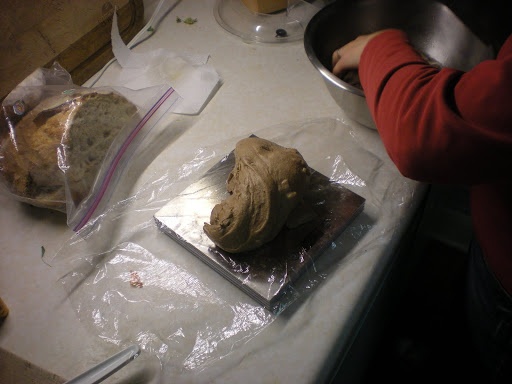
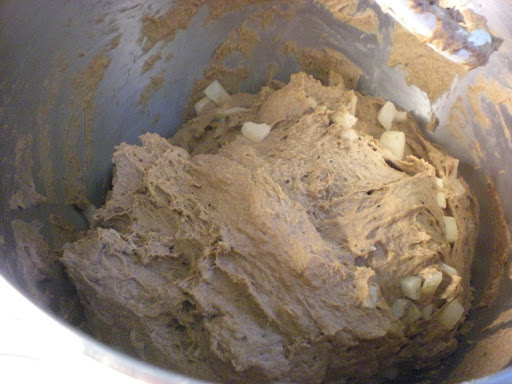
6. The dough will want to ride up on the dough hook, so keep pushing it down. When it looks about like this, let it rest for five minutes.


7. After five minutes, mix on medium-low speed to make a smooth, tacky ball of dough.


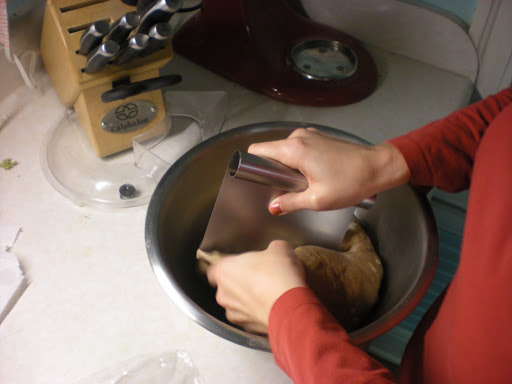
8. Take the dough out of the bowl and knead for a bit on a floured surface.


When it starts looking good, put it in a well-oiled bowl to rise for another 90 minutes.


Looking good!

9. Prepare at least one piece of parchment paper with rice flour. Partition out two equal sized loaves.


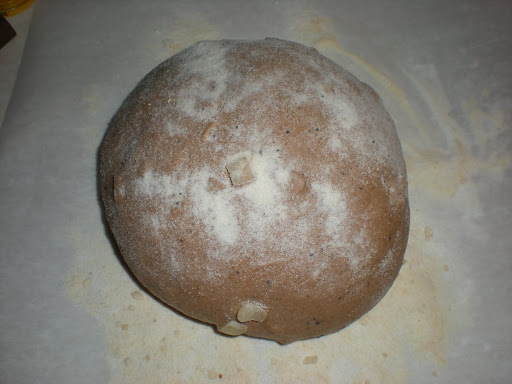
10. Form one into a ball and place on the parchment paper.


11. Sprinkle some of the rice flour on the top of the loaf to prevent sticking. Cover with plastic wrap and a dish towel and let sit another hour or so.


12. Preheat oven to 350 degrees F. If you’re using a dutch oven, put the cold dutch oven into the oven to warm it up.

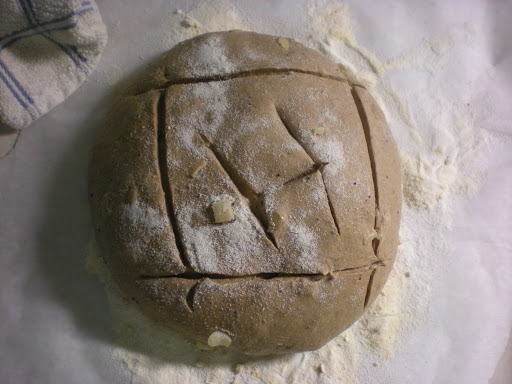
13. Score your loaf and put it in the warm dutch oven in the oven for 25 minutes with the lid on, then 25 minutes with the lid off.


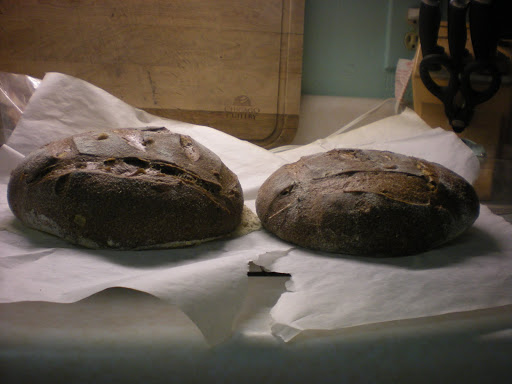
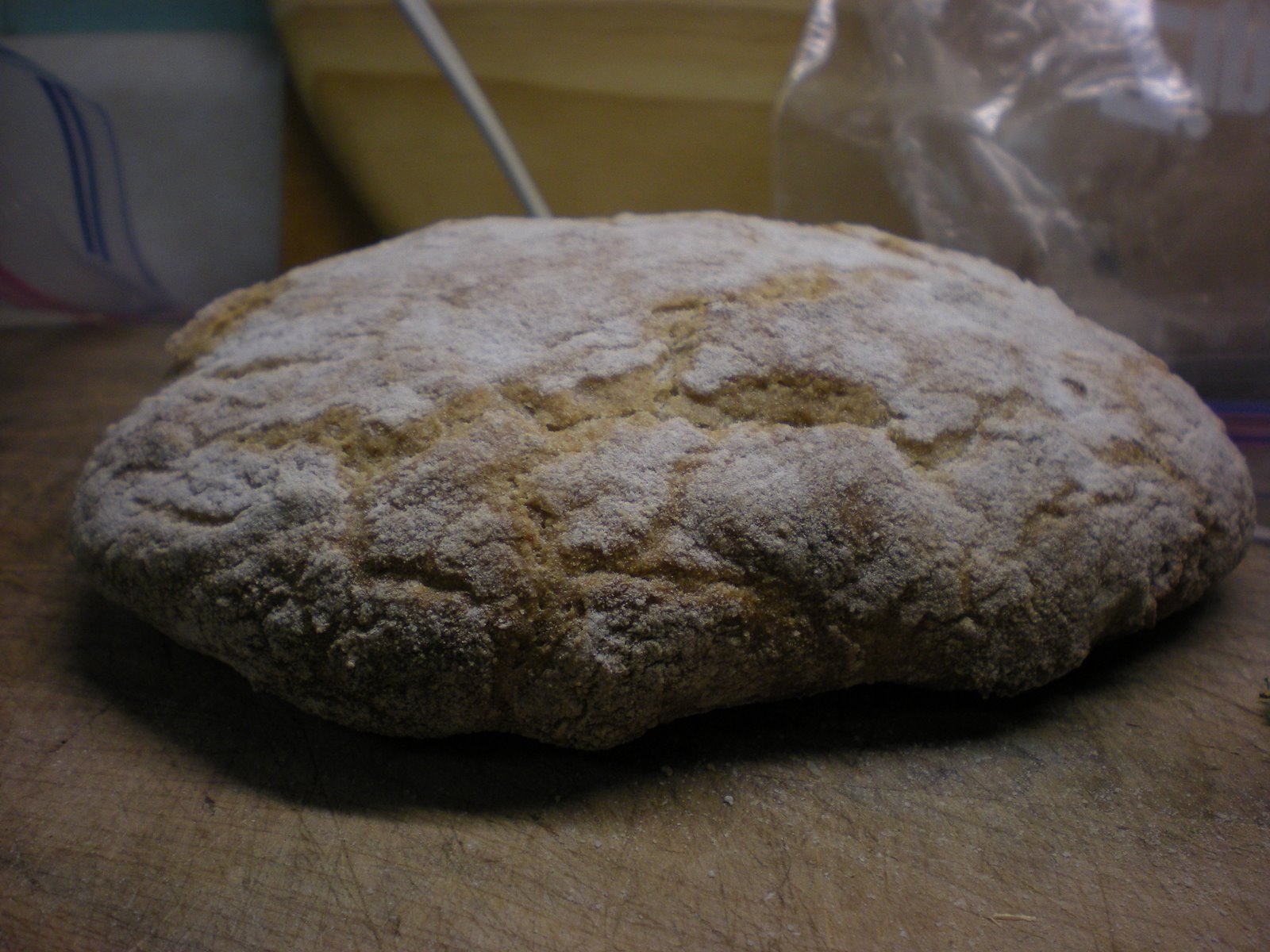
Done!


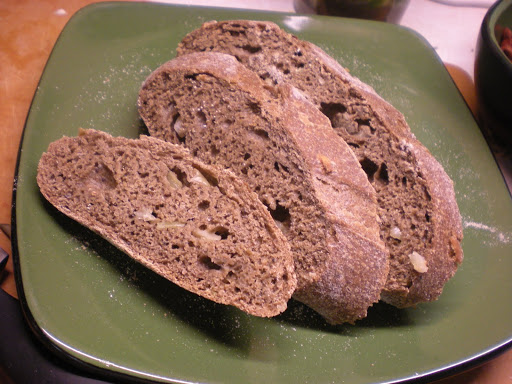
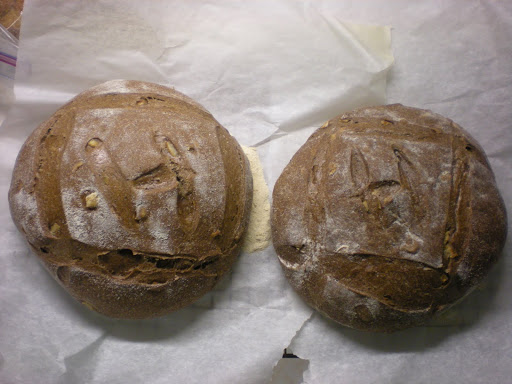
Verdict? Really really tasty. You can definitely taste the rye, even though there isn’t much rye flour in it. The poppy seeds and onions help add flavor too.


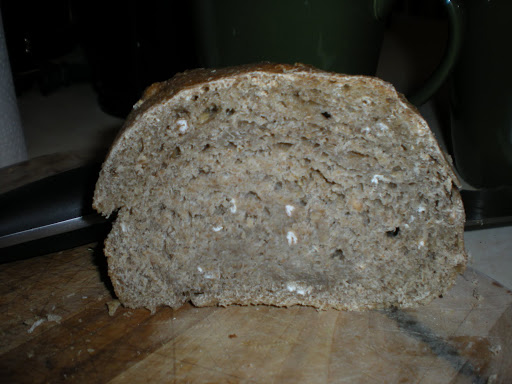
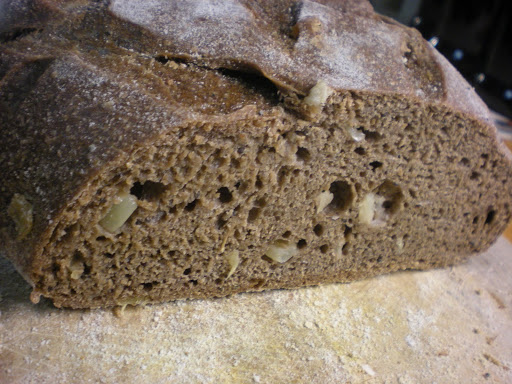
The onion pieces made funny little air pockets, which helped it not be so heavy like other rye attempts.


One downside is that this really isn’t a breakfast loaf, which is when Mr. Bread Maiden and I usually eat bread, usually slathered with butter, jam, or peanut butter. This bread likes to be eaten without accompaniment. It goes well with soups though.


All in all, I would definitely call this a success! The mission for 100% and 50% rye flour breads just never resulted in very satisfying loaves for me. Maybe I did them wrong, or didn’t like the taste, but this Reinhart Soft Rye Sandwich bread is very tasty and sometimes that is enough for me.

Go make these! Now!

Shortbread and Shaun of the Dead


Sometimes I feel like Shaun at the beginning of the movie Shaun of the Dead, where he’s so distracted by other things going on in his life that he fails to notice that everyone is becoming zombies around him. Sometimes he notices little things, but it’s always peripheral, and doesn’t grab his attention until the zombies are (literally) knocking down his door.

That’s how I’ve been feeling about shortbread the past week. Someone will mention it in passing, then I’ll hear a Splendid Table podcast, then I’ll be looking at a news article about Scotland and it’s mentioned. The shortbread is just lurking at the periphery.

Until one day when Mr. Bread Maiden casually mentions, “you know, you could make shortbread.” He’s much more perceptive than I.

And then, because I love Mr. Bread Maiden, I make shortbread.


Also, when I make him things like shortbread he gives me jewelry like the ring in the picture. I can’t complain.

I got this recipe from Chocolate and Zucchini, a wonderful blog. You can check it out here: http://chocolateandzucchini.com/archives/2006/11/shortbread.php

The one thing I did change is I added a bunch more salt, to both the recipe and then I sprinkled it on top of the shortbread before baking it. It moderates the sweetness a bit, which we happen to like.

Shortbread Recipe:

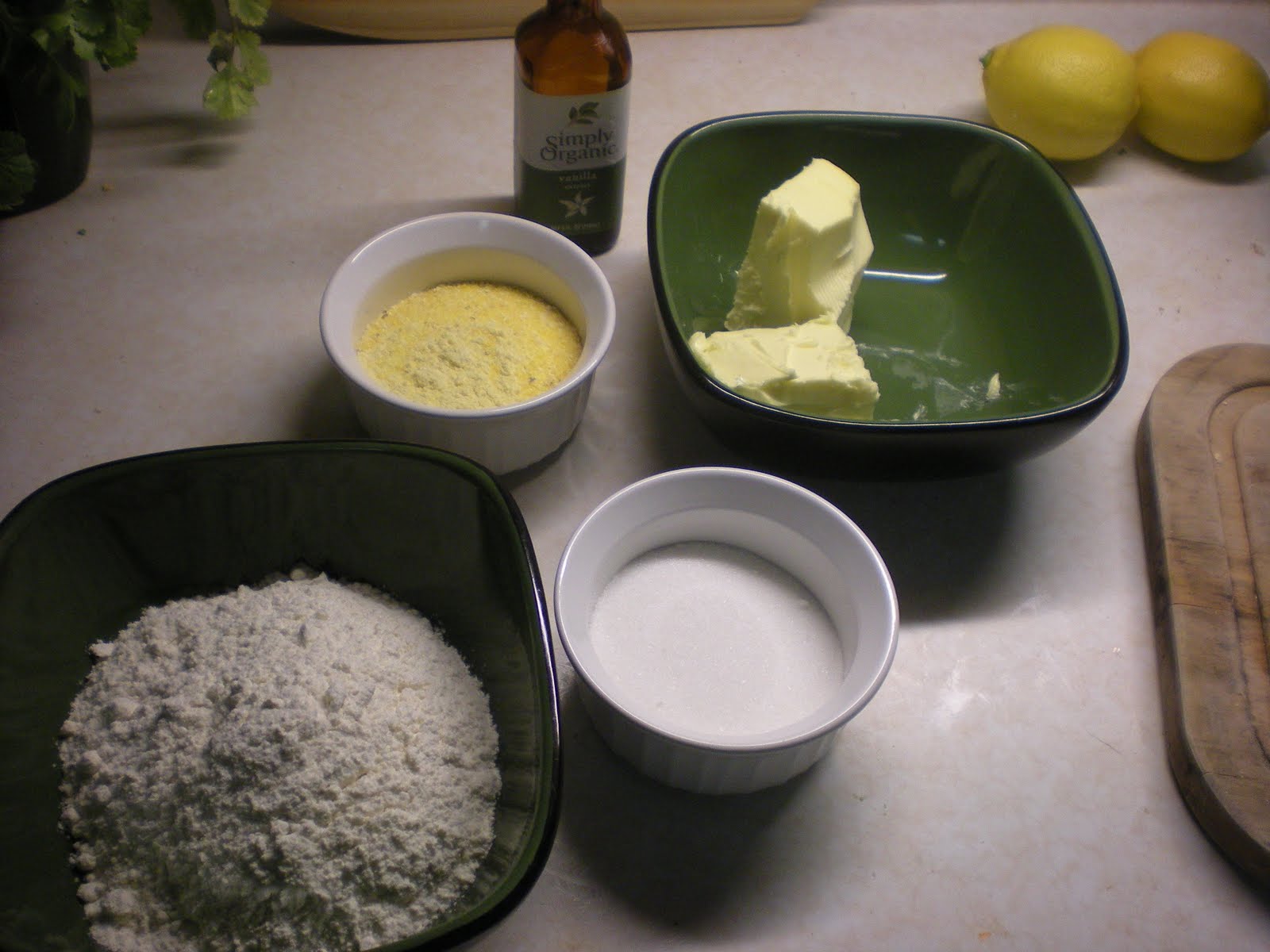
150 grams top-quality butter
70g granulated sugar
1/2 teaspoon pure vanilla extract
70g stone-ground cornmeal (I used mostly fine-ground but also some coarse-ground)
150g all-purpose flour
a couple teaspoons of kosher salt or sea salt


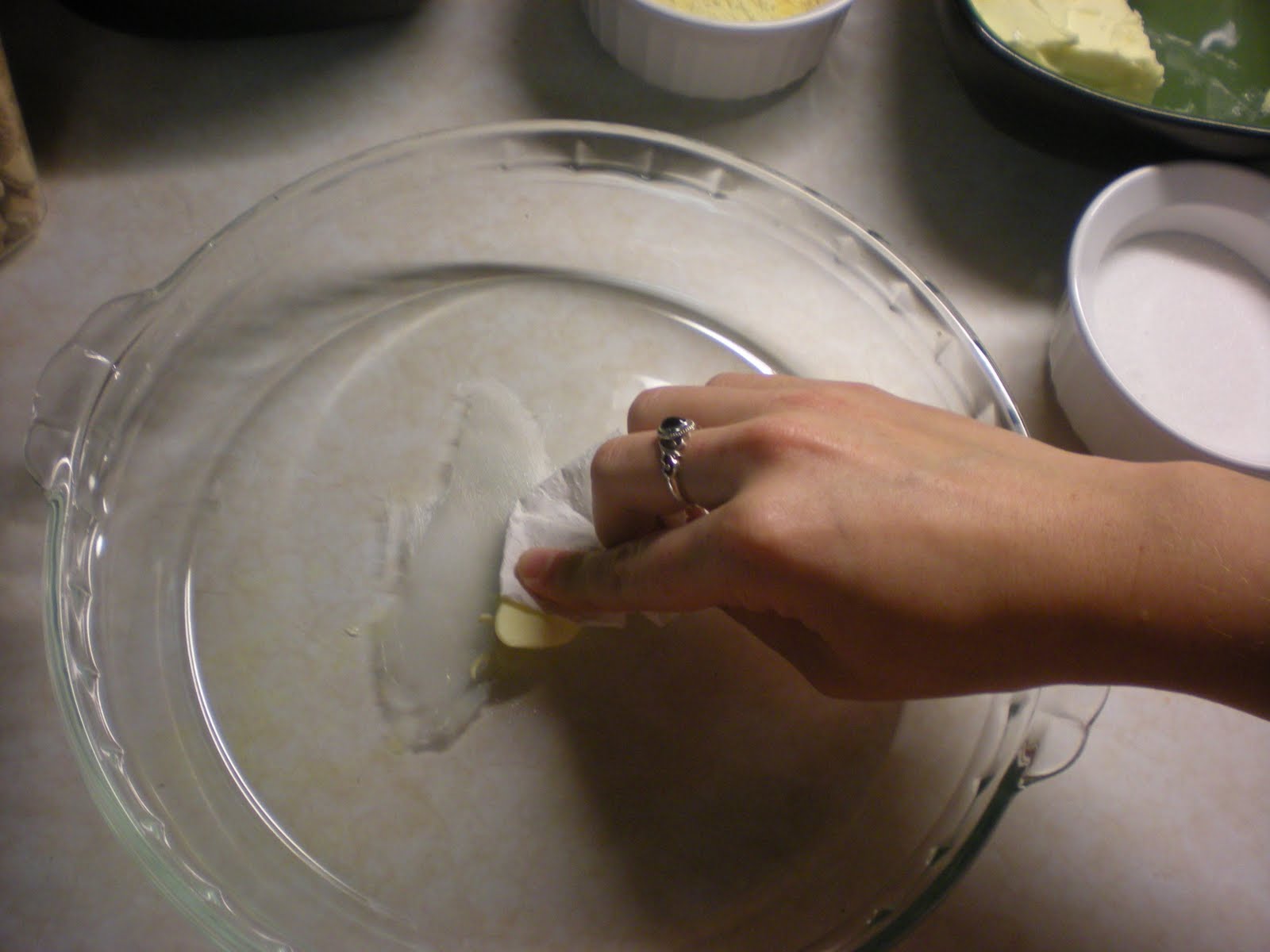
1. Preheat the oven to 300°F. Butter a 9.5″ round glass pie pan. Set aside for now.


2. Add about a teaspoon of salt to the flour and whisk together. Set aside.

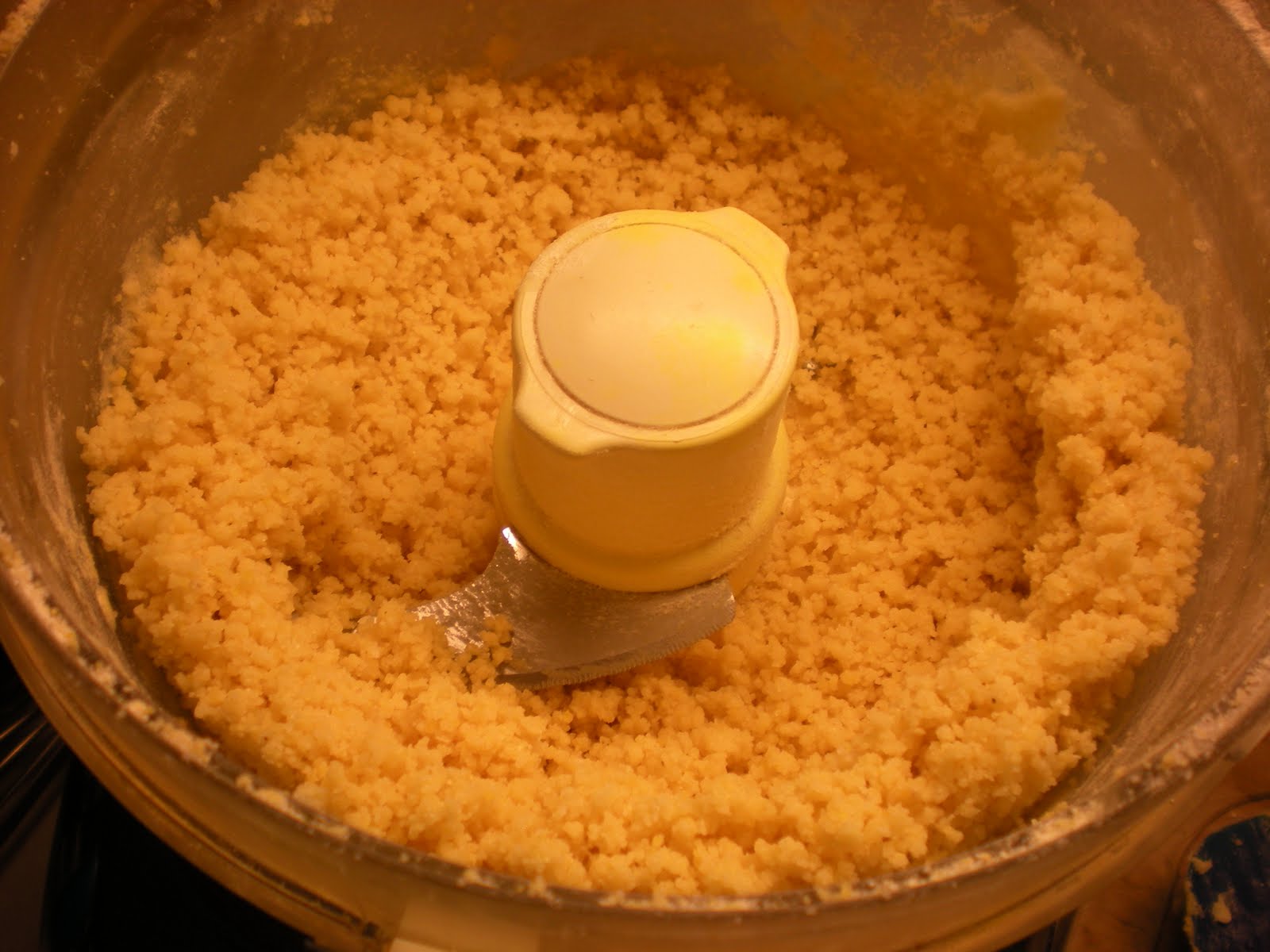
3. cream the butter, sugar, and vanilla extract in the food processor.


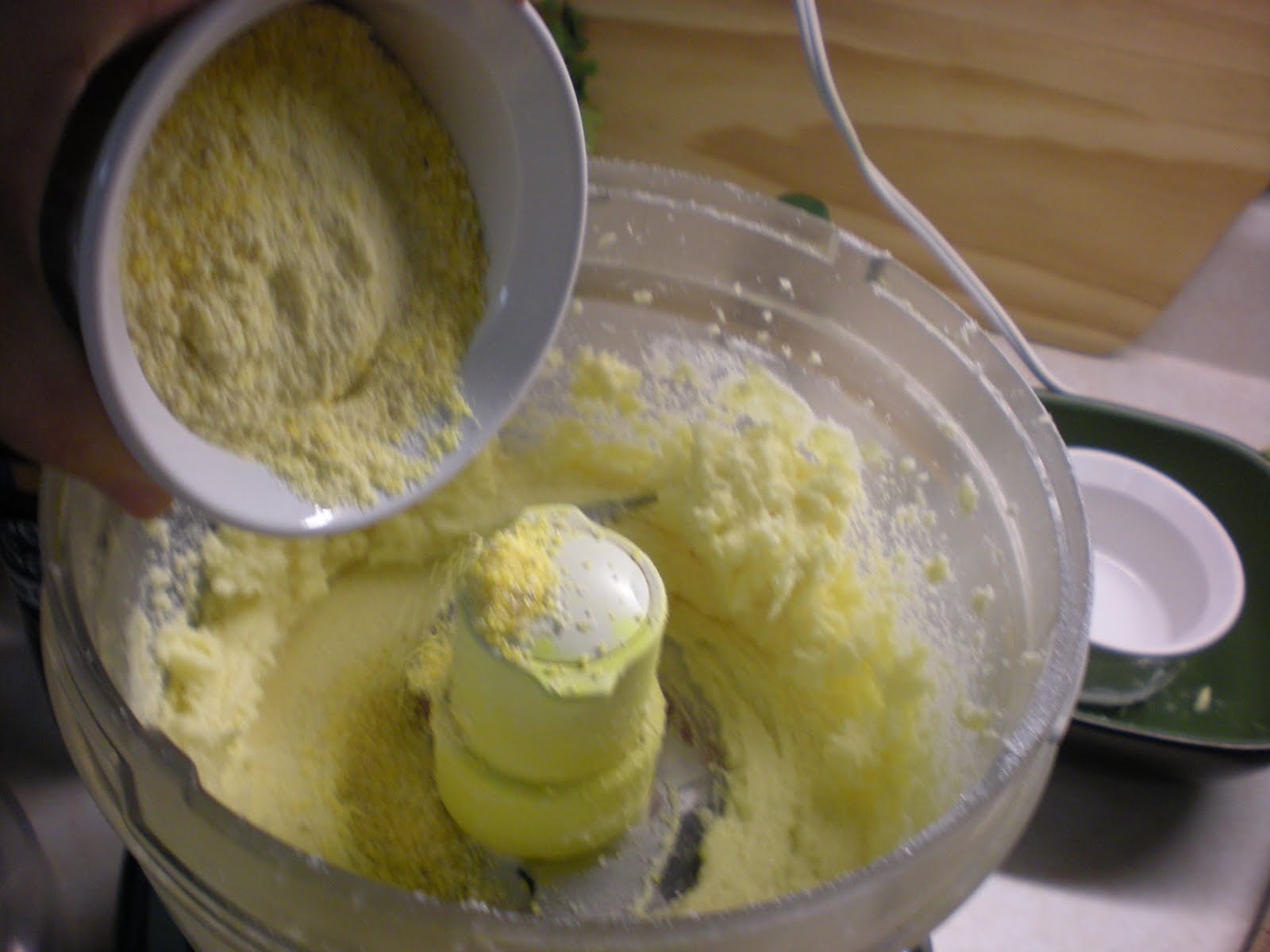
4. Add the cornmeal and pulse until it’s blended in.


5. Add the flour and salt and pulse until it starts coming together but is still flaky and mostly in small balls (not unlike food processor pie crust).


6. Remove the mixture from the food processor onto a clean surface. Gently form into a ball but don’t worry if it doesn’t come together very well.

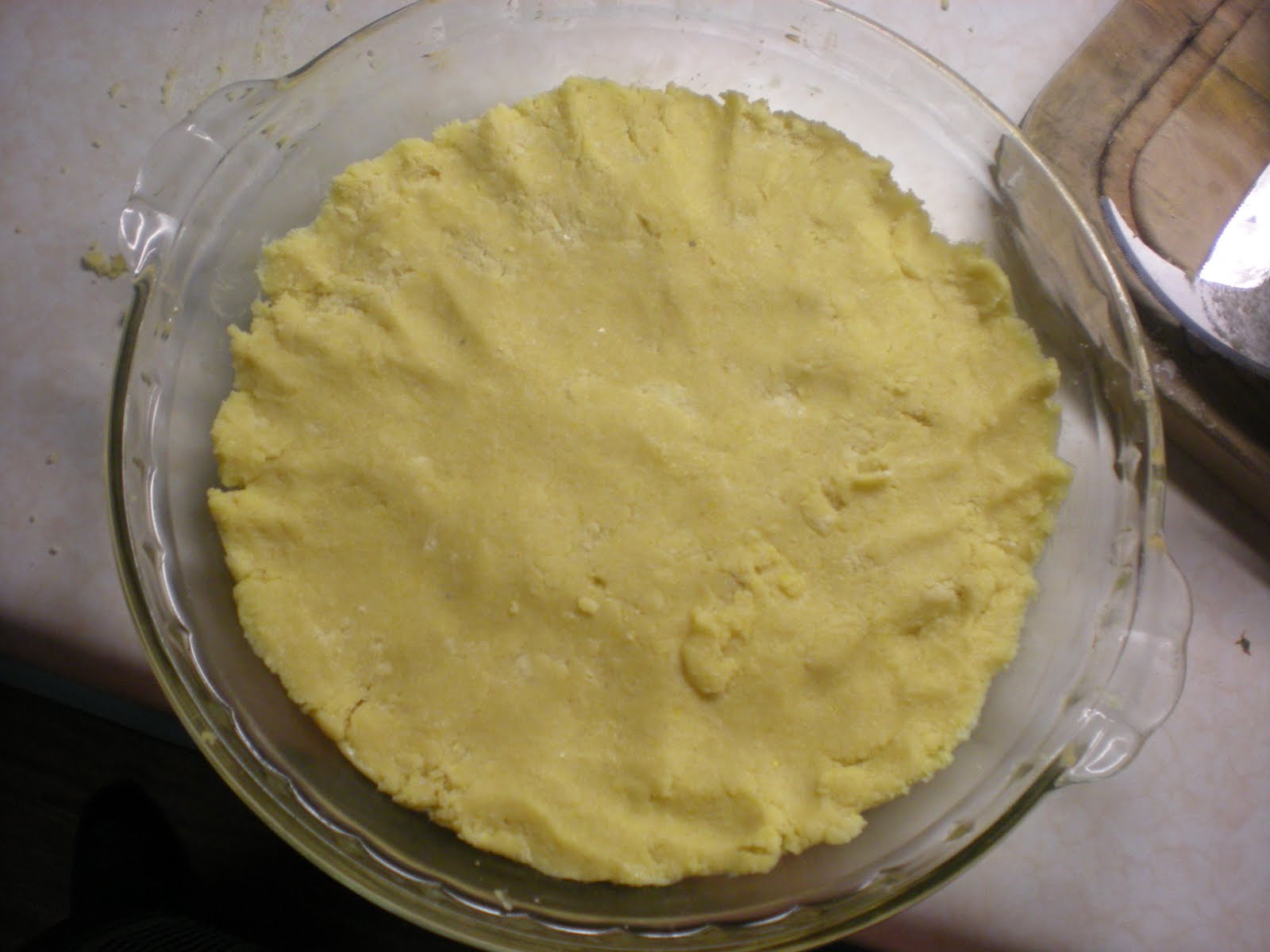
7. Pat the mixture into the buttered pan so it fills the pan and is flat.


8. Cover with plastic wrap and let sit in your fridge until it’s cooled down a bit, maybe 15 minutes.

9. Take it back out from the fridge and remove the plastic wrap. Flatten out the top and edges a bit, if you need to (I needed to). Poke little holes in the top with a fork and sprinkle with some salt.


10. Put in the oven and bake for 30-40 minutes until golden. Mine definitely took the whole 40 minutes.

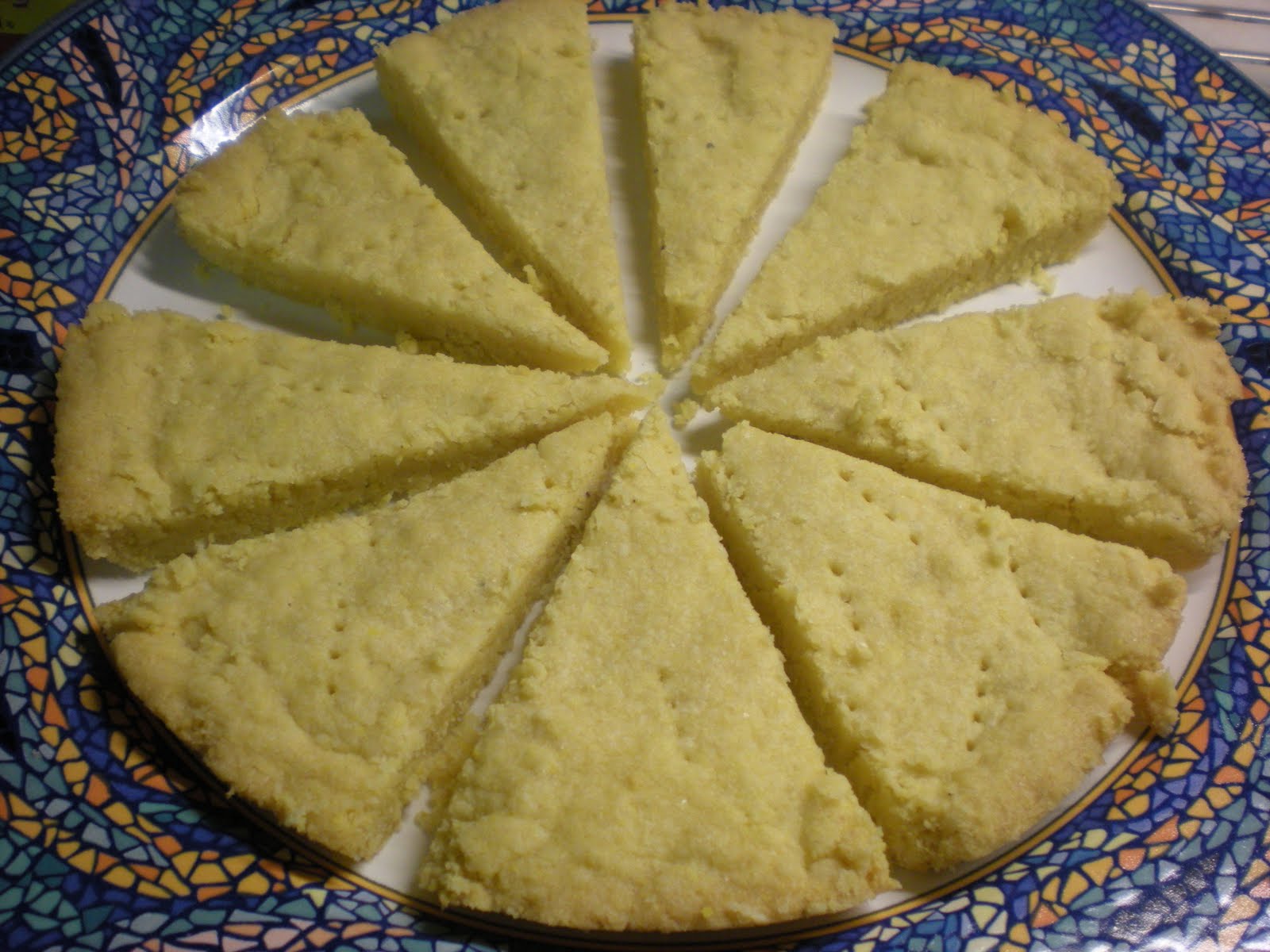
11. Remove from oven and immediately cut into triangles with a knife.


12. Let it sit until completely cooled.


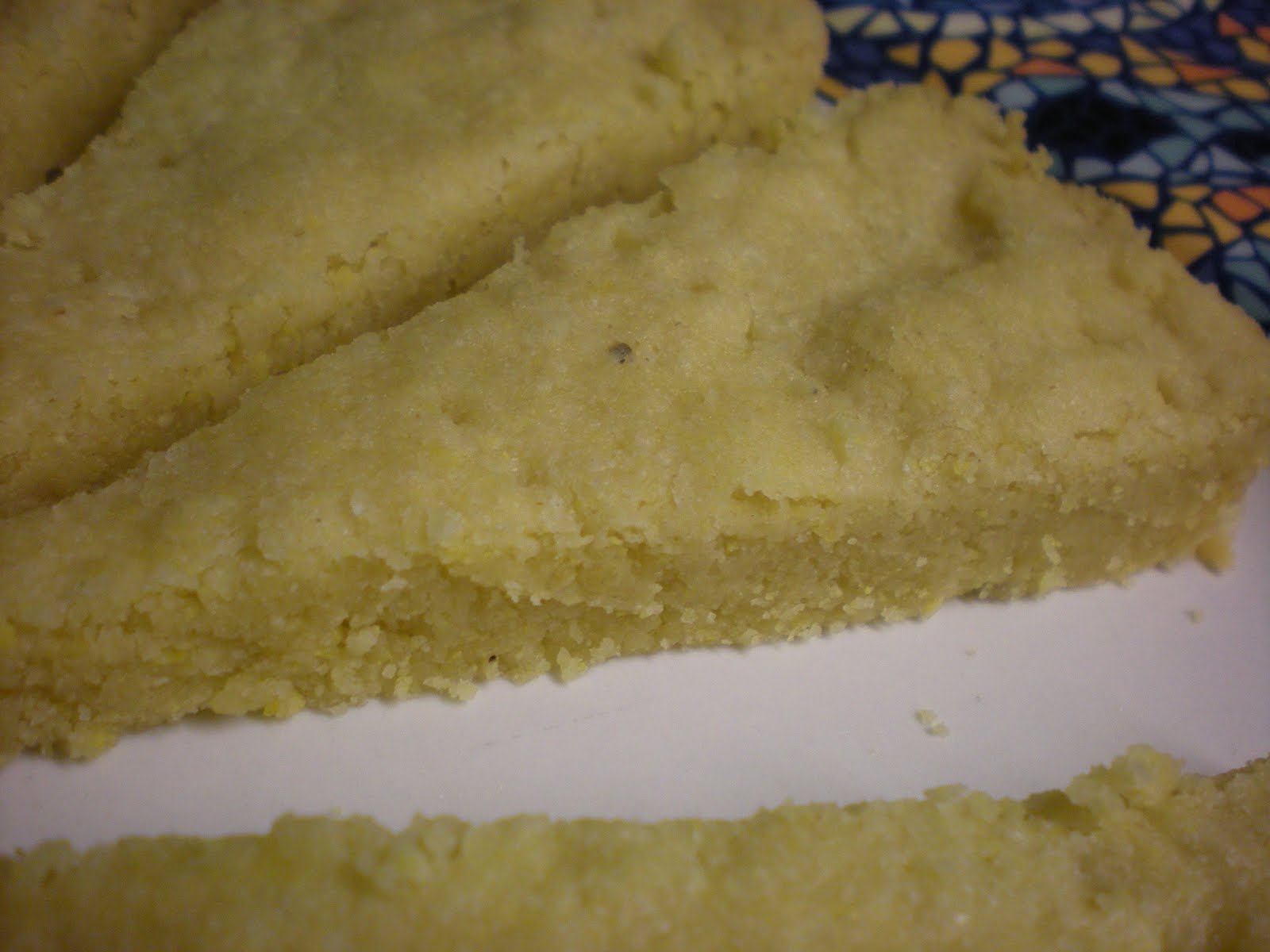
Don’t let the pictures fool you; it’s still really crumbly. My first few pieces out of the pan were a sacrificial offering to the crumbly shortbread gods.


Conclusions? This recipe is so, so yummy. It doesn’t look like much but it is seriously addictive.


Success. Go make this! Now!

Macarons


This is a bit of a deviation from the usual bread, but since coming home from Paris, I haven’t had the time or enthusiasm for making regular bread. When we get back to Texas things will be more normal.

However, I have been very excited about trying to make authentic Parisian macarons, which I tasted for the first time in Paris.


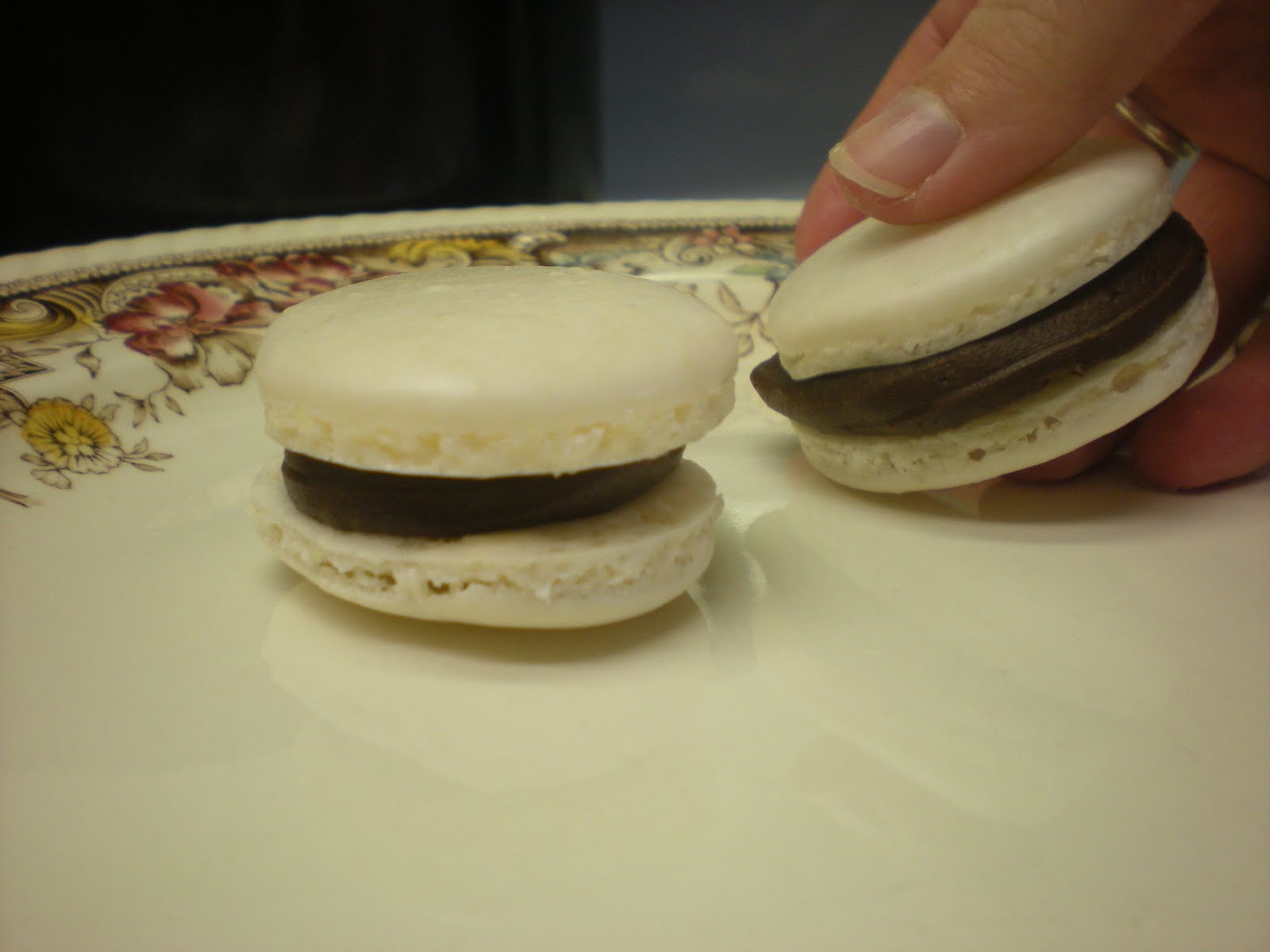
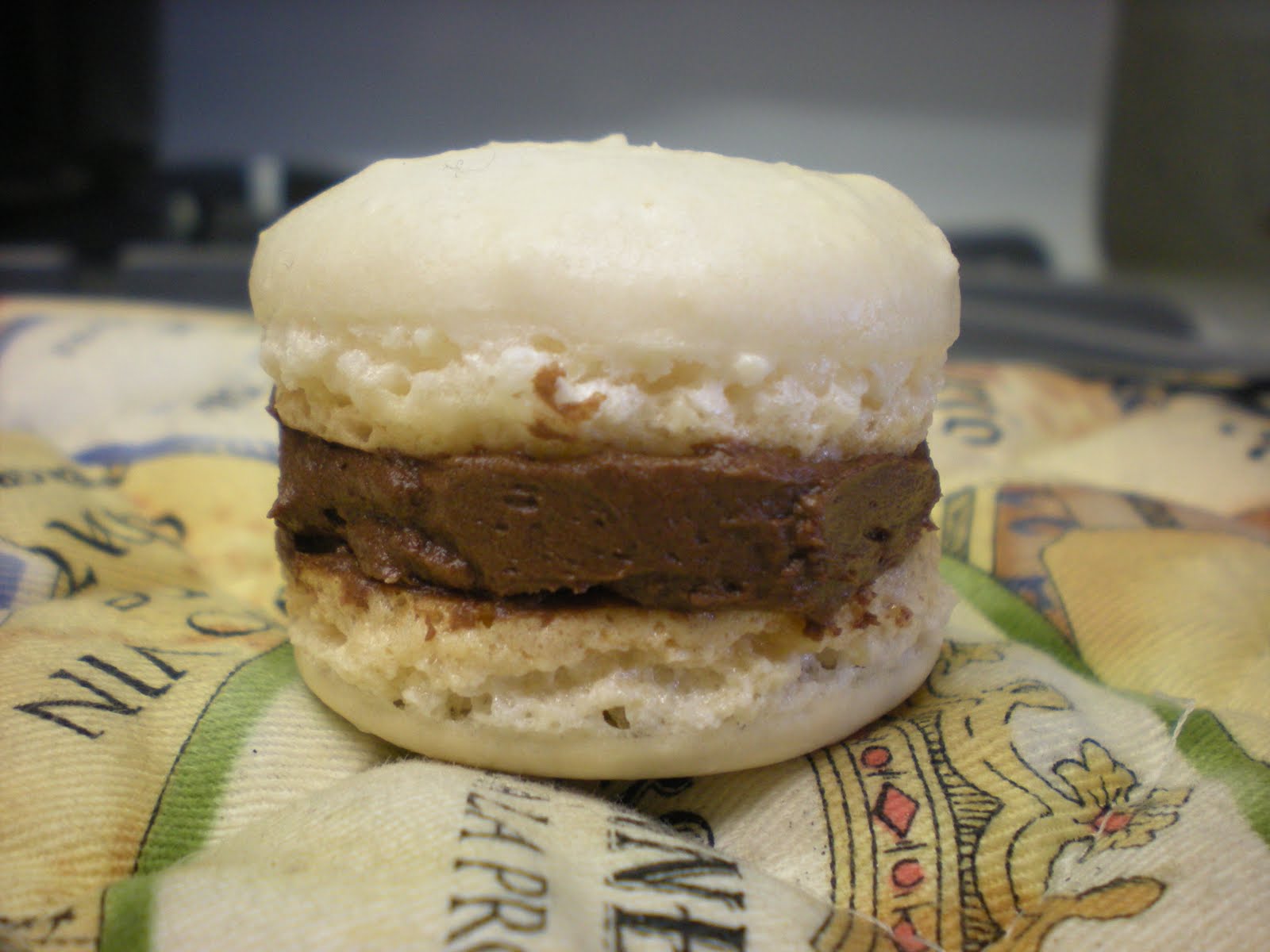
These gorgeous, multi-colored little cookies are basically a chocolate ganache or other filling sandwiched between two baked meringues mixed with ground-up almonds.


For more about macarons, check out Joe Pastry’s blog: http://joepastry.com/index.php?cat=171. I have found him to be very helpful and he includes a breakdown of macarons, a section on troubleshooting, and the differences between macarons and macaroons, which are two very different things. In sum, the recipe for the meringues comes from Joe Pastry but the ganache is my sister-in-law’s (Mr. Bread Maiden’s sister). Since the recipe isn’t mine, and I don’t make any changes to it, you will have to go to Joe’s site to get it.


Ready? Here we go. To make these, I had the assistance of my sister-in-law, Slow Learner’s daughter (I think she was dubbed Fast Learner a few posts ago), who is a pastry prodigy and who saved the macarons from a dumb mistake on my part. She also made the ganache with her prowess and I bow down to her in basically all things pastry and cookie.


Also she took the pictures.


1. Mix slivered almonds and powdered sugar together in a food processor.

2. Put your egg whites into the bowl of a stand mixer and whisk until you get soft peaks. Add the granulated sugar and continue whisking until stiff peaks form.

3. In the bowl of the stand mixer, use a spatula and fold the ground almonds and meringue together.

4. Use a cookie scoop or pastry bag to distribute mixture on a cookie sheet covered with parchment paper. Using Joe Pastry’s recipe I had enough batter for three cookie sheets. Let these sit for 45 minutes to an hour uncovered. The trick to getting the airy “feet” is you want the meringue to dry out and a small crust to form so the air is trapped and has to shoot out underneath. This gives the macaron its traditional and much-sought-after shape.


5. Preheat the oven to 300 degrees and place trays in the lower-middle of the oven for 10-12 minutes, then take them out and let them cool for at least 30 minutes. It’s really exciting to watch the feet form, because then you know you did it right!


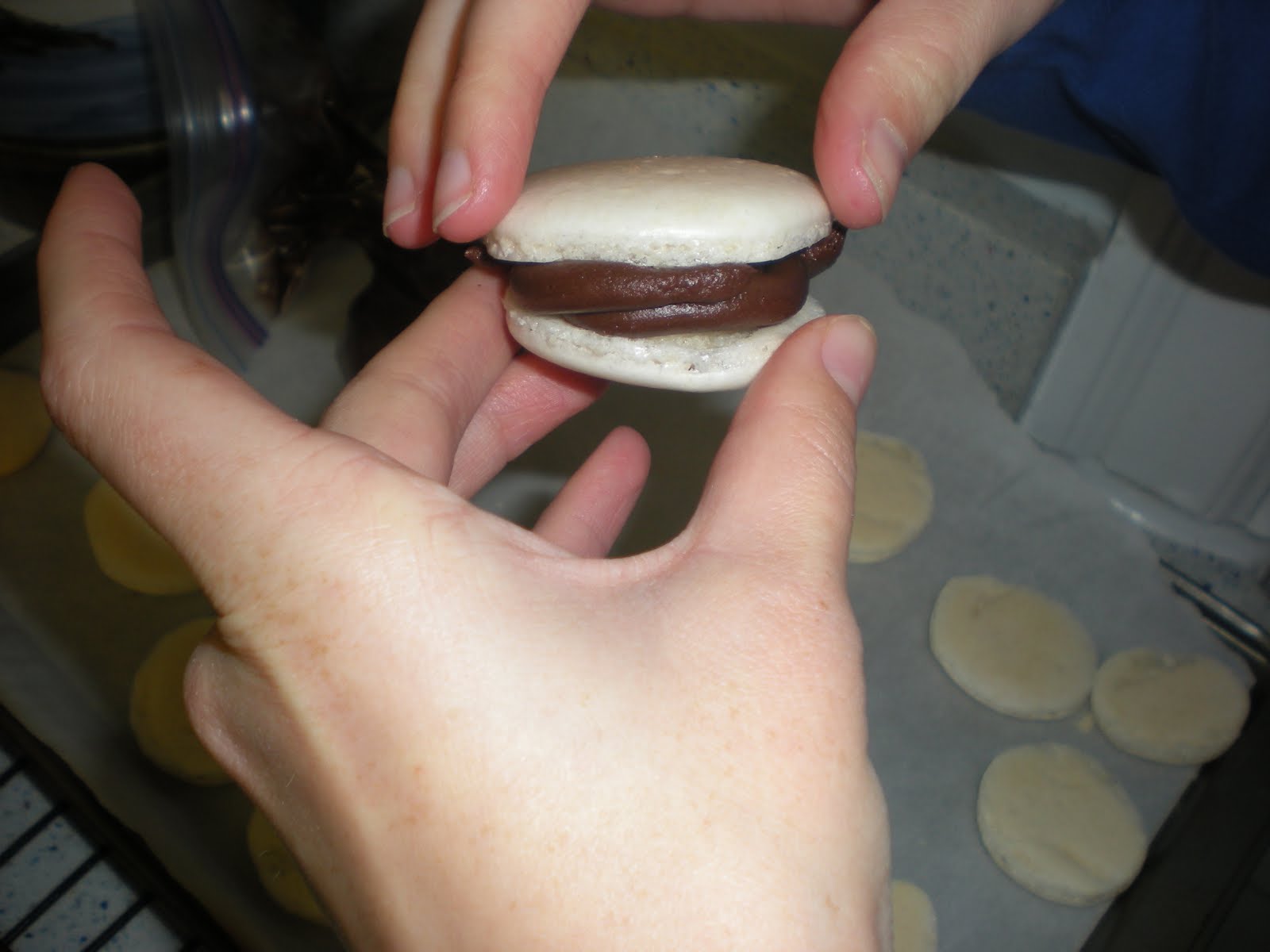
6. CAREFULLY remove the meringues from the parchment and let them sit while you make the ganache. Put the ganache in a pastry bag and pipe out on the bottom of one meringue.


7. Place another meringue on top, being careful not to press it down, even though you’ll want to. The meringues are so delicate you will crush them if you try to exert pressure.


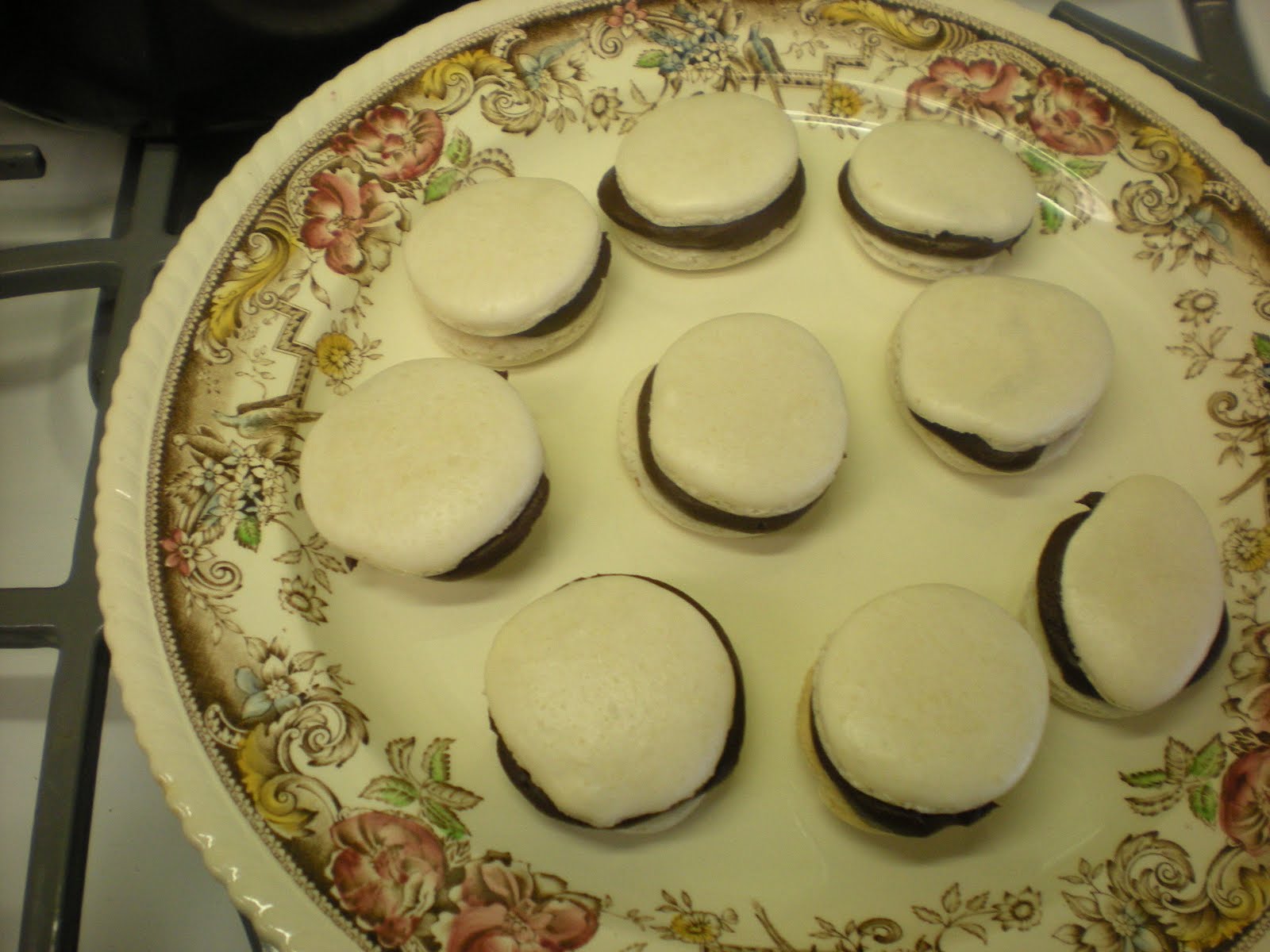
8. Admire how gorgeous YOUR macarons look! Now eat! Or save them and bring them to the Boeuf Bourguignon dinner you have planned for your parents and in-laws. We found that the macarons stiffen up a little bit if you leave them in a cool place for a few hours (it doesn’t have to be the fridge; think a cold room in the house where they will be unbothered).


In any case, these are so yummy and not really that hard to make, although they do dirty up both the food processor and the stand mixer. But such sacrifices are small compared to the deliciousness of homemade macarons.

I need to update more

Once again, I find myself so busy that despite all the time in the world to make delicious confections, I rarely find the time to sit down and blog about them.

1. The past few weeks I’ve been making up a few firsts mixed in with the tried-and-true. I’ve been making enormous batches of Reinhart’s spent grain breads (detailed earlier) since Mr. Bread Maiden has been brewing up beer like a crazy person and we always have tons of spent grains left over.

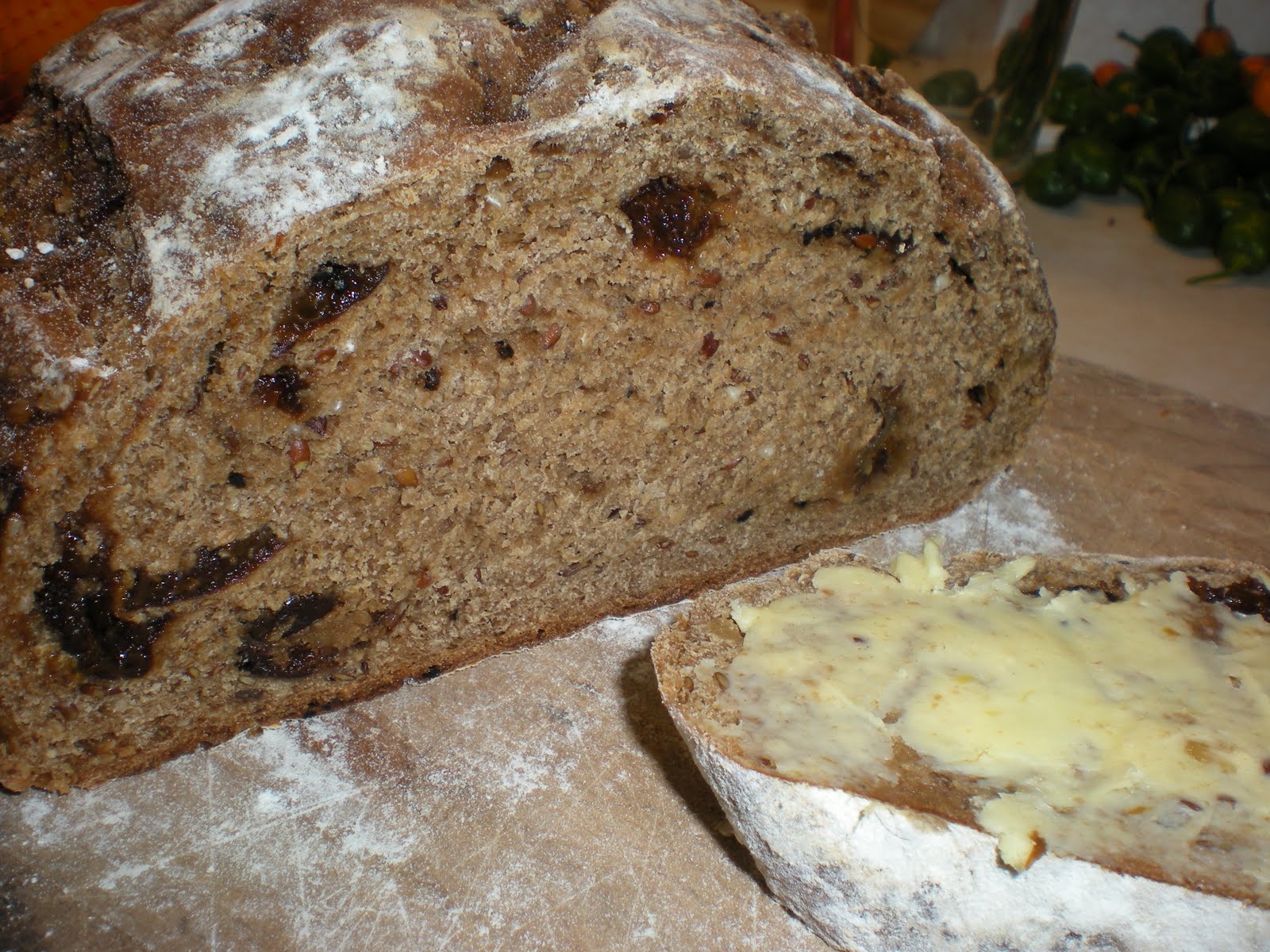
However, I must’ve measured wrong because once I got to the fourth loaf, I was nearly out of grains! I decided to experiment and threw in flaxseeds, sesame seeds, dates, and raisins.

The dates were a challenge to keep in the loaf, but eventually they started to meld with the rest of the dough.

The bread turned out fantastic; almost like a cinnamon raisin bread but not as sweet.

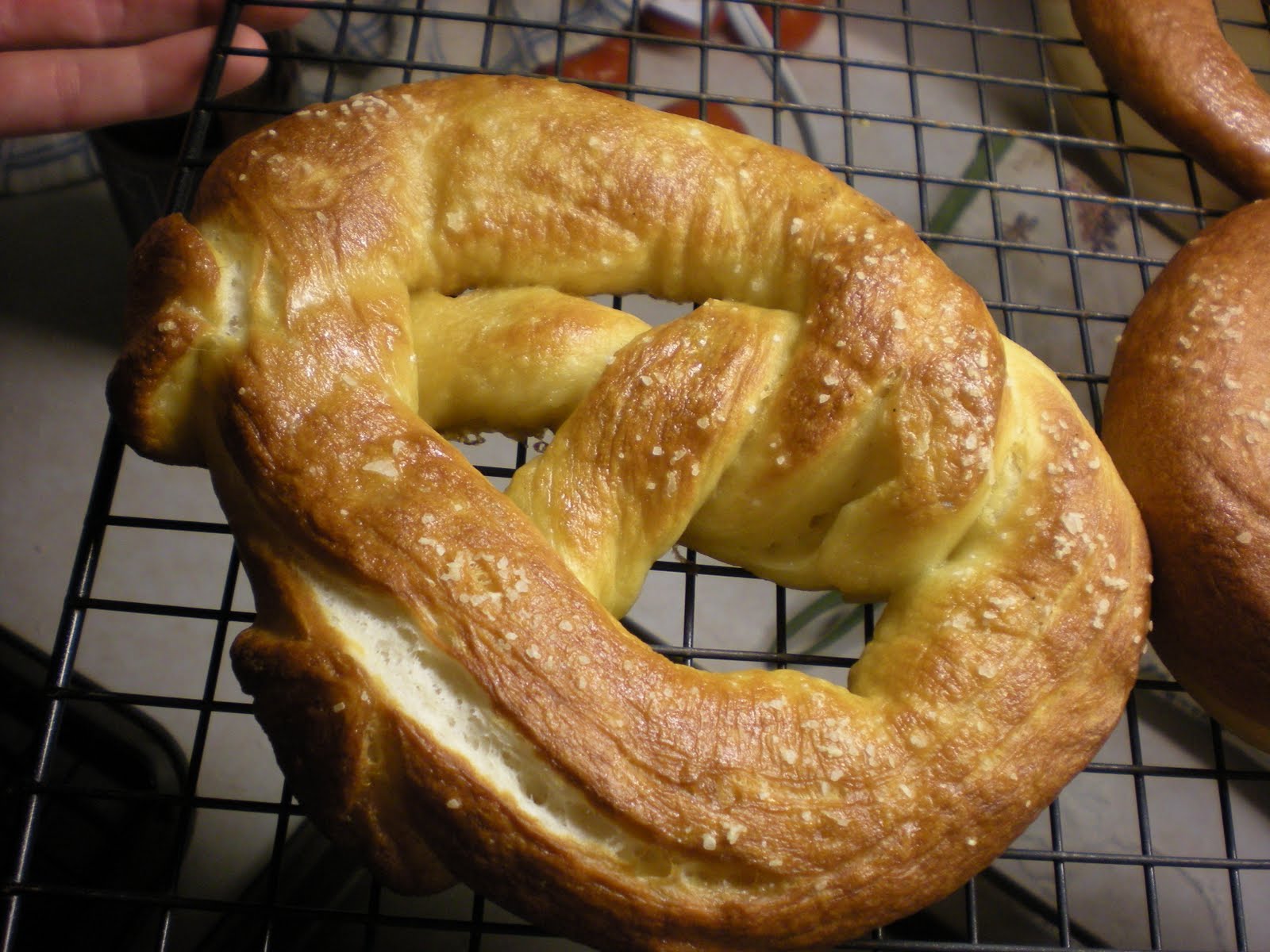
2. I had a hankering for homemade pretzels after seeing so many people make them on the FreshLoaf. So I had to try for myself!

I didn’t take many pictures of the process since it went so fast: we shaped them, boiled them in baking soda, and then baked them in the oven.

They were quite tasty, and continued to taste good even after a few days kept in the fridge.

3. Doughnuts were something else I wanted to try. There is nothing better than a cup of dark coffee with a lightly-sugared plain doughnut.

We used some kind of fat (will have to ask Mr. Bread Maiden which it was) to fry these.

Then we let them fry for about 30 seconds to a minute on each side until they were nice and brown, and let them cool on a paper towel.

Like biscuits, doughnut dough scraps don’t do very well if you try to roll them back up after the first roll-out. So that’s what the pointy pieces are next to the nice round doughnuts.

I even made doughnut holes! The best part about home baking is that you can adjust the amount of sugar to your liking. At the Bread Maiden household, our liking is “not very much, thanks.”

That’s about it for now on the baking front. I’ll try to be more prompt on my entries. However, my big baking project, my fruitcakes, won’t be ready for another month. You’ll just have to be patient! Love, Bread Maiden.

back in Austin!

wow, it’s certainly been a while since I’ve posted here. I’ve just been really busy. Now I’m back in Austin, not that that means I’ll have a ton of free time, but at least I can squeeze in a quick post letting my readers know what’s been going on with me in the world of bread.

1. After a desperate attempt to save my sourdough starter, I decided to throw it out and instead started another one from Slow Learner’s sample, which I had actually given her a few months prior. Now that I know what happened, I will make sure it doesn’t happen again.

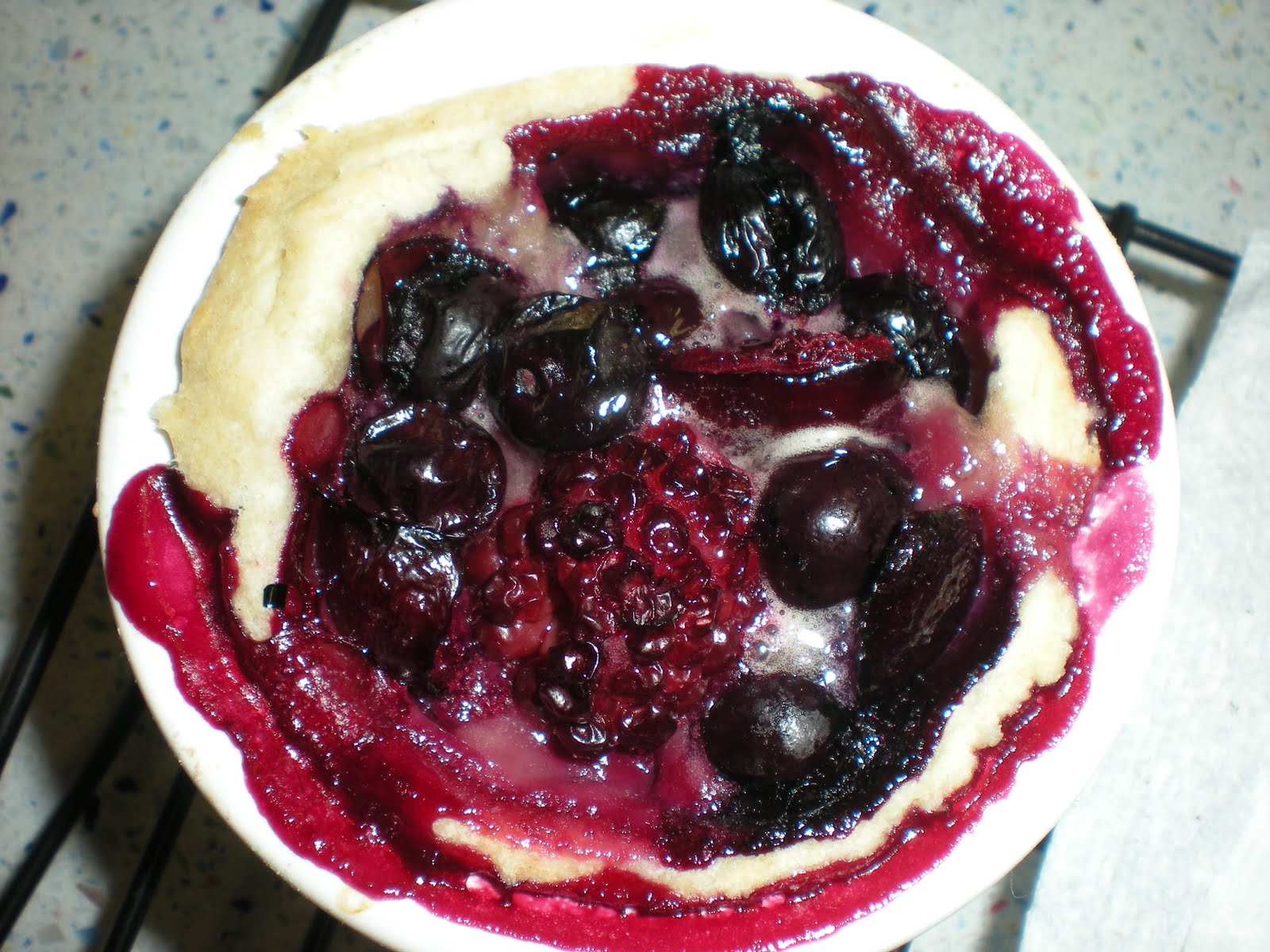
2. I spent the summer mostly making pies. The fruit was so good in DC that I switched gears a bit and focused on delicious flakey crust and fruit filling. I also became a fan of Dorie Greenspan!

3. Jam! The fruit also inspired me to dabble a bit in jam, although that was slightly less successful. Here’s a sample:

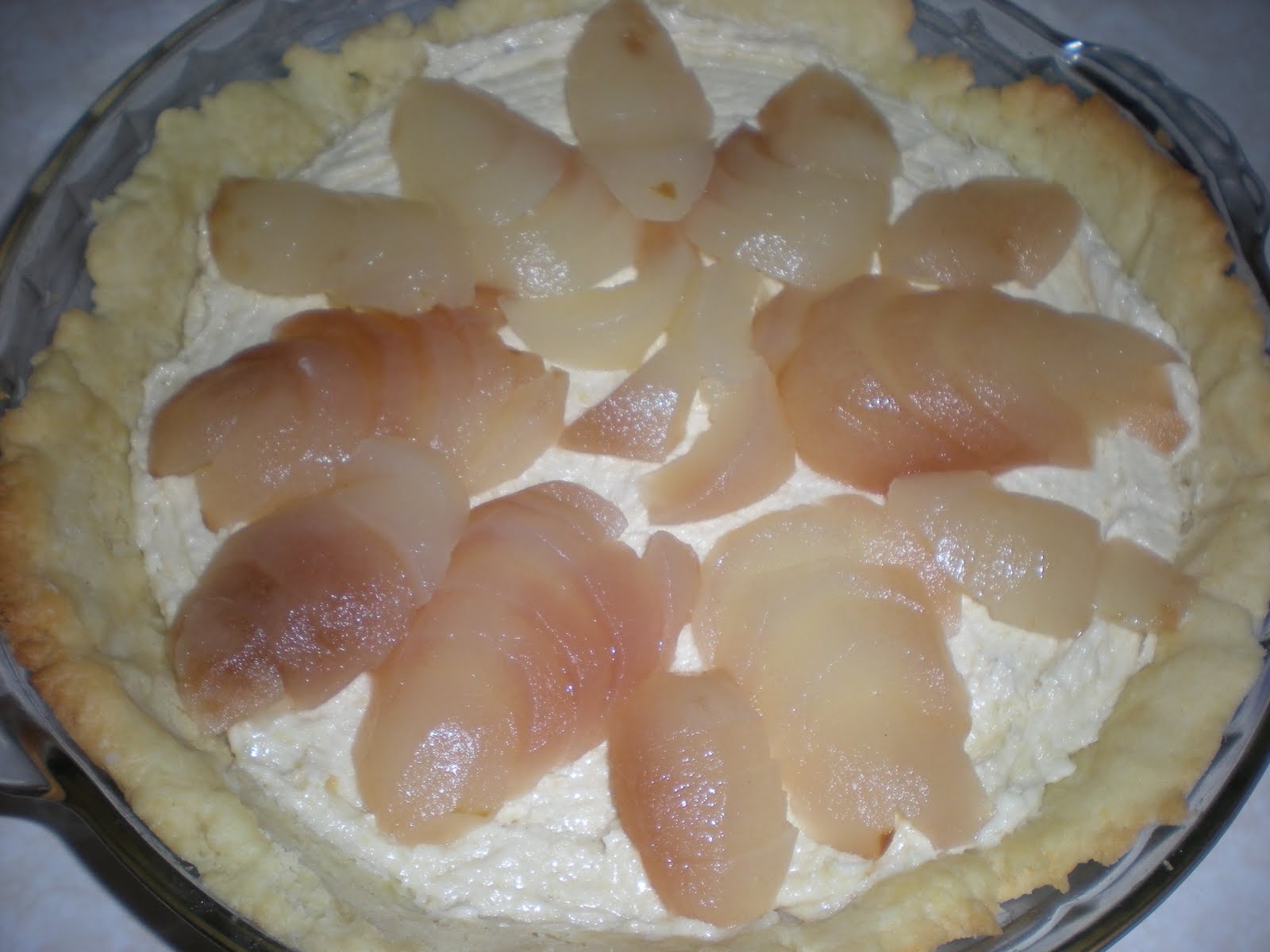
4. Dorie Greenspan’s Pear Tart! This isn’t my favorite, although it is Dorie’s and Mr. Bread Maiden loves it too. I just felt like it was a little too sweet and too much work for what it makes. But try it for yourself.

5. Kugel! In honor of Rosh Hashanah, I made a sweet kugel with honey and apples. It was really delicious and terribly unhealthy for you!

6. Challah! I guess I was on a roll.

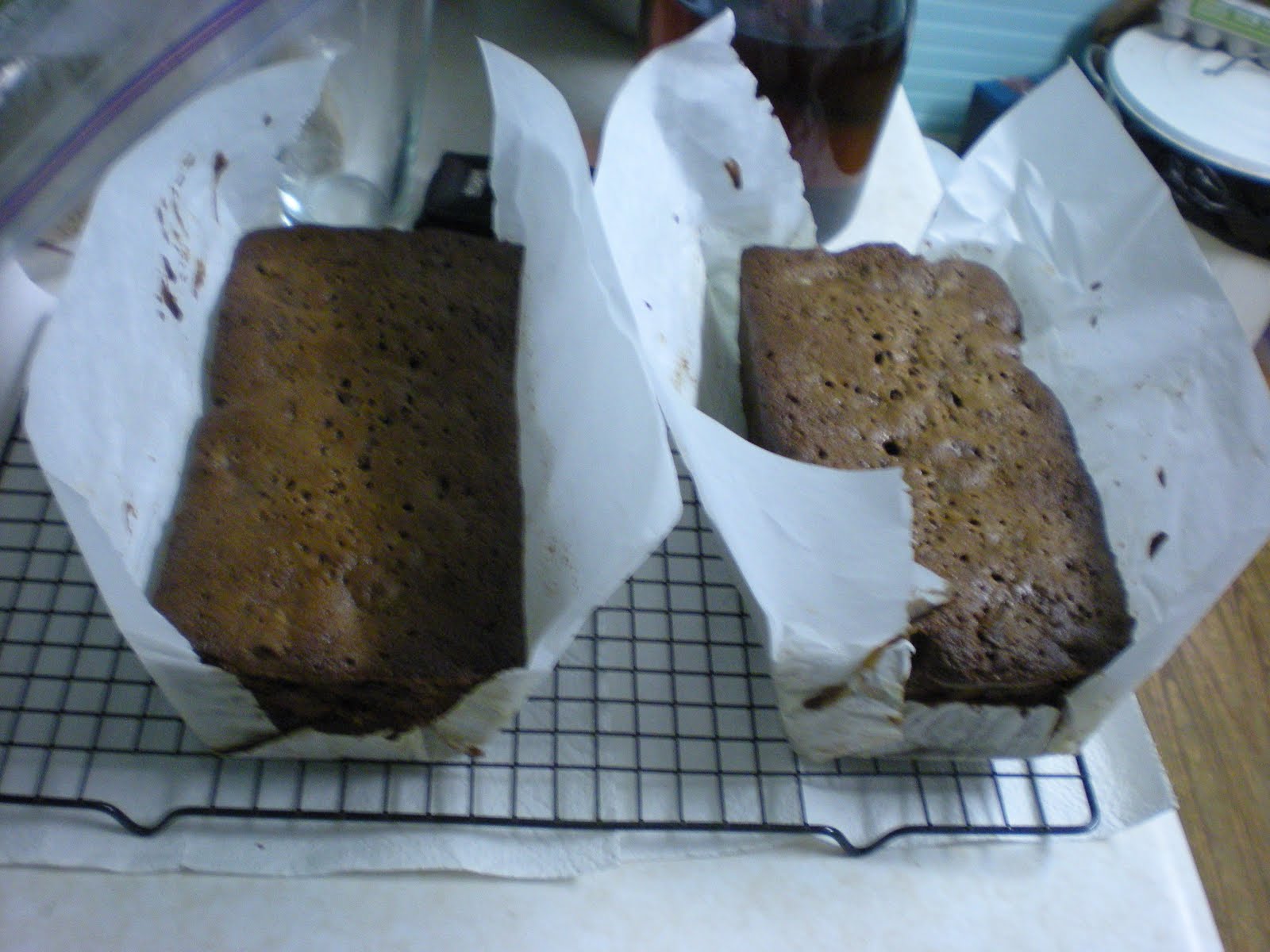
7. Fruitcake! There will likely be a post about this later because it’s actually bread, not like any of the above. So stay tuned! We’ve tried it and it’s really good. The brandy helps.

So, now you know Bread Maiden is alive.

Sourdough Starter Troubles

First, I would like to apologize in advance for what is perhaps an overly technical, and certainly rather boring post to those unitiated in sourdough culture (sorry also for the terrible pun).

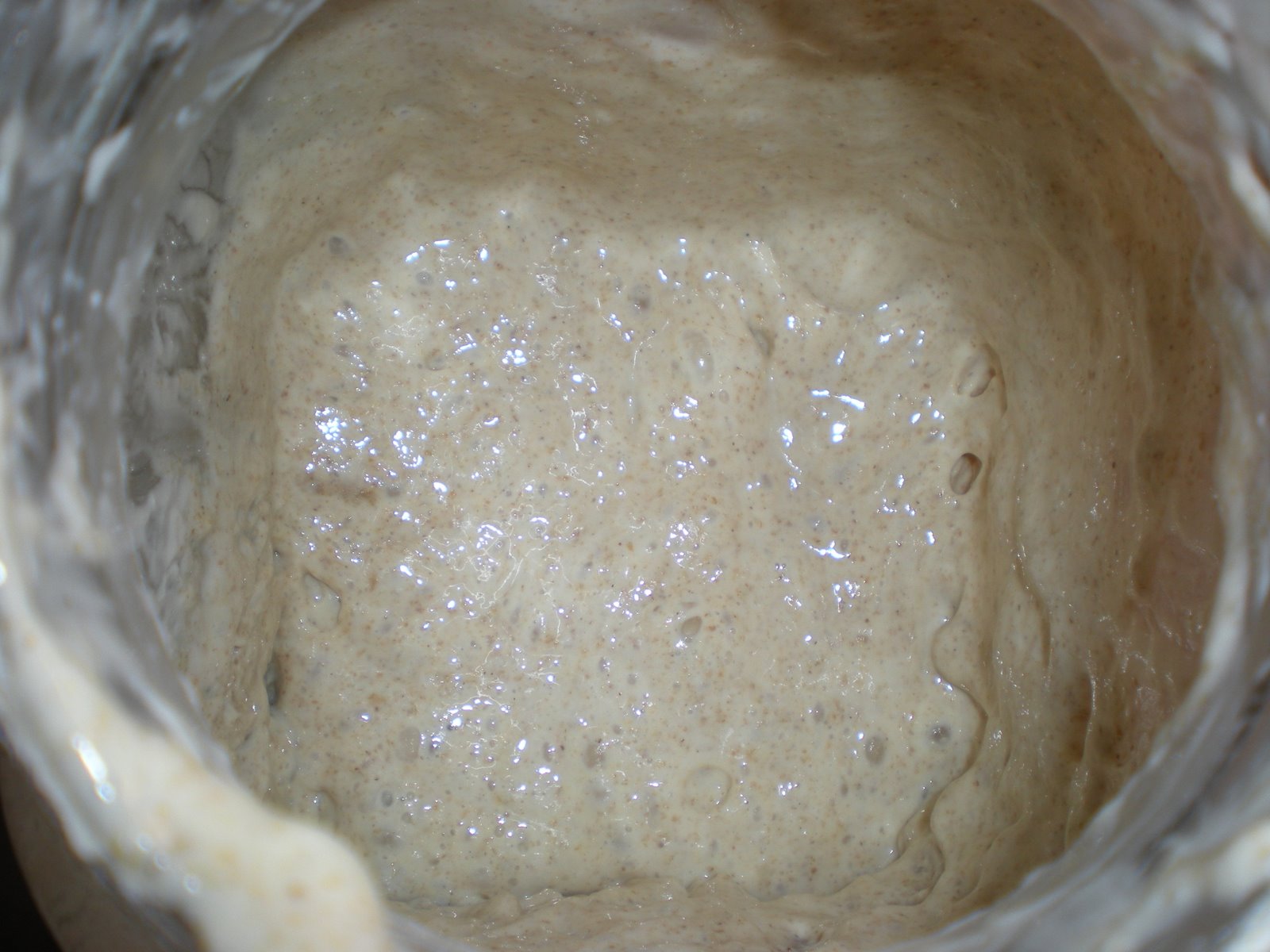
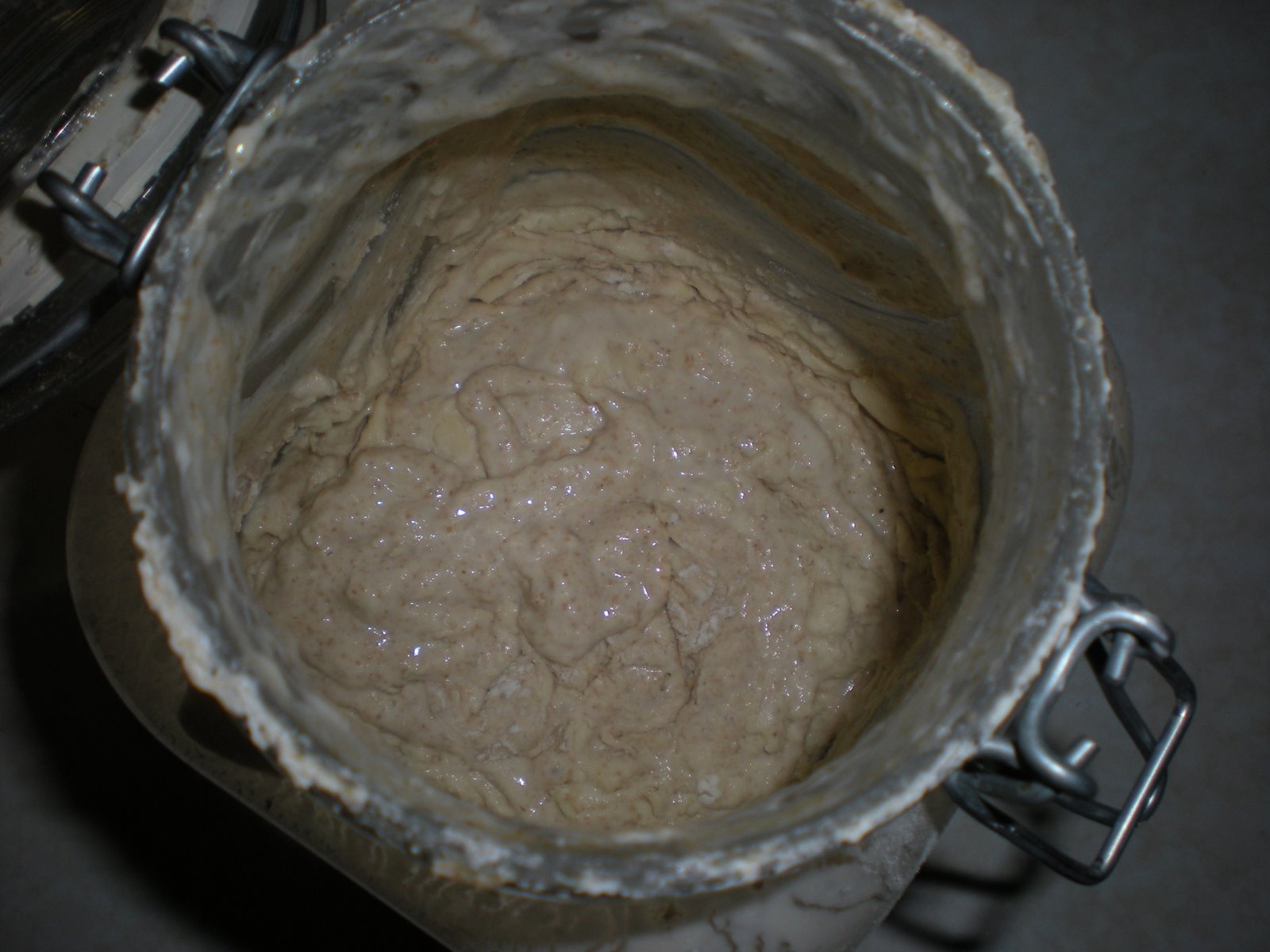
I have been baking with a sourdough starter for nearly a year now. As regular readers know, I began my starter using leftover yeast from Mr. Bread Maiden’s beer brewing activities, instead of the typical Reinhart “pineapple juice” formula. This allowed for the yeasty beasties (technically S. Cerivisiae) to procreate and become usable much faster.
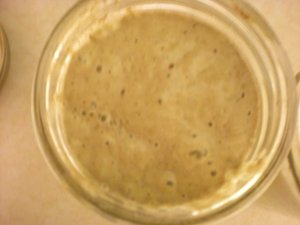
And life has generally been grand. I keep two starters, at 100% and 75% hydration, and keep them in the fridge until the day before I need them, when I build them back up on my kitchen counter.

However, last week things took a turn for the worse.

Here is the story.

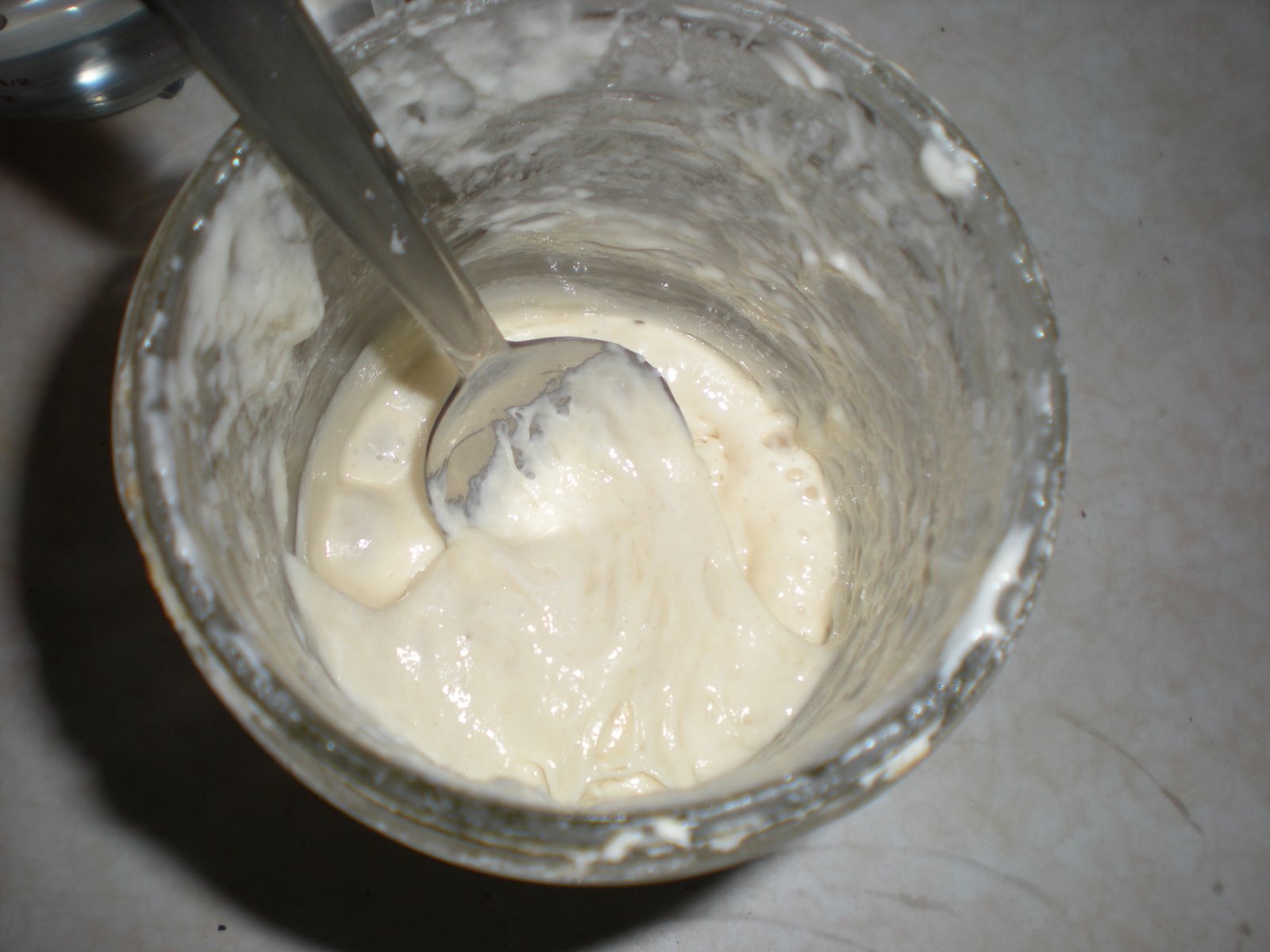
My mother in law (Slow Learner, her self-given blog nickname, not something I would ever call her since she is wonderful) was helping me make sourdough. In anticipation of her arrival, I transfered my starter (which I had previously kept in a small Ball canning jar) into a very large pickling jar so I could build up a large amount of starter that we could use.

Since I was busy with other breads, I gave her the ratios for my fail-safe (or so I thought) 1-2-3 Sourdough. We left the dough to sit overnight, doing several stretch-and-folds to strengthen the shape. Each time, it was forming a stronger ball of dough. All seemed to be going well.

Then, for the final shape, something went terribly wrong. Every time I folded the dough, it became stickier, goopier and harder to manage. It stuck to everything, no matter how wet my hands were or how much oil we used to grease the bowl. It was like there was no gluten at all. It was awful. We tried adding tons of flour at the very end, but this resulted in a crumbly dough with no flavor.

I initially thought that maybe the 1-2-3 ratio aspect of the dough had left my poor MIL confused and that the ratios of flour, water, and starter had gotten mixed up. It certainly did not look like 66% hydration dough, or even 75% dough. It was liquidy and not firm. But the facts didn’t make sense; it had acted like firm dough when we had mixed the ingredients and throughout the process until the end.

When I tried to make sourdough again, it ended up sticky and flat, just as before.
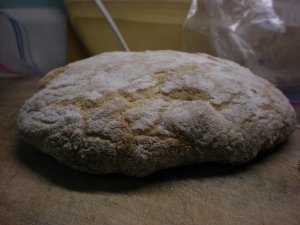
Clearly, something was wrong at some stage in the process. But what?

I made other doughs with commercial yeast that ended up just fine. So the problem wasn’t the flour or water.

The problem was definitely with the starter.

I went online to my favorite discussion blog, thefreshloaf.com. There, forums can answer any question you have about anything to do with bread.

Cruising through the various discussions, I came upon one entitled “Could my starter be destroying the gluten in my dough?”

BINGO! I read on.

Apparently, if starter is left too long without being fed, it develops the ability to eat protein (becomes proteolytic), i.e. gluten. The starter becomes too concentrated with yeast, and it begins feeding on the protein at an accelerated rate.

So, there were several problems at work here.

1. Moving the starter to a larger jar caused a concentration of yeast since I was not giving it enough flour to feed on at each feeding.

2. Because I had such a large jar of yeast, I was keeping it on the kitchen counter but not feeding it as frequently, leading it to develop the ability to eat protein. It also led other, more acid-tolerant strains of yeast, to thrive instead of the nice, yeasty-smelling yeasts that had been cultivated. This gave it the smell of acetone, or cheap nail-polish remover.

So how did I solve this problem? Well, it’s not that simple. We are currently monitoring the starter to see if it recovers. If not, then I guess we will be returning home starterless (here’s hoping my MIL, who I gave part of my starter to during her most recent visit, will loan me some back).

From the fresh loaf, I have gained the following insights to taking care of a sick starter.

1. Reduce the amount of starter you keep replenished. This meant dumping out a good deal of starter, and continuing to dump out about half the starter per day.

2. Keep the starter on the kitchen counter for a week, keeping a strict feeding schedule of one or two feedings a day. At each feeding, pour some out before replenishing it with flour and water.

3. Mix in a bit of rye flour into the usual feeding to generate enzyme activity. This is kind of like distracting the yeast from eating the protein.

We shall see if this works.

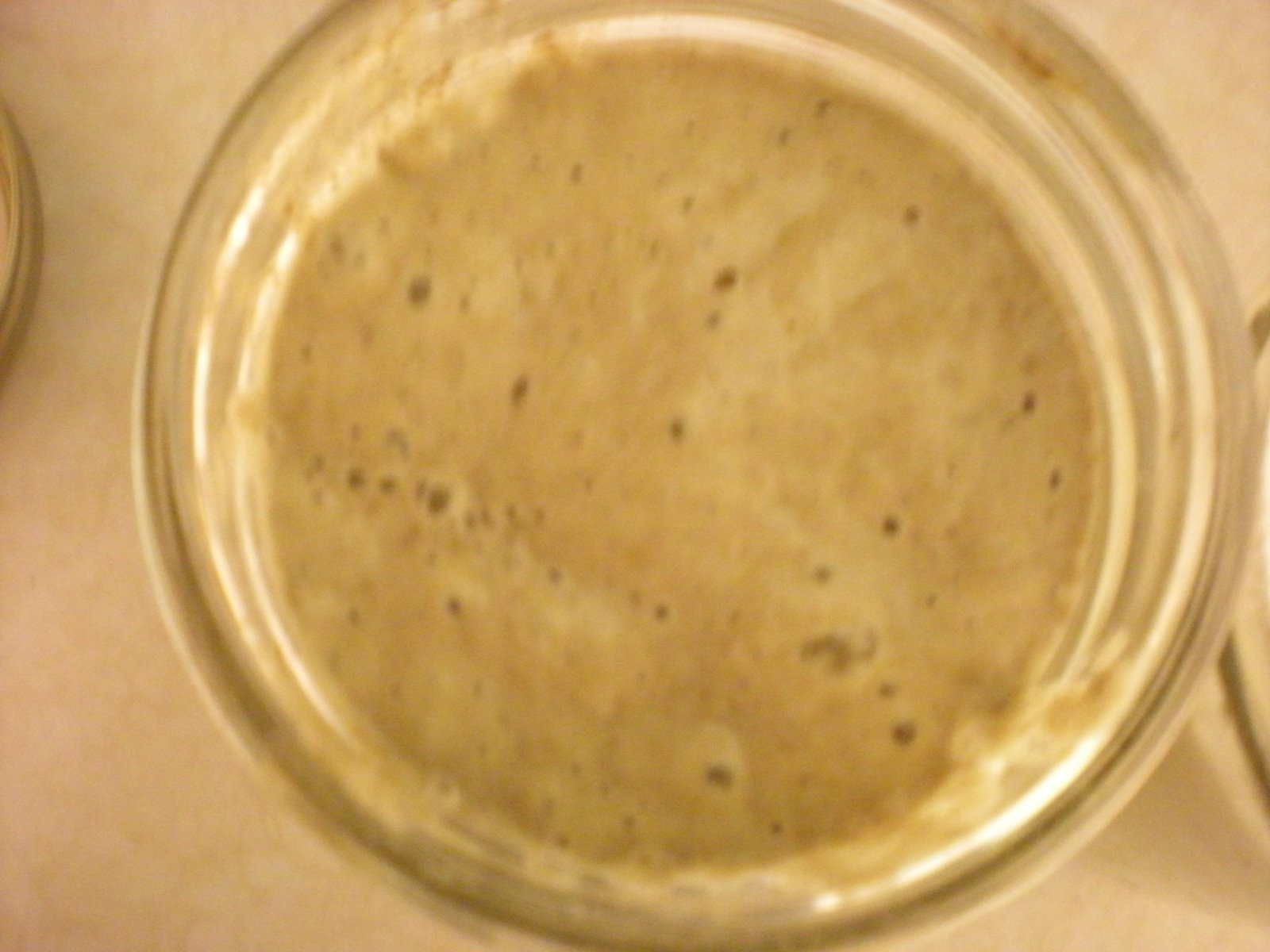
So far things have already improved and the starter is much firmer than before and very active and bubbly. I will keep people notified if the situation improves.

updates

So, as you might imagine, things have gotten pretty crazy for the Bread Maiden. Finishing up the 2nd year of grad school, packing up to head home. We also hosted Mr. Bread Maiden’s parents for a week, wherein Mother-in-law Bread Maiden (actually Slow Learner on this site! Which is a bit of a misnomer since she is quite skilled at baking) and I set out on a whirlwind of baking that lasted three whole days.

Let me back up a bit.

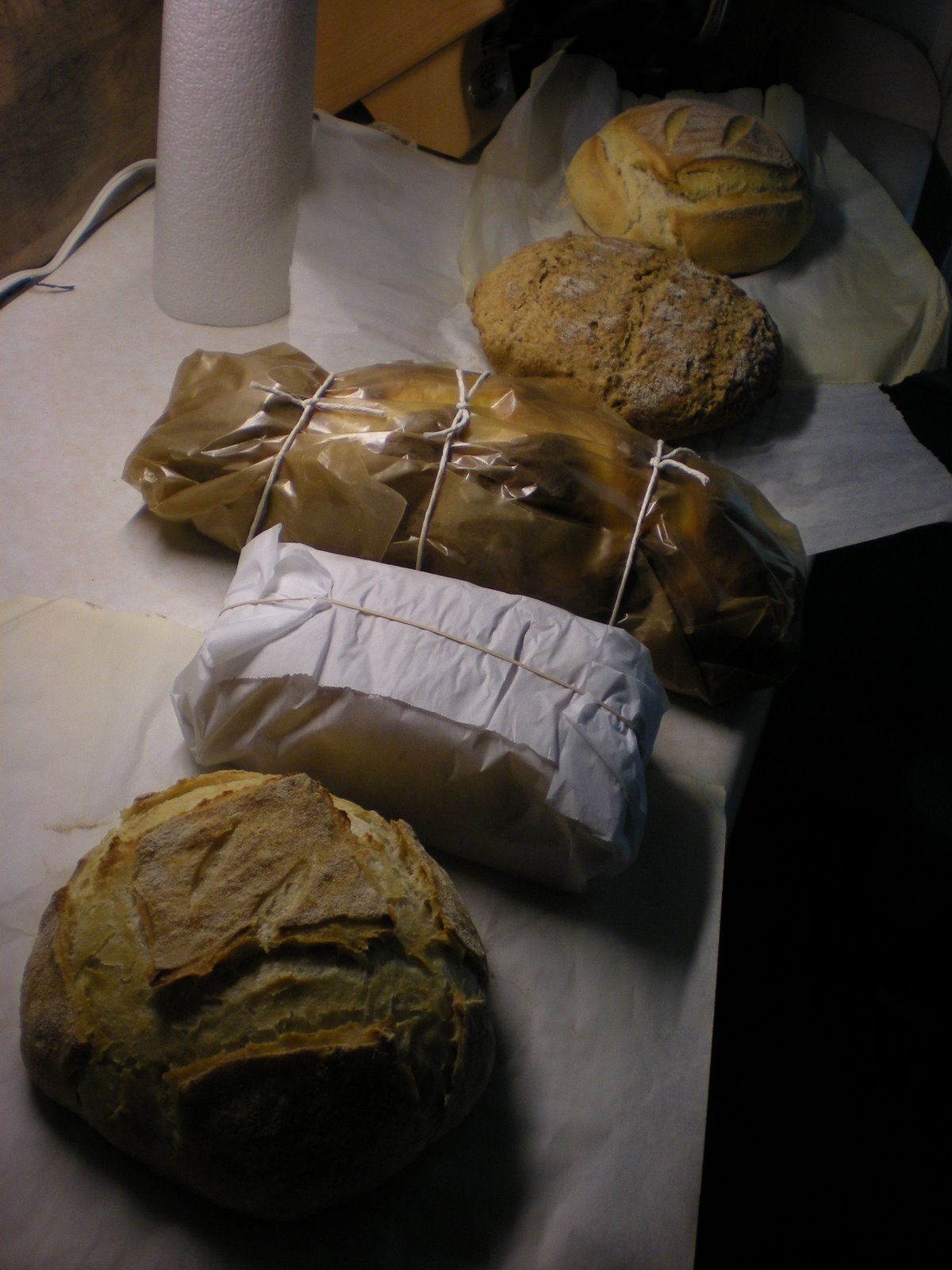
I offered my bread-baking expertise as a prize in a silent auction. The winners were two friends of mine, and I gave them a list of breads I can make and asked them to choose five types. They chose:

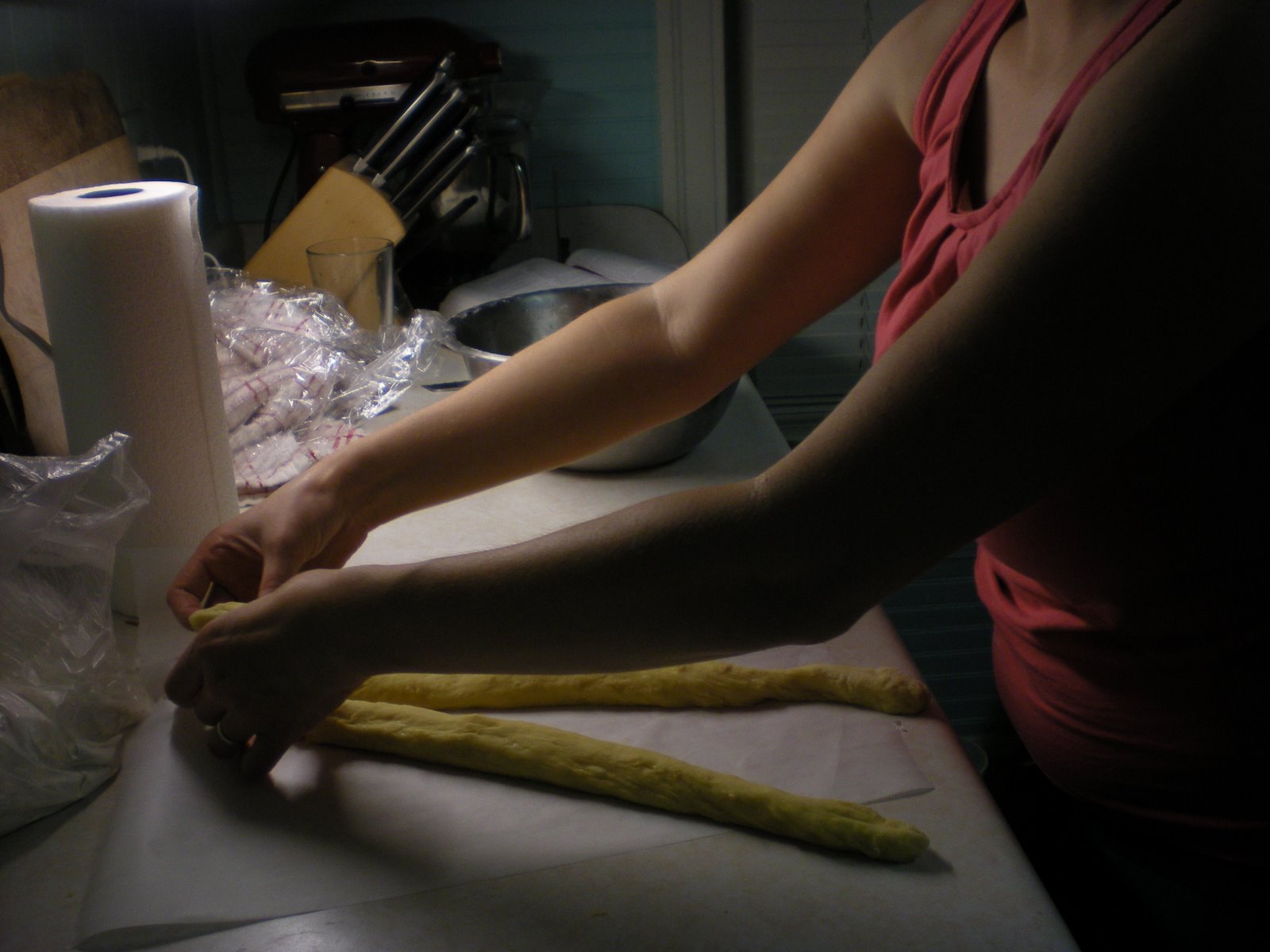
challah,

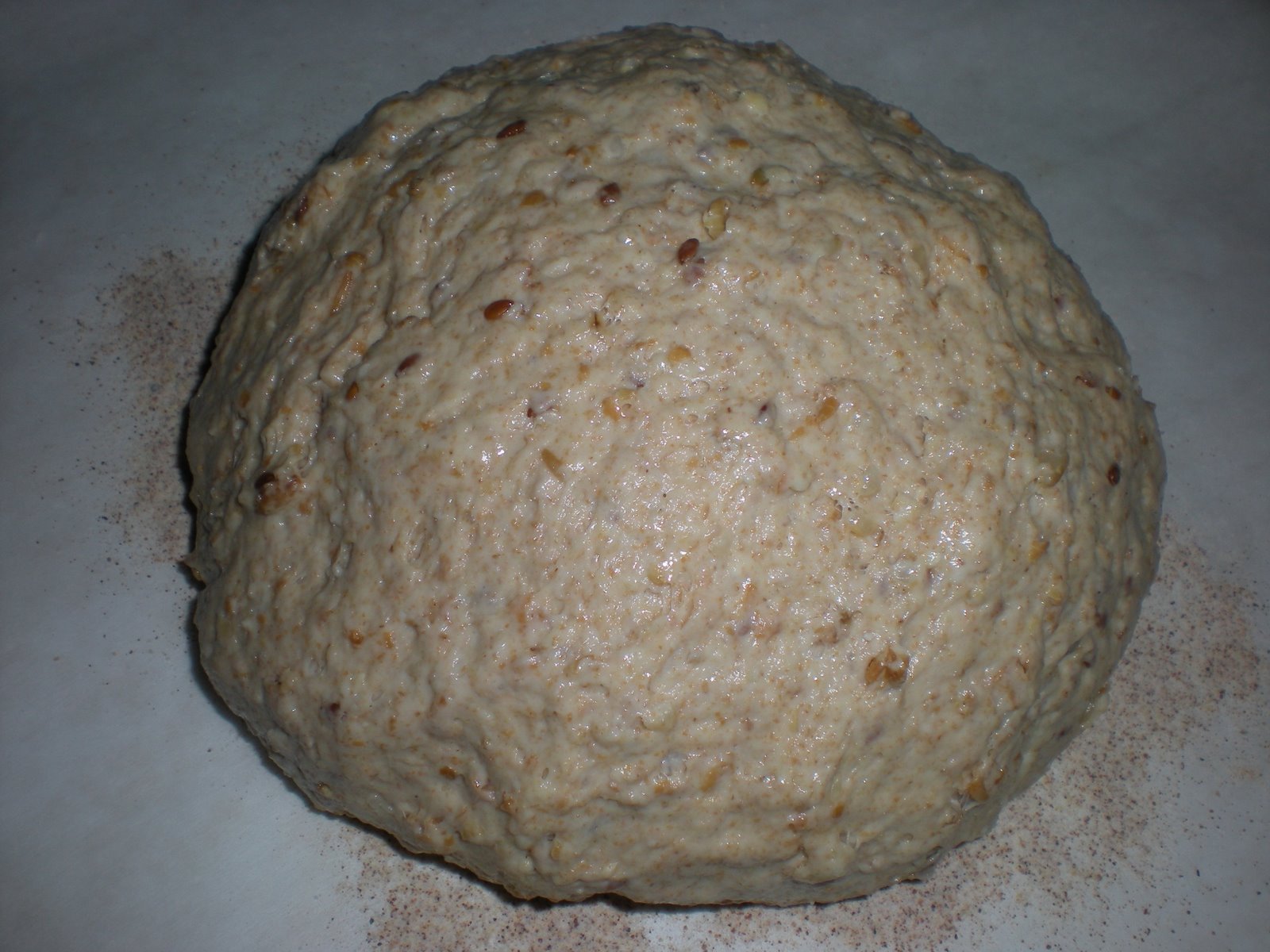
multigrain whole wheat (I forgot to take a picture of the finished loaf),

kugelhopf au lard,

and two loaves of sourdough.

I set the date for delivery of said loaves for the week of Mr. Bread Maiden’s parents’ visit so the two of us could work together, since two of the breads were going to be fairly time-intensive.

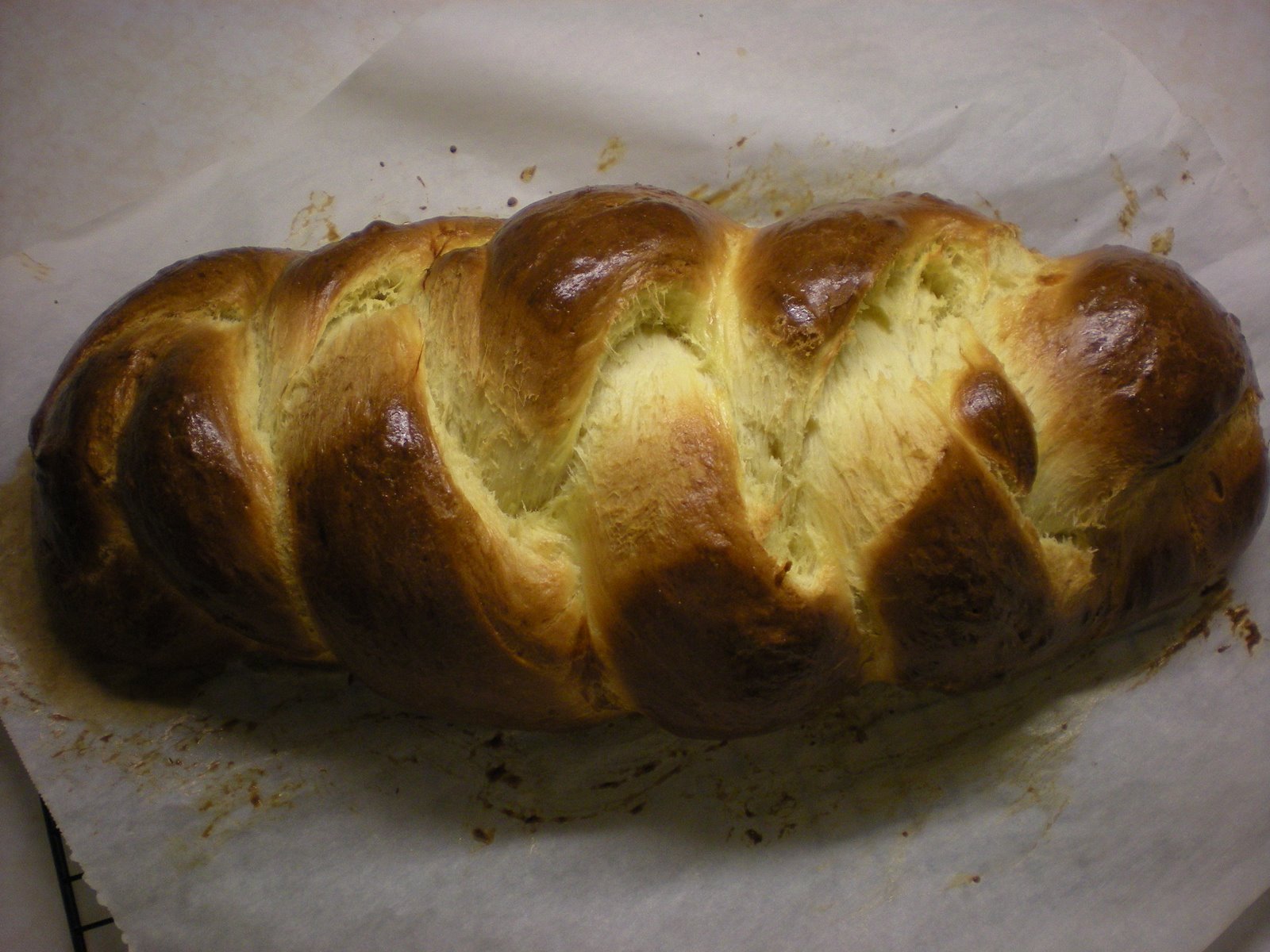
Cough (challah) Cough. Ahem.

We made the loaves, and they turned out beautifully.

All, that is, but the sourdough. But that is for another post.

In honor of Passover

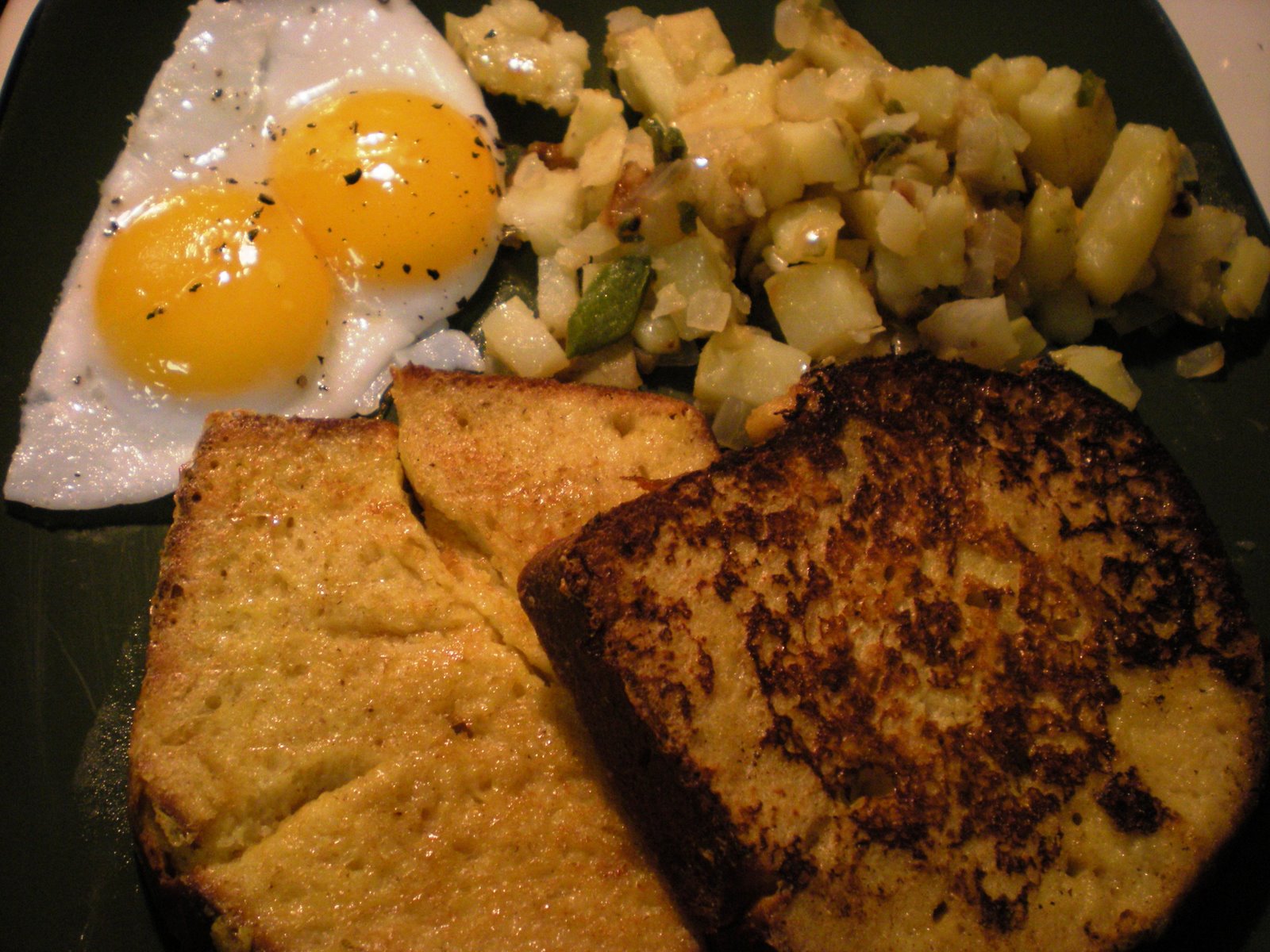
This has been a very Jewish week in baking for the Bread Maiden. Now, the Bread Maiden may not be Jewish, but she does enjoy the occasional matzoh, either plain or with peanut butter. And who can resist challah? On Monday I made challah and Mr. Bread Maiden and I made the Most Decadent French Toast Ever.


One of these days I will post about it.

But that is not what I am writing about today.

Most weekdays are so busy that the only time Bread Maiden can bake is on weekends. She starts daydreaming about baking around wednesday. By thursday it gets really bad. Finally on Friday she can’t take it anymore and as soon as she gets off work she has to come home and whip something up. Anything.


So when I was bored yesterday and needed a quick project, I decided to make Peter Reinhart’s whole wheat matzoh.

It’s so easy everyone. Seriously. It’s like making pie dough without the frustration of mixing in the fat and such. It’s just a simple dough with flour, water, and salt.

The only tricky part is rolling out the dough into really thin shapes. But we will get to that later.

Here is the recipe:

227g whole wheat flour
170g water
4g salt

Preheat the oven to 350F with a clean pizza stone.

ha ha! that’s it! isn’t it wonderful? You will need much more flour when you have to roll the dough out though, especially if you have a wonky plastic rolling pin like I do, which is a snap to clean but flour doesn’t stick to it at all.

Mix the dough up in a ball, doing some kneading to build up the gluten. This is important. Don’t take too much time doing this though, because technically you have only 18 minutes from the time the dough is mixed together to when it has to be baked.

Now divide the dough into eight equal-sized pieces.

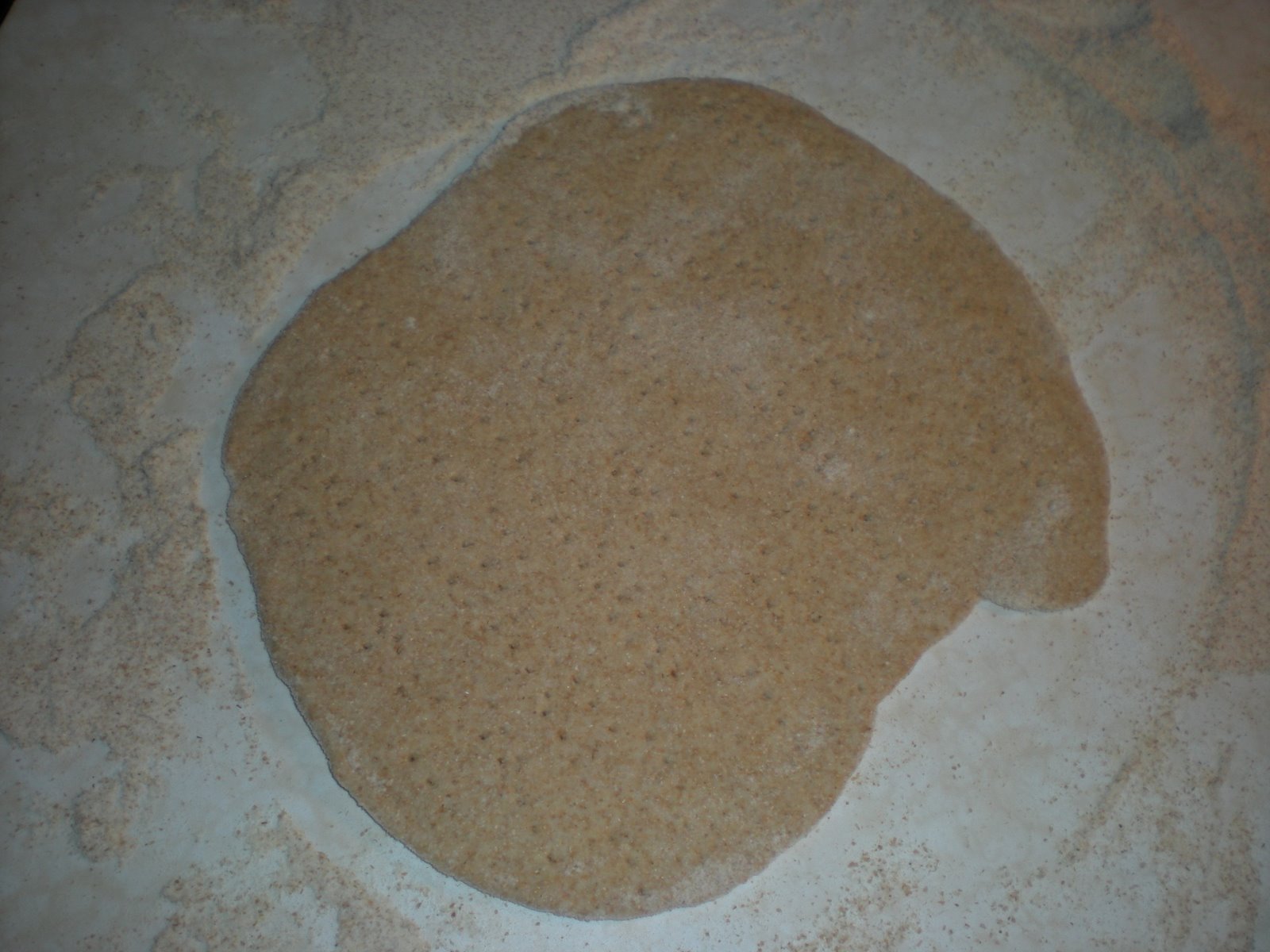
Coat your rolling pin, the counter, your hands, and everything else with flour. Take one of your pieces and roll it as thin as you can possibly manage, flipping the dough every so often and re-coating with flour so it doesn’t stick to the counter.

Reinhart says to use as little flour as possible, but this proved impossible, so I used a lot of flour. I don’t think it matters.

Once the dough is all rolled out, take a fork and poke tons of holes in the dough. This will keep it from puffing up.

Open the oven and sprinkle a bit of white rice flour directly on the pizza stone. Close the oven again.

Now using the rolling pin or a pastry scraper or spatula, transfer the dough either to the oven (if it’s preheated already) or to a baking sheet with a little flour on it.

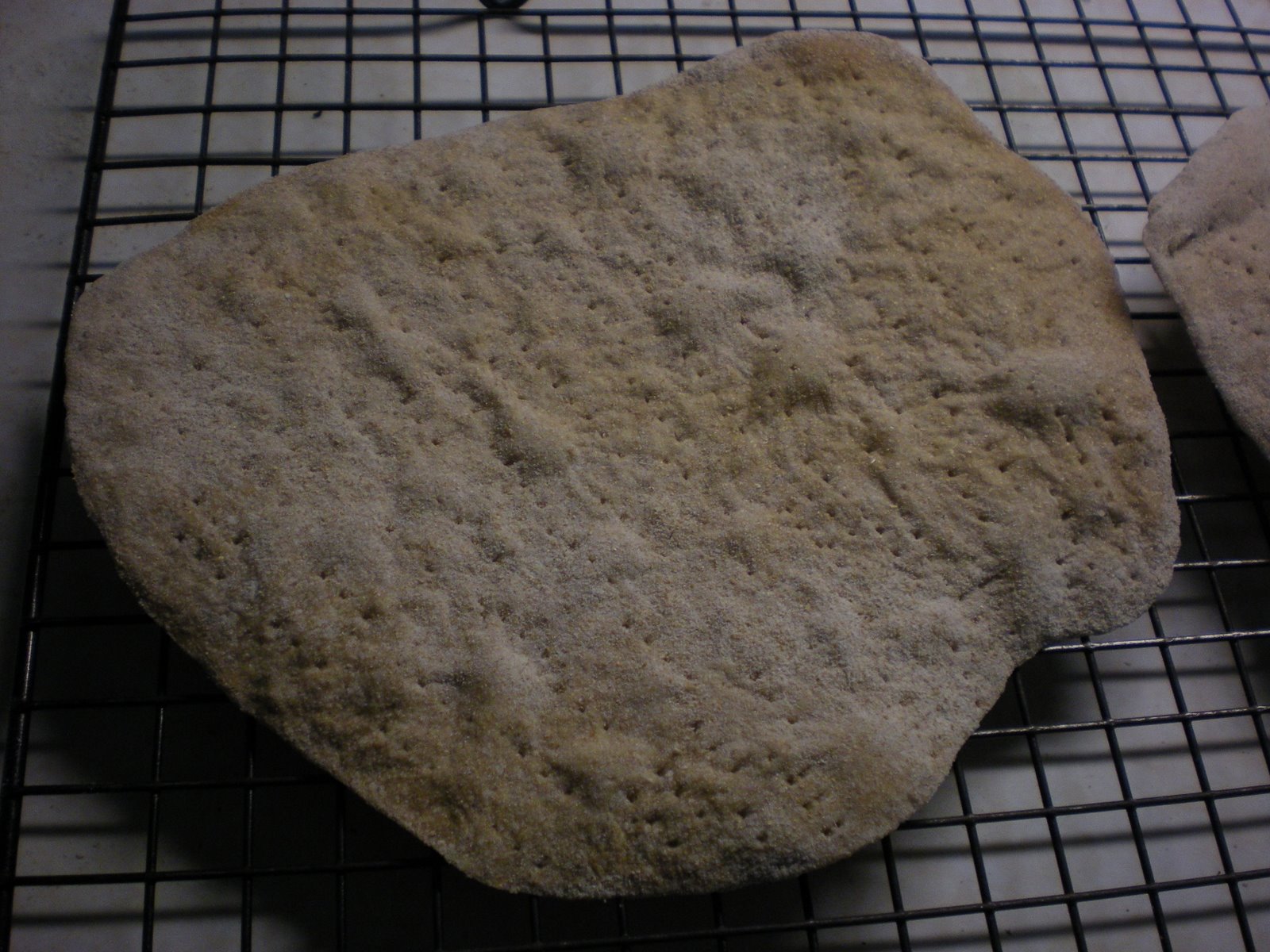
Once the oven is ready, slide your first matzoh (or maybe first two, if there’s room) directly onto the stone. Bake for about 10-16 minutes until CRISPY and hard. Then remove from the oven to a rack to cool.

How awesome is that?

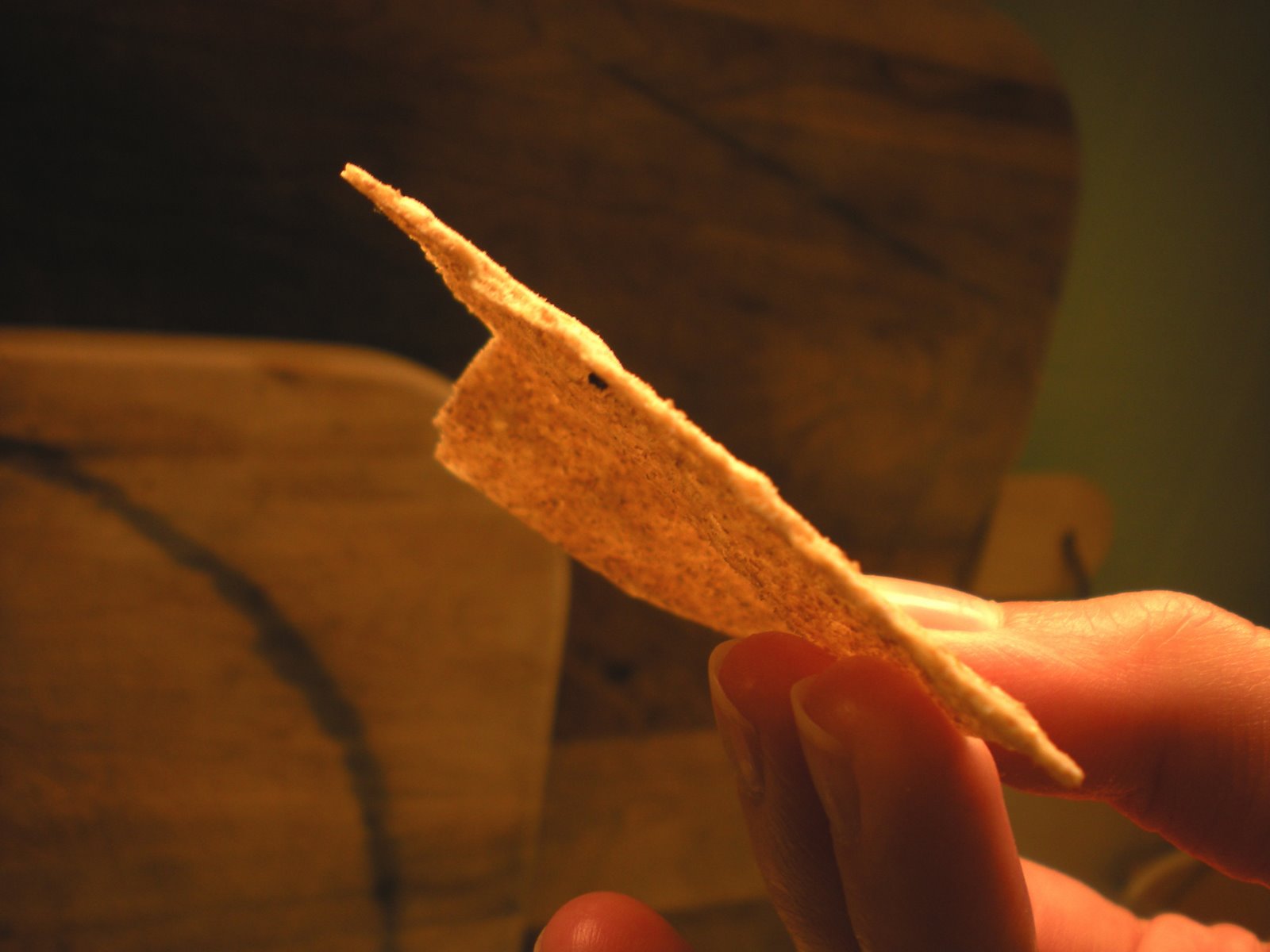
These are so delicious, especially once they’ve had a chance to cool and condense. They become even thinner than when you first took them out. They are great with everything because the taste is so mild.

I decided to break them up and make crackers.

Now you need to make these! Go now!